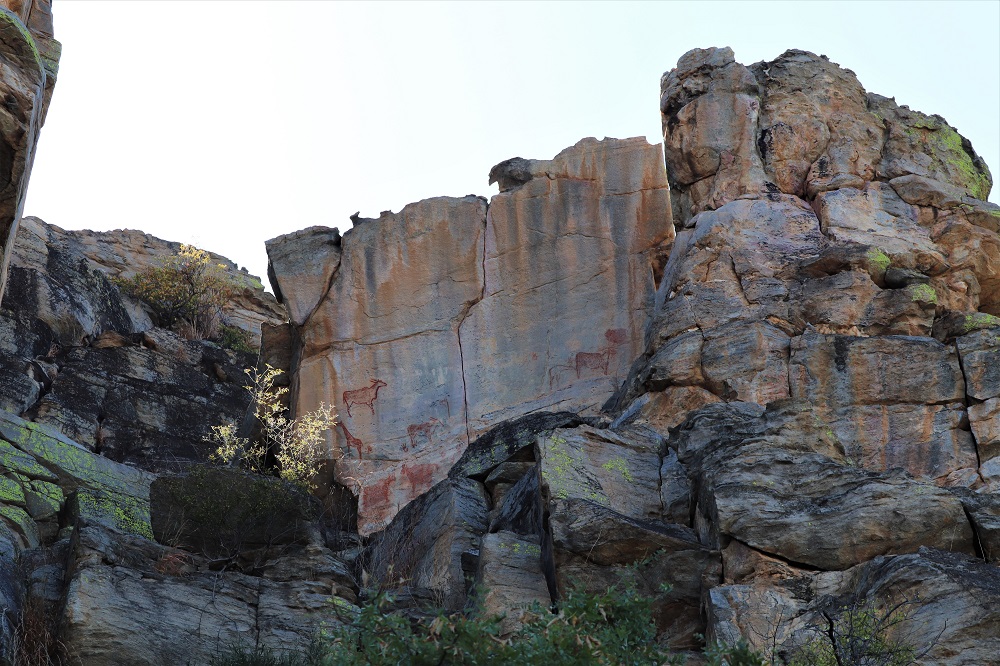
One of the most archaeologically significant and sacred sites in southern Africa, the captivating Tsodilo Hills are adorned by more than 4,500 rock paintings, painted by the San and Bantu peoples over thousands of years.
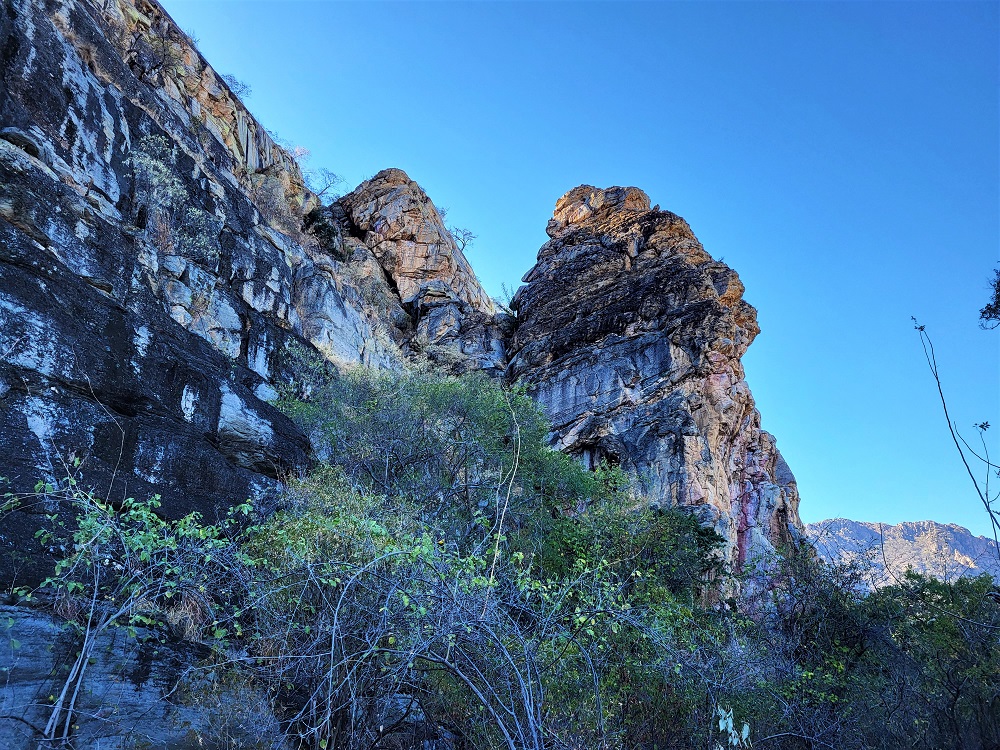
Lying on the western edge of the Kalahari Desert, you can’t miss the hills, a series of four monumental rocks that dominate the otherwise flat, barren landscape.
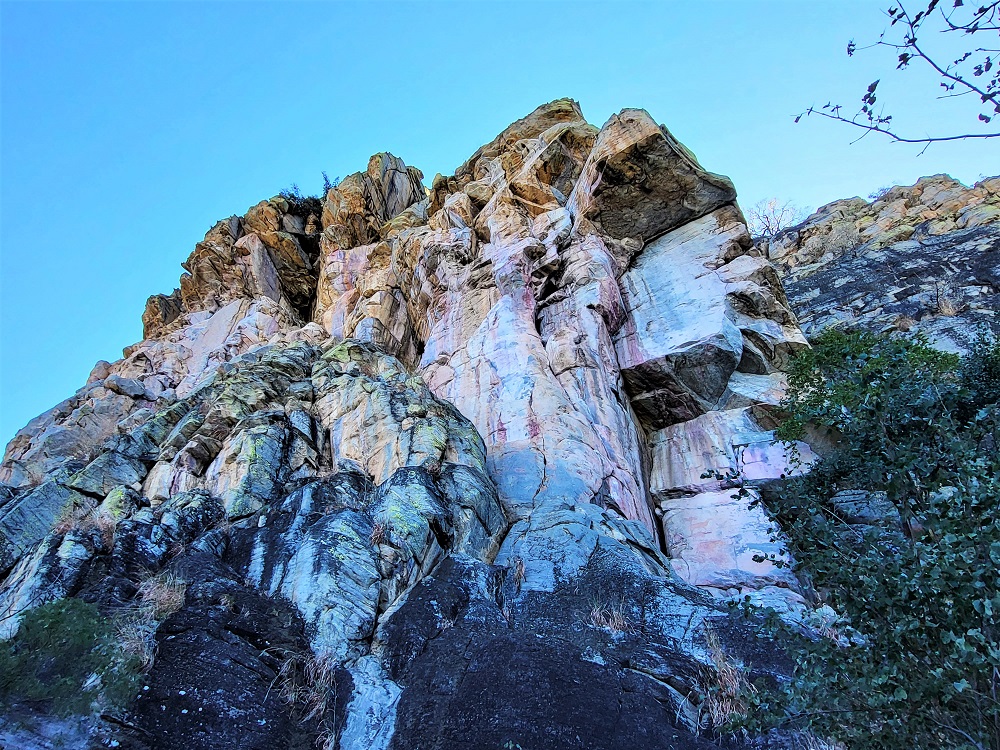
A UNESCO World Heritage Site since 2001, archaeologists estimate that Tsodilo has been occupied by humans for some 100,000 years and it’s long been revered by the people who live here.
The San people believe it was the site of the first creation and the spirit of every plant and animal was created at Tsodilo.
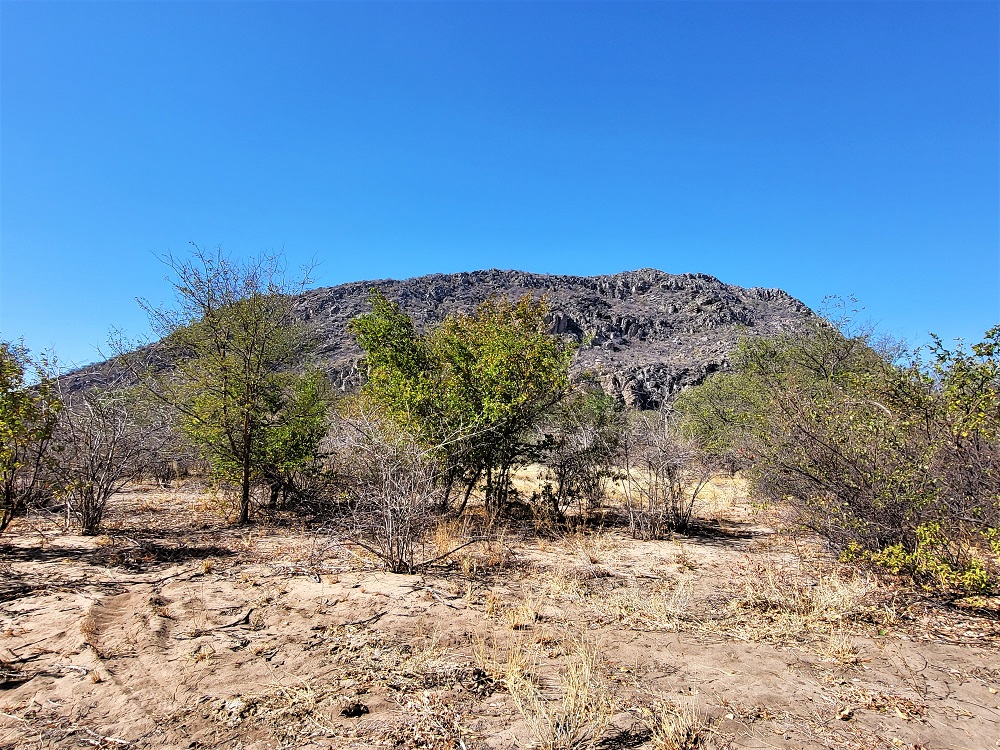
According to legend, the four hills represent a husband (above), a wife (below) and their two children.
Legend has it the wife left her husband, taking their two children with her, but while the older child stayed with its mother, the younger child returned to be with the husband.
Today, the area is inhabited by the !Kung (a San group) and Hambukushu (a Bantu tribe), who are both thought to have settled here in the 19th century.
In a bid to boost the local economy, the Botswanan government has mandated that visitors can only tour the Tsodilo Hills if they’re accompanied by a local guide.
We were met in Tsodilo’s car park by our guide for the day Morango, who lives in one of the nearby San villages.
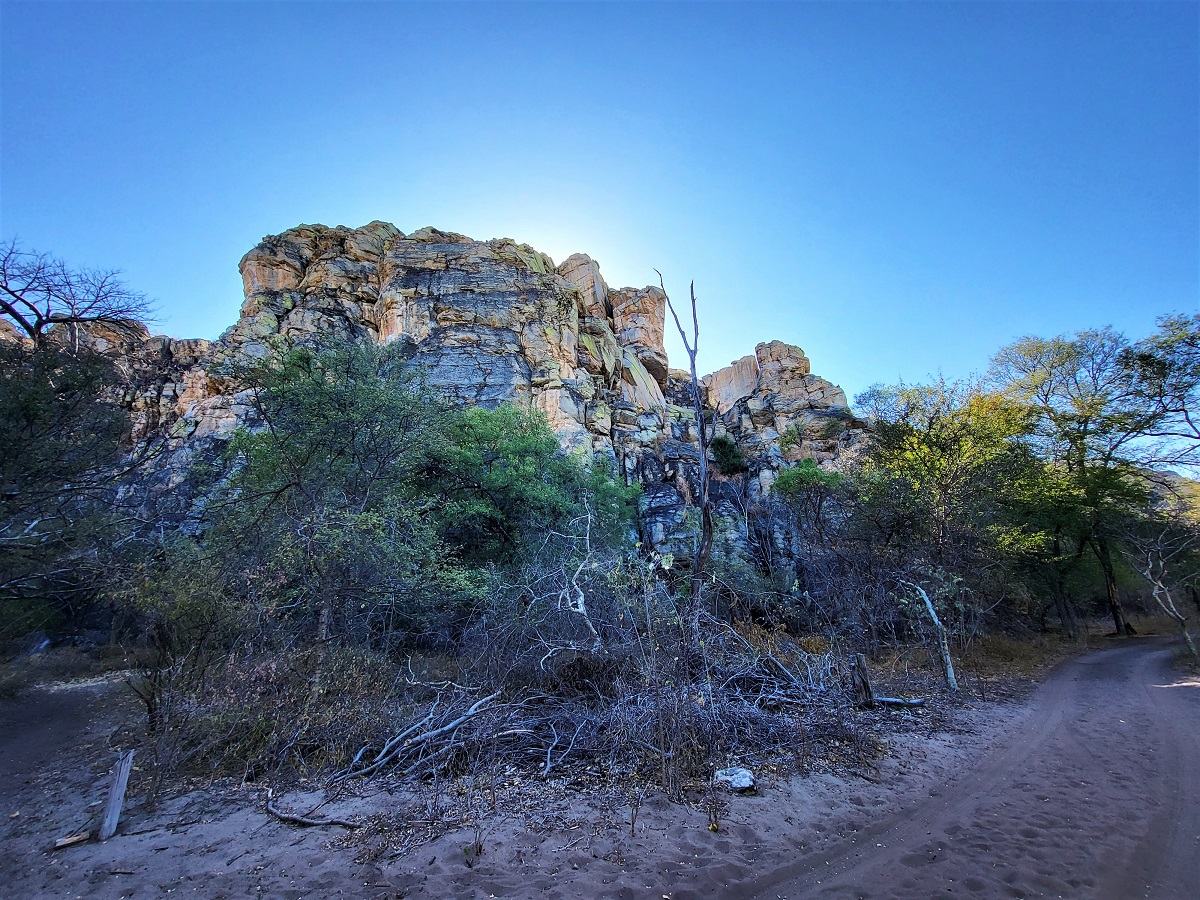
Morango took us on a two-and-a-half our hike around Tsodilo, following one of five walking trails, the Rhino Trail, which takes visitors around and over the Female Hill (above).

One of the things that most struck me about the hills was the spectacular geology, which reminded me a little of the rock formations at Petra.
The colours in the sandstone were phenomenal – a pretty mix of reds, yellows, pinks, greys, whites and blacks in eye-catching shapes.
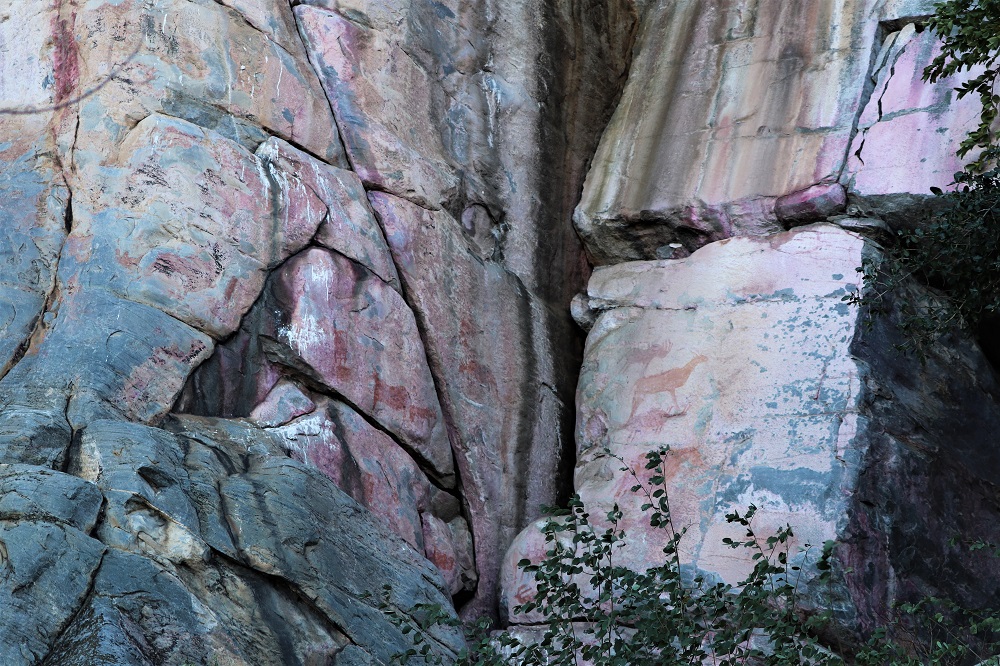
As we walked along the trail, we learned there are two types of rock art at Tsodilo – red and white finger paintings.
The red paintings, which make up the majority of the art, were painted by the San people, with some paintings dating back as far as 4,000 years ago.
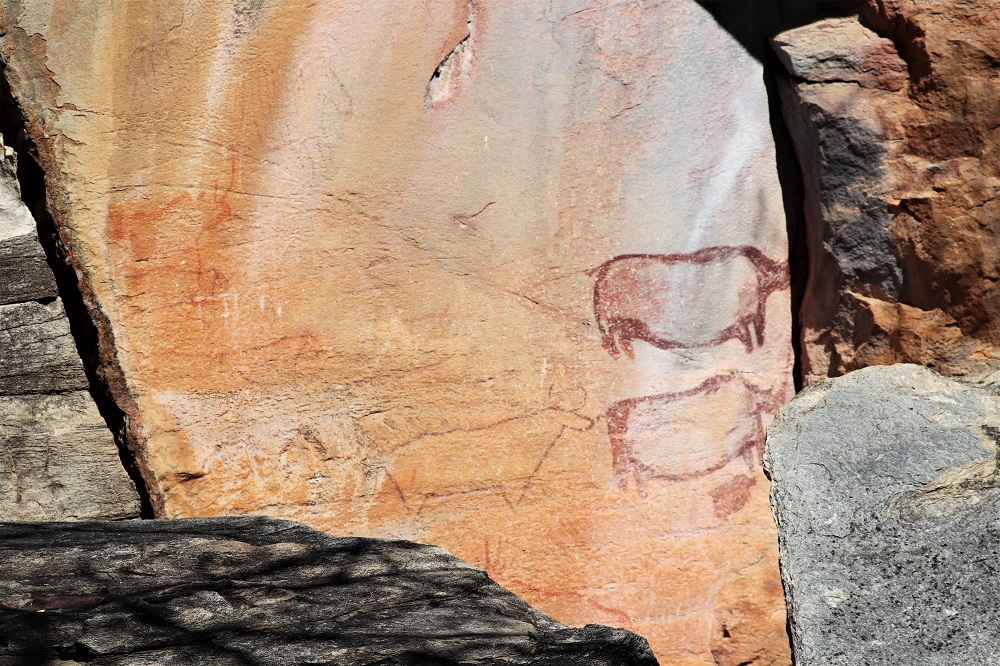
The red paint was made by mixing calcrete, haematite, charcoal, blood, marrow, fat, tree sap and urine.
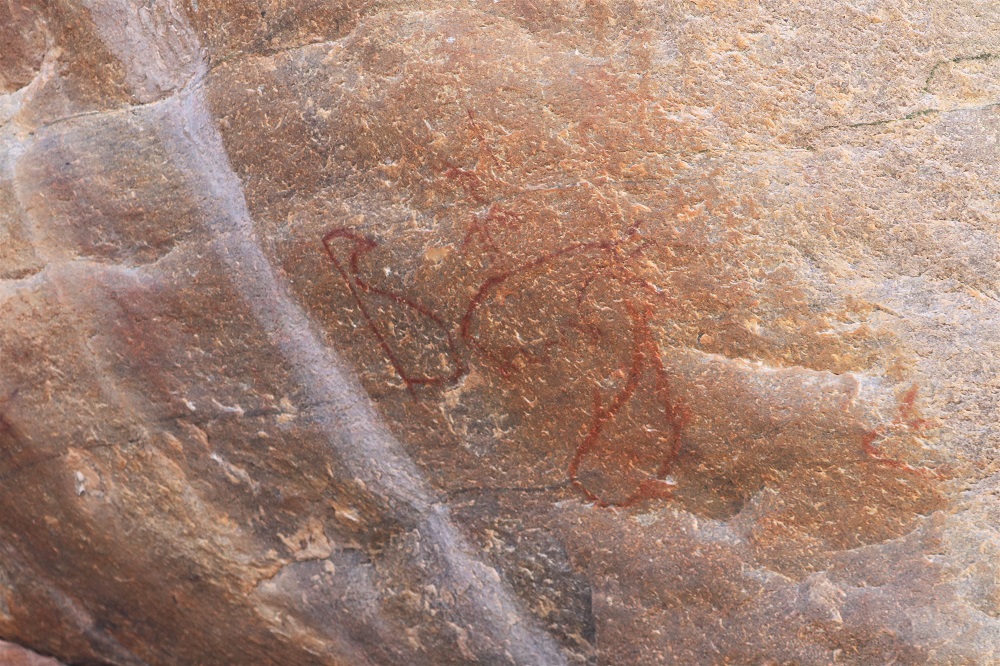
The extraordinary paintings depict animals, people and geometric shapes, and I was surprised to find animals such as whales (above) and penguins among the artworks, as Tsodilo is so far from the sea.
The San are a nomadic people and experts believe the painters must have had links with the Namibian coast to have been able to draw the marine creatures.
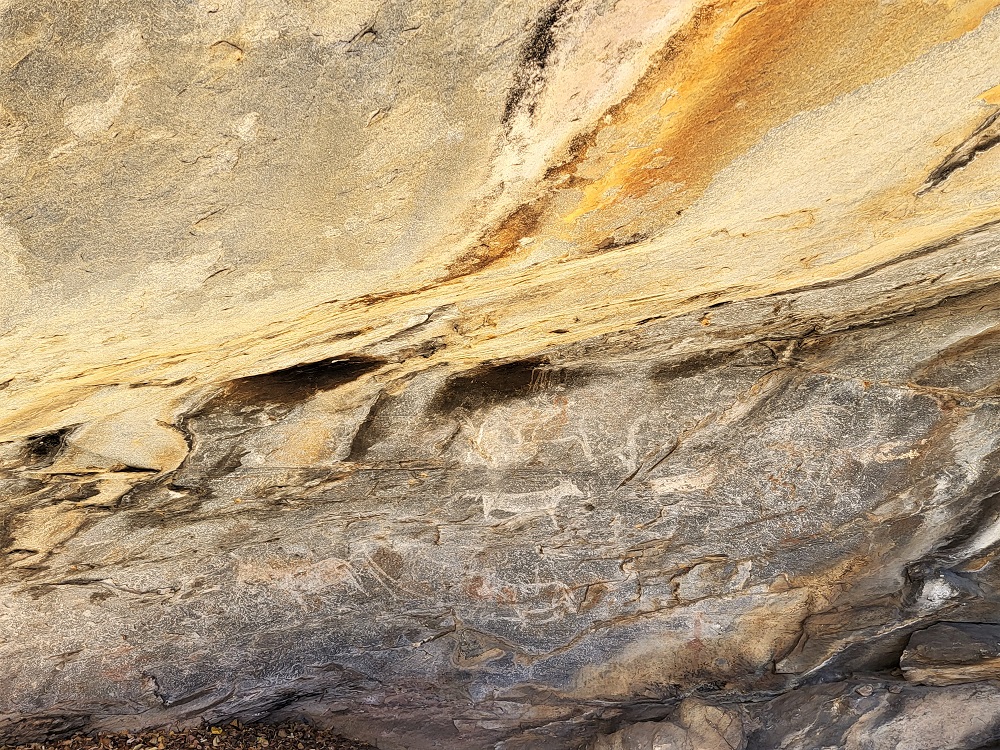
Tsodilo is also home to a series of white paintings created by the Bantu people, which date from as long as 2,000 years ago and feature images of cattle, horses and other domesticated animals (above).

We followed the Rhino Trail as it skirted the edge of the Female Hill, as Morango pointed out various interesting features along the way
We passed a cave and a few rock shelters – in one of which, Morango showed us a cupule, a rock with small round dents carved into it (above).
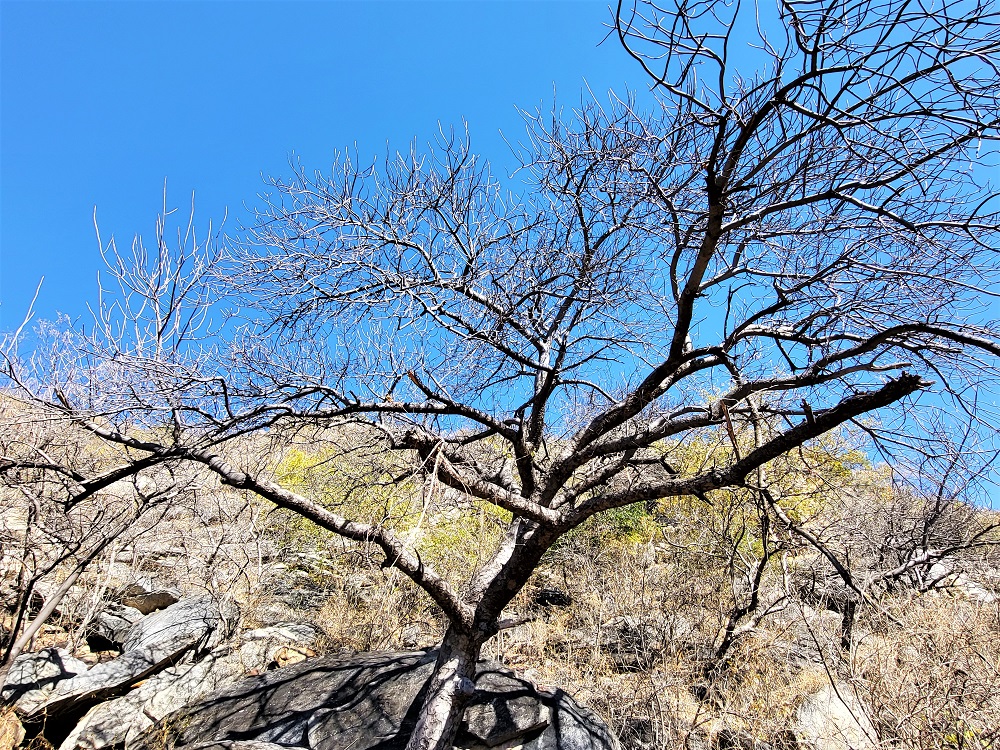
We also passed some unusual tree species, including a number of baobabs and a mongongo tree (above), which is beloved by elephants for its nuts.
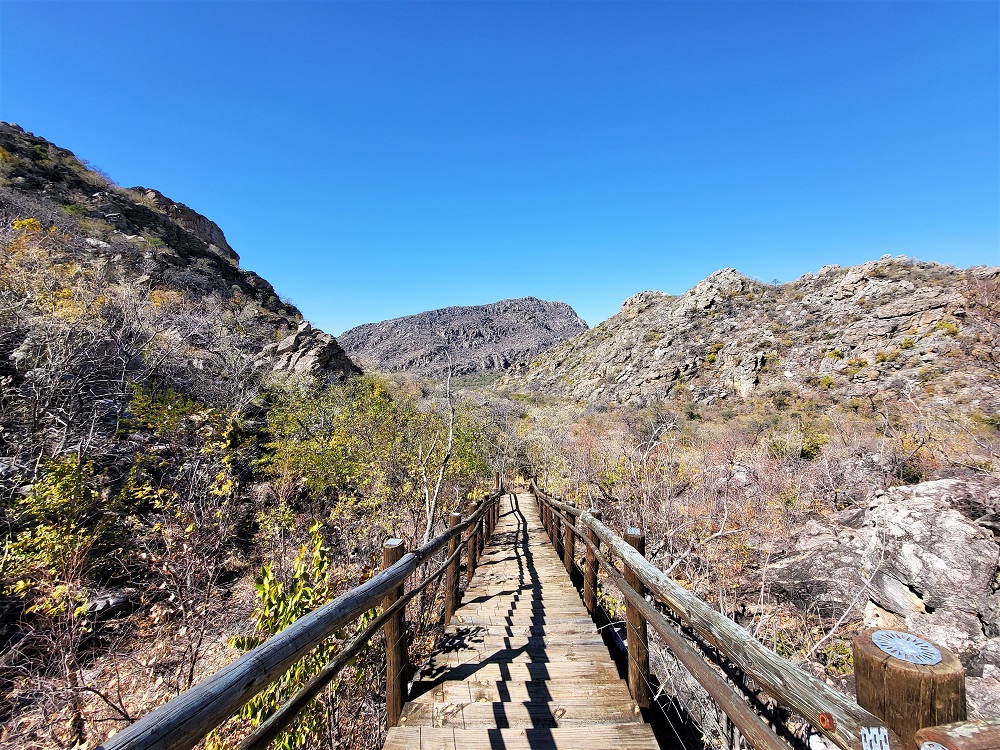
After an hour or so, the trail became steeper and we had to clamber up some large rocks to reach the viewing platform, which looked out over the route we’d just walked (above).
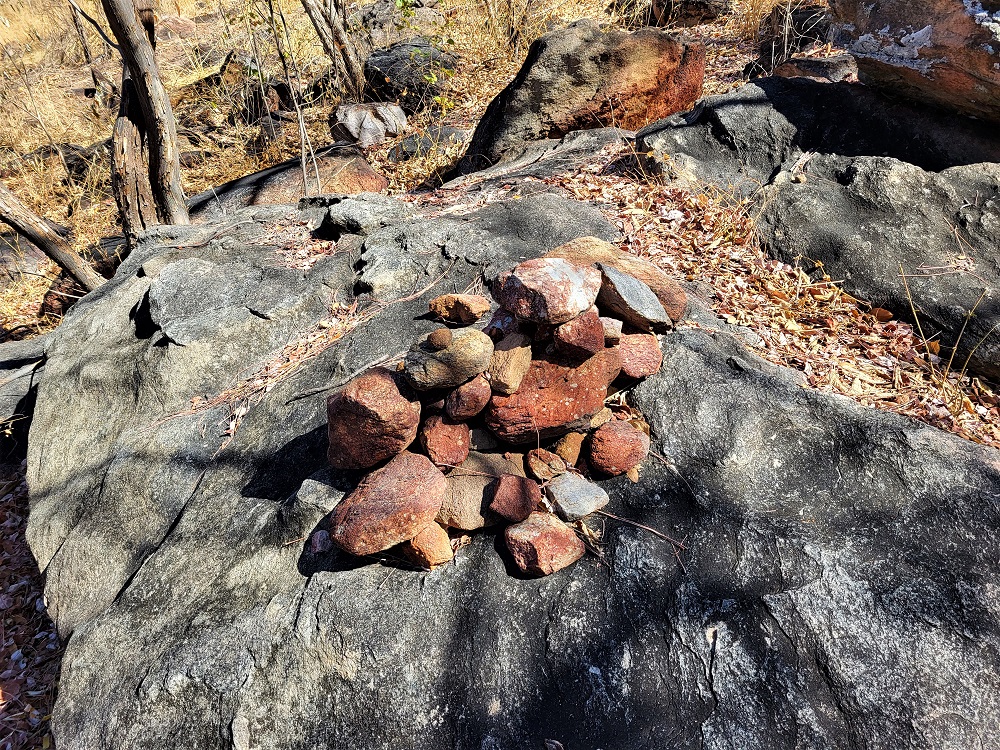
We continued our hike to the top of the hill, stopping part way to find a pretty stone to lay as an offering to our ancestors to make sure we had a safe journey over the hill (above).
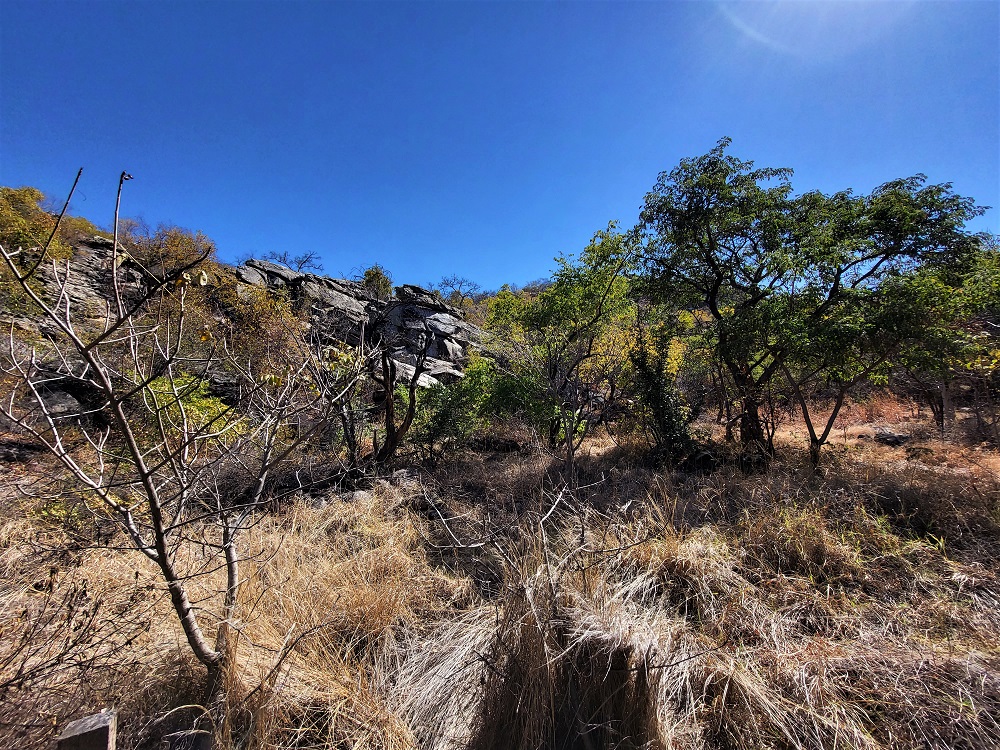
The top of the hill was flat and we were delighted to find yet more rock art, including one painting that featured three human figures (below), which the San people used to initiate their hunters.
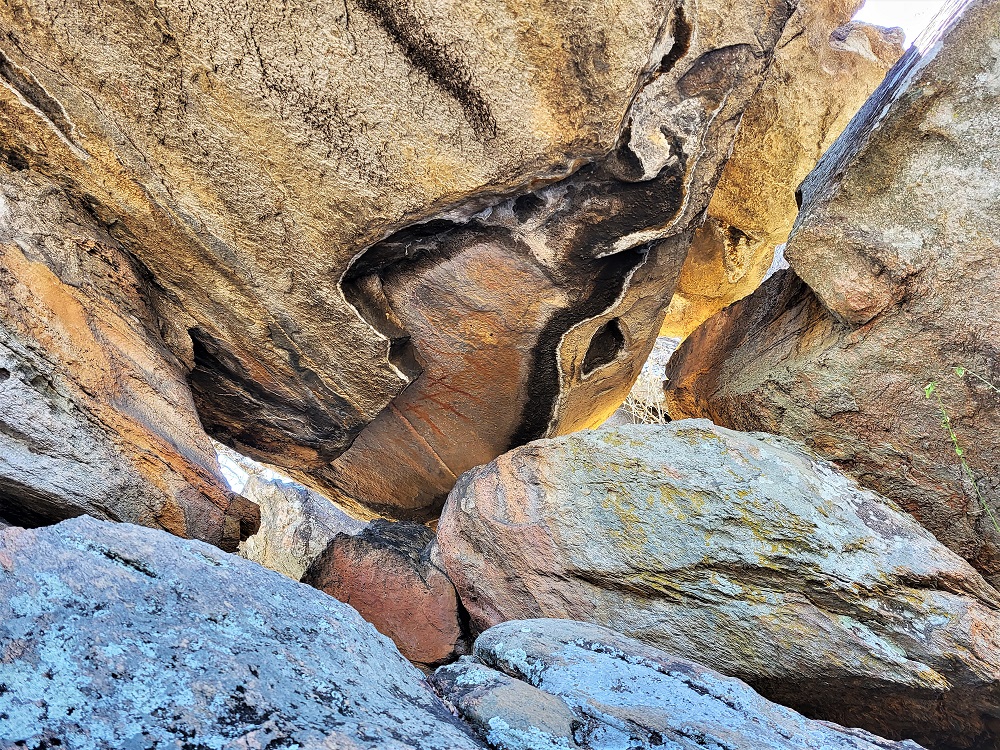
Another depicted the animals the hunters were expected to learn to hunt.
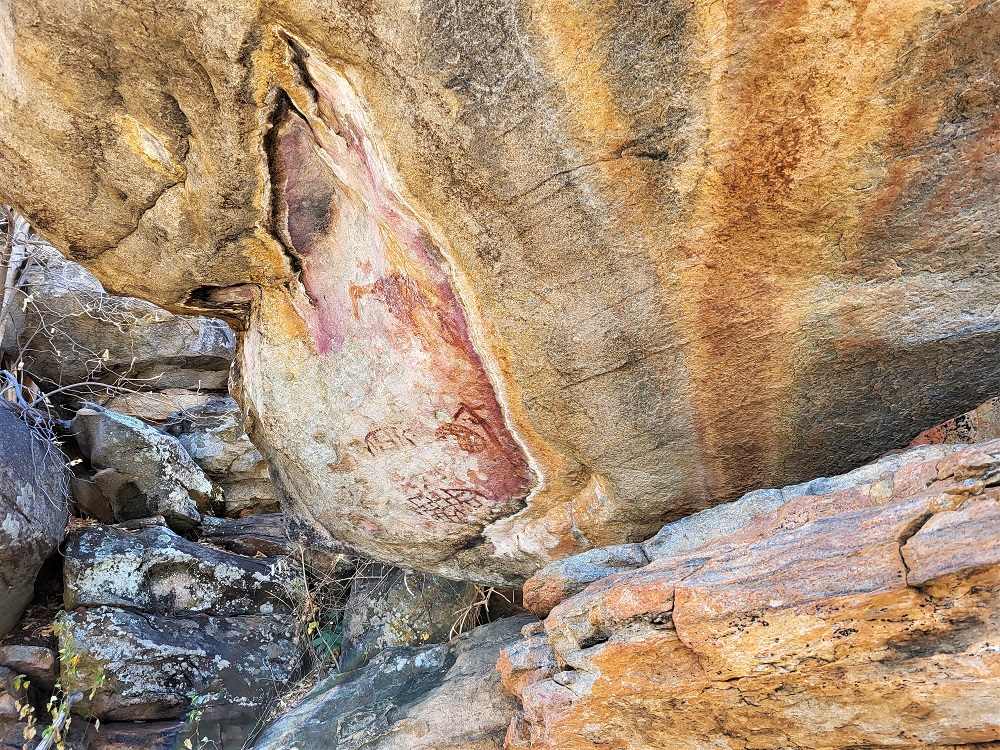
As we made our way over the top of the hill, Morango stopped to show us some leopard prints that had been made within the last 24 hours.
Sadly, there was no sign of the leopard (although I’m not sure I really wanted to come face-to-face with a leopard on top of the rock).
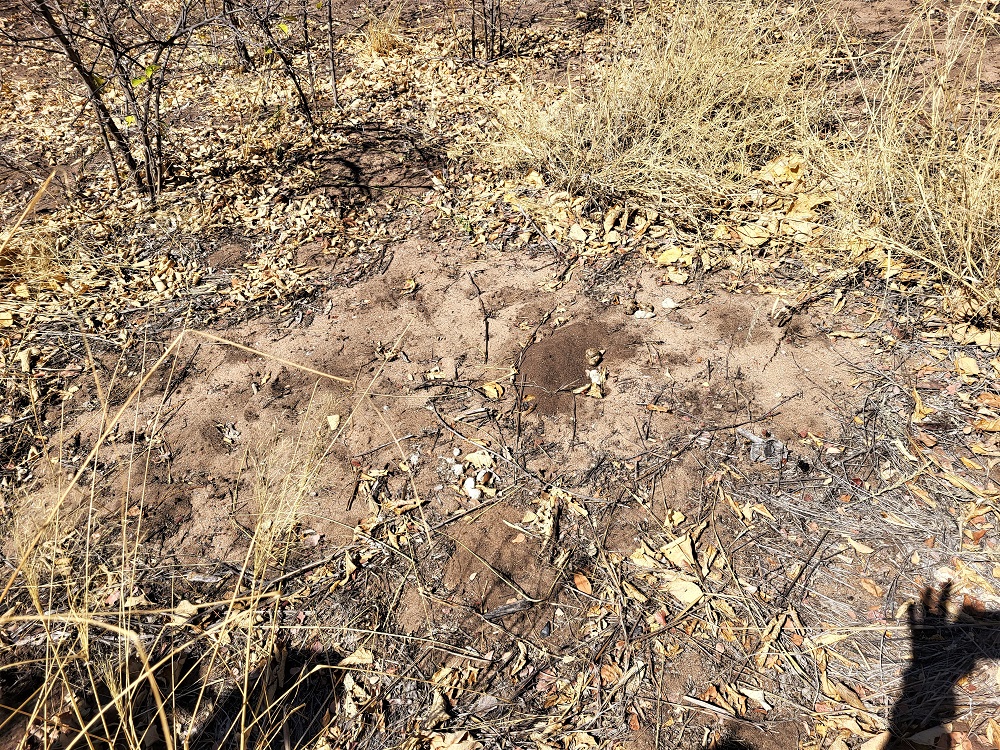
Morango showed us how to identify hyena poo, too, (above, it’s often white because the scavengers eat a lot of bones), as well as a few pieces of pottery he found in the dusty ground (below).
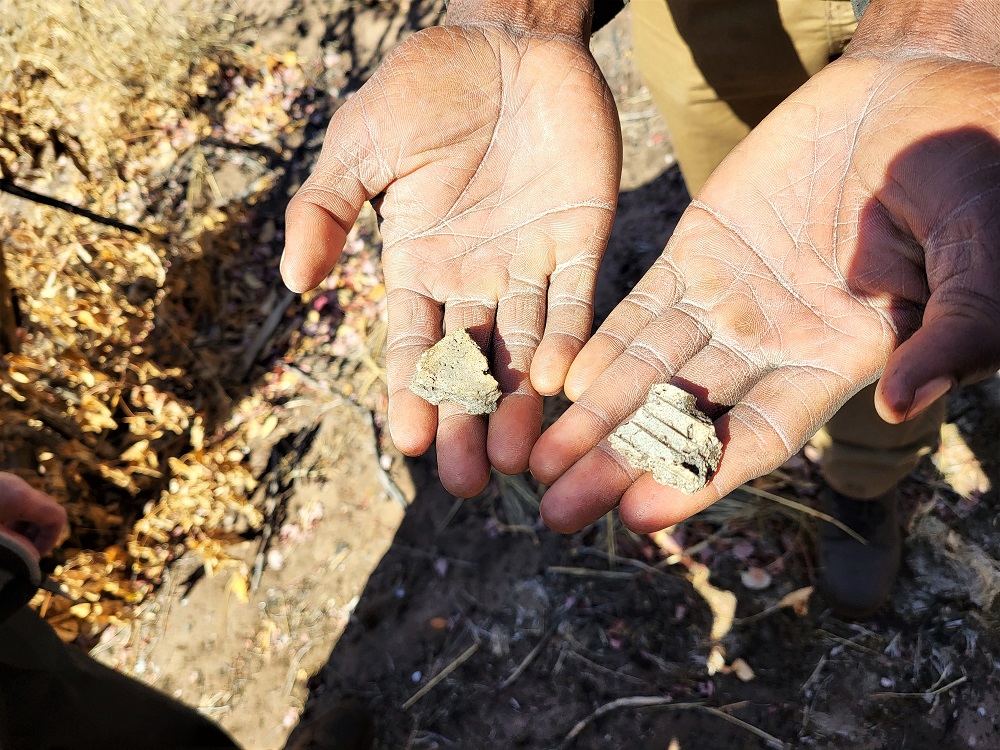
The top of the Female Hill is also home to the grave of a 15-year-old girl, which was discovered during an archaeological dig and dates back some 2,000 years.
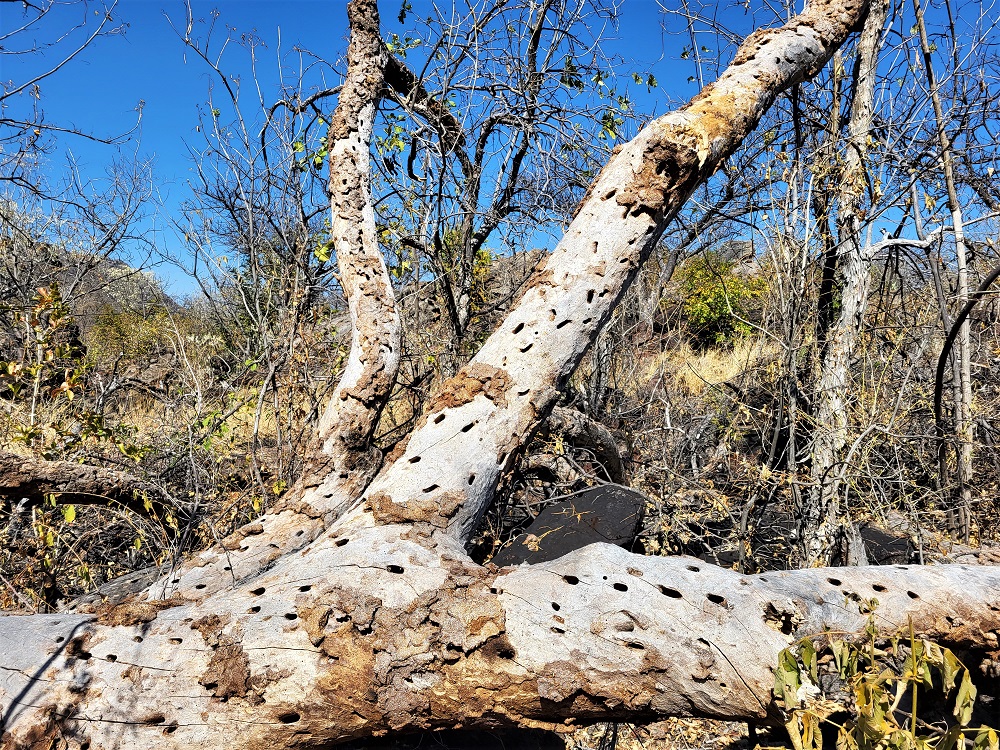
After traversing the top of the sandy plateau, we began our descent and I soon realised why we’d been told before setting off that this part of the trail wasn’t suitable for people with mobility issues.
The climb down was rather hairy at times and there were quite a few instances where I found myself intentionally sliding down the rocks on my bum.
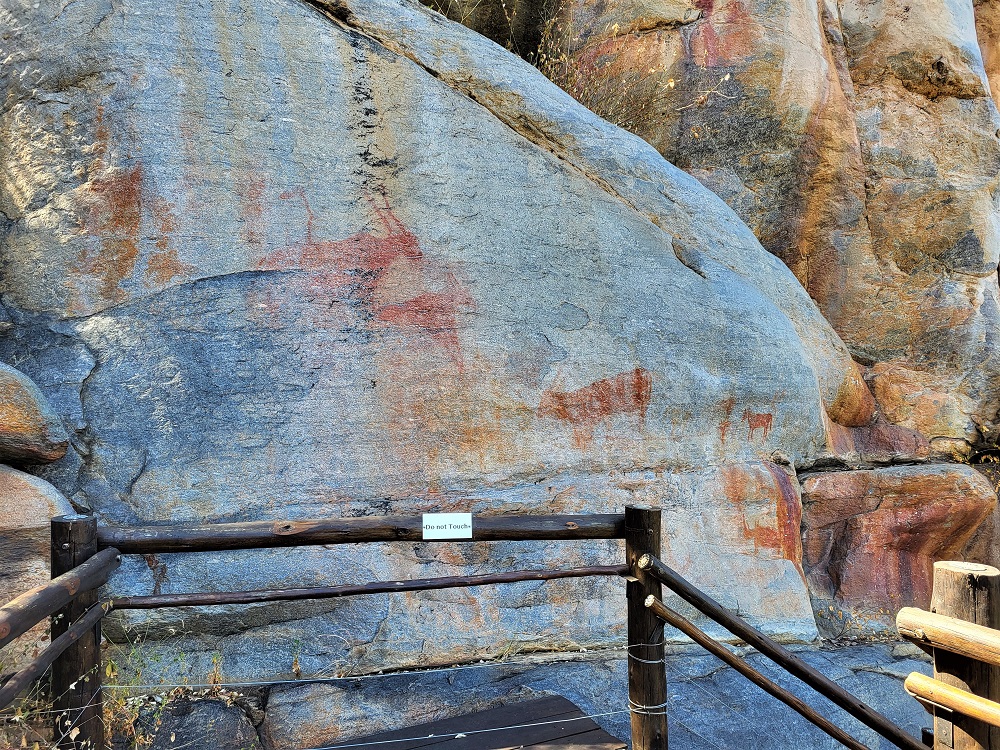
But the challenging hike was worth it as we were rewarded with beautiful views and even more examples of rock art (above).

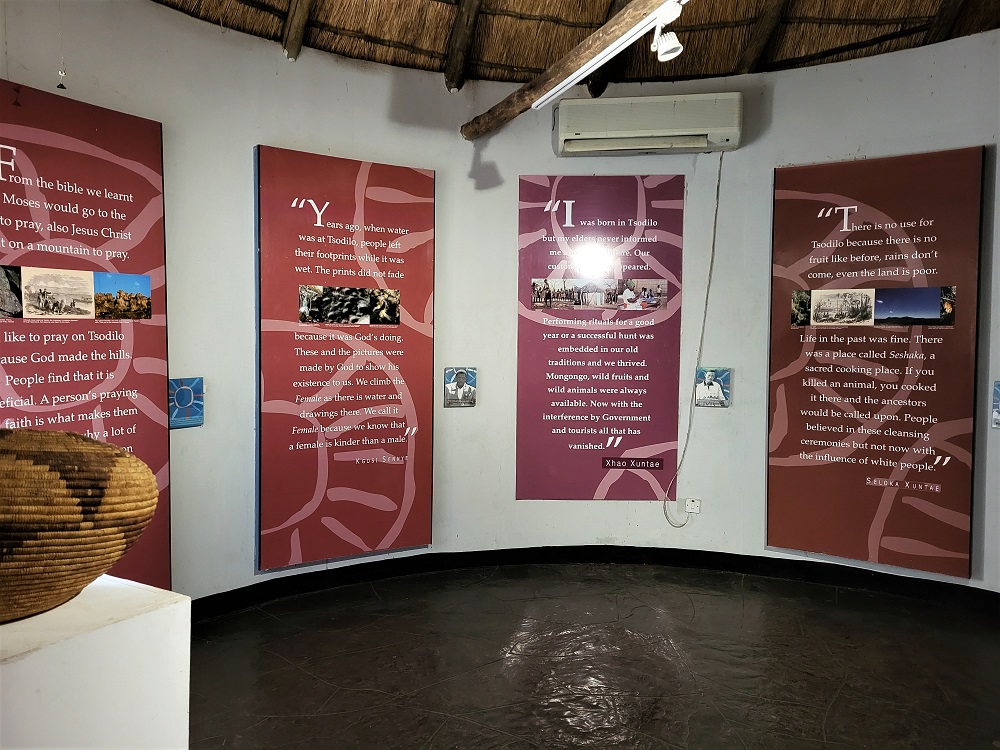
After making it safely back to the car park, we headed to the Tsodilo Hills museum (above) to learn more about the historic site.
The first part of the museum focused on Tsodilo, its geology and its history, while the second part was more anthropological in its scope, featuring quotes from local people (below).
I really enjoyed our tour of the Tsodilo Hills. It’s a unique, fascinating and intriguing place, and Morango was an excellent guide.
It was a privilege to have the opportunity to see the ancient rock paintings up close and to learn more about the San and Bantu peoples who’ve called the hills home for millennia.
Tips
- Be aware the full Rhino Trail isn’t suitable for people with mobility issues or inexperienced walkers and hikers, as it’s a difficult scramble on the way down.
- There are toilets in the main car park, but otherwise there are no facilities along the route.
- Make sure you wear trainers or hiking boots with good grips and old socks – the trail is awash with grey sand and your feet will be filthy by the end of the hike.
 Little Old World
Great hike. It’s not every day that a person gets to see paintings that are several thousand years old.
LikeLiked by 1 person
It’s certainly one of the most special and unusual hikes I’ve done.
LikeLiked by 1 person
Fascinating! Amazing that the paintings are so old.
LikeLiked by 1 person
While some of the paintings were quite faded, others were remarkably clear still
LikeLiked by 1 person
An incredible place!
LikeLiked by 1 person
I totally agree, it’s a fascinating and fabulous place.
LikeLike
It’s amazing to hear just how old some of these pictographs are and that some of them are still clearly visible today. What a neat place to visit and imagine what it was like to once live here thousands of years ago.
LikeLiked by 1 person
It’s incredible to think they’ve survived for so long, especially as some of the paintings are completely open to the elements. It’s a fascinating place.
LikeLiked by 1 person
What a fantastic place! It is truly a privilege to be able to see these paintings, thousands of years old, and to have a local person as a guide. Perhaps seeing fresh leopard prints rather than the actual animal was the way to go. Would I be correct in surmising that the older (red) images depict wild animals and hunting scenes predominantly? While the white paintings are mostly of domesticated animals?
LikeLiked by 1 person
Thanks Leighton, it was a really special place and humbling to see such ancient paintings up close. Our guide was so knowledgeable and gave us real insight into the history of the site and its significance to the local people. Yes, that’s correct. The red paintings are mostly wild animals, (there are also geometric shapes), while the white paintings mostly depict domestic species such as cattle.
LikeLiked by 1 person