The most northerly capital in the world, Iceland’s biggest city is small, compact and friendly, and can easily be explored on foot.
I spent a lot of time during my five days in Reykjavik walking around the city centre as I traversed from one part to another.
Here’s a whistle stop guide to some of the sights I visited…
A very brief history of Reykjavik
Founded in 870 by the Vikings, Reykjavik means ‘Bay of Smoke’ and was named for the steam coming from the area’s geothermal springs.
It was a small and fairly inconsequential settlement until the end of the 18th century when the Bishop of Skálholt, later Bishop of Iceland, moved to Reykjavik after Skálholt was all but destroyed by a huge earthquake in 1784.
In 1845, Reykjavik’s importance grew when the Icelandic Parliament, the Alþingi, decided to make it its new home and in 1918, the city was chosen as the country’s capital.
Historic harbour and Faxaflói Bay

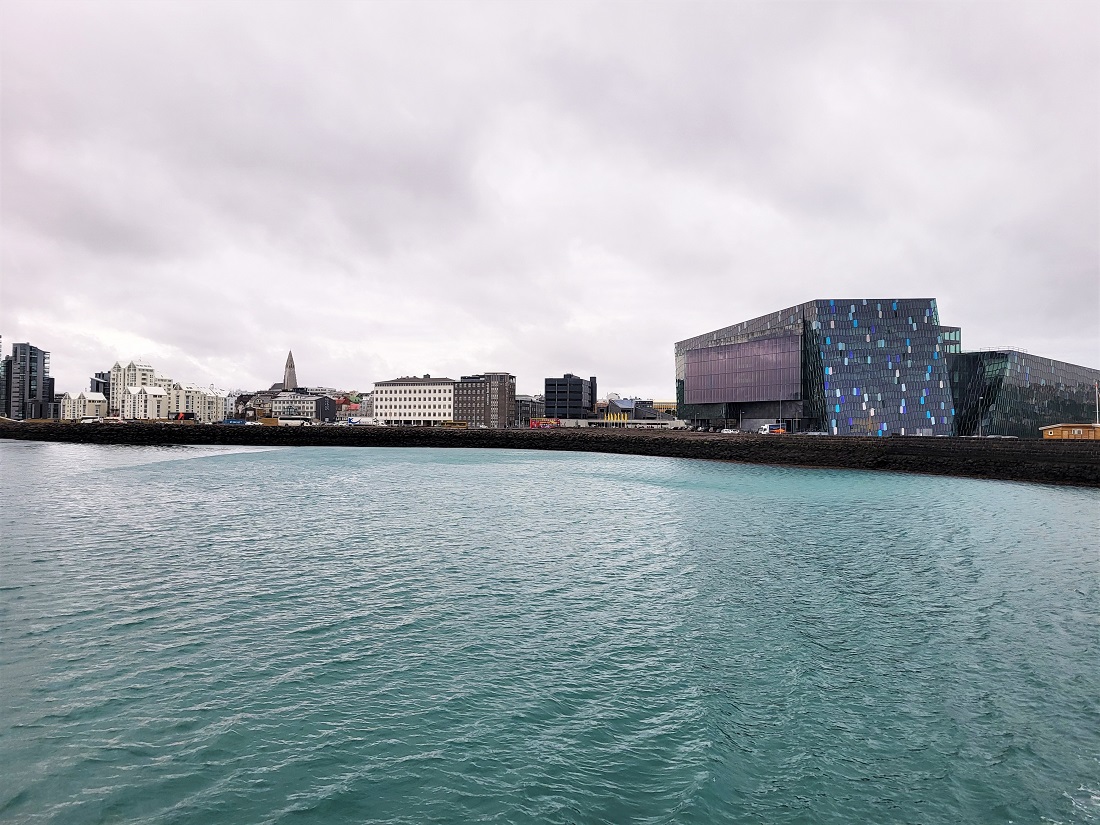
Situated on a strip of land that juts out into Faxaflói Bay, many of the Icelandic capital’s main sights are close to the shoreline.
The historic harbour area is home to a number of museums, including the Reykjavik Maritime Museum, Whales of Iceland and the Saga Museum, which recounts the country’s early history.
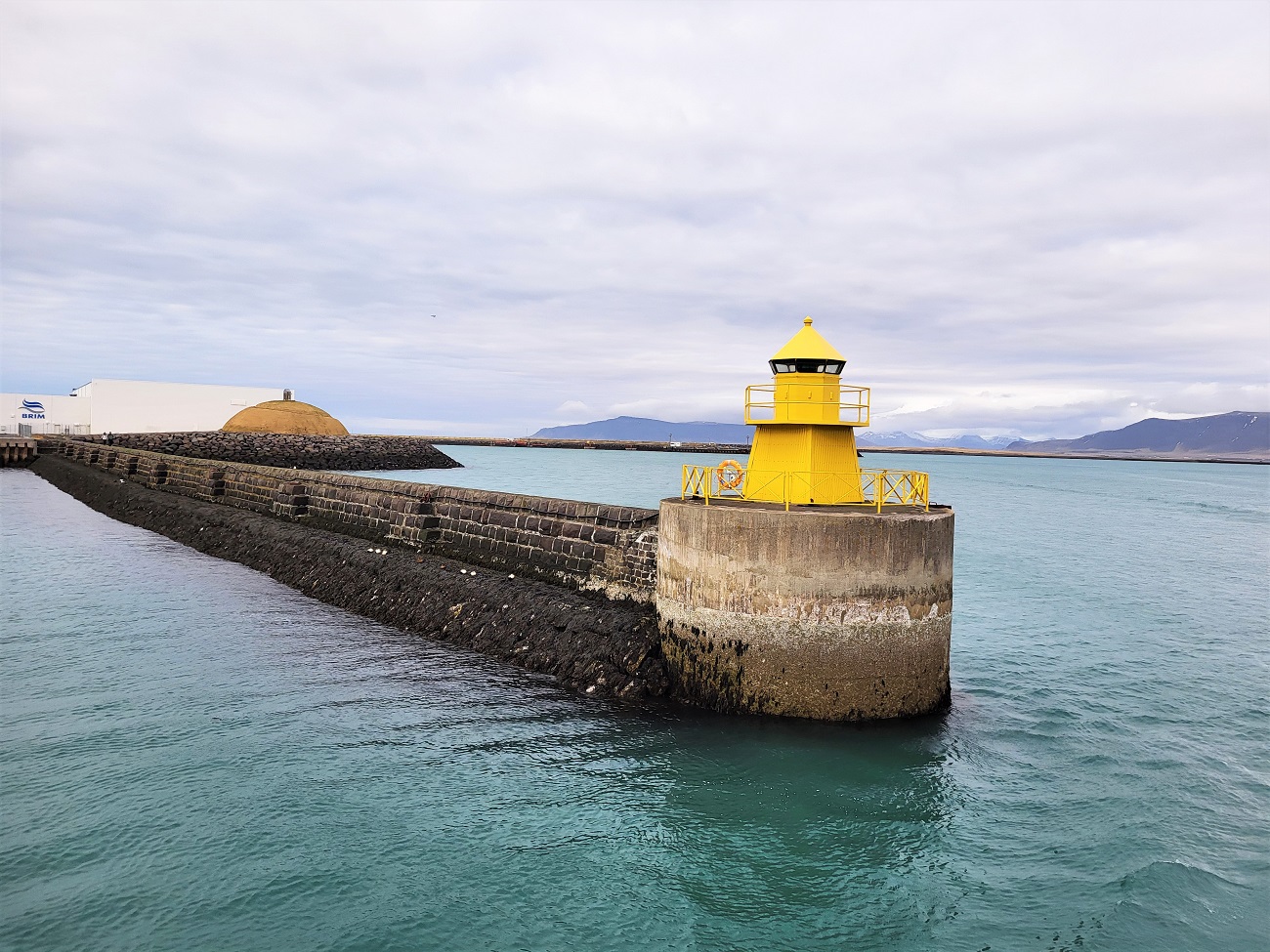
It’s also where you can set sail into the Bay on a whale watching tour or embark on a trip to see the Northern Lights from the water.
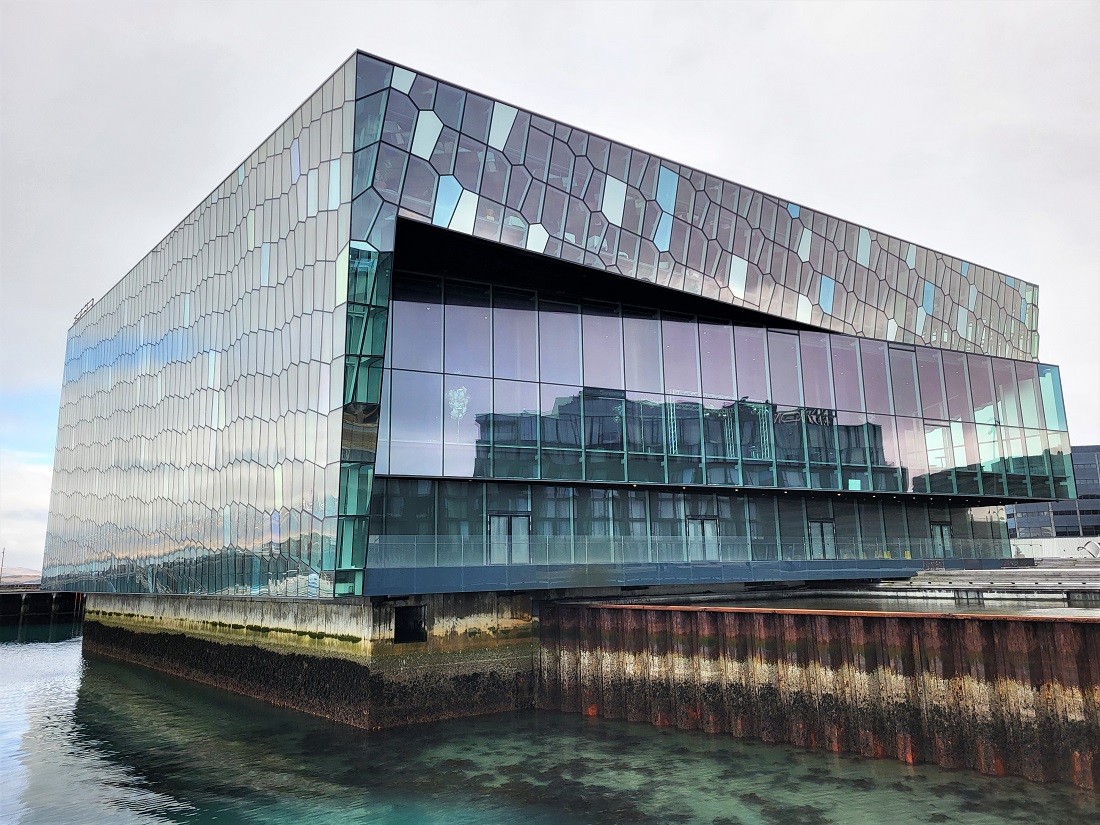
At the far end of the historic harbour, you’ll find the spectacular Harpa Concert Hall (above).
Opened in May 2011, the stunning steel and glass building is one of the city’s most impressive architectural feats.
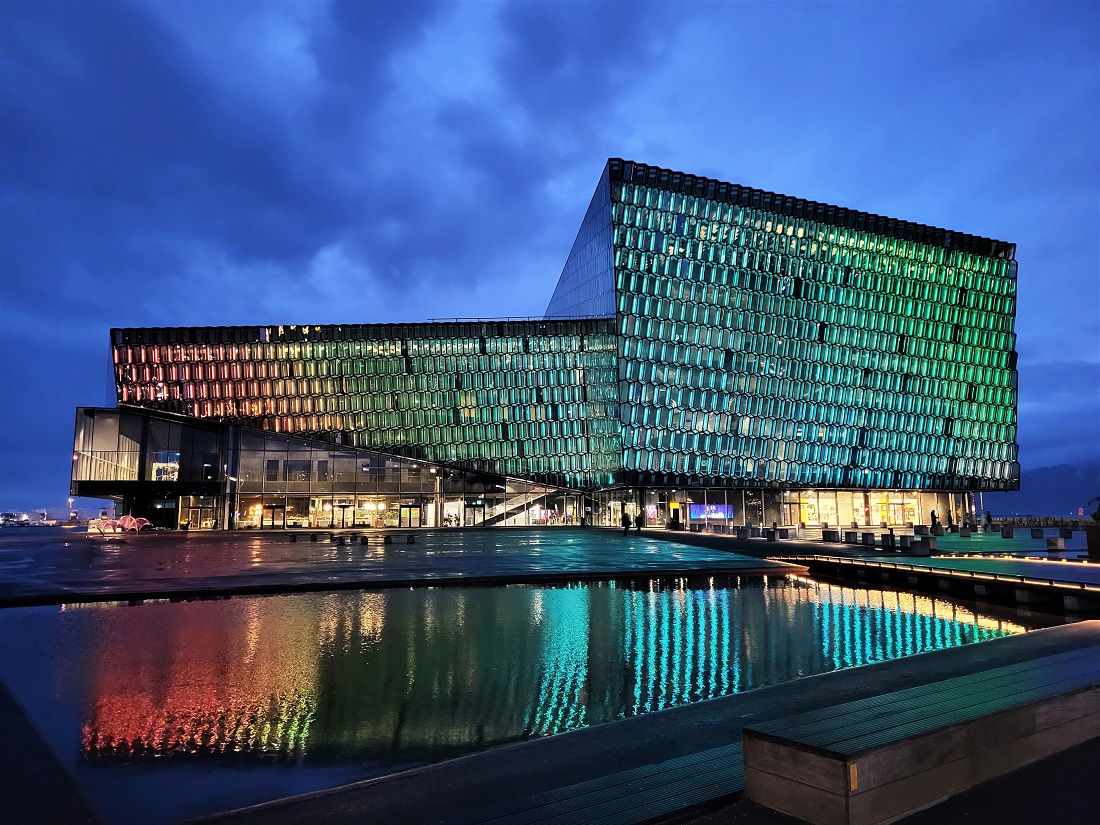
Named for the Icelandic word for harp, the concert hall is the home of the Iceland Symphony Orchestra and Reykjavik Big Band.
It boasts two restaurants, a gift shop, a jazz club and The Volcano Express, a recently opened visitor experience all about the country’s volcanoes.
Harpa’s worth visiting by day and night, as it’s lit up in an array of dancing colours after dark (above).

Follow the path along the waterfront past Harpa and you’ll be treated to lovely views over Faxaflói Bay (above) and its strikingly clear, light blue waters.
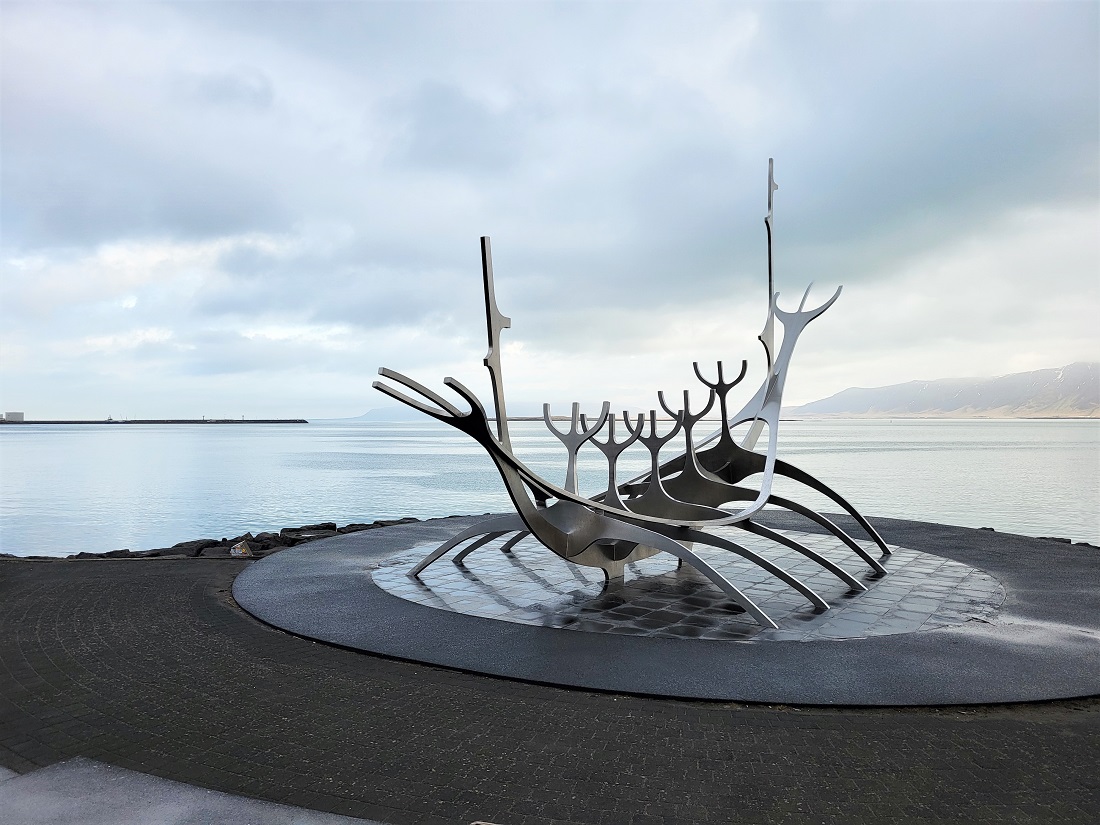
A little further along, you’ll come to the Sun Voyager Statue, a steel sculpture of a Viking longship by the artist Jón Gunnar Arnarson (above).
Laugavegur and Hallgrímskirkja
Reykjavik’s main shopping street Laugavegur is home to countless bars and restaurants, along with a host of shops seemingly aimed at tourists selling Icelandic goods, such as wool jumpers and cuddly puffin toys.

If you like pastries and chocolates, be sure to stop at Sandholt (above).
The swish family-run bakery and café isn’t the cheapest of places, but the baked goods and hot chocolate are delicious (I can vouch for the iced poppy seed buns).

Veering off from Laugavegur is another of the capital’s most popular shopping streets, Skólavörðustígur, which is also known as Rainbow Street on account of a stretch of rainbow-hued road.
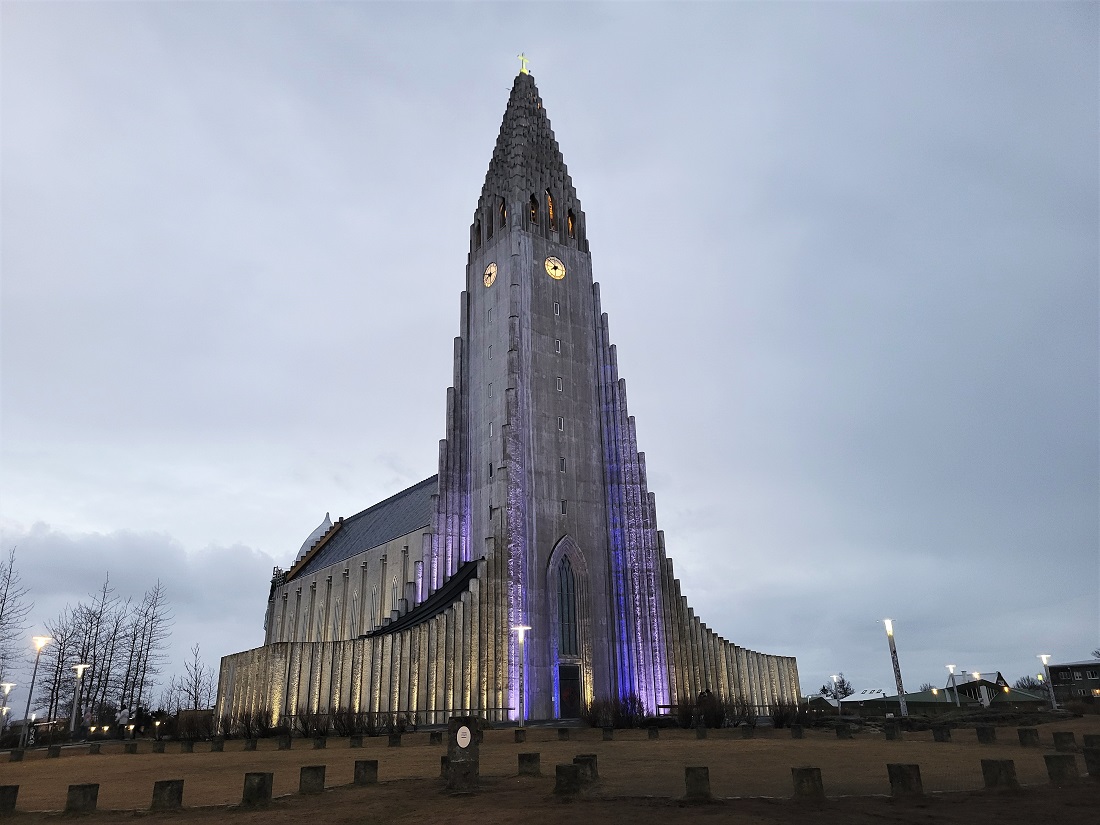
The street leads to one of Reykjavik’s most notable sights, Hallgrímskirkja (above).
At 73m tall, the distinctive Lutheran church is the tallest building in Reykjavik and the biggest church in Iceland, and can be seen from miles around.
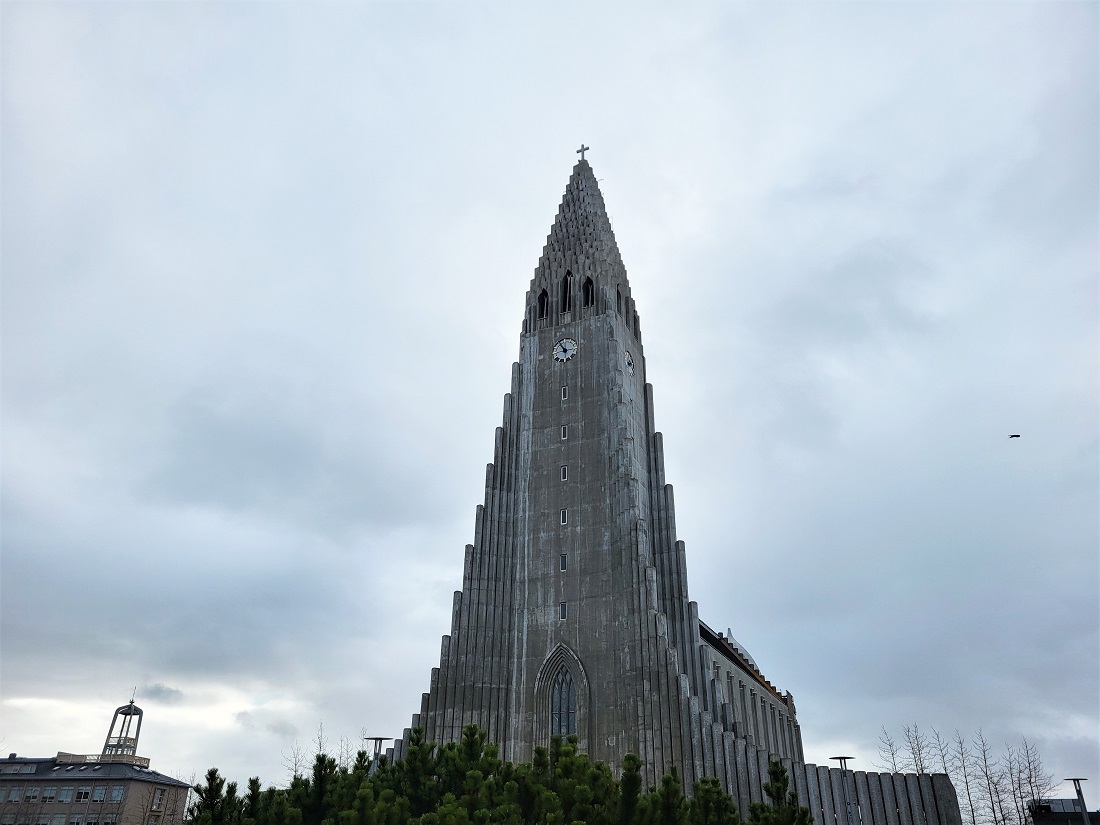
The grey stone church was designed by Gudjón Samúelsson in 1937 to resemble the basalt columns that are found throughout the country.
Work started on the building in 1945, but it wasn’t completed until 1986.
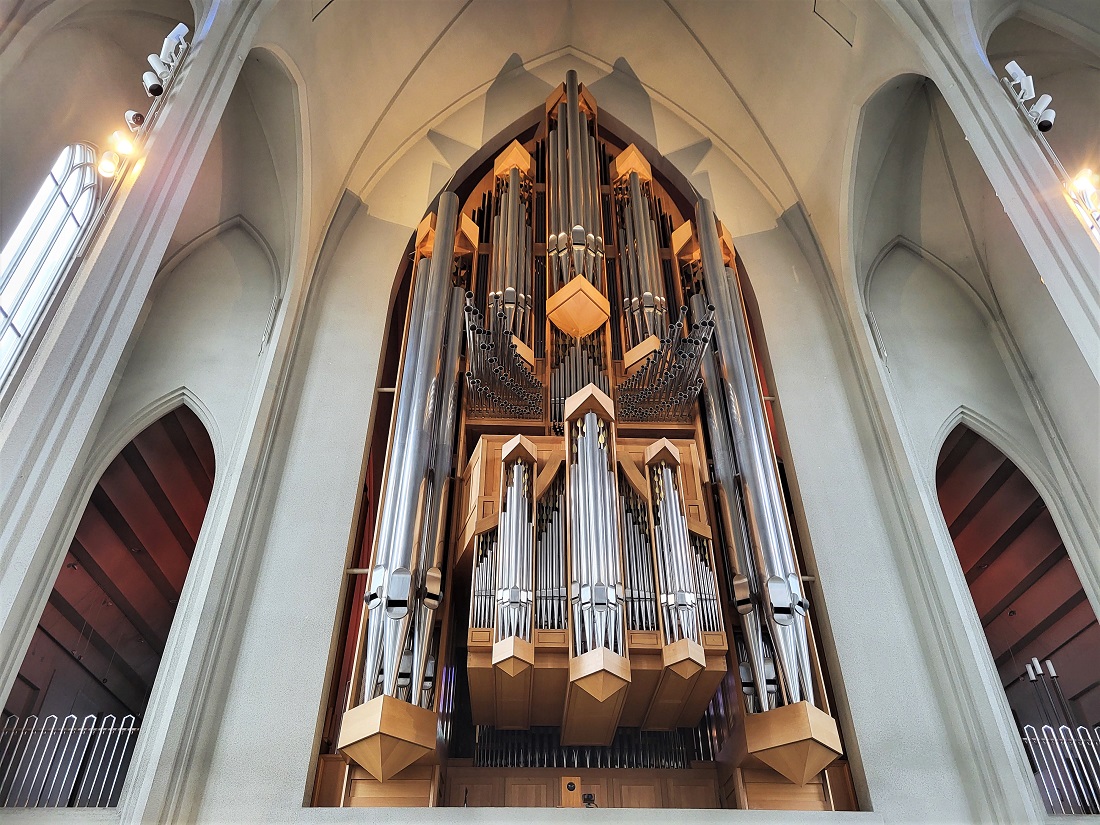
Inside, the church is a plain affair and there isn’t much to see. Although it does have an impressive organ featuring a staggering 5,275 pipes, which was built in Bonn in 1992 (above).
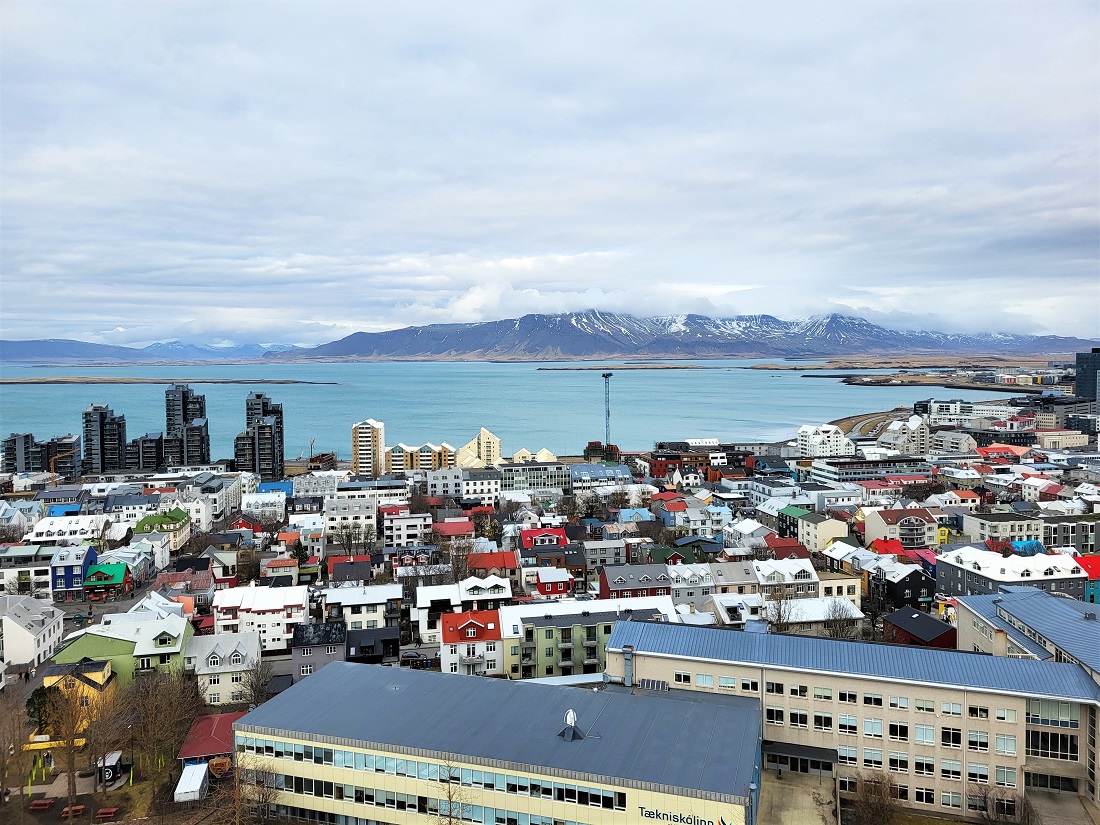
The church is free to go inside and you can pay a small fee to go to the top of the bell tower (via a lift and a couple of flights of stairs).
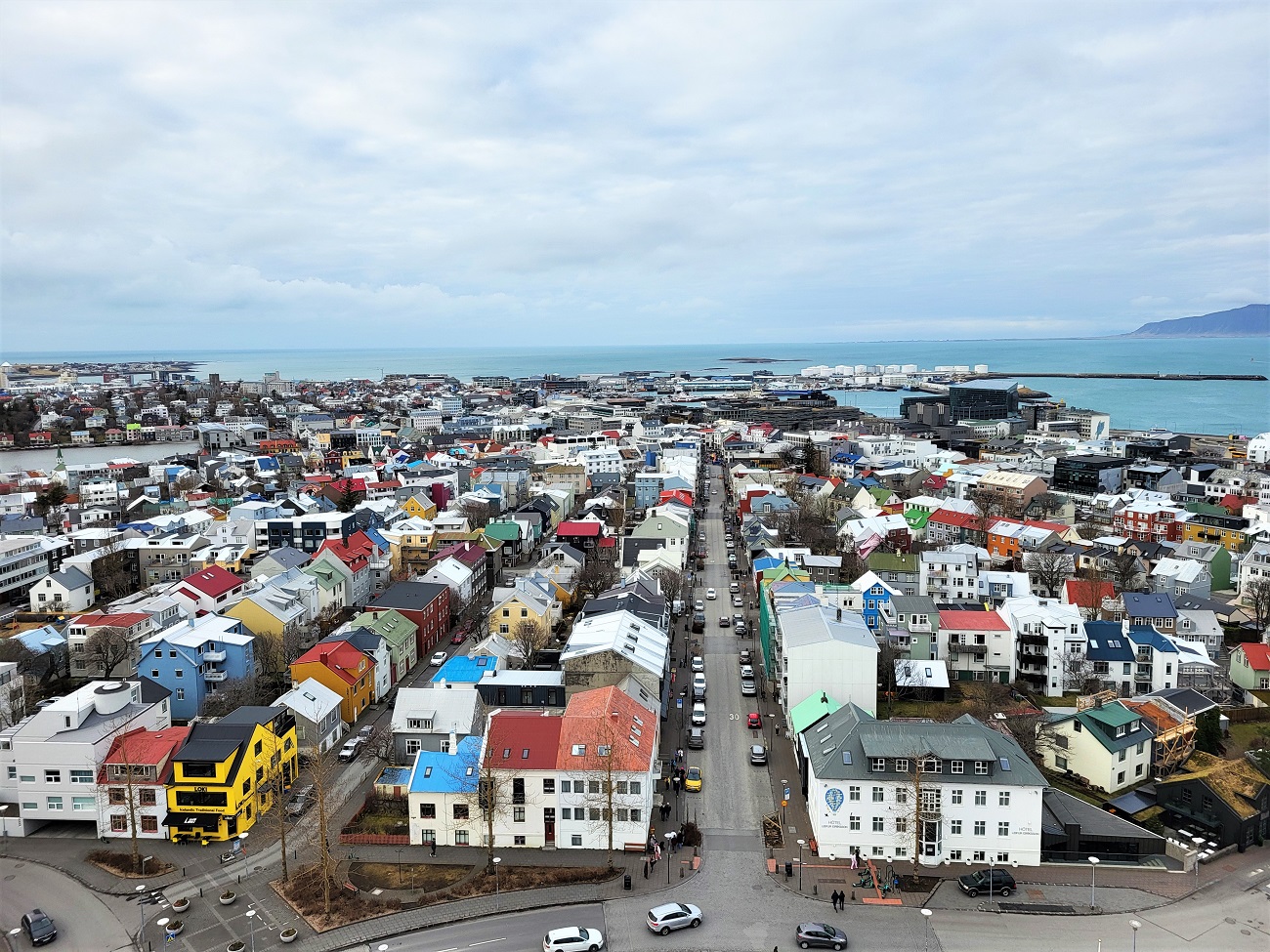
This is well worth doing as the tower boasts incredible views over the city (above).
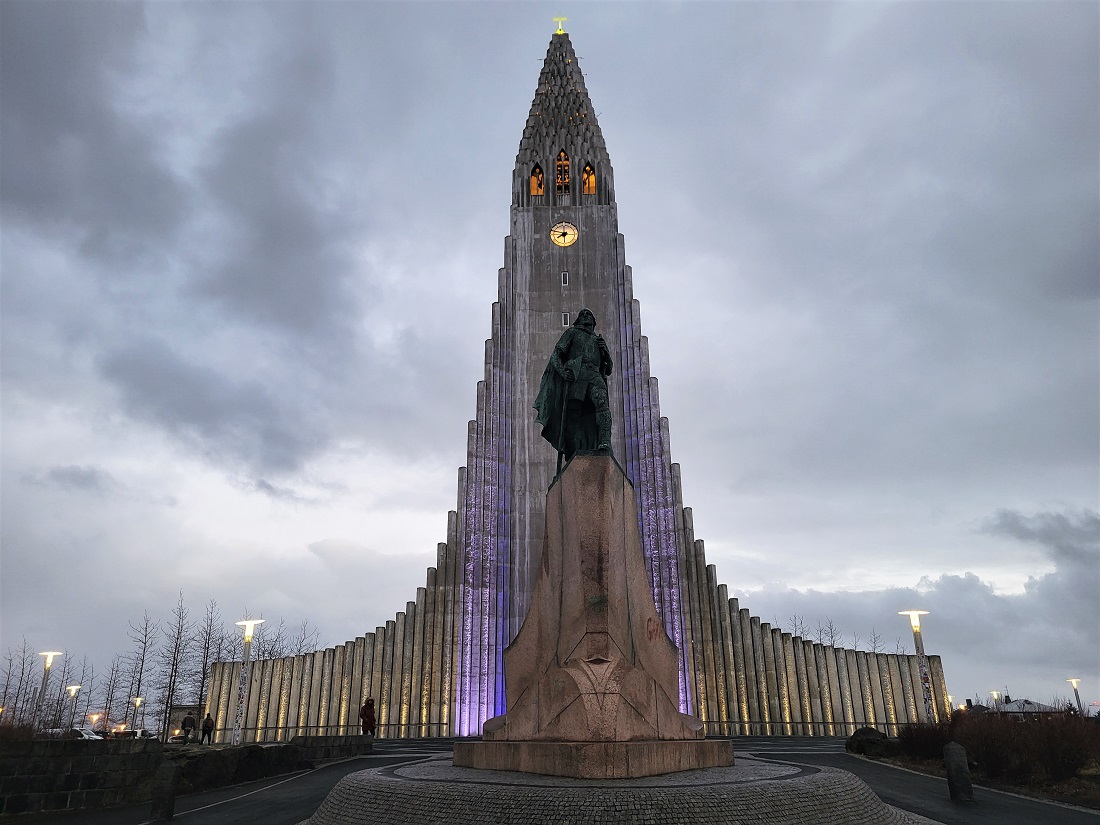
In front of the church, you’ll find a huge statue of Leif Erikson (above), which was given to the Icelandic people by the US in 1930 to mark the Icelandic Parliament’s 1,000th birthday.
The explorer is one of the most famous people in Icelandic history, having set sail for North America in the 11th century, some 500 years before Christopher Columbus, briefly founding the settlement of Vinland.
Historians aren’t entirely sure where Vinland was, but L’Anse aux Meadows in Newfoundland is thought to be the most likely spot.
Tjörnin Lake and Old Reykjavik
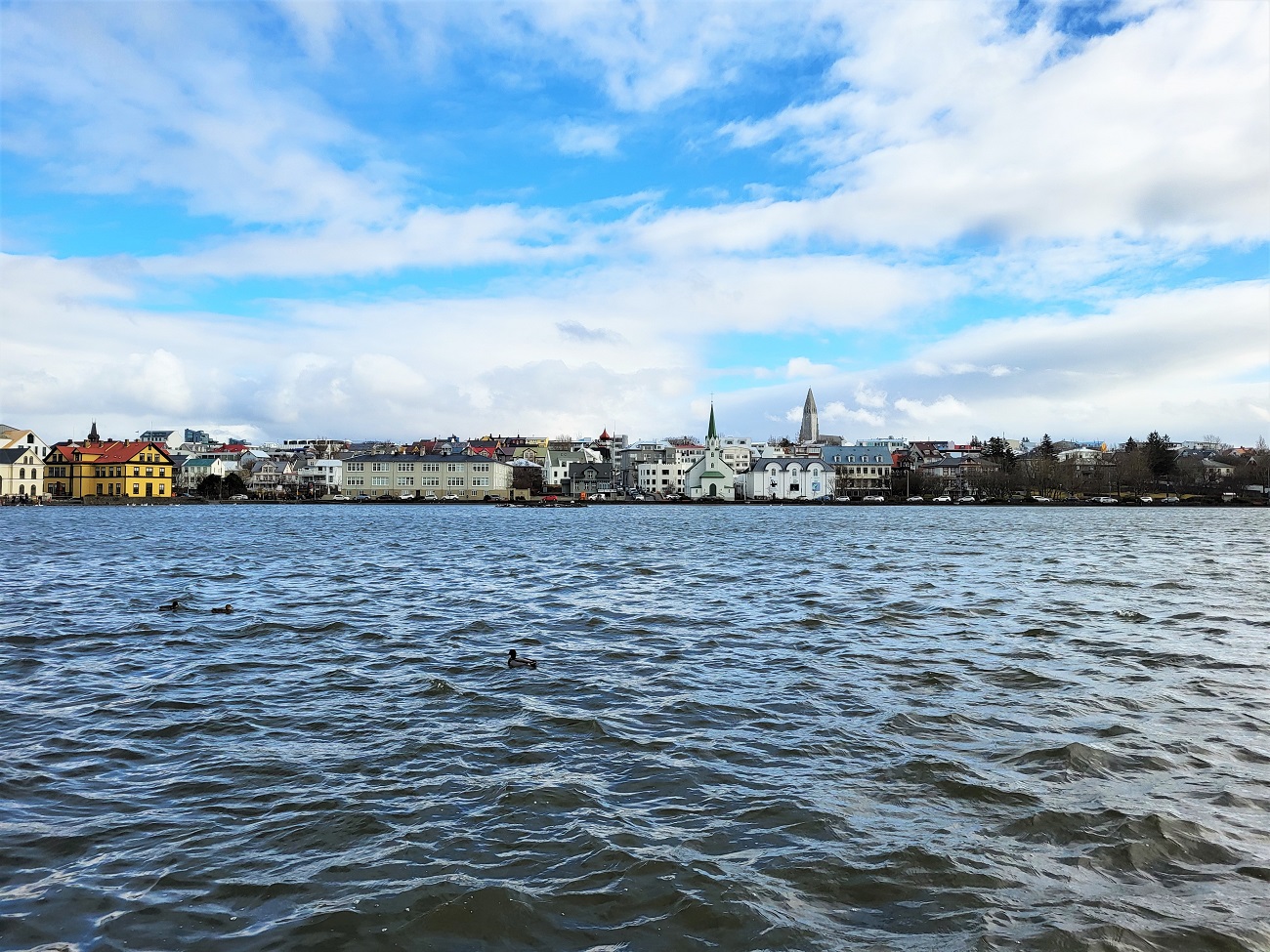
Tjörnin Lake, which is affectionately known as ‘the Pond’, lies in the centre of Reykjavik, just minutes away from Laugavegur, and is a pleasant spot for a stroll.

The shore’s lined with quaint, colourful houses, which makes for an idyllic scene – photos can’t capture just how pretty it is (above).
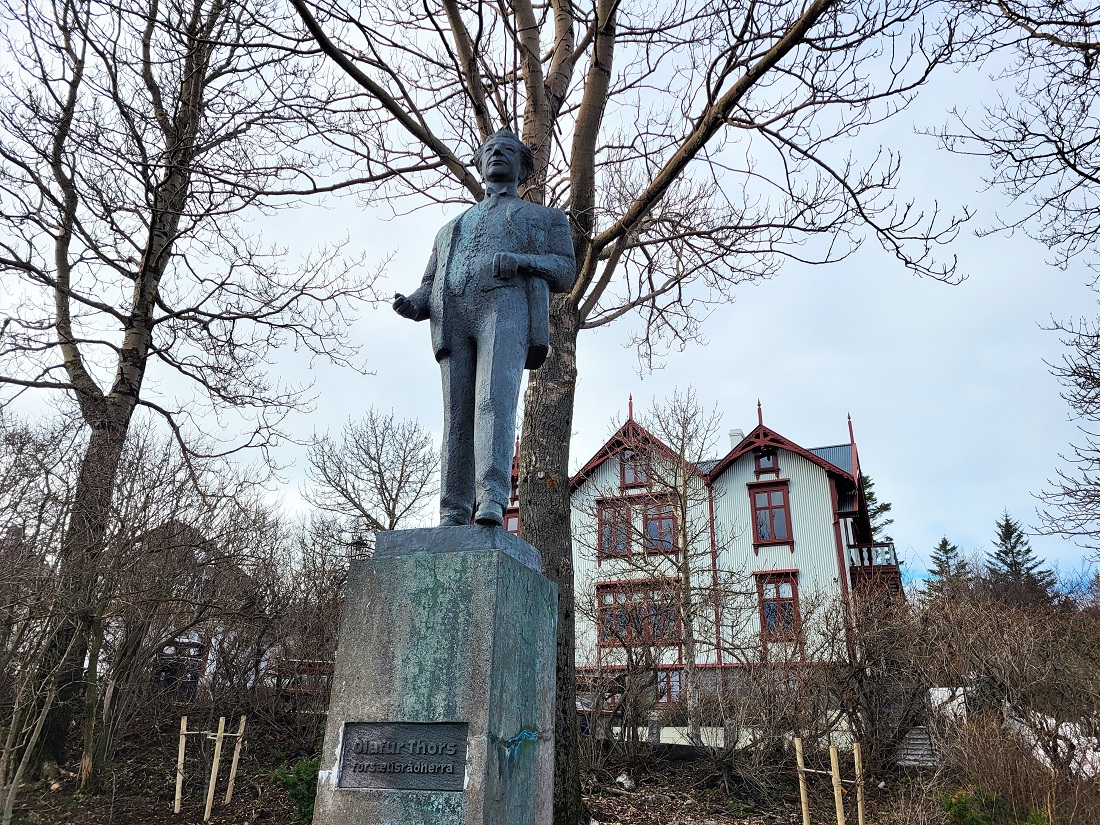
To the south of the lake lies Hljómskálagardur Park (Pavilion Park).
Dating back to the early 20th century, it’s Reykjavik’s first planned park and is dotted with artworks and statues, including one of former Icelandic Prime Minister Ólafur Thors (above).

The surrounding area is home to a few museums, too, including the National Museum of Iceland and the National Gallery of Iceland (above).
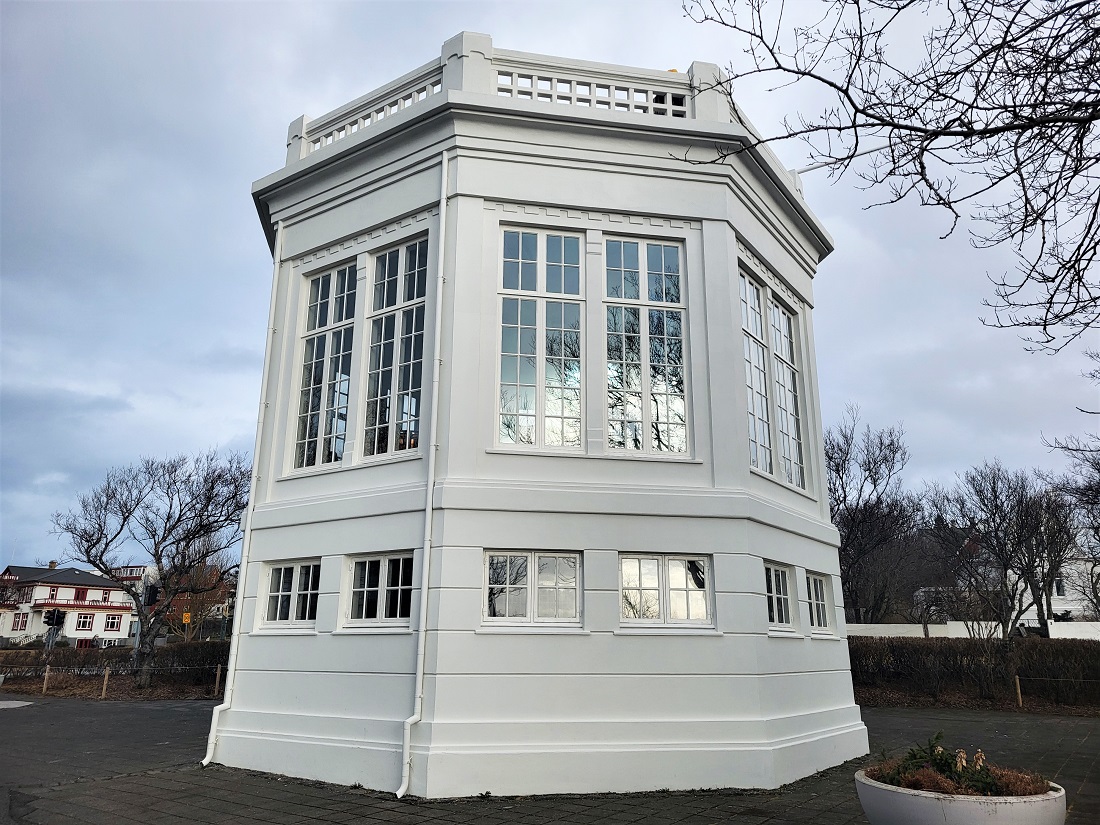
There’s also an eye-catching pavilion, Hljómskálinn (above), which was built in 1923 as Iceland’s first dedicated music venue and is the base of Reykjavik’s brass band.

On the northern edge of the lake, you’ll find Rádhusíd, aka Reykjavik’s City Hall (above). Built in 1992, it houses the Mayor of Reykjavik’s offices.

There isn’t much to see inside – the only thing of note is the large model of Iceland (above). But there are free toilets you can use.

The area to the north of the City Hall is the location of the 18th century Domkirkjan (above), Reykjavik’s official cathedral.

Across the road from the cathedral is the Alþingishúsid or Parliament House (above).
Built in 1880, the small, simple and attractive Parliament is one of the oldest stone buildings in Iceland.
General thoughts
I enjoyed my time in Reykjavik, exploring its different sights. Welcoming, safe and clean, it’s a surprisingly small capital city and doesn’t take long to walk around.
The architecture’s quite understated – there are no grand Baroque or Gothic buildings like you see in other European capitals – but I liked its quiet simplicity.
It gave the city a unique, relaxed charm and I instantly felt at home there.
Info
Harpa
Austurbakka 2, 101 Reykjavík
Open 10am to 8pm, Wednesday to Saturday, and 10am to 6pm, Sunday to Tuesday
harpa.is/en
Sandholt
Laugavegur 36,101 Reykjavík
Open daily, 7.30am to 6pm
sandholt.is/en
Hallgrímskirkja
Skólavörðuholti, 101 Reykjavik
Open daily
hallgrimskirkja.is/en
 Little Old World
The Hallgrímskirkja looks like the church Thor and Odin attend on Asgard lol! In all seriousness though a very impressive building.
LikeLiked by 1 person
Thanks! It’s a stunning and impressive church, and quite unlike any other church I’ve seen. It’s really striking.
LikeLiked by 1 person
Such a striking city – I love the Viking long ship sculpture. I really must visit Iceland one day soon!
LikeLiked by 1 person
Thanks Han, it’s an attractive city. The longship sculpture is stunning. Hope you make it to Iceland in the not too distant future 🙂
LikeLike
It looks very attractive. That church is so iconic I didn’t realise it wasn’t the cathedral which is quite ordinary looking in comparison.
LikeLiked by 1 person
Thanks Anabel, it’s a great city. I was surprised that was the cathedral, too, as it’s quite small and ordinary. It’s where the Bishop of Iceland set up when he moved the bishopric from Skalholt at the end of the 18th century.
LikeLiked by 1 person
There’s a museum in Newfoundland, Canada with ruins of Leif Erickson’s summer village. The Vikings apparently came every summer for a few years, so it wasn’t just a one-time voyage. A trip to Iceland would complete the story for me. Maggie
LikeLiked by 1 person
Ah, thanks Maggie! That’s interesting. I hadn’t realised they came back every summer, I thought they just stayed for a few years. Hope you make it to Iceland 🙂
LikeLiked by 1 person
I didn’t know either until we visited the museum. Hopefully we’ll get to Iceland someday 😊
LikeLiked by 1 person
For some reason we didn’t go inside the church when we were in Reykjavik. And I can’t remember why. Anyway, it’s nice to see what it looks like from your pictures. Love the views from the top of the bell tower too.
LikeLiked by 1 person
You didn’t miss much inside the church, it’s very plain. The exterior is far more impressive. The views from the top of the tower were lovely though.
LikeLiked by 1 person
Great tour around Reykjavik- I love the simple yet striking beauty of the buildings. I’m going to make it Iceland one of these days 🙂
LikeLiked by 1 person
Thanks Meg. I was surprised by how simple the buildings were in Reykjavik, but they were so pretty and charming, especially those around Tjörnin Lake. I look forward to reading your posts about your trip once you’ve made it 🙂
LikeLiked by 1 person
Looks great!Thanks for the guide
LikeLiked by 1 person
Thanks Tanja!
LikeLiked by 1 person