
One of the things I found most striking about Morocco was its varied landscapes – from rolling sand dunes to Alpine forests and rugged coastline.
And nowhere was this stark contrast more apparent than on the day we drove from Fes to the desert, via the Atlas mountains.
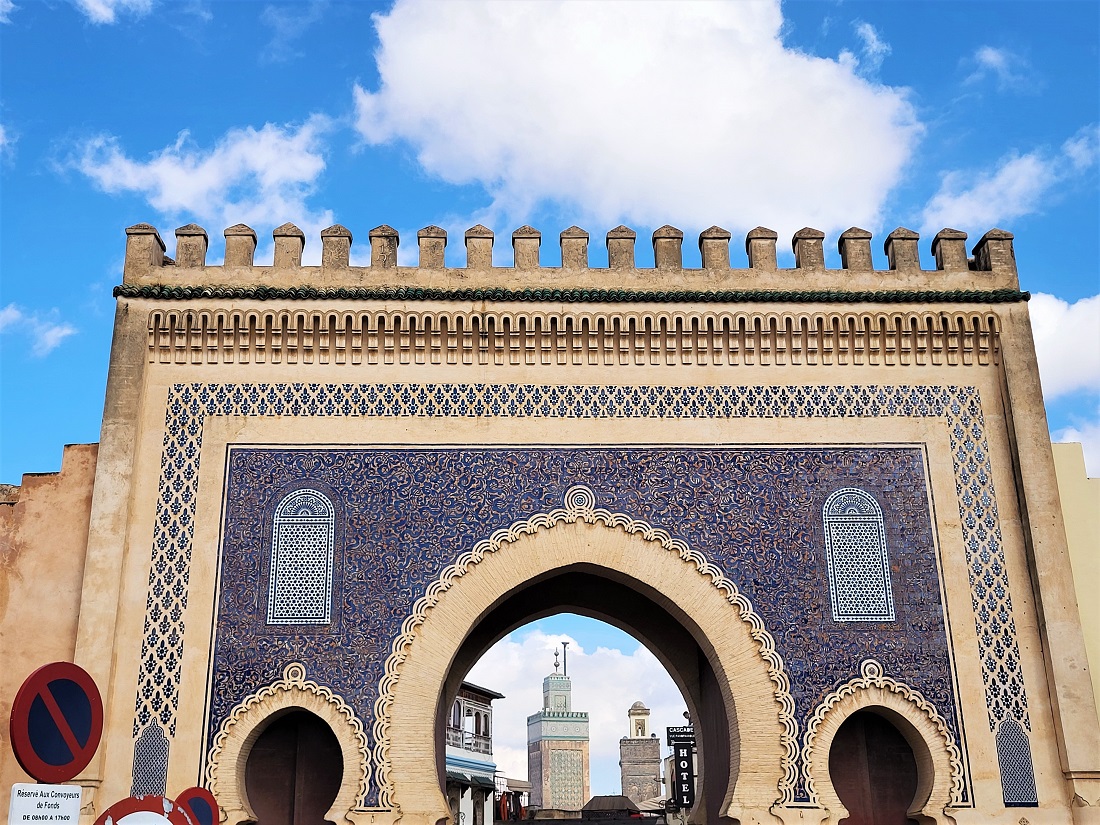
We started our journey at 8.30am, where we swapped the historic Imperial city (above) for the Saiss Plain, one of four agricultural plains in Morocco (the others are around Casablanca, Agadir and Marrakech).
The area is renowned for growing fruit, such as apricots, peaches and grapes.
After a while, we began our ascent into the Middle Atlas mountains, passing the small town of Immouzer and through a small forest that’s home to wild boar.
The forest gave way to flatter terrain punctuated by small rocks and patches of grass.
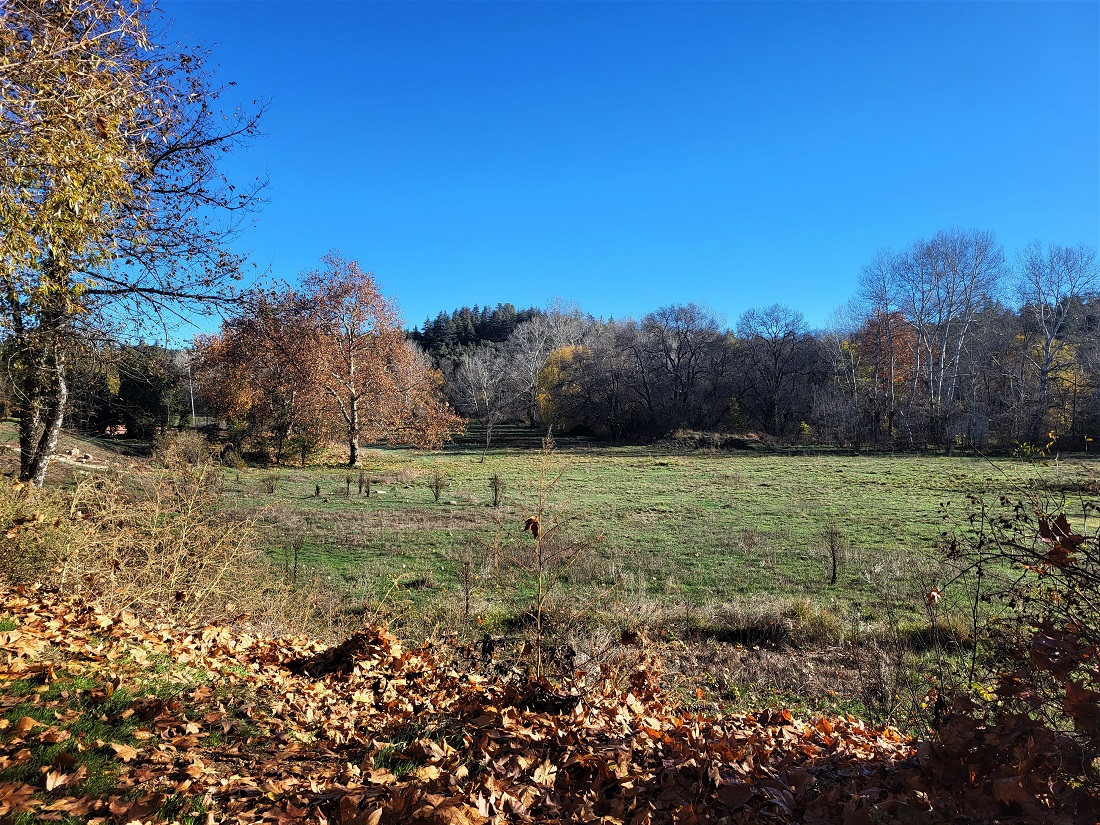
At 10am, we stopped in the mountain town of Ifrane (above), which lies at an altitude of 1,800m.
The town has been dubbed the ‘Switzerland of Morocco’ and I can see why, because thanks to its chalets and leafy parks and streets, it wouldn’t have been out of place in the Swiss Alps.

The town was built as a mountain resort by the French in 1929 to escape from the stifling heat of the cities. Today, it’s home to Al-Akhawayn University, which opened in 1995.
Getting into the Alpine spirit, I stopped in one of the town’s cafés for a hot chocolate, then set off for a short walk around the main square.
Ifrane looked pretty in the sunshine thanks to the vivid autumn colours of the trees and I was surprised to find there was a noticeable chill in the air. The air felt crisper and cleaner, too.
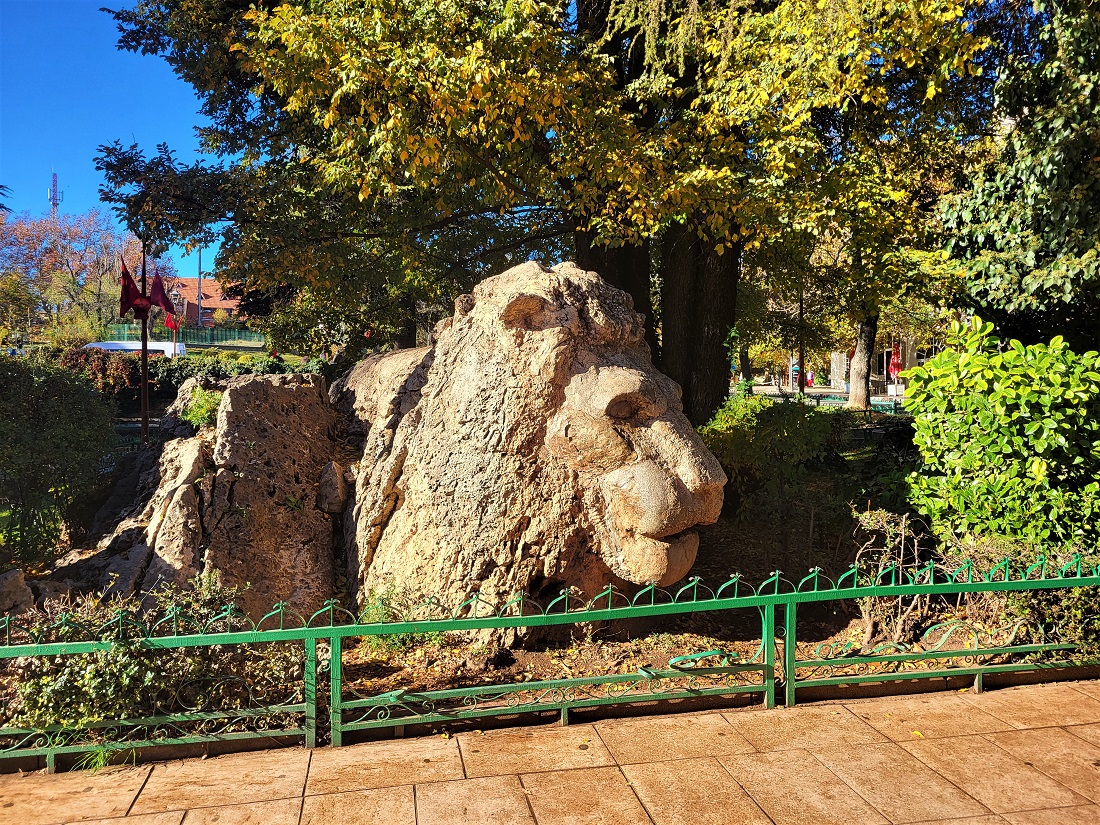
There isn’t much to see in Ifrane – the most notable feature is the statue of the Ifrane Lion (above).
The statue depicts the lions that used to roam the forests of the Atlas mountains until 1922 when the last lion was killed.

We left Ifrane, passing a small, private airport, which is used by various royals and dignitaries, on our way to Ifrane National Park.
King Mohammed VI of Morocco and a number of Arab royal families have palaces in the park’s mountains and we stopped briefly at a viewing point to soak up the picturesque scene (above).
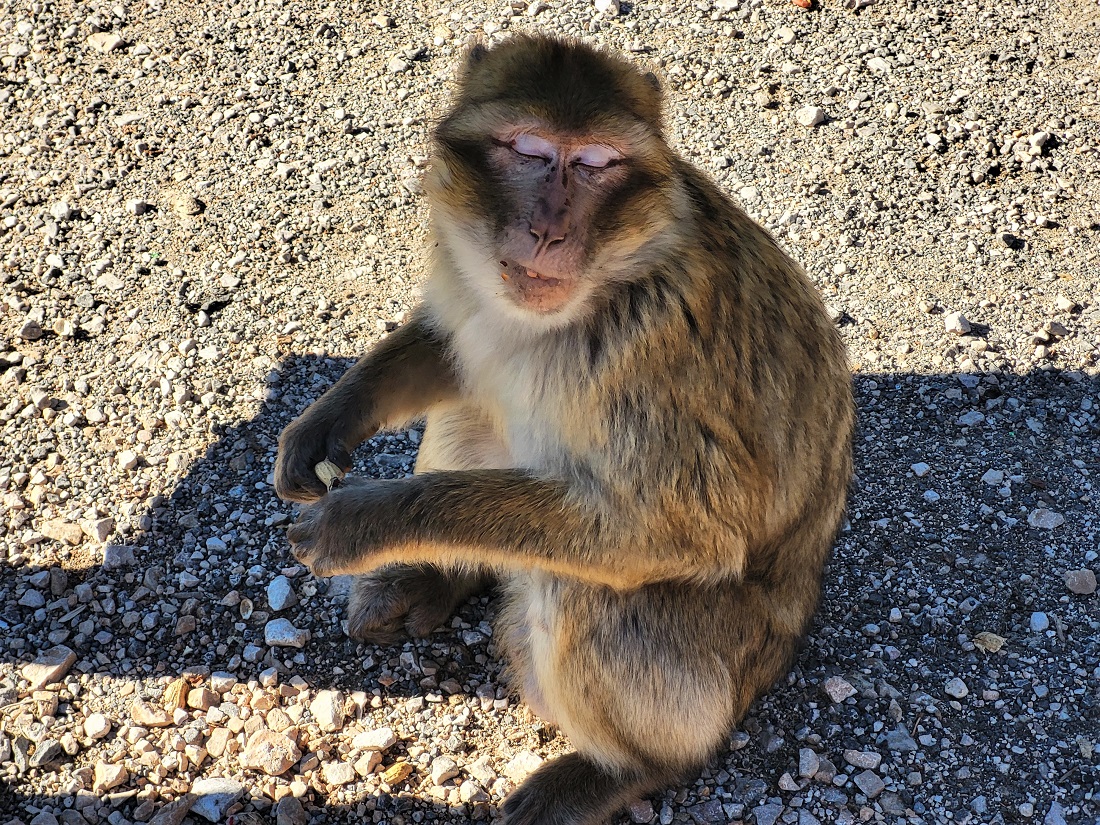
We stopped again a short while later in a small patch of forest that’s home to barbary macaques (above), the only monkeys in Morocco.
There were various vendors near the car park selling peanuts and fruit. But I felt uncomfortable with the idea of feeding these wild animals, so I declined the many offers of peanuts I received.
On the other side of the forest, we emerged into green, hilly terrain, where a number of nomad families had set up camp, using what looked like plastic tarpaulins to build their tents.
I was struck by how much rubbish there was near the camps and there was lots of plastic strewn along the side of the road.
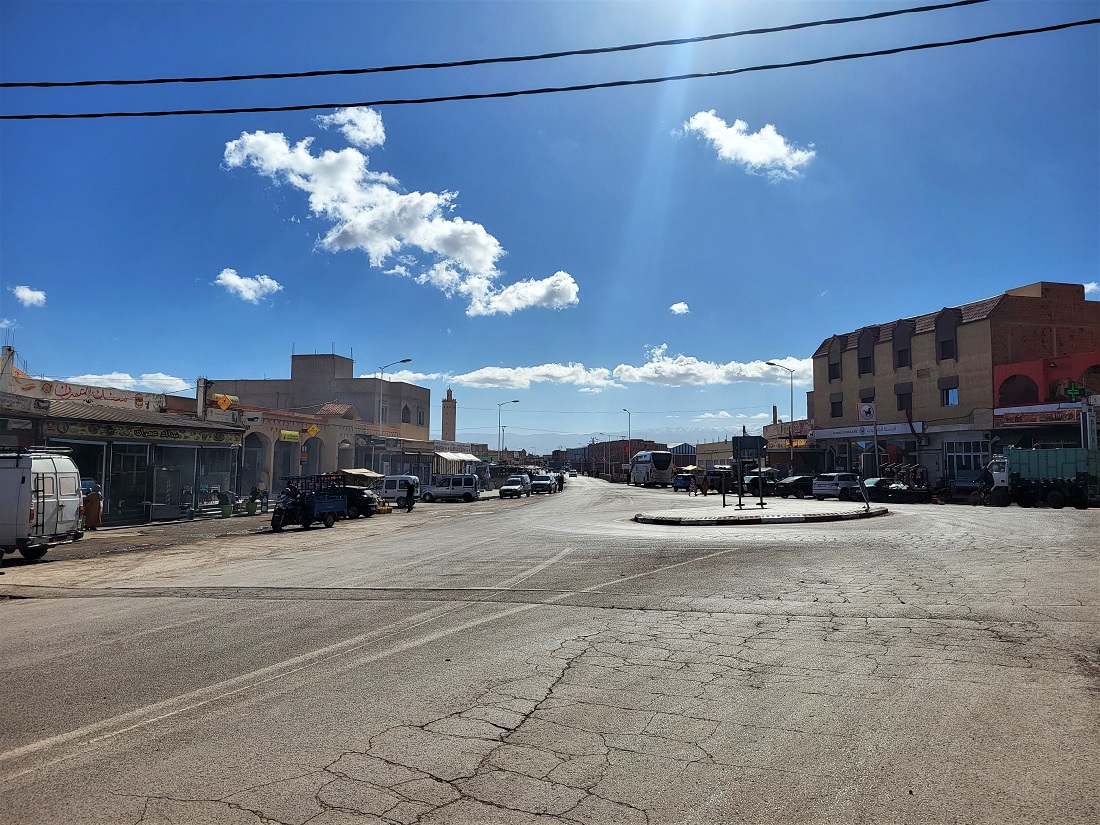
On leaving the Middle Atlas, we found ourselves on an arid plain, where we could just make out the tall, snow-capped peaks of the High Atlas mountains in the distance.
At around 12.15pm, we stopped for lunch in Zaida (above), a small market town that sits at a crossroads between the Atlas mountains and the road to Marrakech.
The smell of grilled meat, a local specialty, filled the air and it was clear this was a popular spot for tourists heading south, as there were a few tour buses lining the road (I didn’t see any tourists).
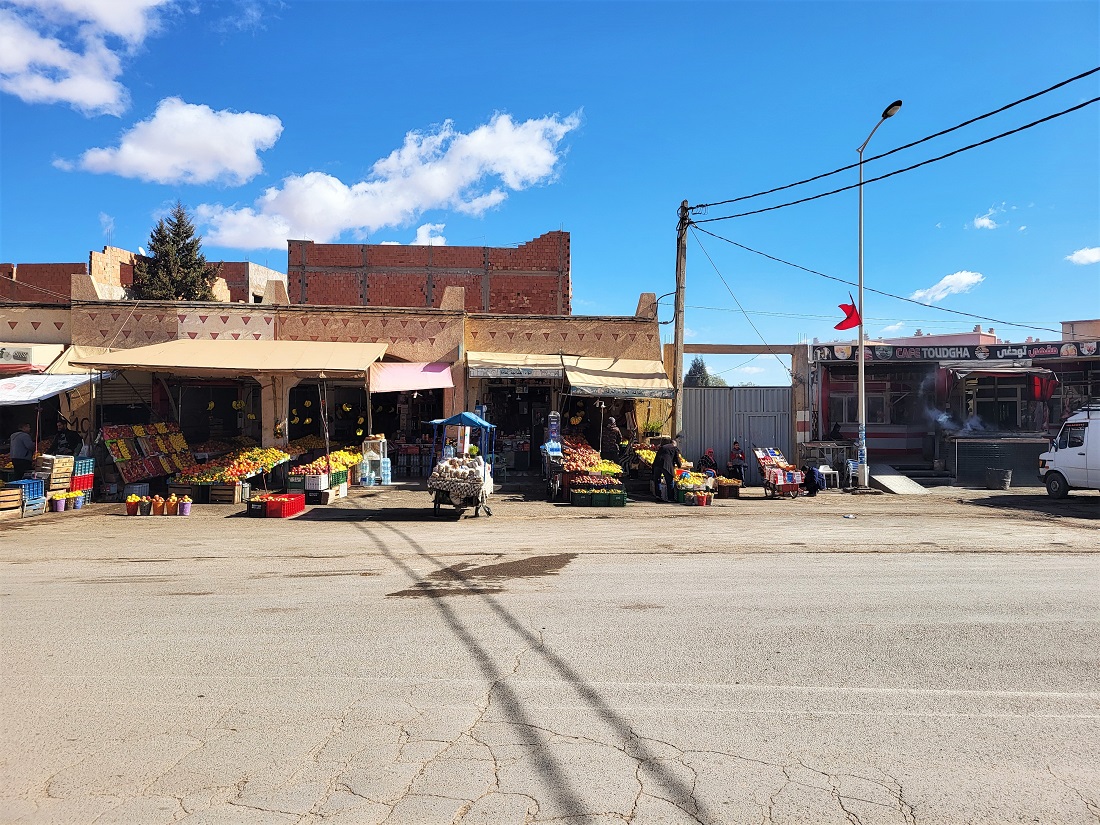
The town was noticeably poorer than the big cities we’d just been to, and there was a real mix of dress – a variety of Arab, western and desert clothing.
We stopped for lunch in one of the places selling grilled meat, where we shared olives, bread and a platter of grilled meat and tomatoes. It was very tasty, but the toilets were grim.
After lunch, I popped across the road to a greengrocer’s where I bought six of the best tangerines I’ve ever eaten for a bargain price of 6 Dirhams (about 45p).
Feeling sated, we set off again, in the direction of the High Atlas mountains.
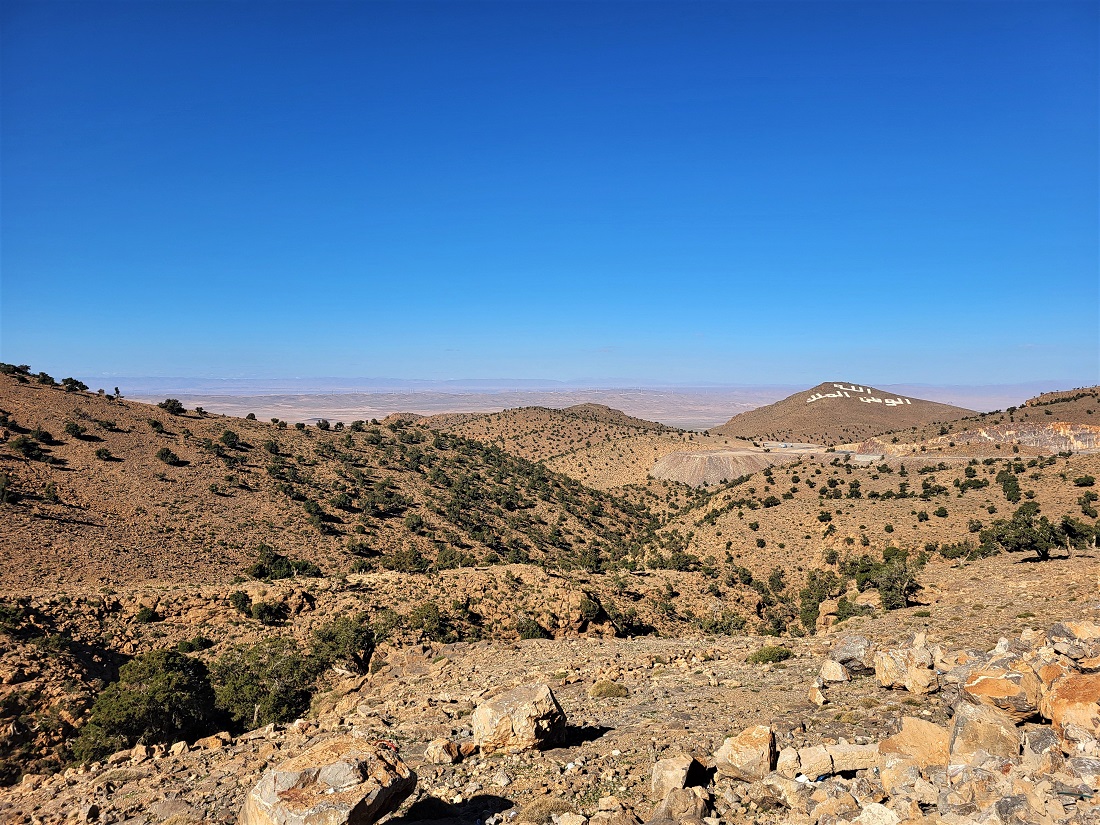
As we drove across the arid plateau, there was nothing to see but sandy red earth and a few shrubs and trees. The harsh landscape reminded me of Jordan.
We passed through the city of Midelt, which means ‘apple’ in Arabic, and is renowned for cultivating apples.
The city’s other claim to fame is that it was the second in Morocco, after Casablanca, to get electricity because the French wanted to exploit the nearby copper, gold and silver mines.
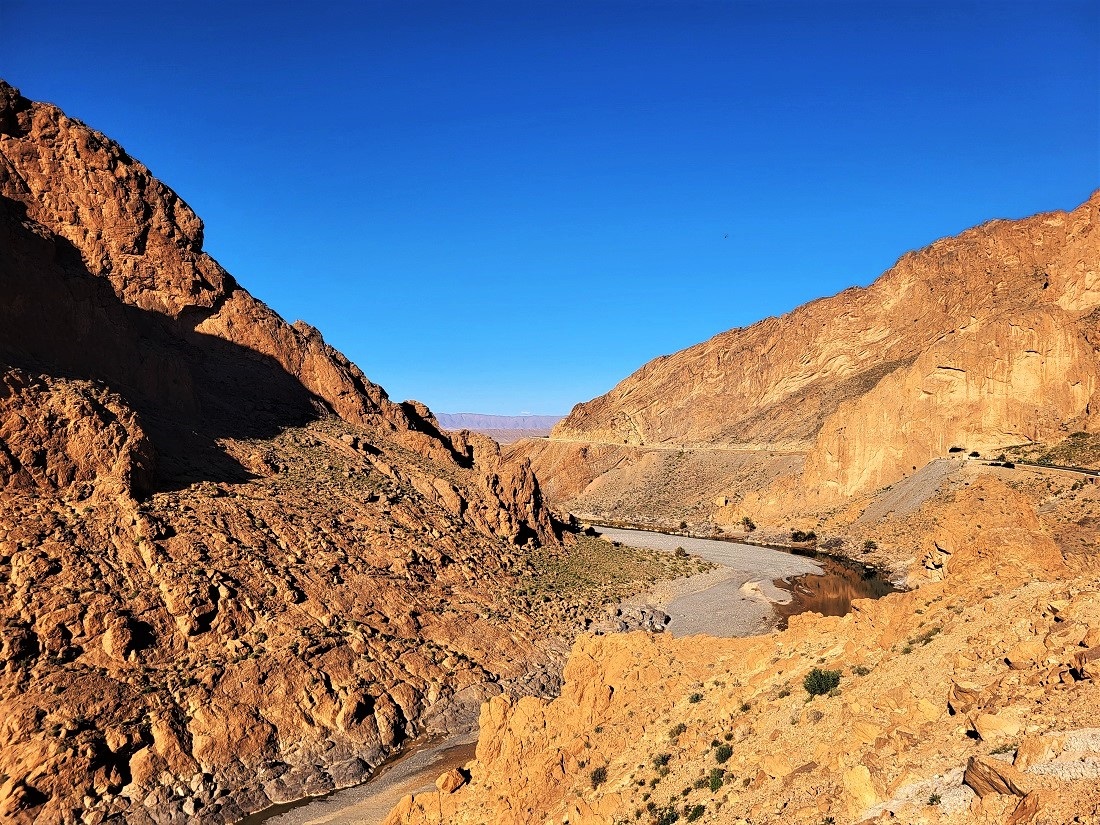
On leaving Midelt, we began our ascent into the High Atlas. The scenery was spectacular, but I was shocked by how little water there was in the River Ziz (above). It wasn’t far off being dry.
We carried on through the mountains and soon came upon an enormous dam that feeds the desert city of Errachidia.
I gasped upon seeing the huge body of water – I hadn’t been expecting it after the earlier trickle where the river should have been.
Not long afterwards, we reached Errachidia, then continued on our way across the barren landscape. After a while, we stopped at another viewing point.

The site looked out over a huge oasis filled with palm trees that stretched as far as the eye could see (above).
After spending hours driving across dry, barren plateaus, the huge expanse of greenery made for a welcome change.
From the viewing point, we continued along the road until we were level with the oasis, where I spied a few rivers filled with water.
As the oasis petered out, the terrain returned to barren dust and I looked on as the sun went down over the landscape.
We finally arrived at our hotel in the desert town of Erfoud at 6.20pm, almost 10 hours after we set out.
 Little Old World
It sounds a slightly mixed experience but the views are stunning!
LikeLiked by 1 person
The scenery was spectacular and I was amazed by how varied it was.
LikeLiked by 1 person
The variety surprises me too. The arid plateau looks the way I would expect. Grim toilets, hmm – that doesn’t surprise me so much!
LikeLiked by 1 person
I was expecting the arid plateaus and mountains, but not the Alpine town. It really looked and felt like I was in France or Switzerland.
LikeLiked by 1 person
It really is remarkable how varied the landscape is in this small country isn’t it? We stayed a few days not far from there in Merzouga, but I’m pretty sure we travelled through Erfoud. Maggie
LikeLiked by 1 person
Thanks Maggie. I was amazed by how varied the landscapes were over such short distances. The Alpine feel of Ifrane and the Middle Atlas was so different to the arid plateaus. There’s a good chance you would have travelled through Erfoud to get to Merzouga, as it’s on the main road south in that part of Morocco. We travelled onto Merzouga the following day on our way to Erg Chebbi.
LikeLiked by 1 person
Looks like an incredibly scenic drive. The lighting looks golden in some of your pictures. It’s very beautiful.
LikeLiked by 1 person
Thanks for commenting 😀 It was a really interesting drive and I was amazed by how varied the scenery was. I hadn’t been expecting such a contrast over such relatively short distances. Morocco’s a very photogenic country, it was difficult to take a bad photo there.
LikeLiked by 1 person
Your beautifully captured photos make me want to book another trip to Morocco. One of the reasons why I love this country so much is its wide variety of landscapes, including mountains, deserts, forests, and coastlines. It’s amazing to think that you can go from visiting the snow-capped peaks of the Atlas Mountains, to the vast sandy dunes of the Sahara Desert, and onto the green valleys, and both Atlantic and Mediterranean coastlines. Thanks for sharing, and have a good day 🙂 Aiva xx
LikeLiked by 1 person
Thanks Aiva 🙂 You’ve perfectly captured one of the reasons I loved my time in Morocco. The scenery was so beautiful and varied. I couldn’t get over how you could go from the sand dunes of the Sahara to the Alpine forests of the Middle Atlas or snow-capped peaks of the High Atlas in less than a day. It’s a fascinatingly varied country. Have a good day, too🙂
LikeLiked by 1 person
What a wonderful drive, the landscape is just beautiful. Morocco really does have such variety to offer.
LikeLiked by 1 person
Thanks Hannah. Morocco’s such a beautiful country, I was taken aback by the contrasting landscapes I encountered. It’s a fascinating country.
LikeLike
What a great road trip through that beautiful scenery!
LikeLiked by 1 person
Thanks Meg, it was a fascinating day! I was amazed by how varied and stunning the scenery was 🙂
LikeLiked by 1 person
Those arid hillsides against the bright blue sky remind me a little of the Sierra Nevada in southern Spain. I can see why the royals wanted palaces with views like those! It sounds like a very scenic drive, with more variety in landscape than I would have expected. Looking forward to reading about the rest of your trip 🙂
LikeLiked by 1 person
Thanks Rosie 🙂 It was a fascinating drive and I was taken aback by the contrasting scenery. I wasn’t expecting it to be so different over such relatively short distances. The Middle Atlas mountains were beautiful and I’m not surprised it’s a popular spot with the royals and with the earlier French ruling class.
LikeLiked by 1 person