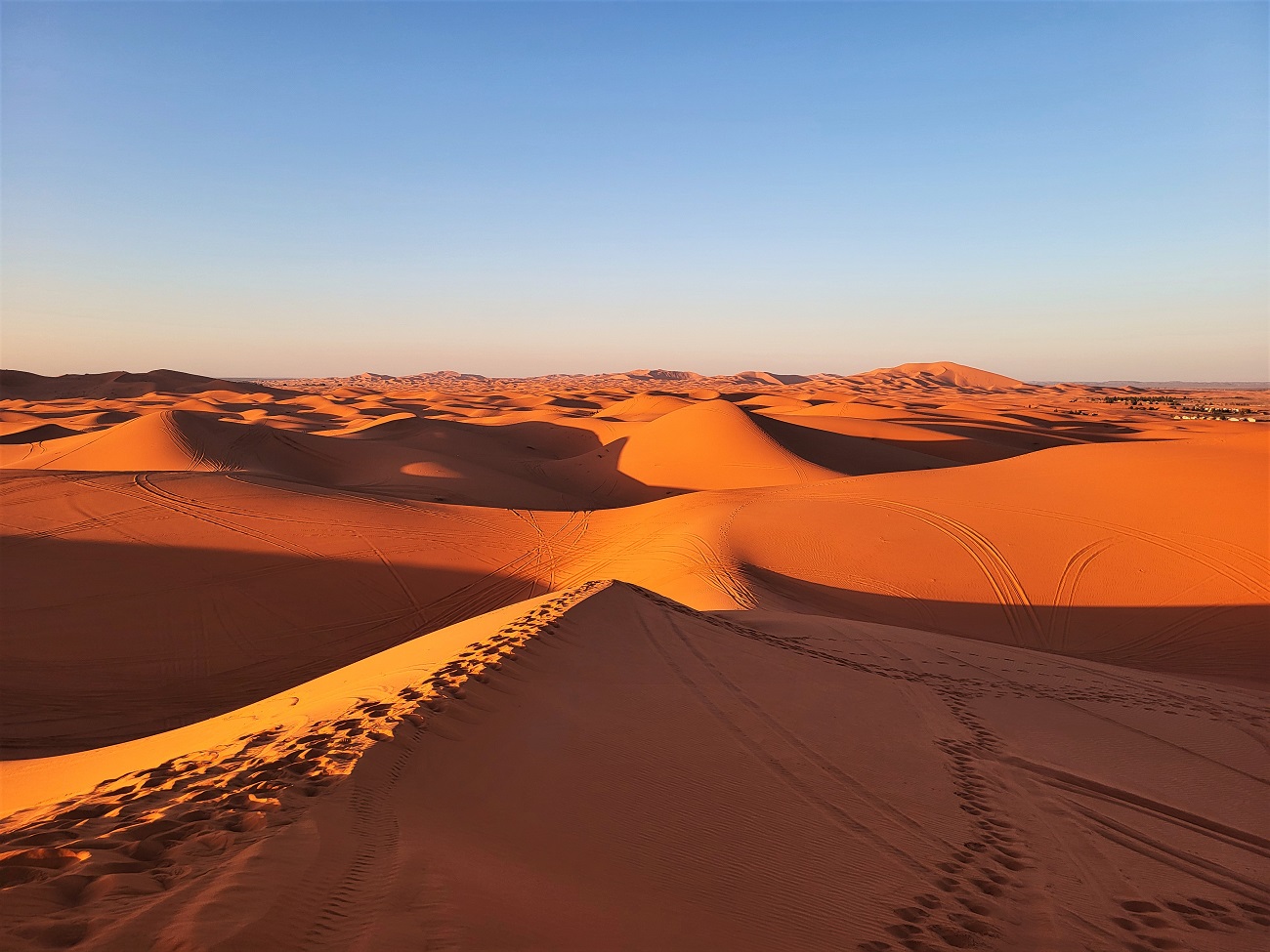
Enormous mounds of soft, ethereal, rusty red sand rising from the ground as far as the eye can see – welcome to Erg Chebbi.
As far as travel moments go, few are as memorable as watching the sun go down from the top of a huge sand dune in this ridiculously photogenic part of Morocco.
Affectionately known as the Baby Sahara, I spent a fun, unforgettable night glamping under the stars at the foot of these extraordinary dunes.
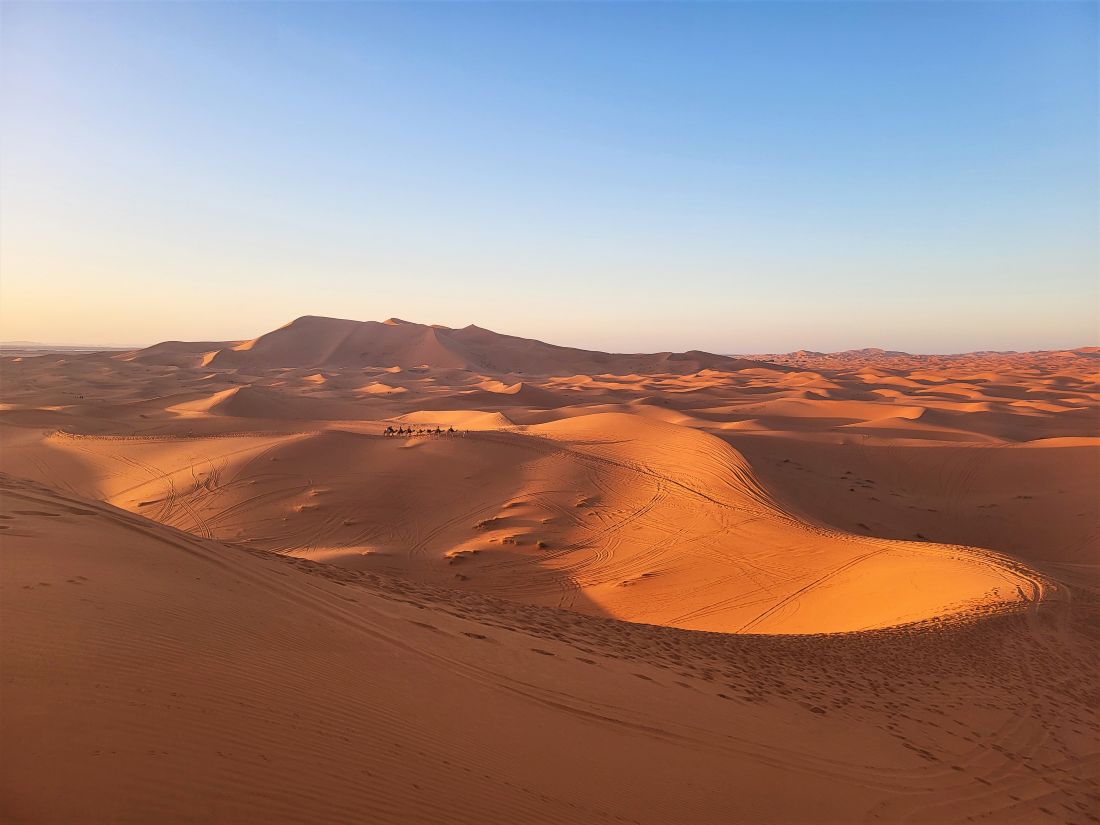
We caught our first glimpse of the dunes as we approached the desert town of Merzouga in the southeast of Morocco.
I was awestruck by these beautiful, otherworldly mountains of red sand, their curvaceous shapes and black shadows a photographer’s dream.
They looked like something from a painting and somehow, didn’t quite seem real.
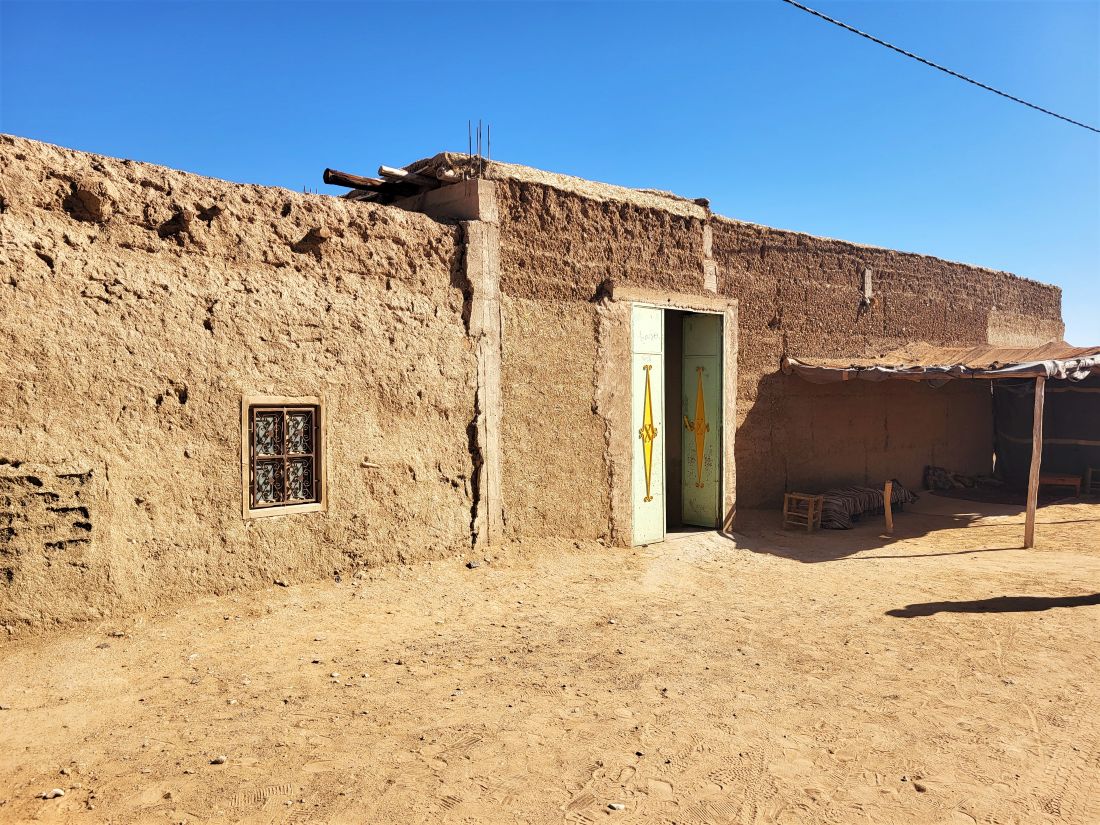
On our way to Erg Chebbi, we stopped in the village of Khamla (above) to take in a performance by a local Gnawa band, the Pigeons du Sable Groupe Zaid (below).
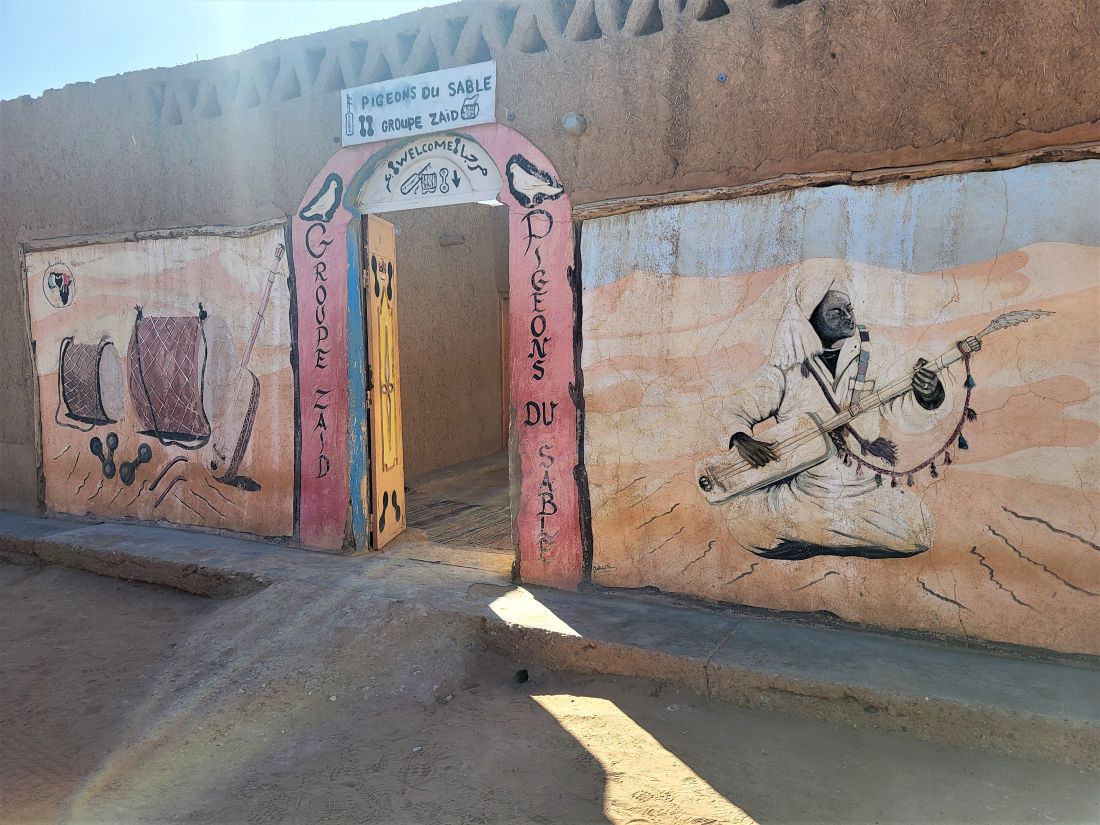
We sat down in a tent, where we were served mint tea. Then the musicians began playing their instruments and singing.
It was a mesmerising experience and I found myself lost in the music.
Gnawa music is described as hypnotic and I could see why. I could have spent hours watching the rhythmic performance, it was so relaxing.
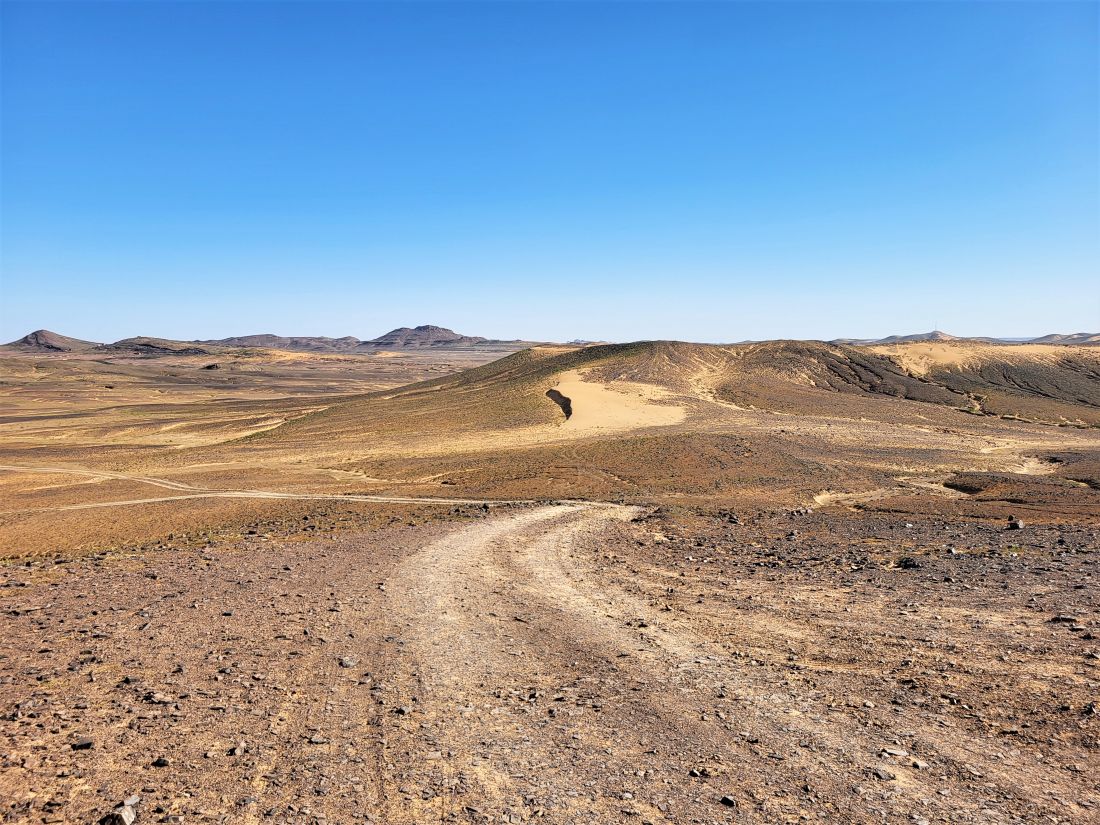
After the performance, we hopped in a four by four and left the village behind.
We sped across the rocky terrain, stopping atop a small mound to take some photos of the spectacular desert scenery (above).
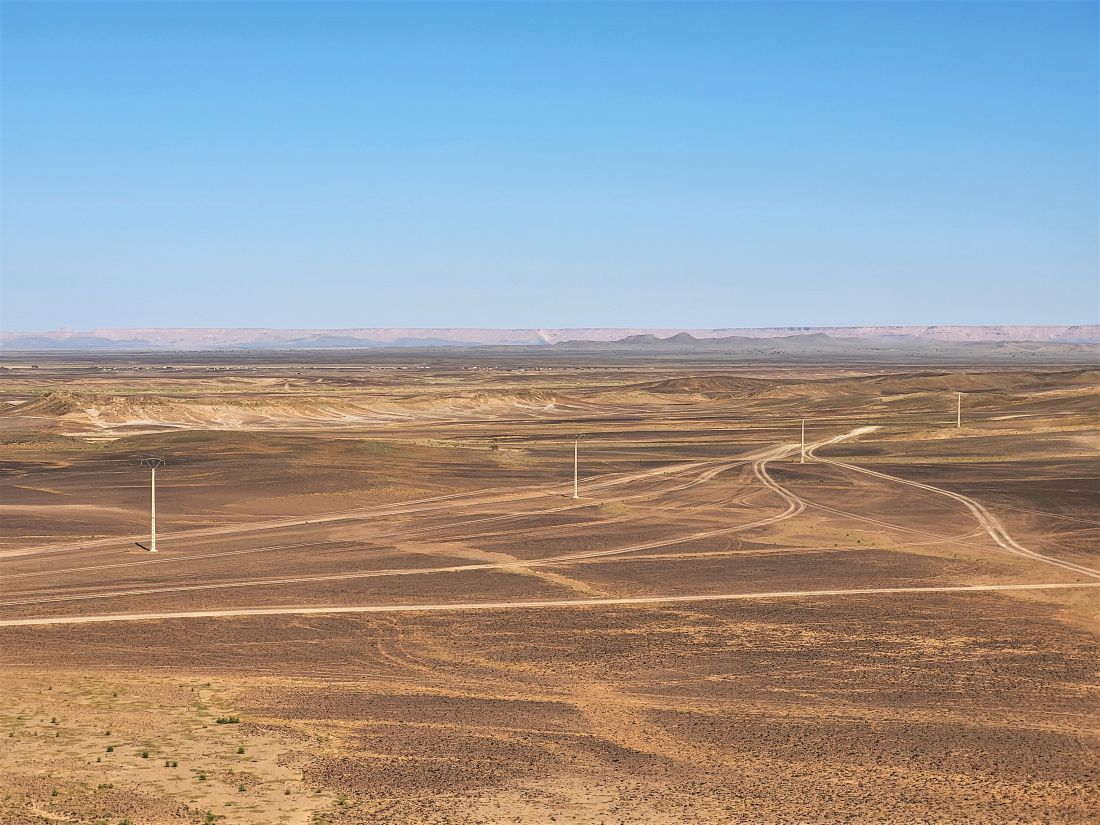
The barren landscape was utterly beautiful and, in the far distance, we could just make out a ridge that marks the border between Morocco and Algeria (above).
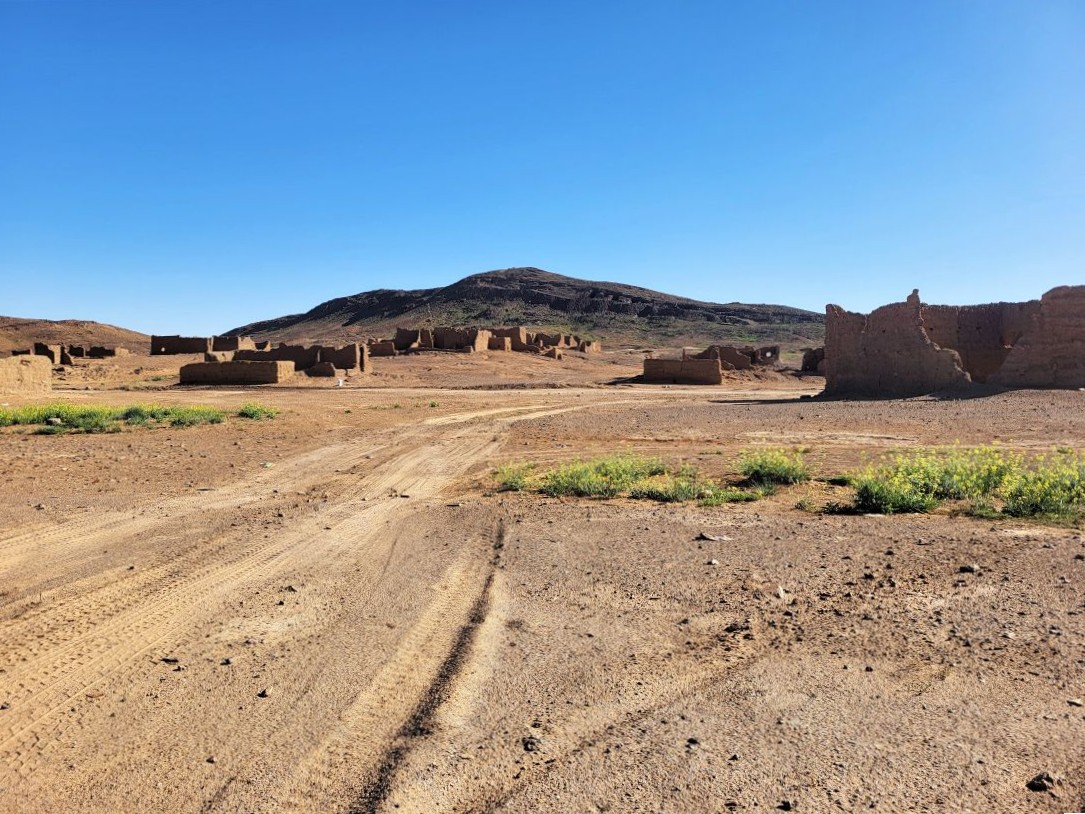
We continued over the arid terrain until we reached a small village that had all but been abandoned (above).
The village had been built by the French to house the workers they’d employed to exploit the surrounding lead mines.
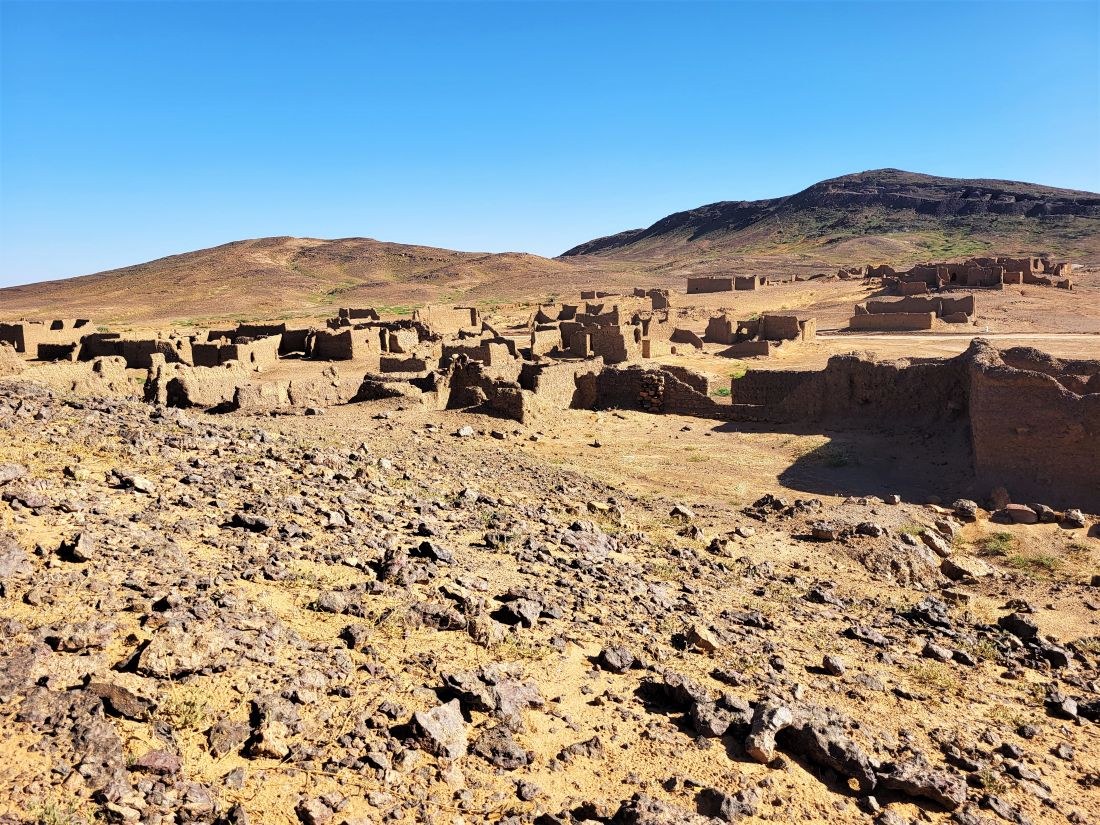
It looked as though the odd house was still inhabited, but otherwise, the village was deserted.
It was such a bleak, isolated place, I couldn’t picture anyone living there.
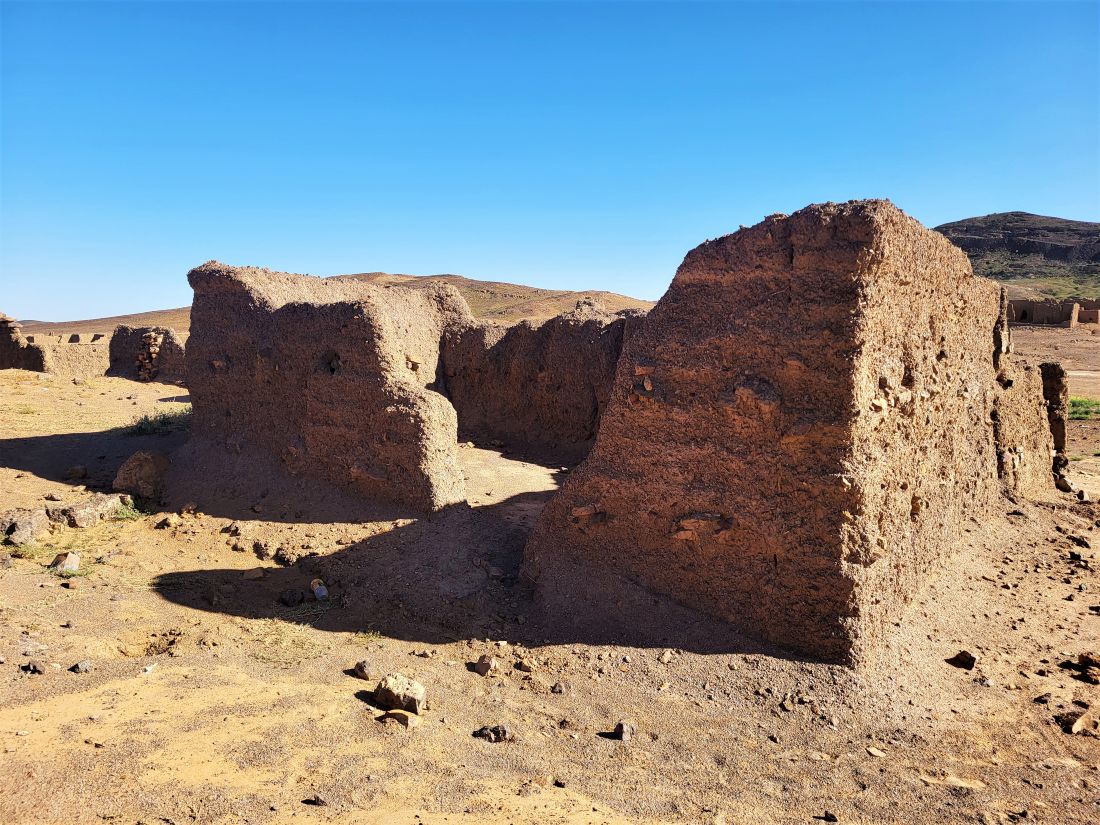
Atop a little hill in the village, the Moroccan military had a small outpost.
The almost 2,000km-border between Morocco and Algeria has been closed since 1994 and its length is heavily patrolled by the Armed Forces on both sides.
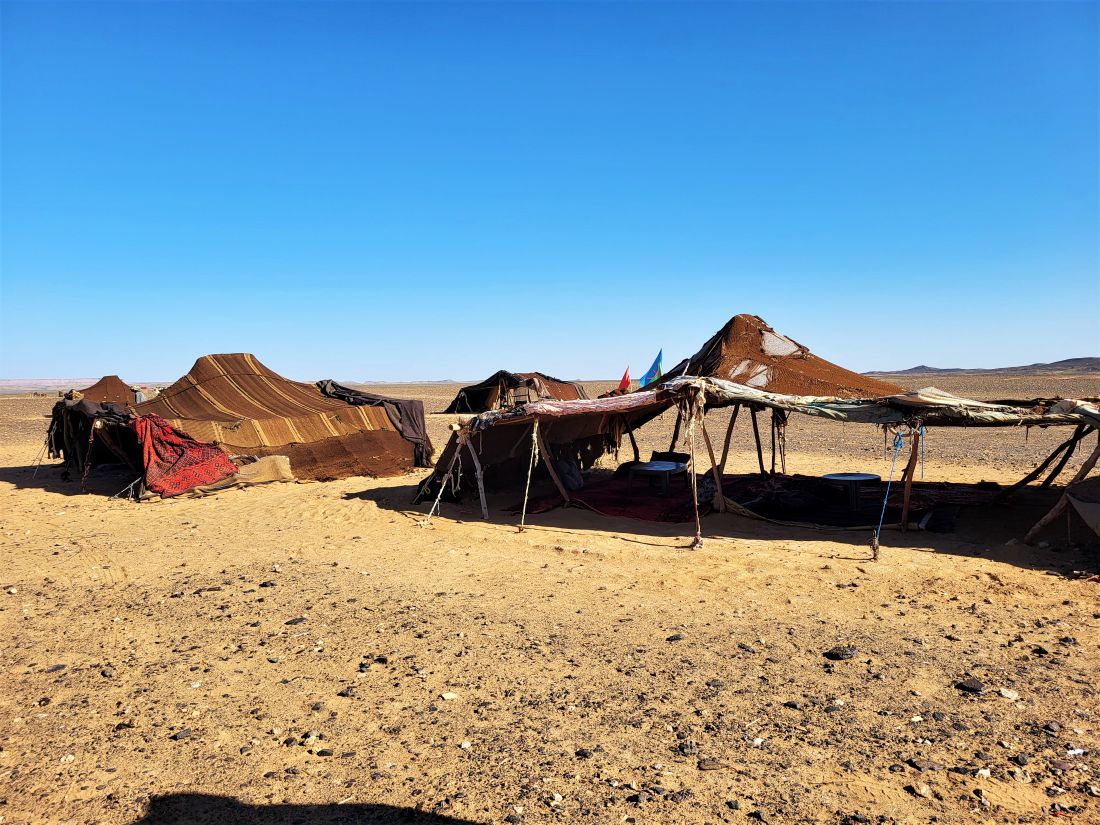
We carried on our tour of the desert until we came to a large camp occupied by semi-nomadic people (above).
The group used to be nomadic, but the droughts of the past few years mean it’s no longer possible to move around and live off the land.
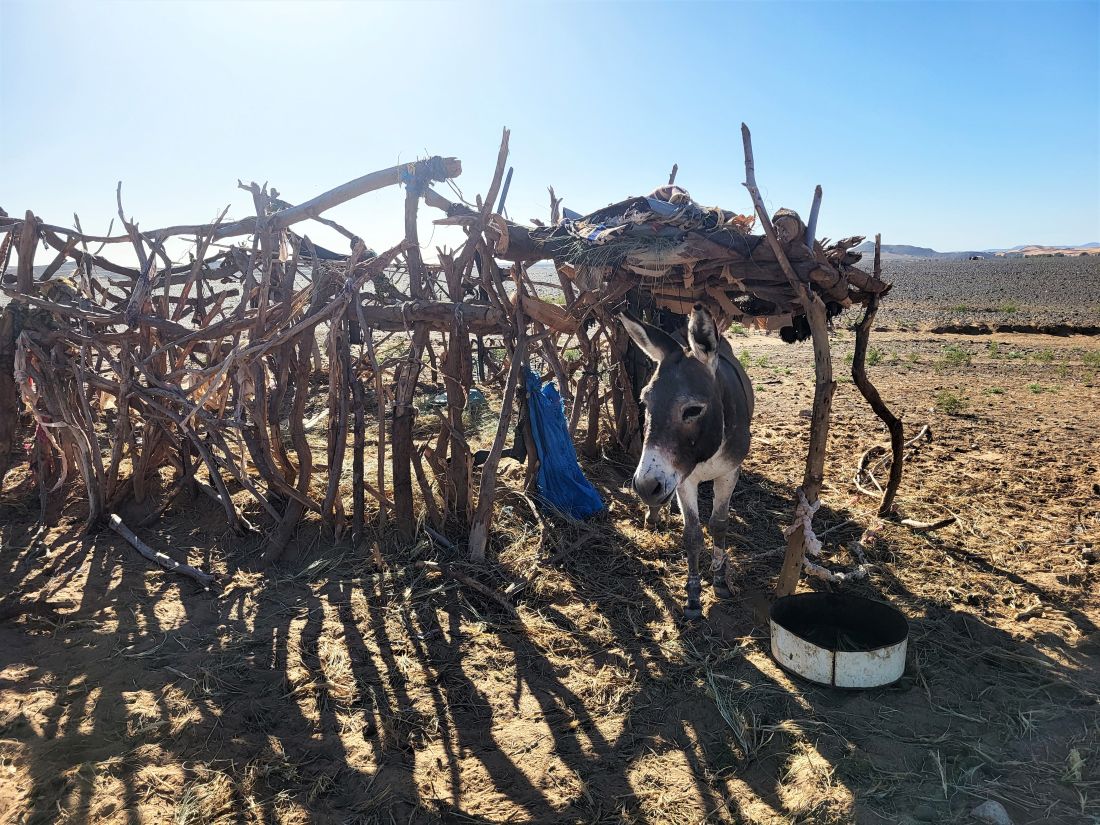
The camp consisted of small tents made from animal hides, wood and straw, and there was a somewhat sad-looking donkey that was used to carry water from a nearby well.
There were a few chickens roaming around, too, along with a coop full of softly cooing pigeons.
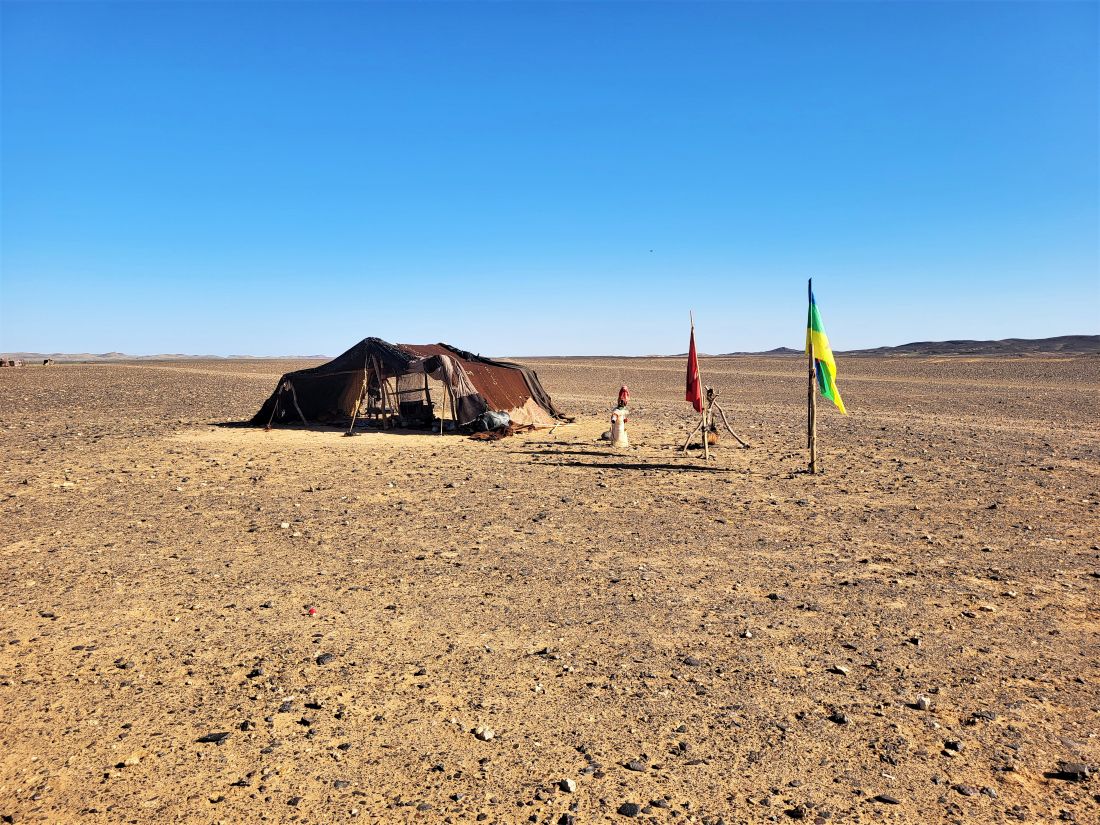
We were welcomed inside one of the tents by a few members of the group who served us tea, savoury nibbles (very moreish) and salted peanuts, and they told us about their life in the desert.
I was interested to hear their children go to school in nearby Merzouga, as I wasn’t sure if they’d be home schooled.
It’s a tough way of life and I didn’t envy them. The sun was extremely strong in late November and I couldn’t imagine living on that harsh desert plain in summer. It must be unbearable.
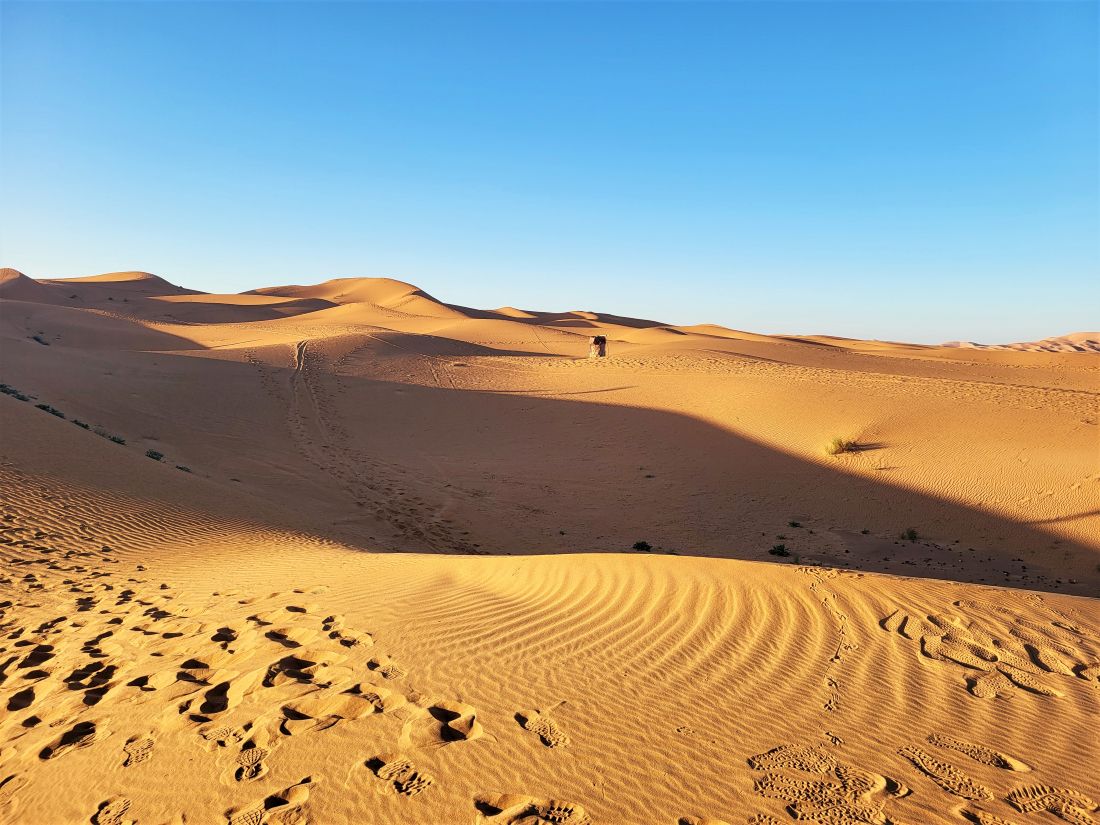
From the village, we hopped back in our four by fours, where we were driven to our camp. Our base was one of a series of small camps on the edge of the dunes.
It was a lovely set up, especially given we were in such a harsh, desolate environment. I had half a swish tent to myself, complete with electric lights and charging points.
After dropping my things in the tent, I set off on a short stroll to take a brief, closer look at the intriguing dunes (above).
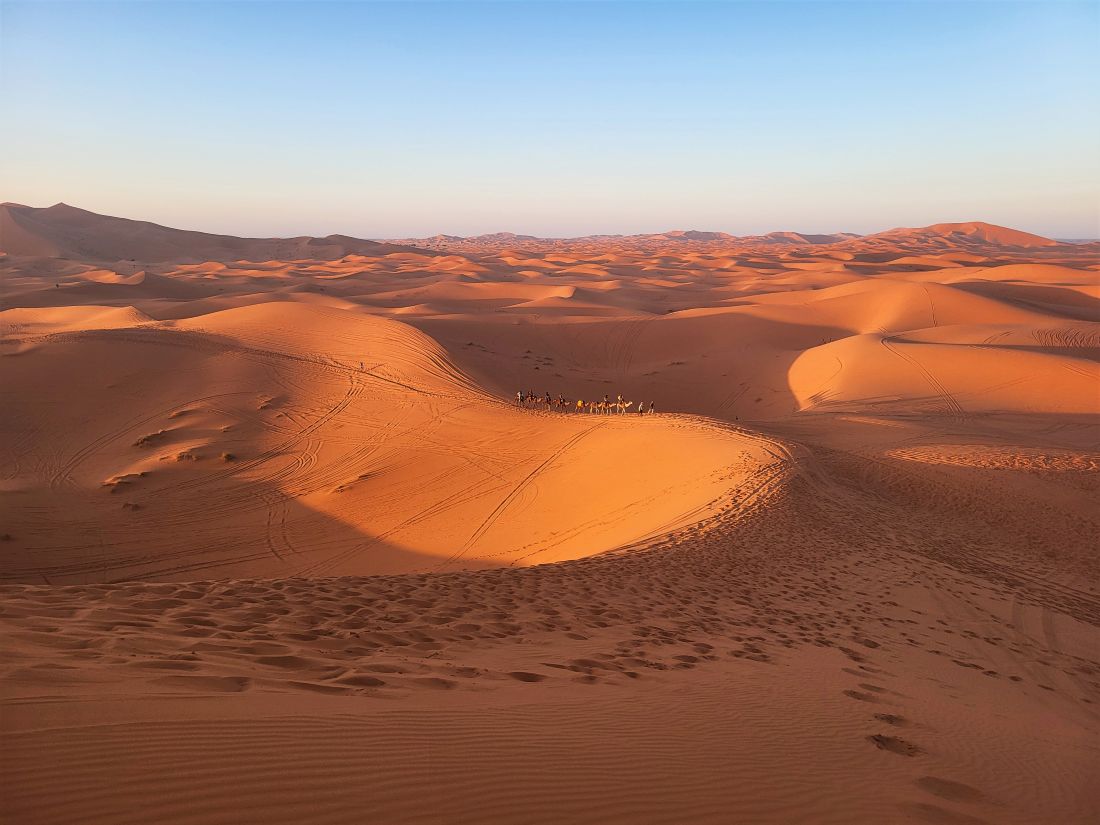
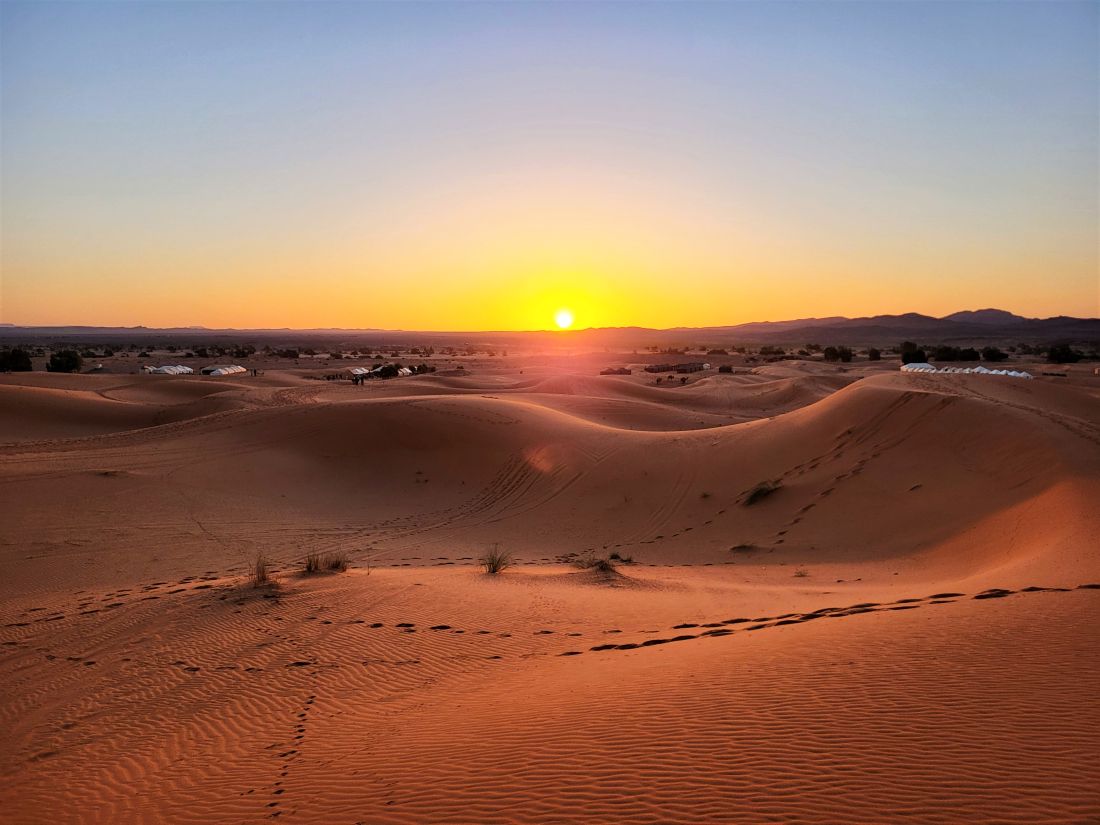
Later that afternoon, as dusk approached, I headed further into the dunes with a few of my camp mates to watch the sun go down.
We trekked to the top of the tallest dune in the vicinity and sat down to watch the remarkable scene unfold before our eyes. The sand dunes were stunning and the colours incredible.
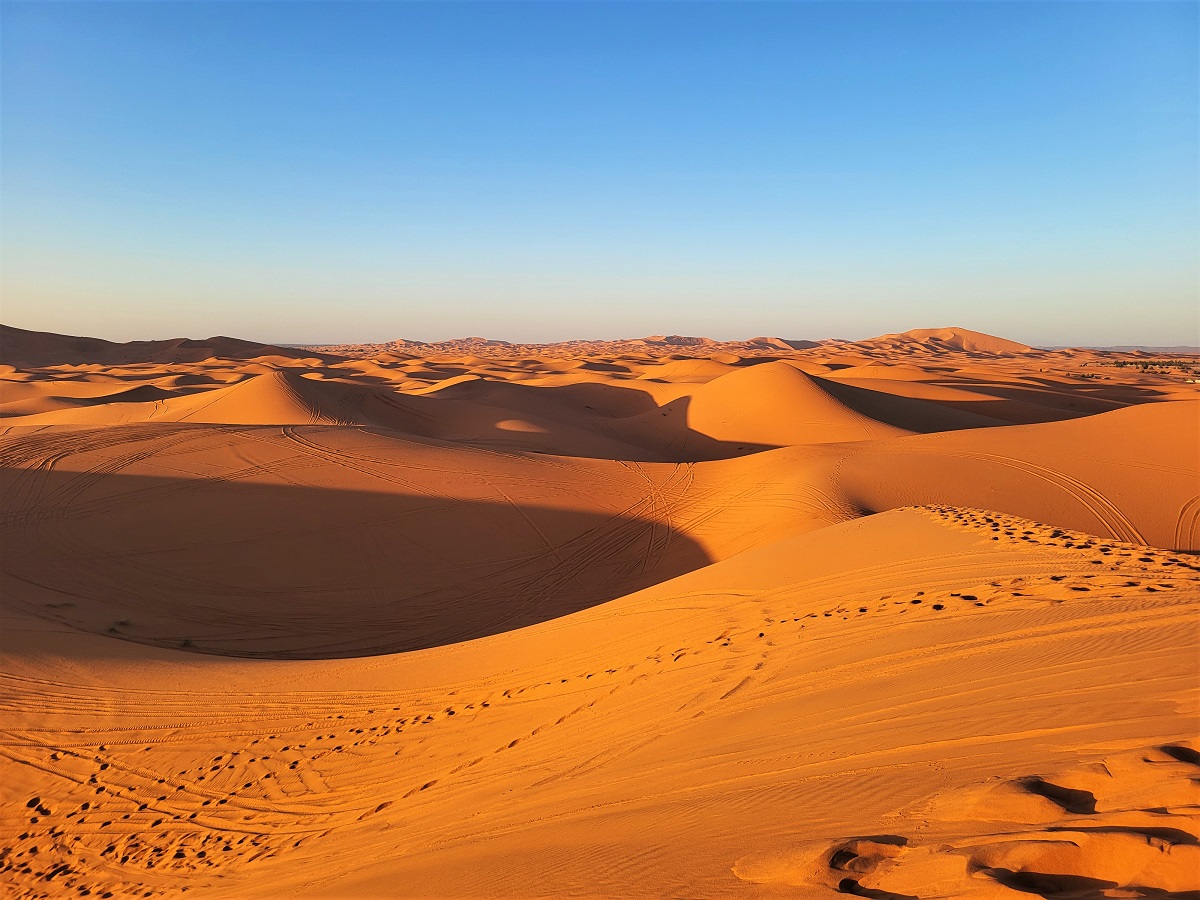
Despite it being deserted when we set off, by the time the sun was about to set, the dunes had become surprisingly busy as groups of people had arrived by camel and quad bike.
It was only after the sun had set that I realised just how many people had joined us atop the sand dune while we’d been swooning over the idyllic view.

Our guide told us later how overcrowding is becoming a real problem in the Baby Sahara, especially during high season (September to October and March to May) as masses of people will descend at sunset.
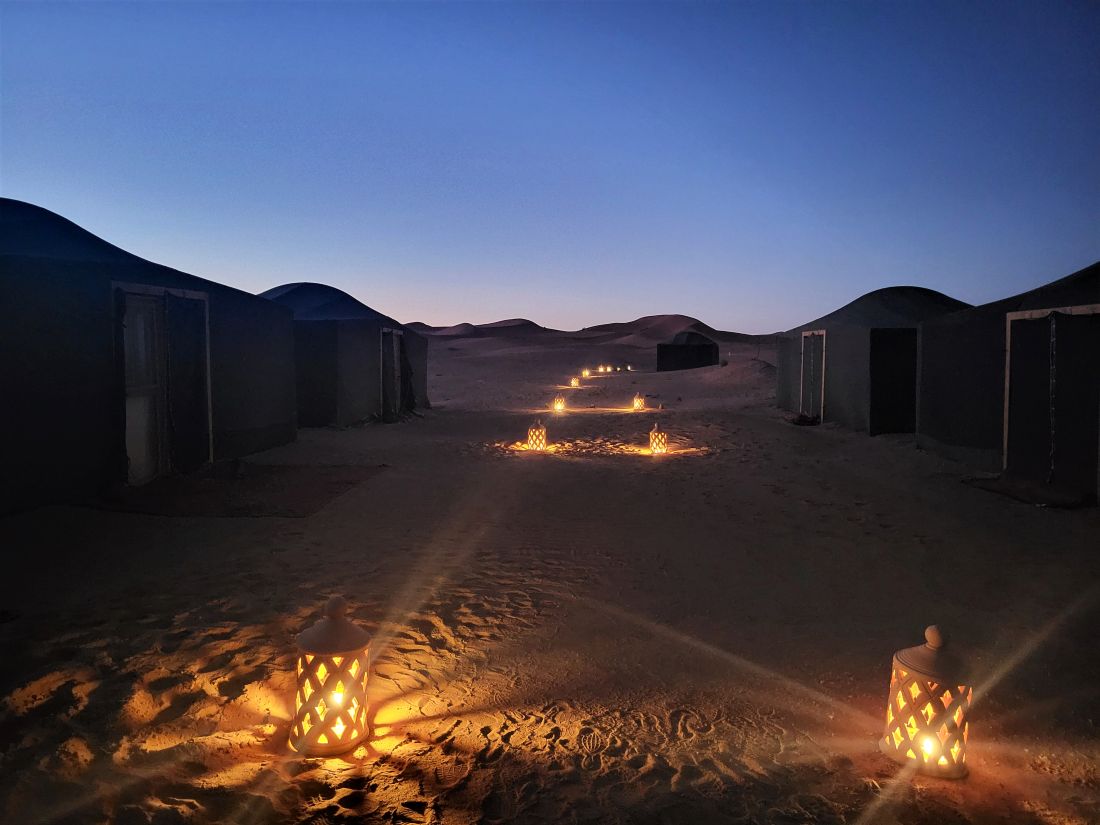
At 7.30pm, we sat down in the communal tent to eat, where we were served a tasty meal of vegetable soup, beef tagine and fruit.
After dinner, we spent some time sitting around the campfire, chatting and marvelling at the medley of stars in the clear night sky.
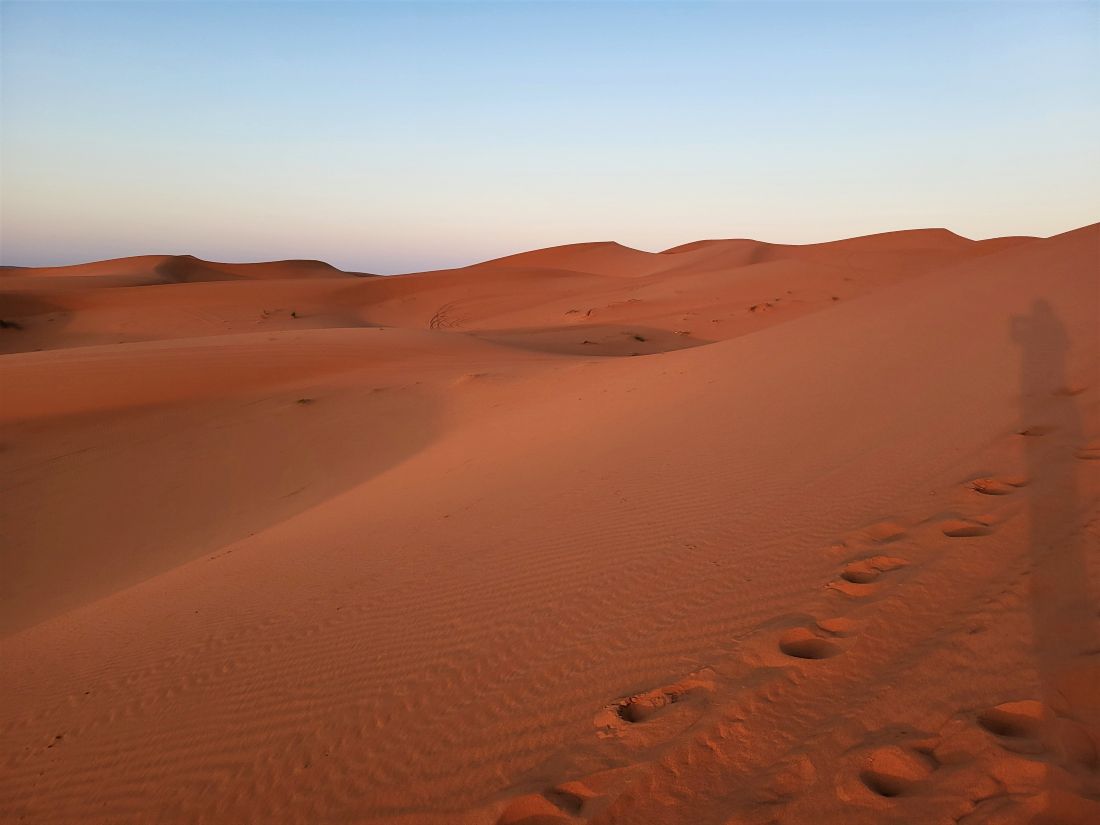
The following morning, I was up before dawn to catch the sunrise (below).
I stood atop a large dune looking in the direction of Algeria as the sun made its striking appearance. The sunrise wasn’t as spectacular as the sunset, but it was still a magical, pinch-me moment.
Unlike at sunset, the dunes were practically deserted and the only other person watching the sun come up was one of my camp mates.
After breakfast, we set off on a camel ride over the dunes to Merzouga. It was our only way out of the Baby Sahara, as our four by fours had long since abandoned us.
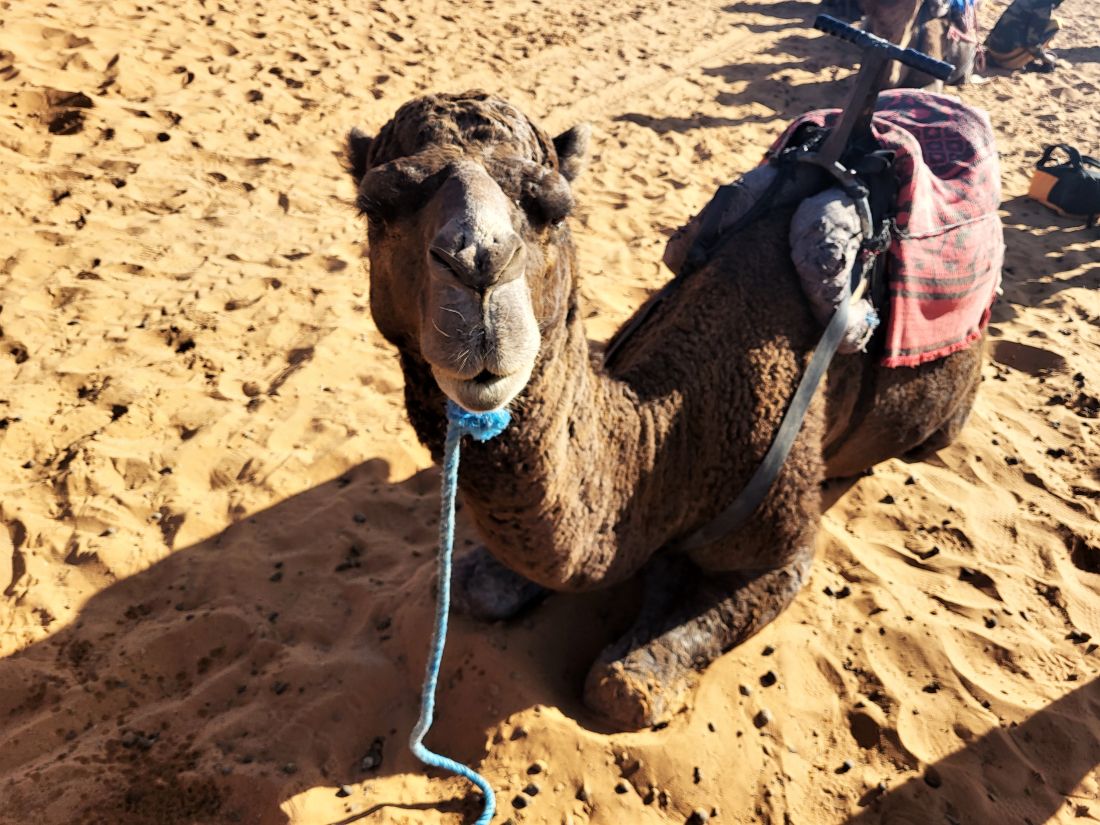
My camel was a sweet, docile thing (above) and I named him Idriss, after the great Moroccan king, as all the camels were male.
He was easy enough to ride, but he kept veering to the left when we went downhill, so I kept having to shift my weight, which wasn’t the easiest thing to do. But we soon got into a good rhythm.
The scenery was breathtaking and, aside from a group of quad bike riders, we had the dunes to ourselves.
Riding across the ethereal dunes with no-one else around was an unforgettable experience.
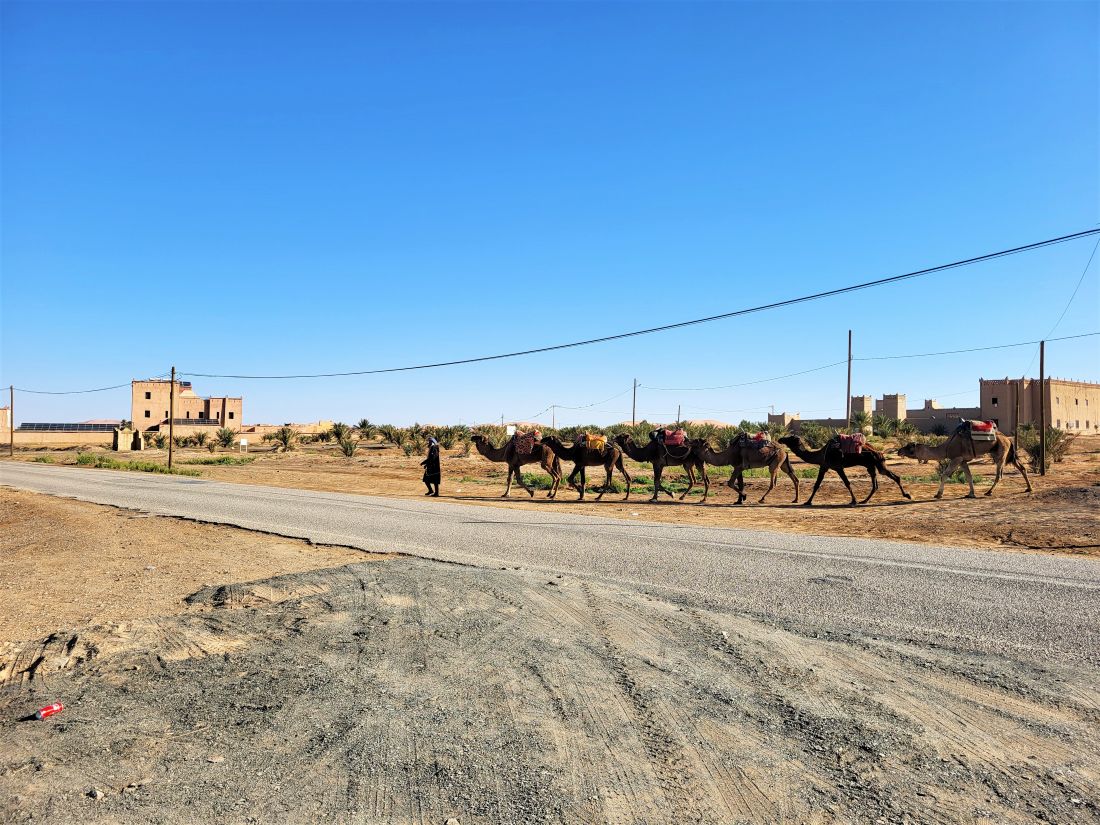
An hour or so later, we arrived in Merzouga, where we said goodbye to our camels and set off on the next leg of our journey, in the direction of Tinghir and Morocco’s southern oases.
I loved our time in Erg Chebbi. The sand dunes were jaw-droppingly beautiful and unlike anything I’d ever experienced.
It’s a remarkable place and one of the highlights of my two weeks in Morocco.
 Little Old World
What a wonderful experience. I loved reading about it and seeing the photos. Thank you 🙂
LikeLiked by 1 person
The dunes were beautiful and it was a fantastic experience! Thank you 😊
LikeLiked by 1 person
Those dunes are incredible. Surreal. I’ll never see them in person, but I would like to!
LikeLiked by 1 person
Thanks Neil, the dunes were extraordinary and so beautiful!
LikeLiked by 1 person
The dunes are incredible, such gorgeous colours.
LikeLiked by 1 person
Thanks Anabel, they were extraordinary. I’ve never seen anything like them.
LikeLiked by 1 person
Wow, you captured so many beautiful photos. I just love how glamping provides a front-row seat to the Sahara’s stunning landscapes, including spectacular sunsets and, also incredibly clear night skies for stargazing. Thanks for sharing, and have a good day 🙂 Aiva xx
LikeLiked by 1 person
Thanks Aiva. The dunes are spectacular and it’s difficult to take a bad photo of them. It’s an incrediblely picturesque place. Glamping was a lot of fun and it was great to be able to see the Sahara at dawn and dusk as it was on the doorstep. The clear night sky was amazing and we had a lot of fun trying to work out the different constellations. Have a good day, too 🙂
LikeLiked by 1 person
🥰🥰🥰
LikeLiked by 1 person
Stunning captures of the sand dunes in the golden afternoon sun. What a gorgeous sunset and sunrise. Glad to hear you had a wonderful camping experience in such a harsh environment.
LikeLike
Thanks 🙂 The sand dunes at Erg Chebbi were breathtaking, even more so as at sunrise and sunset. It was probably the best camping experience I’ve ever had. The tents were fabulous and, for once, I didn’t have to worry about the rain.
LikeLiked by 1 person
wow, your pictures are incredible! Those rolling dunes of sand make such a dynamic landscape 🙂 Have a great weekend!
LikeLike
Thanks Meg 🙂 The sand dunes were incredible and one of the most spectacular places I’ve ever been. They were so photogenic, it was difficult to take a bad photo of them!
LikeLiked by 1 person