
With charming architecture, scenic hikes, great food and top notch art galleries, Norway’s second largest city Bergen is a delightful place for a short break.
Last summer, I spent an all-too-brief 24 hours in the city following my kayaking trip in the Norwegian fjords.

I arrived in the city late afternoon and after checking into my hotel, set off for a stroll through the city centre in the direction of Vågen Harbour and Bryggen.
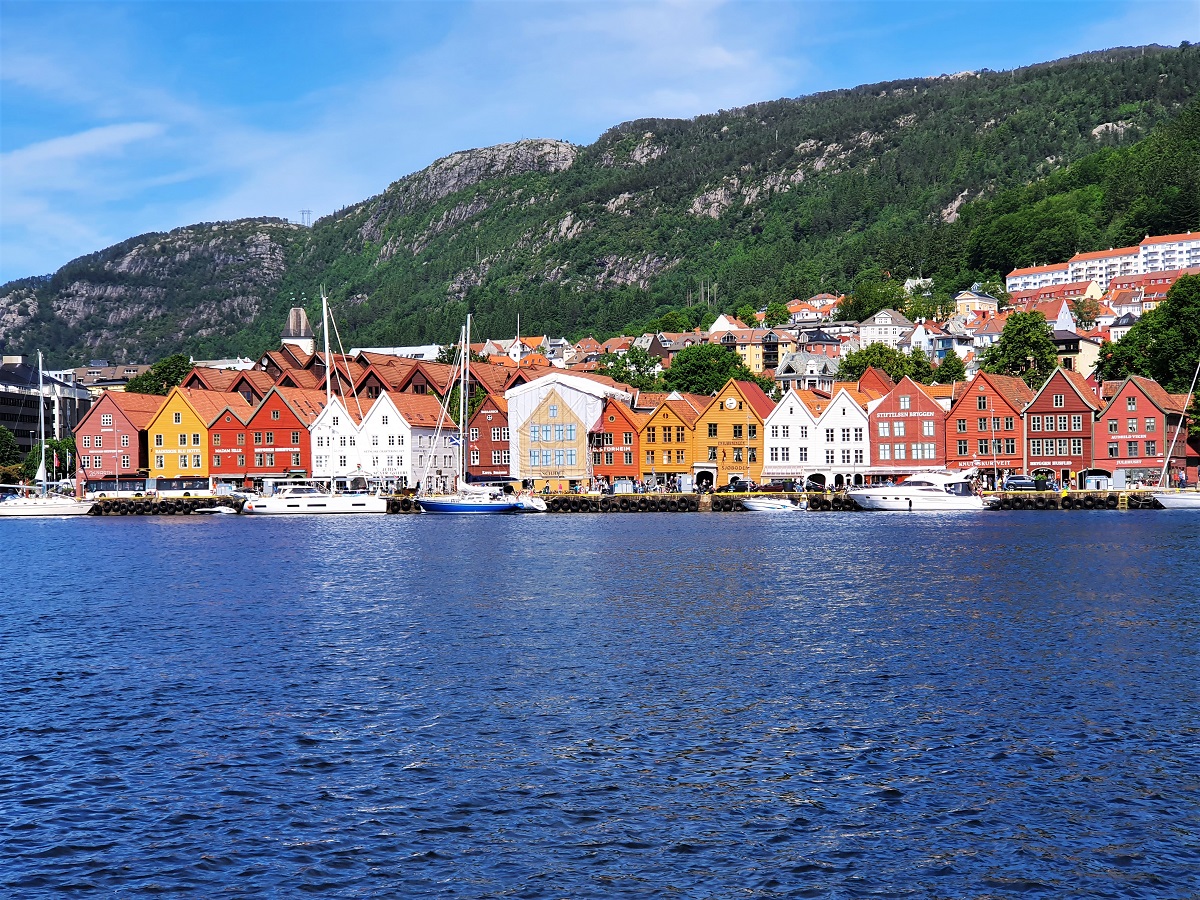
Bryggen is the oldest part of the city and is renowned for its colourful wooden Hanseatic buildings (below).

It was early evening by the time I reached the harbourside and there was a real buzz in the area, the streets were brimming with people out for dinner and drinks.
Feeling peckish, I bagged a seat in Pingvinen, a trendy little restaurant-cum-bar nearby that serves traditional Norwegian fare (be warned, this unfortunately includes whale).

I opted for beer-cured vension for starters (above), followed by meatballs with vegetables, potatoes and lingonberries (below), washed down with a local cider.

The restaurant had a welcoming, lively vibe, the food was tasty and the service excellent.

Early the following morning, I set off through Bergen’s attractive streets (above) to Fløibanen, the city’s 100-year-old funicular that takes visitors to the top of Mount Fløyen (below).
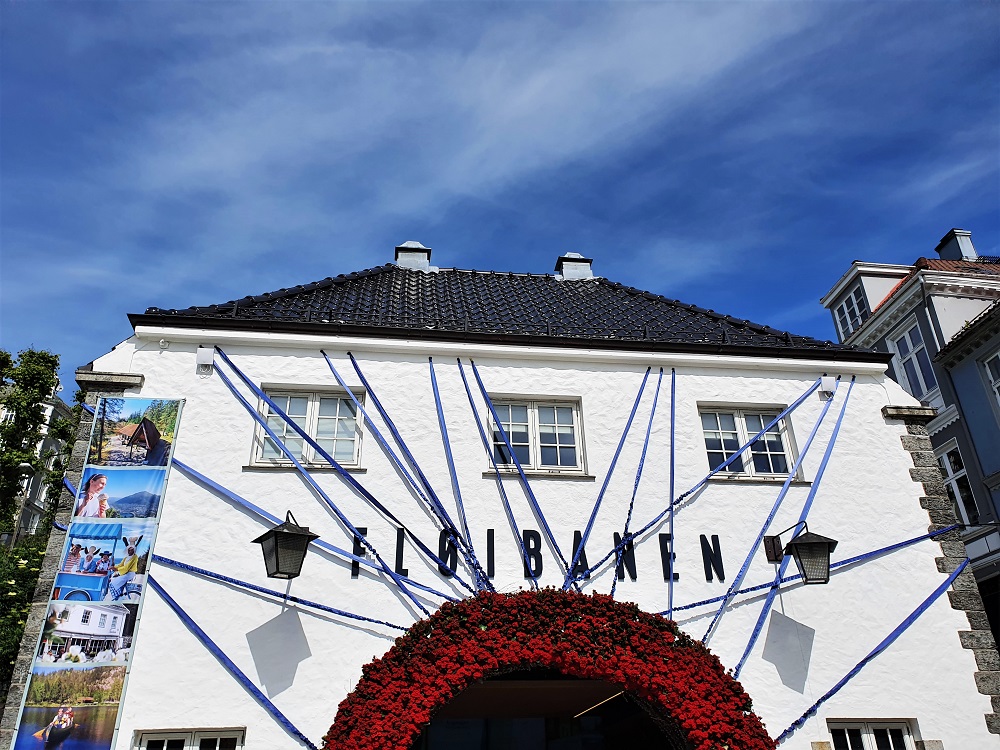
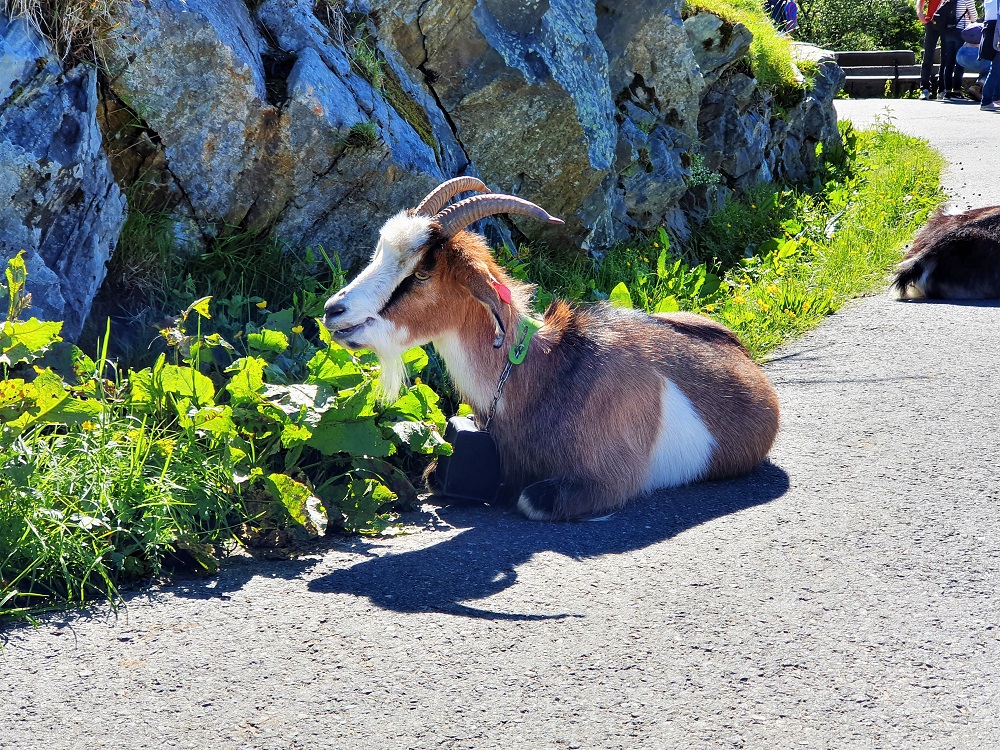
Mount Fløyen is one of seven mountains that surround Bergen and the top of the mountain is home to a visitor centre, as well as picturesque lakes, great hiking trails and a few very chilled goats (below).
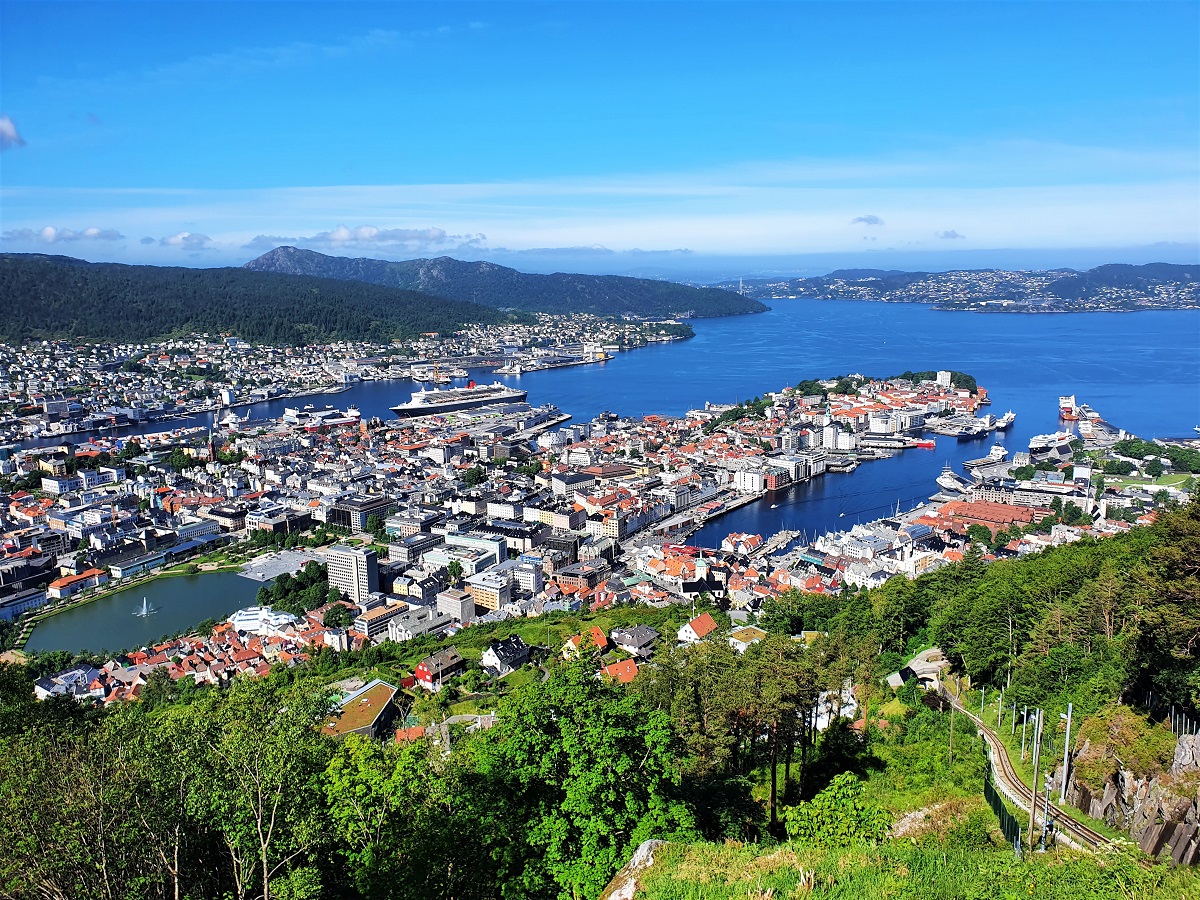
It also boasts spectacular views of the city and the harbour below.
There are quite a few trails on the mountain top, but as I only had 24 hours in the city, I gave myself just an hour to explore them as I was keen to see some of Bergen’s other sights, too.

I set off along one of the scenic paths in the direction of Skomakerdiket lake (above) and from there, continued exploring the labyrinth of trails (below).

One of the most curious sights atop the mountain was an old stone trough that had been used as a water stop for horses ferrying visitors to summit in the 1890s (below).

After an hour on the mountain, it was time to make my way down to the city centre.
Back in Bryggen, I spent some time ambling through the alleyways that run through the Hanseatic buildings that line the harbour.
Situated on the Bergenshøyen Peninsula in the south-west of the country, Bergen’s strategic coastal location made it a major northern European trading hub for centuries.
At the end of the 14th century, the city became a base for the Hanseatic League, the confederation of merchant guilds that operated across northern and central Europe.
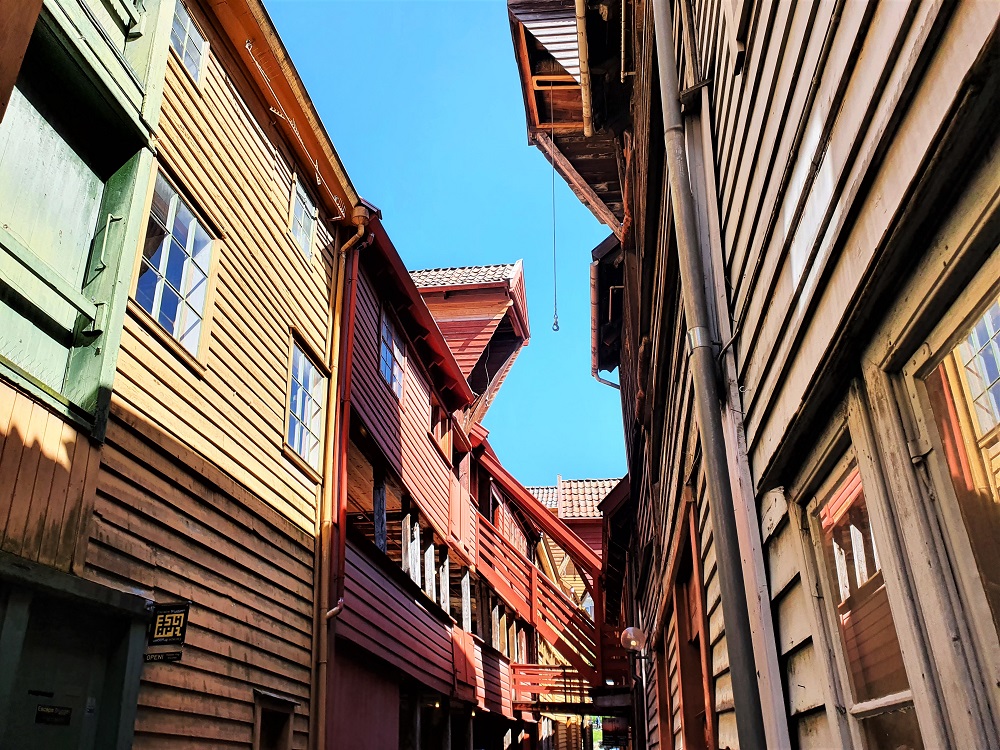
The guilds’ distinctive, colourful wooden buildings were used as living spaces, business premises and warehouses.
Now a UNESCO World Heritage Site, the 60 or so buildings you see today date from the beginning of the 18th century after the earlier warehouses were destroyed by fire.
Today the eye-catching structures are home to a collection of boutiques, cafés and bars.
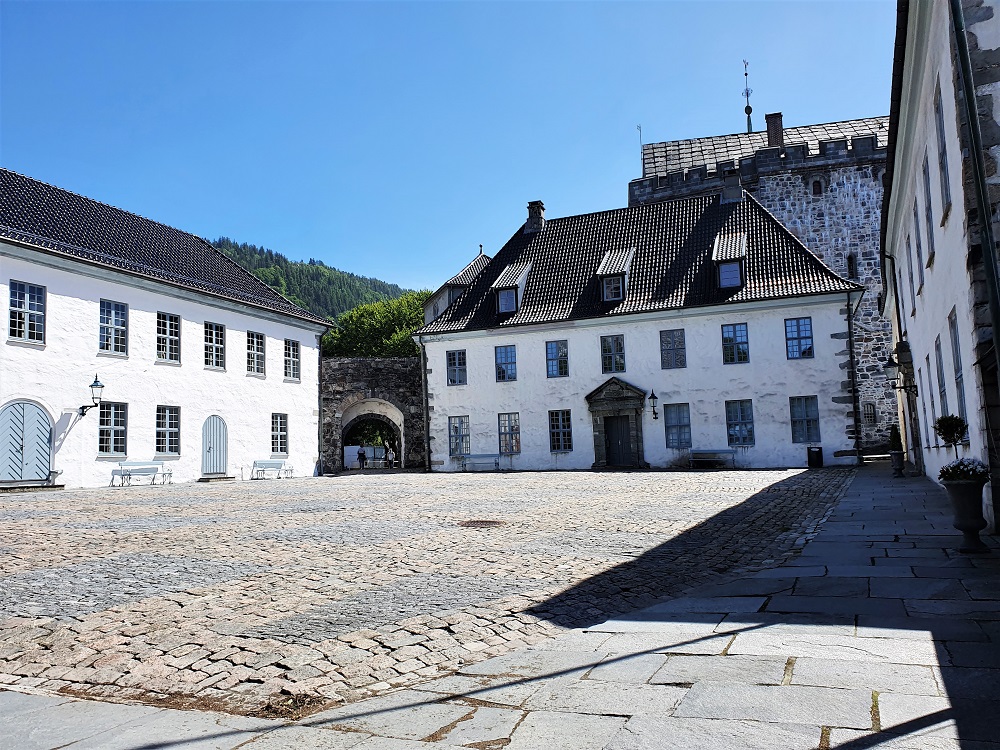
I continued my tour of Bergen with a visit to the Bergenhus Fortress (above), which was built in the 1240s to protect the harbour.
The complex was once home to the city’s royal residence, cathedral, bishop’s palace, a monastery and some churches.
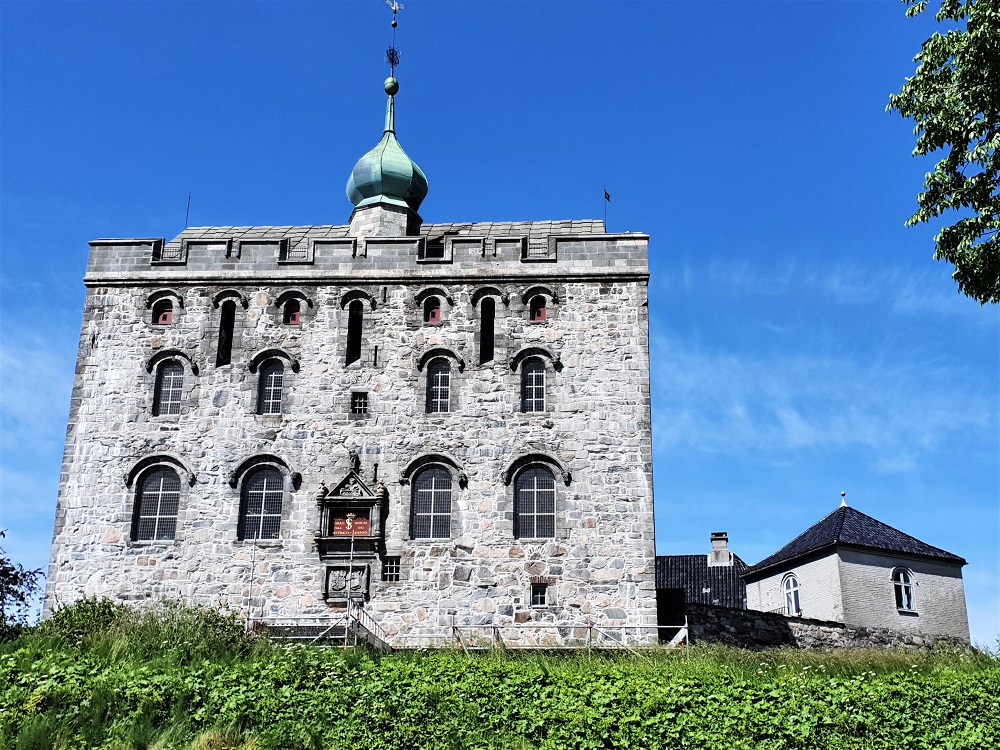
The fortress is now controlled by the Norwegian navy, but sections of it, including the Rosenkrantz Tower (above) and King Håkon’s Hall, are open to the public.
Rosenkrantz Tower was built in the 1560s by Erik Rosenkrantz, the then-governor of Bergenhus Fortress, who incorporated earlier parts of the complex into the structure.

The tower is set out over multiple floors and there’s a one-way system that takes visitors up to the roof and back down via a series of narrow, winding staircases.
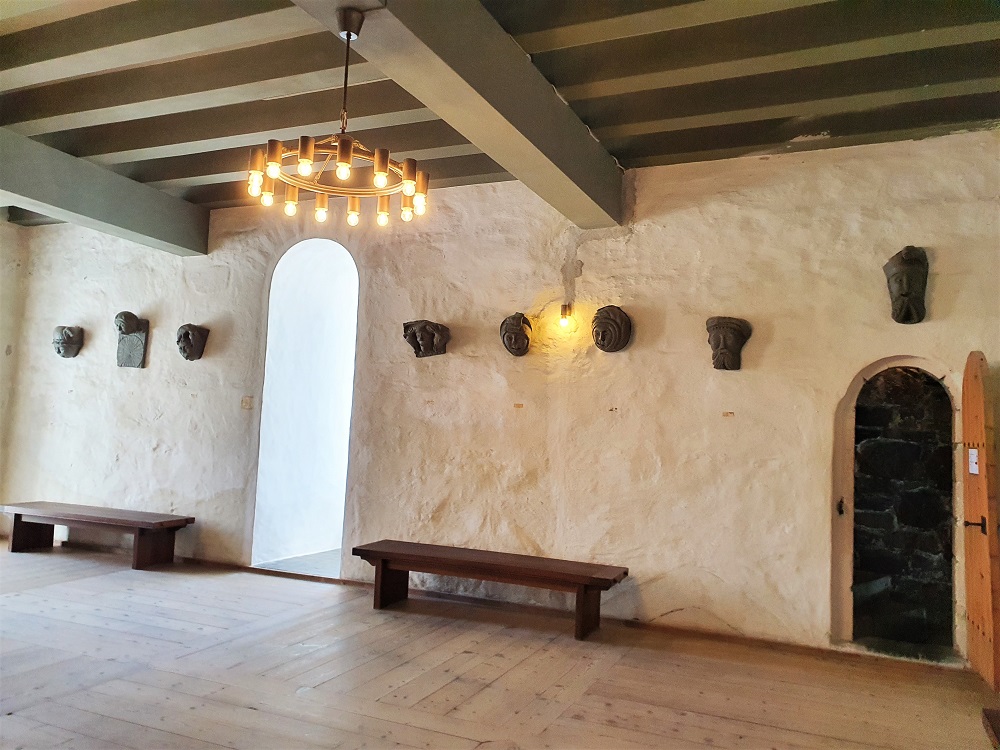
There isn’t much to see on the lower floors because most of the rooms, such as the Gentlemans’ Hall (above) and the Oratory, are plain and unfurnished.

But there are some interesting architectural and decorative touches, and a few rooms, such as the Guard-room (above), have costumes on display.
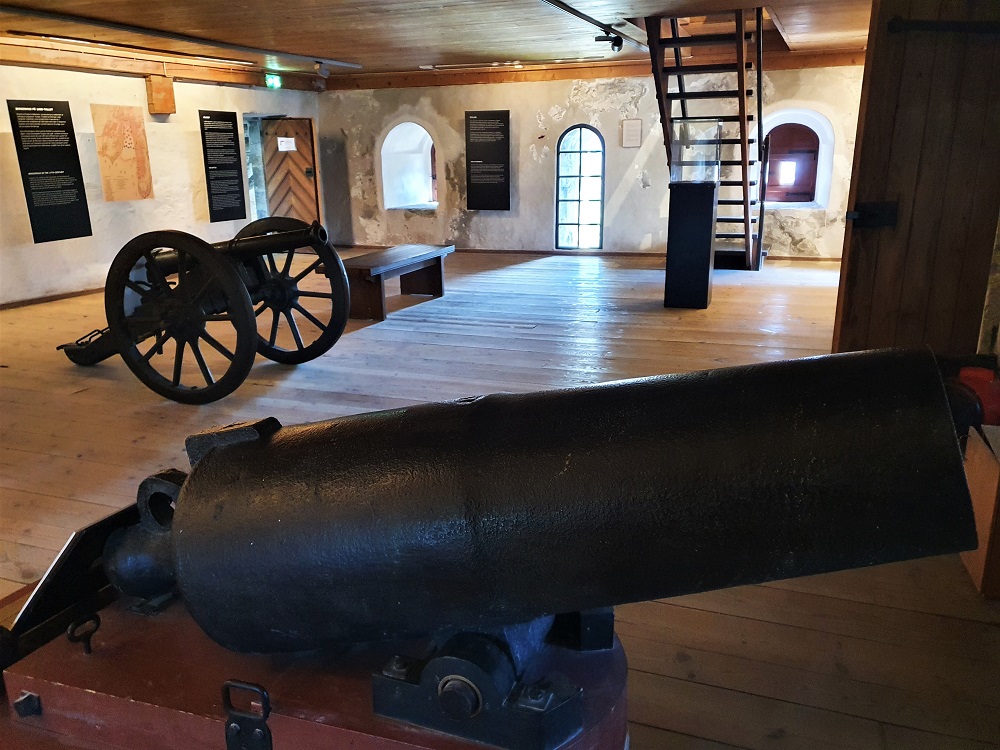
Towards the top of the tower, there’s a small exhibition (above) about Bergen’s naval history and the 1665 Battle of Vågen, a brief battle of the Second Anglo-Dutch War in which an English fleet attacked a flotilla of Dutch merchant ships in the harbour.
During the battle, a cannonball fired by the English accidentally landed in the fortress, so the fortress’s commander ordered his men to return fire, forcing the English to retreat.
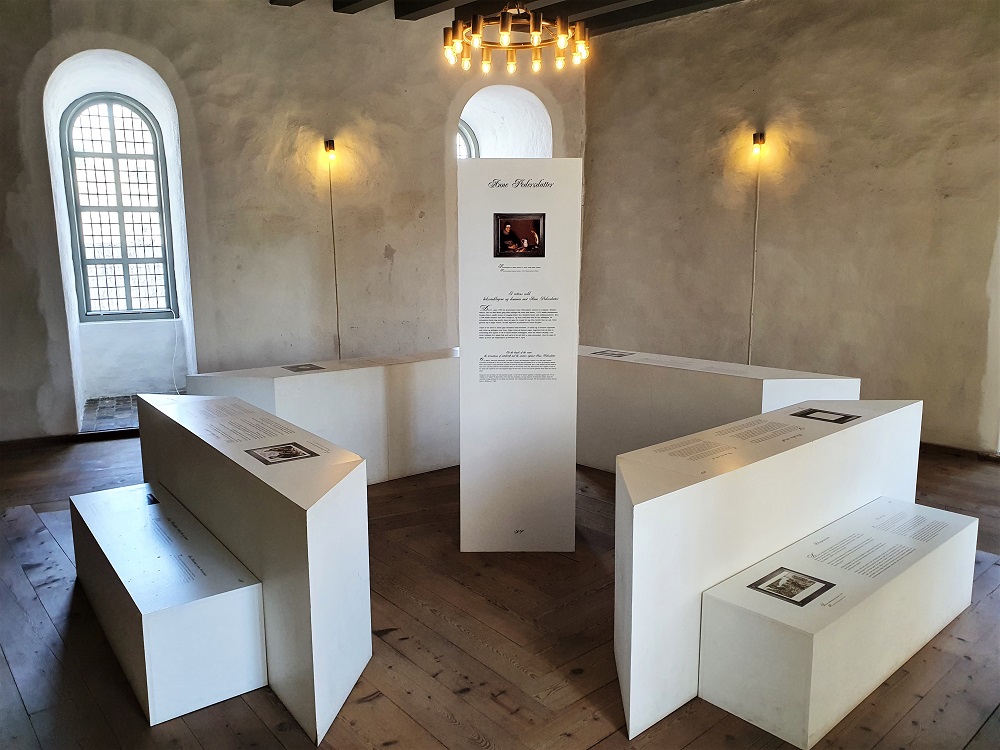
The tower is also home to an ecclesiastical exhibition and a display about witchcraft (above).
This small exhibit details the tragic case of Anne Pedersdotter, a widow who was burned at the stake in 1590 after being falsely accused of being a witch.
It’s one of the most famous witchcraft trials in Norwegian history and Anne’s heartbreaking fate has since been chronicled in operas, plays, novels and films.
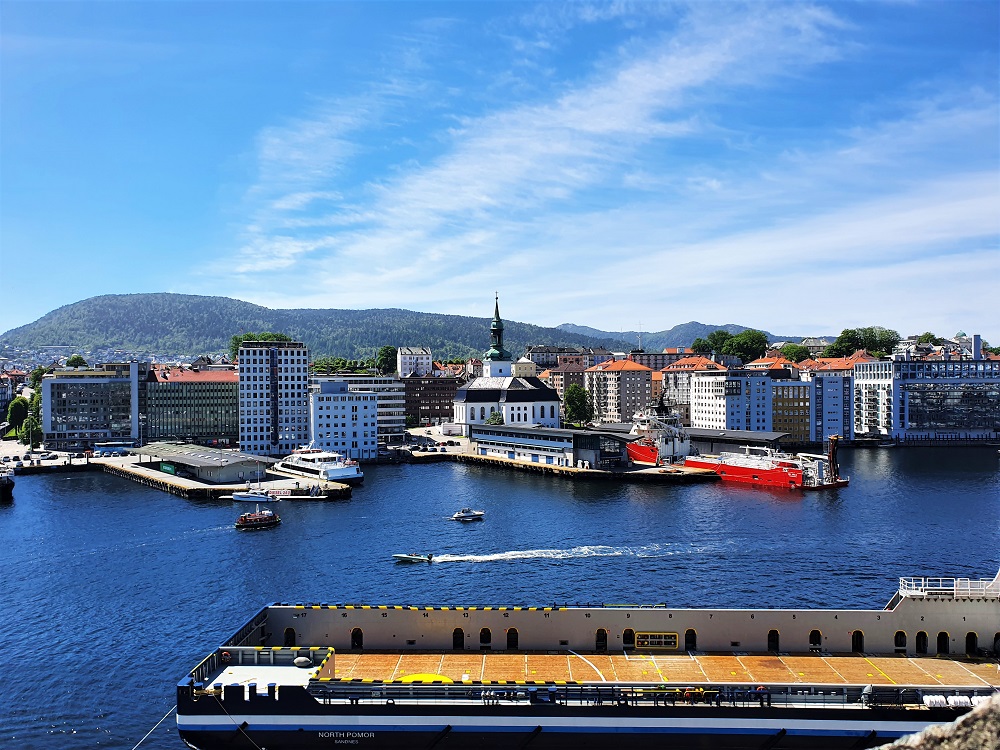
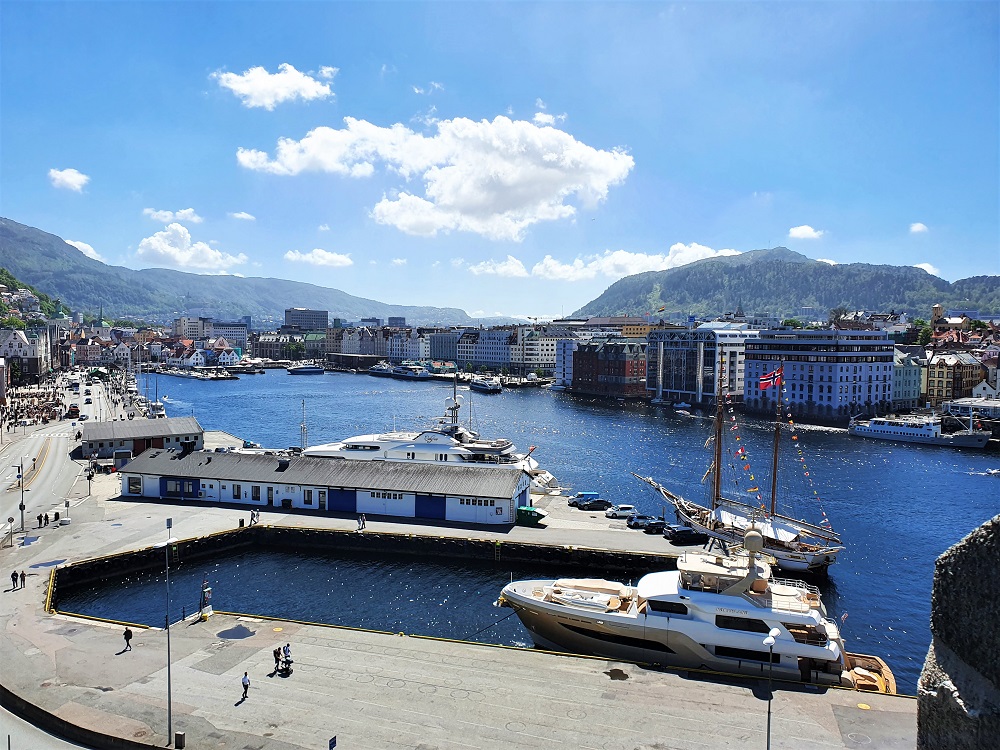
My favourite part of the tower, though, was getting to go up onto the roof, where I was rewarded with great views across Vågen Harbour (above and below).
Having seen all there was to inside the Rosenkrantz Tower, I crossed the fortress’s courtyard to King Håkon’s Hall (below), which was originally built in the mid-1200s by King Håkon Håkonsson.
After Norway merged with Denmark in 1380, the hall fell out of use and into disrepair, and it remained in a dilapidated state until the end of the 19th century when it was restored.

On 20 April 1944, tragedy struck when a Dutch ship carrying dynamite exploded in the harbour, blowing the roof off the hall.
King Håkon’s Hall underwent another major restoration and it was finally re-opened to the public in September 1961.
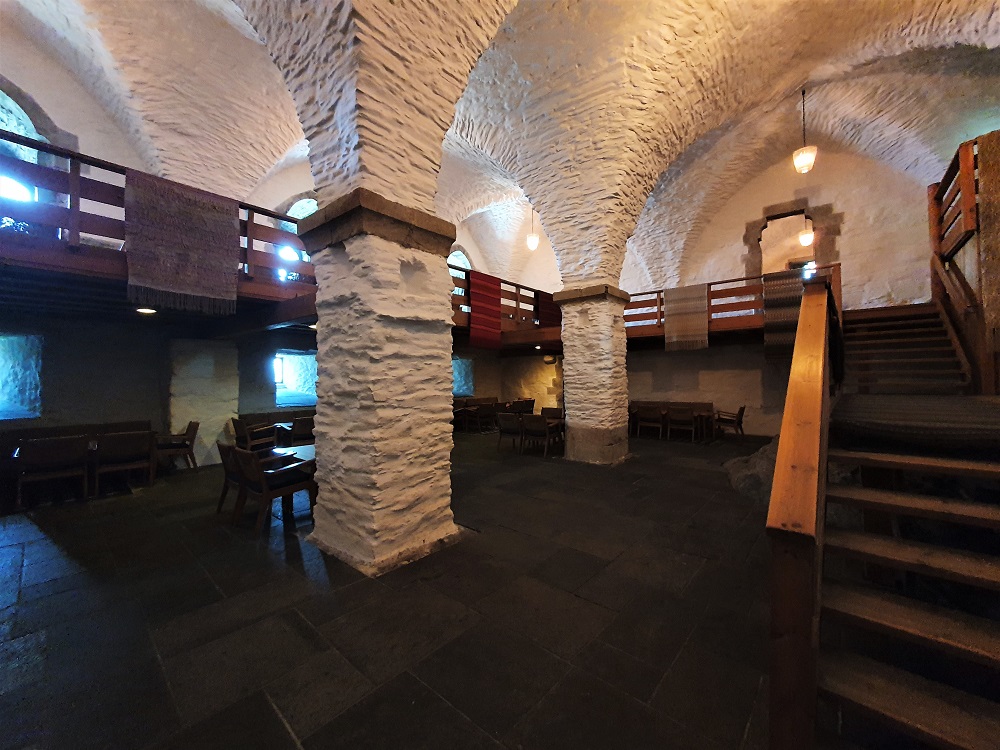
Inside the hall, there are a series of chambers with tables and chairs, which aren’t particularly interesting (above).
But the hall itself more than made up for the lacklustre chambers – it’s a grand, beautiful room and an impressive sight (below).

From the fortress, I continued my whistlestop tour of the city with a stroll around Lille Lungegårdsvannet, a small lake in the city centre (below).

The area surrounding the lake is home to four Kode art galleries. The galleries house a variety of artworks from across the ages and include one of the largest collections by Edvard Munch.
Ordinarily I’d have been keen to pop inside at least one of the museums, but as it was a Monday they were all closed.

From the lake, I meandered over to Mariakirken, a 12th century church in Bryggen that’s said to be the oldest building in the city (above).

The church boasts two distinctive towers, 15th century frescoes and an elaborate Baroque pulpit that was given to the church by the Hanseatic merchants in 1676 (above).

By now it was late afternoon and time to head to the airport, so I made my way through Bergen’s charming streets to my hotel, passing Bergen Cathedral along the way (above).
The simple, unassuming cathedral is in stark contrast to many of Europe’s more lavish cathedrals (looking at you Milan, Gloucester, St Paul’s) and when I first walked past, I thought it was just an ordinary, albeit attractive, church.

Built around 1150, the ancient stone structure has a storied history and was the location of Norway’s first coronation.
The cathedral was closed during my brief visit, so I wasn’t able to go inside. But as I was admiring the exterior, I was intrigued to spot a cannonball stuck in one of its walls.
The cannonball struck the cathedral during the aforementioned Battle of Vågen and has been lodged in its façade ever since.
I had a wonderful time in Bergen and would have liked to have spent longer there, as there was a lot I didn’t see or only saw very briefly.
The friendly, walkable city wasn’t as expensive as I expected (think London prices) and I’d like to go back for a long weekend to really explore all it has to offer.
 Little Old World
Even though you arrived in the city in the late afternoon, at least you were able to enjoy some nice weather and clear skies, which are always great for wandering around. The city looks very charming and the views are stunning. Glad to hear that you were able to squeeze in an hour of hiking too.
LikeLiked by 1 person
I was very lucky with the weather, it had been raining heavily up until an hour or so before I arrived. It’s a lovely city and has a little bit of everything.
LikeLiked by 1 person
How did you do so much in 24 hours? It’s amazing!
LikeLiked by 1 person
I like to keep busy 🙂 Many of the places I visited (apart from the mountain) were quite small, so it didn’t take long to look around them. Plus everything’s very close together and within walking distance, which made it easier to fit lots in.
LikeLiked by 1 person
Beautiful Bergen – you saw so much in just a short time.
LikeLiked by 1 person
When you only have 24 hours, you have to make the most of it!
LikeLike
Amazing photos! What a wonderful place to visit!
LikeLiked by 1 person
Thank you 🙂
LikeLike
Wow, did you even sleep?? Not a place I know much about, but it looks really interesting and you certainly got good weather to make the most of it.
LikeLiked by 1 person
It’s not somewhere I knew much about either, but it’s a great little city. I was very lucky with the weather. It rains 240-odd days a year in Bergen and there had been downpours just hours before I arrived, so I wasn’t expecting the glorious (and very welcome) sunshine.
LikeLiked by 1 person
We visited Norway on this cruise ship . I love these amazing images. Let’s follow our blogs. Anita
LikeLiked by 1 person
Thanks Anita! Hope you also enjoyed your time in Norway.
LikeLiked by 1 person
Thanks
LikeLiked by 1 person
I absolutely fell in love with Bergen when I was travelling in Norway in 2019- I was lucky enough to have a few days there at the end of a cross-country trip, and we had incredible weather the entire time, which we were told by locals was very lucky! Walking through those cobblestone idyllic streets had me utterly charmed. What a great place to end your kayak trip! 😊💖
LikeLiked by 1 person
Thanks Laura 🙂 Bergen’s so charming, I’m not surprised you fell in love with it. It’s a wonderful city with so much to do. My only regret is that I didn’t have longer there. Gosh, you were incredibly lucky to have had such great weather. I saw both sides of the weather and was very relieved the sun came out while I was exploring the city.
LikeLike