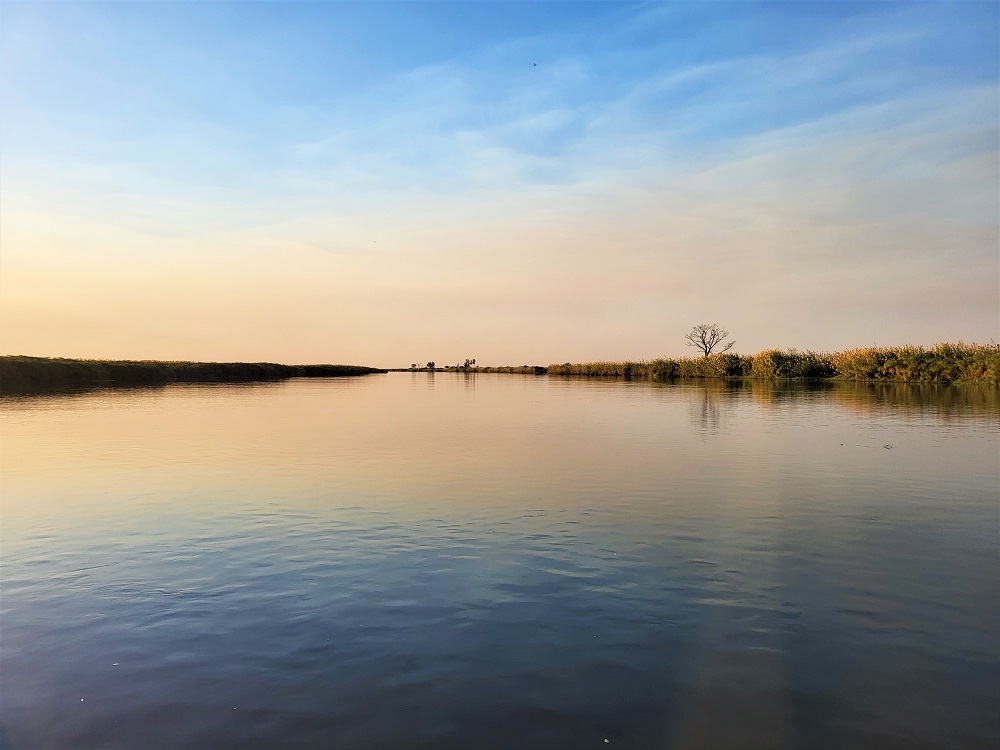
In northern Botswana, you’ll find the Okavango Delta, a vast, sprawling network of waterways and islands that at its peak covers some 18,000 sq km.
A UNESCO World Heritage Site, it’s one of the biggest inland deltas in the world and provides water to around one million people.

The wetlands are home to an astonishing number of birds, mammals, plants and fish.
Hippos, crocodiles, elephants, eagles, snakes, herons and many more call this incredible freshwater habitat home.
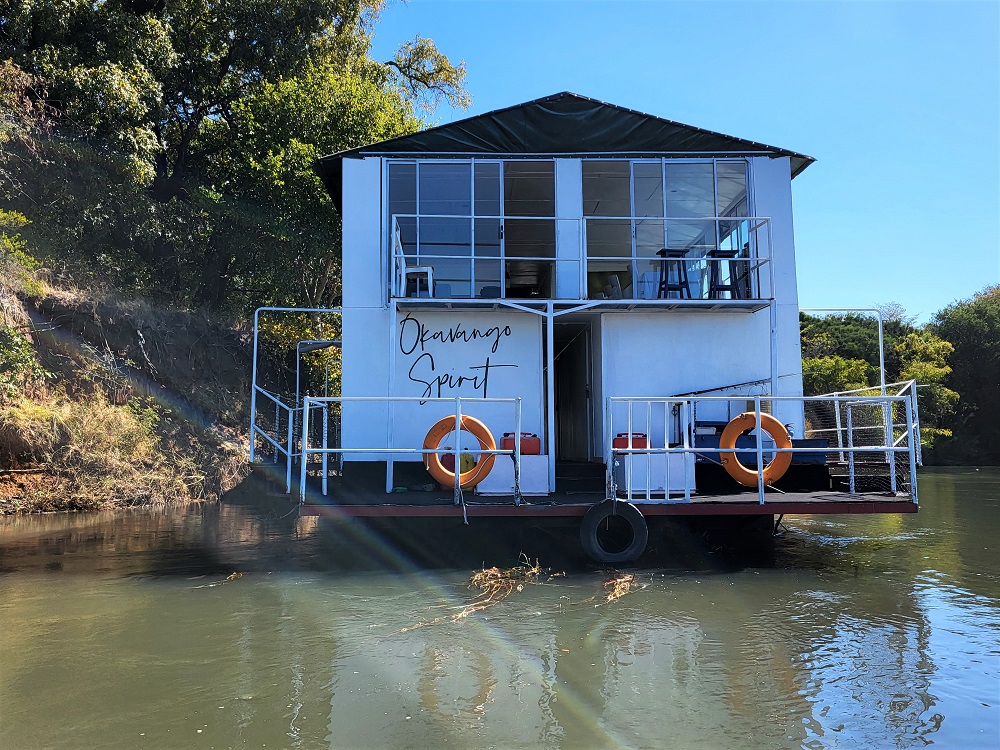
I spent three nights staying on a houseboat (above) on the Okavango River during my time in Botswana, taking short trips on a smaller speedboat to better explore this mesmerising environment.
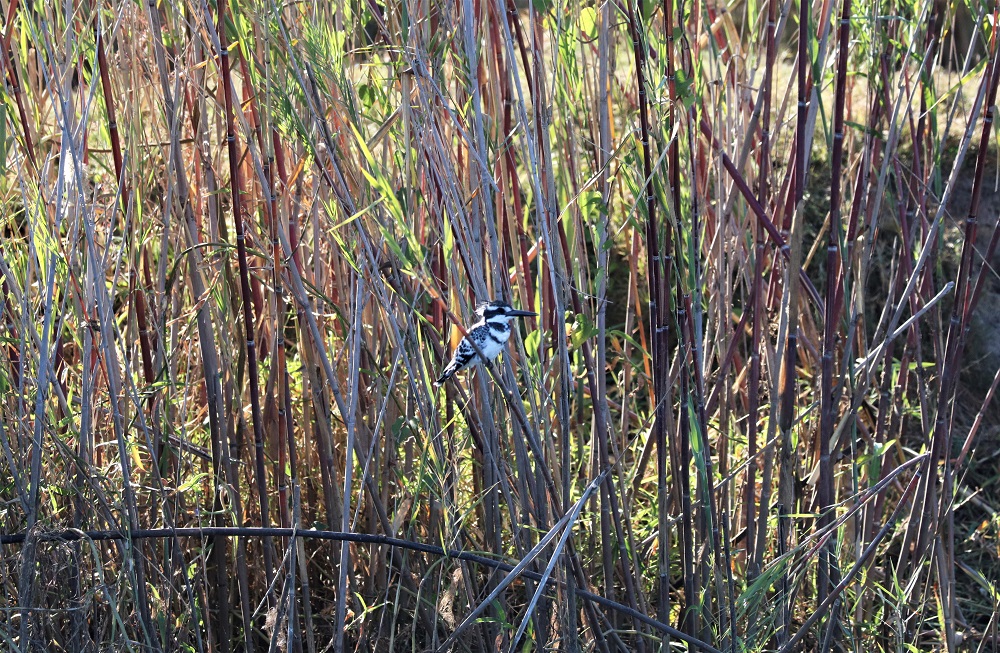
We arrived at the houseboat around lunchtime and after having lunch and getting settled, we spent the early part of the afternoon watching the birds.
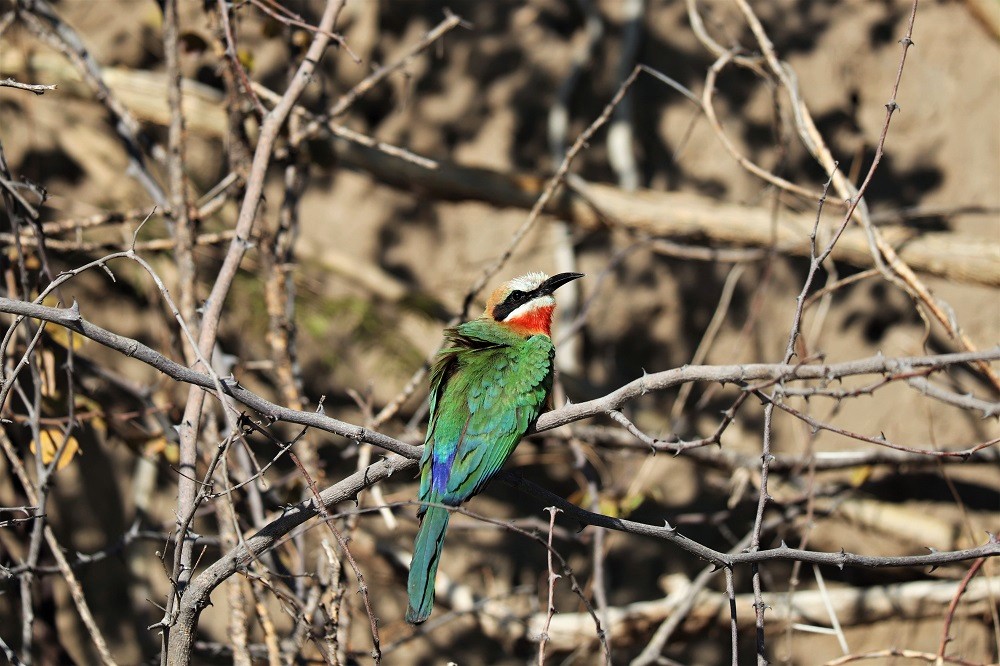
Among the species we spotted were pied kingfishers (above), which were flying in and out of the nests on the riverbank beside us, white-fronted bee-eaters (below) and long-crested eagles.
One of the guys on our trip was a keen birdwatcher, who would kindly point out the different species to us.
It was incredibly helpful as I’m terrible at telling birds apart and often have no idea what I’m looking at. But I found with his help, I got to know many of Botswana’s common species.
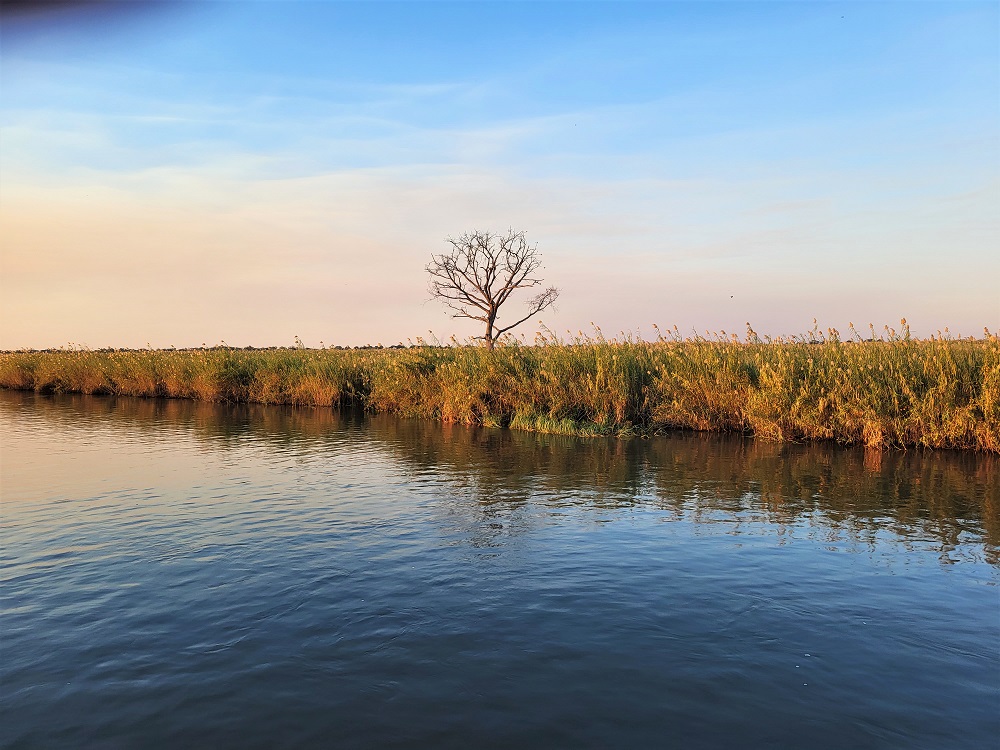
At 4pm, we set off for a short cruise up the still, peaceful river and I was amazed to find there was nary a sound to be heard.
Along the way we spotted fish eagles, storks, ibises, egrets and a trio of otters.
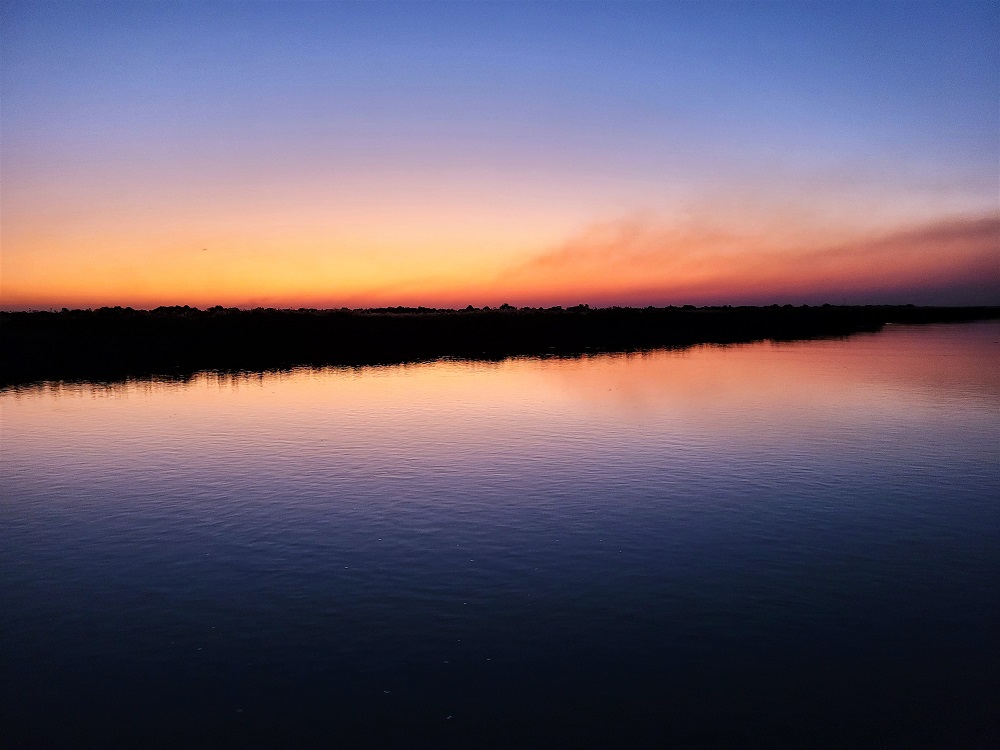
We arrived at our mooring around 6pm and I stayed out on deck to watch the sun go down over the delta. It was a breathtaking sight (above).
As night fell, everything turned pitch black and with no light pollution, the night sky was illuminated with the highest concentration of stars I’ve ever seen.
It was so clear we could see the milky way and it was a magical way to end our first night in the Okavango.

On our second day, we made our way off the river and through the dusty, bumpy roads to the Tsodilo Hills.
The UNESCO World Heritage Site boasts rock art by the San and Bantu peoples that are thousands of years old (above).
It’s an astonishing place and deserves its own post, so I’ll cover it in detail in a future post.

On our third morning, I was up just before the crack of dawn to watch the sun rise over the delta (above).
We set off for our first boat ride of the day at 8.15am, clambering aboard the speedboat for a cruise downriver.
Once again, I was amazed by how quiet it was with barely a soul to be seen. During our two-and-a-half hours on the river, we didn’t pass a single boat.
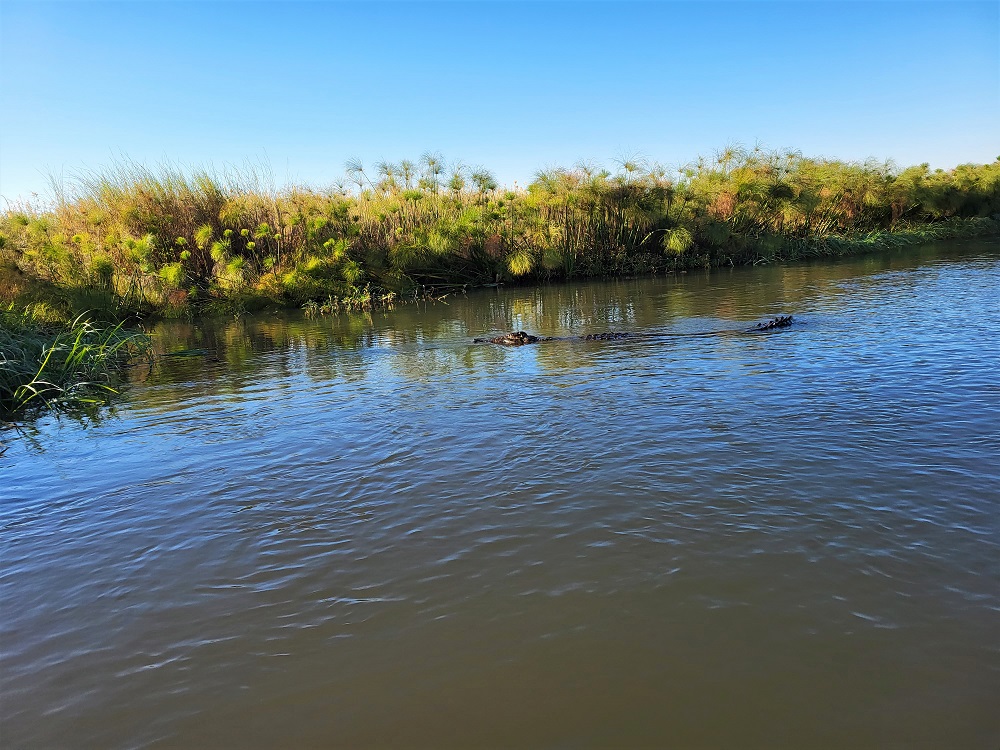
It didn’t take long before we spotted out first crocodile though – an enormous specimen floating on the water’s surface. We quickly sped by in case it was looking for breakfast (hence the wonky photo, above).
Cruising the river, we were never quite sure what we were going to see emerging from the rustling papyrus reeds or the inky black depths of the water.
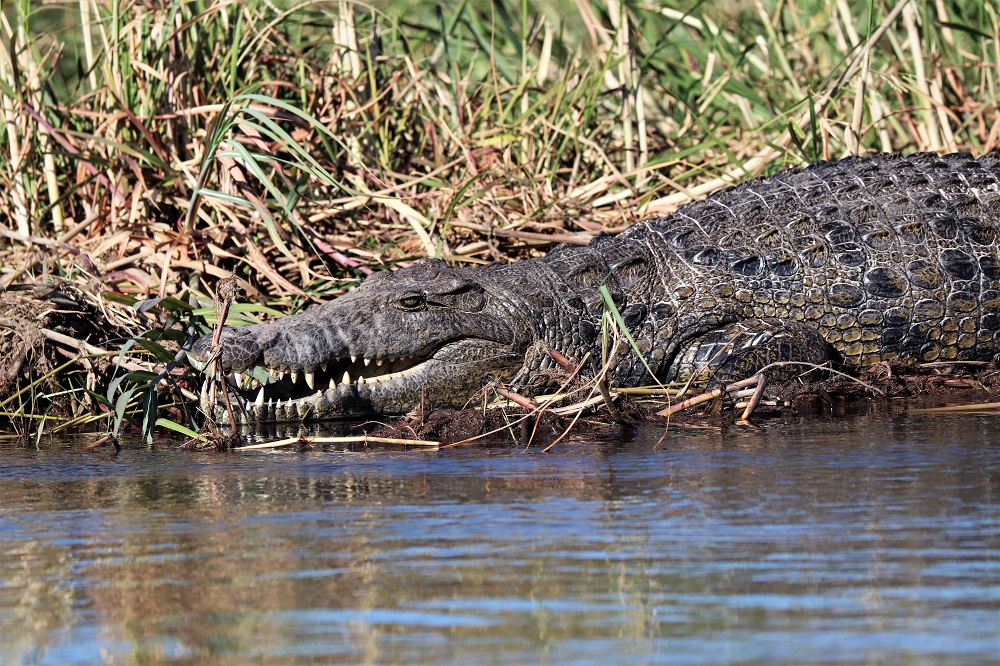
We saw lots of crocodiles during our trip, many of which were chilling on the riverbank as they digested their latest meal (above).

We also saw an abundance of birds, with fish eagles, swallows, kingfishers and, my favourites, the bee-eaters (above and below) all making an appearance.
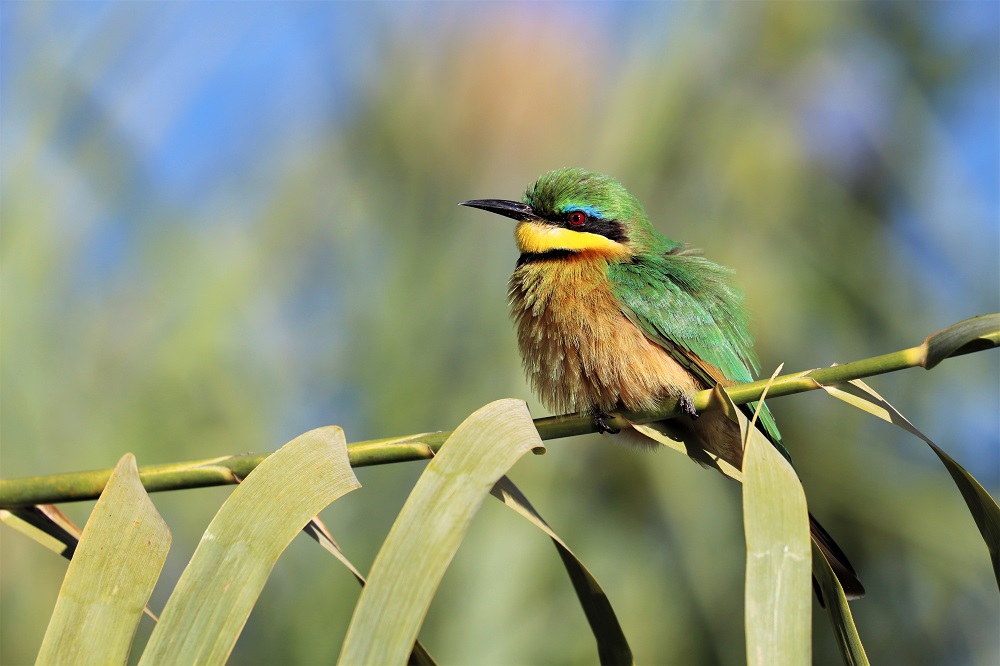
We also briefly glimpsed an antelope and an elephant among the reeds, as well as a vervet monkey in a tree. It was an incredible morning and I was amazed at how much wildlife we saw.
We arrived back at the houseboat around 11.30am. But this didn’t mean an end to the wildlife spotting, because shortly after lunch we found we’d been joined by a visitor.
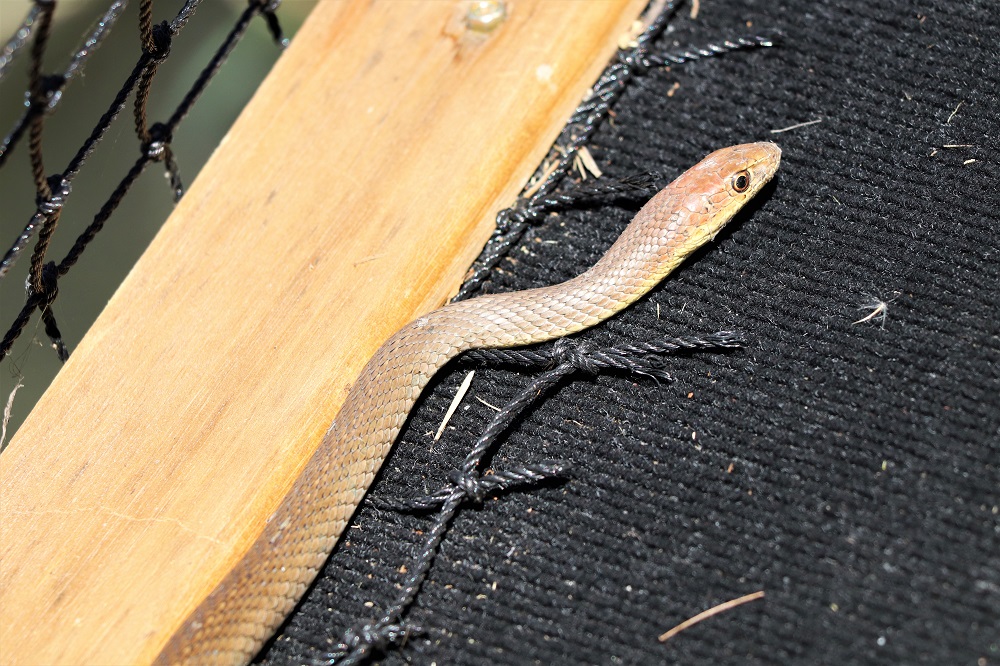
A harmless brown water snake had decided to make itself at home on the lower deck (above).
The snake was astonishingly calm and didn’t seem at all bothered by the curious humans who came to watch and photograph it, and it stayed on board for quite some time.
Apparently when you spot a brown water snake, the biggest thing to worry about is whether there’s a python hot on its tail as they like to hunt them. Luckily for us, our visitor proved to be python free.
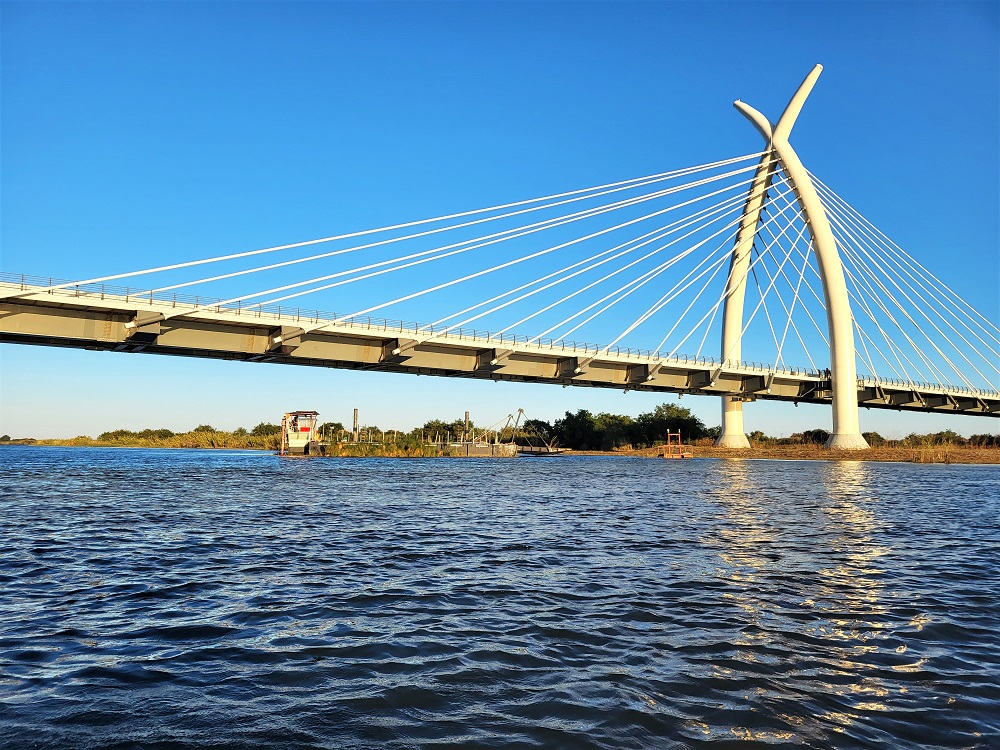
Around 4pm, we set off for another boat ride along the river, this time travelling upstream towards a huge bridge over the Okavango (above).

As we motored up the river, we saw a couple of crocodiles, along with quite a few wading birds such as storks, spoonbills and the goliath heron (above).
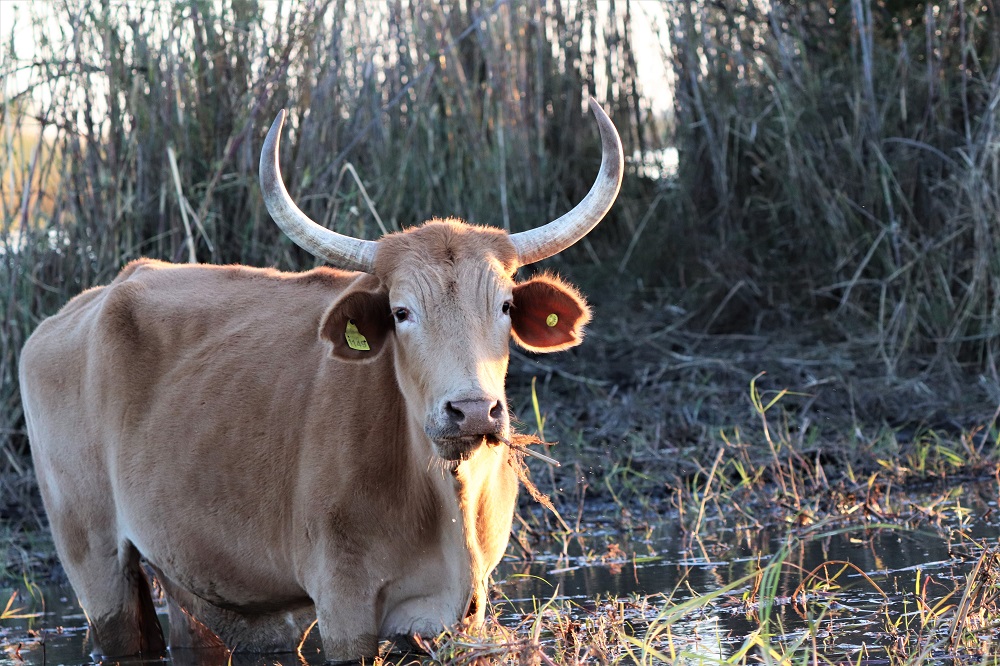
There were also lots of cattle grazing on the edge of the water (above).
The most memorable part of the boat ride was the hippos. Before the trip, the one animal I wanted to see more than any other in the Okavango was a hippo, having watched a documentary about them, narrated by the legendary David Attenborough, over Easter.
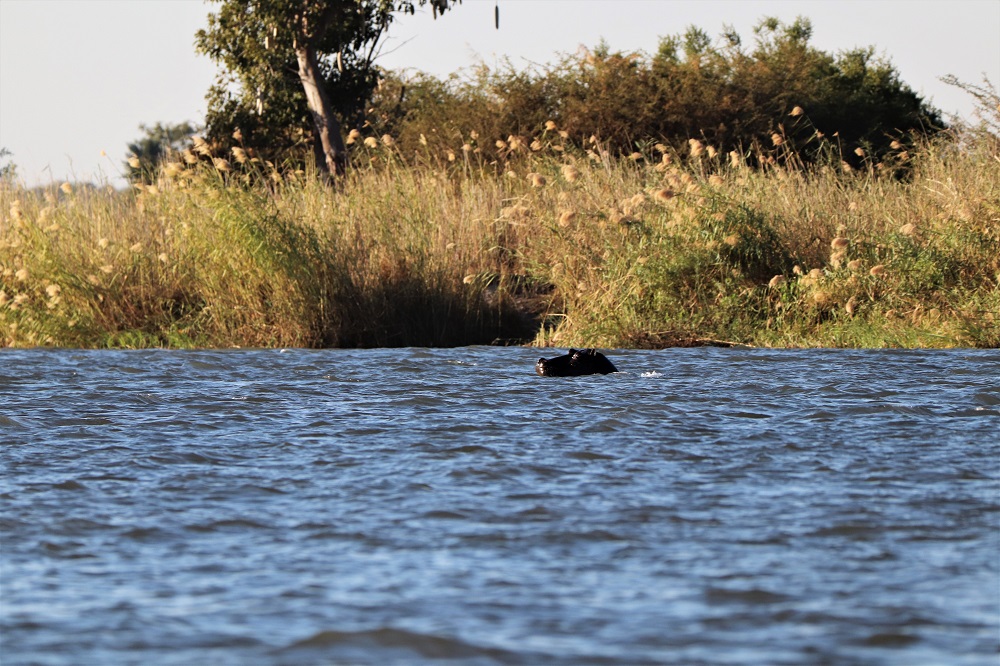
It didn’t take long before we spotted our first pod of hippos – the distinctive heads bobbing just above the water’s surface, their beady eyes watching our every move.
I was very excited until our guide told us we needed to pass them at speed because as the most dangerous animals in Africa, they could easily flip our small speedboat if they felt threatened.
Having already seen countless crocodiles in the water, I didn’t fancy our chances if we ended up in the river.
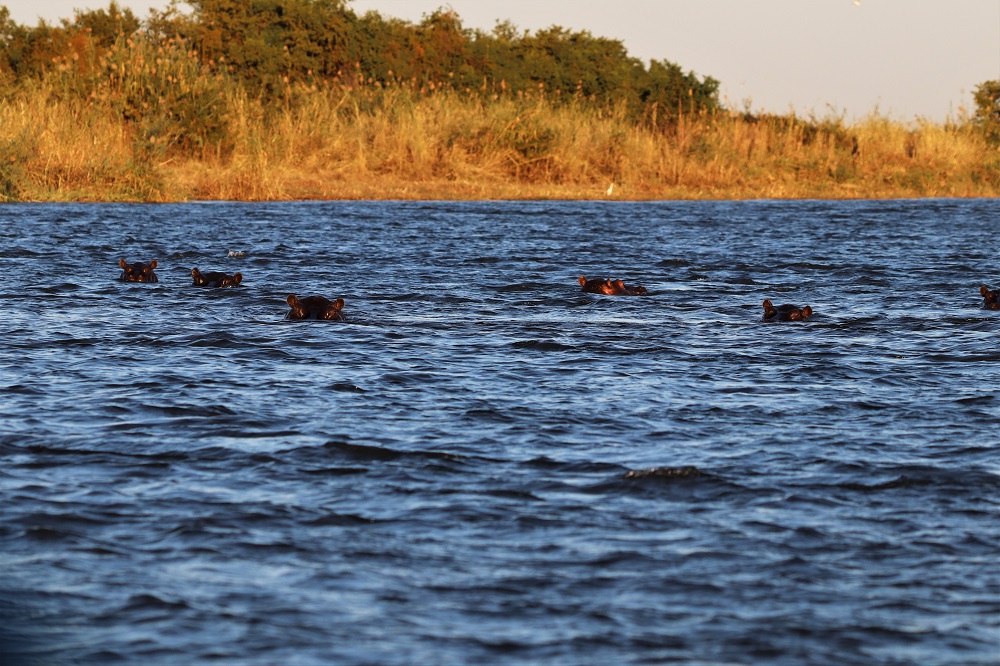
I began to feel increasingly anxious as we passed a number of menacing-looking pods whose bobbing heads and laser-focused eyes stayed locked on us the entire time we were in their vicinity (above).
One or two even bared their teeth as we passed, clearly unhappy to see us encroaching on their territory.
As we found more and more pods of hippos and passed them without incident, I began to relax as we sped on by.
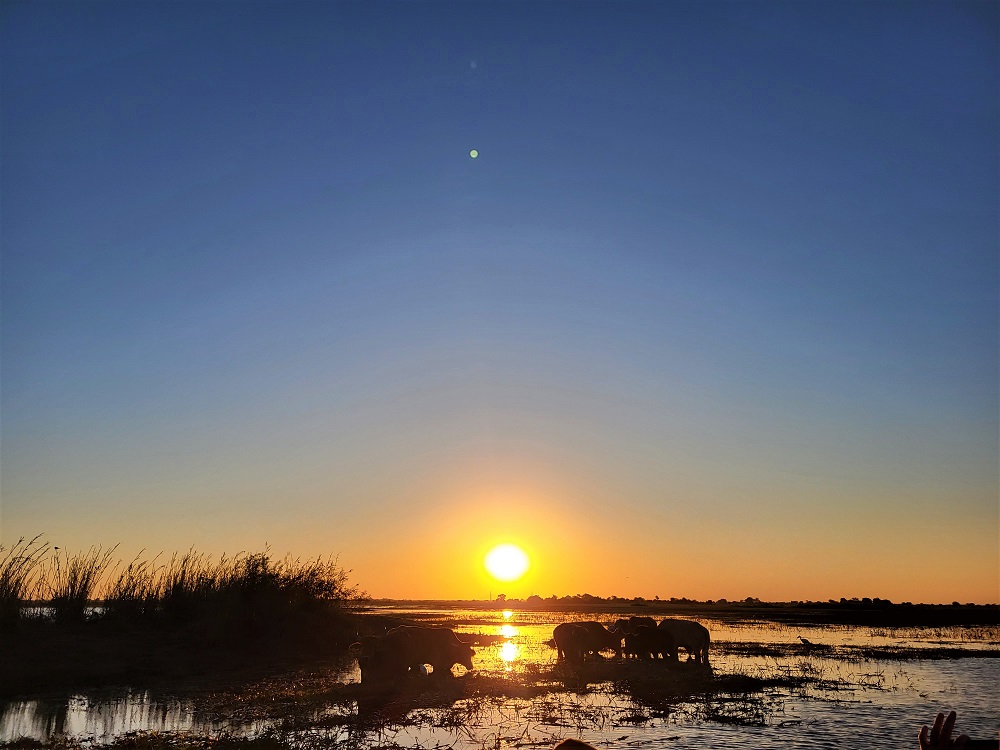
As we cruised along the river, the sun began to set (above) and we stayed on the Okavango long enough to watch the sun go down (above), arriving back at our houseboat around 6.15pm.
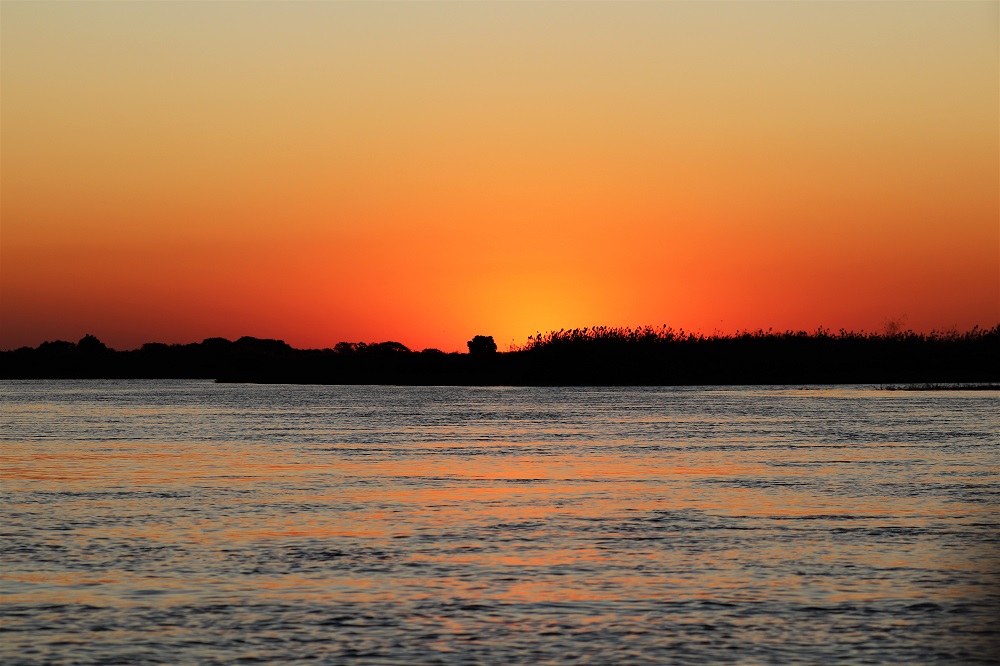
It was a wonderful way to end our time on this serene, spellbinding body of water.
Hippo-induced terror aside, I loved the three days we spent exploring the Okavango’s unique ecosystem and getting to know its fabulous wildlife.
 Little Old World
Oh wow, those views are gorgeous. Sunrises, sunsets wildlife. Looks like an amazing cruise! Maggie
LikeLiked by 1 person
Thanks Maggie. It was beautiful and so serene (apart from the hippos!).
LikeLike
What a fantastic experience. To see SO much wildlife is very special.
LikeLiked by 1 person
It was incredible. I couldn’t believe how much wildlife we saw, it was a real privilege
LikeLiked by 1 person
Those hippos look alarmingly sinister! I didn’t realise they were quite so dangerous.
LikeLiked by 1 person
Sinister is a very apt description. It was very unnerving going past the hippos and I hadn’t realised they were quite so dangerous either until we were out on the water with them!
LikeLiked by 1 person
It’s amazing how important wetlands are and how much life they support. Sounds like such a unique experience to stay on a houseboat during Botswana to explore the river. Your pictures are gorgeous.
LikeLiked by 1 person
I was amazed by how many diverse species the Okavango Delta supports. But it’s a little sobering when you think just how much of the local ecosystem depends on its waters. It was the first time I’d been on a houseboat like that and it was a great way to experience the river. Thank you 🙂
LikeLiked by 1 person
What a special special place. Places like this always bring home how important protecting our world is, and how small we are in it. Beautiful.
LikeLiked by 1 person
It’s so true. We’re just one species among many millions. It’s crucial we protect places like the Okavango as so many species rely upon it. It’s a magical place.
LikeLike
What an incredible experience this must have been. Seeing a chunk of Africa (I don’t really count my time in Morocco) is on our wish list and you have certainly got me thinking about Botswana. These landscapes… that array of wildlife in such an authentic setting… the sunsets… this is the stuff of wanderlust dreams. The crocodiles are pure unadulterated evil but I would still find it a thrill to catch some glimpses.
LikeLiked by 1 person
Botswana’s a great introduction to southern Africa, especially if you want to see some wildlife, as there’s such a diverse range of species and it’s a relatively safe and prosperous country. Although if you don’t like wildlife there isn’t much else to see. The crocodiles on the riverbanks aren’t too much of a worry as they’ve usually just eaten, it’s the ones in the water you have to worry about. Having said that, I still wouldn’t get too close to the ones on the riverbank either…
LikeLiked by 1 person