
If you want to see elephants in the wild, look no further than Chobe National Park.
The 11,700 sq km park in north-western Botswana is home to some 35,000 elephants, the highest concentration of the pachyderms in the world.

The sprawling park was opened in 1968, making it Botswana’s first national park, and it has a diverse range of habitats.

The area around the Chobe River is home to the park’s biggest concentration of animals.
There, alongside the aforementioned elephants, you’ll find giraffes, vervet monkeys, lions, crocodiles, impala, kudu, zebra and more.
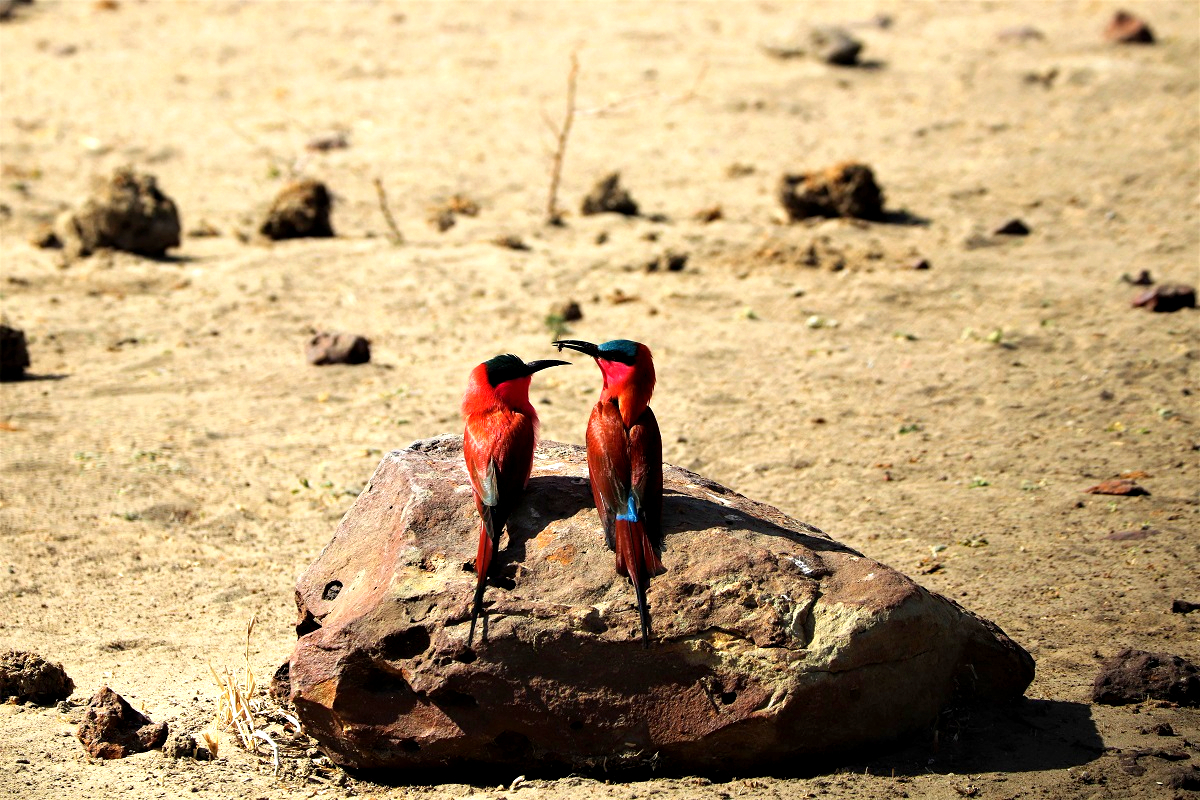
The park is also home to more than 400 species of bird, including eagles, kingfishers, herons, kori bustards (below) and the spectacular carmine bee-eater (above).

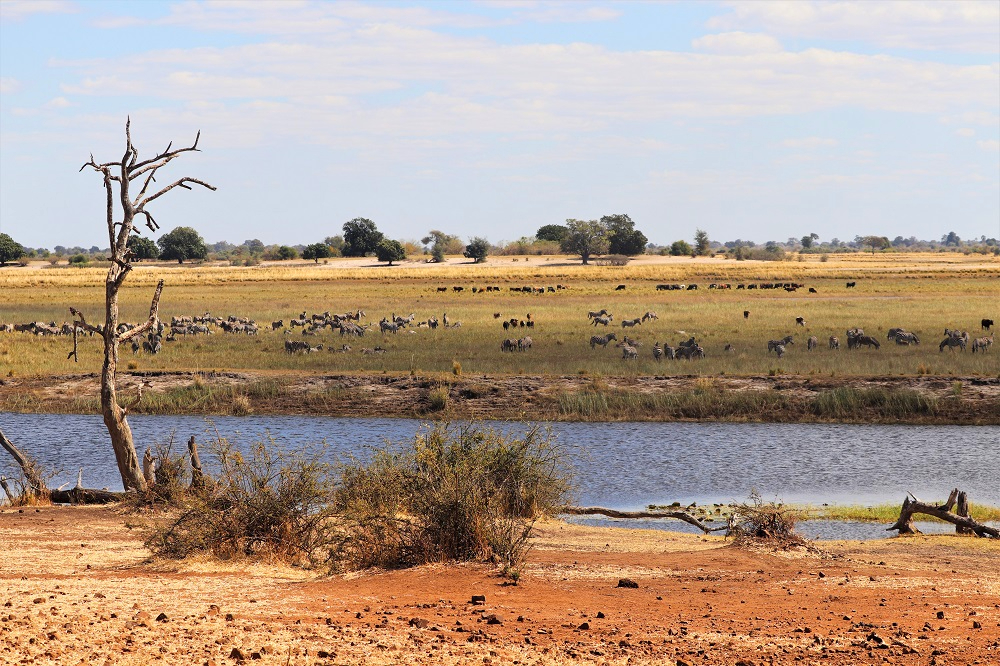
I spent two days exploring the Chobe Riverfront area (below), wild camping in one of the park’s campsites not far from the river.
After arriving in the park late morning and settling into the camp, we set off for our first game drive at 4pm.
We headed in the direction of the Chobe River and along the way we spotted guinea fowl, hornbills, impala and kudu.
Just up from the riverbank, we were awe-struck to find a lion, camouflaged by the bushes as it enjoyed a bite to eat.
Down by the river, I was amazed by how many elephants there were.
I knew the park was home to more elephants than anywhere else on Earth, but seeing so many freely walking around in one place was mind boggling.
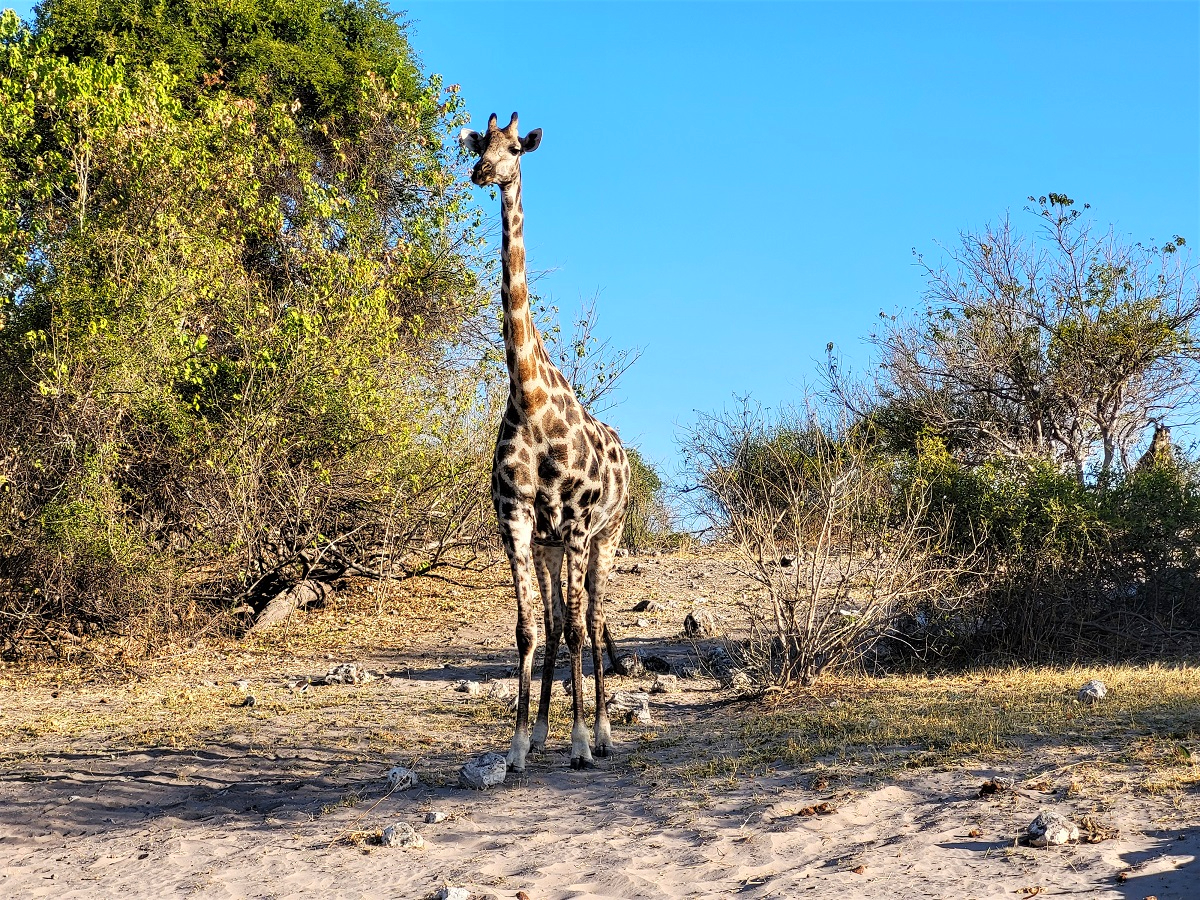
On top of that, we also spied a few crocodiles, giraffes (above) and a hippo in the distance, basking in the mud.
The sheer volume of wild animals we saw in such a small area was astonishing and I was surprised by just how close we were to them.

From the riverbank, we headed in the direction of the scrub, where we saw yet more giraffe, kudu (above), impala and a sable.

Towards the end of our drive, we came upon the lion we saw at the start, now lying out in the open (above).
He was a magnificent beast and I was surprised by how chilled and unbothered he was by us gawping humans, possibly because he’d just had what was presumably a good meal for a lion.
As we stopped to watch the lion, a herd of elephants that had been drinking down by the river began making its way up the bank to where the lion was (below).
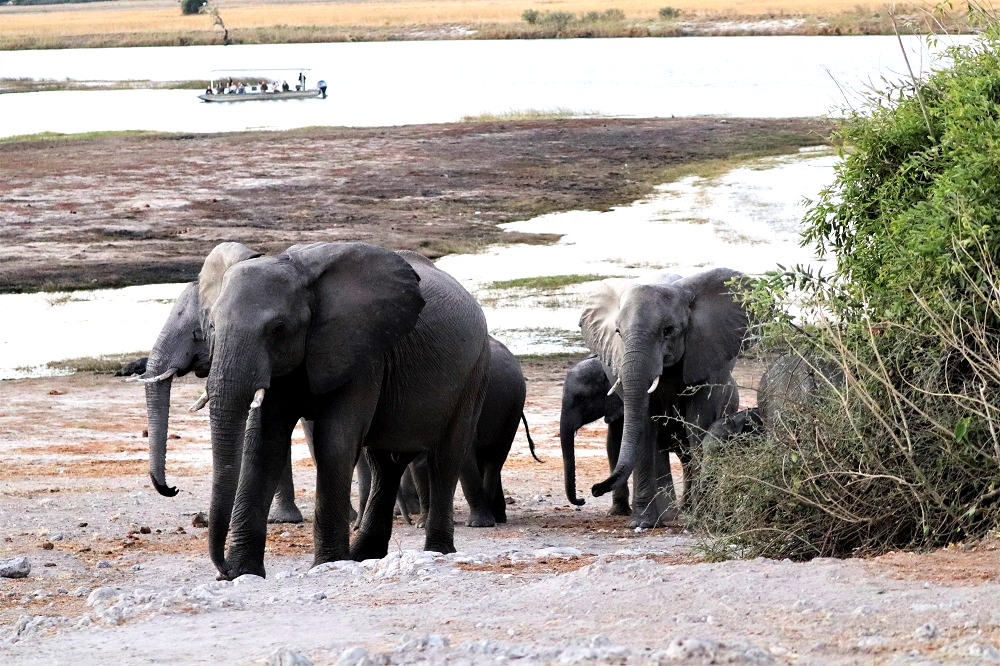
As the herd passed, the adults formed a protective cocoon around the babies and chased the lion off, trumpeting their trunks in the process.
The elephants made an enormous racket as they trundled past, continuing to flank the babies.
It was an incredible feat to witness after such a short period of time in the park.

As the sun began to set over the Chobe River, we made our way back to camp in time for dinner, still stunned by the marvellous scenes we’d encountered.
The following morning, we were up and out just after dawn, heading back towards the river.
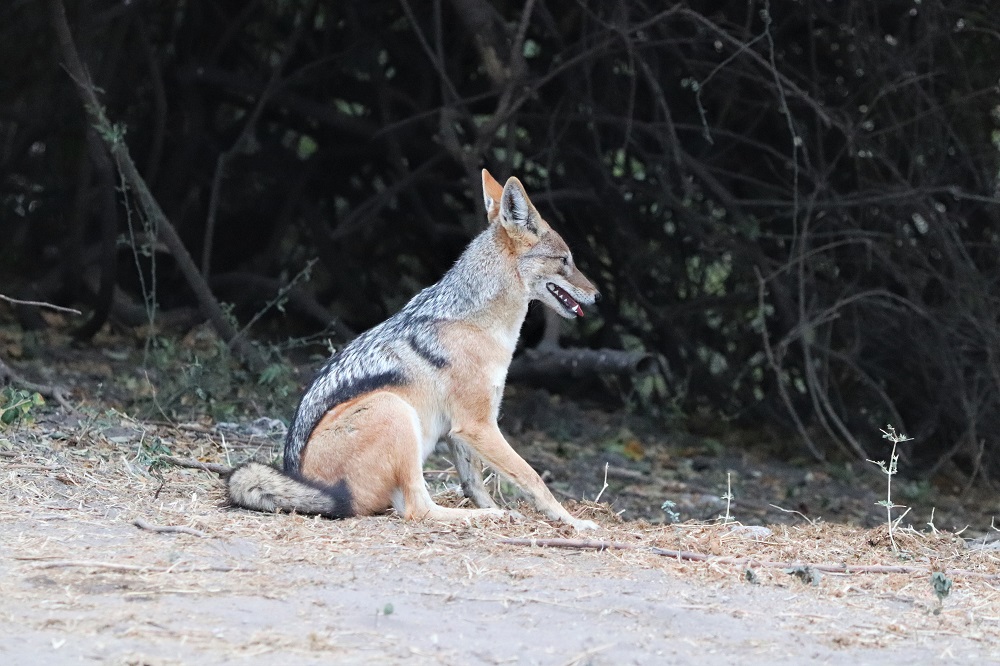
There we found three jackals happily helping themselves to the lion’s leftovers from the day before.
We drove around the park, which seemed noticeably quieter than the previous evening, although we once again came across a steady stream of elephants and giraffes.

Down by the river, we spotted two lionesses lying down behind a bush, while across the river a third lioness was prowling around (below).

We stopped and spent some time watching the lionesses, as eventually, the third lioness crossed the river to join the other two.

The Chobe Riverfront is home to two adult male lions (two brothers who lead a pride) and it wasn’t long before we found the second male lion sauntering through the bush (above).

The lion got right up close to our truck, again completely unperturbed by us, before striding right on by and carrying on with his journey.
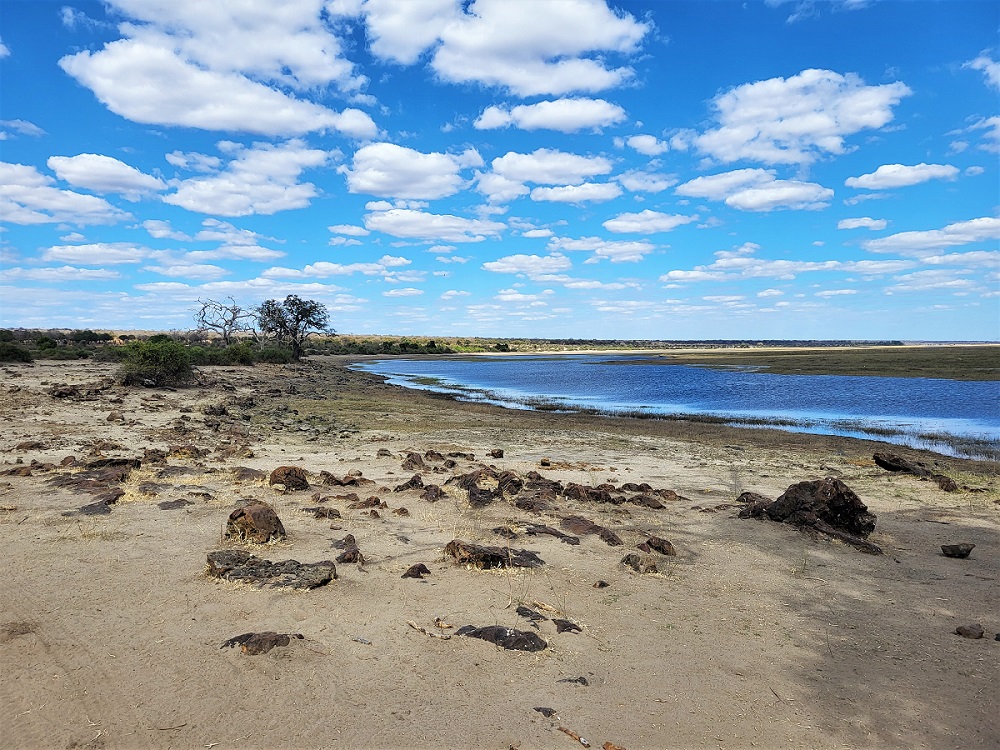
Shortly afterwards, we stopped at a stretching point near the river, where I spent some time photographing a cape glossy starling (below).
We saw the starlings everywhere in Botswana and I couldn’t get enough of the stunningly iridescent birds whose plumage glistened in the winter sun.

We headed back to camp, having spent almost five hours driving around the park.
We had lunch, before popping to Kasane, the nearest town to Chobe, for supplies and from there to the river, where we enjoyed a three-hour boat ride.

The Chobe River cruise was one of my favourite experiences in Botswana.
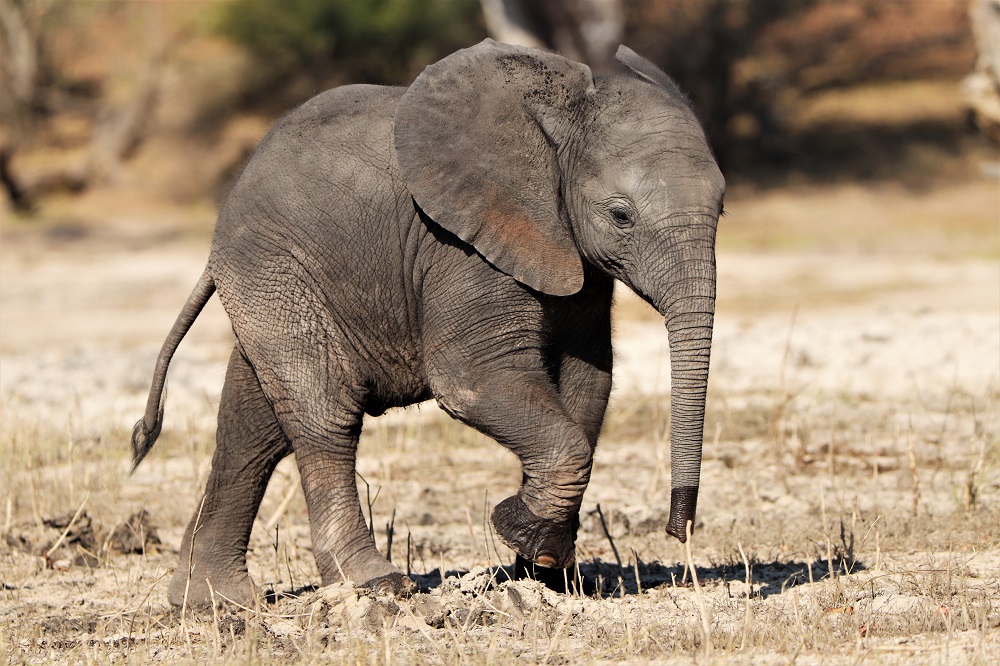
We saw some incredible wildlife (spoiler alert: swimming elephants, baby elephants and swimming baby elephants) and I’ll write about it in my next post to do it justice.
The next morning (my birthday), we were up and out at the crack of dawn as we had a long drive to Savuti, in another part of Chobe National Park.
Along the way, we set off for a game drive that followed the course of the Chobe River.
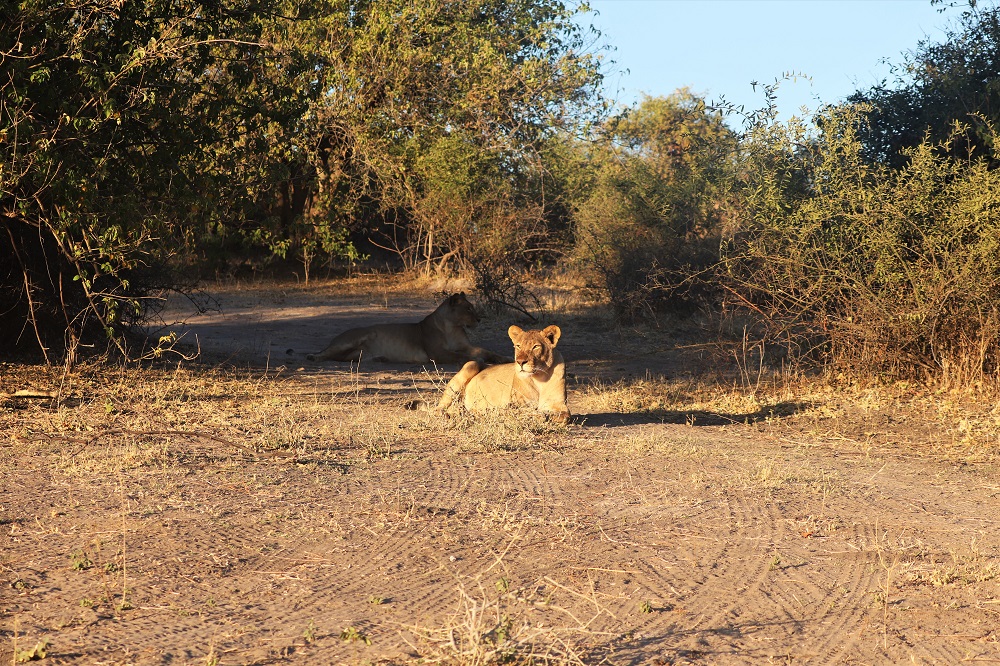
First up, we stumbled upon the three lionesses we’d seen the day before, feasting on a dead elephant.
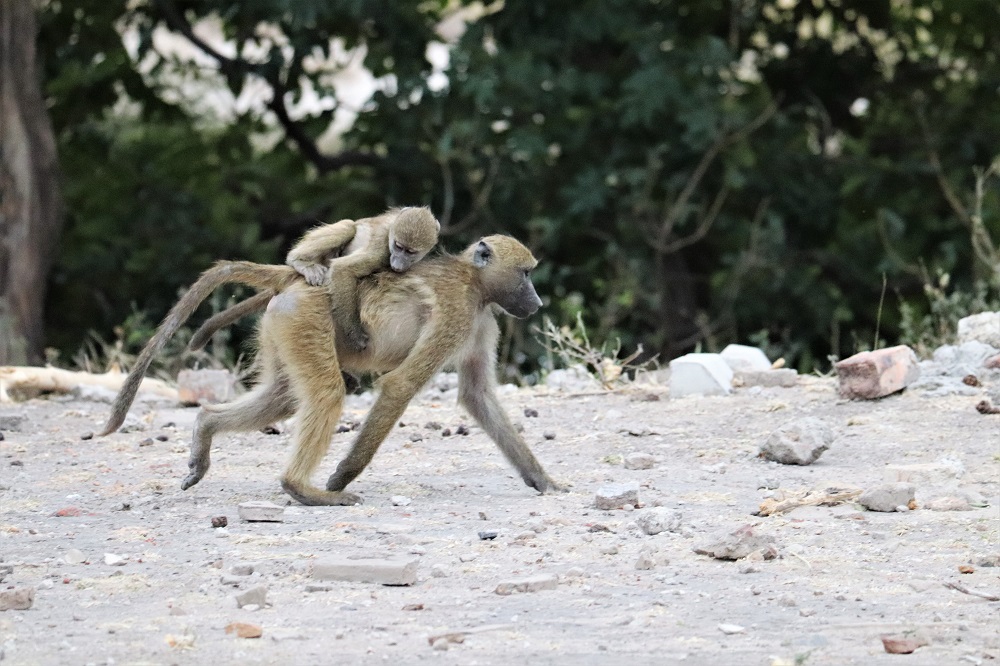
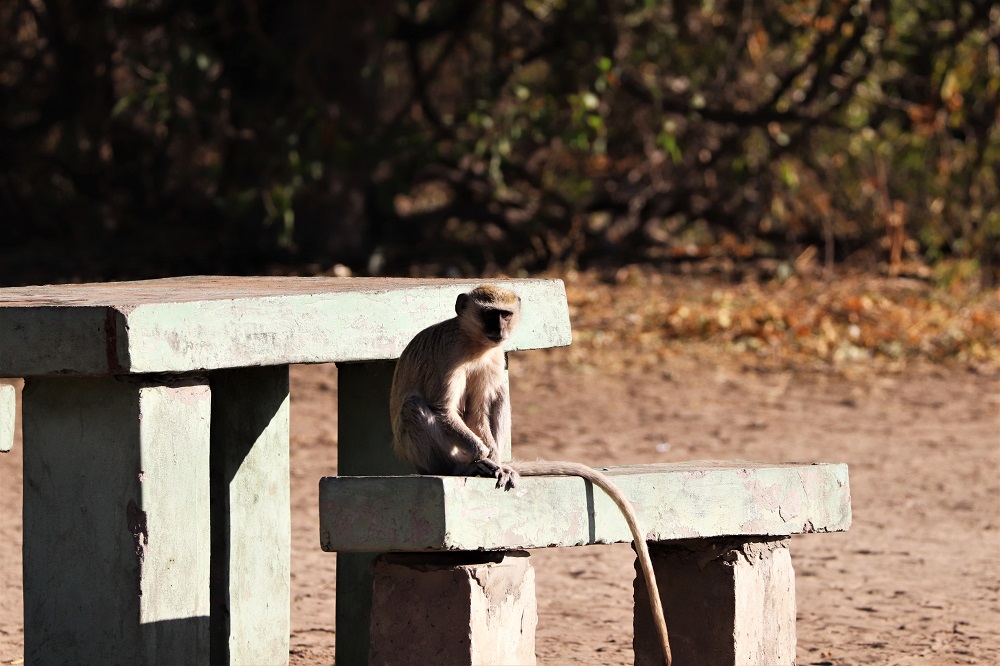
As we drove around, we saw more elephants, giraffes and lots of vervet monkeys (above).

As we continued to follow the river, we saw impala (above), waterbuck (below) and giraffes, and before long, we started to see zebra, too.

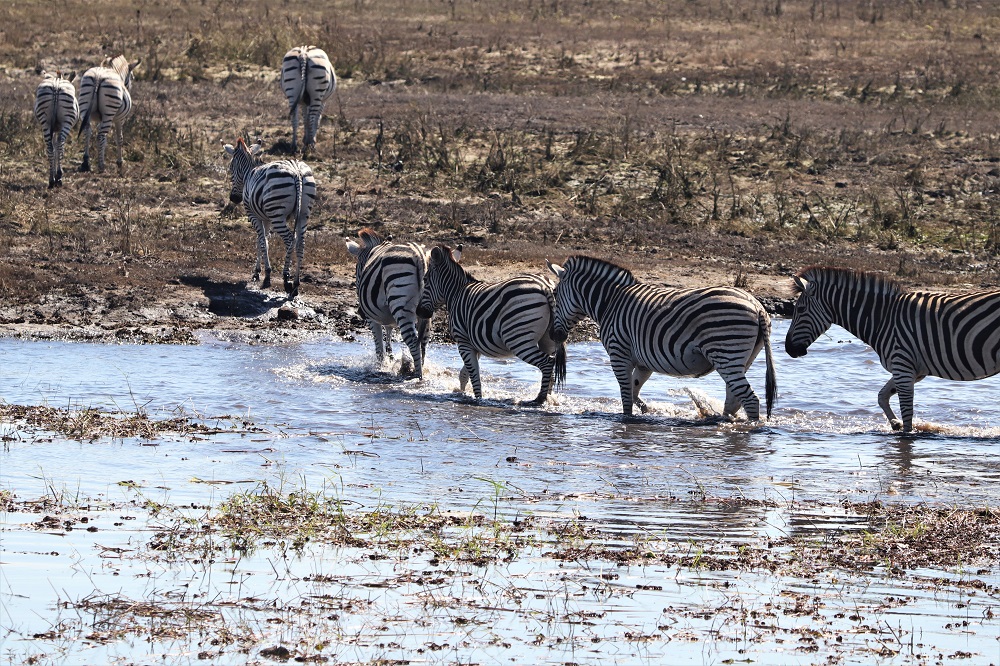
We stopped for a while to watch a dazzle of zebras cross the Chobe River.

The first few zebras chose the wrong path and stumbled as they hit a particularly deep part (below).

It was amazing to watch as the remainder of the dazzle took note and shifted slightly to the right, where they crossed trouble free (below).
As we drove through Chobe National Park on our way to Savuti, the landscape began to change. The soil changed from sandy yellow to red and, latterly, brown.
It’s hard to fathom that we only spent two full days at the Chobe Riverfront because we experienced so many memorable moments.
The amount of wildlife we saw was astonishing and it far exceeded my expectations. It’s an incredible place and one of the world’s great national parks.
 Little Old World
Nature in the raw. And to think that animals such as these once were abundant throughout enormous areas in Africa.
LikeLiked by 2 people
It was incredible to see these wonderful animals in their natural habitat, yet so sad to think they’ve been reduced to such small parts of the continent and many are now endangered.
LikeLiked by 1 person
Your photos are quite spectacular and so is seeing wild animals in their natural habitat. Thanks for the tour, I thoroughly enjoyed it. Cheers, Aiva 🙂 xx
LikeLiked by 2 people
Thanks very much Aiva, glad you enjoyed it! Seeing animals in their natural habitat is an incredible experience and such a privilege. Hope you’re having a good weekend 🙂
LikeLiked by 1 person
Fabulous photographs! The lions are awesome, but I keep coming back to the giraffe’s head peeking over the bushes as my favourite. That or your opening elephant. What an experience you had.
LikeLiked by 1 person
Thanks Anabel! It was an incredible experience. I’m not sure I have a favourite, but I really like how the animals have such different expressions.
LikeLiked by 1 person
Just incredible, I also wrote about Chobe after our visit – a truly special place ❤
LikeLiked by 1 person
Thanks Hannah, it’s a very special place. I’ll have to have a look for your post 🙂
LikeLike
I’ve been lucky enough to spend quality time with elephants in Thailand, Cambodia and India. But boy would I love to add Africa to that list. In this regard, Chobe National Park looks like a fantastic choice. Your post also reminds me that I haven’t seen enough giraffes in my life, they are such gentle, majestic creatures. I do like the intimacy in the shots you captured. The kingfishers in consultation (is that something in its beak, the dude on the right?). The zebra mid-splash… baby monkey hitching a ride on mama…. the lion who seems to be giving you such a regal (and somehow slightly menacing at the same time) look. Killer sunset shot…
LikeLiked by 1 person
Thanks for your kind words Leighton. I’d love to see elephants in the wild in Asia. As far as wildlife in southern Africa goes, Chobe’s a great choice because there’s a good chance you’ll see most local species and four of the big five (there are no rhinos), thanks to the abundance of water. The giraffes are lovely and I was surprised by how well they blend into their surroundings, especially given how tall they are. Yes, the bee-eaters are feeding, one’s passing food to the other. I guess that’s the beauty of seeing animals in their natural habitat and spending so much time with them, you get to see them in different contexts. It was a real privilege to have been able to spend so much time with these magnificent creatures.
LikeLiked by 1 person
Great captures of the wildlife. It must have been so incredible to see so many of these wild animals up close. Sounds like a great spot to celebrate your birthday.
LikeLiked by 1 person
Thank you 🙂 It was an incredible experience and a little surreal to see so many animals you normally only see on TV or in pictures up close and in the wild. It certainly made for a very memorable birthday!
LikeLiked by 1 person
What an incredible place. And to think you saw all of this in just a couple of days! As a kid, I loved watching wildlife documentaries (and had a particular soft spot for Big Cat Diary, which followed a pride of lions, a cheetah family and a mother leopard and her cubs) and I’ve always wanted to go on a safari and see them for myself. Maybe one day it will happen 🙂
LikeLiked by 1 person
Thanks Rosie. It was astonishing how many animals and how many different species there were in such close proximity, and it was very surreal seeing the sorts of things you’ve only ever seen on a wildlife documentary in person. I hope one day you get to go on safari to see the big cats 🙂
LikeLiked by 1 person