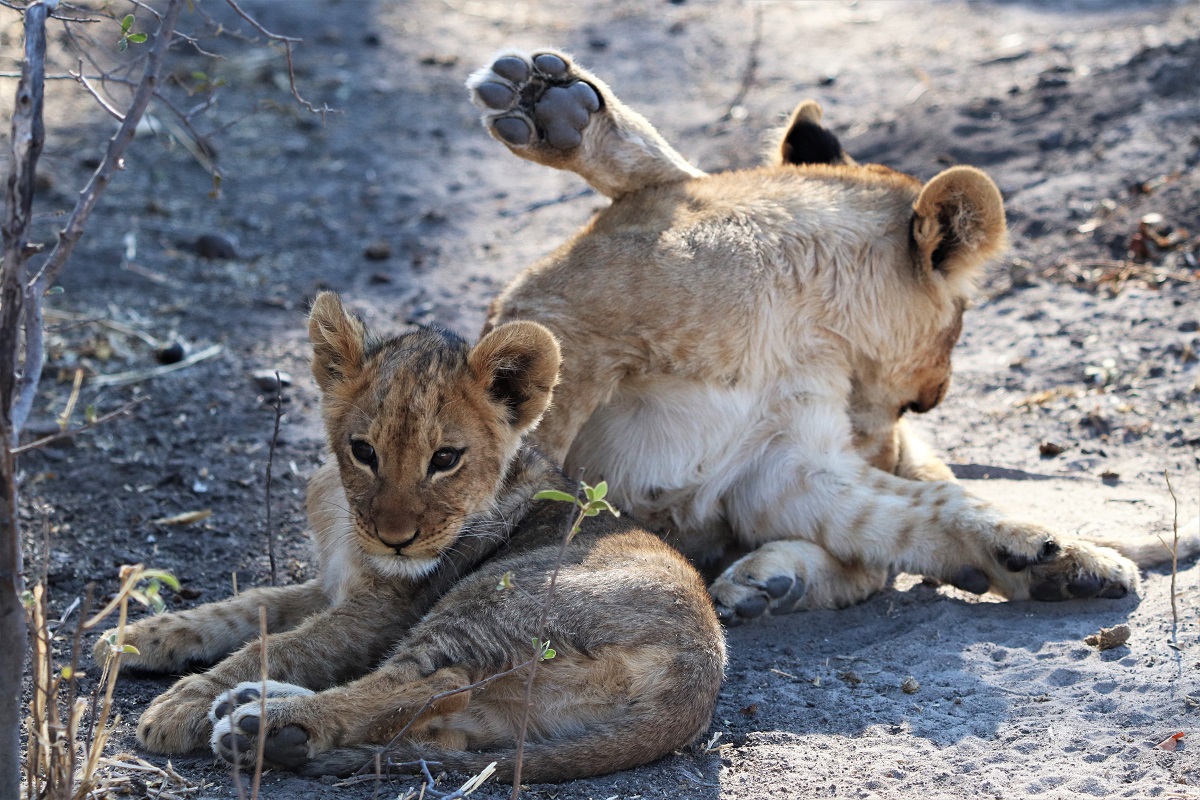
When I think of Chobe National Park’s Savuti region, two creatures spring to mind – lion cubs and wild dog pups.
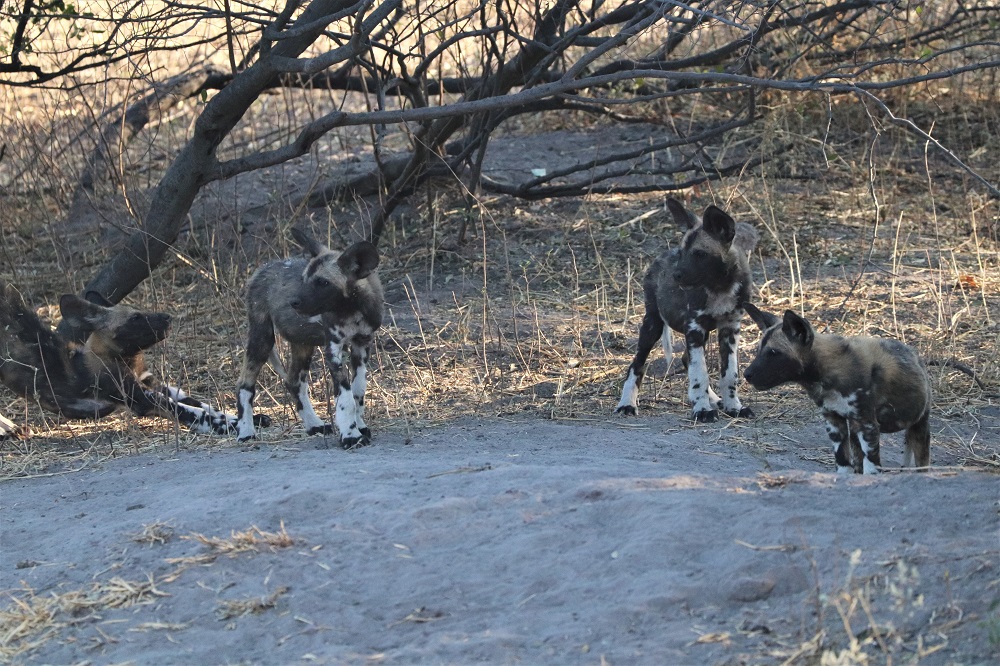
We didn’t see a huge amount of wildlife in Savuti compared to the Chobe Riverfront, but what we did see was supremely adorable. Be warned, this post contains lots of cute animal photos.

Savuti lies in the south-western corner of Chobe National Park and is renowned for its flat terrain.
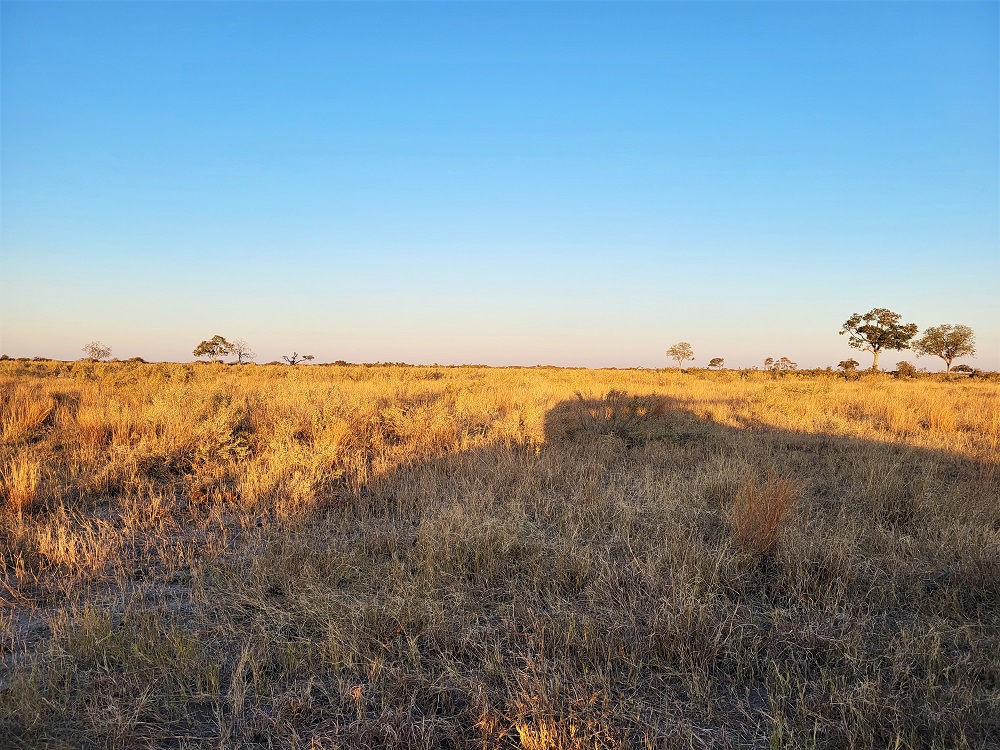
This quiet, remote area of grasslands and marshes was once part of a huge inland sea that encompassed much of northern Botswana.
But it’s now dry save for the mysterious Savuti Channel, which flows on and off according to the shifting tectonic plates.

When I visited Savuti over the summer, the channel was bone dry, although it flowed as recently as 2014 having reappeared in 2008 after a 20-plus-year dry spell.
We arrived at Savuti via the Chobe Forest and a long drive along some very bumpy, sandy tracks.
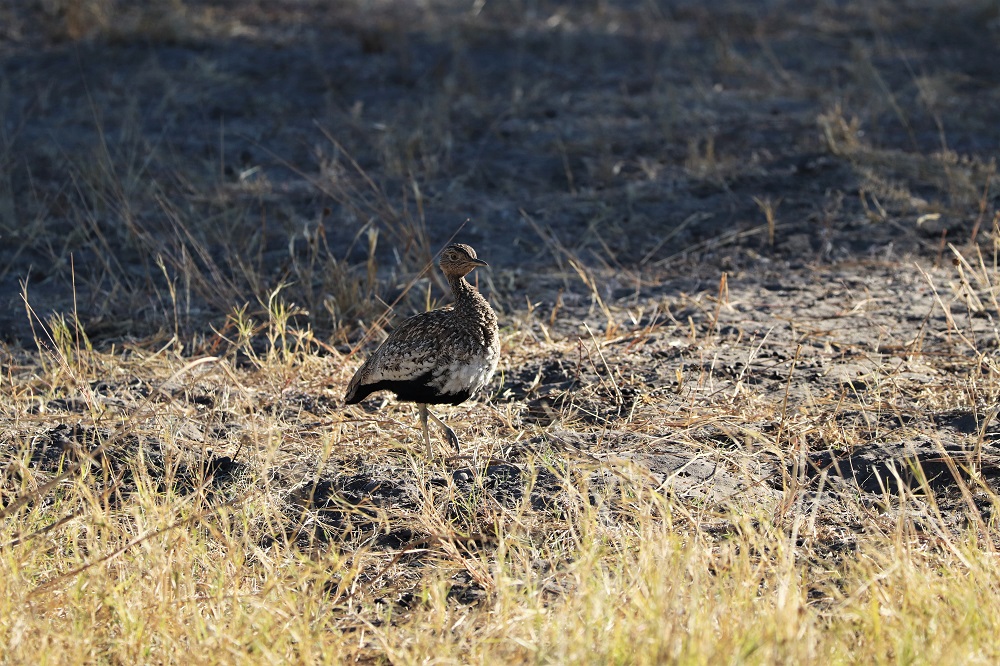
We were thrown about a fair bit in our safari truck on our way to the campsite and at times, it felt a bit like being on a fairground ride.
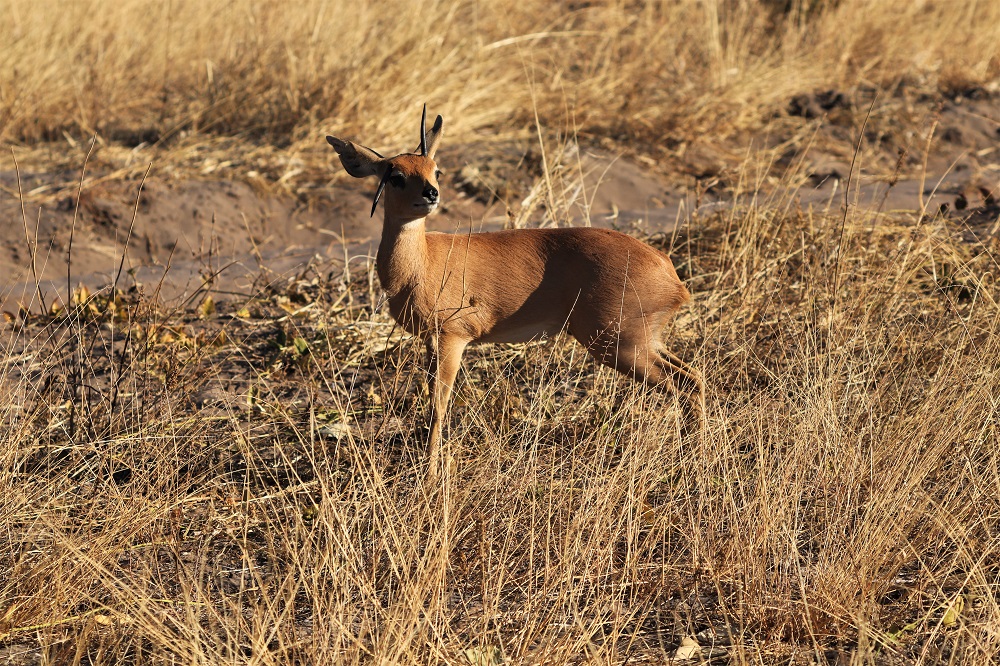
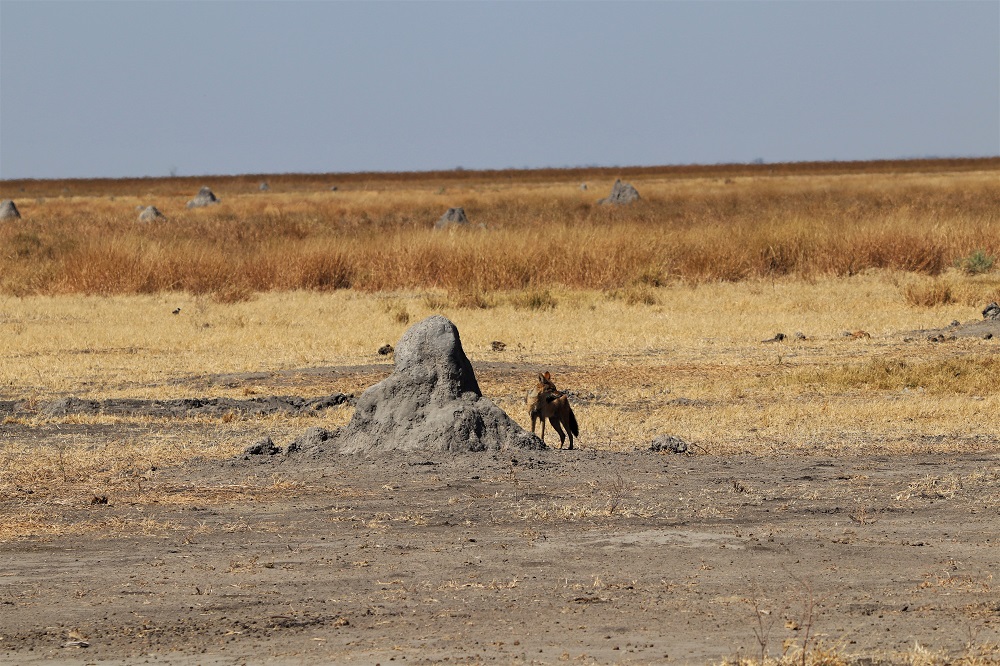
We didn’t see much wildlife during the long drive, although we spotted the odd elephant, giraffe, impala (above) and kudu.

Towards the end of our drive, we came upon a small pack of endangered African wild dogs with a litter of puppies (above and below).
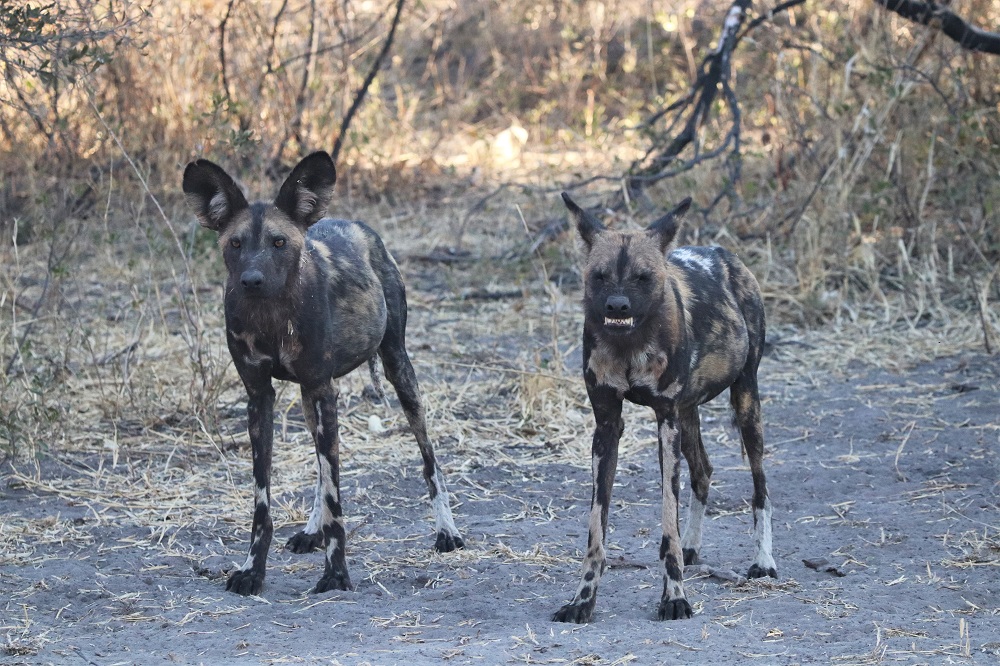
We stopped for a while to watch the wild dogs and puppies, and to take some photos.
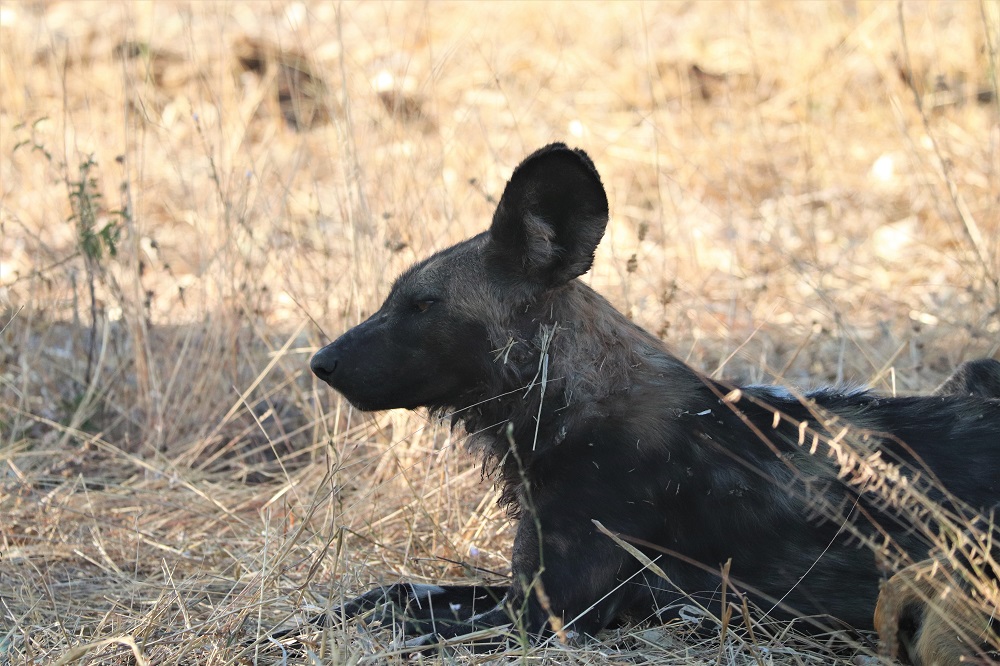
We reached our campsite around 6pm, where we had dinner and spent the evening chatting around the campfire. The following morning we set off just after 7am for a game drive.

Along the way, we spotted a giant eagle owl, along with a few kudu (above) and impala.

After a short while, we came upon a pride of lions, consisting of a male, three lionesses and seven or eight cubs.

We spent an absolute age watching the cubs as they fed and played in the dry grasslands.
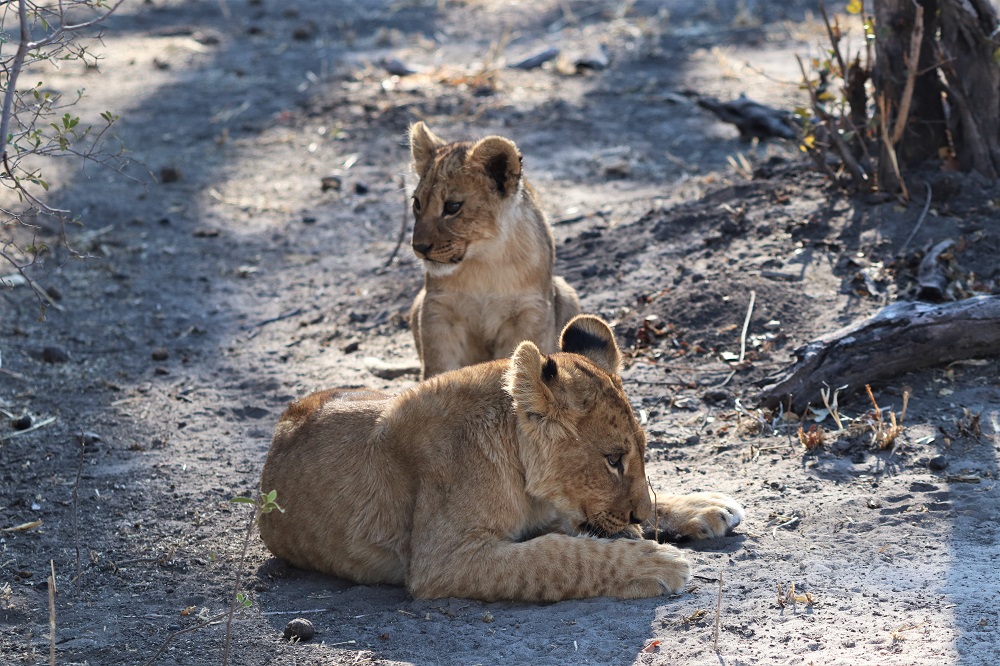
I was amazed by how calm and unbothered they were by us.

They looked up as we arrived, then carried on doing their own thing, ignoring us as we sat gawping at them, completely overawed by the scenes in front of us.

Eventually, we left the lions in peace and continued our drive around the Savuti region.
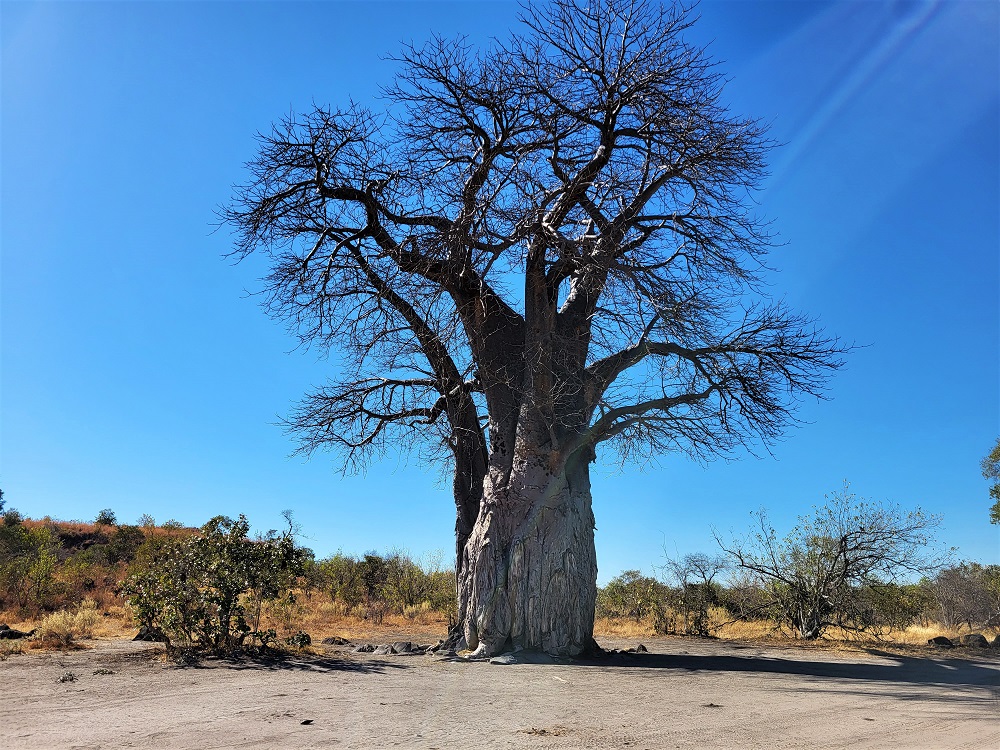
We stopped for tea by a clearing under a huge baobab tree (above), where we were joined by a number of hornbills, on the hunt for any leftovers from our teabreak.
The hornbills weren’t shy and I was surprised by how close they got to us (below).
They seem to be the seagulls of southern Africa in the way they’re constantly looking to scavenge any fallen crumbs of food, but far less aggressive and a little cuter.

We continued driving around for a little while looking for more wildlife, before setting off over the very bumpy, dusty terrain in the direction of our next base – Moremi Game Reserve.

Along the way, we spotted a flock of vultures in the distance crowded around a dead elephant.
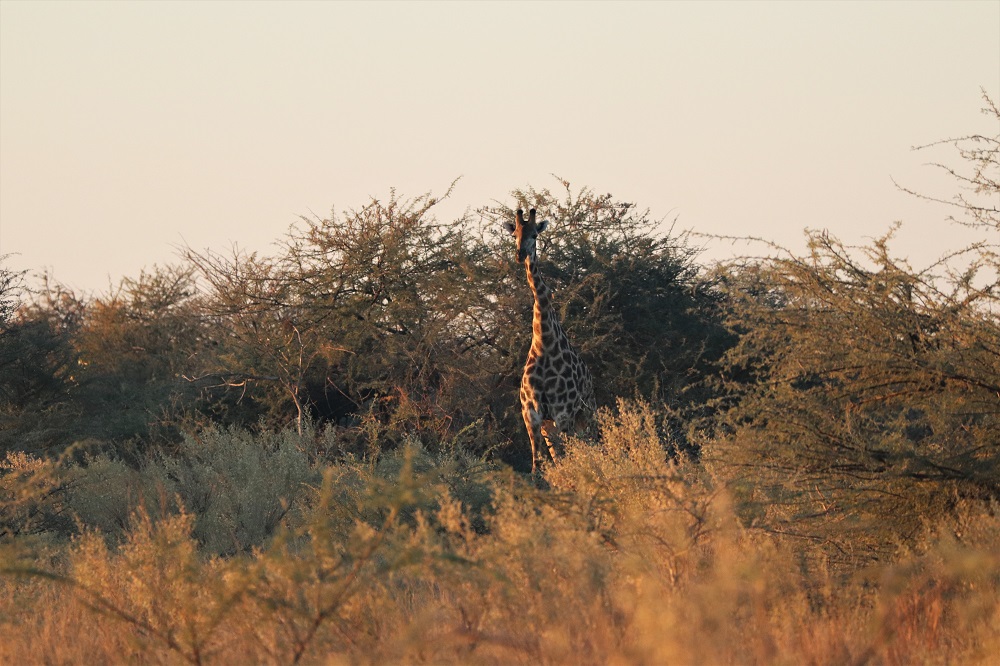
There wasn’t much to see as we drove through the dry, desolate landscape. Occasionally, we spotted some giraffes as they popped their heads up to watch us as we drove past.
We drove for ages and passed out of Chobe National Park into a private game reserve.
At times, the landscape was completely barren and all you could see was the stumps of dead trees.
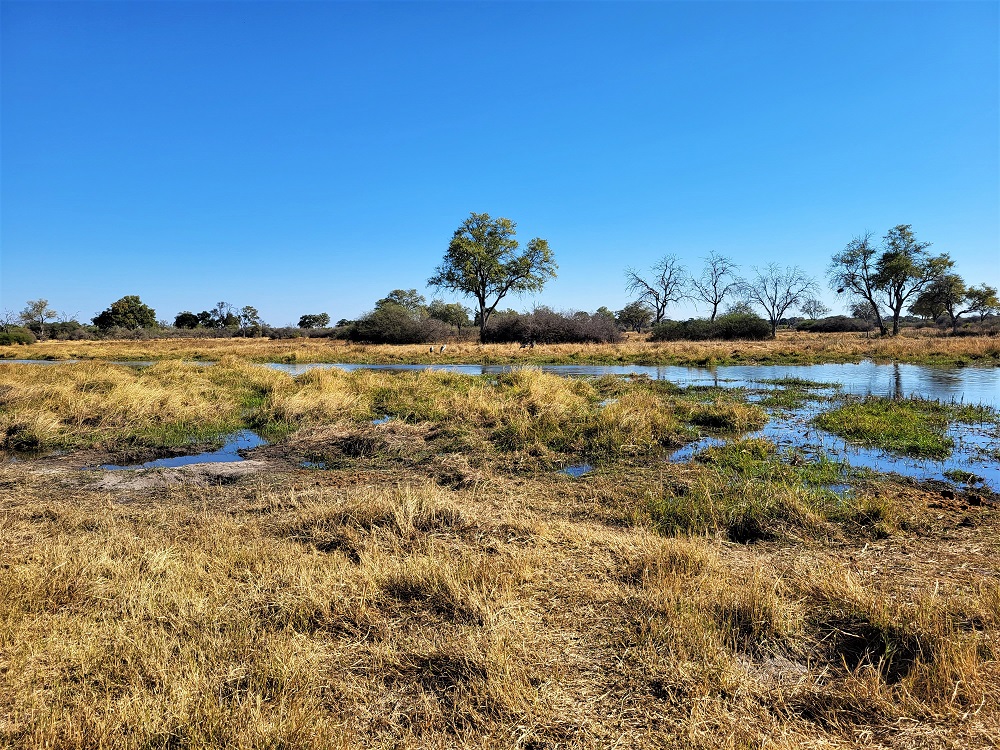
After a while, water came into view. It was the Okavango River (above), and it was considerably smaller than it was when we saw it in the delta.
With the river, came more animals. We stopped for lunch near a clump of dead trees, close to the water and in the distance we could see another flock of vultures.
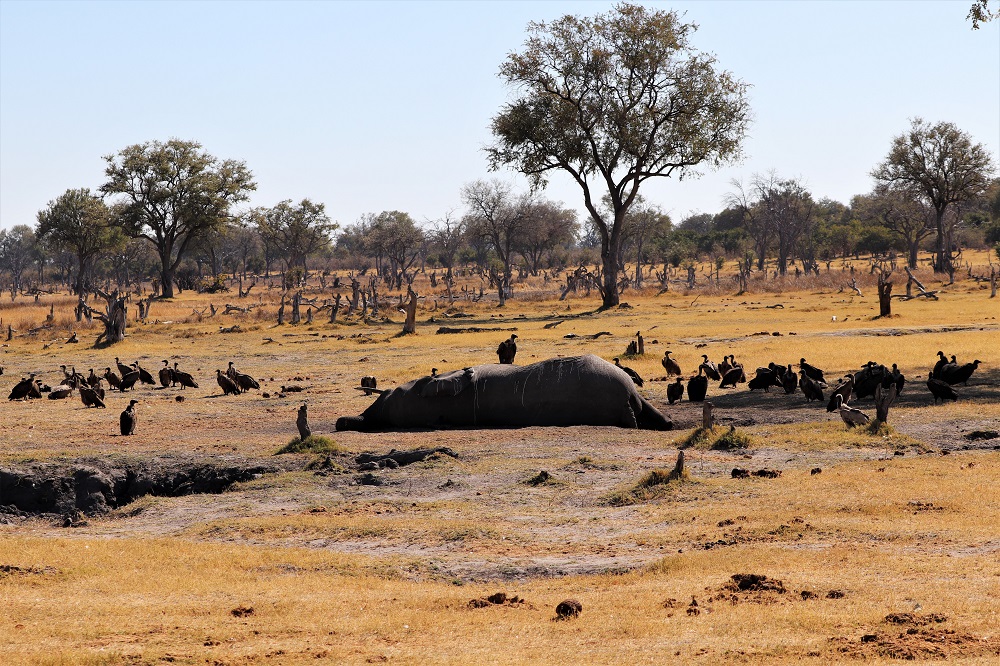
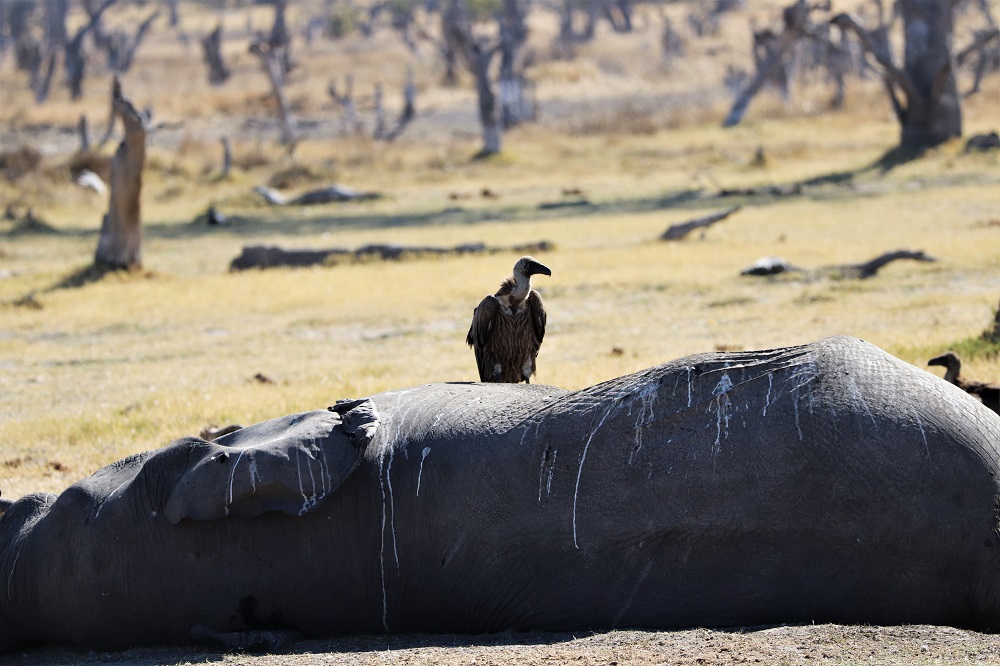
When we set off again, we could see that the vultures were clustered around another dead elephant (above and below). It was a bleak and eerie sight.
As we continued through the game reserve, we saw some elephants, including one that was spraying itself with mud (below).

We also spotted a pod of hippos in the river (below) and a small flock of cranes.

After stopping to take a few photos, we continued on our way, making it to our camp near the Khwai River by 5pm. Not long after we arrived and had settled into our tents, there was a commotion in the camp.

I popped my head out of my tent to find there was an elephant calmly walking through the camp, just behind the tents opposite mine (above).
We were told to stay in our tents while the elephant made its way past the camp. It was an eventful end to a long, rewarding day.
 Little Old World
Wow!! The baby lions are just ADORABLE. The wild dogs would have me terrified though, look at those teeth!!
LikeLiked by 2 people
The lion cubs were so cute, we were all in awe of them. The wild dogs weren’t quite as cuddly and seemed a lot more feral. In Moremi, we saw them stalking their pray (fortunately, they didn’t catch anything while we were watching). They’re incredibly fearsome hunters.
LikeLiked by 1 person
Amazing photos, you’re so lucky that the hornbill came so close. It’s different from one’s I’ve seen in South America and Thailand. We had an elephant come into our dining tent once. It was a little scary, but in the end it just strolled by. Maggie
LikeLiked by 2 people
Thanks Maggie! The hornbills were absolutely fearless and came right up to us looking for food. We saw a few different types of hornbills, including some ground hornbills. Oh wow, an elephant in a dining tent – I think I also would have been a little scared by that. I’m glad our elephant was the other side of our campsite.
LikeLiked by 2 people
Amazing! The lion cubs are super-cute.
LikeLiked by 2 people
Thanks Anabel, the cubs were adorable. It was a real privilege to see them up close in their habitat.
LikeLiked by 1 person
So happy to see the Painted Dog puppies 🙂
LikeLike
Your pictures of those lion cubs are absolutely adorable. This just made my morning.
LikeLiked by 2 people
Thank you 😊
LikeLiked by 1 person