
Our time in the Moremi Game Reserve couldn’t have been more different to our experience in Savuti.
Whereas Savuti was dry, dusty and quiet on the wildlife front, Moremi Game Reserve was lush, wet and teeming with birds and animals.

We spent two nights camping near the Khwai River, before moving onto Xakanaxa in another part of the reserve.

On our first full day in Moremi, we were up at 6am and out for our first game drive by 7am.
It didn’t take long before we spotted our first signs of wildlife – four giant hornbills by the side of the road and some hippos in the Khwai River.

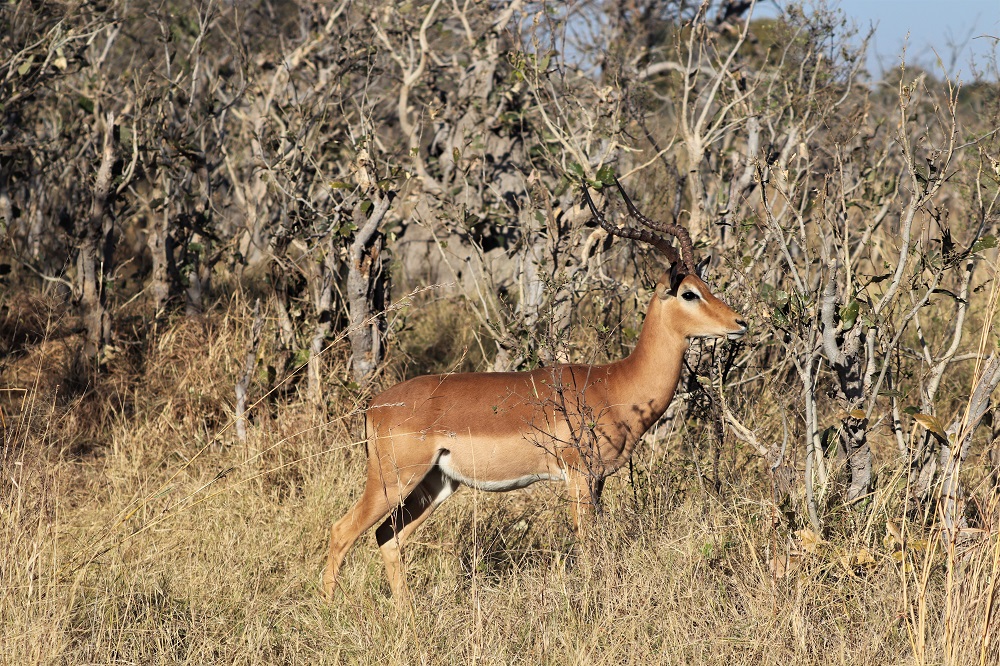
As we drove around, we saw multiple dazzles of zebra, as well as herds of impala (below), red lechwe and tsessebe (the latter three are all different types of antelope).
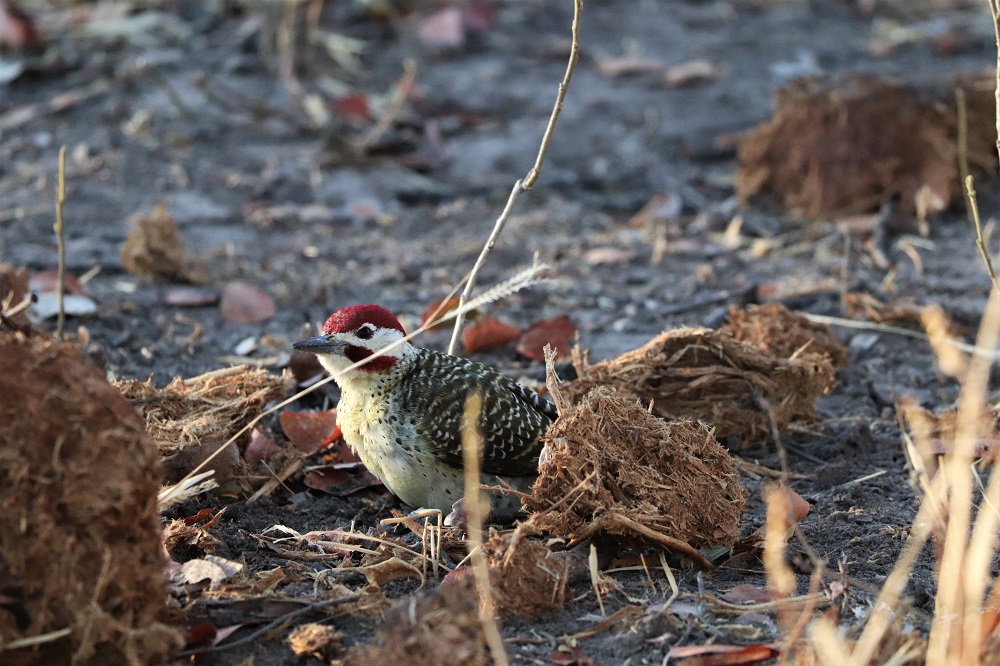
We also saw lots of birds, including a Bennett’s woodpecker (below) and some double-banded sandgrouse.
Before long we spotted a series of cars parked near some bushes and as we got closer, we could see a couple of lionesses and a cub, but they left almost as soon as we arrived.

We carried on along the winding track and stumbled upon a pair of African wild dogs that were happily feasting on the remains of an impala.
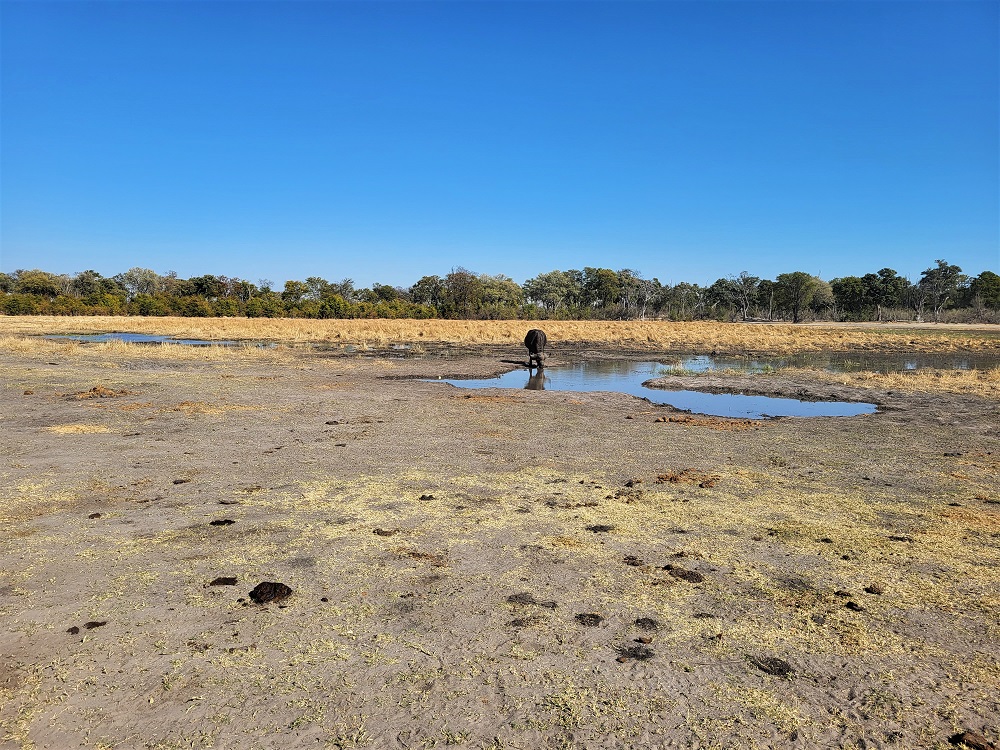
We were soon off again, and having sighted some buffalo, we headed down to the water’s edge, where we could see geese, hippos and impala in the distance.

We followed the road for a short distance along the course of the river, then stopped to take some photos of a buffalo (above).

While we were busy watching the buffalo, our guide asked us if we’d spotted the lion – there, sure enough, camouflaged by the grass was a lioness (above).

We made our way to the other side of the patch of grass for a closer look and found the lioness had company – another lioness and three cubs.
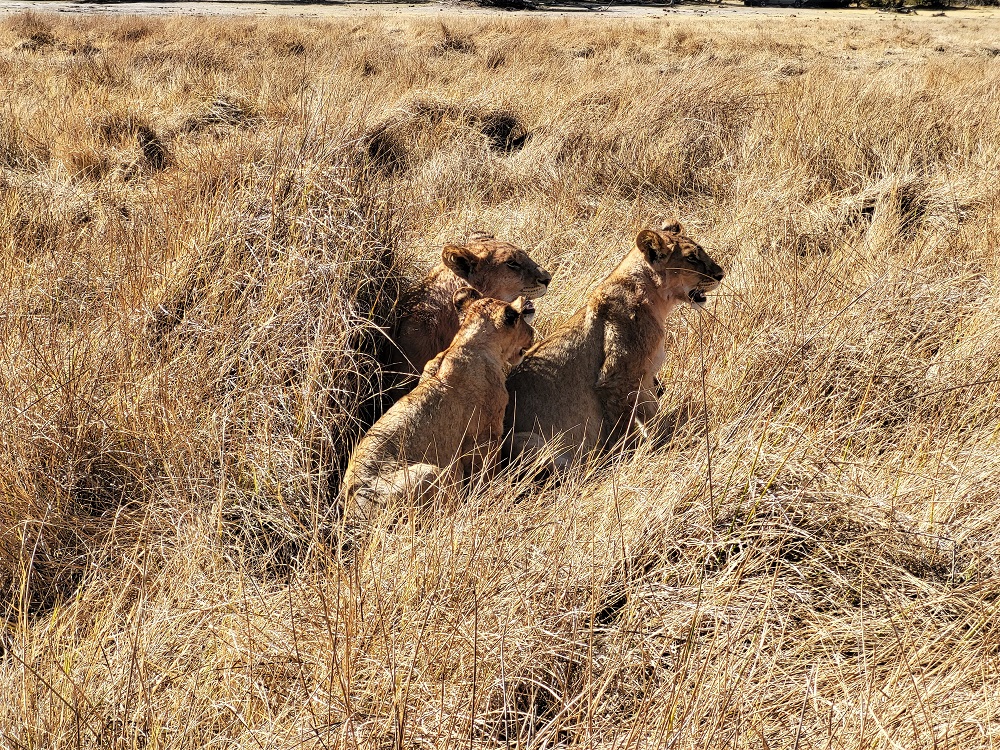
Like the other lions we’d seen, they didn’t bat an eyelid as we sat watching and photographing them as they relaxed in the grass.

We set off again, and saw yet more zebra (below), impala and double-banded sandgrouse (above).

As we neared our campsite, I saw what looked like a bunny rabbit sitting on the ground near a bush.
Unable to quite believe what I was seeing (I swear it looked like Thumper from Bambi), I pointed it out to one of my camp mates who confirmed, to my relief, that I wasn’t seeing things.
It turned out it was a cape hare, which is native to Africa and Asia.
We arrived back at our camp late morning, and after brunch, spent the afternoon reading and napping at the campsite.
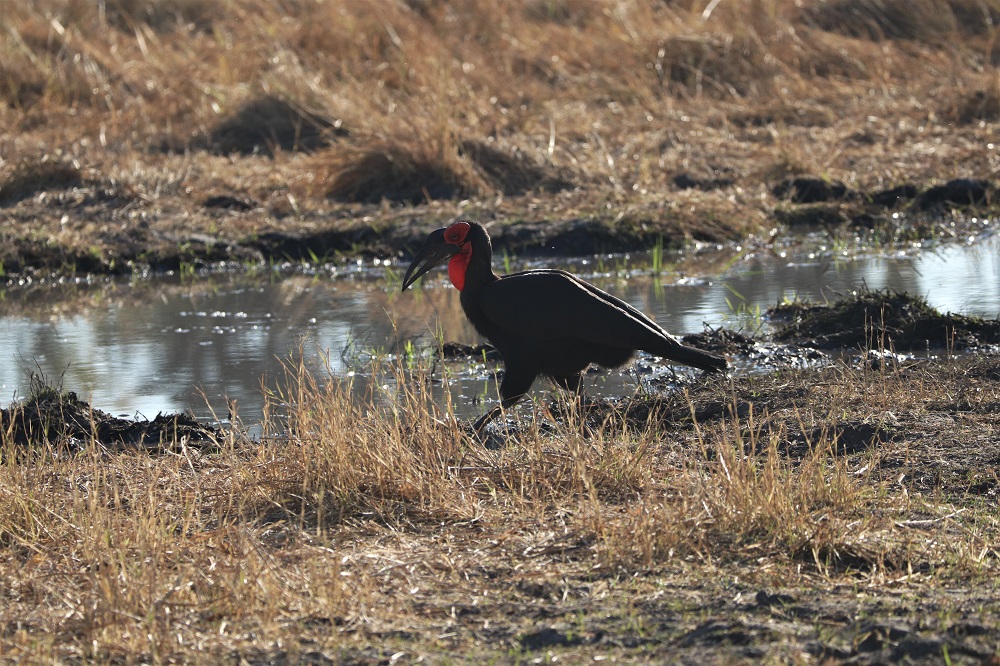
At 4pm, we set off for a late afternoon game drive. We drove down towards the river, where we spotted yet more southern ground hornbills and hippos (above and below).

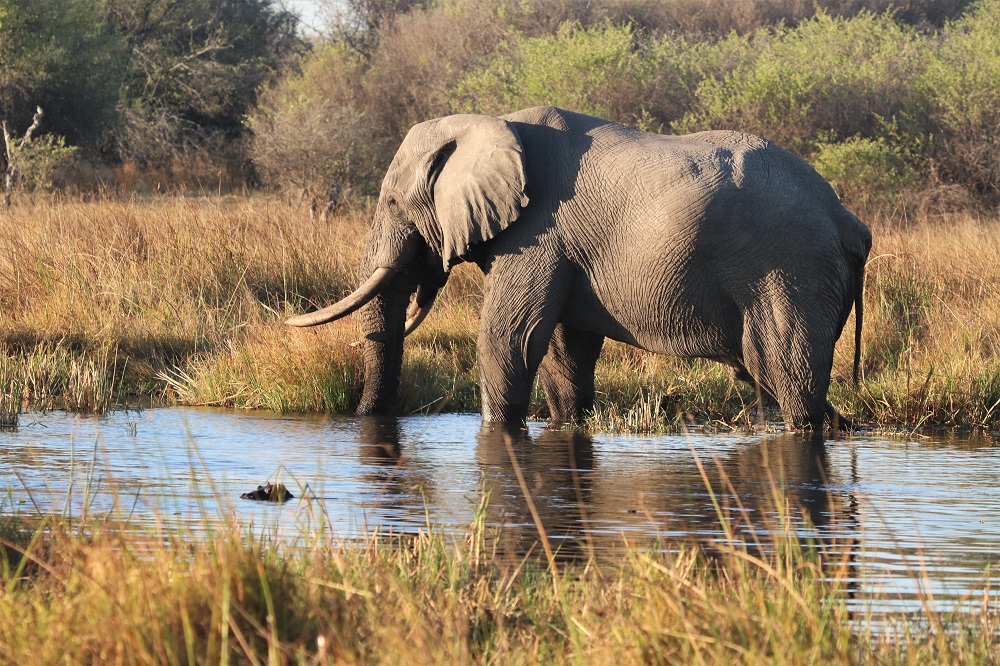
As we drove along the water’s edge, we spotted a honey badger skulking about near some bushes, along with some elephants and another hippo (below).
We also drove past a huge hippo sauntering across the grassland (below).

Towards the end of our game drive, we came upon a pack of wild dogs, which was stalking a herd of roan antelope.
As the wild dogs approached, they spooked the antelope, which ran off, leaving the wild dogs to turn their attention to some nearby impala. Fortunately, the wild dogs failed to catch them.
While it was fascinating watching the dogs stalk their prey and the way in which they work as a pack, I really didn’t want to see them kill anything, so I was relieved they left without success.

By now, the sun was starting to set over the game reserve (above), so we made our way back to our campsite.
The following morning, we were up and out again before 7am, where we spent a futile couple of hours driving around looking for wildlife.
There was nothing to be seen and after taking us to a known hyena den, only to find it empty, our guide exclaimed: “Today is not a good day, I cannot see anything.”
But by 9am, the day perked up considerably when we hit the safari jackpot and spotted a queue of cars near some bushes.
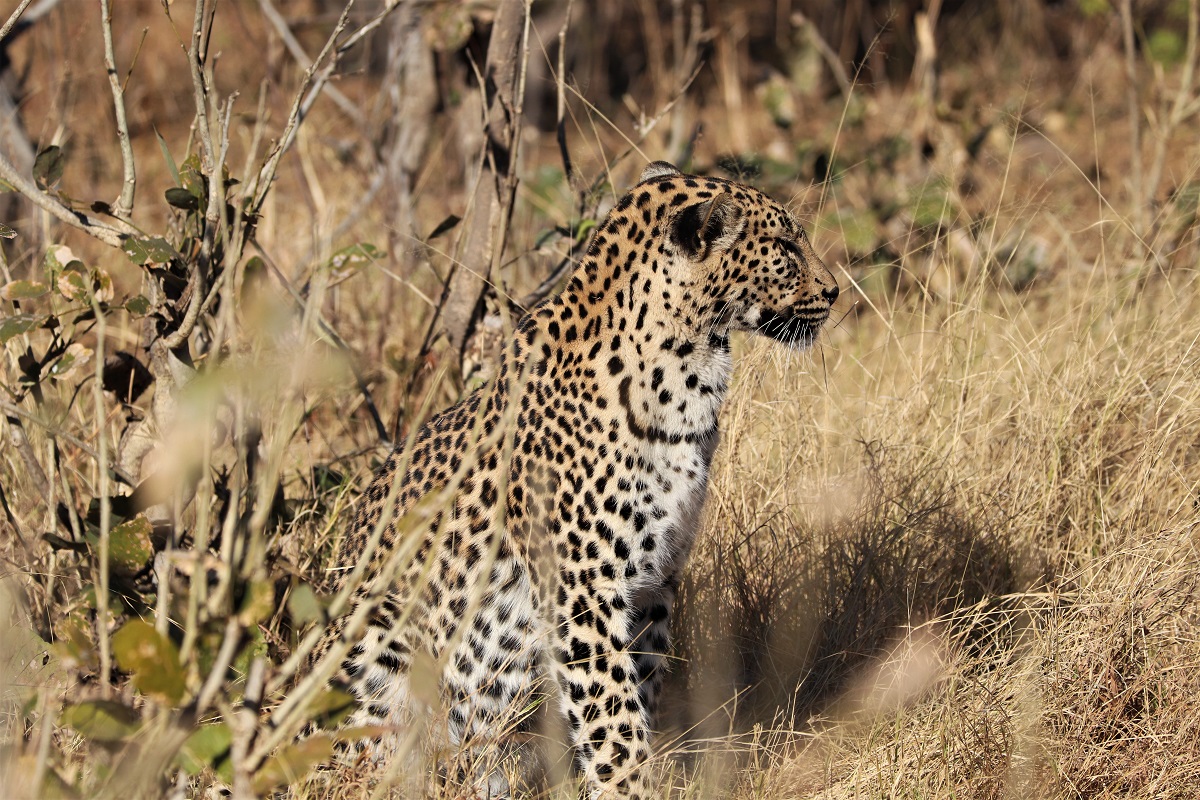
Rather than join the back of the unfathomably long queue, our resourceful guide took us around the other side of the bushes, where we were rewarded by our first and only glimpse of a leopard.
Despite being the last to join the party, we had a superb view of the elusive, elegant creature.

We spent ages silently watching the leopard, until the graceful big cat decided she’d had enough and took herself off for a snooze behind a bush.
We set off again and more than made up for the earlier scarcity of animals, as we saw giraffes, elephants and more.
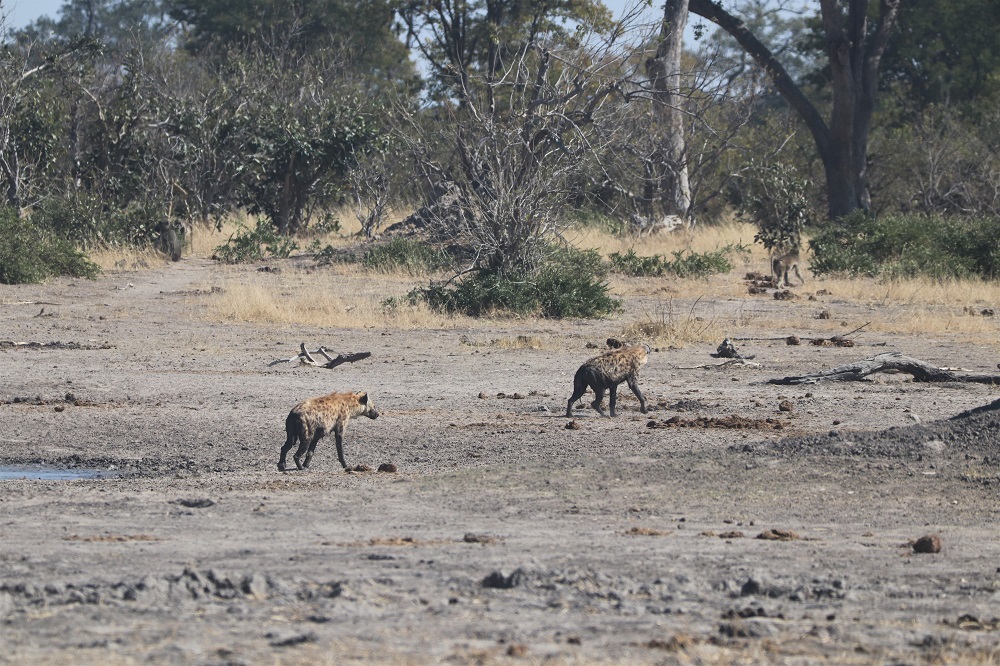
Around 11am, we pulled up at a waterhole for a tea break and saw two hyenas skulking off in the distance (above).
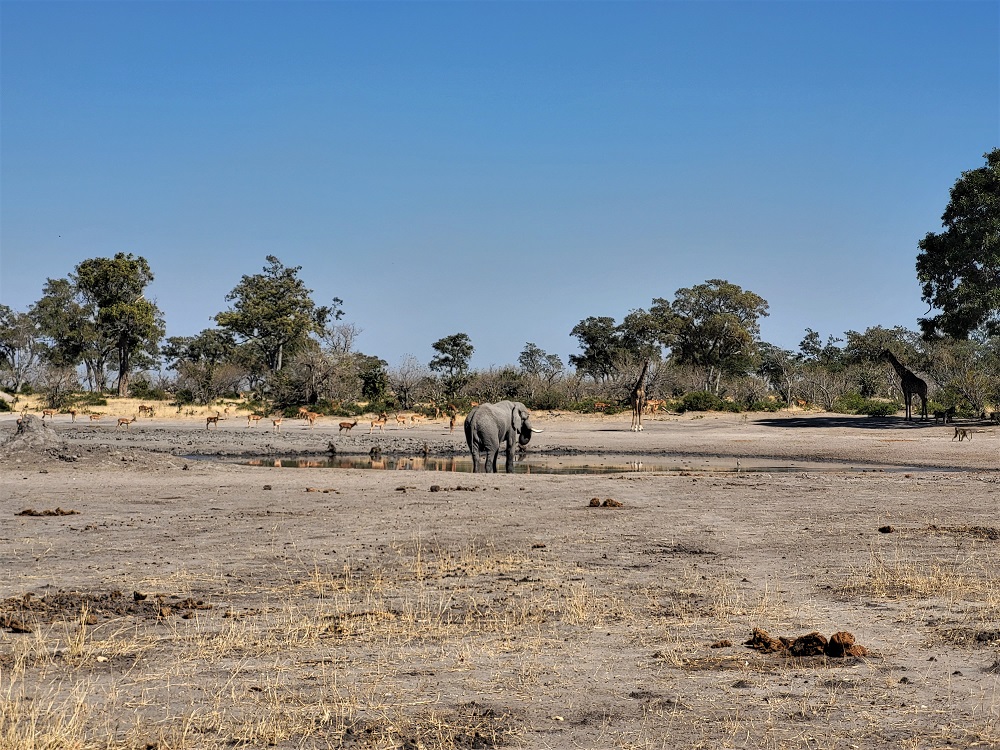
The waterhole was awash with animals, with an elephant, a couple of giraffe, a herd of impala, some warthogs and a troop of baboons all gathered together.
It was incredible to see so many different species in one place.

From the watering hole, we continued our drive along a never-ending plethora of narrow, bumpy tracks on our way to our next and final destination, Xakanaxa.
The roads were so narrow, the open-sided truck was having to squeeze past bushes and trees, and I was struck three times in the face by flying branches.
By lunchtime, I was thoroughly fed up having to duck every time we passed a bush to avoid another face lashing.

Around 1.45pm, we stopped for lunch in a wooded area not far from a river, where I spent some time trying to photograph a lilac-breasted roller (above and below).

The bird is utterly spectacular and has a dazzling, vibrant plumage, but try as I might, I was never able to do it justice in photos.
All my photos make the bird look quite dull, but in real life it’s vividly luminescent.
After lunch, we set off again on another long drive along the bumpy, narrow tracks.
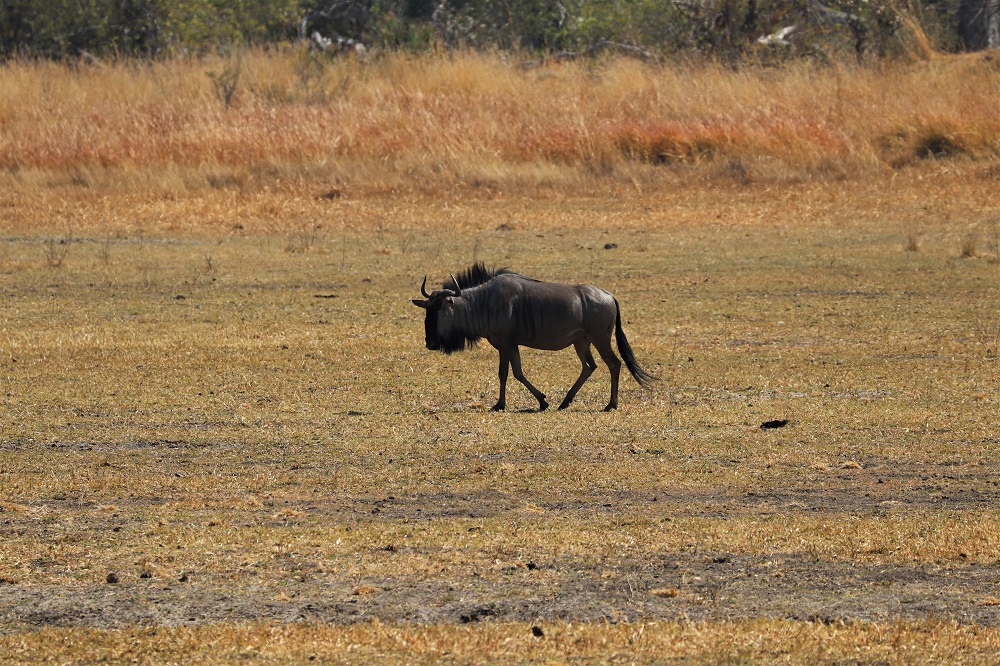
Along the way, we saw a host of animals, including zebra, hippos, wildebeest (above), giraffe, a huge herd of buffalo (below), impala, kudu and more.
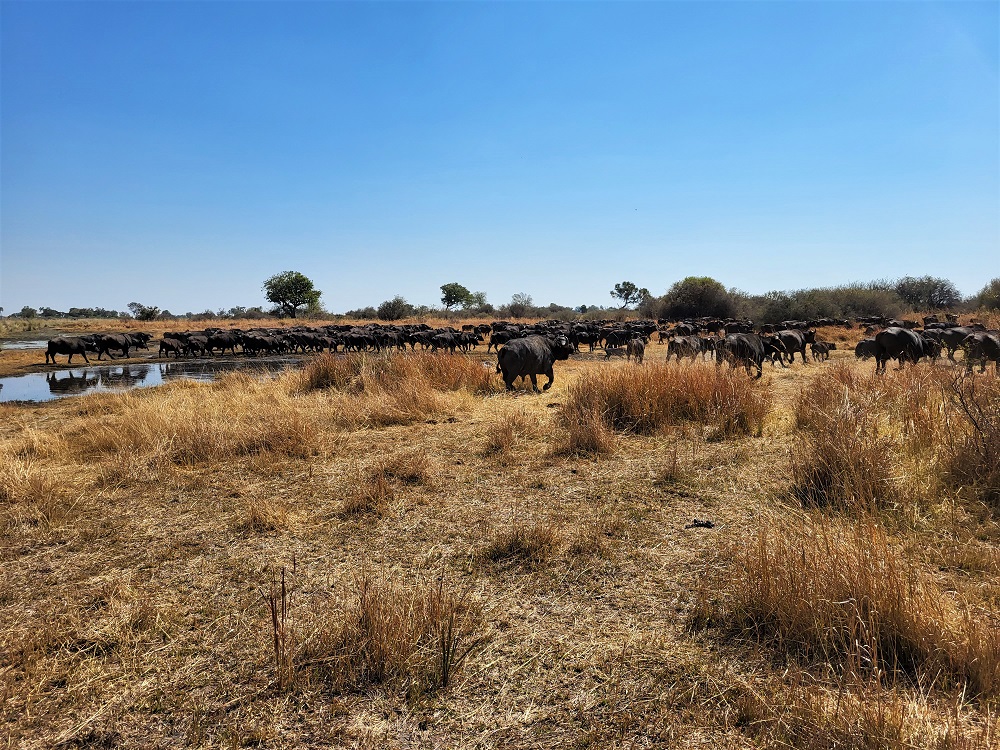
The wildlife spotting was non-stop and it felt as though we saw almost everything we could see in that one drive.
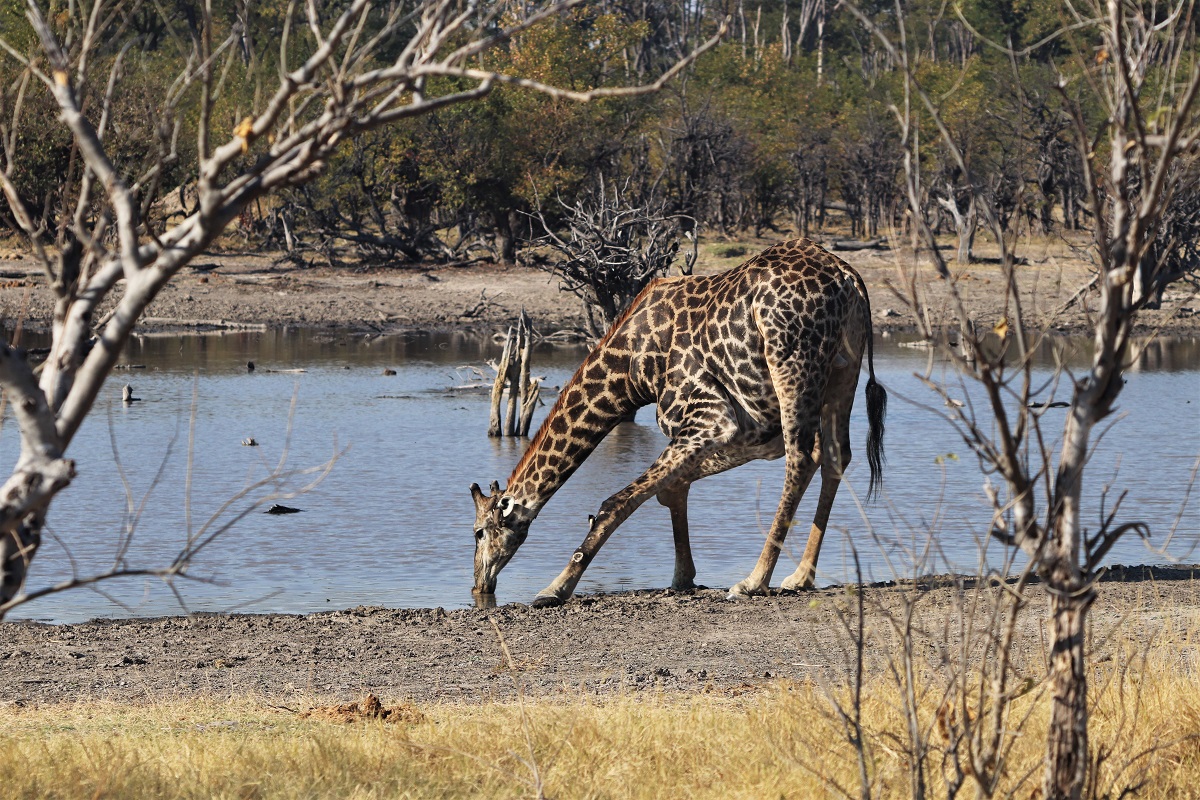
Around 4.30pm, we came upon a pair of giraffe (above) drinking at a watering hole that was also home to a very territorial hippo (below).
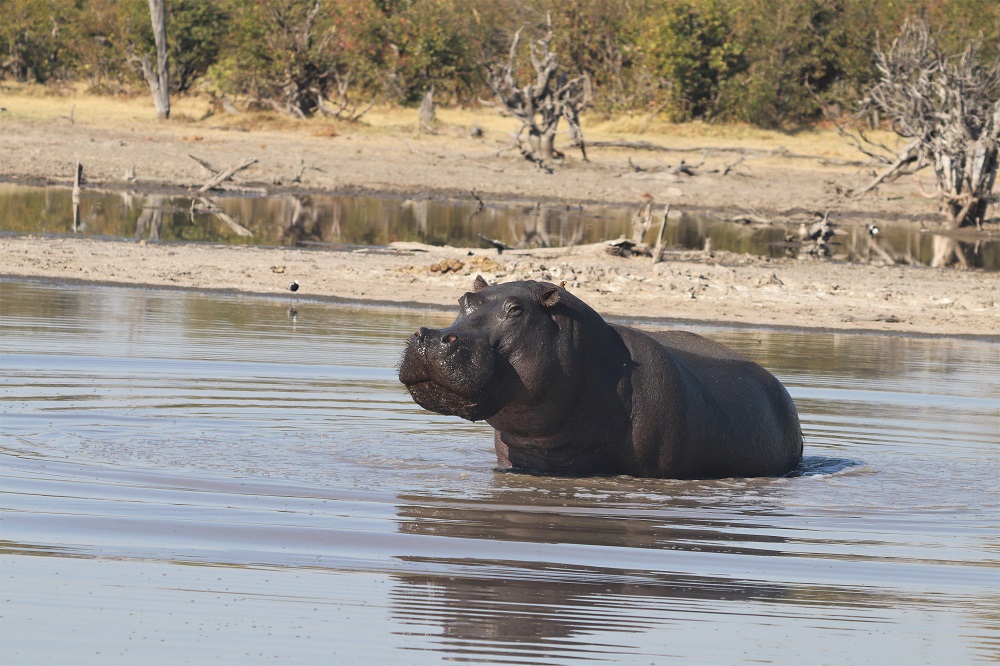
The hippo kept opening its mouth just to make sure we knew it was the boss in that particular body of water.

We then spotted some lions under a bush, so we drove around to get a closer look and spent ages photographing them.

We carried on with our journey and by now, after 10 hours on very bumpy roads in an uncomfortable safari truck, we were all getting quite grumpy.

As we approached our campsite, we saw some more lions, partially camouflaged by the grass and stopped to take some photos.
We finally reached our campsite at 6pm after 11 hours on the road.
As I got into bed later that night, I could hear the sound of a lion roaring in the distance. Even after dark, the wildlife made sure to let us know they weren’t far away.
 Little Old World
What an amazing trip and wonderful photos.
LikeLiked by 1 person
Thank you, it was an incredible experience 🙂
LikeLiked by 1 person
Amazing. And to think that not all that long ago there were vastly more animals in Africa, and in all the other continents, than there now are.
LikeLiked by 1 person
Yes, it’s so sad when you think how much the animal populations have declined and how they’re losing more and more of their habitats. But it was great to see how much space the animals have in Botswana and the efforts there to protect them.
LikeLiked by 1 person
Incredible photos 🤩.
LikeLiked by 1 person
Merci beaucoup 😊
LikeLiked by 1 person
Your photos are absolutely incredible. That one of the wild dog with a blood stained face made me stop scrolling and go back to look at it twice.
LikeLiked by 1 person
Thank you 😊 The photo of the wild dog is one of my favourites.
LikeLike
Finally catching up on your blog posts after a busy half term. Love the collective noun for zebra – I didn’t know that one before! Wonderful photos, and definitely sounds like a trip to remember.
LikeLiked by 1 person
Thanks Rosie : ) Dazzle’s a great collective noun isn’t it? It was an unforgettable trip. Hope you have chance to relax now that term’s over.
LikeLiked by 1 person
Sounds like you had some awesome wildlife sightings! Your pictures are fantastic. And what a gorgeous sunset.
LikeLiked by 1 person
We were so lucky with the wildlife we saw. Thank you 😊 The sunsets over there were beautiful.
LikeLiked by 1 person