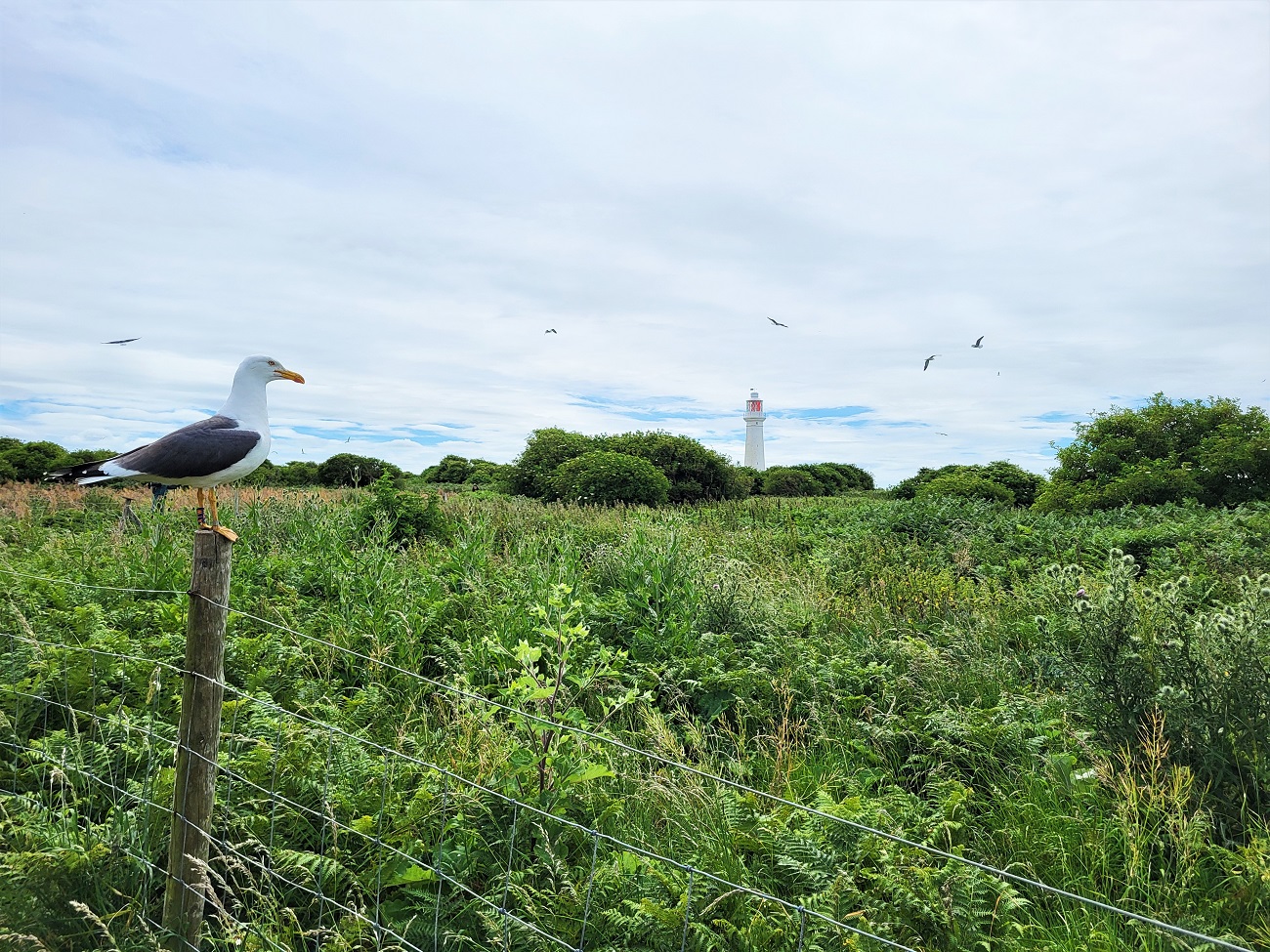
In the middle of the Bristol Channel, part way between Cardiff and Weston-super-Mare, you’ll find two islands: Flat Holm and Steep Holm.
Flat Holm belongs to Wales and marks the country’s most southerly point, while Steep Holm belongs to England.

I’d been longing to visit Flat Holm for years and had been all set to go as a student journalist many moons ago, but the trip was called off due to the weather.
Fast forward some 15 years and I was determined that 2024 was the year I finally made it.

I arrived at my departure point in Cardiff Bay at 9.45am to be fitted for a life jacket. Then made my way onto the small inflatable speedboat that was going to carry us to the island, some 15 minutes away.
Before we could reach the Bristol Channel, we needed to navigate the Cardiff Bay Barrage (below).

Built between 1994 and 1999 to the tune of £220 million, the barrage is one of the most sophisticated flood defence systems in the world and was one of the biggest civil engineering projects in Europe.
Designed to regenerate Cardiff’s old docklands area, it also protects the city from the Bristol Channel, which has the second highest tidal range in the world – only Labrador Bay in Canada has a higher range.
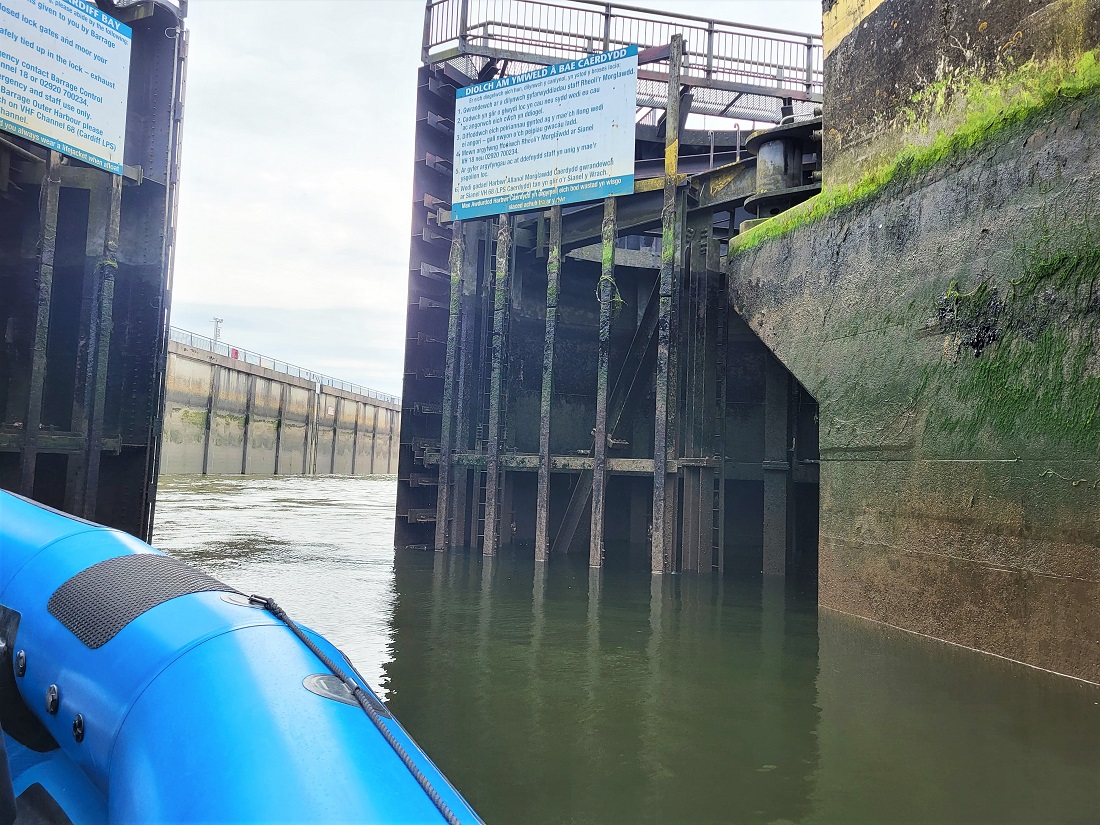
I’ve walked over the barrage countless times since it opened 25 years ago.
But this was the first time I’d passed through the locks into the Bristol Channel and it was fascinating to see how it worked up close.

After making our way through the lock, we found ourselves in the channel, where we quickly sped across the five miles or so of open water to Flat Holm.

On disembarking from the boat, we were greeted by the island’s warden, a few volunteers and an enormous flock of seagulls.
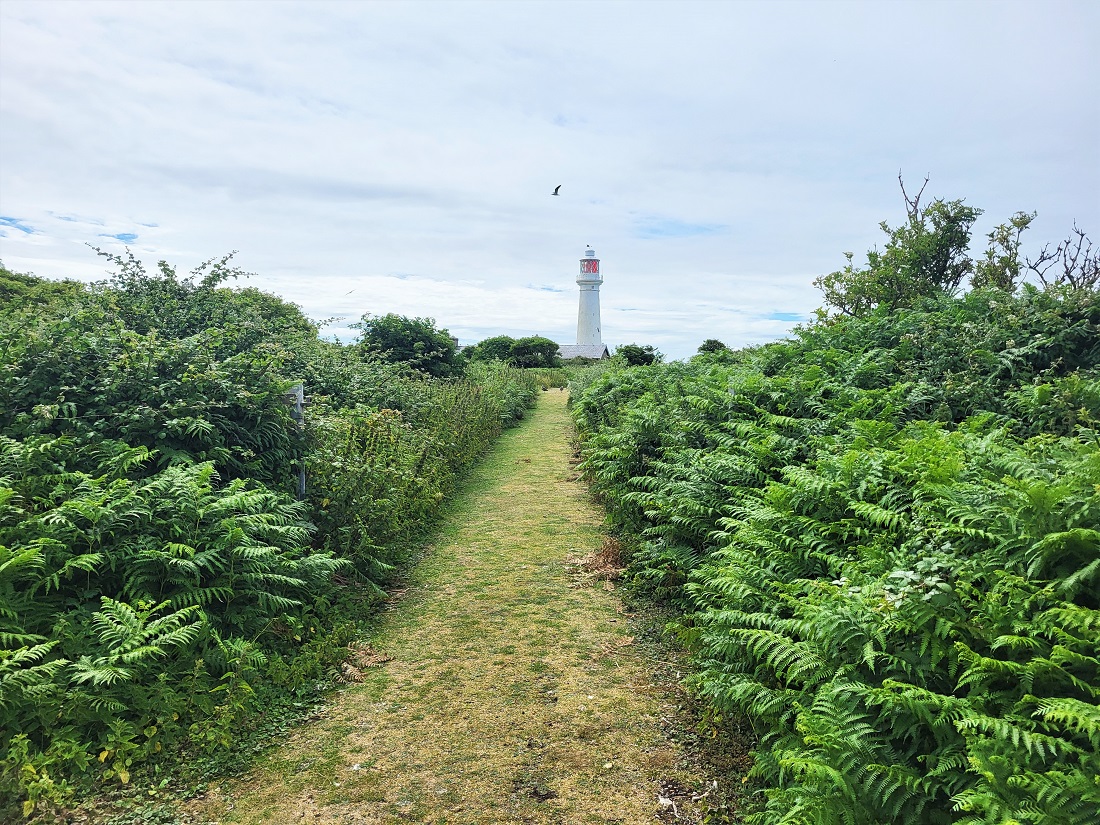
The warden took us up to the island’s main path (above), which leads to Flat Holm’s museum, pub and gift shop, for a quick orientation tour, before leaving us to do our own thing.
I decided to join a free guided tour that was being offered by one of the volunteers.

Flat Holm, or Ynys Echni as it’s known in Welsh, has a long history that dates back to at least the Dark Ages.
The earliest known visitor was St Cadoc, who regularly visited the island in the 6th century with his followers. The Vikings were also known to have frequented Flat Holm.
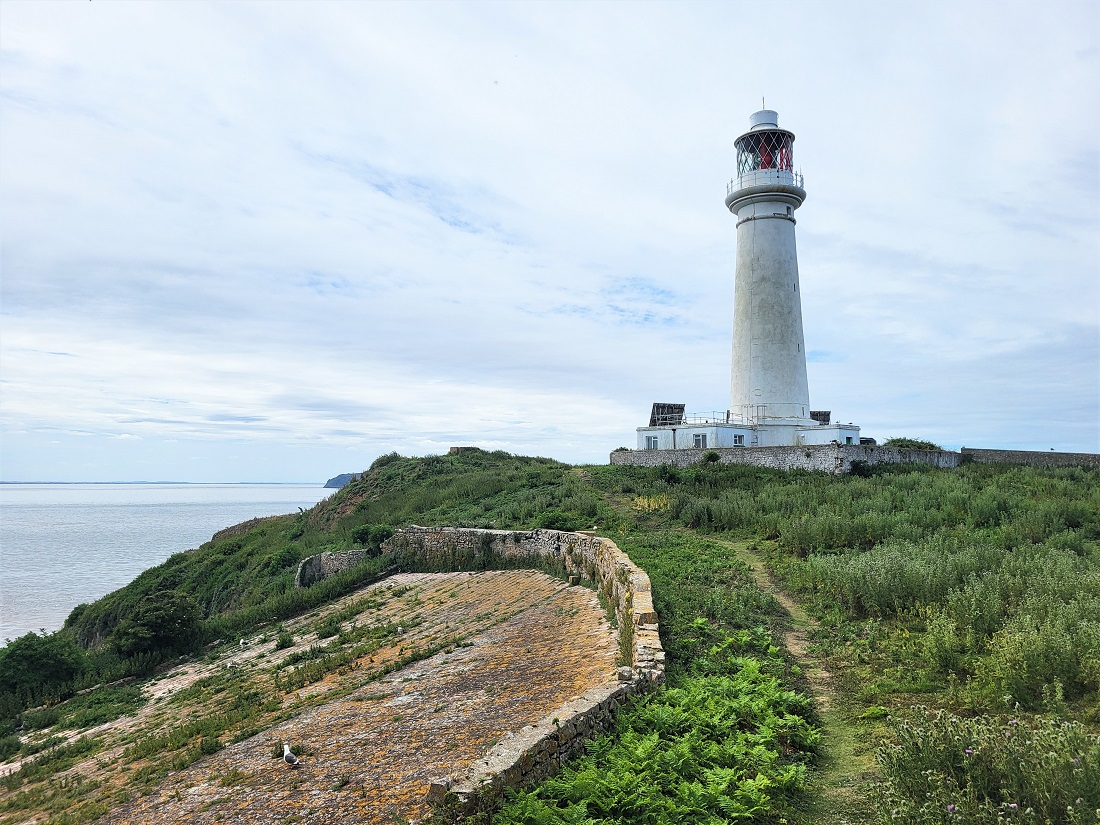
Our knowledgeable and well informed guide started our tour by taking us up to Flat Holm’s lighthouse.
Along the way, we passed a huge water catchment area built by the Victorians (above).
Still in use today, the brick slope catches and diverts rain water into a huge underground tank, which supplies the island with water.

We stopped in front of the lighthouse (above), which is run remotely by Trinity House and powered by solar energy.
But we couldn’t go inside because no-one on the island has a key, so we had to make do with admiring it from the outside instead.
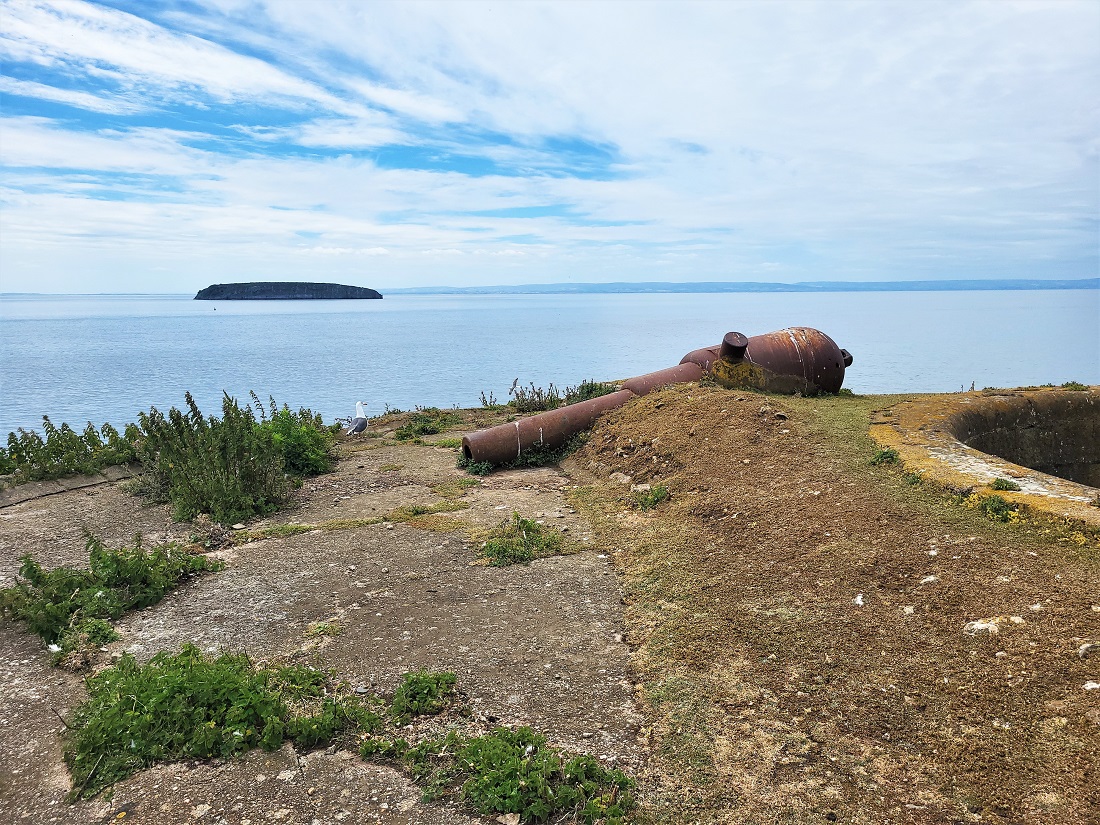
Due to its strategic location, Flat Holm is full of abandoned military fortifications.
The Victorians were the first to fortify the island between 1865 and 1869, installing nine massive guns and a series of tunnels and bunkers.
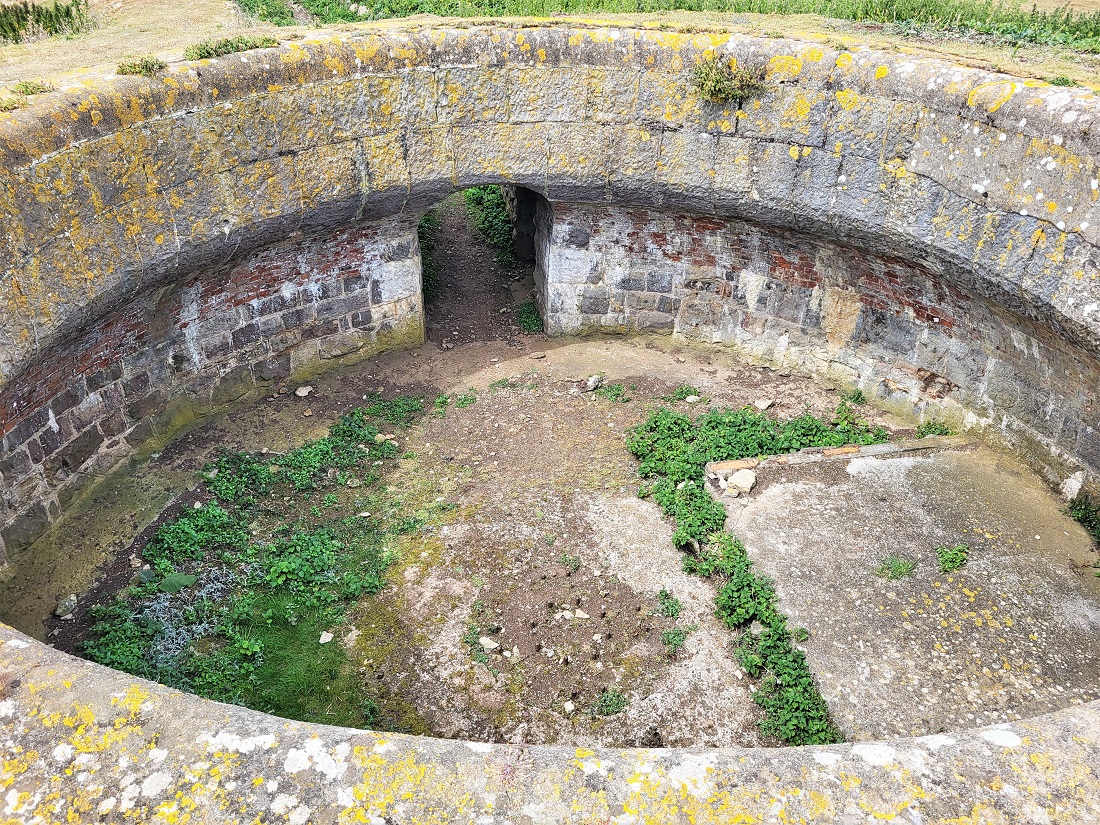
Flat Holm was further fortified during the Second World War when some 350 soldiers were stationed on the island.
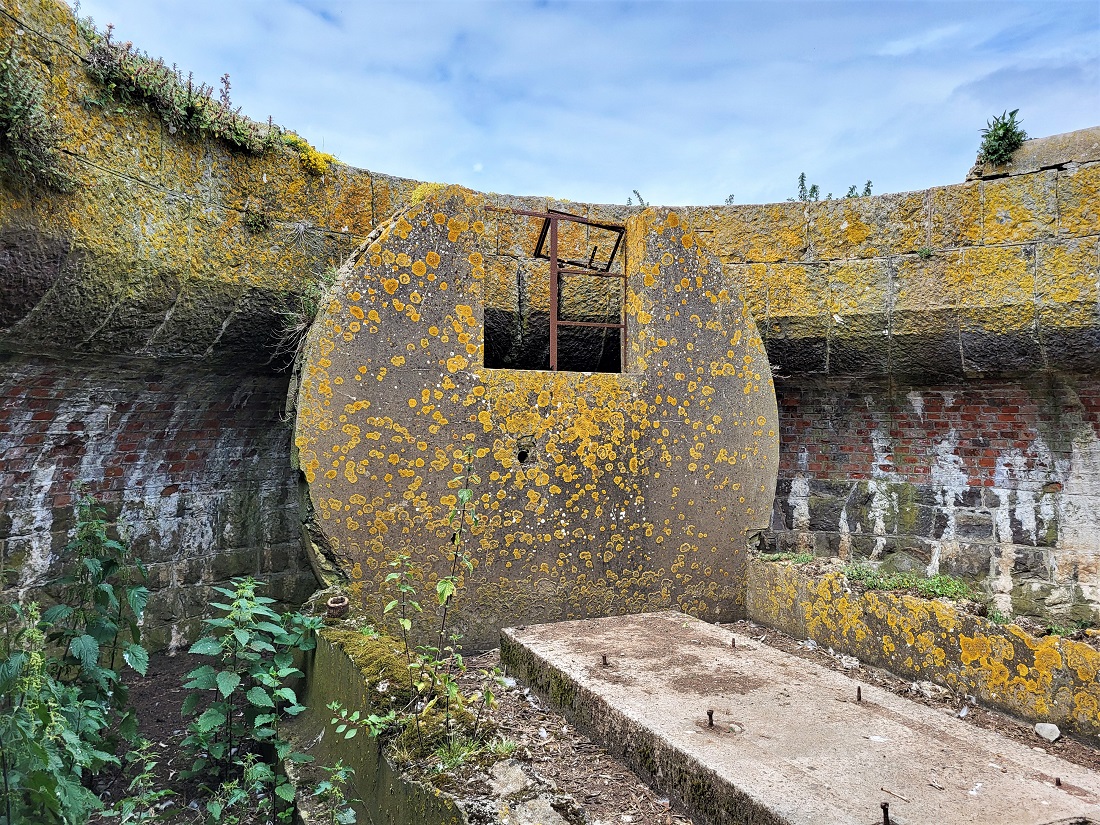
Visitors are free to wander around the abandoned bunkers, tunnels and gun pits, and as we explored the various nooks and crannies, our guide regaled us with stories about their eventful history.

There were a few ruined cottages near the lighthouse, where its keepers used to live with their families (above).
Flat Holm is so remote and derelict, I can’t imagine what it would have been like to live there.
It’s very much a world unto its own and is so open to the elements, I’m not sure how pleasant it would be in the middle of a raging storm.

It was a calm summer’s day when I visited and the clear blue skies meant there was a lovely view of Steep Holm and the south-west of England in the distance (above).
Having seen all there was to see near the lighthouse, we crossed Flat Holm in the direction of the isolation hospital on the other side of the island.

Built in the late 1800s, the hospital was designed to treat those infected with cholera and was subsequently closed in 1935.
During the Second World War, it was used by the Army as a canteen and to hold concerts and other forms of entertainment for the troops.

Sadly, the hospital’s in a perilous state today and is currently off-limits to visitors.
A few years ago, Flat Holm was awarded money from the lottery heritage fund to repair the roof, but they couldn’t start work because of the pandemic, during which time the roof collapsed.
Plans are now afoot to use the money to make the building – sans roof – safe again for visitors.

When I was first set to visit Flat Holm 15 years ago, there was more to the island but budget cuts have meant it’s now quite run-down, which was sad to see.
The council seems to be trying to reinvigorate Flat Holm though, as they’ve renovated one of the cottages as a holiday let and are adding a yurt guests can stay in, too (above).

Our guide took us past the yurt and the farmhouse (above) where the island’s warden now lives, before finishing the tour near the main path.

There were a few parts of the island I couldn’t visit – the foghorn station (above), which was built in 1908 and in use until the 1980s.
As well as the site of the world’s first wireless transmission over open water.
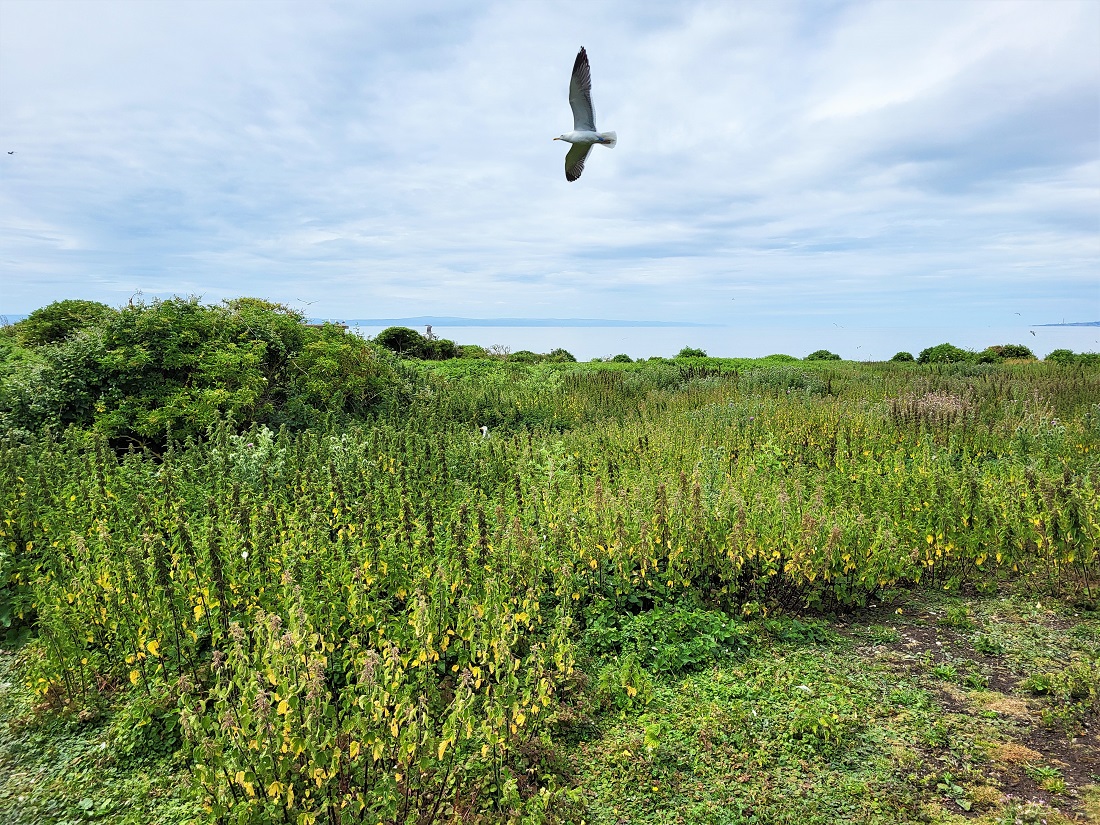
In May 1897, an Italian engineer Guglielmo Marconi sent a message from Lavernock Point on the south Wales coast to George Kemp, a post office engineer from Cardiff, who was on Flat Holm.
The historic message, which is now in the National Museum of Wales in Cardiff, said simply: “Are you ready?”
The site where the message was received (above) is in the middle of a nesting gull colony, so we couldn’t take a closer look at it.

Flat Holm is a Site of Special Scientific Interest and, as such, is home to a massive colony of seagulls.
It was late June when I visited and the height of gull breeding season, which meant the island was full of chicks and their overprotective parents.
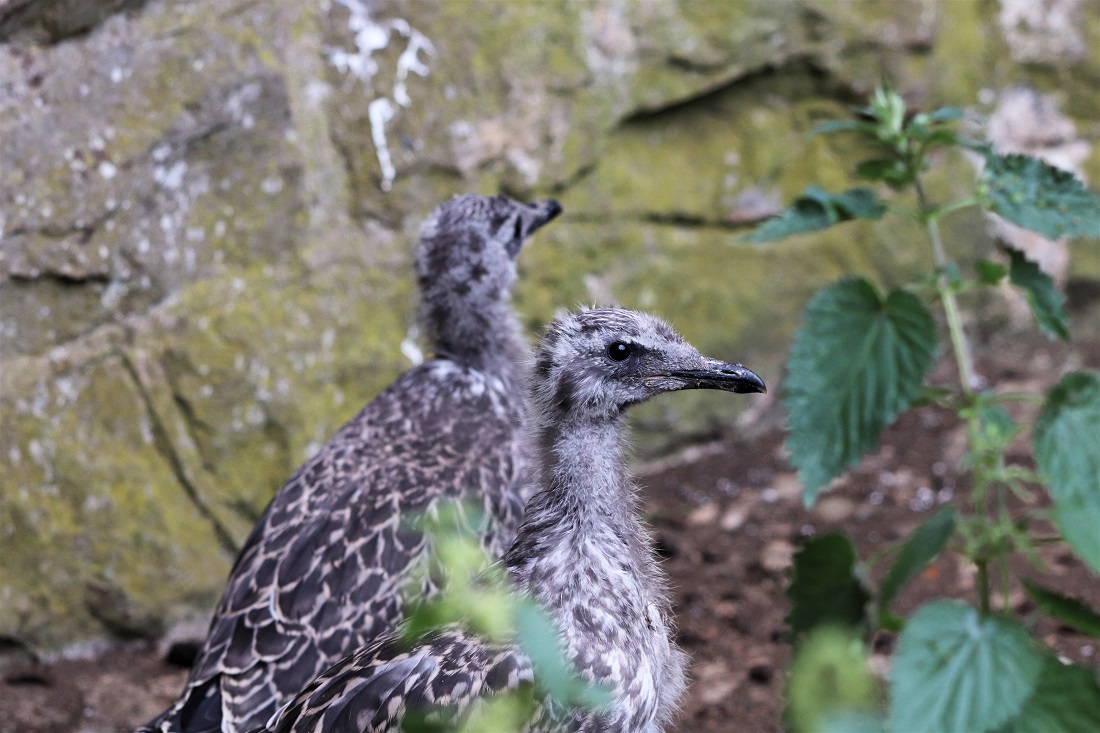
They were everywhere, including the main paths, which meant I was subject to lots of dive-bombing attacks as I walked across the island.
Even the toilets weren’t a seagull-free zone. As I approached the ladies’ loo, I heard a huge scream as the woman ahead of me was startled to find two chicks skittishly sliding around near the sink (below).

The presence of so many seagulls was an overwhelming sensory experience.
The dive-bombing was one thing, but the gulls sounded constantly and it was anything but peaceful.
I was only on the island for two-and-a-half hours, but I don’t think I could have spent much longer because of the incessant sound of the gulls.
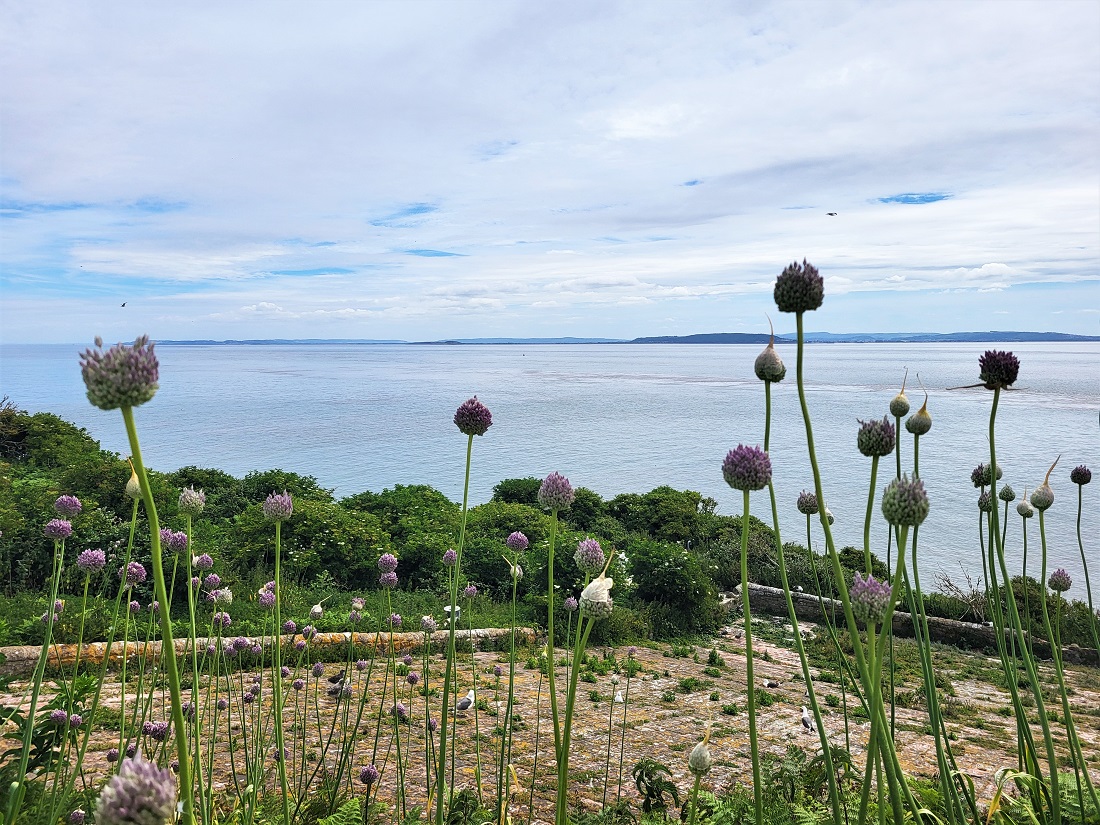
Aside from seagulls, Flat Holm is also home to wild leeks (above), wild peonies (for a few weeks a year), slow worms, rabbits and eight sheep.

There are also lots of ladybirds and I spent a little while trying to photograph them (above).

Before catching the boat back to Cardiff, I popped inside the museum, as well as The Gull and Leek (Flat Holm’s pub), which are both housed in the former barracks.

I made sure I was back at the jetty in plenty of time to catch the boat back to Cardiff, as it was the last boat of the day and I didn’t want to get stranded.

Flat Holm’s a fascinating place and I’m glad I finally made it.
I’m not sure how much I enjoyed my time there (the seagulls were a bit much), but there’s lots to see and I enjoyed learning about its eventful history.
I’d like to go back at a different time of year when the gulls weren’t breeding, as I suspect I’d find Flat Holm much more enjoyable if it was quieter and I wasn’t having to constantly dodge the dive-bombs.
Info

- You can get a boat across to Flat Holm from Cardiff Bay (above) or the nearby town of Penarth – Bay Island Voyages sail from Cardiff Bay on an inflatable speedboat (it can be bumpy and very wet, and won’t be suitable for everyone), while Cardiff Cruises sail from Penarth in a more leisurely, traditional vessel.
- The trips are weather and tide dependent, and can book up far in advance.
- On arriving on the island, you’ll need to pay a landing fee to the warden – £5 for adults, £2.50 for children, cash only.
- Facilities on the island are limited and rudimentary. There are toilets, and you can buy hot and cold drinks and snacks, such as crisps and chocolate, in the pub. But if you want a more substantial lunch, such as sandwiches, you’ll need to bring your own in a sealed container.
- Don’t miss your boat back to the mainland or you risk being stranded. Because of the tides, boats run very infrequently between Flat Holm and the mainland.
- You can find more information about visiting Flat Holm on the Cardiff Harbour Authority website
 Little Old World
Very interesting. Thanks for the tour.
LikeLiked by 1 person
Thanks Neil, it’s a fascinating place.
LikeLiked by 1 person
Sounds like an interesting trip – though I agree with you, I’m not sure I could put up with screeching seagulls for more than a couple of hours! Thanks for sharing 🙂
LikeLiked by 1 person
Thanks Rosie 🙂 It was a fascinating place to visit, but the seagulls were a bit much.
LikeLiked by 1 person
What a beautiful and interesting place! I would love to visit here…although I am not a fan of seagulls 🙂
LikeLiked by 1 person
It’s a beautiful island and has such a long and interesting history. You couldn’t avoid the seagulls when I went, but hopefully it’s quieter when they’re not breeding.
LikeLiked by 1 person
What an interesting visit! I can’t imagine wanting to rent a cottage or yurt to spend my holidays there though.
LikeLiked by 1 person
It’s a fascinating place! A couple arrived to stay as I was leaving, but I can’t say I was tempted to do the same, especially during breeding season. Two-and-a-half hours on the island was enough with all the seagulls.
LikeLiked by 1 person
The island looks so pretty, but I can’t hear those seagulls, so it also looks peaceful. As much as I like the island, going through the locks looks like something I’d like to do. Maggie
LikeLiked by 1 person
Thanks Maggie. It’s a beautiful island, but the photos are rather deceptive. It makes it look calm and relaxing, which it definitely wasn’t with the seagulls! Going through the barrage and across the channel on the speedboat was a lot of fun. It was so interesting to see how the locks work, it’s very clever.
LikeLiked by 1 person
I can see why you’ve been wanting to go to Flat Holm for a while now, the scenery and coastal views looks beautiful. I love the look of the lighthouse as well.
LikeLiked by 1 person
Flat Holm’s a beautiful island and I’m glad I visited, it made for a really interesting day trip. It’s shame you can’t go inside the lighthouse, I’m sure the views from the top are spectacular.
LikeLiked by 1 person
I would definitely love to visit, it looks and sounds such a fascinating place. But as you say maybe not in seagull breeding time! Love the name of the pub. Very apt! 😀
LikeLiked by 1 person
It’s a fascinating place to visit if you’re ever in Cardiff, it has such an interesting history. But gull breeding season probably wasn’t the best time to go 🙂 It’s a fantastic name for a pub!
LikeLike
it’s beautiful – I’d love to visit one day, what a hidden gem!
LikeLiked by 1 person
Thanks Hannah, it’s a stunning island. It really is, a lot of people in Cardiff don’t know about it and haven’t visited.
LikeLike
Looks so nice. The kind of things we like doing.
LikeLiked by 1 person
Thanks Mélodie, it was a really interesting place to visit.
LikeLike
Thanks for sharing this, I’ve never been! I’d love to go one day though.
LikeLiked by 2 people
You’re welcome 🙂 It’s a fascinating place to visit and makes for a great day trip.
LikeLike