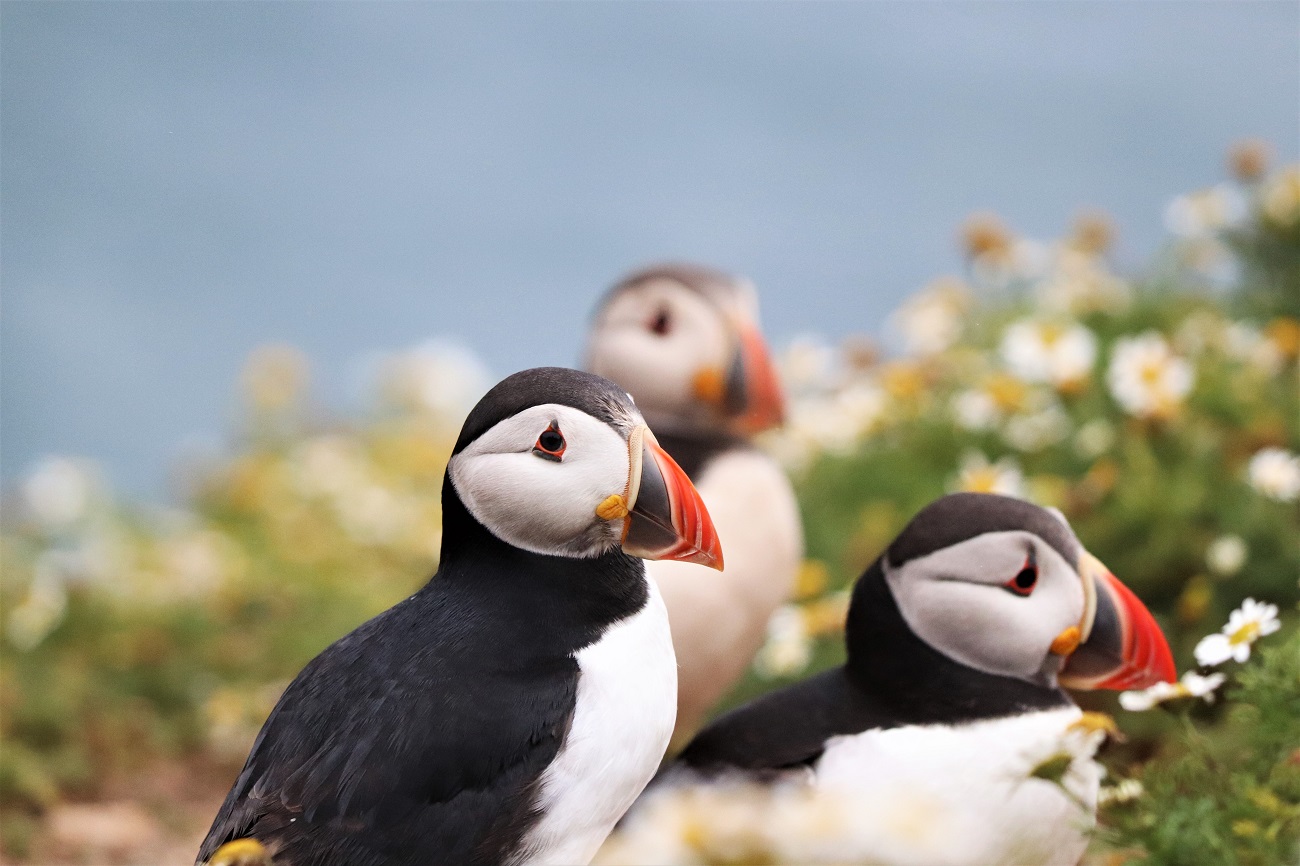
When one of my friends asked in January if I fancied going to Skomer Island over the summer to photograph the puffins, I immediately said, “Yes”.
I’d been wanting to visit the island for years, having heard countless friends and family members rave about their experiences there.

So we signed up to do a one-day photography workshop with local photographer Drew Buckley.
Be warned this post features a ridiculous amount of puffin photos.

Situated off the coast of Pembrokeshire in west Wales, Skomer Island is renowned for its wildlife and was one of the UK’s first national nature reserves.
Separated from the mainland during the last Ice Age, the island has been inhabited since at least the Iron Age and is a scheduled ancient monument.
The last permanent residents left in 1950. Today, Skomer is owned by the Welsh Government and is run by The Wildlife Trust of South & West Wales.
It’s most famous for its Atlantic puffins, which come to the island to breed from mid-April to late July. Last year, some 42,500 puffins temporarily set up home there.
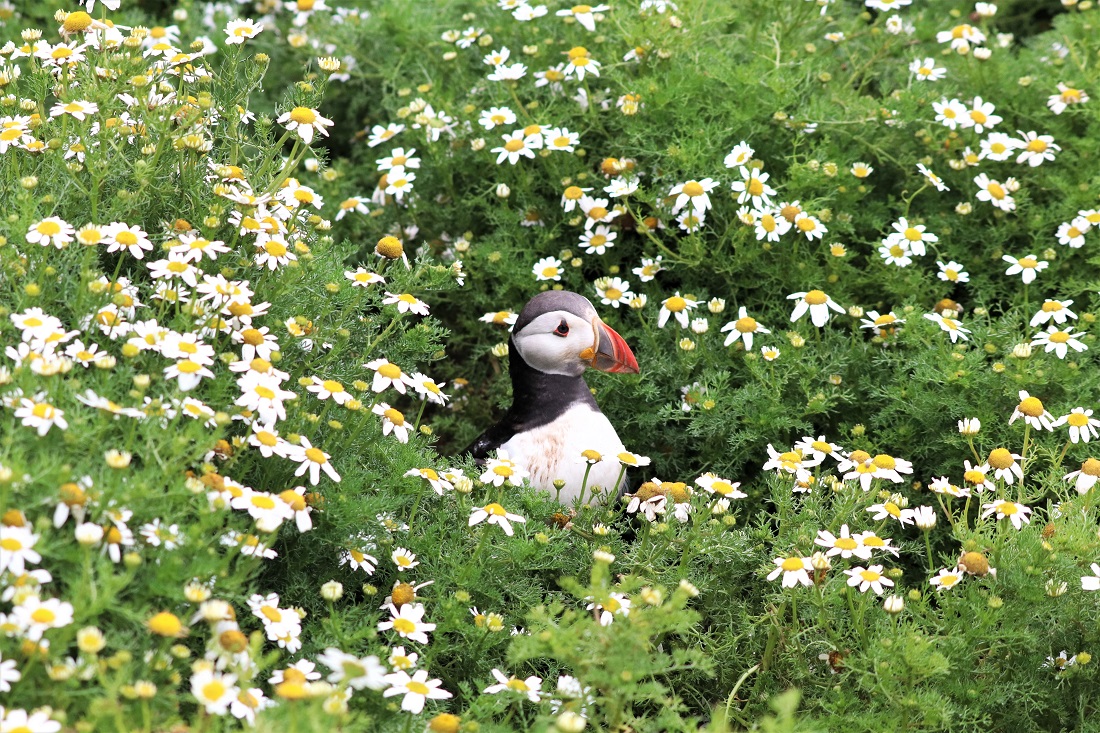
But it’s not the only bird to visit Skomer. The island also welcomes the world’s largest colony of manx shearwater, along with guillemots, kittiwakes and razorbills.
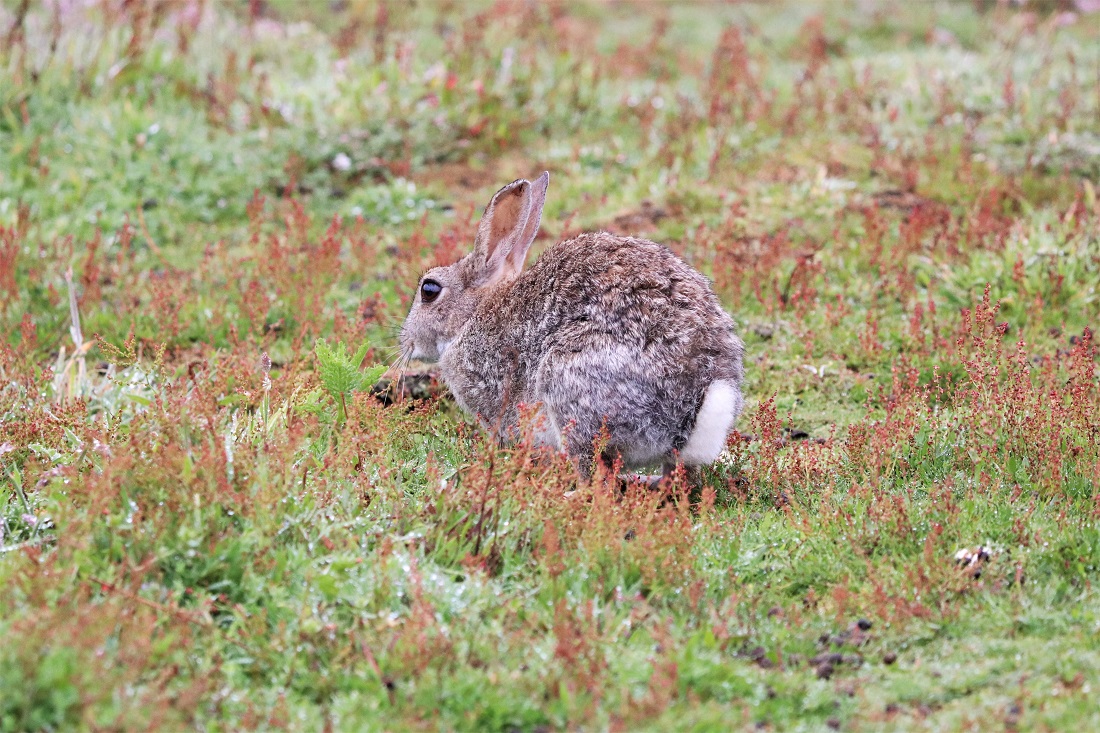
Skomer’s other wildlife includes rabbits, voles (including the unique Skomer vole), shrews, lizards, toads, newts, butterflies and slow worms, as well as visiting dolphins, porpoises and grey seals.
In the run up to our trip in early July, I was worried we wouldn’t make it to the island as the weather forecast didn’t look promising.
Trips to the island are weather dependent and while the days around our planned visit looked clear (sunny even), there was non-stop heavy rain forecast.
Fortunately, the night before our departure the weather forecast improved considerably, and while it rained a little in the morning, it was only light.

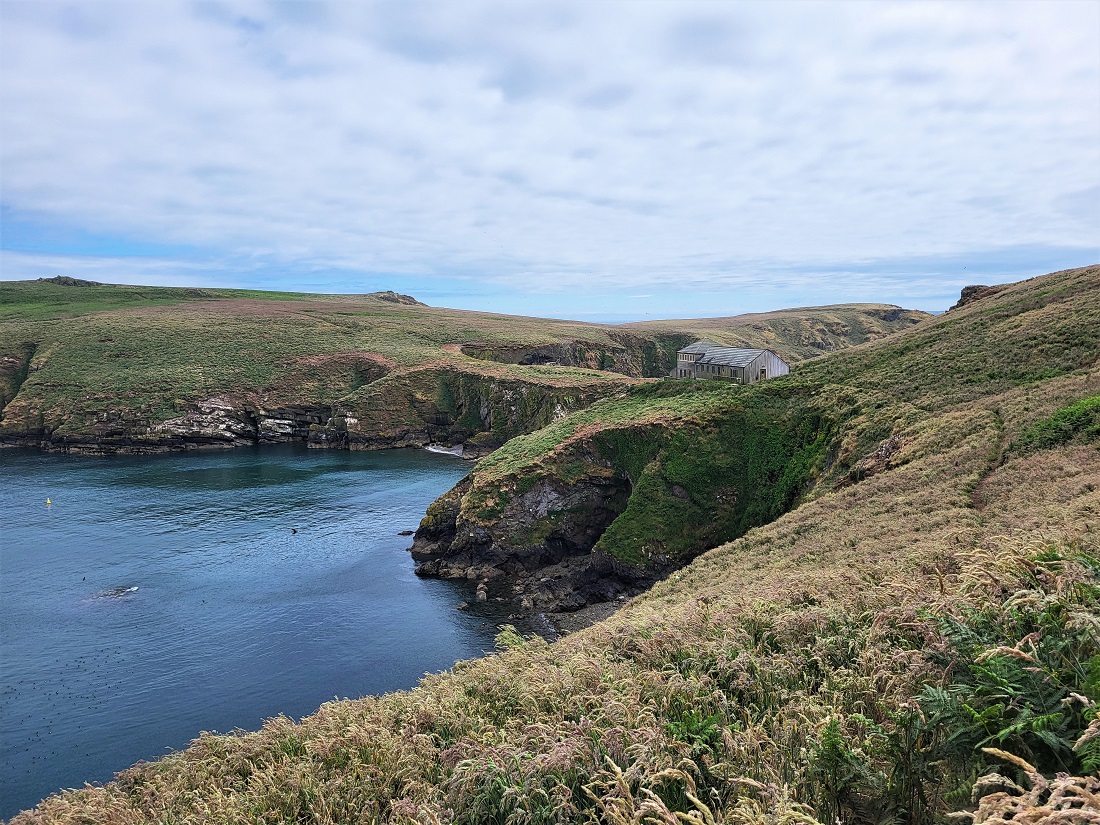
We arrived at Martin’s Haven in Pembrokeshire (above) half an hour before our departure time to meet Drew and the two other photographers who were making up our group.
At 10am, we boarded our boat and set sail across the sea for the 15-minute crossing to Skomer, where we were greeted by the island’s warden and some volunteers.

After a brief talk by the warden, we were free to do our own thing, so Drew took us up to the centre of the island to set up our cameras.
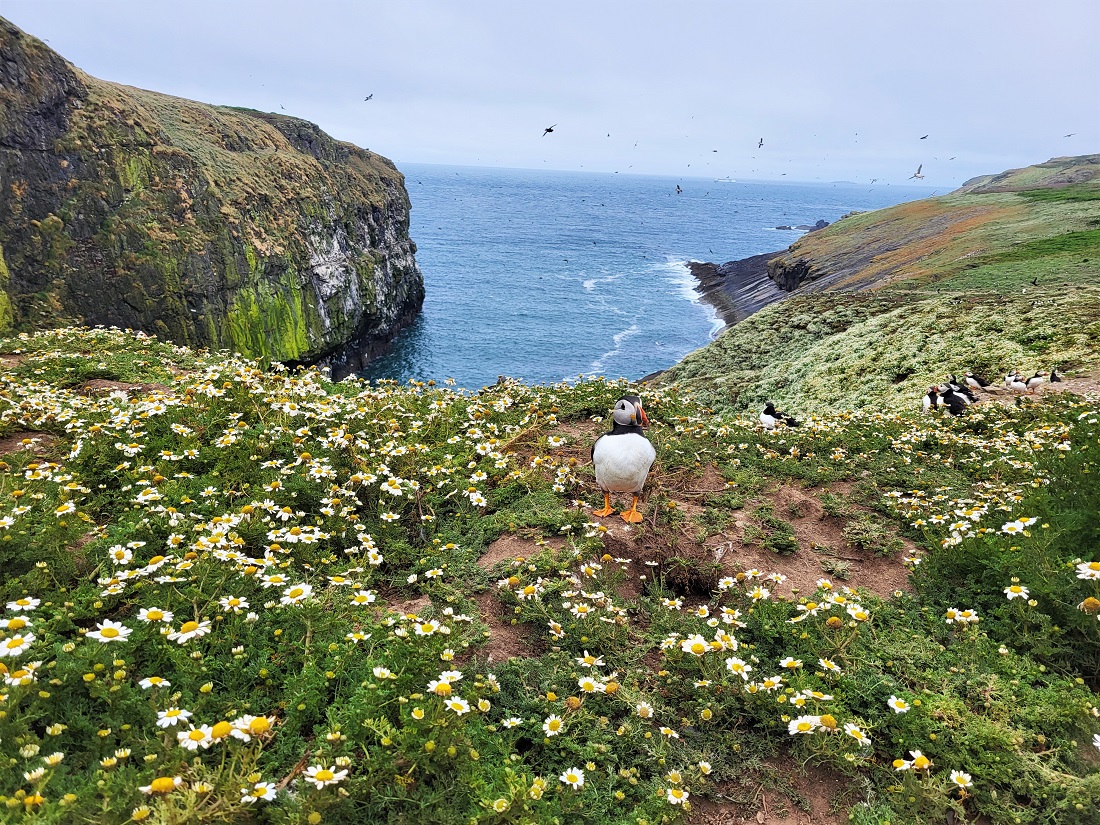
We then followed a path across the island to The Wick (above), a dramatic cliffside spot – the first of the day’s three shooting locations.
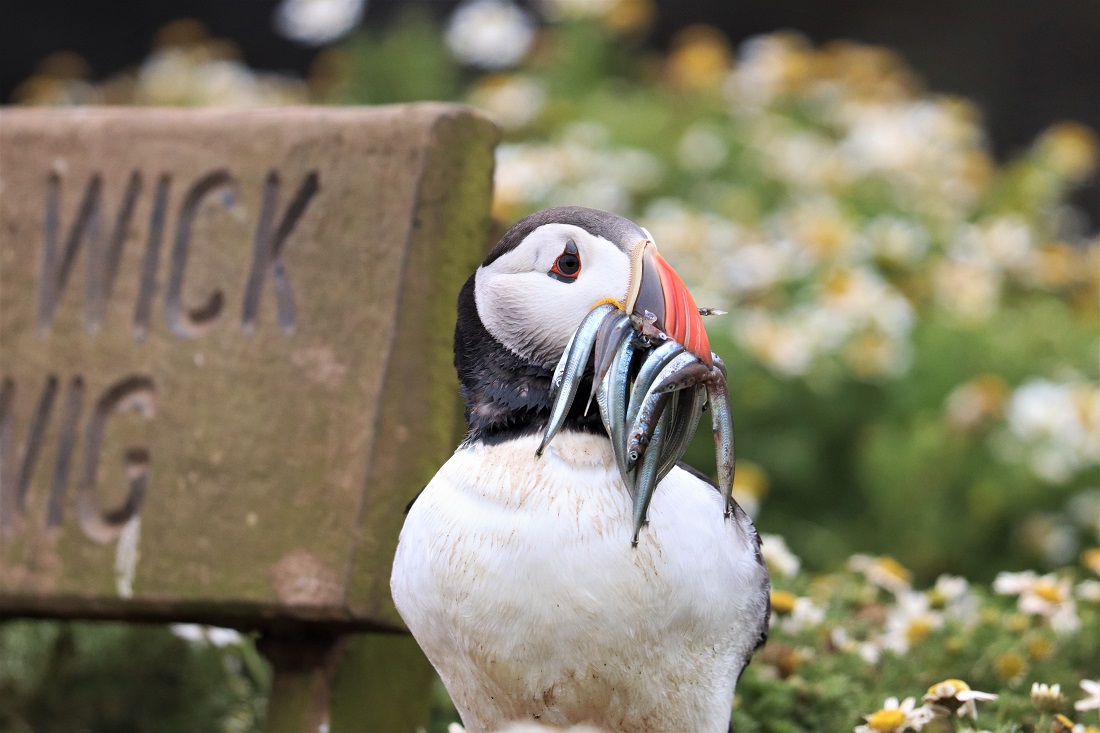
As we approached The Wick, we found a crowd of photographers with huge cameras, a volunteer who was making sure everyone behaved and hundreds of puffins.
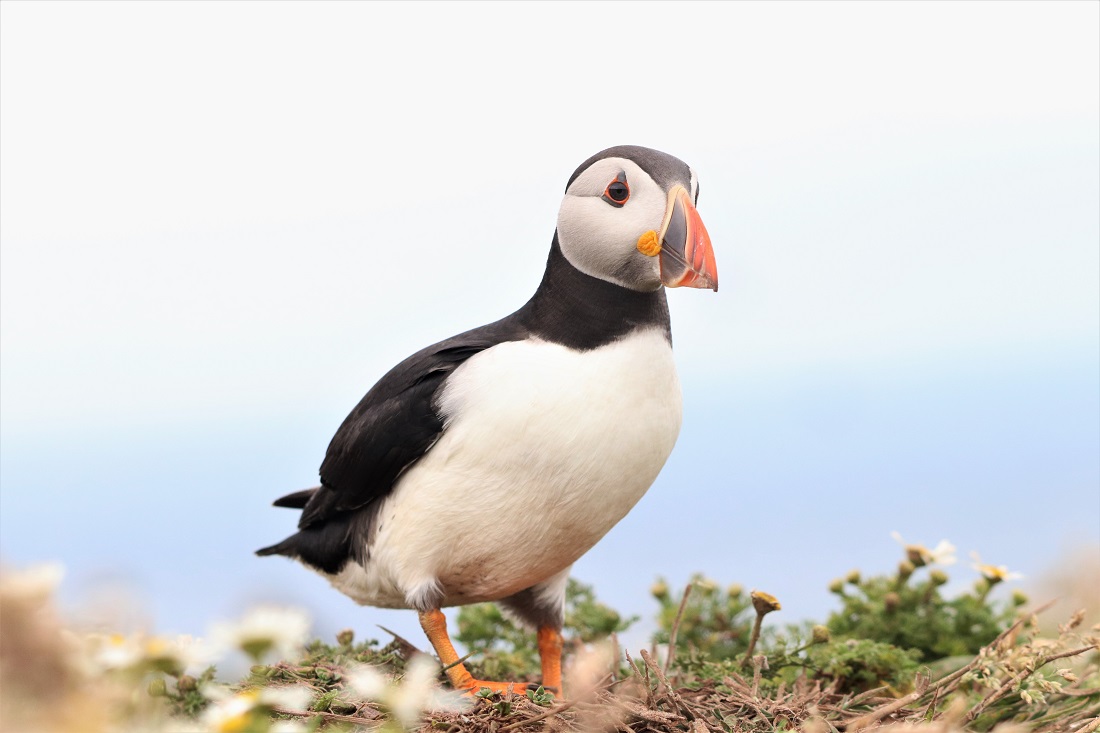
Everywhere I looked there were puffins and it’s safe to say I was instantly besotted. They’re the cutest birds I’ve ever seen.
You have to stick to the paths when you’re on the island to avoid disturbing the burrows that dot the landscape.

I watched as the puffins flew on to the clifftop from the sea, their beaks full of sand eels to take back to the pufflings in the burrows.

I had to keep a constant eye out to make sure I wasn’t blocking their path, as the puffins have a set (often illogical) route they like to follow.
If you block their path, the puffin will come fairly close to you, then just stop and look up at you expectantly.
This is your cue to keep moving away until they start on their way again.
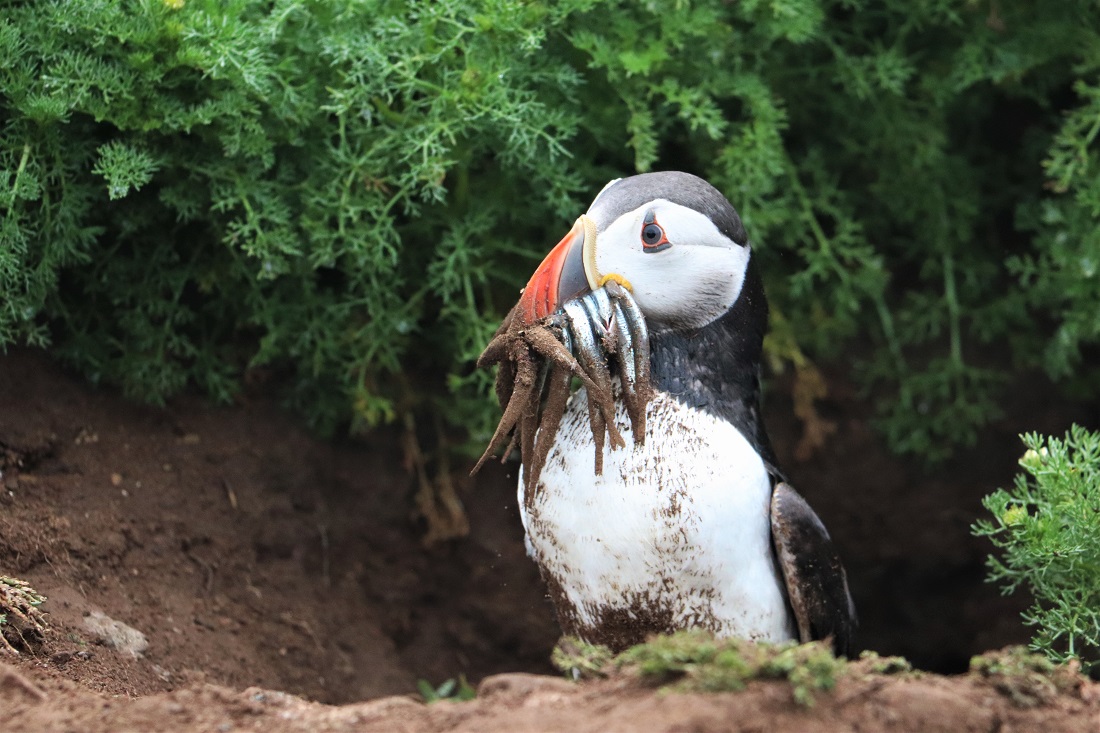
I spent some time watching one puffin who wandered past me with a beak full of sand eels and then dived into a nearby burrow (not its own) to escape a predatory seagull.
Every time it emerged from the burrow, the seagull would appear and the puffin would dive back inside.
After a good 15 minutes, the seagull gave up and the puffin carried on its merry way.
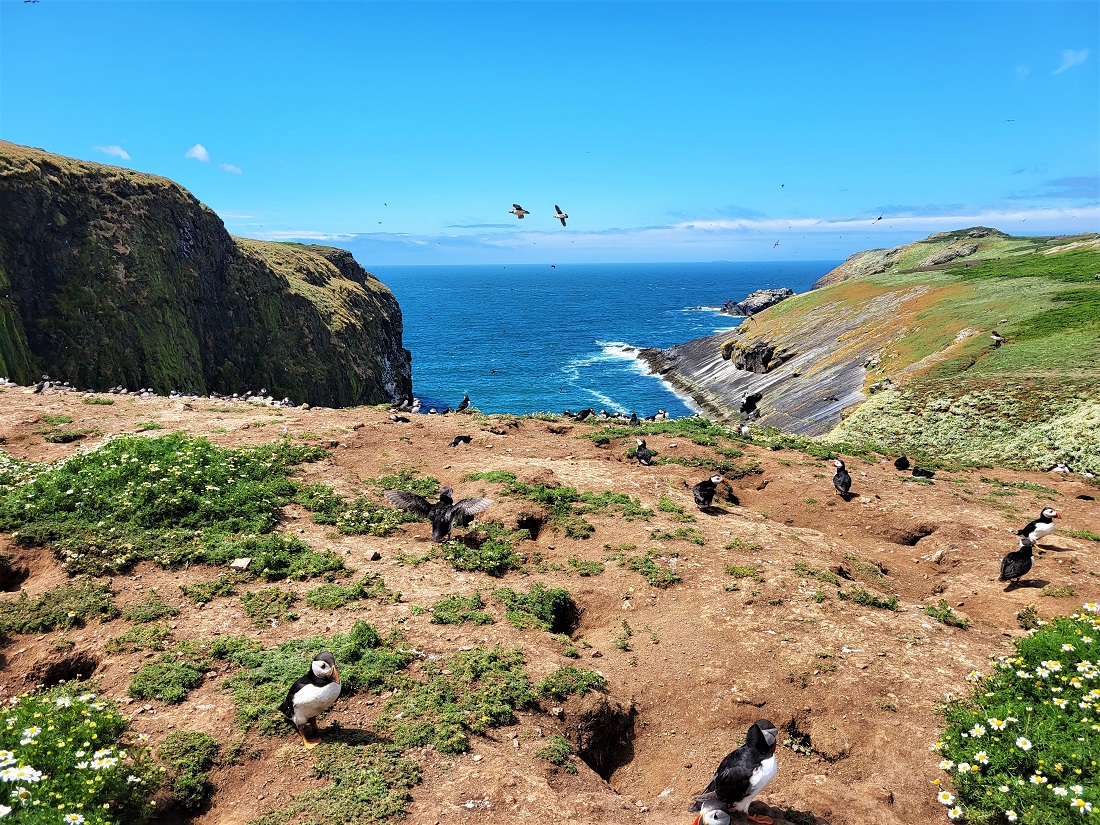
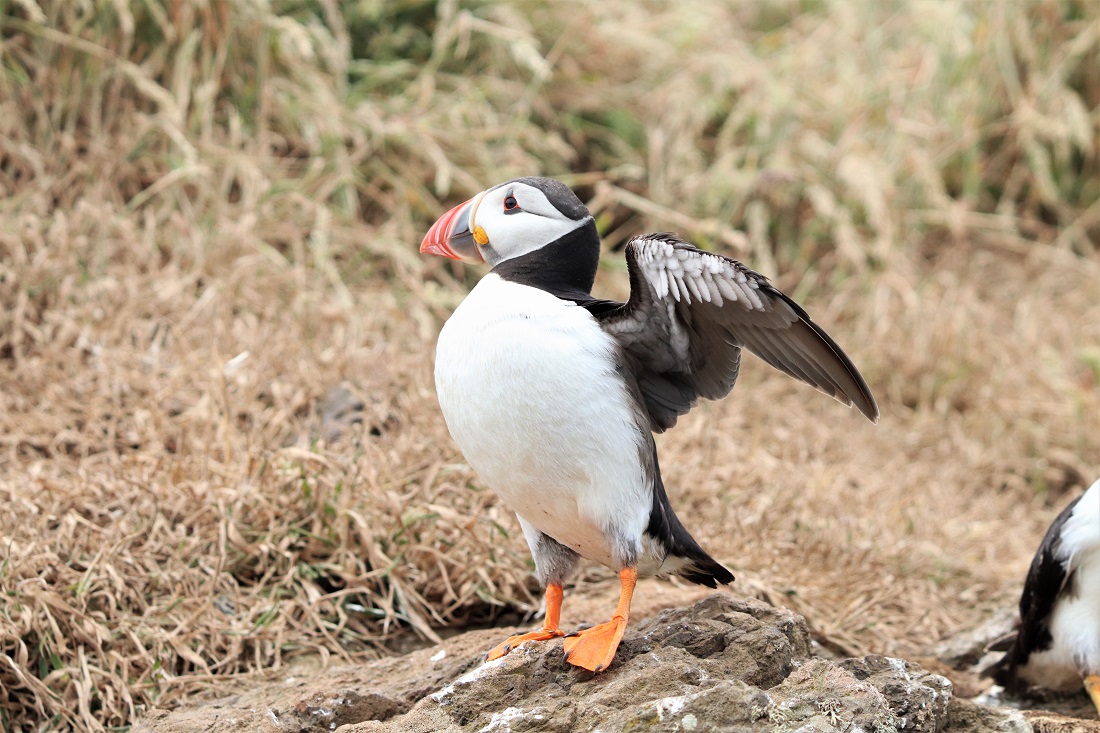
After around an hour watching and photographing the puffins (above), I moved further up the hill to observe another colony.

I was the only person at this spot and it was so peaceful sitting on the path surrounded by puffins.
They’re so full of character, I had a great time quietly watching them going about their business.
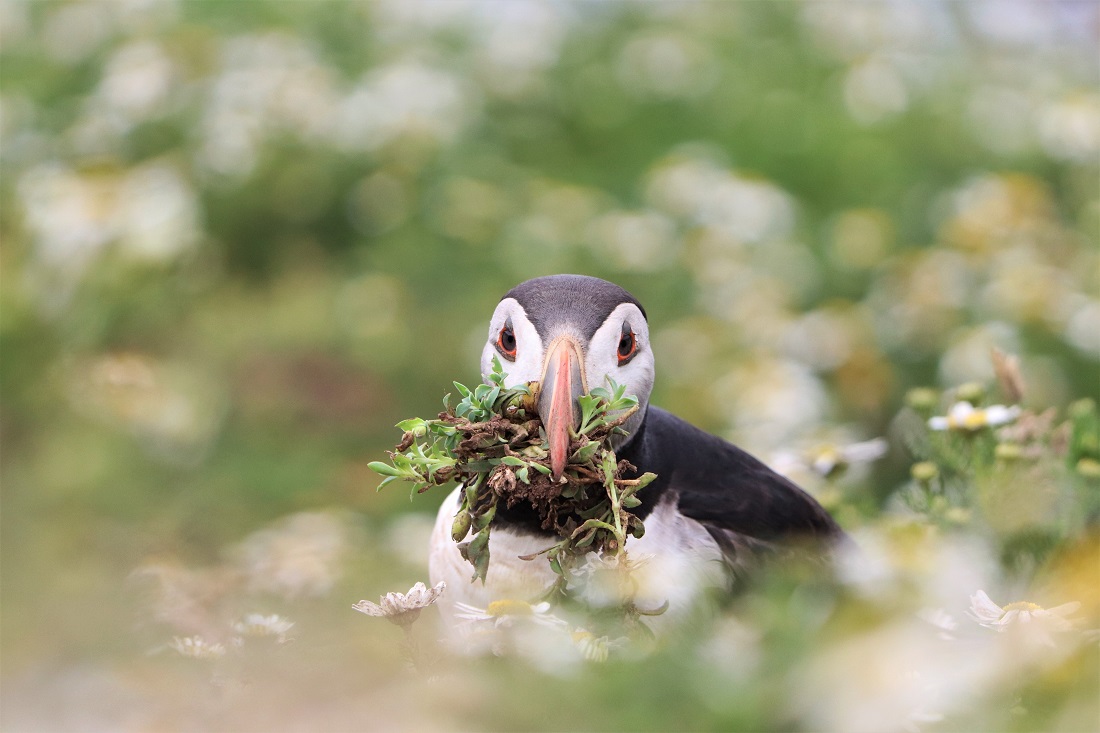
Some puffins were filling their beaks with grass, which they were taking back to their burrows (above), while others were peeking out of their burrows to catch a glimpse of me (below).
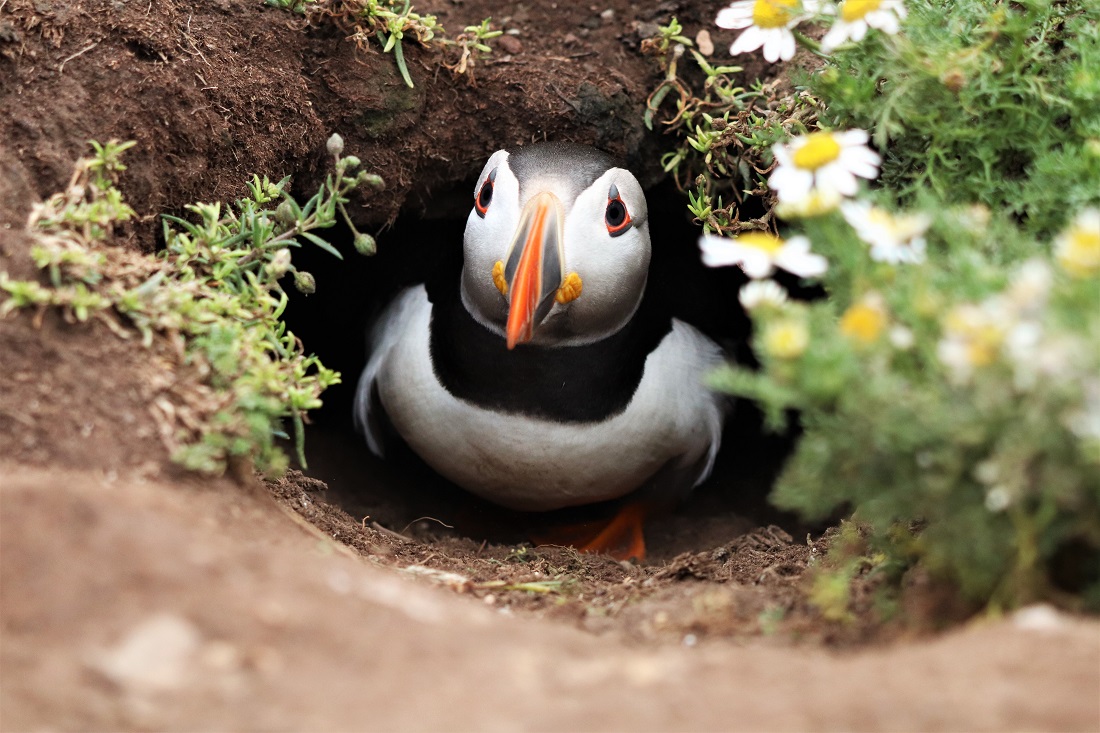
It was a magical experience and after half an hour or so, I spotted a couple of curious pufflings peering out from among the grass.
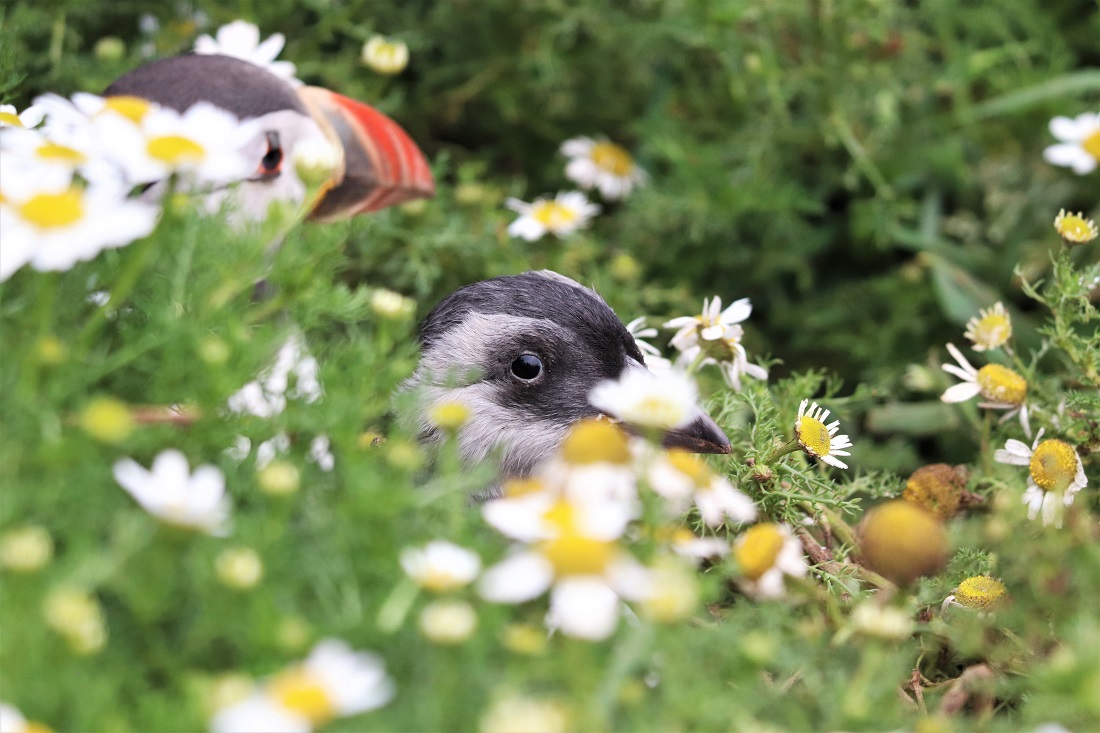
The pufflings stay in their burrows for safety because the ever-present seagulls are looking for an opportune moment to swoop down and nab one.

After a short while, the pufflings grew bolder and began fully emerging from their burrows.
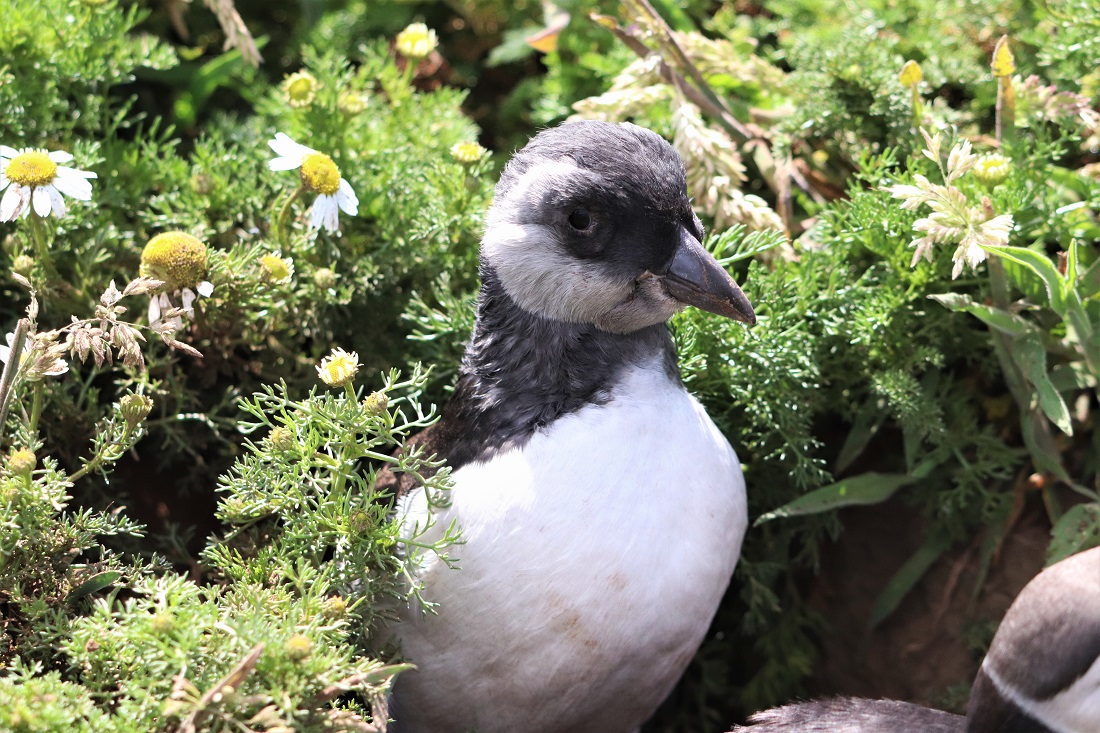
Not for long though, as their watchful parents swiftly shepherded their errant offspring back underground.

But I got to witness one sweet moment between a puffling and its parent, as they touched beaks (above), before the puffling was swiftly ushered to safety.
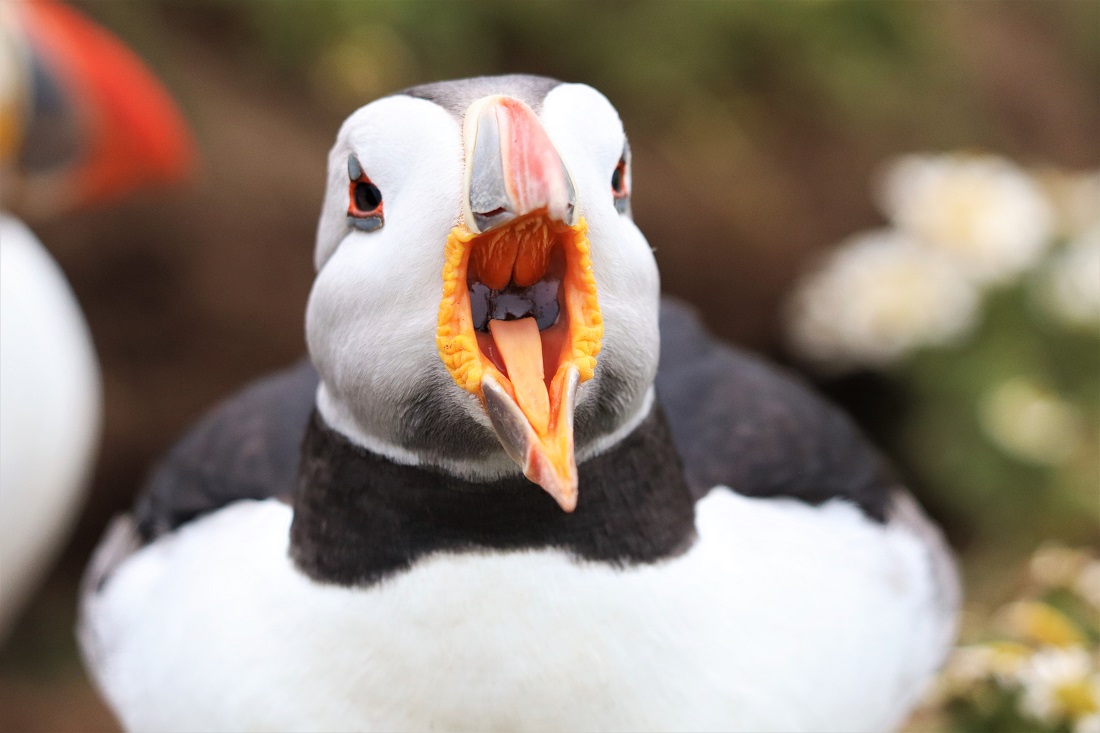
After a while, Drew came to let us know we were moving to a picnic spot in the middle of the island, where we were going to have lunch.
Our time at The Wick flew by and we spent more than two hours watching and photographing the puffins.

It was difficult to tear myself away from them, but I managed to take a couple more sneaky pics before we left (above).
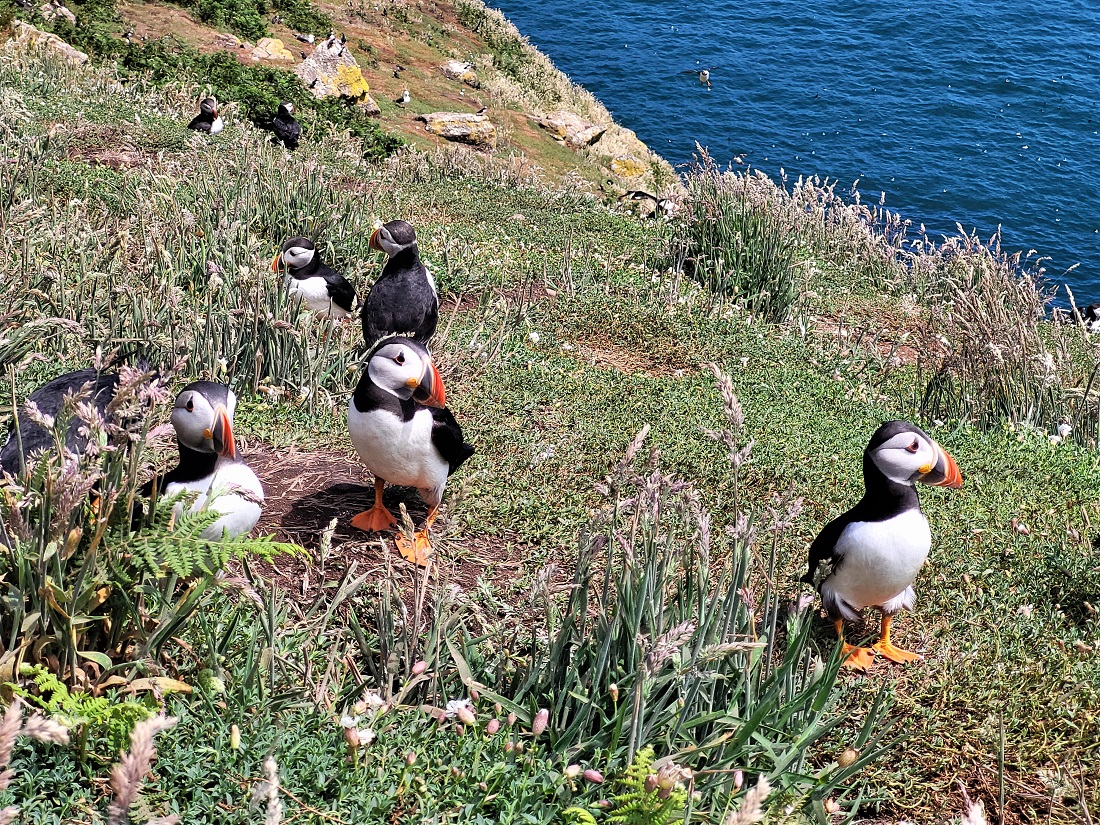
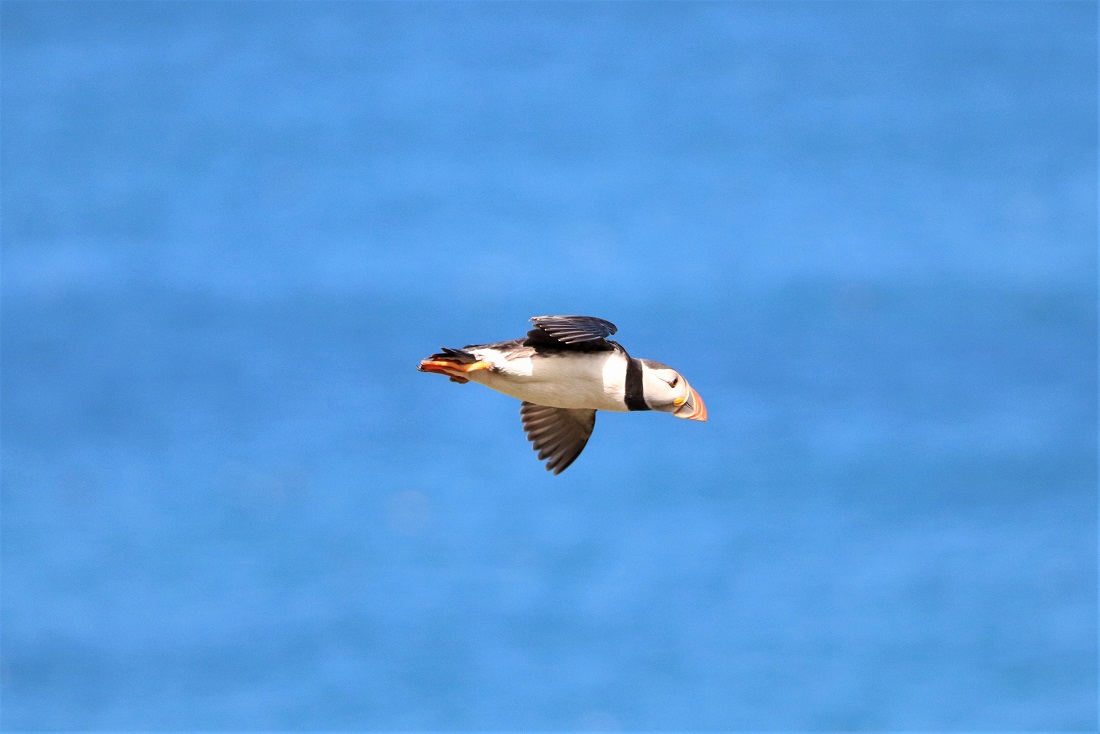
After lunch, we moved to another part of the island, South Haven, where we practised photographing the puffins as they came in to land.
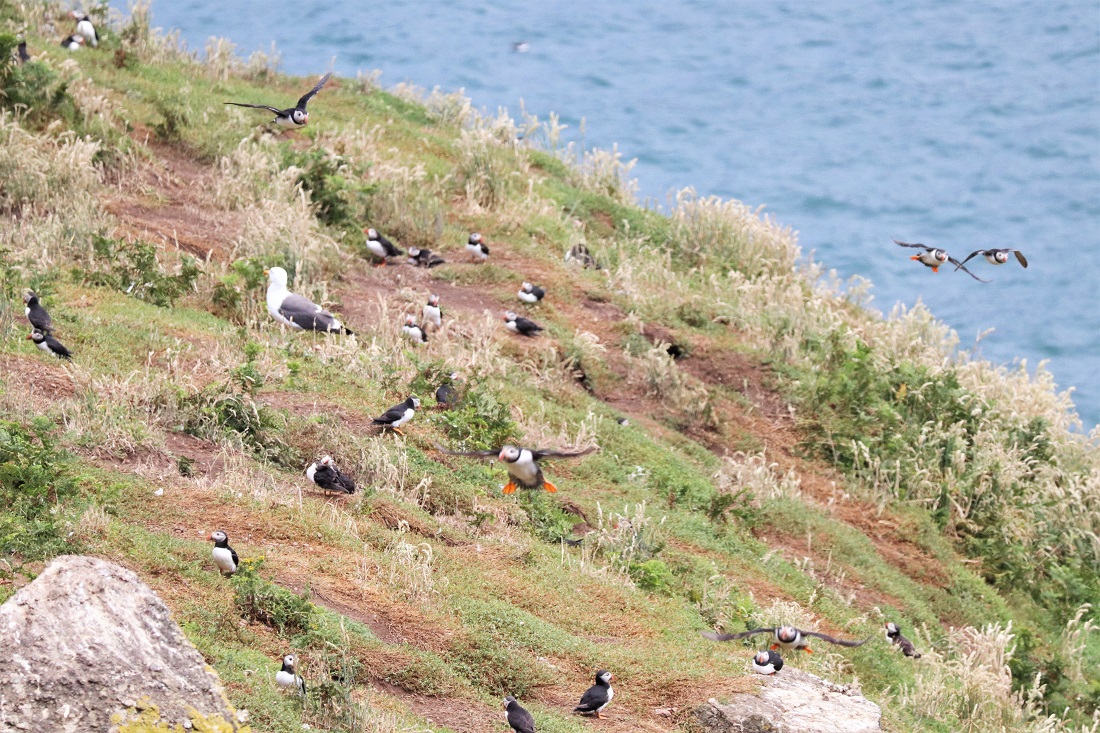
This, it turns out, is incredibly difficult and I had many, many failed attempts before Drew taught me a trick, which meant I occasionally got a flying puffin in focus.

We passed a good half an hour among the puffins at South Haven and I spent more time sitting by the puffins watching them than taking photos.

Seemingly every time Drew came over to see how I was getting on, I was sat there observing the puffins, trying to soak up the awesome sight in front of me.

I found myself repeatedly assuring him that I was taking some photos (in all I ended up with around 500!).

My favourite moment came when a puffin coming in to land with a beak full of sand eels decided to use my knee as a launchpad, looking for a boost further up the hill.
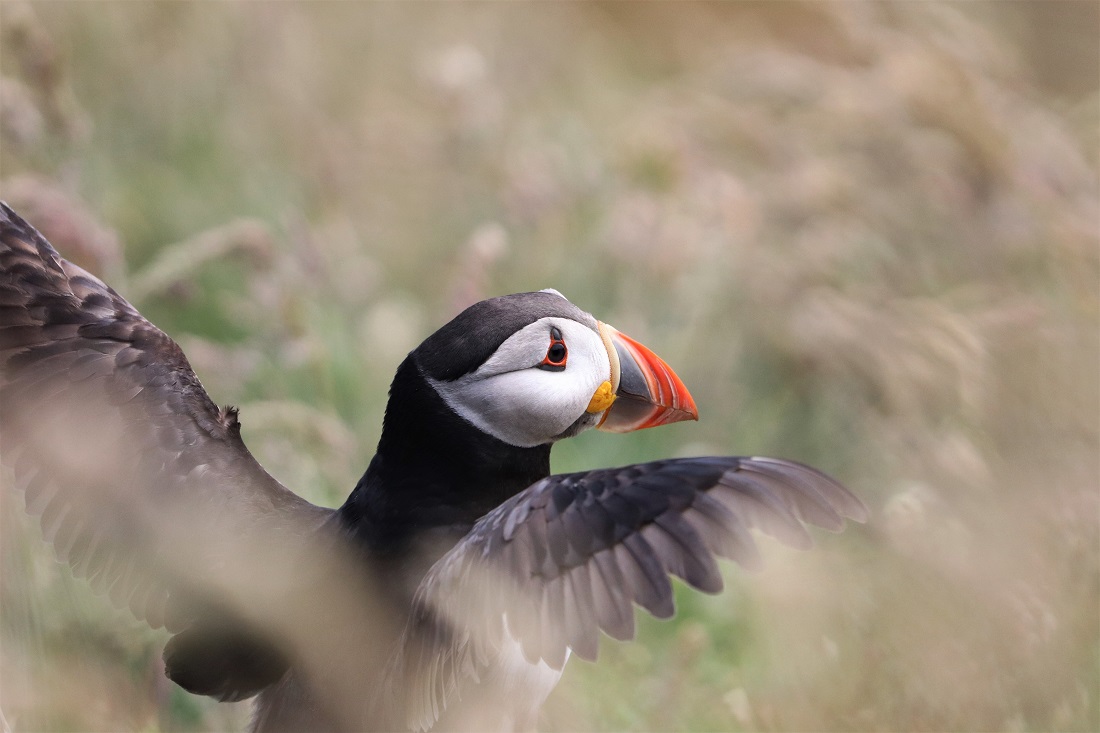
It was a surreal moment and if my friend hadn’t confirmed that I’d just been touched by a puffin, I’m not sure I’d have believed it had happened.

From South Haven, we followed the path around the island to the next bay, North Haven, where we spent some 20 minutes photographing the puffins before catching our boat back to the mainland.

At North Haven, we had a great view of the puffins in the sea and I was taken aback by how many there were (above).

The water in the bay below was filled with puffins, bobbing along on the surface of the water.

The area around North Haven is quite rocky and there were lots of rocky outcrops where the puffins were congregating.

It gave me a great opportunity to have another go at trying to photograph the puffins, not only as they were flying, but also as they were taking off and landing.

I also practised tracking the puffins in the air, photographing them as they took off from the cliffs and then following them as they flew across the sky.

It was at North Haven that I took my favourite shot of the day, a puffin taking off from a rock (below).
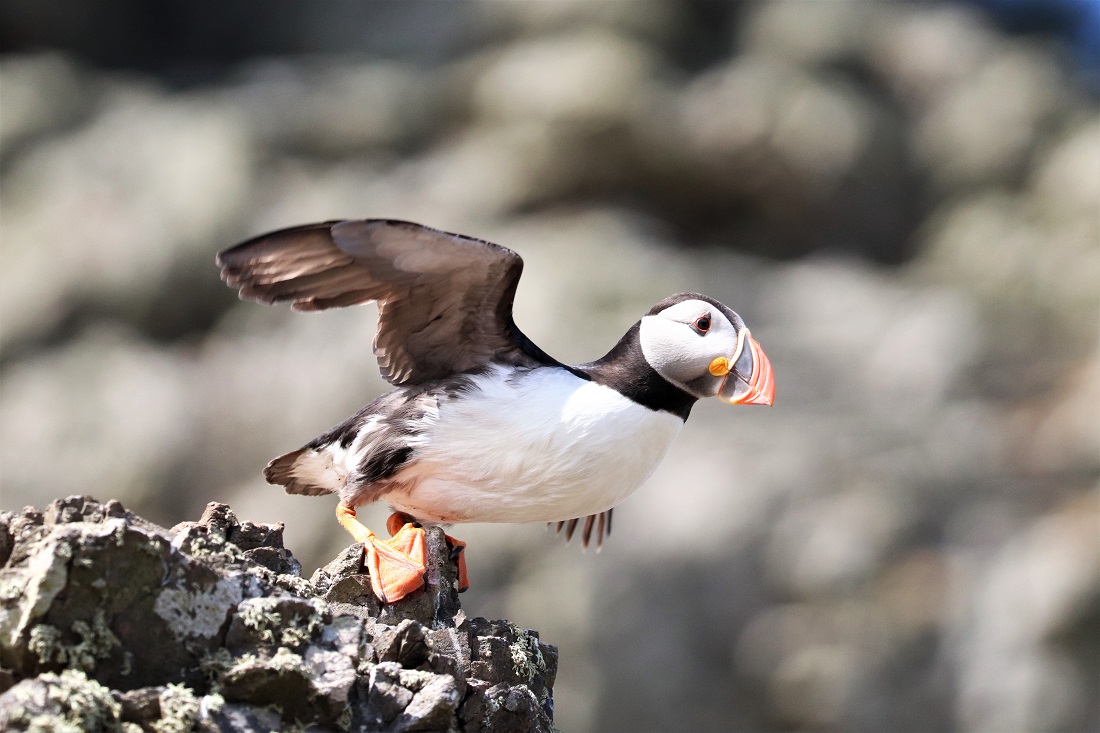
It was difficult to leave the puffins when it came time to board our boat back to Martin’s Haven and I continued to photograph them until the very end.

I absolutely loved my time on Skomer Island and it more than lived up to my expectations.
It’s an enchanting place and the puffins are mesmerising. I could have spent days happily ensconced among them, watching and photographing them.
I’m really pleased we decided to do the photography workshop, as Drew taught me some new tricks and I was delighted with how my photos turned out.
I’ve only included a fraction here, but I can safely say they wouldn’t have been anywhere near as good or as varied if I hadn’t taken part in the workshop.
Info
- There are no cafés or shops on Skomer Island, so you’ll need to bring a packed lunch and all your supplies with you. There’s a toilet in the visitor centre
- You’ll find a shop, which sells hot and cold drinks and snacks, and a toilet at Martin’s Haven
- Parking costs £7 for the day at Martin’s Haven, or if you’re a National Trust member, it’s free
- Allow plenty of time for your journey to Martin’s Haven. It’s in deepest Pembrokeshire, at the end of a series of narrow, winding country lanes and will probably take longer than you think to get there (it certainly takes longer than Google tells you it will)
- You can find information about how to visit the island on The Wildlife Trust of South & West Wales’s website
- If you’re interested in one of Drew’s photography workshops, you can find information about them here
 Little Old World
Wow! Fantastic photos. My little grandsons would love to go there.
LikeLiked by 1 person
Thank you! It’s an incredible experience – definitely one of the highlights of my summer.
LikeLike
You’re right. They are amazingly cute. Great photos.
LikeLiked by 1 person
Thank you! They’re adorable and quite funny to watch in person.
LikeLiked by 1 person
I can’t believe how close you got to them! We saw puffins in Newfoundland but they were on a rocky point across the water. Your pictures are amazing and I understand why you took 500! Maggie
LikeLiked by 1 person
Everyone had said before I went that you get up close to them, but I hadn’t realised how close you get. They’re very gentle and curious birds. Thanks Maggie 🙂 I’ve since managed to edit them down to about 300, which is a little more manageable.
LikeLiked by 1 person
Waouh. Splendid photos of the puffins. I find these birds so beautiful. I was happy to see them in Northumberland.
LikeLiked by 1 person
Merci Mélodie! It’s cool that you got to see them in Northumberland. They’re so cute, you can’t help but smile when you see them.
LikeLiked by 1 person
Not possible to have too many puffin photos! And you got some fabulous ones. The most I have ever seen were on the Treshnish Isles (boat trip from Mull). We’ve been twice, maybe 15 or so years apart. and it was and to see the population well depleted the second time. Not enough sand eels apparently.
LikeLiked by 1 person
A few people have said that to me 😄 I still think I have a few too many though. Thank you! That’s such a shame the population was well depleted the last time you went. I know at Skomer the population has increased significantly in recent years, so hopefully they’ve had a similar resurgence on the Treshnish Isles.
LikeLiked by 1 person
Your pictures of the puffins are absolutely adorable and amazing! The one-day photography workshop with a local photographer sounds like fun! Glad to hear the weather forecast improved and you even got to enjoy some blue skies and sunshine.
LikeLiked by 1 person
Thank you 😊 It was a great experience going with a photographer, I learned so much that day and I’ve been out practising in my local park since. I’m so pleased the weather improved. There’s no shade or cover on the island, so I think it would have been pretty miserable trying to photograph the puffins in the pouring rain.
LikeLiked by 1 person
Puffin pictures for the win! You got so many great pictures. What a fun and unique experience to get to spend a day with a photographer and the puffins 🙂
LikeLiked by 1 person
Thanks Meg 😊 It was an unforgettable experience and I’m glad we decided to do the photography workshop. It was a really fun day.
LikeLiked by 1 person
Fantastic photos!especially the one with puffin amongst the flowers
LikeLiked by 1 person
Thank you 🙂 The puffin peeking out from the flowers is very cute.
LikeLiked by 1 person
Absolutely love your photos, they really capture the beauty and character of these charming birds. And wow that’s amazing that one stood on you!
LikeLiked by 1 person
Thank you 🙂 The puffins are so charming and full of character it’s difficult to take a bad photo of them. I was so surprised when the puffin landed on me, I wasn’t expecting it at all. It’s certainly not something I’ll be forgetting any time soon!
LikeLike
Wow they are incredible and your photos are truly beautiful! I would love to be able to visit and see them one day 🙂
LikeLiked by 2 people
Thanks Hannah! It was an amazing experience and I’d highly recommend it, if you ever get the opportunity 🙂
LikeLike
OMG you got to see a puffling!! That’s amazing! Skomer looks fantastic. I’ve been to the Isle Of May a couple of times which is just off the Fife coast and is an incredible place for puffin-spotting.
LikeLiked by 1 person
I saw two pufflings!! I was really chuffed to see them. They were so cute and really curious, their parents kept trying to get them to go back in their burrow. Skomer’s incredible, it’s filled with puffins. It’s fantastic there are so many places around the UK where you can go see the puffins.
LikeLike