
Orangutans are my favourite animal and I’ve wanted to see the great apes in the wild ever since I was a child.
So it may come as no surprise that the first place I visited when I arrived in Borneo was the small town of Sepilok in Sabah, home to the world’s first orangutan sanctuary.
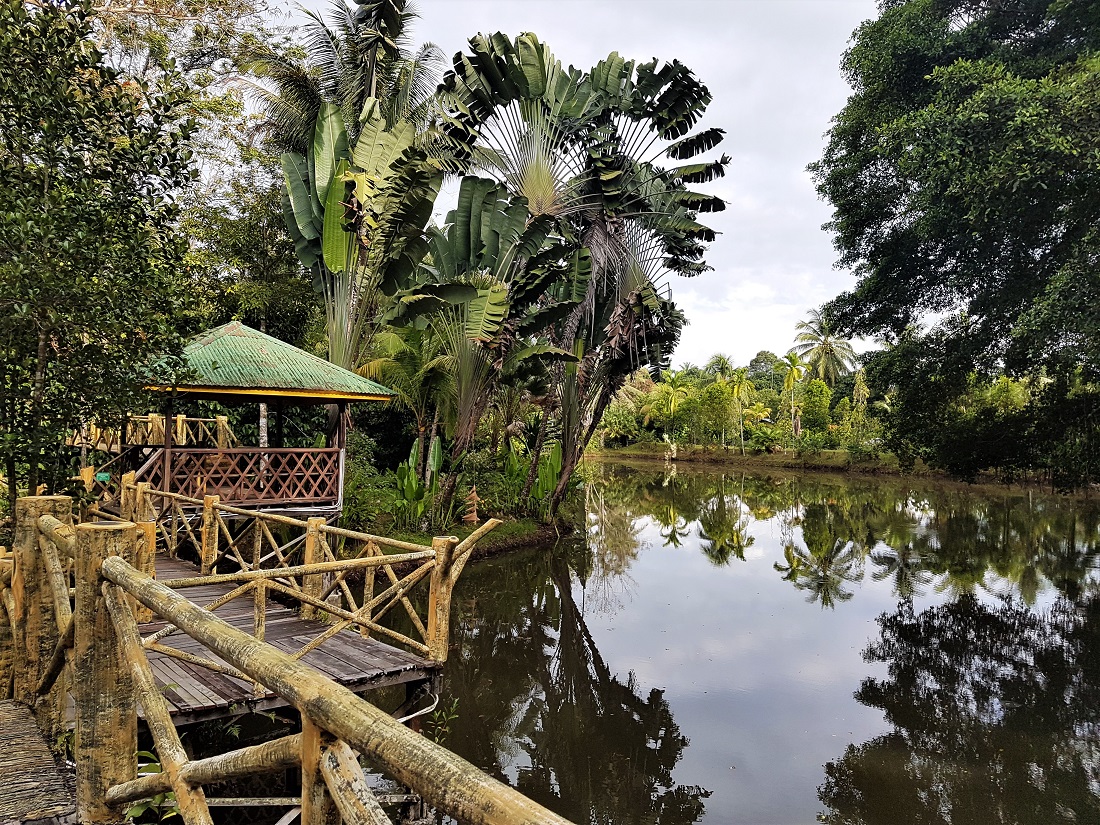
The town, which lies to the east of the city of Sandakan, also houses a conservation centre for sun bears and a Rainforest Discovery Centre.
All three lie within the 43 sq km Sepilok-Kabili Rainforest Reserve.
Sepilok Orangutan Rehabilitation Centre

Opened in 1964, Sepilok’s Orangutan Rehabilitation Centre is one of four centres around the world dedicated to supporting orangutans.
The centre takes in orphaned and injured orangutans with the aim of rehabilitating and, eventually, releasing them back into the wild.

Run by the Sabah Wildlife Department, some 60 to 80 orangutans live within the reserve and it looks after 25 young orangutans in its nurseries.
When they arrive at the centre, the orphaned orangs are checked over by vets and quarantined to make sure they don’t pass on any germs to the other apes, as orangutans are particularly susceptible to diseases.

We arrived at the centre, which was just a five-minute walk from our hotel, at 8.45am, stored our items in a locker (you can’t take bags or food into the reserve in case the orangutans run off with them) and made our way to the entrance.
Before heading inside, we cleaned our hands using the sanitiser provided to help protect the apes from any germs we may have been carrying.
There are series of boardwalk trails for visitors to follow throughout the reserve and our first port of call was the nursery.
Along the way, we spotted our first orangutans of the day – a mother and baby high in the trees.
They were some way off and shrouded by leaves, but I was delighted by our first glimpse of the magnificent apes.

The nursery is a small air-conditioned building with two rooms where you can watch the young orangutans from behind a pane of glass.
It’s here the orangutans come after their quarantine and where they start their rehabilitation journey.
The nursery features a feeding station, along with ropes to help the great apes learn to climb and develop the essential skills they need to survive in the wild.
Newer orangutans are often paired with slightly more experienced ones from whom they can learn the ropes.
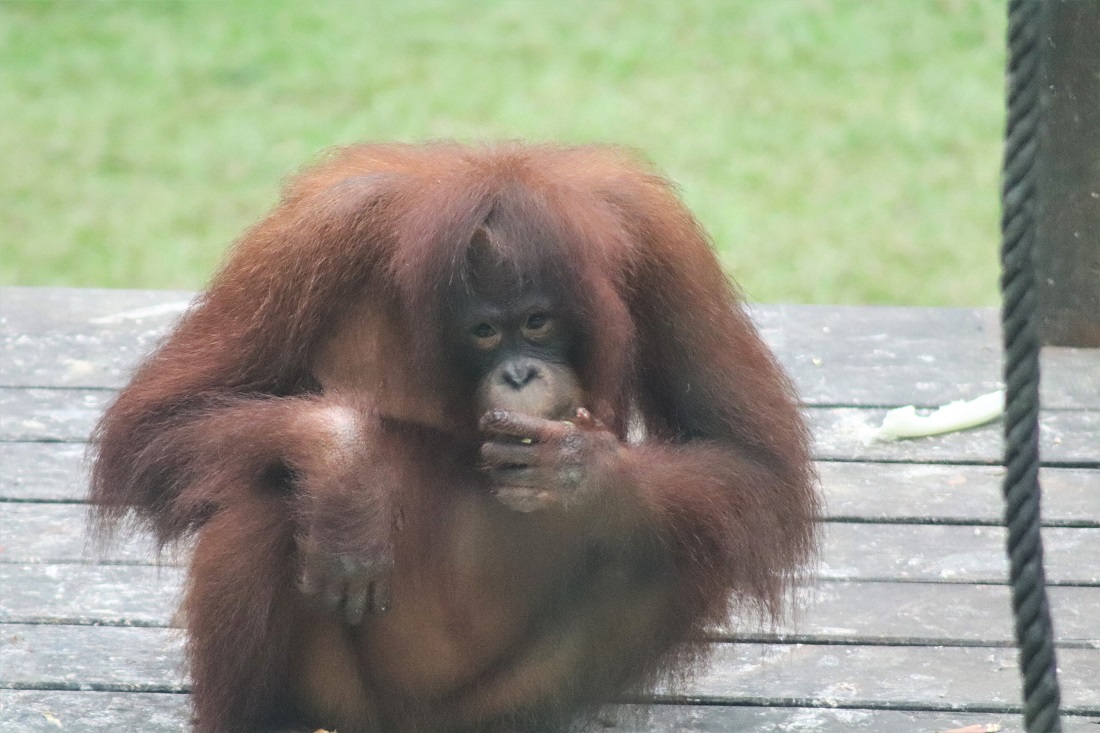
In the nursery, I was excited to find an orangutan happily munching away on the feeding station, while in the distance, a few other young orangs were playing on the ropes.
I spent some time watching the orangutans going about their business, before moving on through the reserve to the feeding station.
The orangutans are given food each day at 10am and 3pm to supplement their diet.
But they’re given the same boring food each day to encourage them to forage their own food.
While it’s a good place to see the orangs, the apes don’t always show.

I got chatting to an Australian guy, who told me this was his third visit and he’d yet to see any orangutans.
But it turned out the third time was the charm, as there were a couple of orangutans on the ropes when we arrived.
The two orangutans stopped what they were doing when the ranger came and watched in anticipation as he tipped a bucket of fruit and vegetables onto the platform.
While they were waiting, one of the orangutans began stroking the other’s chin, which was adorable to watch.
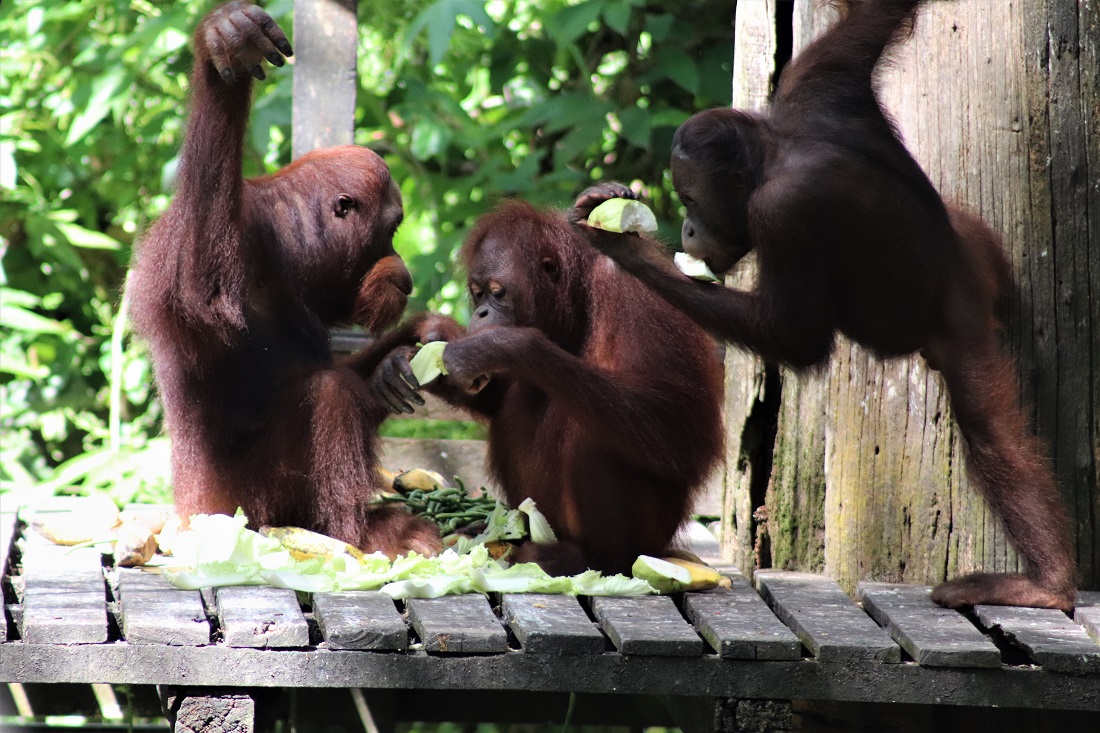
As the two orangutans began eating, they were quickly joined by a third (above).
We’d arrived at the station early so had a prime spot to watch them (my guide had pointed out the best place to stand) and I was grateful for this as it was really busy by now.

Once the orangutans had their fill, they were off, but we were soon joined by a mother and her unbelievably cute baby.
At the beginning, the baby was cwtched up with her mum, so was hard to see.
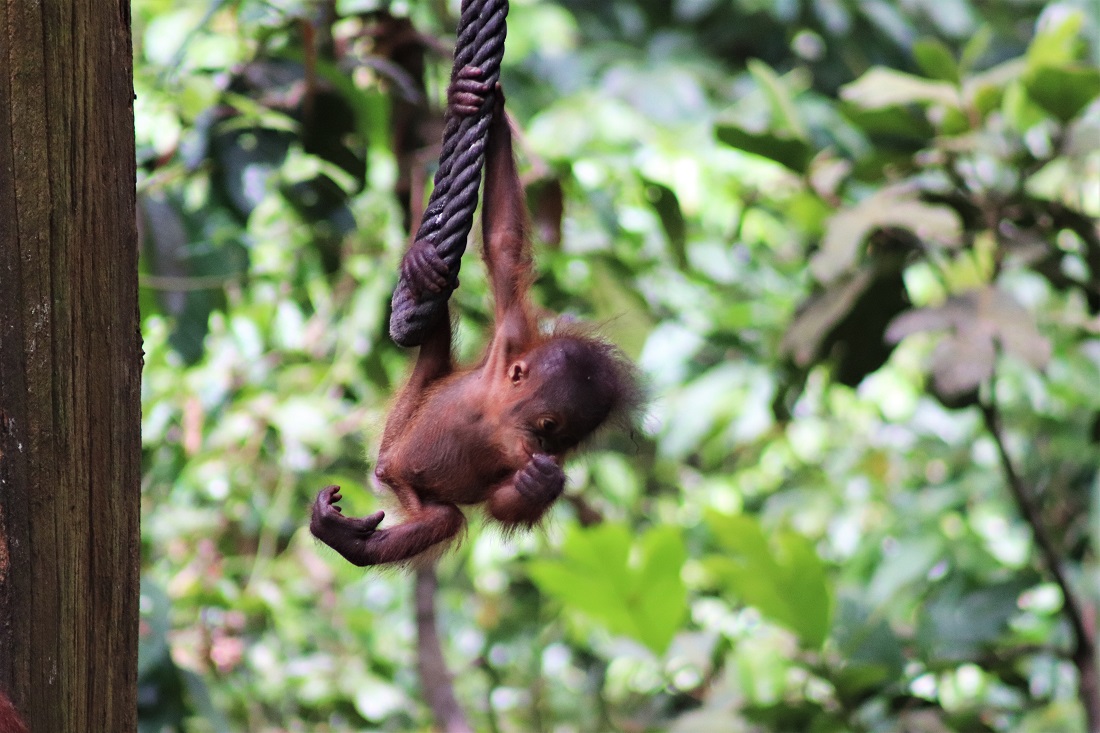
But by the end of the session, the baby was happily munching away and even ventured away from its mother to have some fun playing and dangling from the end of a rope (above).
It wasn’t long before they were joined by a third orangutan (below), who spent most of his time hanging from a rope, eating and watching the pair, but not really interacting with or bothering them.
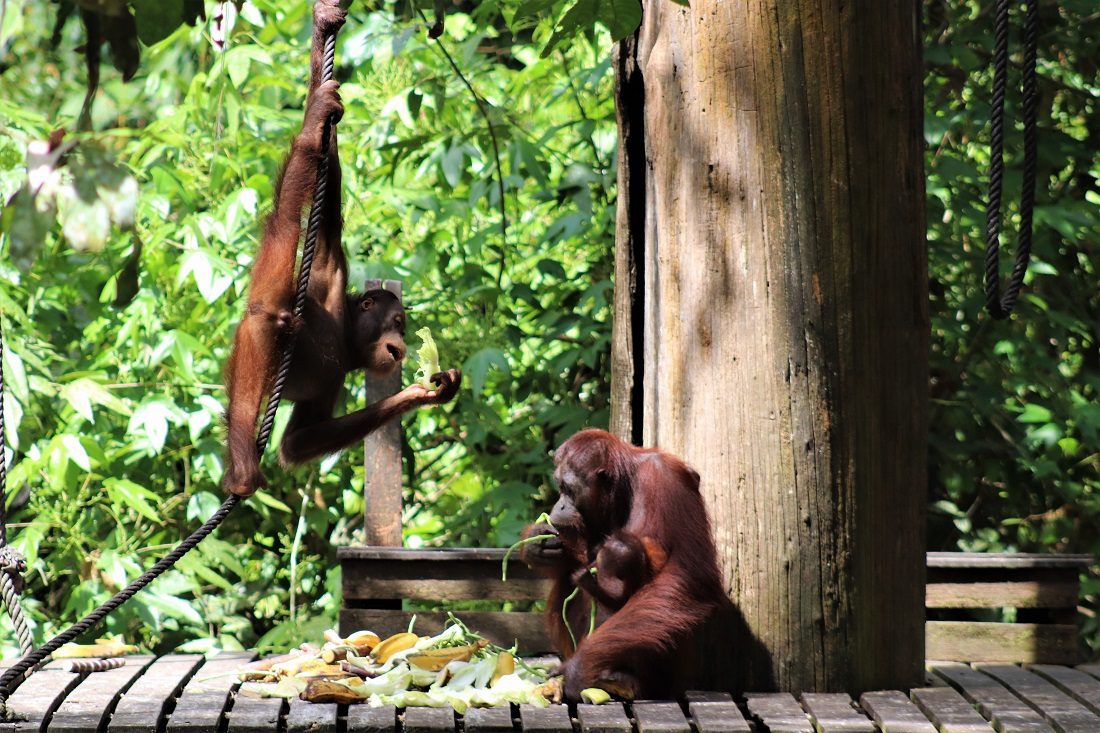
It was incredible to be so close to the orangutans and I felt especially lucky to have seen the mother and baby.
But I couldn’t help but feel it must have been a bizarre experience for the great apes, sitting there having brunch while a hoard of humans gawped at them and took photos.

After around half an hour, the mother scooped up her baby and swang off into the trees via the ropes. The third orangutan swiftly disappeared, too.
Feeding time over, we made our way back along the boardwalk to the entrance, stopping along the way to take a look at a tiny pygmy squirrel on a tree trunk.
I had such a wonderful time at the Orangutan Rehabilitation Centre that I decided to go back later that afternoon for the second feeding session.
The afternoon session usually welcomes far fewer people than the morning’s and I was surprised by how quiet it was in comparison.
When we arrived the food was already on the platform, but there weren’t any orangutans to be seen.
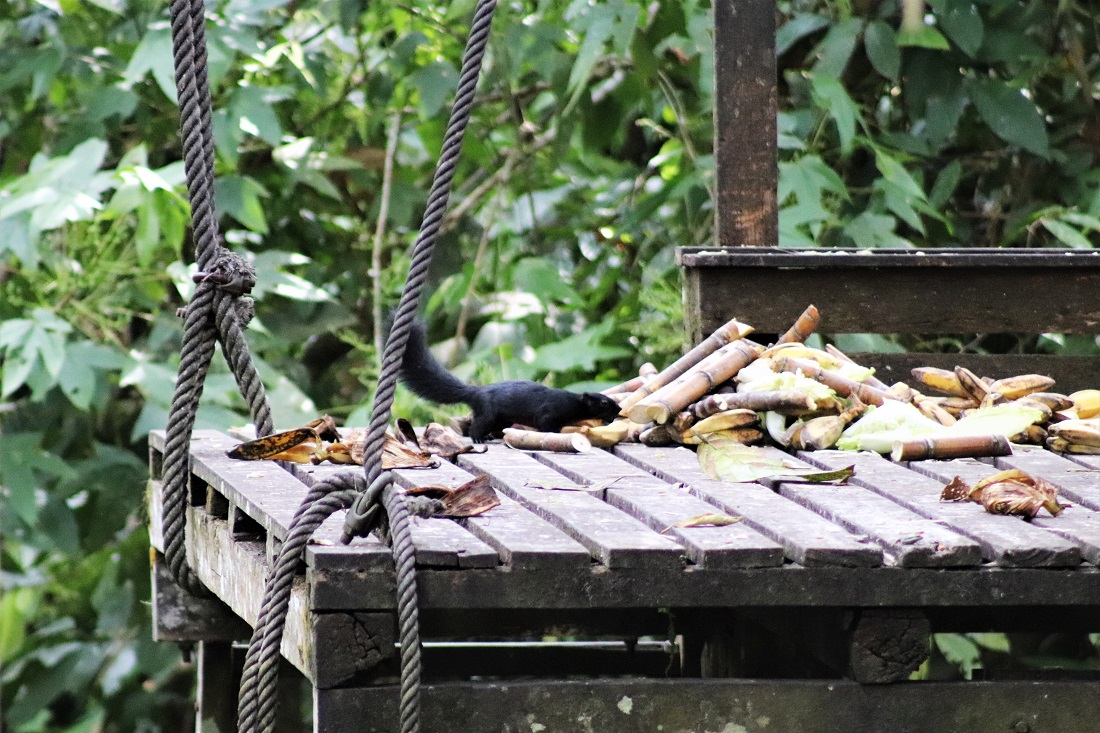
The only creature we saw was a black squirrel, who was happily helping himself to the fruit and veggies (above).
The Bornean Sun Bear Conservation Centre

Native to Southeast Asia, sun bears are the smallest bears in the world.
They’re named after the yellow marking on their chests, which are unique to every bear and act as a sort of fingerprint.
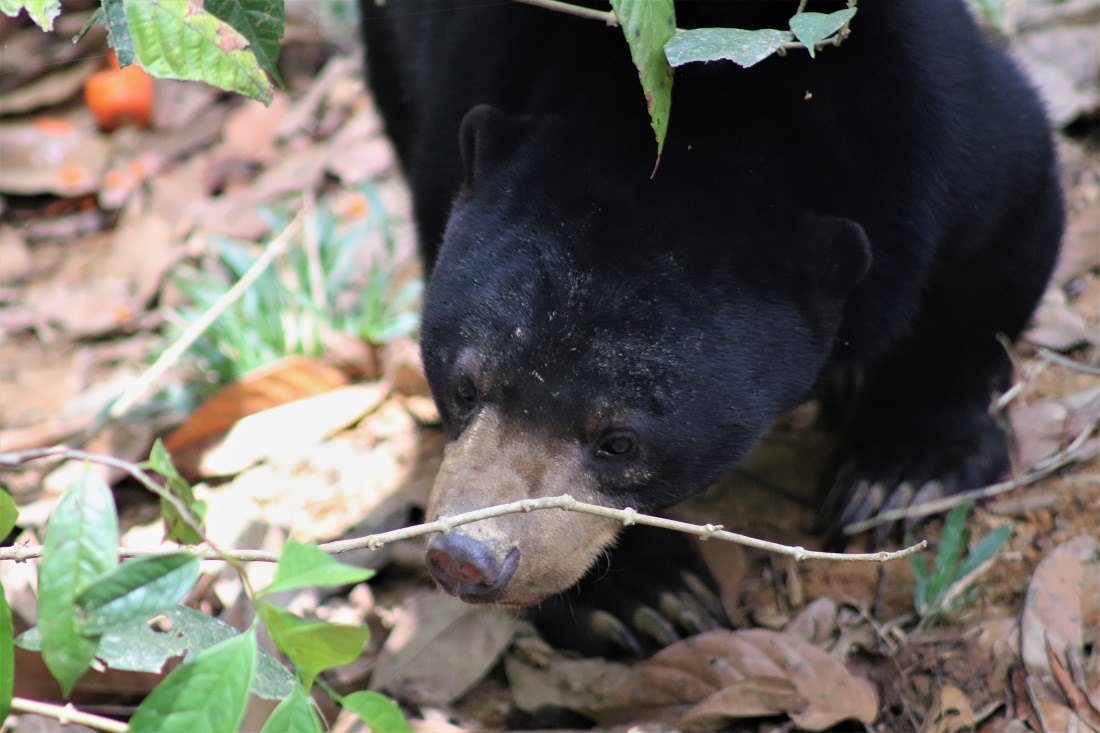
Sepilok’s Bornean Sun Bear Conservation Centre was founded in 2008 to rescue and rehabilitate captive sun bears.
The 2.5 hectare site is today home to 43 rescued bears.

The centre is next door to the Orangutan Rehabilitation Centre, so I made my way there after my first visit to the orangs.
It’s a similar set up to the Orangutan Rehabilitation Centre, but on a smaller scale and only has two viewing platforms.

We made our way to the first viewing platform, where there were a few bears milling around, including one who was lounging in a log (above).
They were very cute, but also a lot smaller than I was expecting.

We watched as one of the bears paced back and forth on a log.
This often happens with bears that have been caged because it can take them a while to adjust to having so much space to roam around in.
They’ll often pace back and forth as if in a cage until they get used to their new surroundings.
Having spent some time watching the sun bears, we moved to the second viewing platform, but didn’t spot any bears.

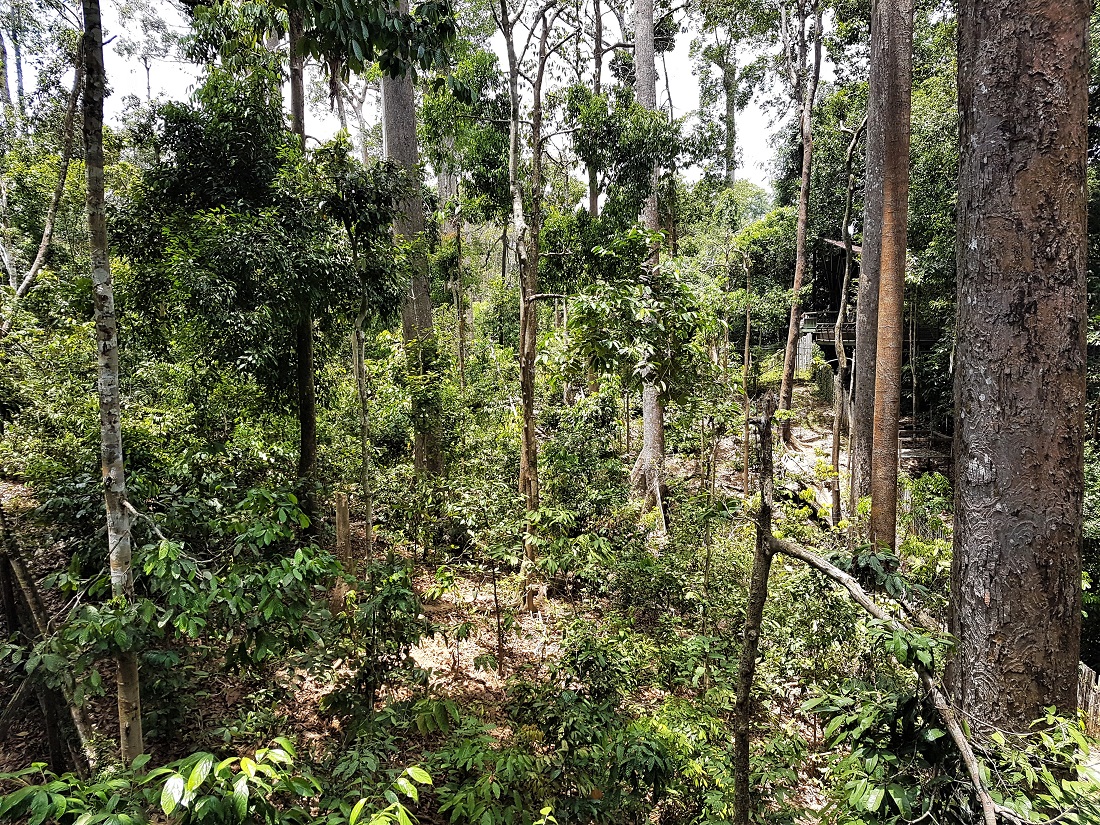
We did, however, spot a venomous green snake camouflaged by the tree (above), which was very cool.
Rainforest Discovery Centre

We ended our day at the Rainforest Discovery Centre, which is run by the Sabah Forestry Department, and boasts a 620m-long skywalk and three viewing towers.

We walked through the park via the skywalk, stopping to climb one of the viewing towers where we saw the odd bird.
We then made our way back to the boardwalk where we planned to wait until dusk because that’s when the rainforest’s red giant flying squirrels were due to make their appearance.
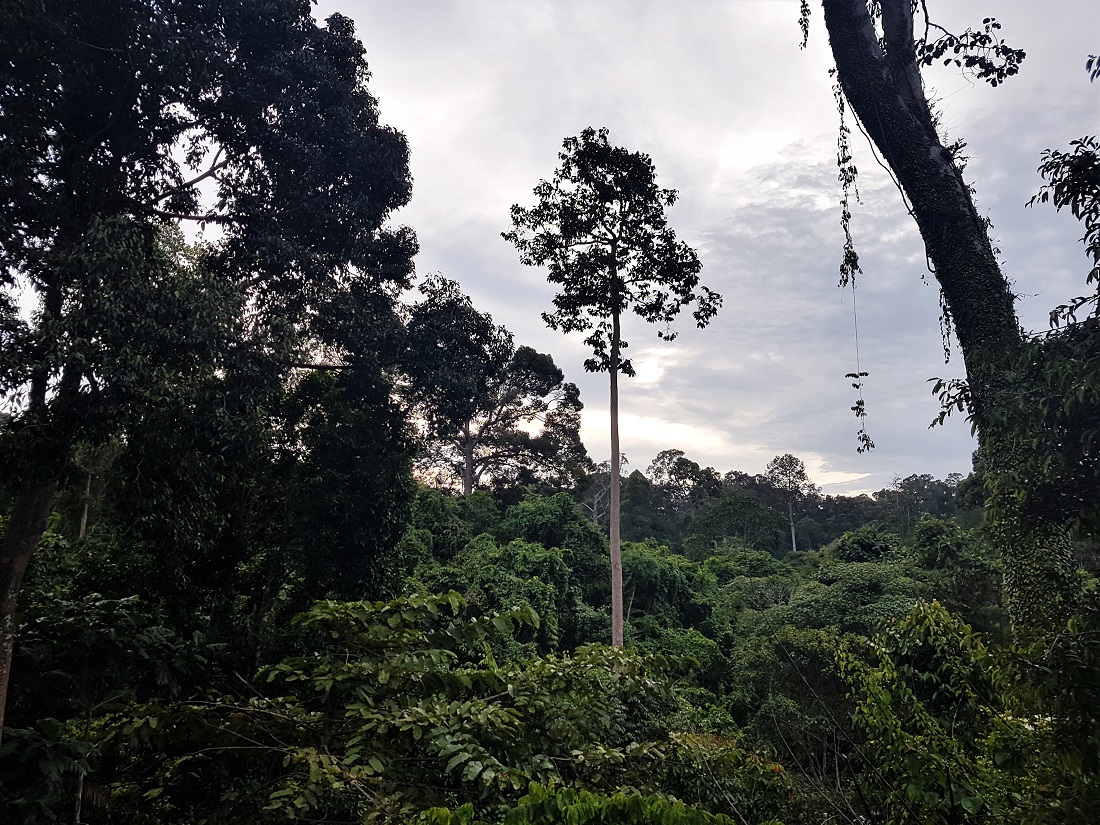
We waited a good half hour until the first one appeared.
Sadly, it was a blink and you’ll miss it affair, and took me by surprise, so I completely missed it as I was looking elsewhere.

I was more prepared for the second one and watched it emerge from its nest and glide into some nearby trees.
Soon a third giant flying squirrel made an appearance, popping its head in and out of its nest.
We waited ages for it to make its move, and by the time it finally crossed the canopy and took to the skies, there was just enough light to see it and take a very blurry photo (below). It was an awesome moment.

It was pitch black as we made our way out of the centre and we had to be careful not to touch the handrail because there were miniature scorpions on it!
I loved my visit to Sepilok and its wildlife centres. And I was thrilled not only to have seen orangutans in the flesh, but to have seen so many. It was a dream come true.
I also enjoyed our visit to the sun bear sanctuary, learning about these vulnerable bears. While seeing the giant flying squirrel take flight was the perfect ending to a fantastic day.
Info
Sepilok Orangutan Rehabilitation Centre
Open daily, 9am to 4pm
Bornean Sun Bear Conservation Centre
Open daily, 9am to 3.30pm
Rainforest Discovery Centre
Open daily, 8am to 5pm
 Little Old World
The orangutans are so gorgeous and that baby adorable. Thanks for sharing 😀
LikeLiked by 1 person
Thank you, they were really cute 🙂
LikeLiked by 1 person
Sepilok is an amazing sanctuary isn’t it?! Love the baby orangutan, so cute 😊 Maggie
LikeLiked by 1 person
Thanks Maggie! It was incredible, I had such a great time there. The baby orangutan was adorable 🙂
LikeLiked by 1 person
Greetings. Orangutans are so playful and incredibly agile. They truly are wonderful.
LikeLiked by 1 person
Hi Neil, they’re the most incredible creatures and fascinating to watch. Thanks for commenting, hope you’re having a good day 🙂
LikeLiked by 1 person
As I said last time, we have been to Sepilok and loved it, but i don’t know the other two sanctuaries you mention – maybe they didn’t exist 20 years ago, or maybe we just didn’t have time.
LikeLiked by 1 person
The sun bear sanctuary only opened in 2008, so I’m guessing it wasn’t there when you went. It was really interesting, I didn’t know anything about the bears before I went. They were very cute.
LikeLiked by 1 person
An orangutan sanctuary- this sounds like an absolute delightful experience! You got some great pictures of these beautiful creatures 🙂
LikeLiked by 1 person
It was fantastic to see the orangutans in person, they’re so full of character and fascinating to watch. Thanks Meg 😀
LikeLiked by 1 person
It’s great that places like this exist. How wonderful that you got to see some orangutans, including a baby! How adorable!
LikeLiked by 1 person
The sanctuary does such incredible work. Not only keeping these magnificent creatures alive, but educating the local population. One of the worst things about Borneo was seeing the extent of the deforestation from the air, it was devastating. We were so lucky seeing so many orangutans. The baby was ridiculously cute!
LikeLiked by 1 person
Oh my goodness, what a special and amazing place to see your favourite animals. Amazing photos 🙂
LikeLiked by 1 person
It was a wonderful place and an experience I’ll never forget. Thanks Hannah 🙂
LikeLike