
I’ve visited many a National Trust estate in my time, but Stourhead in Wiltshire is one of its finest.
For the magnificent stately home, which is named after the source of the River Stour, boasts one of the prettiest and most idyllic landscape gardens in the UK.

Unsurprisingly, its good looks have meant it’s had starring roles in films such as the Keira Knightley version of Pride and Prejudice and Stanley Kubrick’s Barry Lyndon.
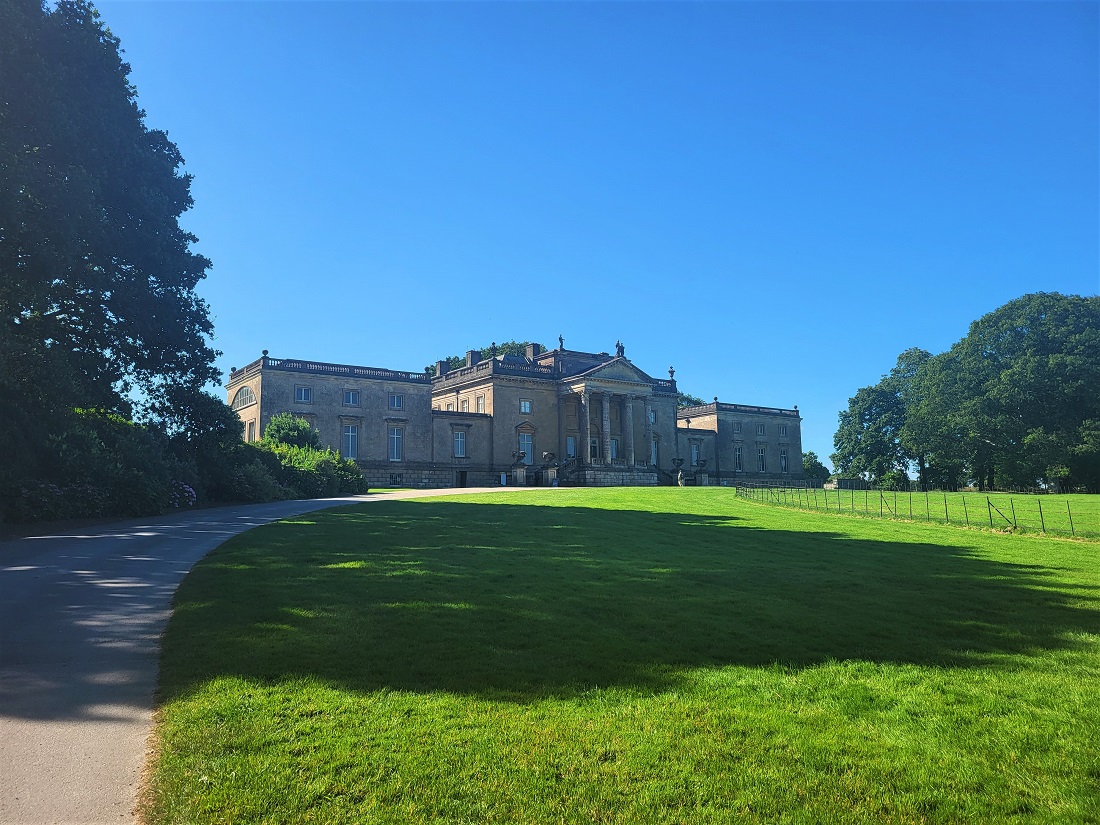
The estate dates back to the 18th century when Henry Hoare, a scion of the Hoare banking family, bought Stourton Manor and asked the Scottish architect Colen Campbell to replace it with a Palladian-style mansion.
Over the years, various members of the Hoare dynasty made changes to the grounds and the house, adding wings and rooms, and filling it with great works of art and Chippendale furniture.
Today, the sprawling, 1,072 hectare estate is looked after by the National Trust.

I arrived at Stourhead a little after lunch on a scorchingly hot Sunday in August to find the estate was unsurprisingly packed with families enjoying a day out.
After taking a look at a map, I set off to explore the grounds, starting with the picturesque lake.

As I approached the water, I stopped to take a look at the eye-catching Bristol High Cross (above).
The tall, medieval cross, which is decorated with intricate carvings of the kings and queens of England, was originally located in the centre of Bristol, but was moved to Stourhead in 1765.

I ambled down to the edge of the lake, where I had stunning views of the Pantheon across the water (above), before joining the lakeside path around the garden.
The garden was designed by Henry Hoare in the 1740s and the area around the lake is dotted with follies, grottoes and temples.

The earliest is the Temple of Flora, which is dedicated to the Roman goddess of flowers (above).

Inside, a few classical statues adorn the back wall and there are fantastic views of the Pantheon opposite, too (below).

I found the various temples and grottoes a relief as I walked around, as the cool stone buildings were a wonderful place to escape from the searing summer heat.
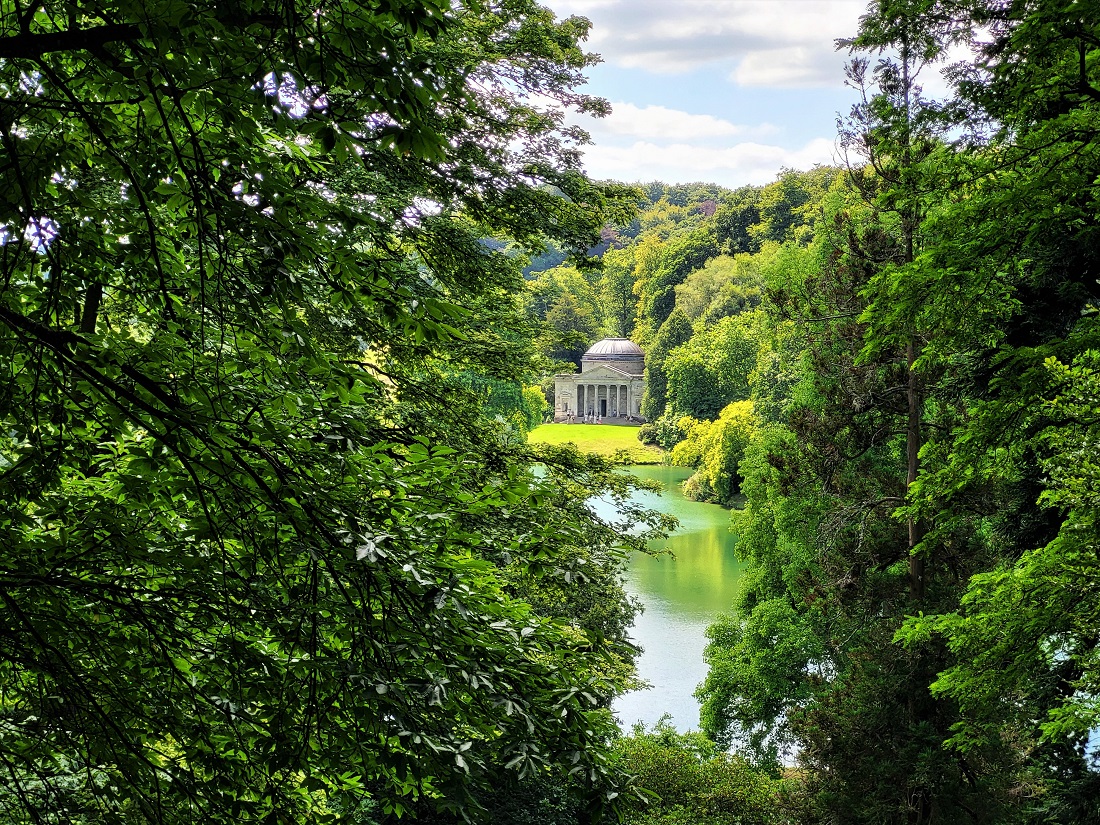
Behind the Temple of Flora, there’s a viewing point part-way up the tree-covered hill that offers another glimpse of the Pantheon in the distance (above).
From the viewing point, I rejoined the main path, setting off in the direction of the grotto, which turned out to be closed for repairs.

The Gothic Cottage nearby (above), which looks like something out of one of Grimm’s fairy tales, was open to visitors, so I stopped to take a peek inside.
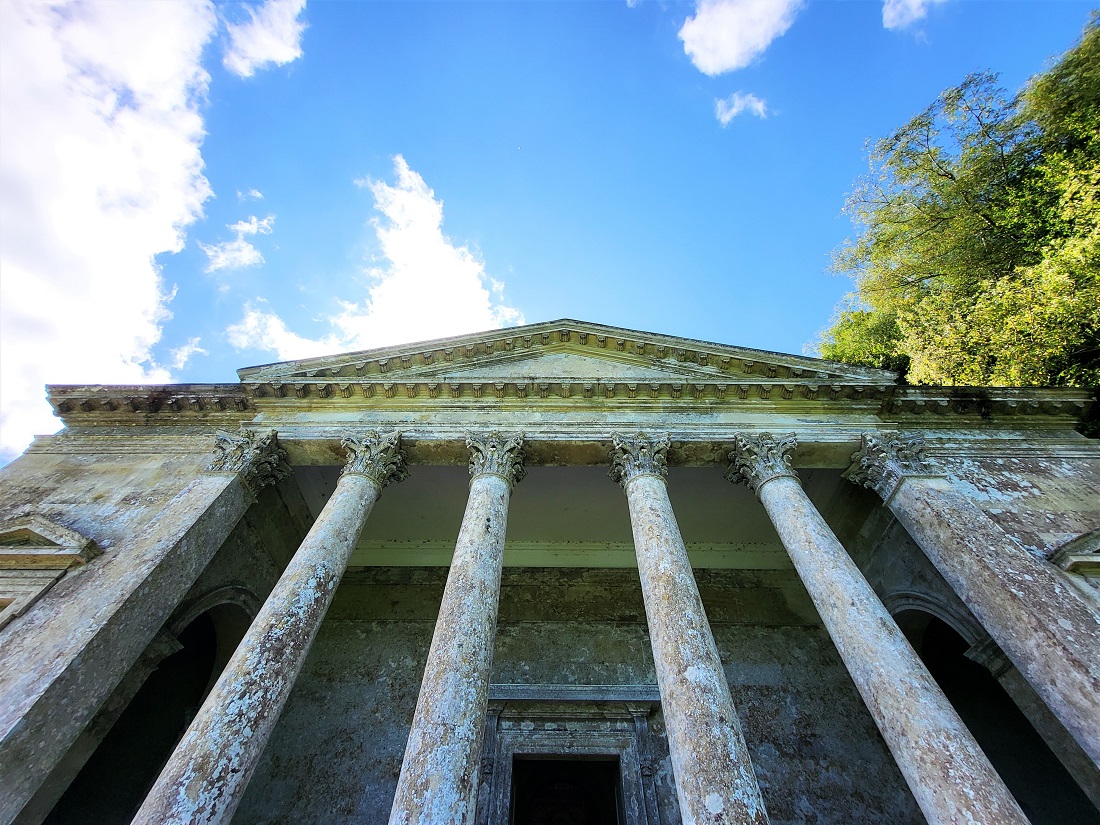
There wasn’t much to see, so I continued along the lakeside path until I reached the Pantheon, which I’d spent so much time admiring from the other side of the lake.

The stone folly, which was inspired by its namesake in Rome, was built in the mid-1750s and, like the Temple of Flora, is decorated with classical statues (above).
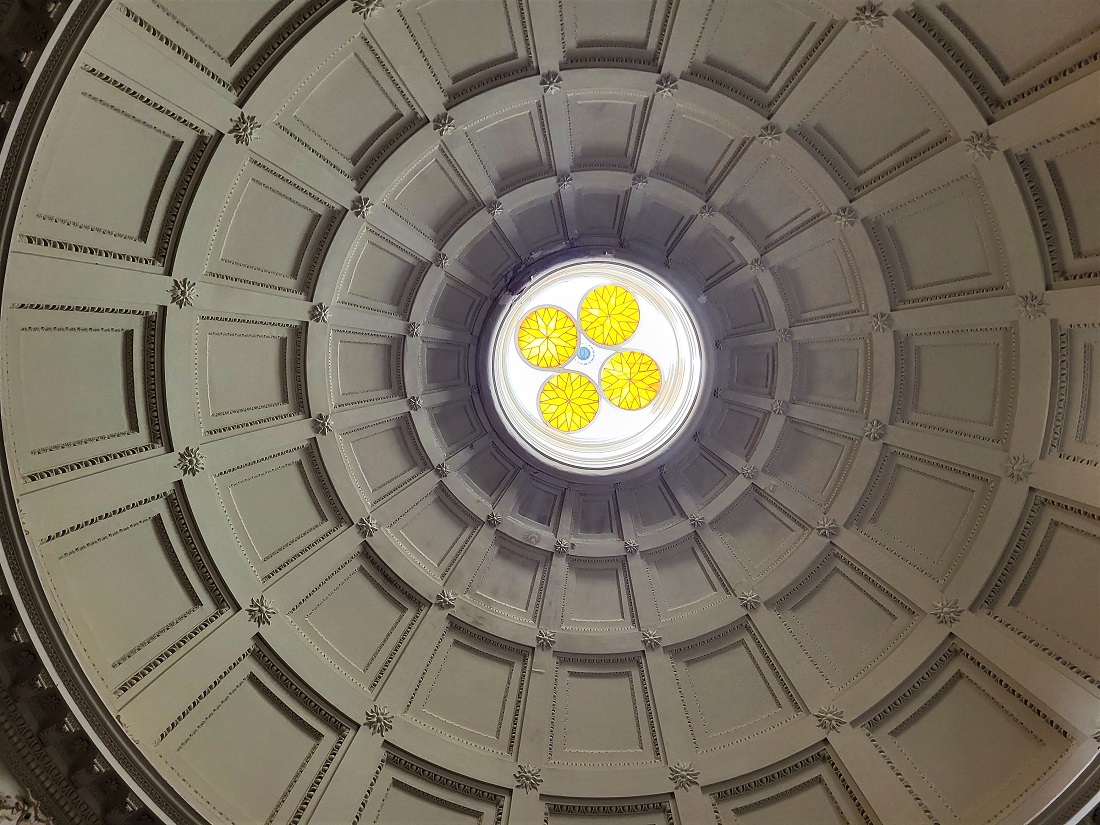
The statues were attractive enough, but I was more impressed by the lovely domed roof (above).
Back outside, I stopped to soak up the views across the lake, before continuing on my way.

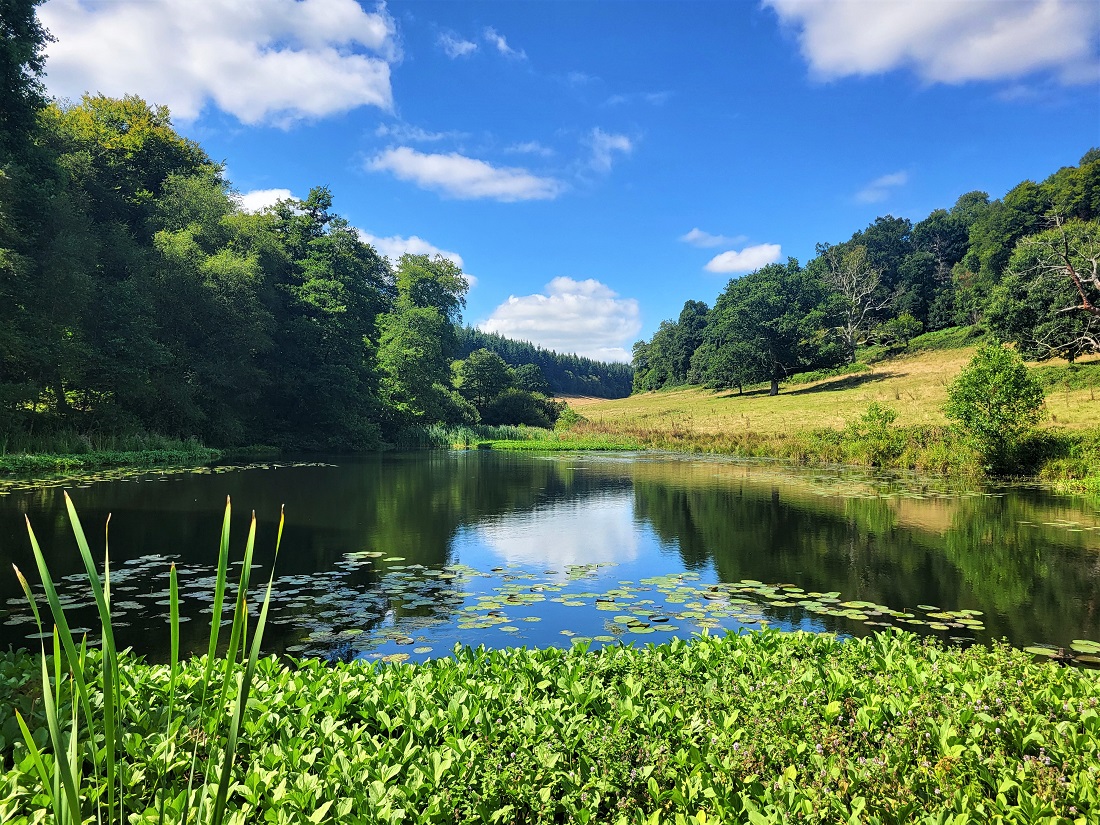
One of the things that struck me most about the lake was its vivid turquoise hue, which looked spectacular in the sunshine.

But around the corner from the Pantheon, I came upon a sign warning visitors not to go in the water because of the presence of blue green algae.
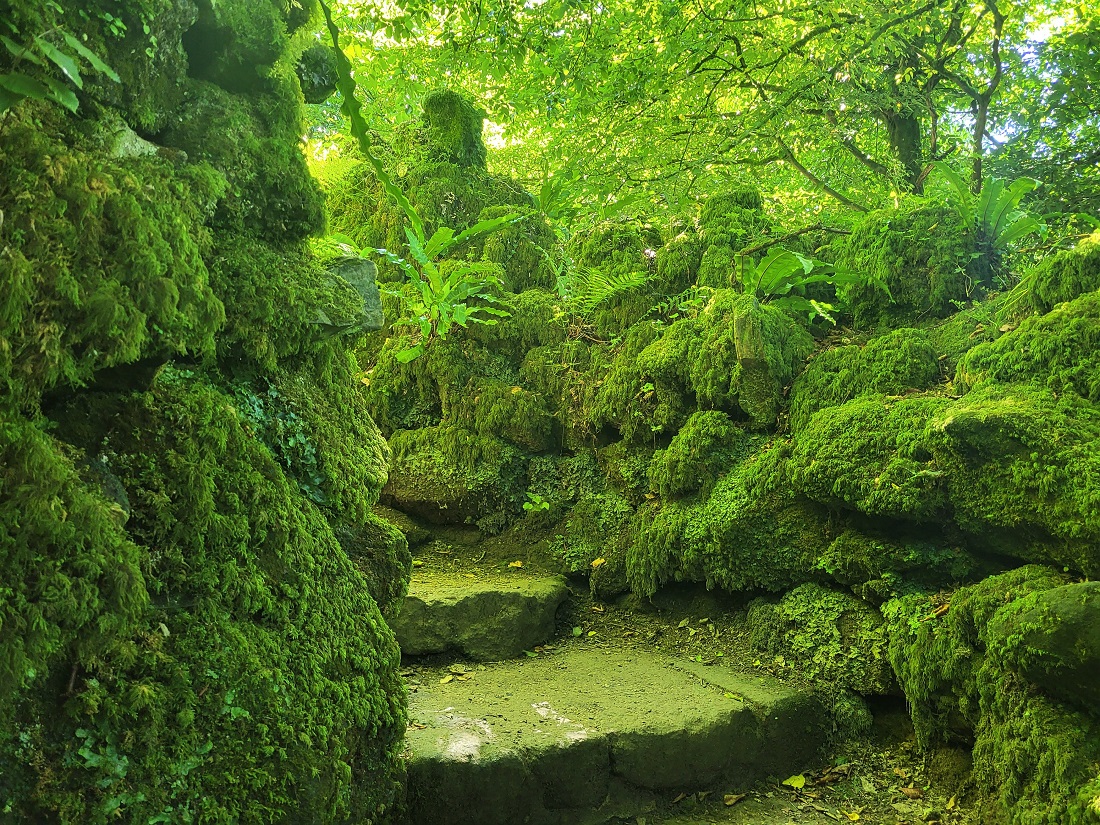
A little further along, I came to the rock arches (above), a series of grotto-like arches and steps built into the hillside that take visitors to a path higher up the hill.

I made my way through the arches and up the steps, then followed the upper path to the delightful Temple of Apollo (above).

Built in 1765, the honey-coloured temple looked glorious in the sunshine and offered superb views of the lake below.
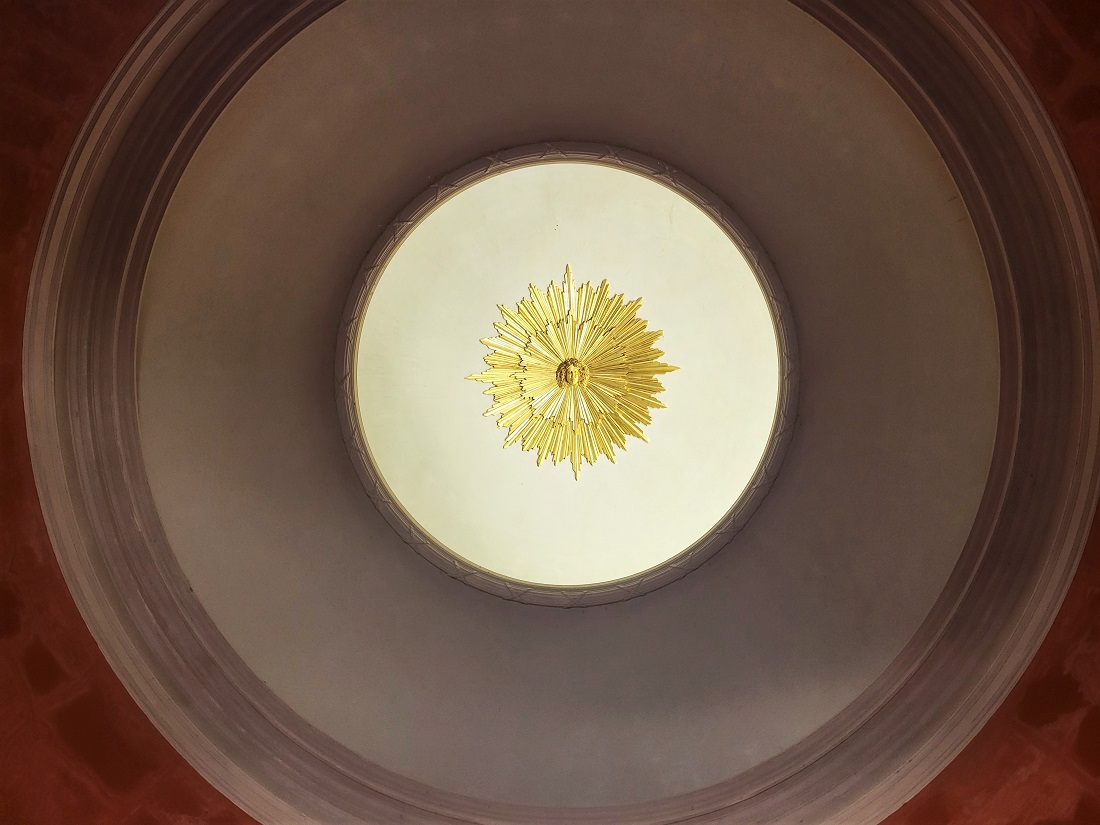
Its domed roof is adorned with a carving of the God Apollo (above), whose face follows you as you walk around.
On leaving the temple, I made my way down the hill to my starting point beside the Palladian bridge.
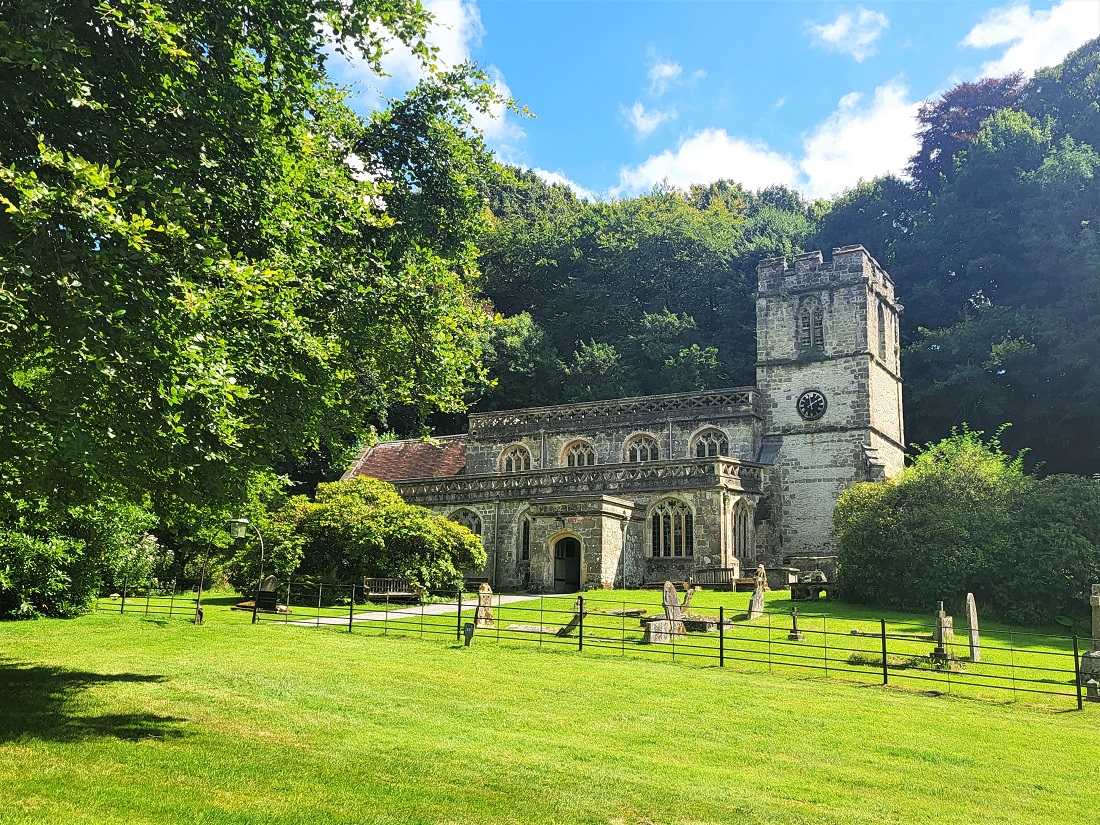
My next port of call was St Peter’s Church (above), a small photogenic church across the road from the Bristol High Cross.

Despite its charming good looks, the church is pretty ordinary inside, so I didn’t spend long looking around (above).
I then headed in the direction of the house, as it was getting late and I wanted to make sure I was there in time for last entry at 4pm.

The enormous Georgian mansion is strikingly beautiful and wouldn’t be out of place in a Jane Austen novel.
But in 1902, tragedy struck when the centre of the house was gutted by fire, leaving the upper floors badly damaged and their contents destroyed.

Only the ground floor rooms are open to visitors and there’s a set route you have to follow as you walk around.
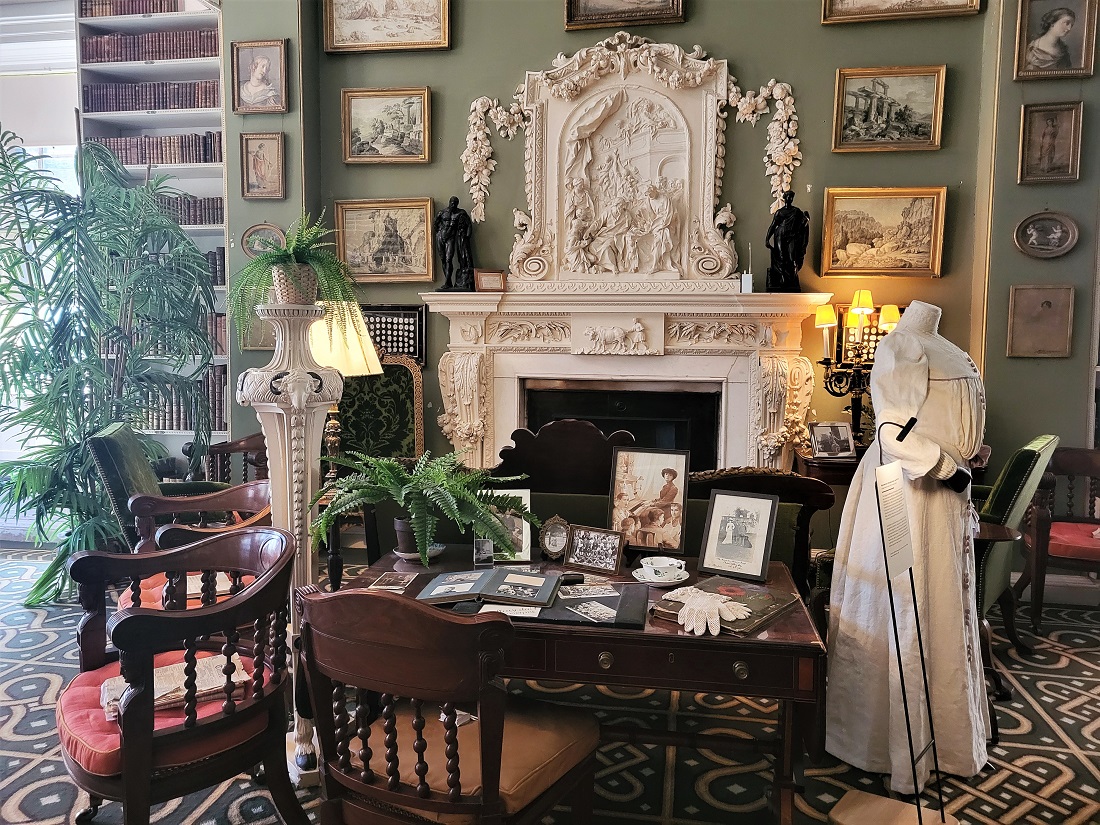
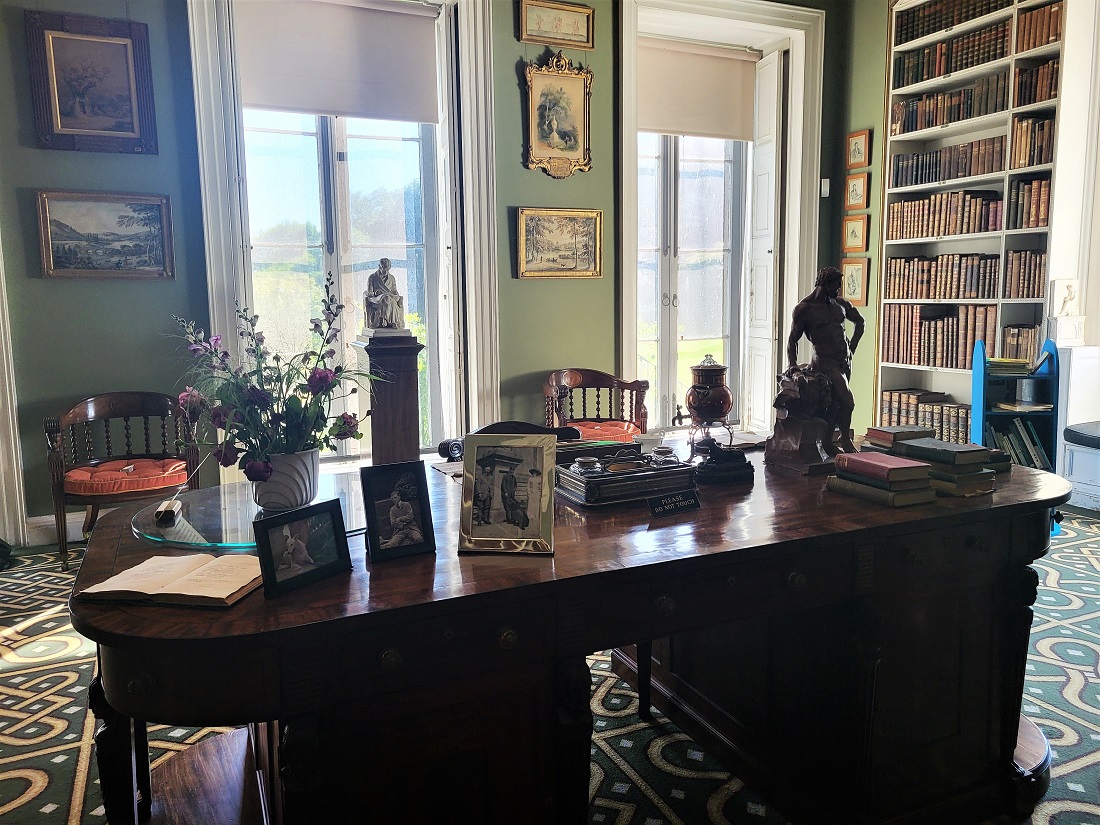
My tour of the house started in the library, a huge, airy room lined with bookcases and boasting some beautiful pieces of wooden furniture (above).
From there, I moved through the mansion’s attractive, handsomely decorated rooms, which included the music room (below).
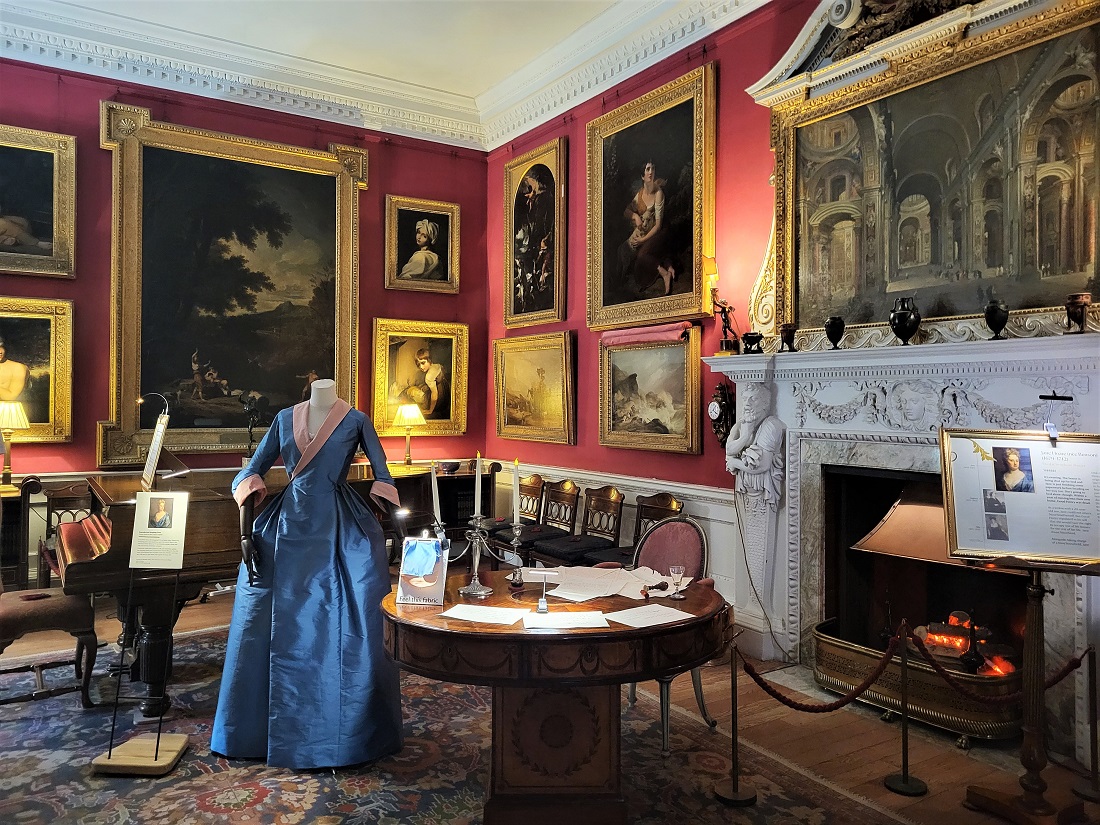
One of the most impressive rooms was the grand saloon (below).
The large, red room was originally envisaged as a chapel, but the plans changed and it was turned into a reception room in 1744, where the Hoare family would entertain their guests.

As I walked through the house, there were various biographies of the women of Stourhead on display, which culminated in a small exhibition in the column room (below).

It was interesting to read about these women’s lives and the influential role they had to play in the making of Stourhead.
History often focuses so much on men, you’d be forgiven for thinking the only thing women did in the past was get married and have babies, so it was refreshing to see such a focus on women’s history at Stourhead.

From the column room, I moved on to the Italian room and then the cabinet room, which is so-called because of the exquisite Pope’s Cabinet that takes pride of place in the room (above).
The cabinet, which is made from hard stone and covered in marble, glass and semi-precious stones, is said to have been made for one of the popes, possibly Sixtus V, in the late 16th century.
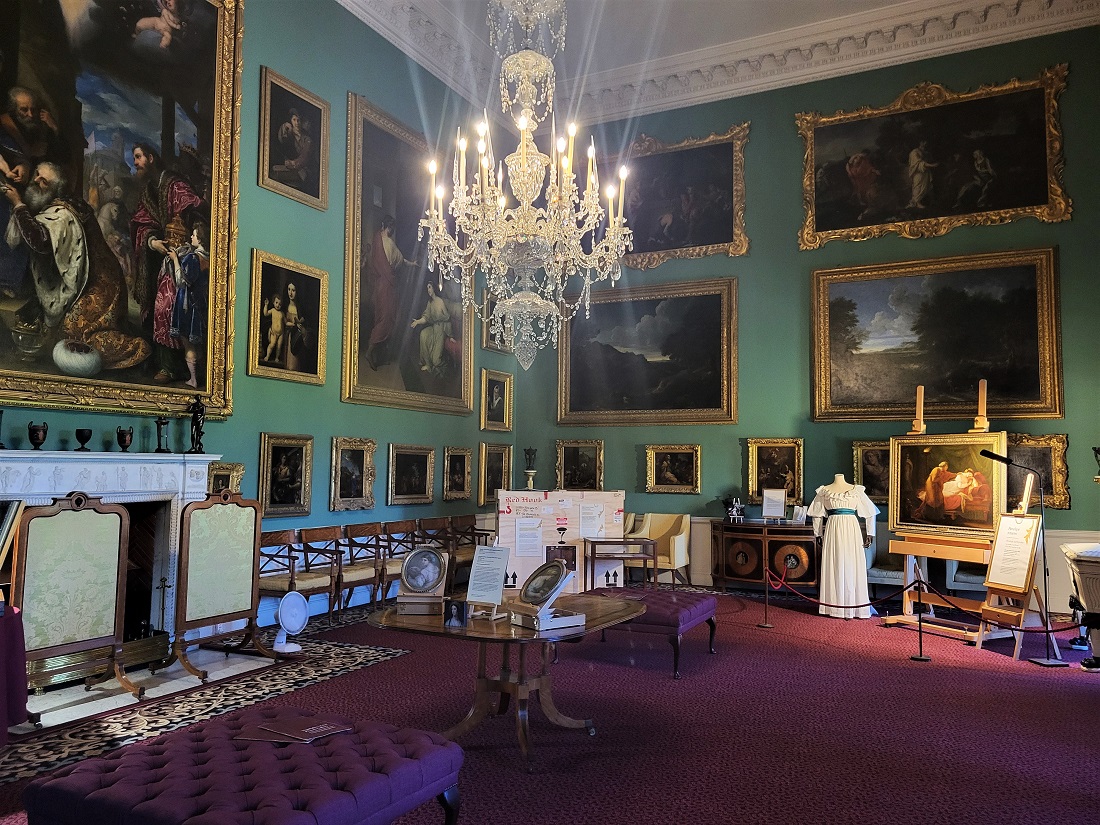
The last room I visited was the picture gallery, a large room filled with works of art (above).
At the far end of the room, there was a small exhibition about Penelope and Euriclea, a painting by the Swiss artist Angelica Kauffman (below).
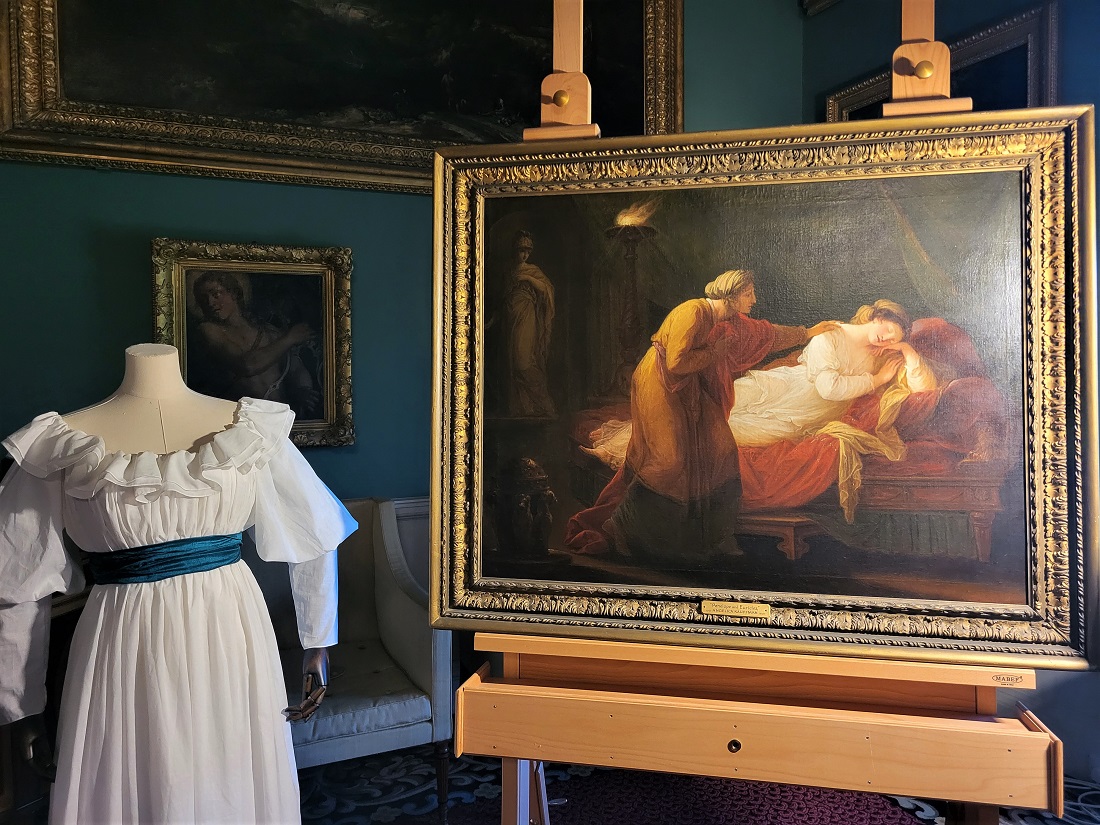
In 1883, the Hoare family sold many of their heirlooms, including paintings by JMW Turner, to pay off their debts.
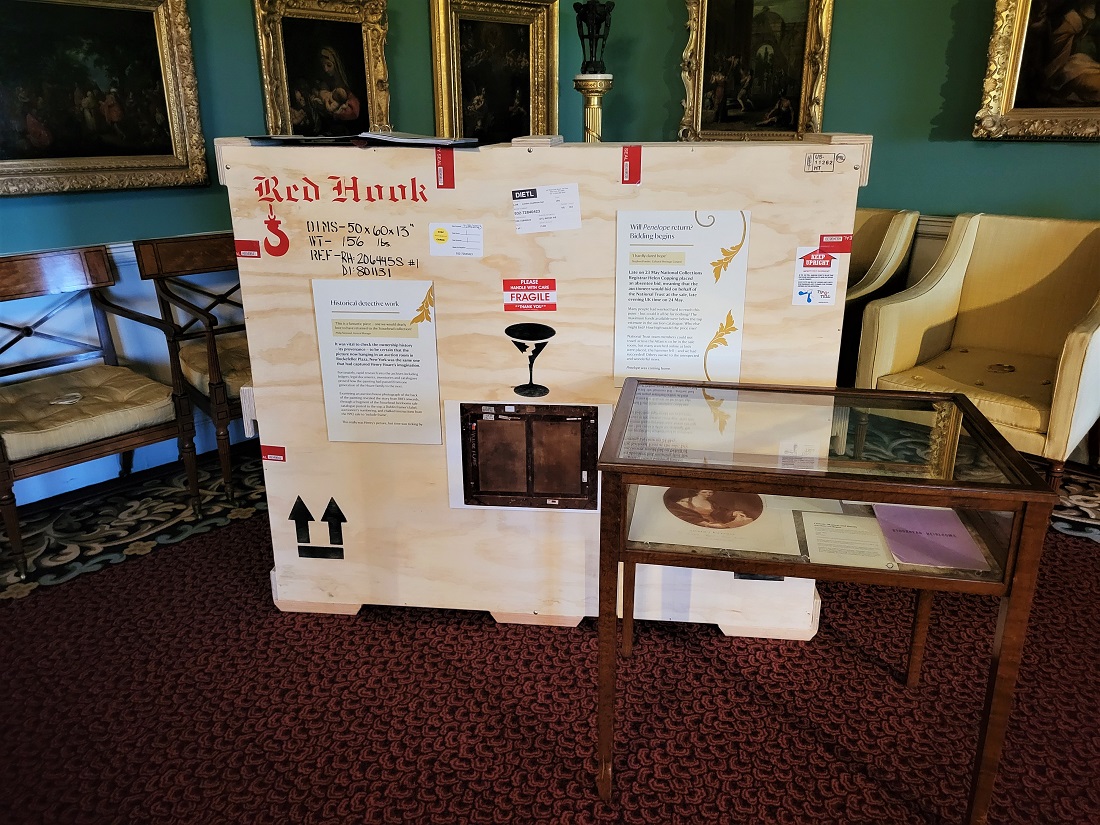
When Penelope and Euriclea went on sale in New York last year, the National Trust successfully bid for it, and it was returned to its original home after 140 years.
In a nice touch, the exhibition also featured the crate in which the painting was shipped back to Stourhead (below).
Having toured the main body of the house, I made my way to the basement, where there was a small, informative exhibition about the Hoare family, the bank and the house.
By this point, it was almost 4.30pm so I headed to the walled gardens, where I had a brief stroll through the lower parts of the garden before it closed (below).

I loved my afternoon at Stourhead. It’s ridiculously pretty and one of the best stately homes I’ve visited (and I’ve been to a few!).
I’d highly recommend visiting if you’re in the Wiltshire or Somerset area.
Info
Stourhead, near Mere, Wiltshire BA12 6QD
£20 adults, £10 children
nationaltrust.org.uk/visit/wiltshire/stourhead
 Little Old World
Just by looking at your wonderfully captured photos, I can see why this place can take anyone’s breath away as it has spectacular landscapes and architectural treasures galore! I especially love the tranquil lake, the circular temple nestled on a hilltop and the wonderful collection of furniture inside of the house.
As the views change with the seasons, it would be a wonderful place to visit at different times of the year – I can only imagine how beautiful it is during the autumn months when the air turns crisp, the days grow shorter, and vibrant green leaves gradually change their colours to a captivating palette of oranges, yellows, and reds. Thanks for sharing, and have a good day 🙂 Aiva xx
LikeLiked by 1 person
Thanks Aiva, it’s unbelievably pretty and very hard to take bad photos of it. It’s one of the most photogenic stately homes I’ve been to. I’d love to go back in the autumn and see how it looks once the trees have changed colour. Have a great day, too 🙂
LikeLiked by 1 person
🥰🥰🥰
LikeLiked by 1 person
How beautiful – I’ve never been but really must make it one day. It looks like you had perfect weather for strolling the extensive grounds, your photos are beautiful! 🙂
LikeLiked by 1 person
Thanks Hannah! It’s so pretty it’s hard to take bad photos of it. I hope you make it Stourhead, I think you’d really like it 🙂 I was really lucky with the weather, it was glorious (for once!).
LikeLike
Thanks for a brilliant description of your visit. What a wonderful place and your photos are great.
LikeLiked by 1 person
Thank you 🙂 It’s a fabulous place for a day out and very photogenic, I had a great time there.
LikeLiked by 1 person
You can definitely see why the house and grounds have appeared on film. So beautiful 😍
LikeLiked by 1 person
It’s ridiculously photogenic and was made for film 😍
LikeLiked by 1 person
Stunning. I have not been, but I feel I know it because I’ve seen that view of the Pantheon across the lake so many times. It’s a classic. I’m glad they are giving more respect to women’s history.
LikeLiked by 1 person
It’s such a beautiful place. It was really good to see the focus on women’s history, some of the women were quite remarkable, so it was interesting to read about their lives.
LikeLiked by 1 person
The grounds and gardens are beautiful and so scenic. I guess it’s not all that surprising to hear they’ve been featured in some films. The mansion looks lovely as well. Sounds like a fun outing.
LikeLiked by 1 person
It was a fantastic day out, there was so much to see. The grounds are very picturesque and it’s the perfect location for a period drama. If anything, I was surprised it hadn’t featured in more films.
LikeLiked by 1 person
What a beautiful place with that perfect mix of interesting history, dreamy gardens, and beautiful interiors. I could happily wander around here delighting in all the different areas for days on end.
LikeLiked by 1 person
It’s spectacular and if I hadn’t been thrown out because it was closing time, I could have spent a lot longer there. It’s just lovely and so idyllic.
LikeLiked by 1 person
Absolutely stunning estate and house.
LikeLiked by 1 person
It’s utterly beautiful and easily one of the best National Trust properties I’ve been to. There’s so much to see.
LikeLiked by 1 person
I can see why you think this is an especially good National Trust property! I love your photos of the pantheon across the lake (though share your sense of ‘ick’ over the blue-green algae… have come across that on a few hikes before now).
LikeLiked by 1 person
Thanks Rosie, it’s a stunningly beautiful estate and difficult to take a bad photo of it. The blue-green algae in the lake was a shame.
LikeLiked by 1 person