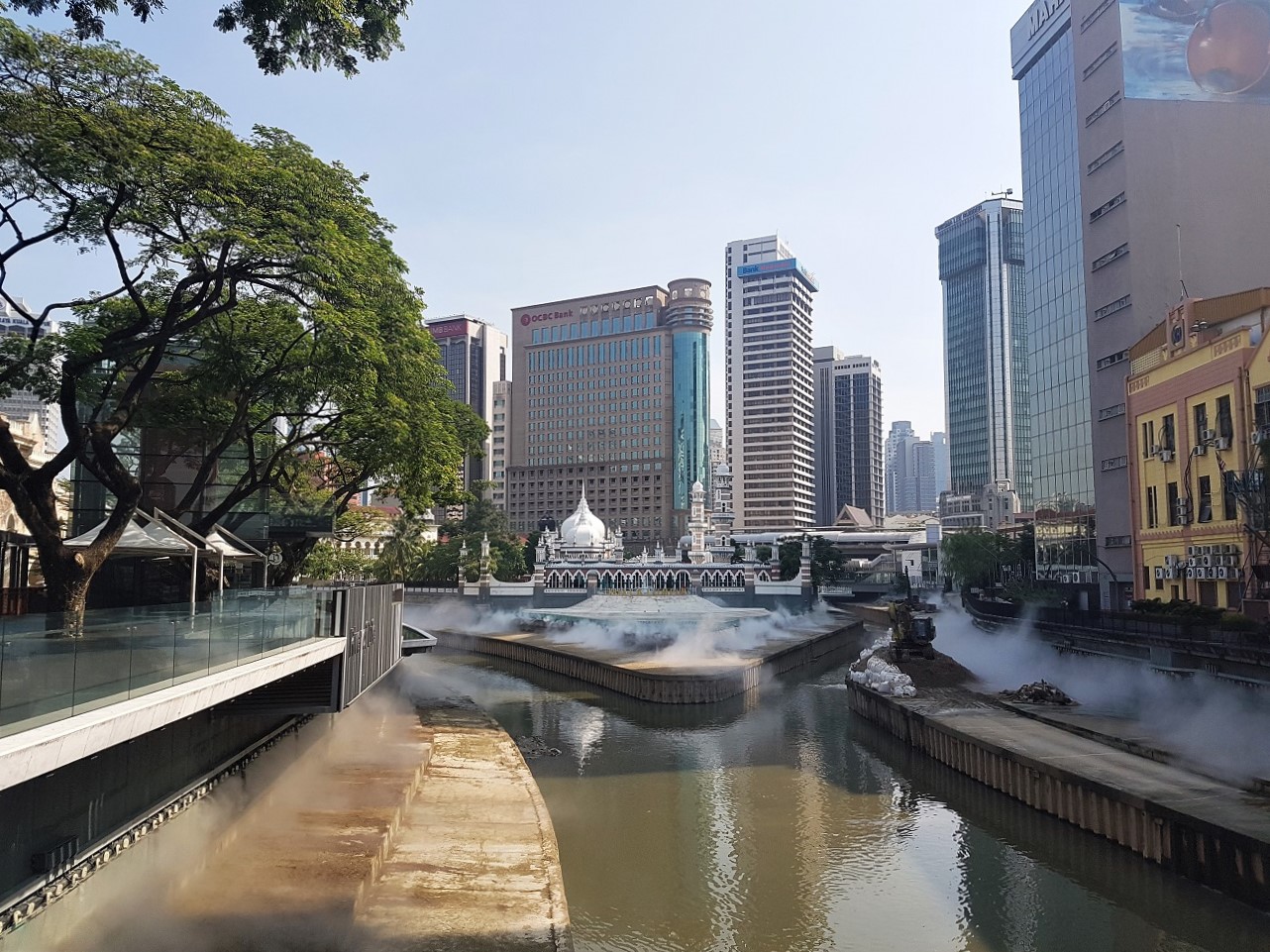
One of my favourite things to do when I travel is try the local cuisine, and thanks to its multicultural heritage, Malaysia is home to some of the best food I’ve ever eaten.
Almost everything I ate was delicious and flavourful, even at the motorway service stations.

I’m still dreaming of the kaya-filled steamed bun from the service station between KL and Melaka (top, above).
So when I was given the opportunity to take a street food tour around Kuala Lumpur’s historic centre, I jumped at the chance.
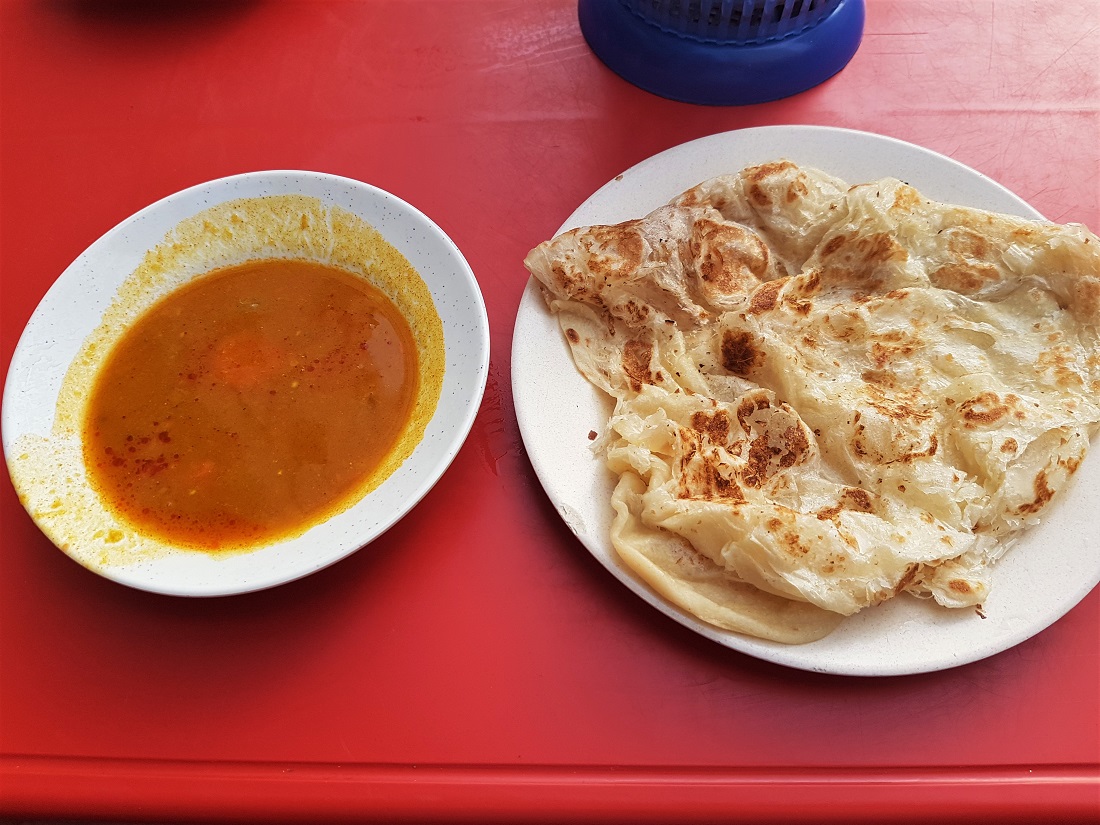
The tour began promptly at 9am in a small Indian restaurant, Restoran al Norul.
We started our morning’s feast with roti canai (flat bread), which was served with a tasty soup-like dhal (above), and teh tarik, a sweet, hot milky tea (below).
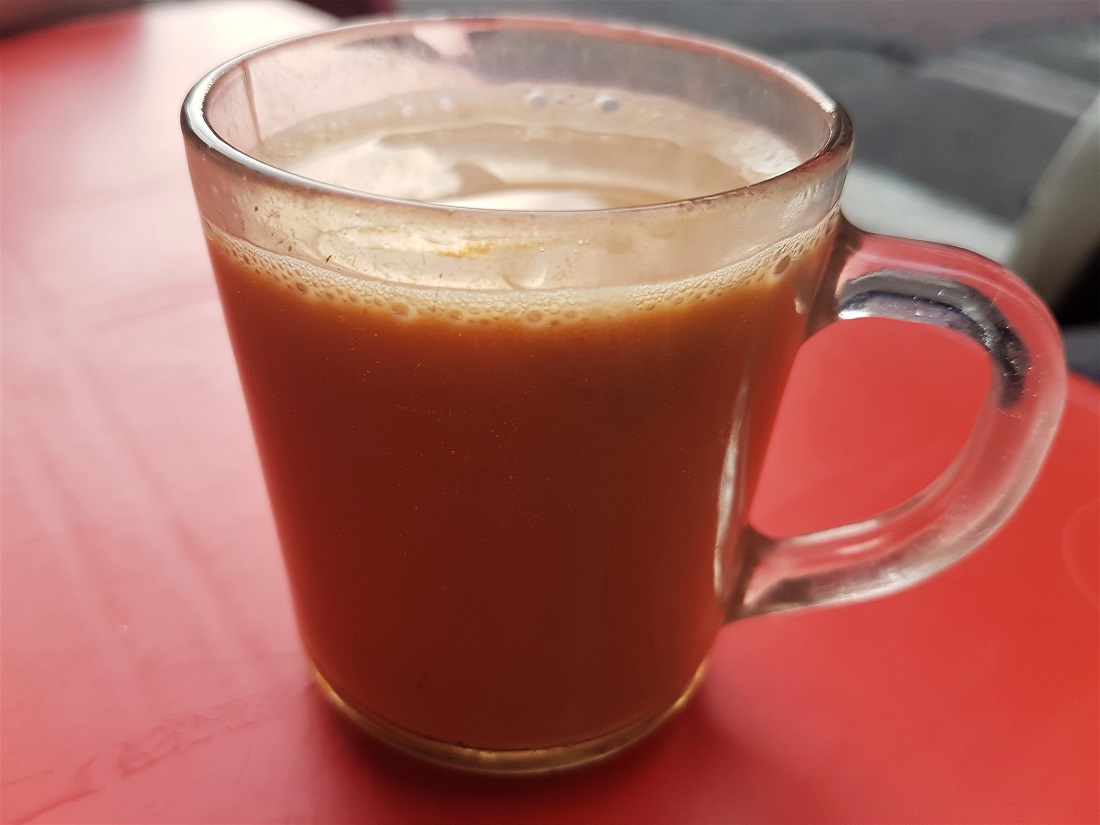
Despite being told I should only taste the food because there was so much more to come, it was so good, I unapologetically wolfed it down.

Breakfast over, we hopped on the Metro to Masjid Jamek, where we set off on a walk around the old colonial heart of Kuala Lumpur.
Our first stop was Merdeka Square, a huge square in the middle of the historic centre.
Also known as Independence Square, it’s where the Malaysians announced their independence from the British in 1957.
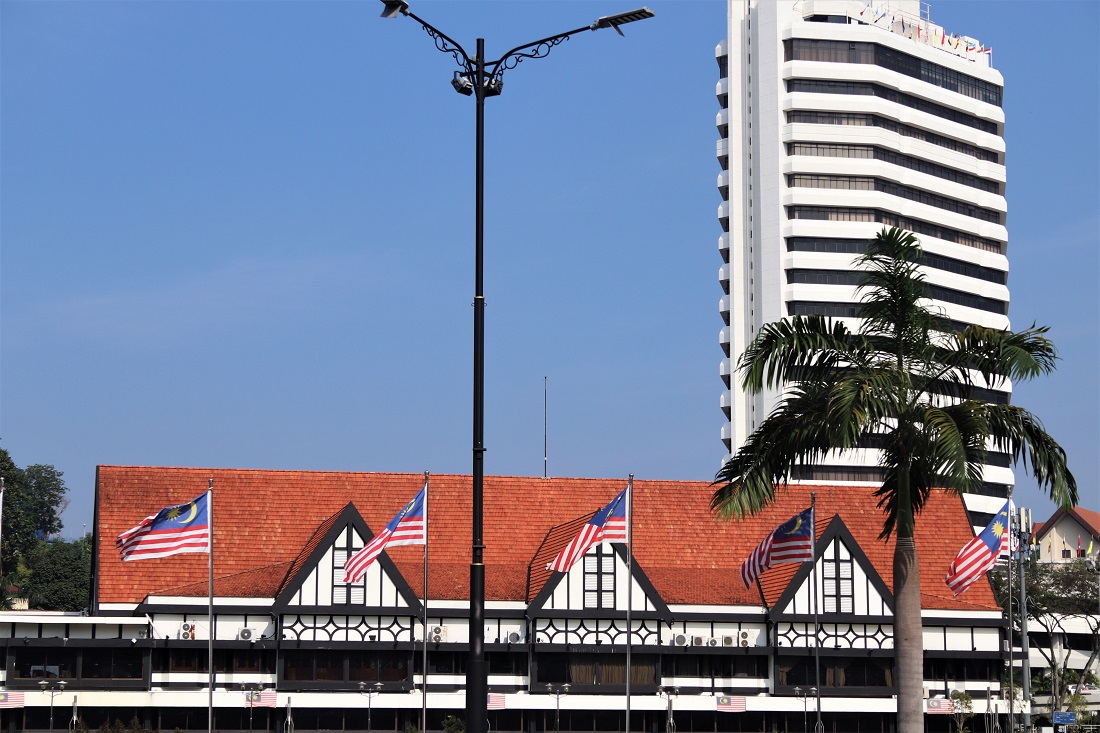
We spent some time admiring the beautiful buildings that surround the square and learning about their history. These included the attractive Royal Selangor Club (above).
The exclusive private club with its distinctive mock Tudor front was where the British used to congregate during their rule.

We carried on along the square, passing the glorious Sultan Abdul Samad Building, the former headquarters of the colonial government (above and below).
The spectacular building is now home to a division of the Malaysian High Court.

We continued down the square, passing the old general post office, then turned left to cross the river.
Here, we stopped to take a few photos of Masjid Jamek Sultan Abdul Samad (below).

Dating back to 1909, the pretty mosque was built on the spot where the rivers Klang and Gombok meet and is the oldest mosque still standing in the city.
It was the main place of worship for the city’s Muslim community until Masjid Negara (the National Mosque of Malaysia) opened in 1965.

We turned right onto Jalan Hang Kosturi, where we visited our second restaurant of the day, Restoran Tajudin Nasi Beriani.
Here we tried a curry puff, as well as burn cake – both were really good.
The curry puff was a tasty little pastry filled with spiced potato (above).

While the burn cake was a small green sweet made from rice flour, flavoured with pandang leaf and topped with sesame seeds (above).
You can’t usually buy burn cakes in the shops because it’s a delicacy that’s traditionally eaten at festivals and on special occasions.

On leaving the restaurant, we briefly popped inside the Art Deco-style central market, before heading to Sin Sze Si Ya Temple (above).
Situated in the city’s Chinatown, it’s the oldest Taoist temple in Kuala Lumpur.
It was founded in the late 19th century in honour of two deities, Sin Sze Ya and Si Sze Ya, who were said to have guided the then-leader of the Chinese community Yap Ah Loy during the Selangor Civil War.
We spent a little while looking around the temple, where there were a number of people sitting at tables ready to tell people their fortune.

From the temple, we continued through Chinatown until we reached Jalan Petaling (above).
Known as Tapioca Street during colonial times because there was a factory making tapioca at one end, today, Jalan Petaling is home to a huge market filled with stalls renowned for selling fake designer goods.
We made our way down the street, stopping at various street food vendors along the way to sample their wares.


First up was tau fu fa, a warm, crème caramel-like dessert made with tofu and palm sugar, followed by a very moreish and refreshingly cold soya milk from a stall called Kim Soya Bean (above).

We then stopped at Madame Tang’s, a Jalan Petaling institution, famed for its moochi.
The marshmallowy treats made from rice flour were coated in ground peanuts (above).
We continued meandering through Chinatown until we reached a Baba-Nyonya restaurant called Kafe Old China.
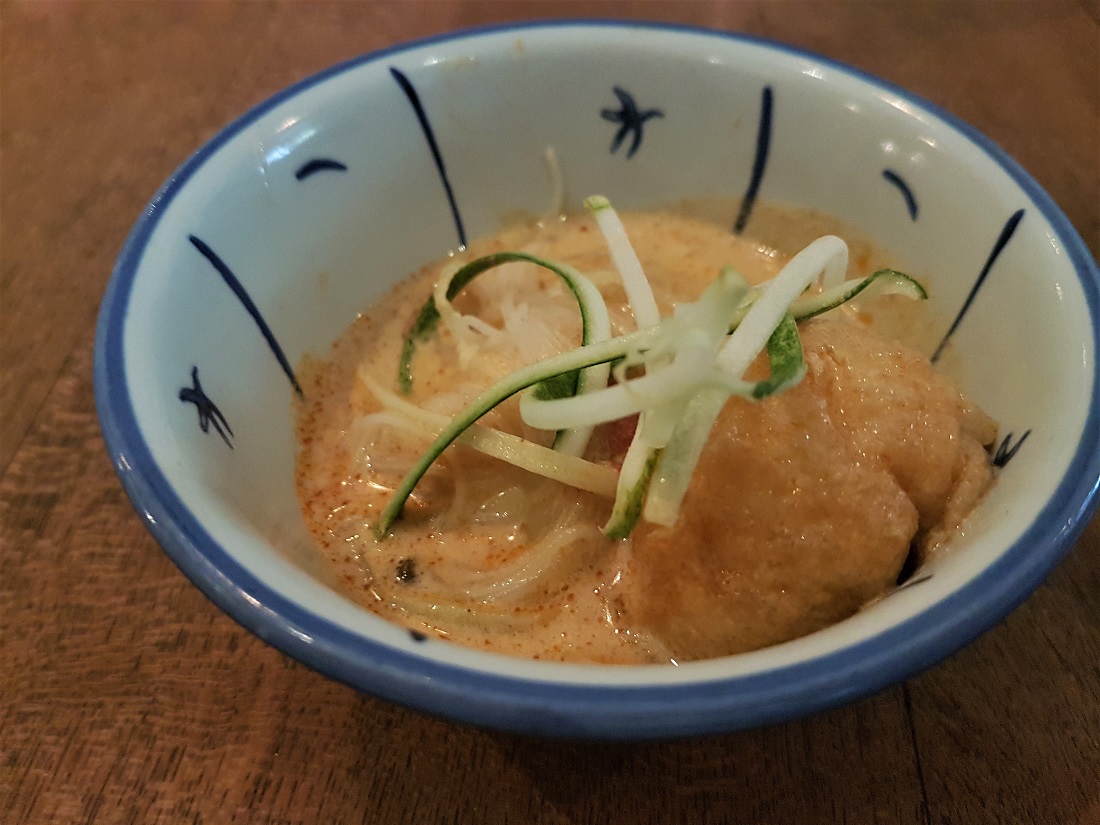
Here we sat down for a bowl of Nyonya laksa – a superb creamy chilli coconut broth filled with boiled egg, vermicelli noodles, prawns, chicken and tofu, and topped with shredded cucumber.
By now I was feeling rather full and was struggling to keep up with all the amazing food that kept coming our way. But we weren’t done yet.

At Pasar Seni Metro station, we caught the Metro to Bangsar, where we spent some time walking around the area.
As we ambled through the streets, we passed an old detached house engulfed by an enormous hi-rise building because the owner refused to sell it to the developers (above).
It was a bizarre sight and given the ‘for sale’ sign outside, I couldn’t help but think the owner may have regretted their decision.

We continued our stroll until we reached Little India, where we stopped at an Indian restaurant called Sri Paandi Curry House, our final stop of the day.
Here we were presented with banana leaf rice (above).
The tasty dish consisted of a banana leaf topped with rice, a poppadom and four dips – a delicious spinach lentil dhal, a refreshing cucumber yoghurt, a mustardy concoction of potato and onion, and a green dip.
We were also served a mutton curry and tandoori-style chicken (the meat was a bit too bony for my liking).
Along with three small desserts – a fudge-like square, a crispy orange twist and an orange ball with a grainy texture (below). It was a great way to end a wonderful morning.

I absolutely loved the street food tour. It was a fascinating mix of food and local history, and our guide was excellent – he was really well informed and so patient with me and the countless questions I asked.
It was a fantastic experience and one of the best things I did during my two weeks in Malaysia.
 Little Old World
So many beautiful photos and buildings, especially the Sultan Abdul Samad Building with its onion-shaped domes with copper coverings. Thanks for sharing, and have a good day 🙂 Aiva xx
LikeLiked by 1 person
Thanks Aiva, the buildings were beautiful and I liked the different architectural styles. Have a good day, too 🙂
LikeLiked by 1 person
🥰🥰🥰
LikeLike
You have made me very hungry! The foods you write about sound delicious.
LikeLiked by 1 person
Thanks Neil, the food was fantastic and very varied.
LikeLiked by 1 person
Everything sounds delicious. As a veggie, I think I would have been more than satisfied with the bits I could eat!
LikeLiked by 1 person
The food was excellent and there were lots of delicious veggie options, which was great.
LikeLiked by 1 person
I’m not a big foodie, but I love Malaysian food, especially in Melaka. I do remember a few excellent meals in Kuala Lumpur too. Maggie
LikeLiked by 1 person
I loved the food in Malaysia, everything was so full of flavour. I’m glad you liked it too and had some excellent meals while you were there 🙂
LikeLike
This is a great guide to not only the market scene, but what food to try there- especially for people like me who are not brave enough to try anything but need some kind of guidance on what something is and how good it is 🙂
LikeLiked by 1 person
Thanks Meg 🙂 I was really glad I’d joined the tour because I wouldn’t have come across half the foods we tried otherwise. I’m sure I drove our poor guide barmy as I wanted to learn about the different foods we had and asked a lot of questions.
LikeLiked by 1 person
that’s the best way to do it 🙂
LikeLiked by 1 person
Taking a street food tour sounds like a great way to sample some of the local cuisine and see some of the sites!
LikeLiked by 1 person
It was a fantastic experience and well worth doing. It was a good way to learn about the city’s history and its multicultural roots, with the bonus of getting to try some excellent food along the way.
LikeLiked by 1 person
Wonderful – we have a street food tour on our itinerary next week and I can’t wait 🙂
LikeLiked by 2 people
Ah, amazing!! Enjoy your street food tour 🙂
LikeLike