
The city of George Town is situated on the island of Penang in the Strait of Malacca off the northwest coast of Malaysia.
It was founded in 1786 by Captain Francis Light, who was looking for a Southeast Asian base for the British East India Company.

Named after King George III, the city became the first British outpost in the region. Today it’s the capital of the Malaysian state of Penang.
In 2008, the multicultural city was named a UNESCO World Heritage Site, alongside Melaka, its fellow historic city of the Strait of Malacca.
I spent a day exploring some of George Town’s main sights, learning about its colonial past, its Chinese and Peranakan heritage, and its Buddhist communities. Read on to find out more…
Fort Cornwallis

Fort Cornwallis marks the spot where Captain Light landed and it’s where the British East India Company built fortifications, barracks, offices, a chapel and a signal station.
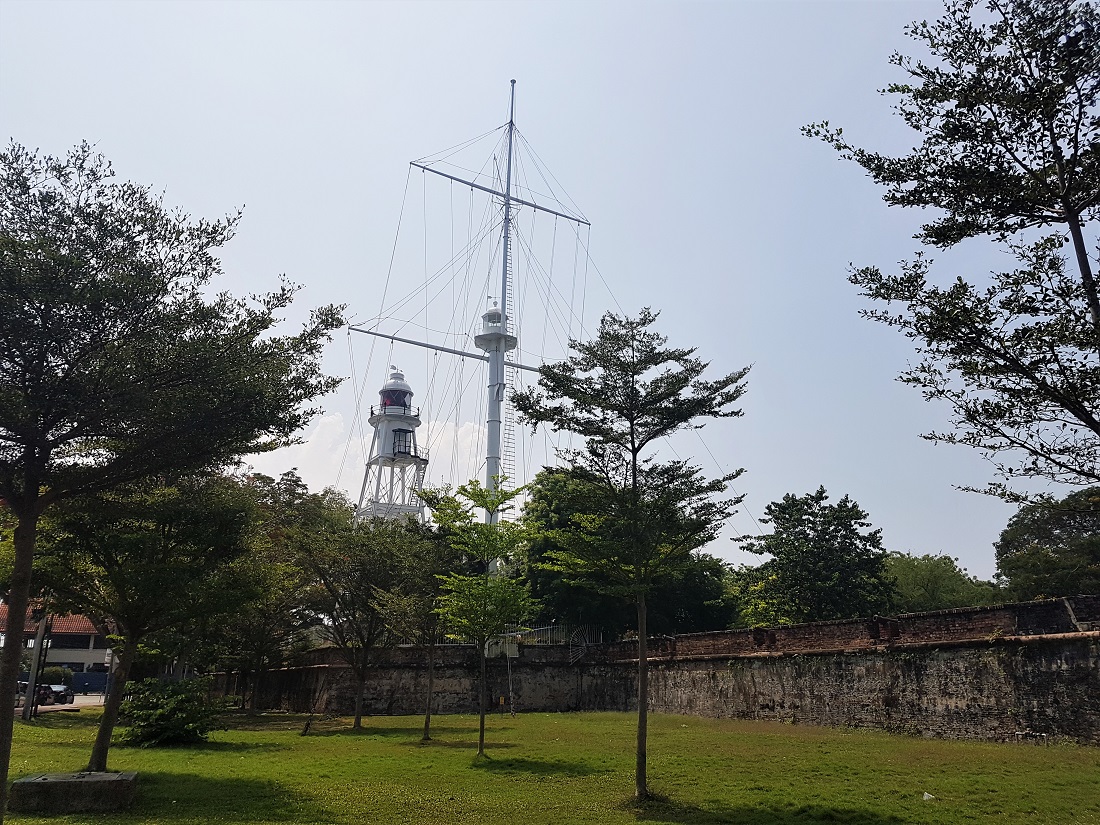
All that’s left of the old complex are the remnants of the brick fortifications and six cannons, along with Fort Cornwallis lighthouse (above), which was built in 1882, making it the second oldest lighthouse in Malaysia.
Chew Jetty

Chew Jetty is the oldest and biggest of the nine jetties built at Weld Quay in the 19th century by various Chinese clans.

Each clan has its own jetty – wooden piers that jut out into the Strait of Malacca (below) – that were founded as a place to load and unload cargo.

Only seven jetties are still standing today and they’re now home to houses, temples, small shops and community hubs.

Although visitors are welcome to explore the jetties, I felt uncomfortable as I walked along the pier because some of the houses offered little to no privacy.
In one house I passed, I could see an elderly woman watching TV and I felt as though I was intruding upon her as I walked by.
Chew Jetty is a unique, fascinating place that’s full of character and offers an insightful, if voyeristic, glimpse into the traditions of the Chinese community in George Town.
Kek Lok Si Temple

Set amid the lush green hills of Ayer Itam just outside George Town, Kek Lok Si is the largest Buddhist temple in Malaysia.

Founded in the 1890s, the sprawling complex features a 30m-high, seven-storey Pagoda of Ten Thousand Buddhas, which was commissioned by King Rama VI of Thailand in 1930.

There’s also an enormous bronze statue of Kuan Yin, the goddess of mercy, which was added in 2002 (above).
The gargantuan statue, which is almost 61m tall, is enclosed by a three-tiered pavilion supported by 16 columns, and is an impressive sight.
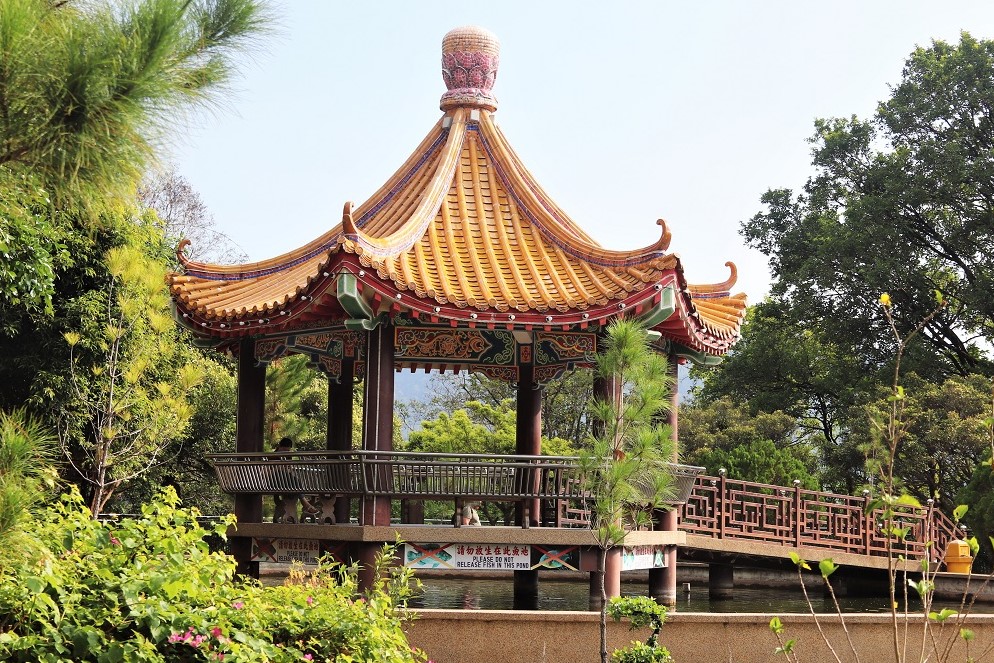
Arriving at the complex, we made our way towards the statue of Kuan Yin, then set off to explore the temple and the large grounds that surround it.
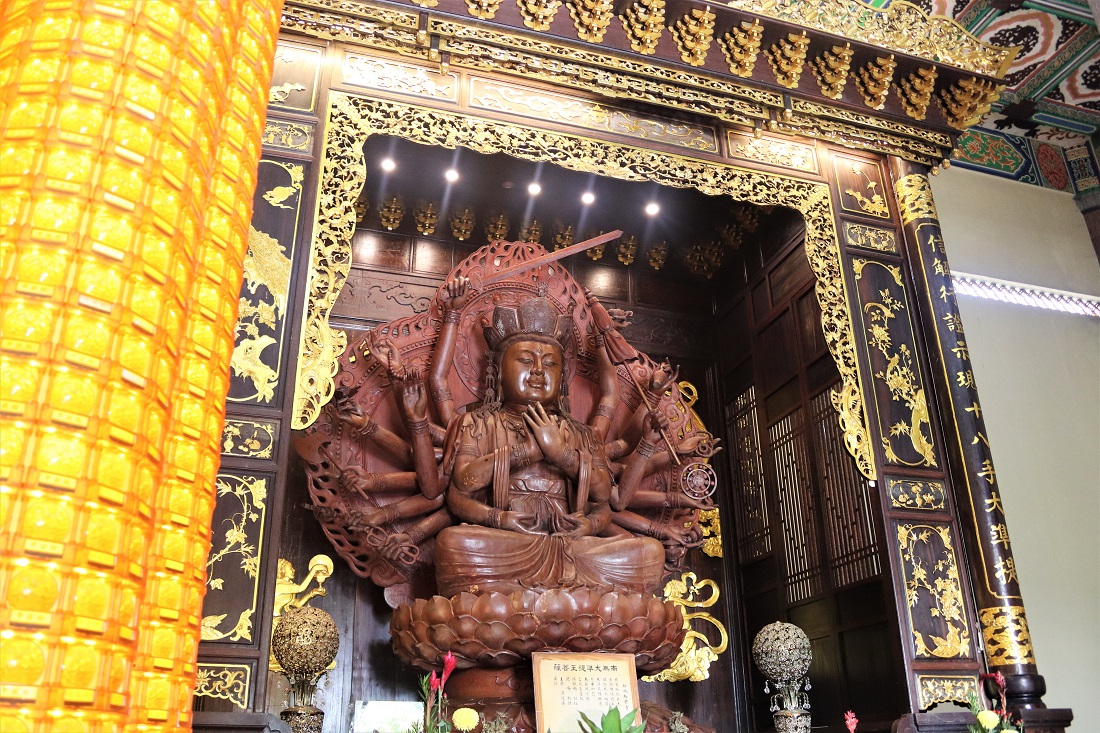
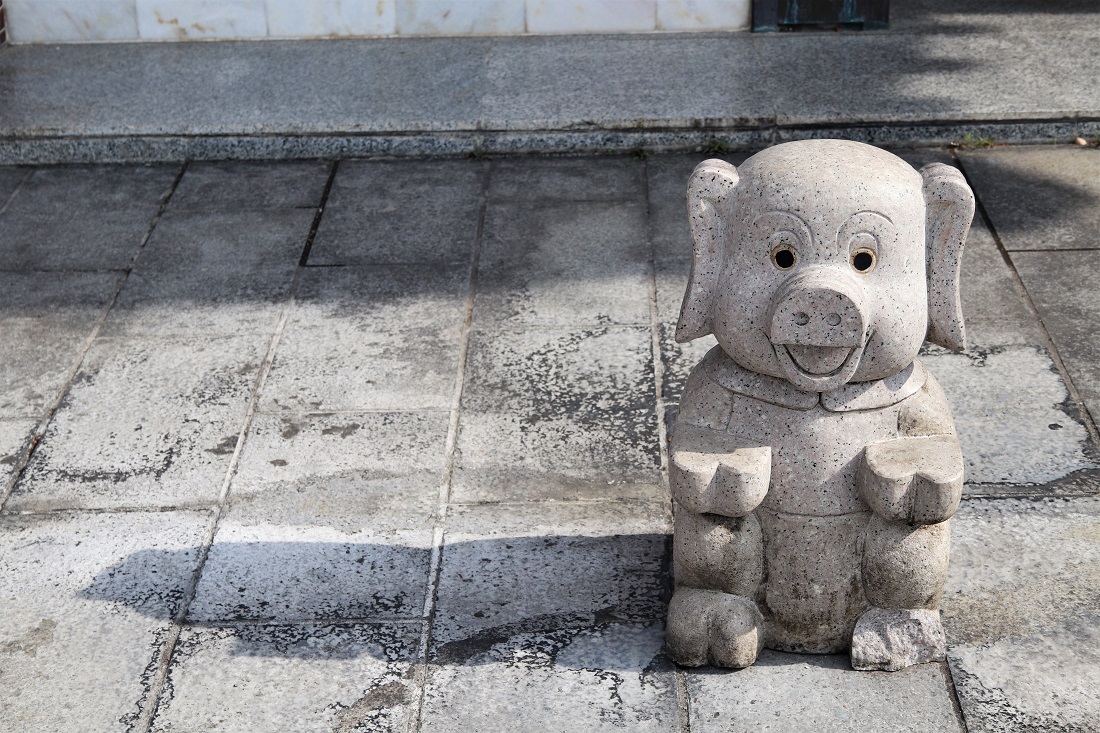
The pretty grounds were filled with statues of animals representing signs from the Chinese zodiac and I had a great time photographing the adorable pig statues (my Chinese zodiac sign).

Although we only saw a small section of the sprawling complex, which stretched down the hillside, what we saw was impressive and I was glad we’d taken the time to venture beyond the confines of George Town to visit it.
Dhammikarama Burmese Temple
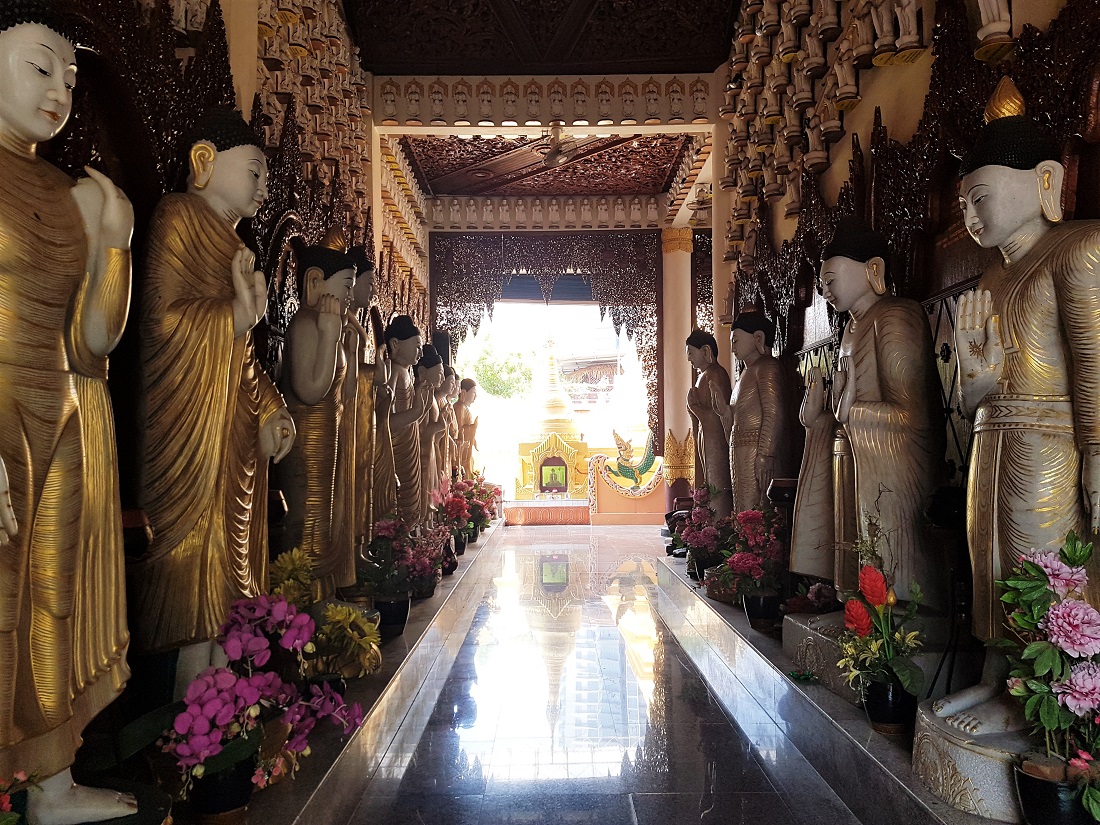
Dhammikarama Burmese Temple in the centre of George Town dates back to the turn of the 19th century, making it the oldest Buddhist centre of worship in Penang.

The small, colourful complex is home to a prayer hall, a wishing pool and monks’ quarters, along with a host of interesting features and statues.
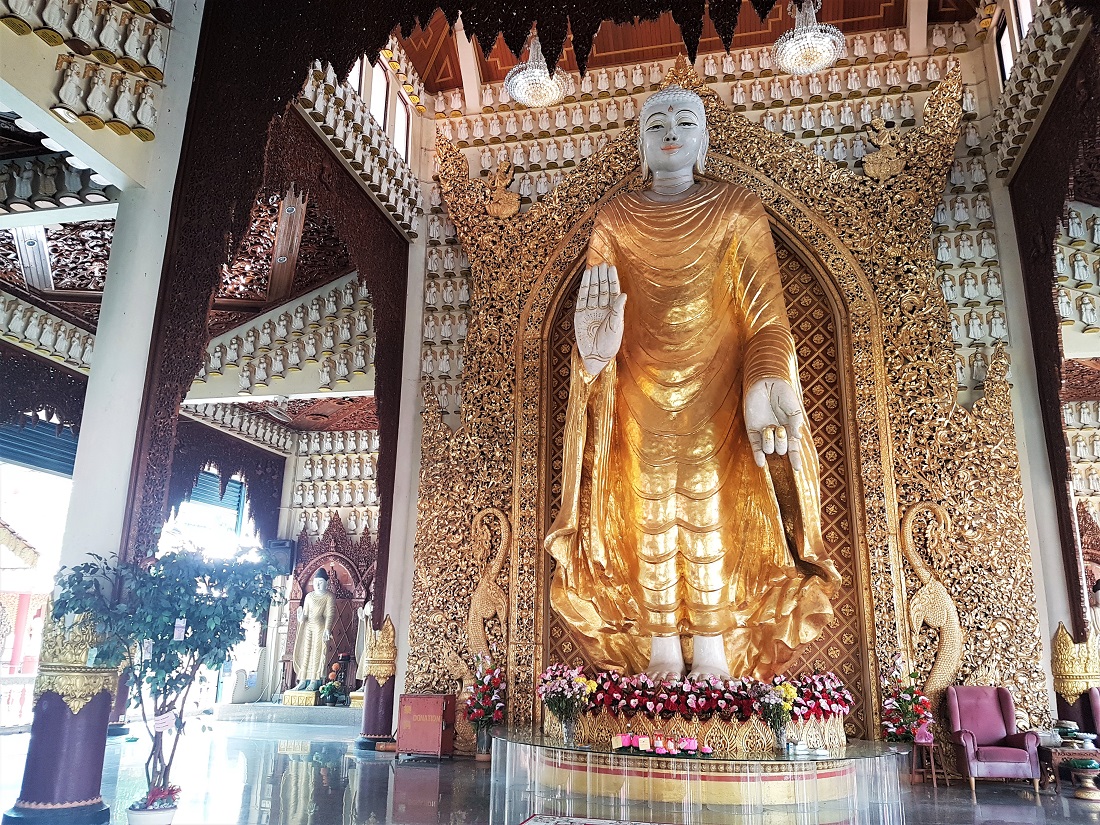
The main hall is dominated by a huge standing Buddha (above) and behind it, there are rows of statues representing different Buddhas from around Asia.

The striking statues in the grounds include a pair of winged chimeras, panca rupa, the guardians of the world (above), and two people carrying a bell you can ring three times for luck (below).
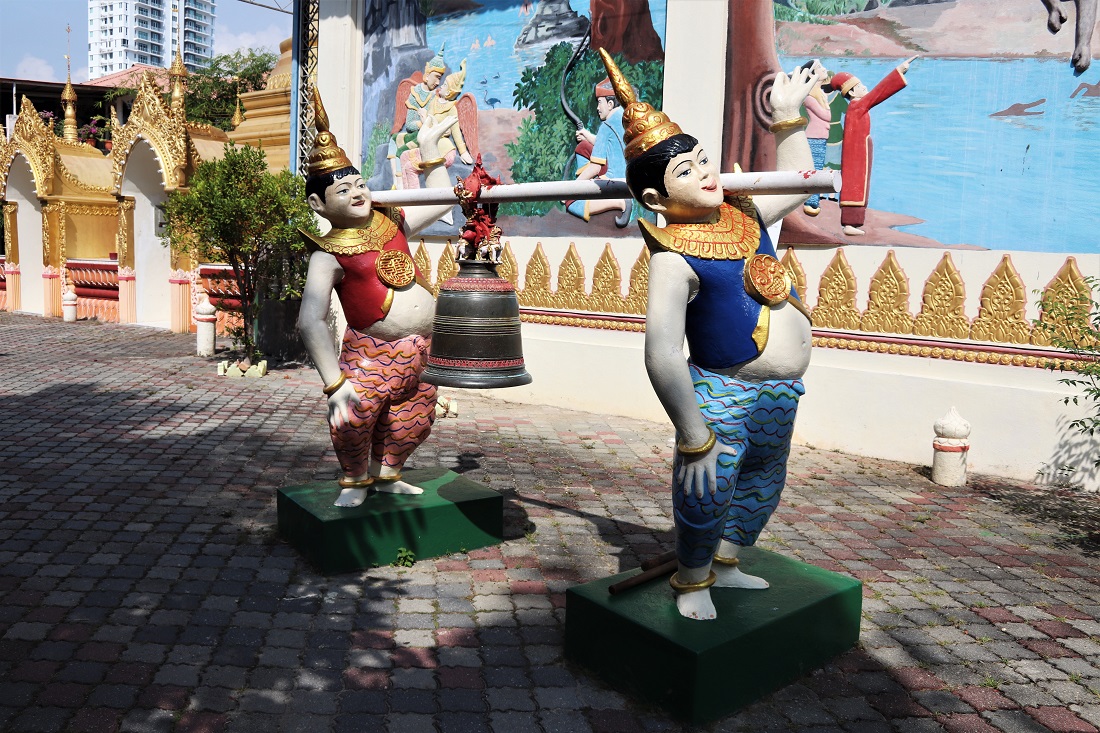
I enjoyed strolling around the fun, lively temple, admiring its many features.
There were a number of Burmese monks milling around the complex in their orange robes, too. If you want, you can ask the monks to bless you in return for a small donation.
Wat Chayamangkalaram Temple
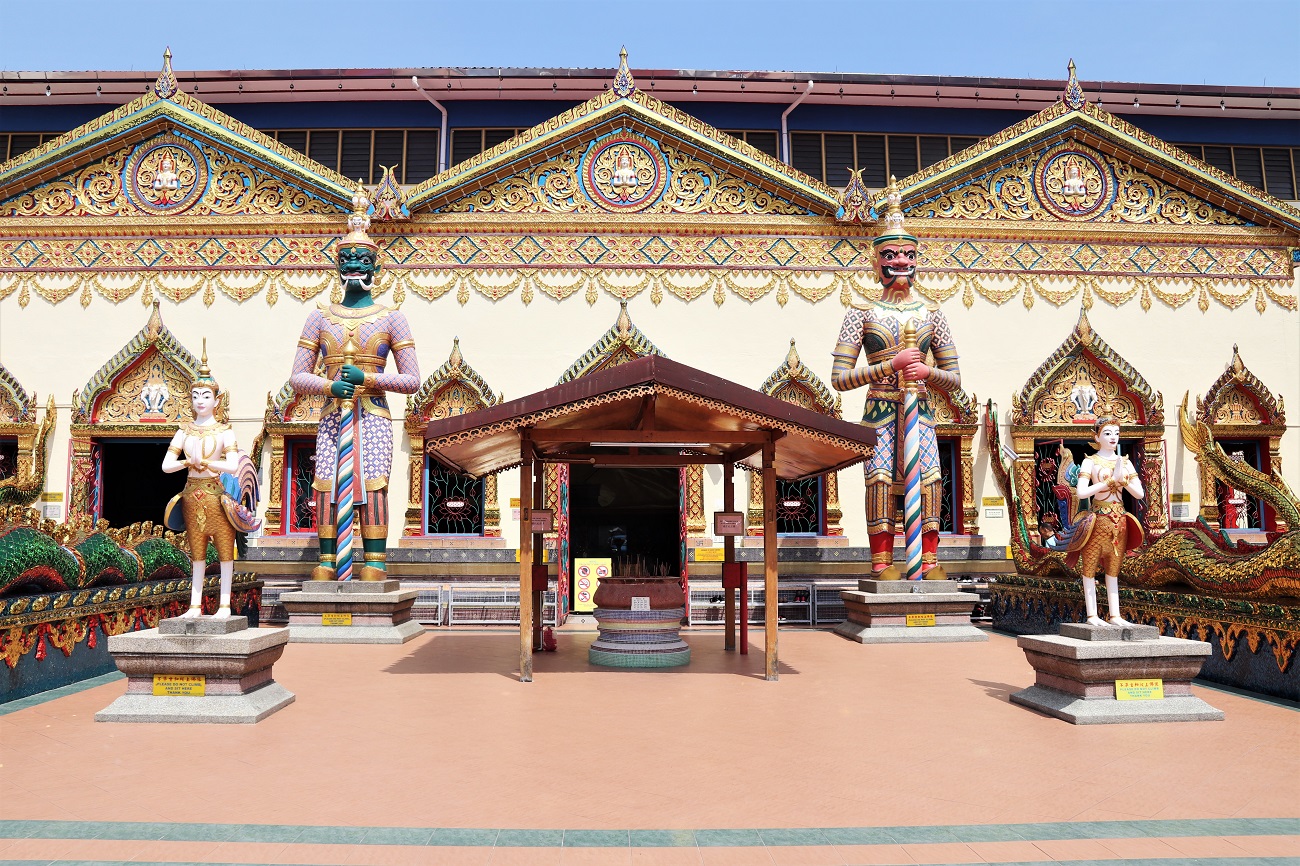
Across the road from the Dhammikarama Burmese Temple lies the Wat Chayamangkalaram Temple.
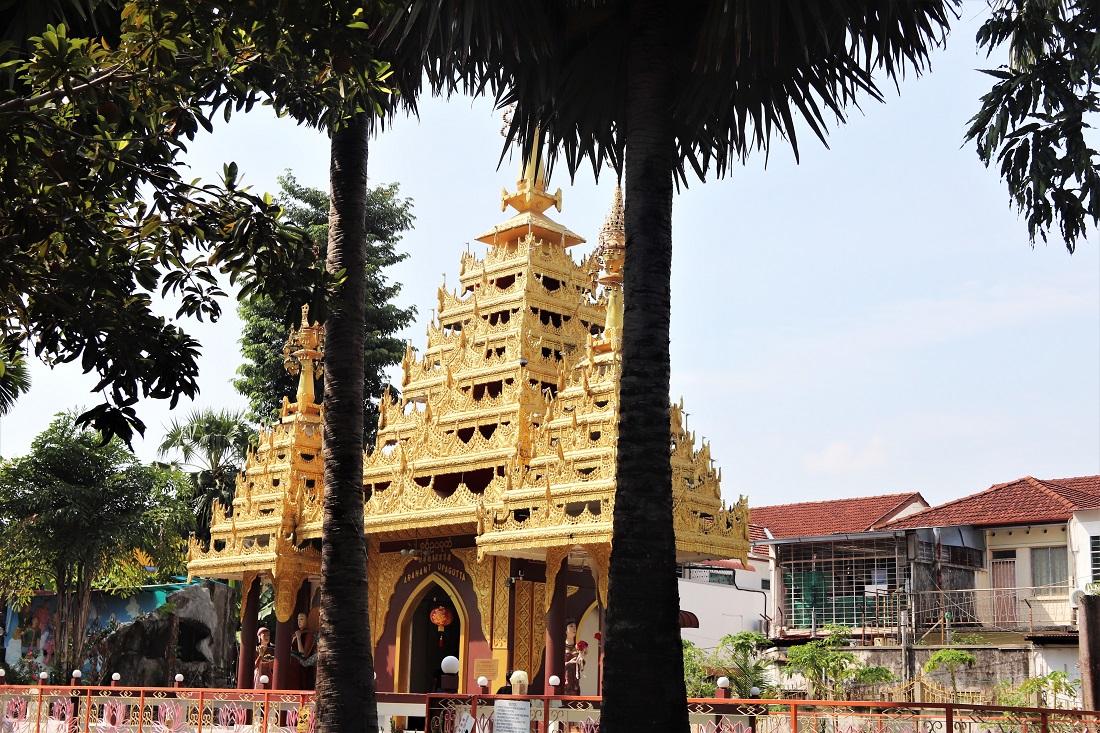
The temple was built by Penang’s Thai community in 1845 and is the region’s oldest Thai Buddhist temple.

It was founded after Queen Victoria gave Penang’s Thai and Burmese communities land on the island, which they used to build their respective temples.
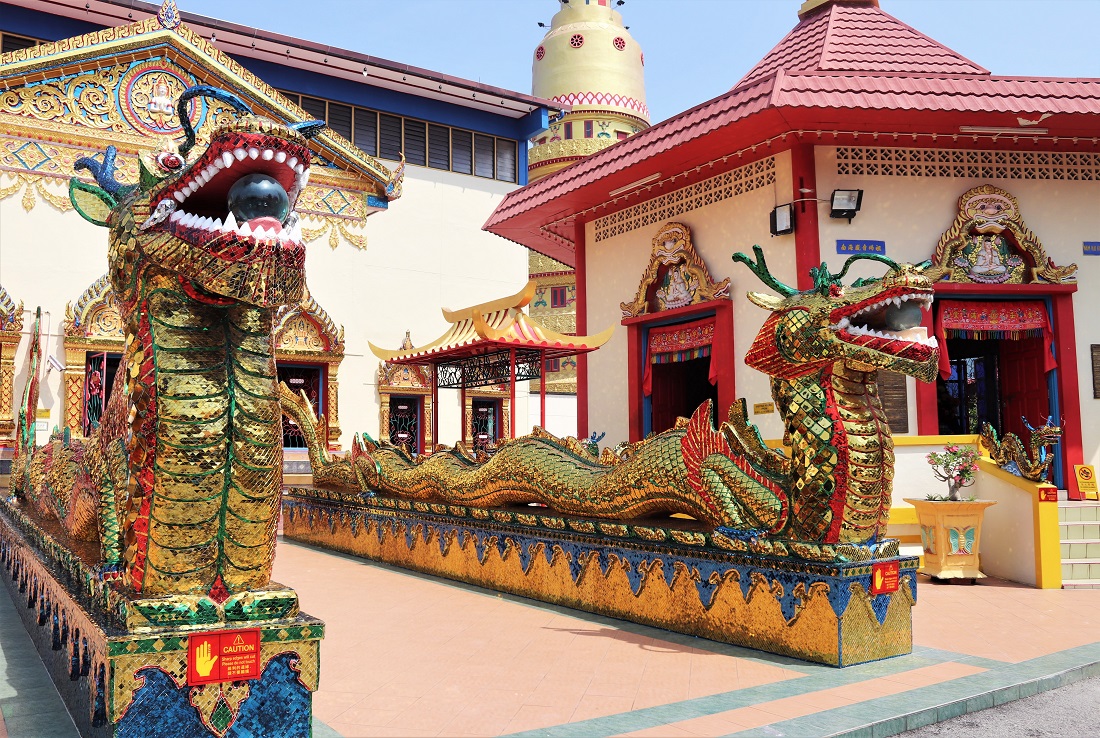
The entrance to the dazzlingly colourful temple is guarded by four glittering sequin serpents (above).
The temple is just as eye-catching inside thanks to the Phra Chaiya Mongkol, the world’s third-longest reclining Buddha statue (below).
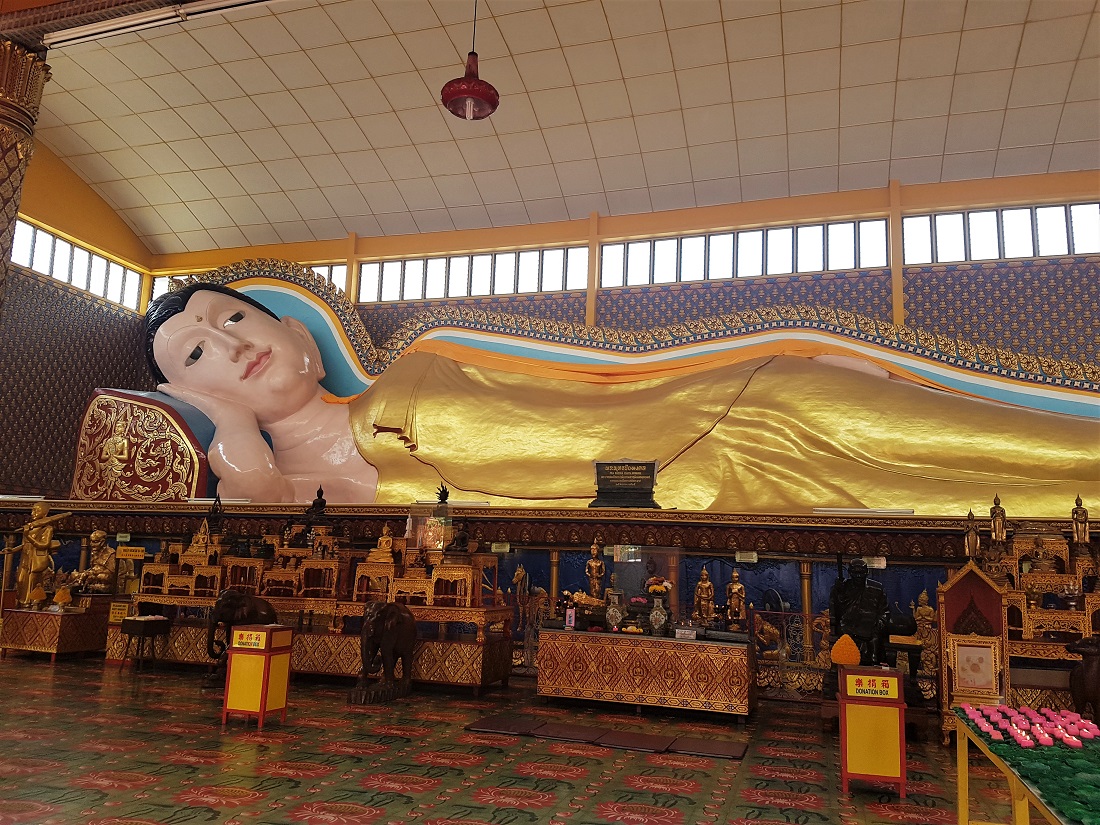
The walls behind the enormous gold statue contain alcoves with the ashes of worshippers who’ve passed away. Many of the inscriptions are in English and feature a photo of the person who’s died, giving visitors a glimpse into the lives of the people who are interred there.
I was fascinated by how different the temple was compared to the other two Buddhist temples we’d visited that morning.
Each temple has its own distinct identity and visiting all three one after the other helped me better understand their unique characteristics.
Pinang Peranakan Mansion

The restored, former home of the 19th century Chinese tycoon Chung Keng Quee has been turned into a museum that recreates a Peranakan (Baba Nyonya) home.
The beautifully decorated mansion is a lavish affair, showcasing more than 1,000 artefacts.
The mansion is also home to a jewellery museum, which features some spectacular gold and jade pieces, and a textile museum.
The textile museum displays traditional Baba Nyonya clothing, beaded shoes crafted by Nyonya women and gorgeous trees of gold thread made by Nyonya brides before they got married.
I enjoyed my self-guided tour around the mansion. It’s a stunning home and the objects on display are exquisite, although it’s worth noting you can’t take photos inside.
The only downside was the dearth of information about the artefacts, which meant I couldn’t put what I was looking at into context.
It would have been useful to have some more information about them to help better understand their significance in Baba Nyonya culture.
Eastern and Oriental Hotel
One of the swankiest hotels in Southeast Asia, the historic Eastern and Oriental Hotel was built in 1885 by the Sarkies brothers, the men behind Singapore’s Raffles Hotel.
Housed in a gorgeous colonial building, it’s the only hotel with a seafront in George Town and its illustrious past guests have included the writers Somerset Maugham, Noel Coward and Rudyard Kipling.
After a busy day looking around George Town, I headed to the bar on the sixth floor, which overlooks the Strait of Malacca, to meet some friends for drinks.
While the bar is lovely – it’s relaxing and very smart – the service left a lot to be desired, as I was left waiting more than 30 minutes for my drink.
The excellent dragon fruit martini was worth the wait though and when it finally arrived, it slipped down easily.
Sitting on the terrace overlooking the water with great company and a cocktail in hand was a fabulous way to end a very busy day in George Town.
 Little Old World
Sounds good. We didn’t get that far on our trip, though John has visited Penang with a former PhD student whose family lived there and liked it.
LikeLiked by 1 person
It’s good to hear John liked it. It’s an interesting place, it was just far too hot while I was there.
LikeLiked by 1 person
Thanks for the tour and for sharing a bit of history about this town. Those temples look impressive and full of colour.
LikeLiked by 1 person
Thank you! The temples were so colourful. It was fascinating walking around them and learning more about the different Buddhist communities in George Town.
LikeLiked by 1 person
How wonderful! We aren’t making it to Penang on our visit to Malaysia (I sit typing this in Kuala Lumpur) so I’m glad to visit through you. It’s beautiful, I’d love to visit the temples….though that service at the bar doesn’t sound good!!!
LikeLiked by 1 person
It’s an interesting city with a very multicultural history. The temples were fascinating! Hope you’re having a wonderful time in Kuala Lumpur! Enjoy the rest of your trip 😀
LikeLike
So many beautiful photos – Penang might be small, but it’s undoubtedly mighty regarding history and culture. I especially love the UNESCO-listed Georgetown which harbours Hindu temples, Buddhist pagodas, faded Chinese shop fronts, and crumbling relics of Malaysia’s colonial past. Thanks for sharing, and have a good day 🙂 Aiva xx
LikeLiked by 1 person
Thanks Aiva! It’s a city with a rich multicultural history and there’s a lovely mix of architectural styles. There was plenty to see and keep me occupied there during my whistle-stop tour. Have a good day, too 😀
LikeLiked by 1 person
Penang is clearly a small but mighty kind of place with so much interest, history, and art packed into a small area. Great tour around the city 🙂
LikeLiked by 1 person
Thanks Meg 🙂 There’s lots to see in Penang and it has an interesting multicultural history.
LikeLiked by 1 person