
When I was looking for somewhere to stop to help break up the long journey home from Norfolk, Anglesey Abbey in Cambridgeshire seemed to fit the bill.
Boasting a monastery-turned-stately home, 114 acres of gardens and a working mill, the National Trust property looked right up my street – and it’s safe to say, I wasn’t disappointed.

Nestled in picturesque countryside some six miles to the northeast of Cambridge, Anglesey Abbey is a charming affair.
Originally founded as a hospital by Henry I in 1135, it was turned into an Augustinian priory in the 13th century, before being closed by Henry VIII during the reformation.

The present Jacobean mansion was built on the remains of the old monastery at the start of the 17th century and it passed through the hands of various families over the centuries.
Its last owner, Lord Fairhaven (grandson of one of the US’s richest men), bought the property with his brother in 1926 and lived there until his death in 1966, when he left it to the National Trust.

On arriving at the abbey, I picked up a map in reception, then made a beeline to the manor house.
I started my tour in the living room (above), which has a lived-in feel to it and is where the priory’s chapter house used to be.

The attractive room is filled with intriguing objects, the most notable of which is the pagoda clock (above).
The quirky clock comes alive every three hours when it plays a tune and three jewelled pineapples rise from their pots and spin. Think of it as a pineapple version of a cuckoo clock.
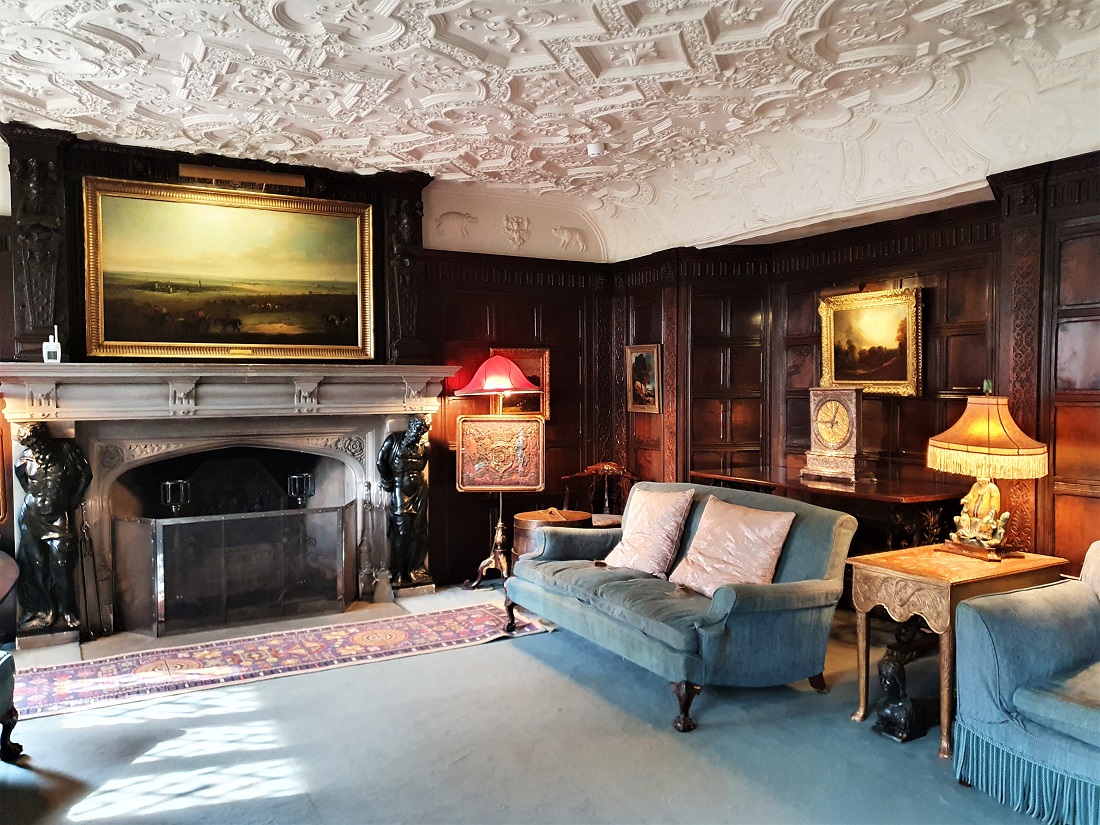
From the living room, I made my way into the delightful oak room, which is adorned with 17th century wood panelling and boasts a large, limestone fireplace (above).
The comfortable, homely room is where Lord Fairhaven would hang out with his guests after dinner and its decoration is said to have been inspired by his uncle’s home on Long Island, Coe Hall.

I continued my tour of the house via a series of corridors and coves, passing a small bathroom and a few bedrooms along the way.

The house is furnished as it would have been during Lord Fairhaven’s time, which I really liked as it felt like a home as opposed to a museum.
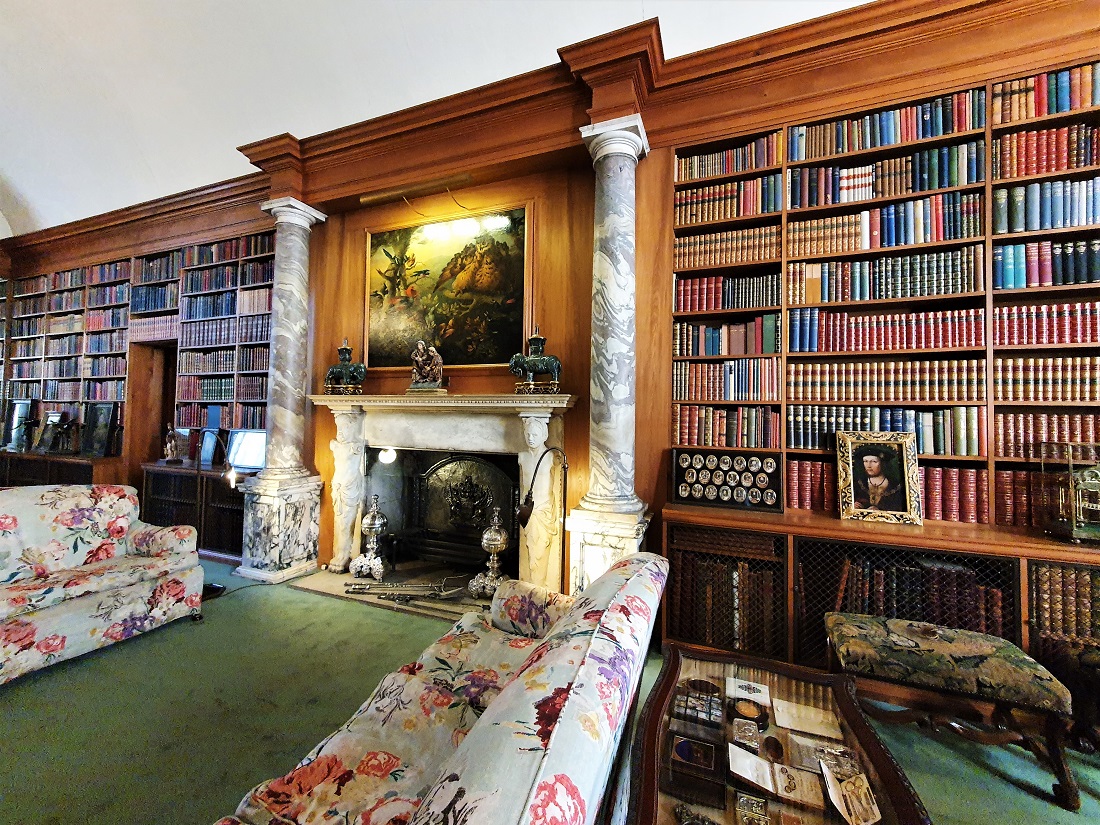
My next port of call was the library, which tends to be my favourite room in any house and the one at Anglesey Abbey was no exception.
The library, which dates back to 1937, is dotted with portraits of the kings and queens of England and is home to more than 5,000 books – one of the National Trust’s best collections.

Lord Fairhaven used to work in the library by day and enjoy cocktails there before dinner, which doesn’t sound like a bad way to pass your day.

The first atlas of England and Wales was also on display when I visited, which was a cool surprise (above).
Created in 1590 by the map maker Christopher Saxton, Lord Fairhaven bought it from Chichester Cathedral in 1947 in a secret auction, which was held without the bishop’s knowledge.

One of the things I really liked about the abbey was the many passageways and nooks and crannies, which were filled with random objects and furnishings.
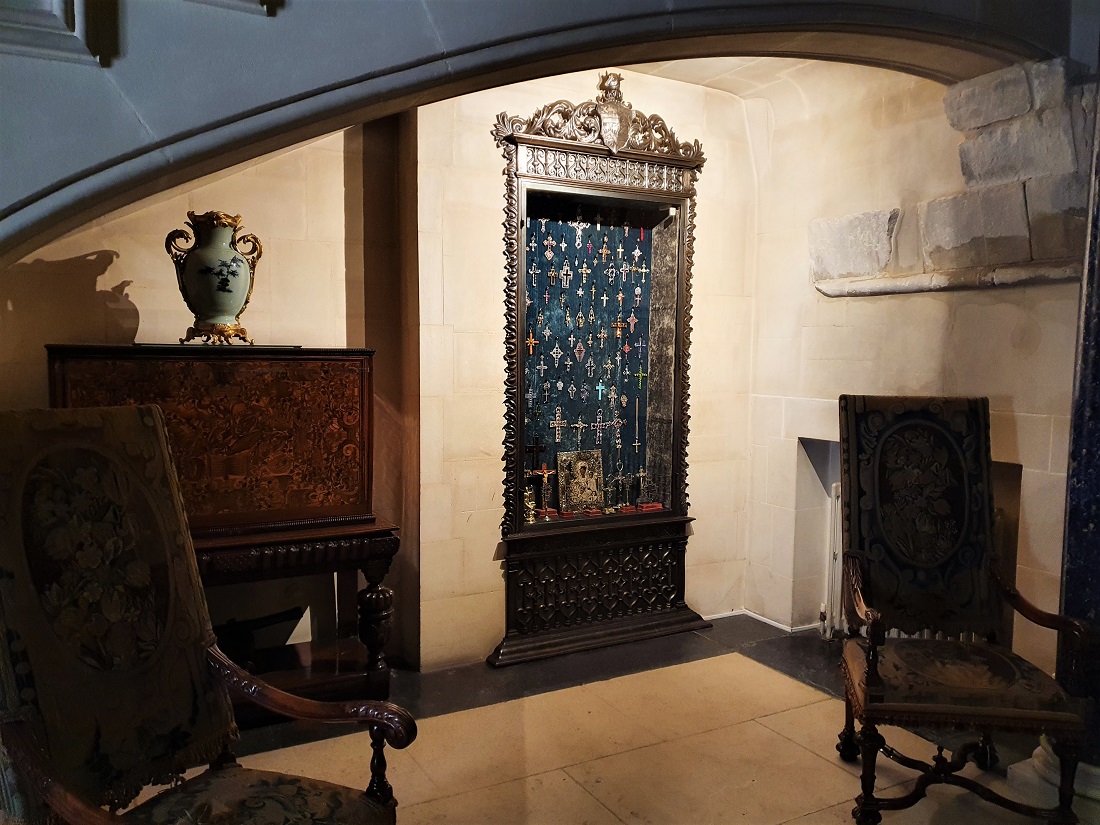
There were statues, paintings, tapestries and other curios throughout the house and it made for an interesting visit as I was constantly stopping to look at things.

The dining room (above), for example, is home to the Shield of Achilles, one of five huge silver shields made between 1819 and 1824 (below).
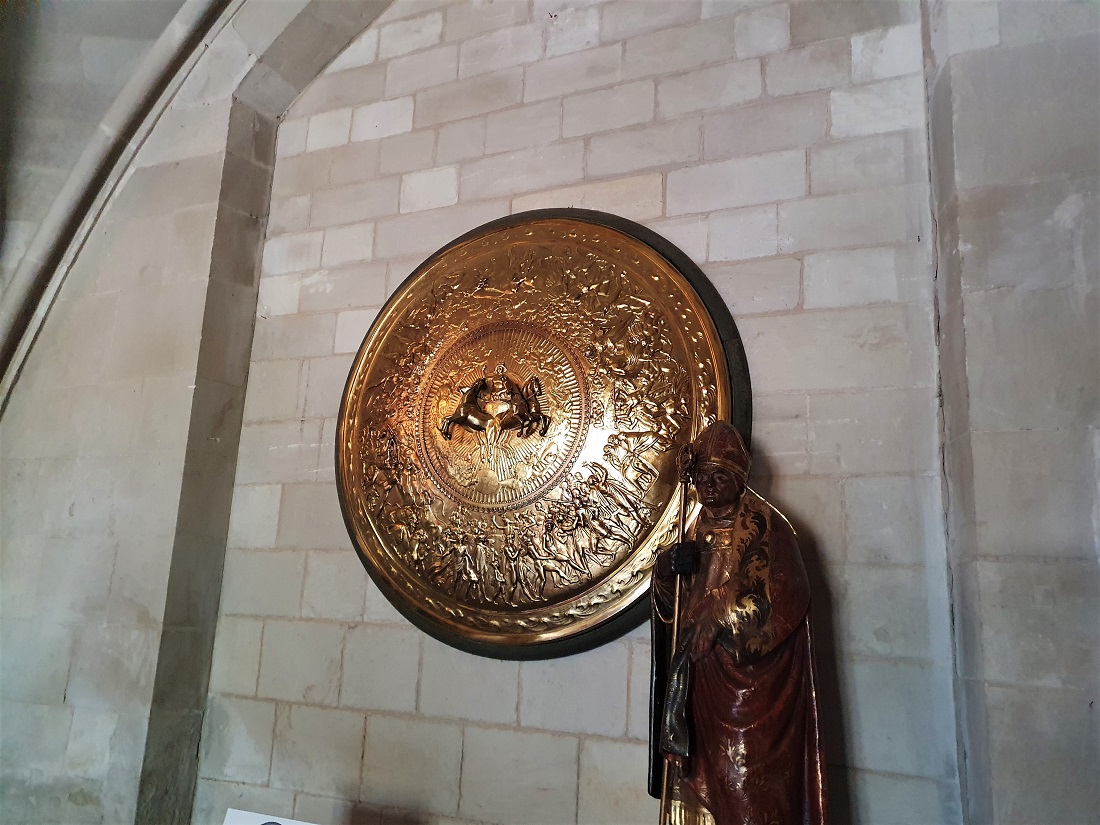
The shield, which was bought by Lord Fairhaven in the mid 20th century, shows Apollo in his sun chariot surrounded by various scenes, such as a city under siege, a wedding and cattle being attacked by lions.
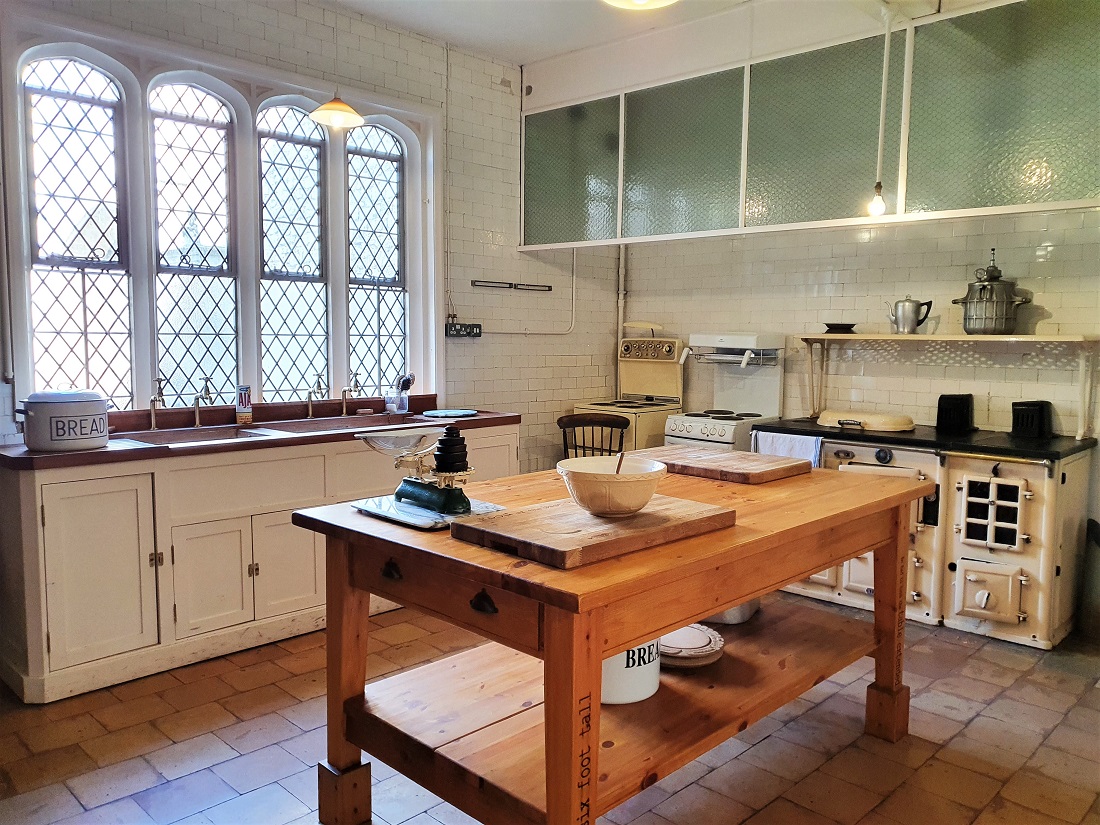
My tour of the house concluded in the servants’ quarters, where I looked around the likes of the scullery, the kitchen and the servants’ hall.

My favourite part of the servants’ quarters was the pantry cupboard, which was stocked with all manner of items from the 1960s (above).
It was a nice touch showing how the kitchen might have looked in Lord Fairhaven’s day.

By now I’d seen all there was to see in the house, so I headed outside into the spring sunshine, where I nipped into the secondhand bookshop before setting off to explore the grounds.

The gardens at Anglesey Abbey are enormous and cover more than 100 acres, so I decided to start by looking around Lode Mill (below).

There’s been a mill on Bottisham Lode since William the Conqueror’s time, but the current mill is thought to date back to the 18th century.
Lord Fairhaven bought it in the 1930s and it was fully restored by the Cambridgeshire Wind and Watermill Society in 1978.

The mill was open when I visited, so I popped inside to have a look around and learn how it works.

It was fascinating walking around the mill and seeing all the machinery used to operate it (above).
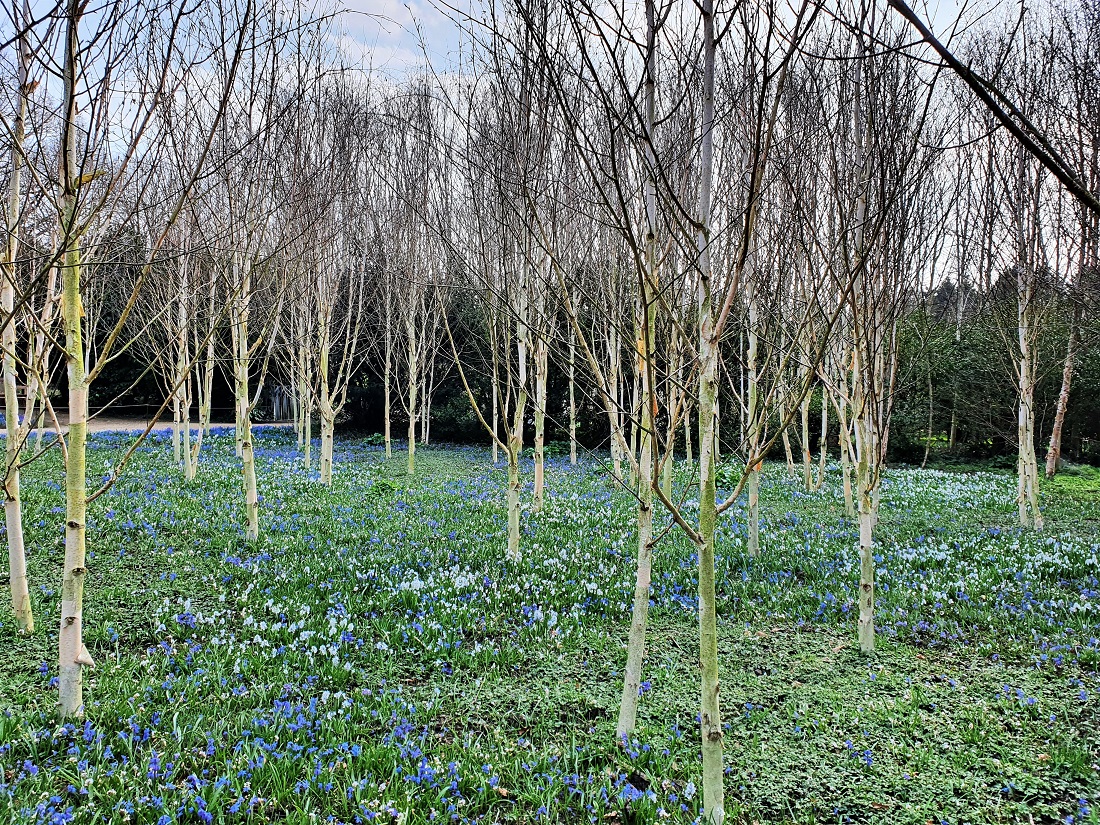
From the mill, I set off to explore the rest of the abbey’s extensive grounds, starting with a stroll along the warriors’ and emperors’ walks.

As it was early spring, there were lots of snowdrops, crocuses and daffodils, which I really liked.
Not only were they really pretty, they also added some lovely pops of colour to the gardens.
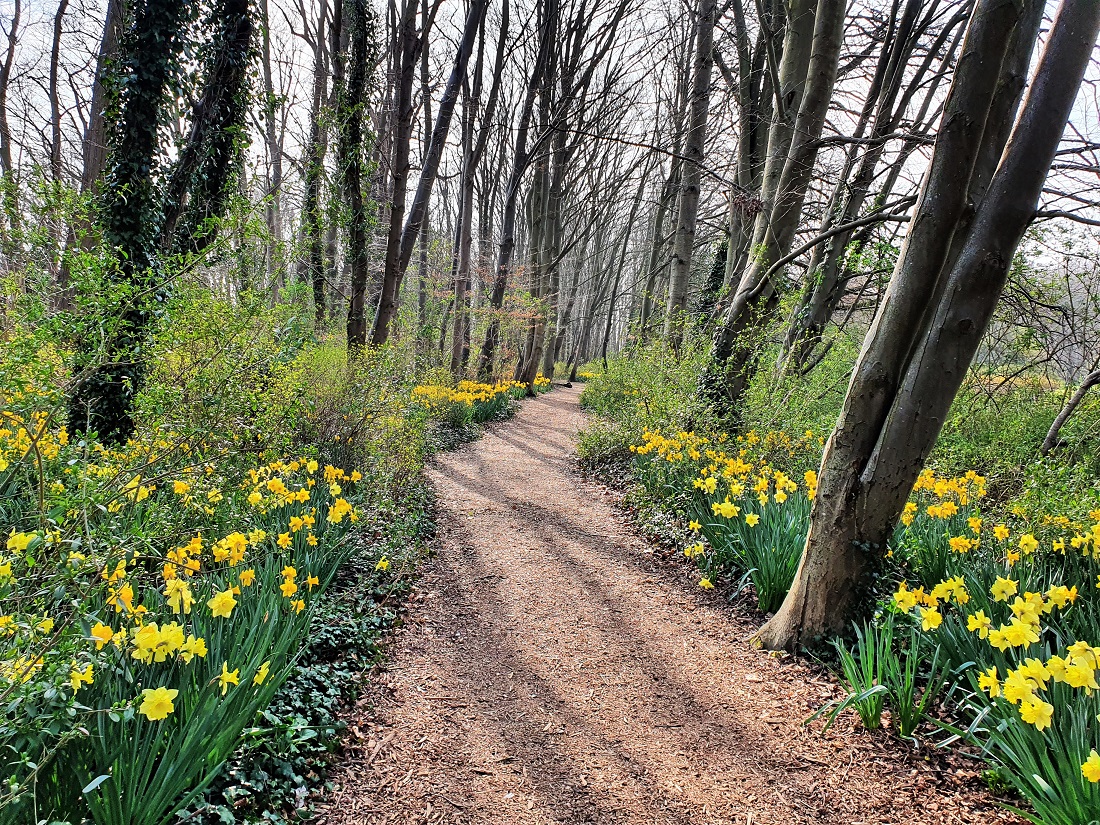
I strolled along the woodland path up to the Hoe Fen wildlife area at the far end of the gardens, where I walked through the woods to the small pond.
While I didn’t see much in the way of wildlife, it was a lovely spring walk.
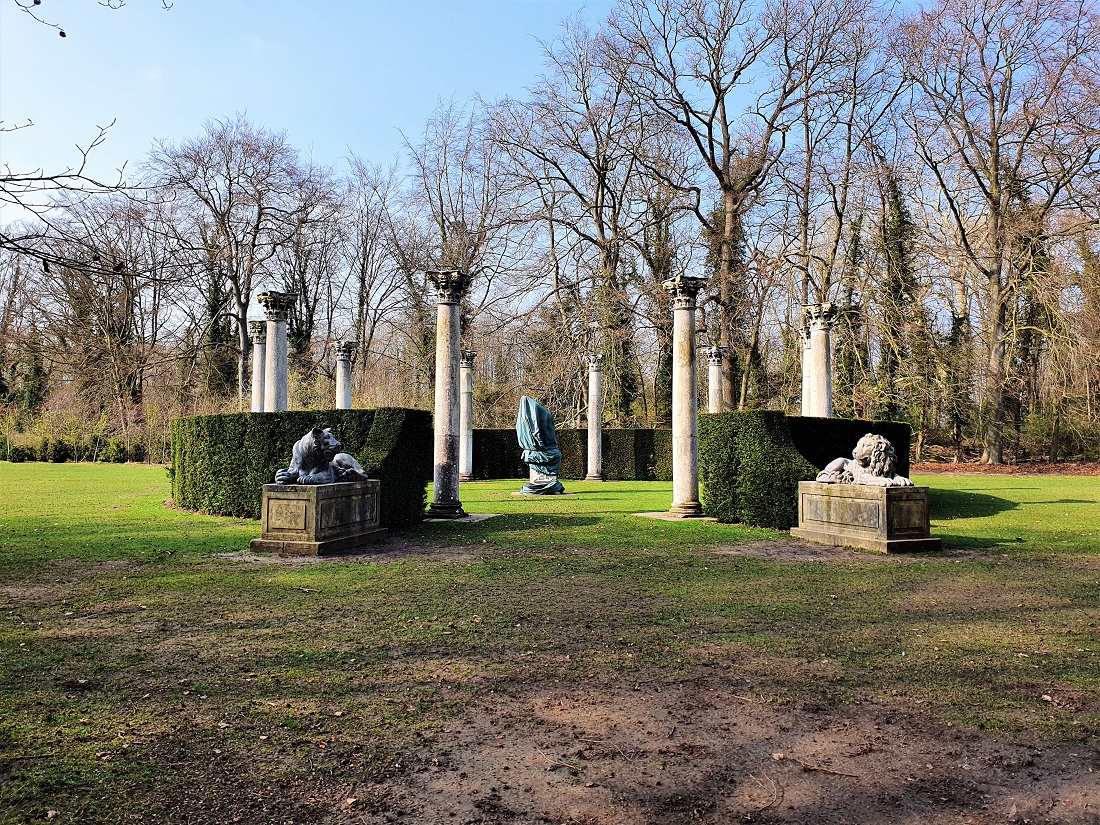
I made my way back towards the abbey and its rose garden via the temple lawn (above) and formal garden, admiring the many classical-style statues as I went.

I really enjoyed my visit to Anglesey Abbey and its gardens. It was a lovely way to break up my long car journey home.
There’s lots to see and do – the house is full of curiosities and the extensive gardens are pretty and peaceful. All in all, it made for a great day out.
Info
Anglesey Abbey, Gardens and Lode Mill, Quy Road, Lode, Cambridge, Cambridgeshire CB25 9EJ
nationaltrust.org.uk/visit/cambridgeshire/anglesey-abbey-gardens-and-lode-mill
 Little Old World
The library is fantastic, but could imagine being at a dinner party in that dining room! Looks like a great stop. Maggie
LikeLiked by 1 person
Thanks Maggie 😀 It would be a fantastic setting for a dinner party! It’s a fabulous room.
LikeLiked by 1 person
It does look unusually homely for a National Trust place. Not many people have pineapple clocks though – I would love to see that in action. And cocktails in that library? Count me in!
LikeLiked by 1 person
Thanks Anabel, I was surprised by how homely it was, it did feel lived in. The pineapple clock’s wonderful – it sadly didn’t chime while I was there. But there’a video of it in action on YouTube.
LikeLiked by 1 person
You don’t see and hear a clock with pineapples every day!
LikeLiked by 1 person
You don’t! It’s a bit more imaginative than your average clock.
LikeLiked by 1 person
It is so beautiful inside. I visited it a long time ago but the house was closed so we just walked around and managed to get inside the mill.
LikeLiked by 1 person
Thanks Tanja, it’s a stunning house, there’s lots to see and some unusual pieces on display. It’s a shame the house was closed when you visited, but the grounds are lovely and a great place to go for a walk.
LikeLiked by 1 person
The abbey looks lovely. The library tends to my favourite room as well. And how nice to visit early in the spring when all the daffodils were in bloom.
LikeLiked by 1 person
Thanks! The abbey was delightful and the library was wonderful. The atlas was particularly cool to see. It was a great time of year to visit with the daffodils, snowdrops and crocuses out in full force. It was nice to see some colour in the garden and enjoy the sunshine after (what felt like) a long and dreary winter.
LikeLiked by 1 person
I think I want that pineapple 🍍 version of a cuckoo clock. Love the furnishings in the house and the gardens look very pretty . Especially the blue flowers surrounding the trees.
LikeLiked by 1 person
Thanks, the clock’s fantastic, isn’t it? The house was lovely and I really liked how many unusual pieces there were to see inside. It felt a bit quirkier and a bit more lived in than some stately homes. The gardens were great and it was nice to see so many spring flowers in bloom.
LikeLike
I visited Anglesey Abbey during lockdown, at the point when the National Trust briefly gave free access to their gardens and green spaces. Thank you for sharing so many pictures of the inside, as we were only able to admire the manor house from the outside. I love the pineapple clock, and the library looks spectacular. Glad you enjoyed your time in East Anglia 😊
LikeLiked by 1 person
Thanks Rosie, I loved East Anglia 🙂 It’s not somewhere I’d really been before, but I had an amazing time. It’s so beautiful and I loved how much wildlife there was to see, I’d happily go back in a heartbeat. It’s a shame you weren’t able to go inside the abbey when you visited as it’s lovely, but understandable given the circumstances. The pineapple clock was a lot of fun and the library was wonderful.
LikeLiked by 1 person
Aw I love Anglesey, I try to go once a month for a nice long walk. Your photos capture it beautifully 🙂
LikeLiked by 1 person
Thanks Hannah 🙂 It’s a beautiful place, I loved it. You’re lucky to live so close and have somewhere so lovely on your doorstep.
LikeLike
What a beautiful Estate! How would it be to call this place home. I really love that library 🙂
LikeLike
Lovely place. Funny, I was actually looking at the National Trust book yesterday to start planning our holiday in Norfolk in April and saw this place ☺️. I need to check if they are dog friendly and I might add it to the list of places to visit.
LikeLiked by 1 person
What a coincidence! It’s a beautiful estate with lots to see and do. I can’t remember if I saw any dogs during my visit. If you do end up visiting, I hope you have a lovely time 🙂
LikeLiked by 1 person