
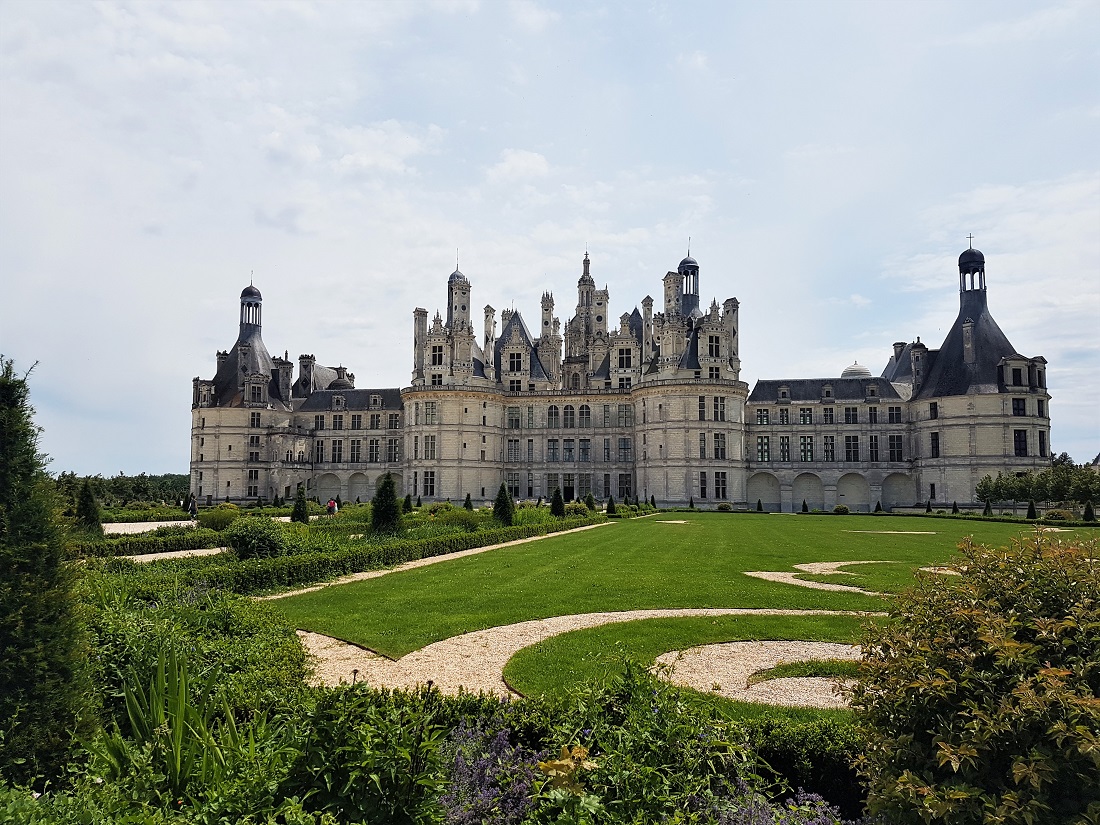
The biggest and grandest château in the Loire Valley is a masterpiece of Renaissance architecture.
Commissioned by Francois I in 1519, the château was built on the site of an old hunting lodge belonging to the counts of Blois, to a design that may have been influenced by Leonardo da Vinci, who lived in nearby Amboise.

After Francois I died in 1547, his son Henri II continued his father’s work, but the château wasn’t completed until 1685 during the reign of Louis XV.
The gargantuan 440-room château, which boasts a mind-boggling 282 fireplaces and 84 staircases, is truly a sight to behold.
I had vague memories of visiting the château as a child and remember standing on a bridge looking out across the fields at this enormous château in the middle of the French countryside.
So, I was a little taken aback to find the château is now a much more commercial affair with multiple car parks, a swish, expensive looking ticket office, and a host of cafés and restaurants.
It couldn’t have been more different to the non-touristy, backwater château I’d remembered from my childhood.
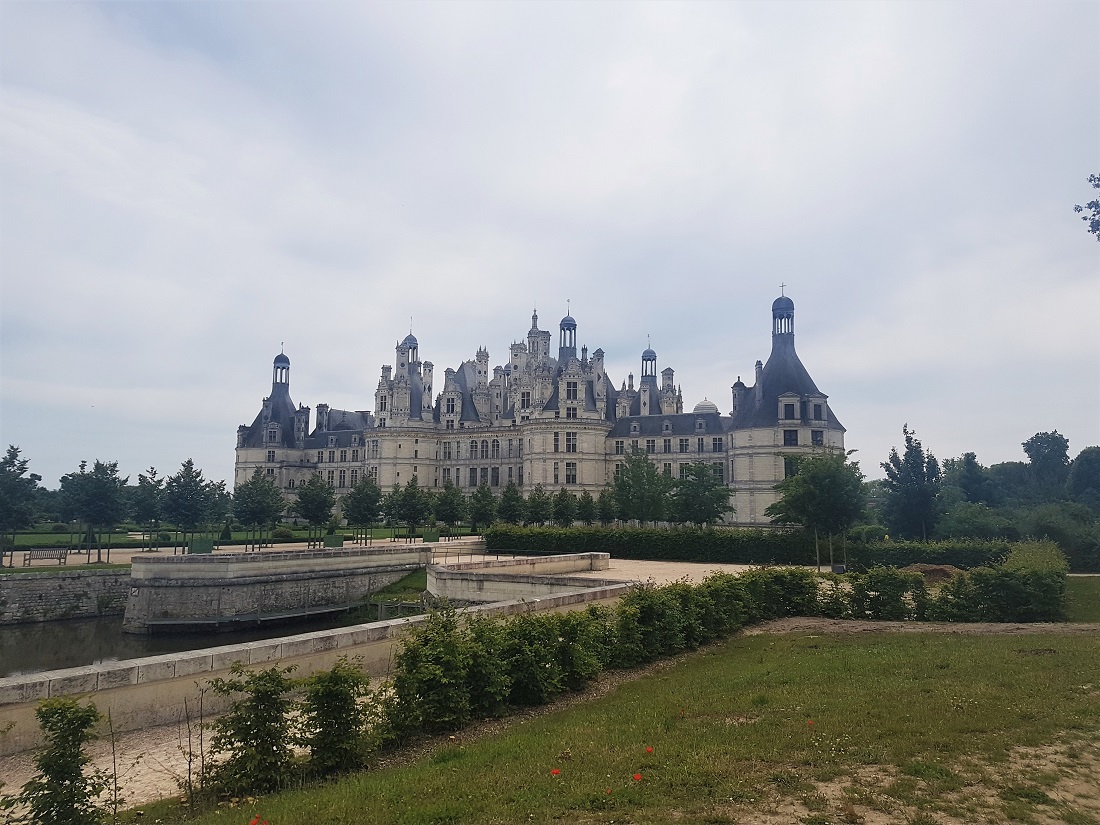
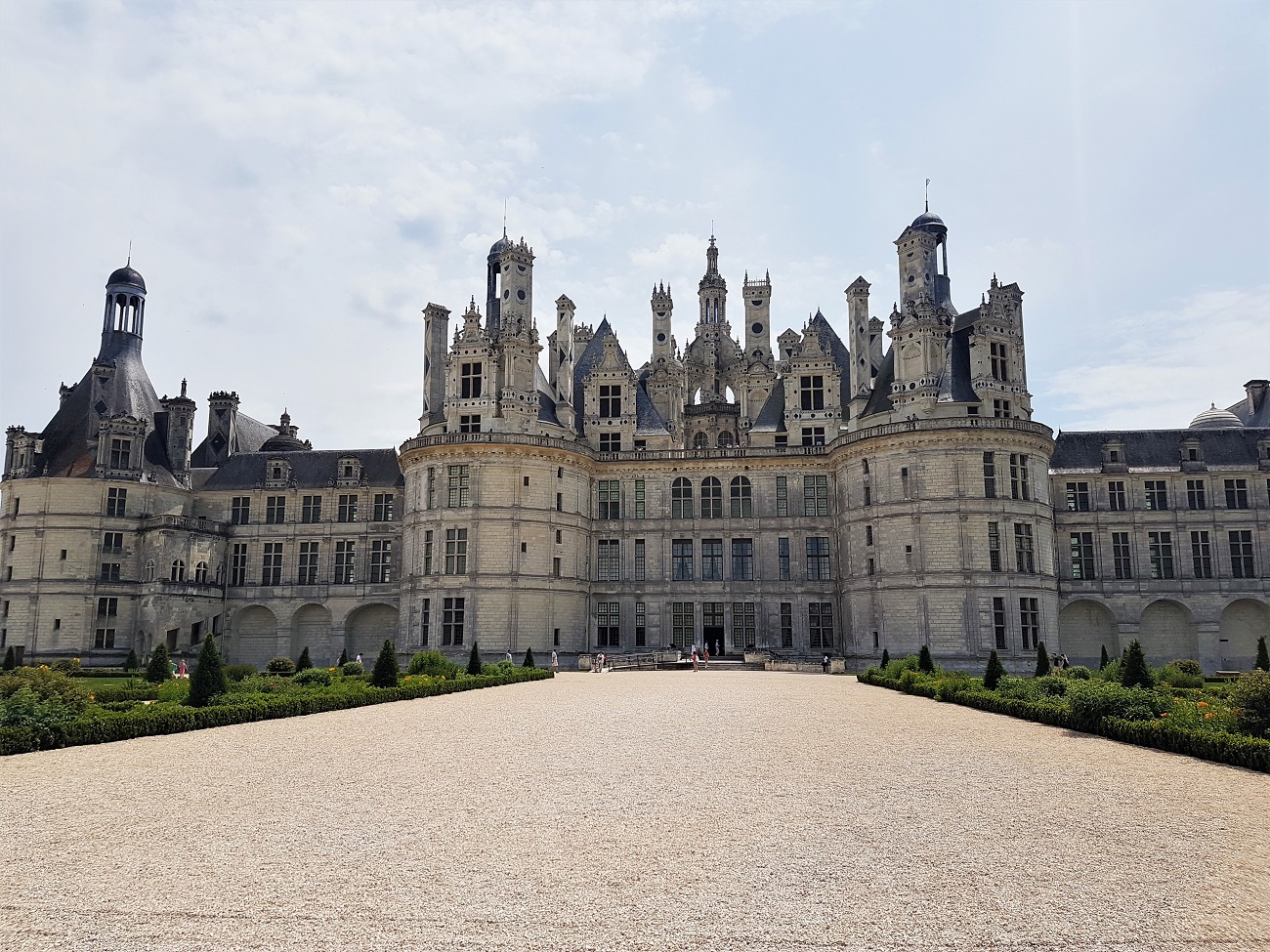
We started our visit by heading to the small bridge I remembered standing on, where we caught our first glimpse of the château in all its magnificent glory (above).
It’s a beautiful, monumental, square-shaped edifice and completely captivating – it’s hard to describe just how big and impressive it is.

We made our way to the entrance and after having our bags searched, we stepped inside the castle’s courtyard and into the château itself.
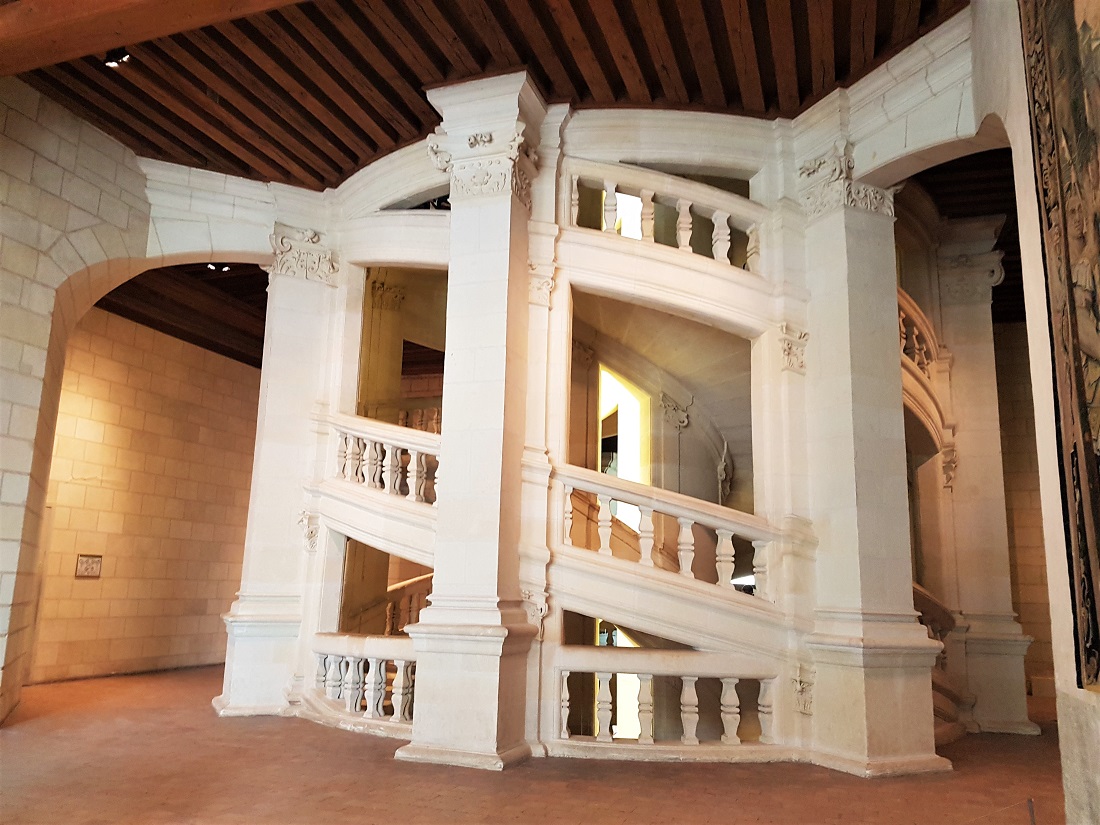
The main body of the château revolves around a double helix staircase, which is said to have been designed by Leonardo da Vinci (below).
The ingenious staircase has been planned so that anyone going up won’t meet those walking down.
We started our visit by looking around the massive rooms on the ground floor. There weren’t many of them and they had little in the way of furniture.
Most were bare bar their silk-covered walls in shades of red, green and yellow, a chandelier and lots of paintings, often of French royals or nobles.
The ground floor was also home to the kitchens, which were fairly small, simple and not particularly interesting.

We then walked up the double helix staircase to the first floor – and this is where the fun began.
The first and second floors are a maze of interconnected rooms, revolving around a corner of the château and it was easy to get lost.
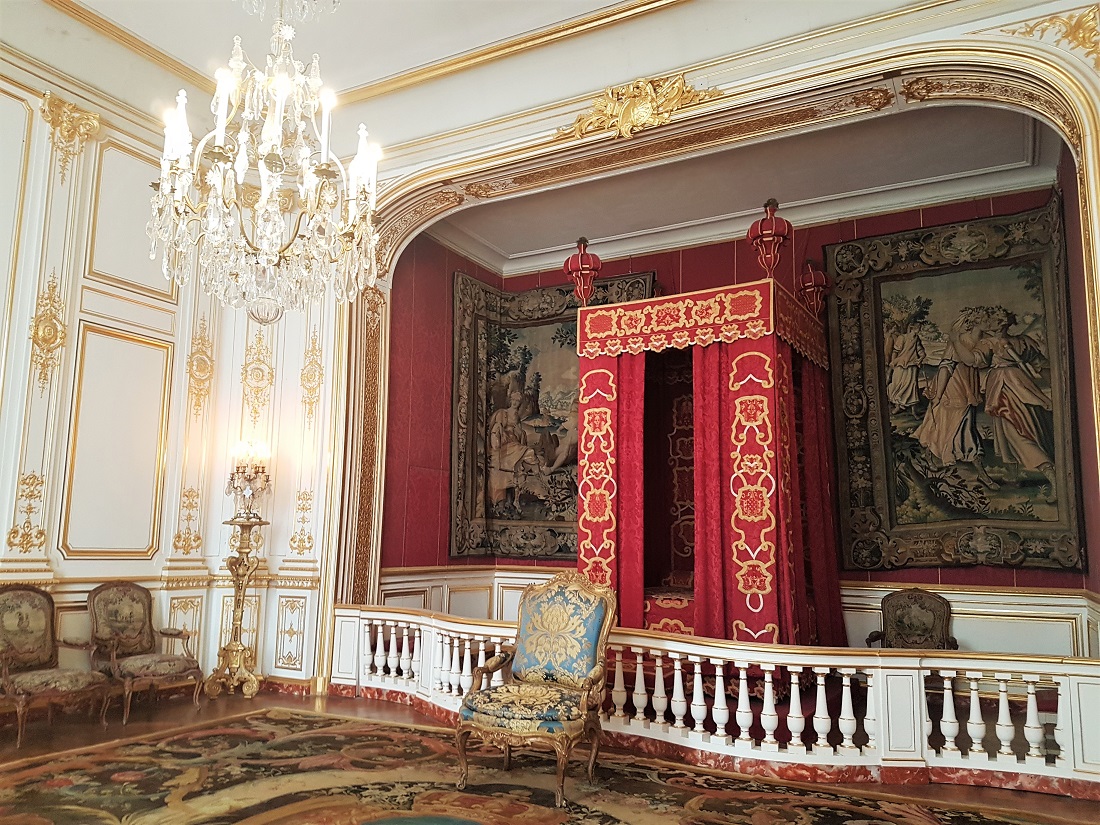
We’d wander through a series of beautifully furnished rooms and eventually emerge on a walkway overlooking the courtyard.
I really enjoyed the rooms on the first floor as they were all furnished, often in different styles, and there was a lot to look at.
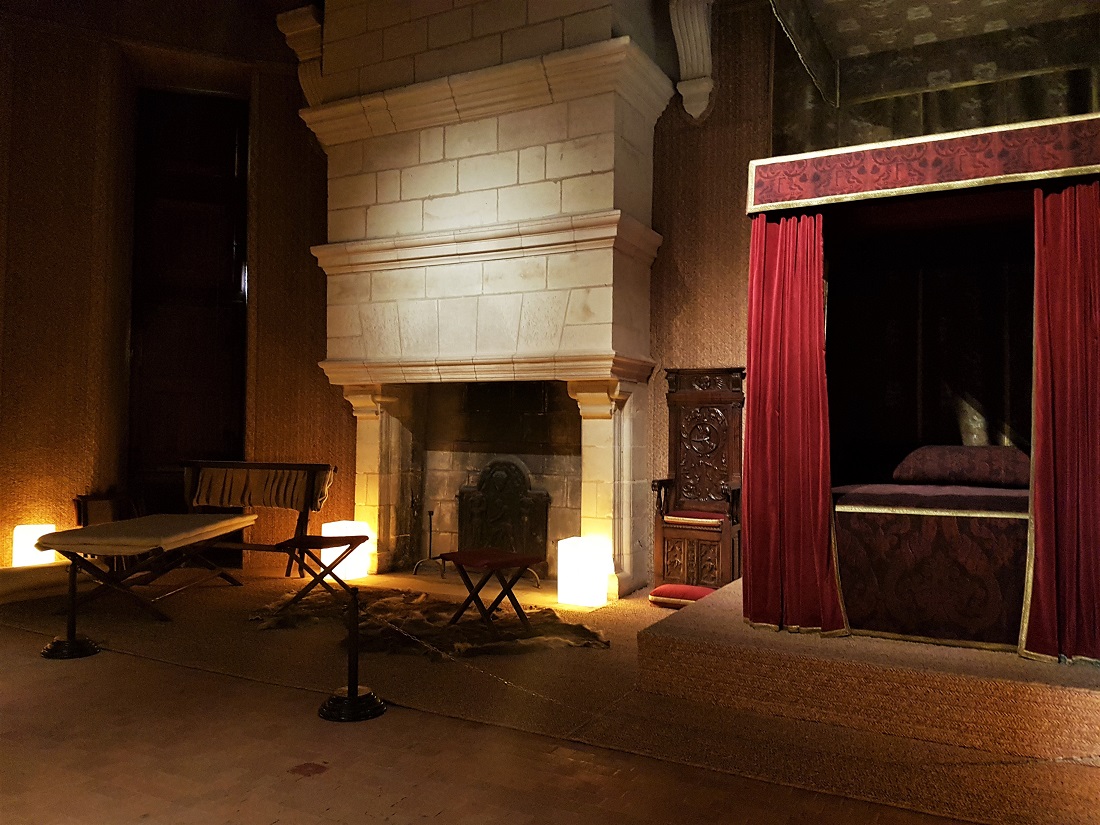
My favourite rooms included François I’s dark, fabric-covered bedroom (above), and the pale, bare chapel with its distinctive, orange stained glass windows (below).

The rooms on the second floor weren’t quite as lavish as those of the first, and there were lots of exhibits about the château’s architecture.
One of the exhibits displayed 18 proposals by architecture students from all over the world, showcasing how they’d design the château if commissioned to do so. Visitors could then vote for their favourite, which was a nice touch.

The château’s architecture is spectacular and I was particularly taken by the exterior staircases (above and below).
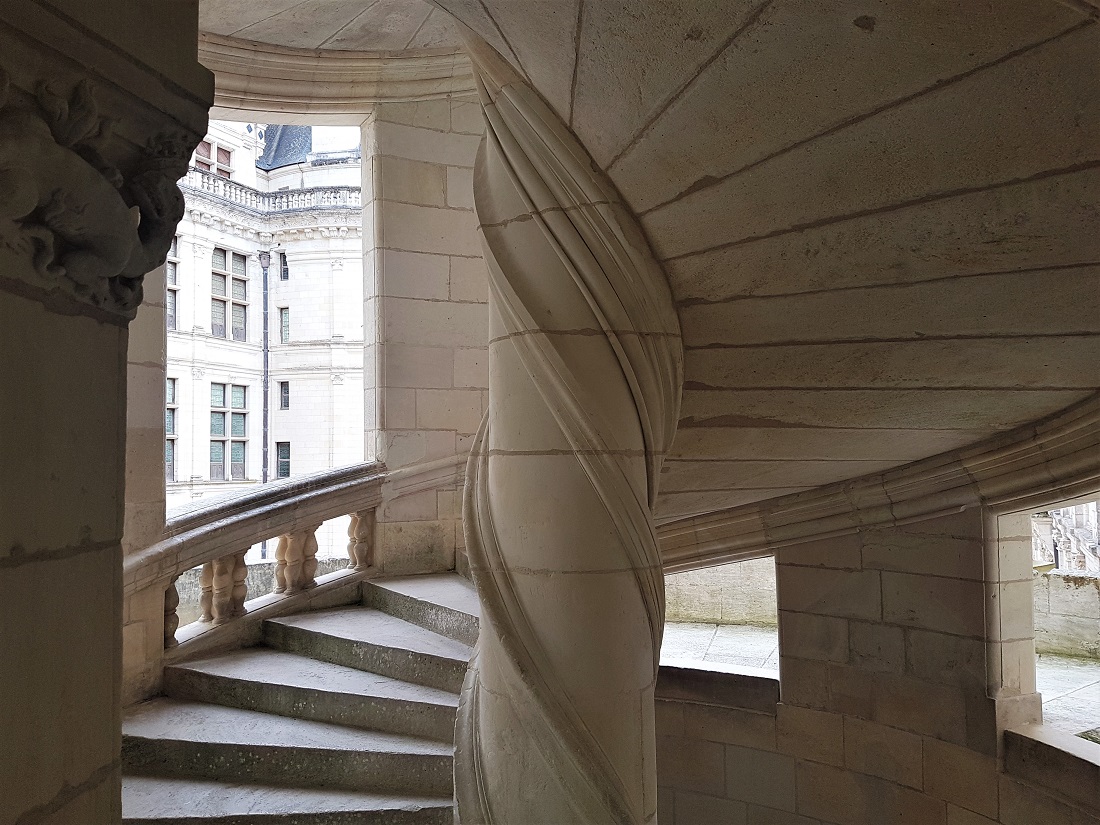
They were so pretty to look at and the craftsmanship that had gone into them was extraordinary.

The letter F and a salamander (François I’s emblem) were also plastered all over the château (above), leaving visitors in no doubt as to whose château it was.
I spotted them on the ceilings, doors, a cabinet and even one of the towers.

I was amused to discover as I walked around that François I had the château built on a piece of marshland no-one ever went to because he wanted to get away from people.
Quite why he decided to build himself a ginormous, 440-room château when he only wanted those closest to him to visit is beyond me. It’s a tad excessive if you’re looking for a quiet bolthole to escape to.
He even had the nearby River Cosson diverted, so it flowed past the château (he initially wanted to divert the Loire but was talked out of it).
Sadly for François, the rest of the court quickly followed him to the Loire Valley and built their own châteaux nearby, so his plan to escape the hoards didn’t pan out.
But, luckily for us, it did result in the construction of some of the finest castles in the world.

From the second floor, we headed up the double helix staircase to the roof terraces (below), where we walked all the way around them, admiring the roof and the views over the gardens below.

The château’s roof is really quite something, and is adorned with all manner of decorative touches and ornate carvings, turrets and chimneys of various shapes and sizes.
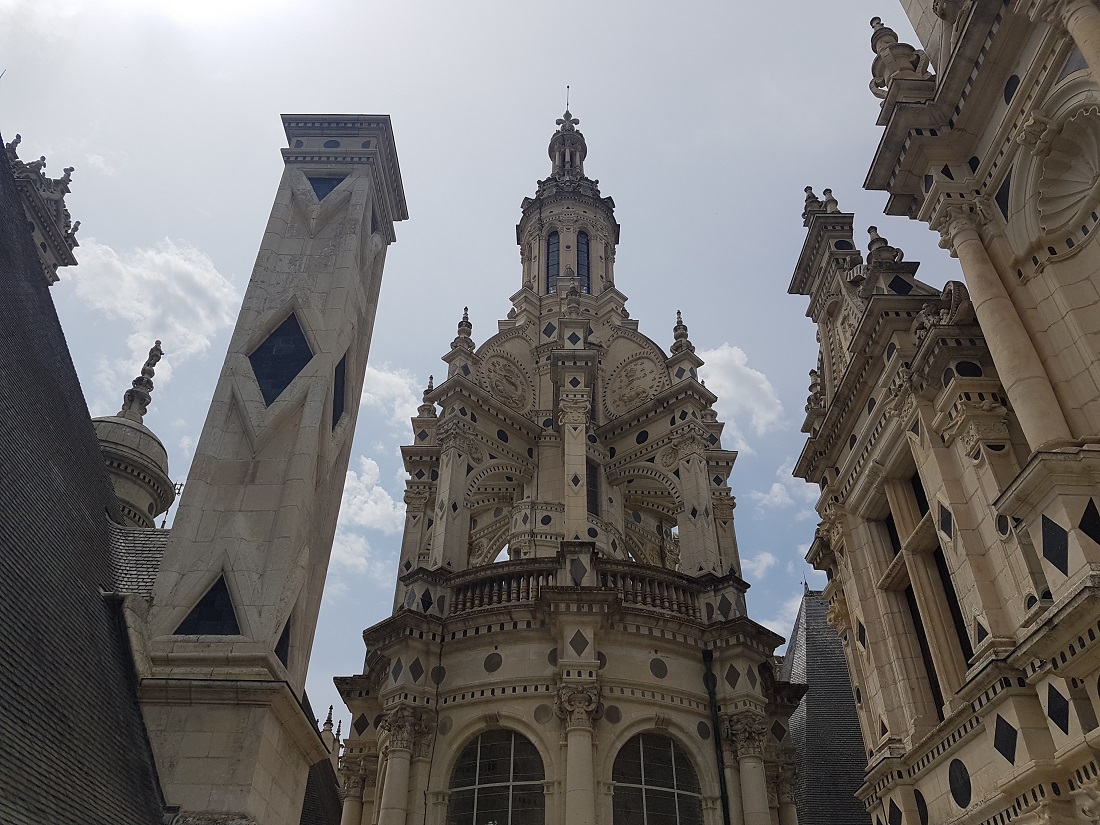
I spent ages walking around marvelling at the sublime architecture and photographing it from different angles.

The views from the roof over the gardens and parkland were also superb (above and below).
It wasn’t until I looked down on the gardens from above that I appreciated how much work and care had gone into them. They’re immaculate.

From the roof terraces, we headed outside and spent some time ambling around the gardens, before making our way to the cafés and shops close to where we parked.
The café system was confusing because some of the cafés were interlinked, while others weren’t. Some were self-service, others only offered sit down meals.
It didn’t really make sense, but we sat down at one of the outdoor tables and the waitress seemed happy for us to go off and get food from wherever we wanted while she fetched our drinks.
We ended our visit with a look around the eye-wateringly expensive shops – think €7.50 for a pot of jam and €36.50 for a bottle of Chambord raspberry liqueur.
I really enjoyed our visit to Chambord. The château is a magnificent affair, boasting exquisite architecture and it’s filled with interesting things to see.
Like Chenonceau, it’s much more commercial than I’d expected and it was heaving with people (there were lots of school groups). But due to its colossal size, you could, for the most part, escape the crowds.

Chambord is one of the most interesting French châteaux I’ve been to and I was impressed by how much of it was open to the public, you certainly get your money’s worth when you visit.
Info
Château de Chambord
Open daily from 9am
chambord.org/en
 Little Old World
What a fabulous chateau. The roof is gorgeous with so many spires and towers. What a funny story though about why and where it was built. I can see why it’s so touristy, but you did well to not include people in your pictures. Maggie
LikeLiked by 1 person
Thanks Maggie, it’s a spectacular chateau and the roof is incredible. Francois’s master plan didn’t quite work out for him unfortunately, but at least it gave us some amazing chateaux. Chambord is so big, you could escape the crowds a bit so it wasn’t too difficult to get photos without people in them.
LikeLiked by 1 person
Great to read about this chateau and wonderful photos. Thank you!
LikeLiked by 1 person
Thank you 🙂 It’s a fabulous chateau, the architecture’s sublime.
LikeLiked by 1 person
What a stunning chateau! Crazy to hear that it has 282 fireplaces! It’s also neat to hear that its design may have been influenced by da Vinci.
LikeLiked by 1 person
Thanks, it’s a spectacularly beautiful chateau! It’s difficult to comprehend how big it is and how many fireplaces and chimneys it has, it’s insane. Da Vinci certainly liked to keep himself busy, it’s cool to think he may have had a hand in designing elements of the chateau.
LikeLiked by 1 person
Stunning! I have not been to this one.
LikeLiked by 1 person
Thanks Anabel! It’s a magnificent chateau and there was lots to see, I enjoyed our visit. It’s an amazing place.
LikeLiked by 1 person
Château de Chambord looks absolutely breathtaking, and your detailed description really brought the experience to life! I love how you captured both the grandeur and the quirky details, like Francois I’s desire for seclusion, despite building a massive château. The double helix staircase is such a fascinating feature—how amazing that it’s possibly designed by Leonardo da Vinci! Even though it’s become more commercialized, it’s good to know the château still offers a lot to explore, from the majestic roof terraces to the historical exhibits. And that roof view over the gardens—wow! I’d definitely love to see this place in person someday!
LikeLiked by 1 person
Thanks very much for your lovely comment. It’s an extraordinary château and it’s cool that Leonardo da Vinci may have had a hand in designing it. There’s a lot to see and it’s worth visiting if you’re ever in the Loire Valley.
LikeLiked by 1 person
You’re very welcome! 😊 It truly sounds like a must-visit destination, and knowing that da Vinci may have influenced its design makes it even more intriguing. The Loire Valley is definitely on my travel list now—thanks for the wonderful recommendation!
LikeLiked by 1 person
Oh be still my architecture loving heart! This is absolutely stunning with so much beautiful detail. 🙂
LikeLiked by 1 person
Thanks Meg 🙂 It’s a stunning château – the architectural details throughout were incredible.
LikeLiked by 1 person
Beautiful château.
LikeLike
Those gardens must take soooo much work – they’re just perfect! I also love the spiral staircases, and the whole chateau is just beautiful. Your comment about how its changed got me a little emotional – I remember visiting Versailles in 1999 as a small girl and it was open and we just hired a boat on the lake, walked round, saw everything calmly with wide open space. Last year I went back and could barely move, and everything was timed tickets. It’s sad how over-touristed everything has become.
LikeLiked by 1 person
I dread to think how much work it must take to look after those gardens (and the château with its 440 rooms!!) – they must have a small army in place! It’s incredible how quickly things have changed and how in a few short years so many places have become overrun with tourists. It doesn’t make for a great visitor experience. At least we can say we were lucky enough to see some of these places before they became so busy.
LikeLike