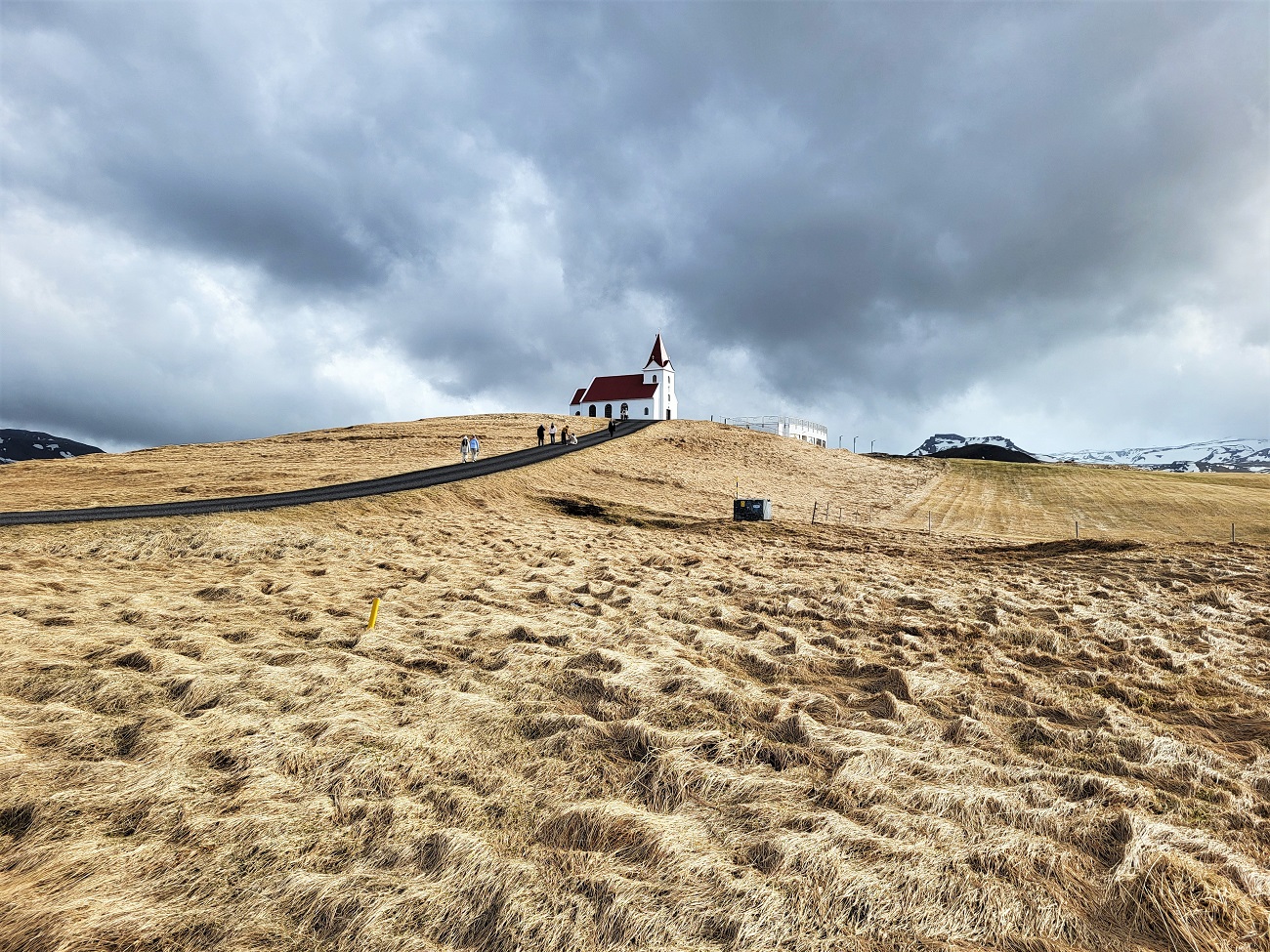
Wild, rugged and evocative, the hauntingly beautiful Snæfellsnes Peninsula is where I truly fell in love with Iceland.
A jagged slither of land on the country’s western coast, it juts out into the North Atlantic and is home to the ancient glacier-topped volcano Snæfellsjökull.
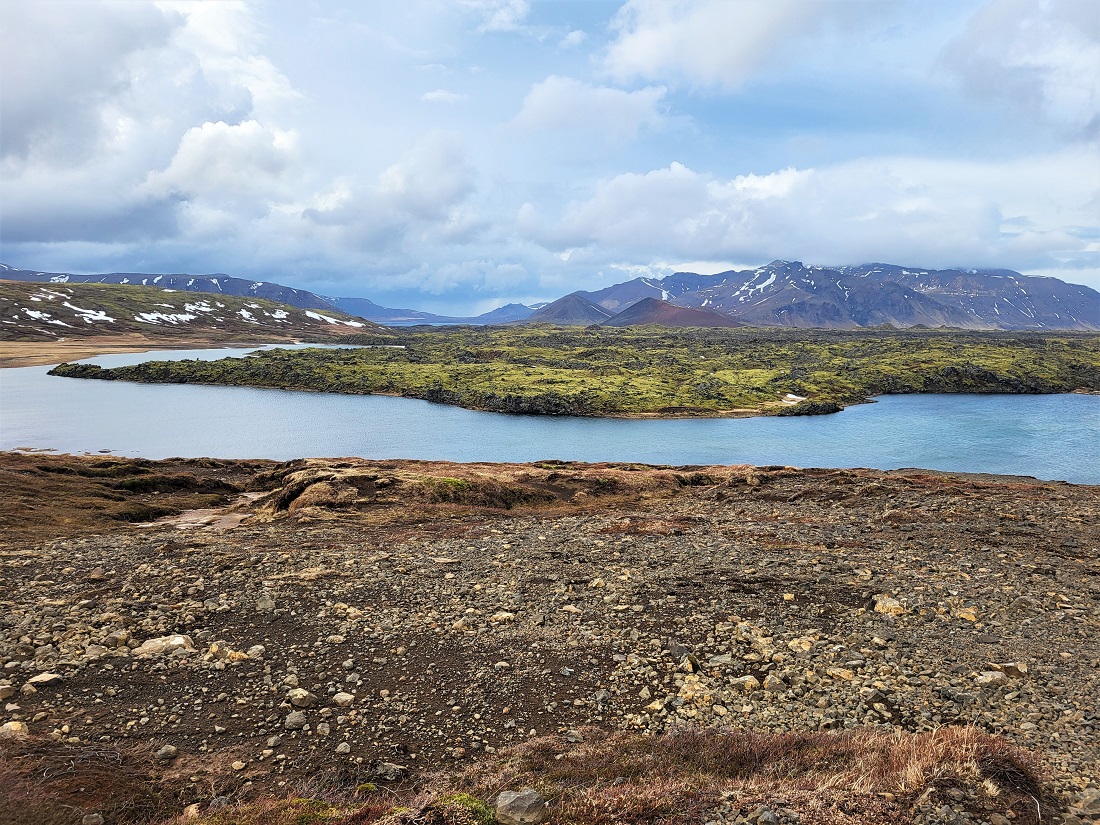
Here you’ll find collapsed volcano cones, black sand beaches, oddly shaped mountains, roaring waterfalls and a handful of isolated churches.
And it’s where I spent my final day in Iceland on a 12-hour-round guided tour from Reykjavik, exploring some of the peninsula’s most remarkable sights.
Ytri Tunga yellow sand beach… with bonus seals!!

Ytri Tunga is something of a rarity in Iceland – a yellow sand beach – which makes it popular with locals, tourists and, it turns out, seals.
Situated on the southern coast of the Snæfellsnes Peninsula, its golden sand and contrasting jet black rocks make for a picturesque spot.
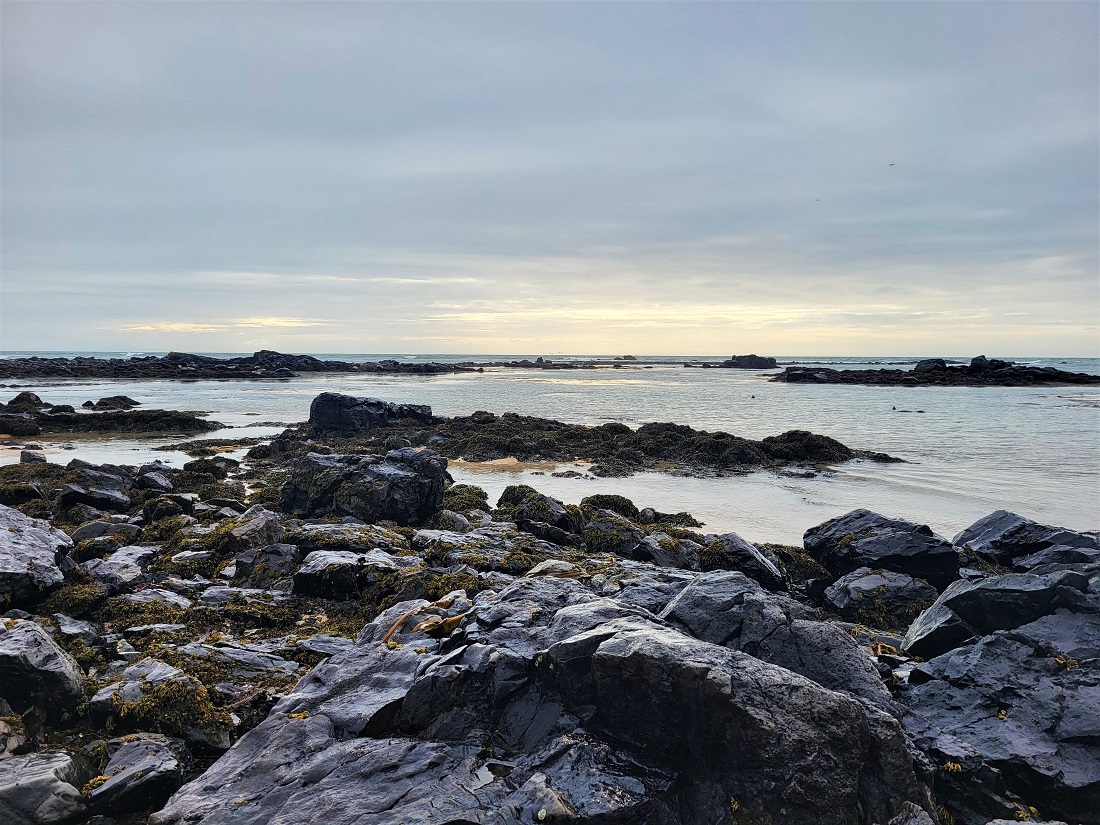
Our guide had given us the heads up there was a possibility we could see some wildlife on the beach, as it’s home to grey and harbour seals.
But having had no luck seeing either the Northern Lights or whales earlier in the week, I wasn’t holding out hope of seeing them. I shouldn’t have been quite so pessimistic.
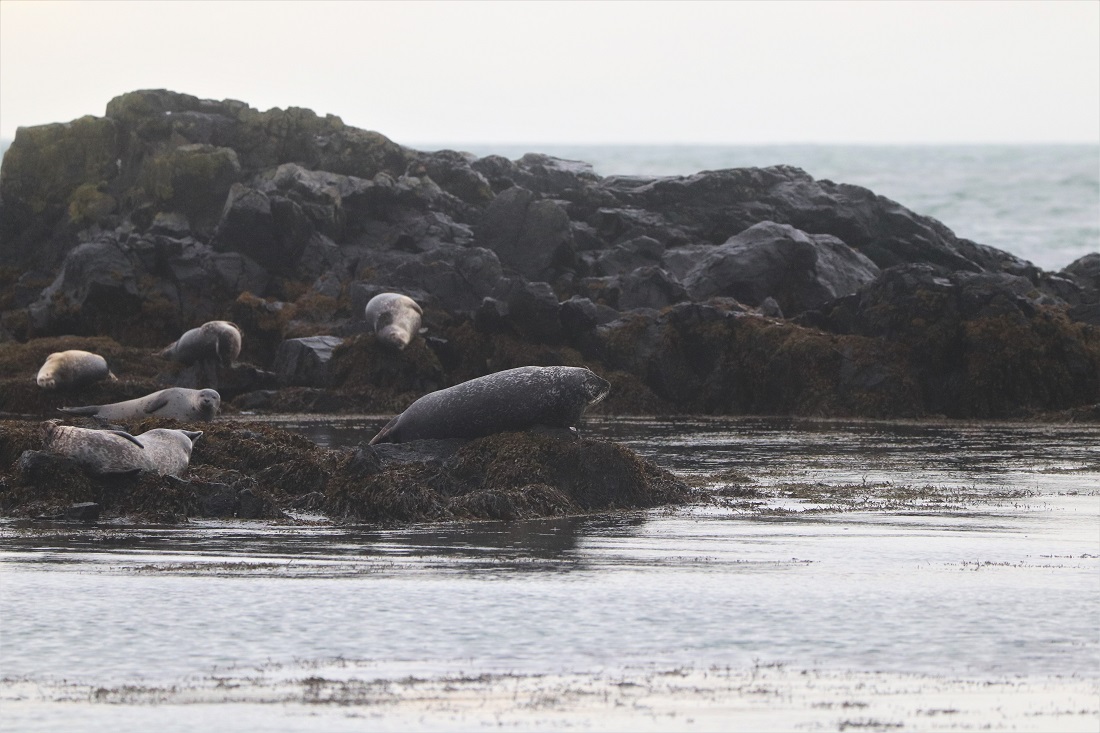
When we arrived, I made a beeline for the rocky shore and there they were… a huge colony of seals (above).

Most of the seals were resting on the rocks in the distance. But there were a couple in the water, too, putting on a show for a small group of delighted French tourists.
I looked on in awe as they twisted and turned in the sea, their grey heads bobbing up and down in the inky black water.
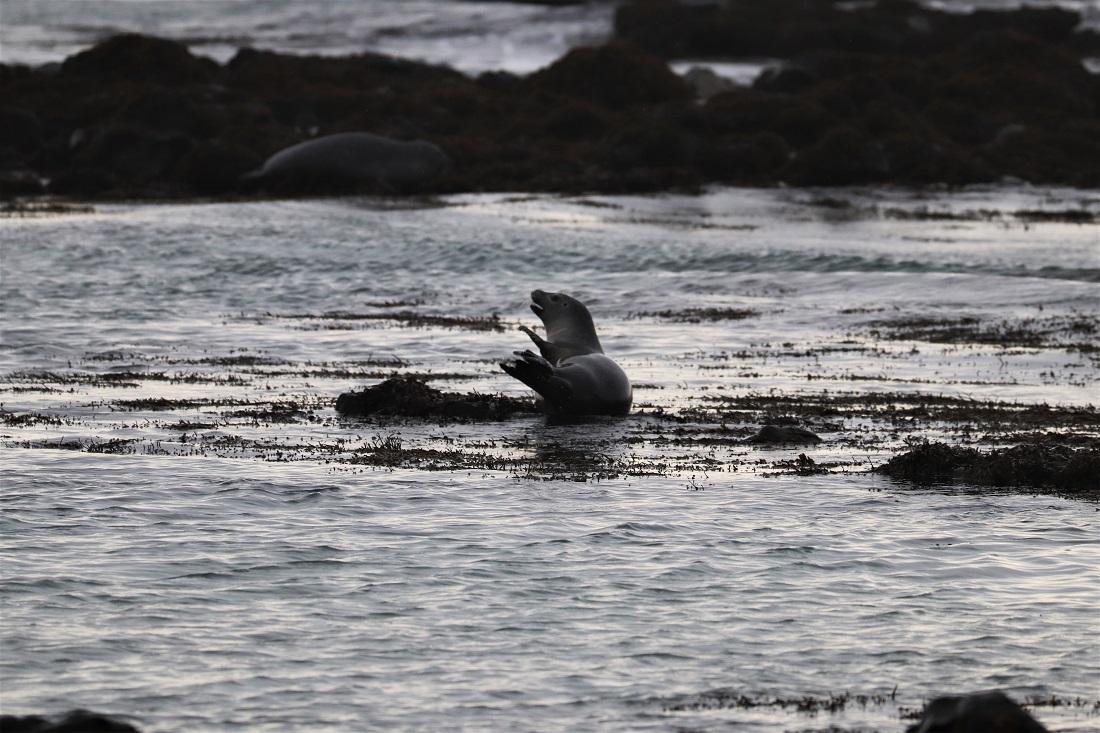
I had a great time watching and photographing the seals, and was amazed how at ease they were with their human onlookers (everyone kept a respectful distance).
When the French group left, I found myself alone on the beach with the seals, which was an incredible moment.

After spending a fair bit of time near the rocks, I strolled over to the nearby stretch of yellow sand (above).

There, I found two seals playing in the water and I stopped for a short while to watch them (above).
I got so carried away, I lost all track of time and had to run to the minibus to make sure I was back in time for our departure.
I loved Ytri Tunga. Seeing the seals was magical and I couldn’t have asked for a better start to the day!
Búðir
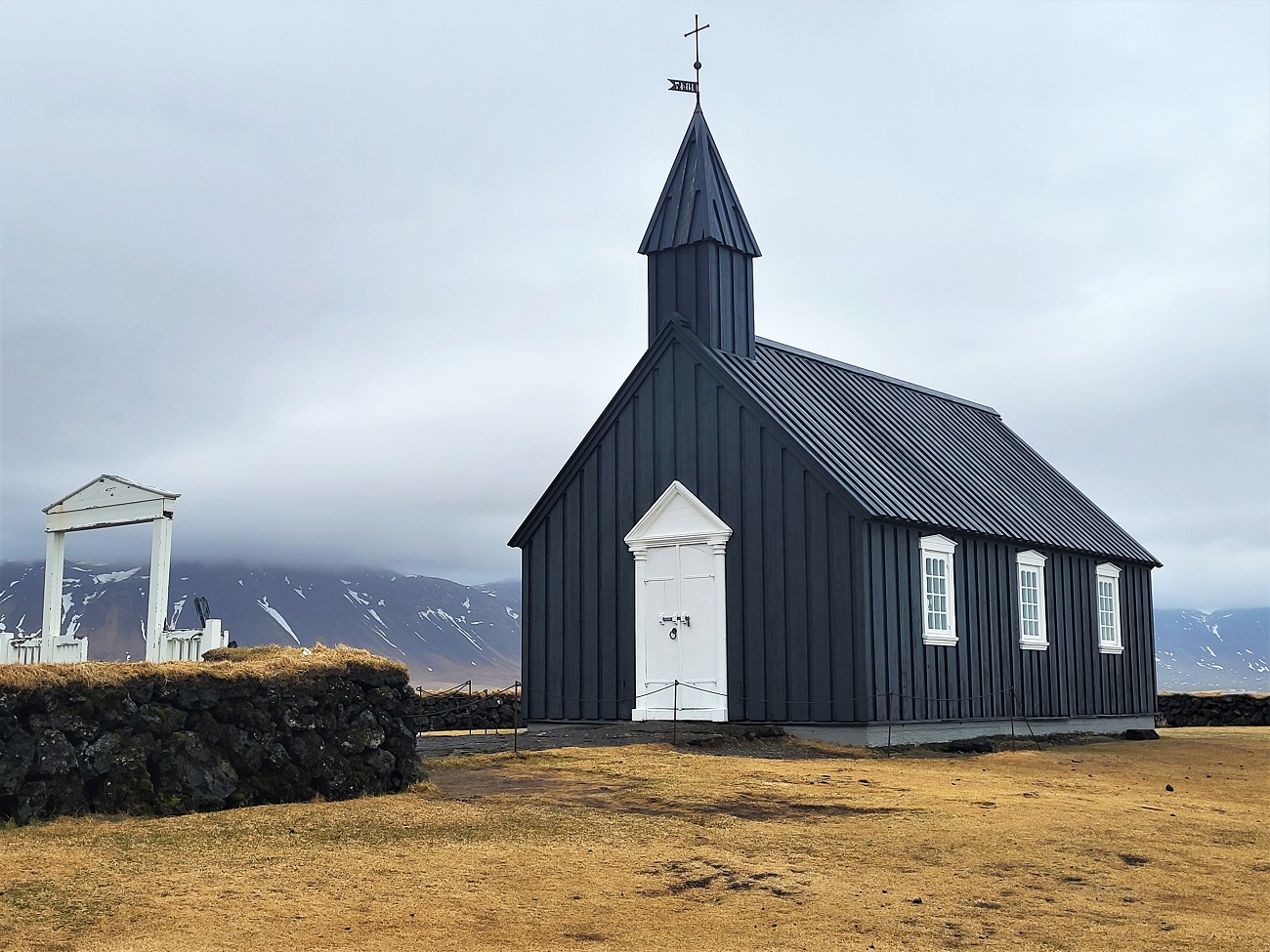
The isolated, abandoned hamlet of Búðir is famous for its black church, one of only three in Iceland.
Built on a yellow grass-topped lava field, the striking church dates back to 1703.
Búðir was once one of the country’s busiest trading ports and it’s hard to imagine this quiet, remote spot was once bustling with people and goods, it seems so unlikely now.
The only other building in the hamlet is a bougie hotel. Back in the 1990s, the hotel was a party hot spot, frequented by Iceland’s glitterati, but it burned down at the turn of the 21st century and has since been rebuilt.
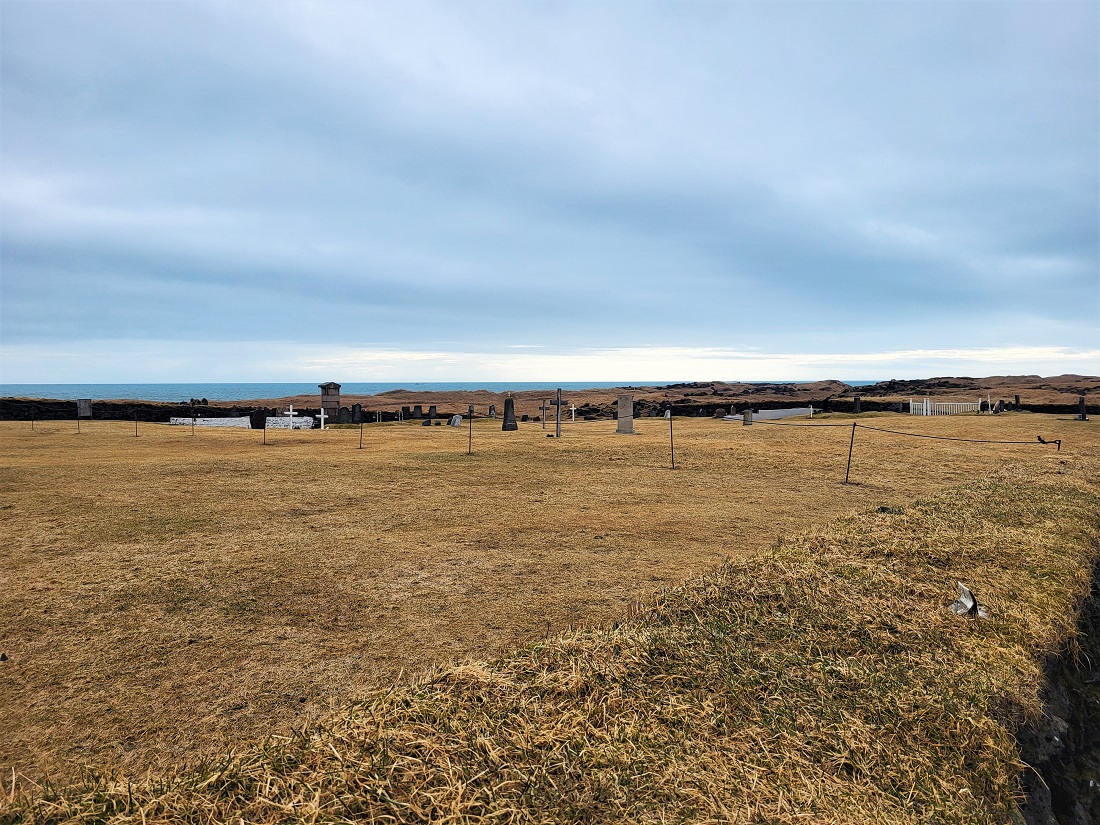
There wasn’t a huge amount to see at the church as you can’t go inside, but there was a small graveyard beside it (above).
It’s a cold, lonely, yet extraordinarily beautiful place, and I could see why Búðir is one of Snæfellsnes’s most popular landmarks.
Arnarstapi

A short drive away along the peninsula’s southern coast lies the small fishing village of Arnarstapi, which is renowned for its spectacular scenery.
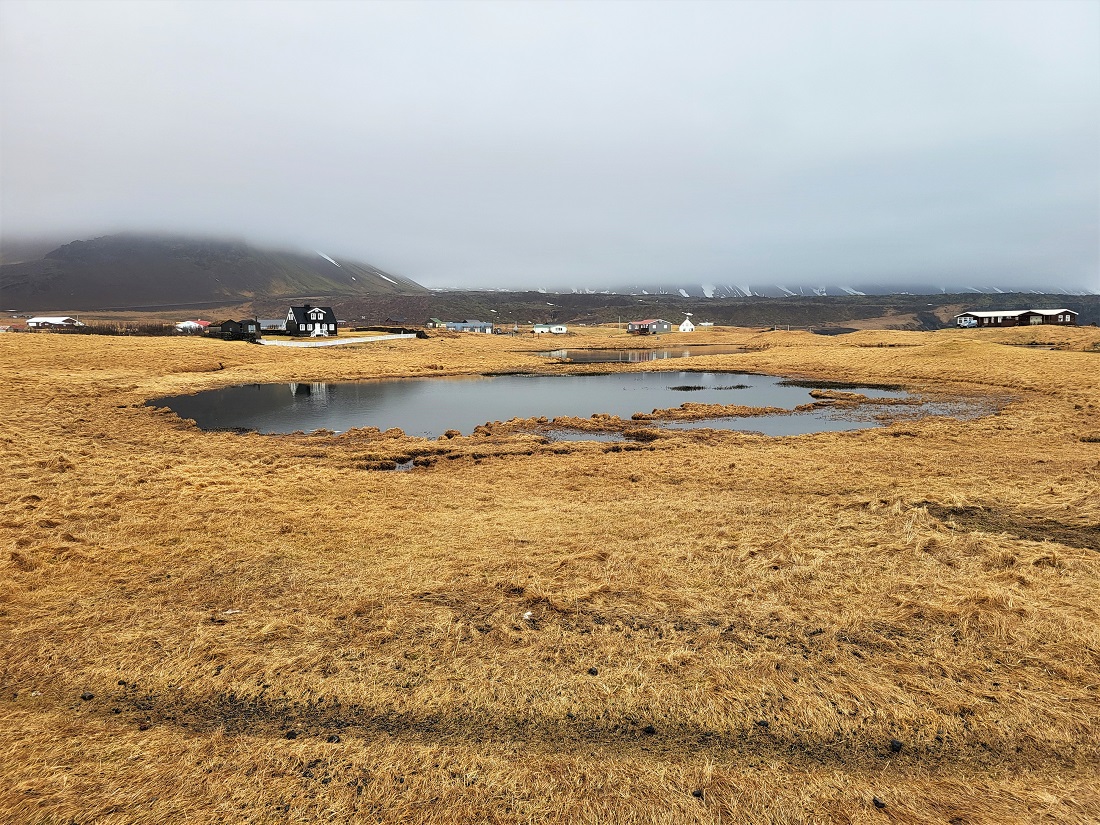
The village was a thriving trading port in the 18th and 19th centuries, and while it’s much livelier than Búðir (it’s home to some houses, a couple of restaurants and public toilets), it’s still a quiet, lonely affair.
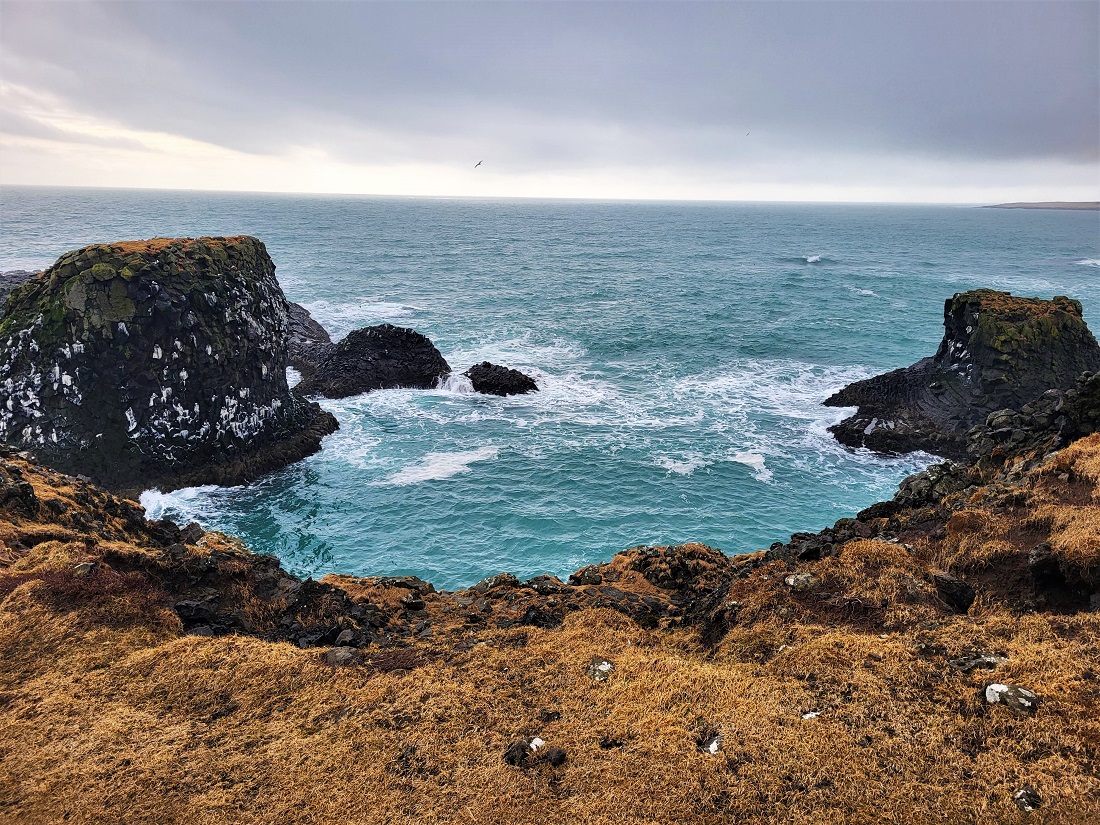
Our guide dropped us off at one end of the village and we set off for a short stroll along the coastal path.

The jagged black cliffs are a stunning sight as they rise from the clear blue sea and I found myself stopping every few metres to admire them.

The rocks and cliffs were awash with sea birds, and the sound of gulls filled the air as I ambled along.

The most recognisable point is Gatklettur, a fabulous natural rock arch topped with tufts of golden grass (above).
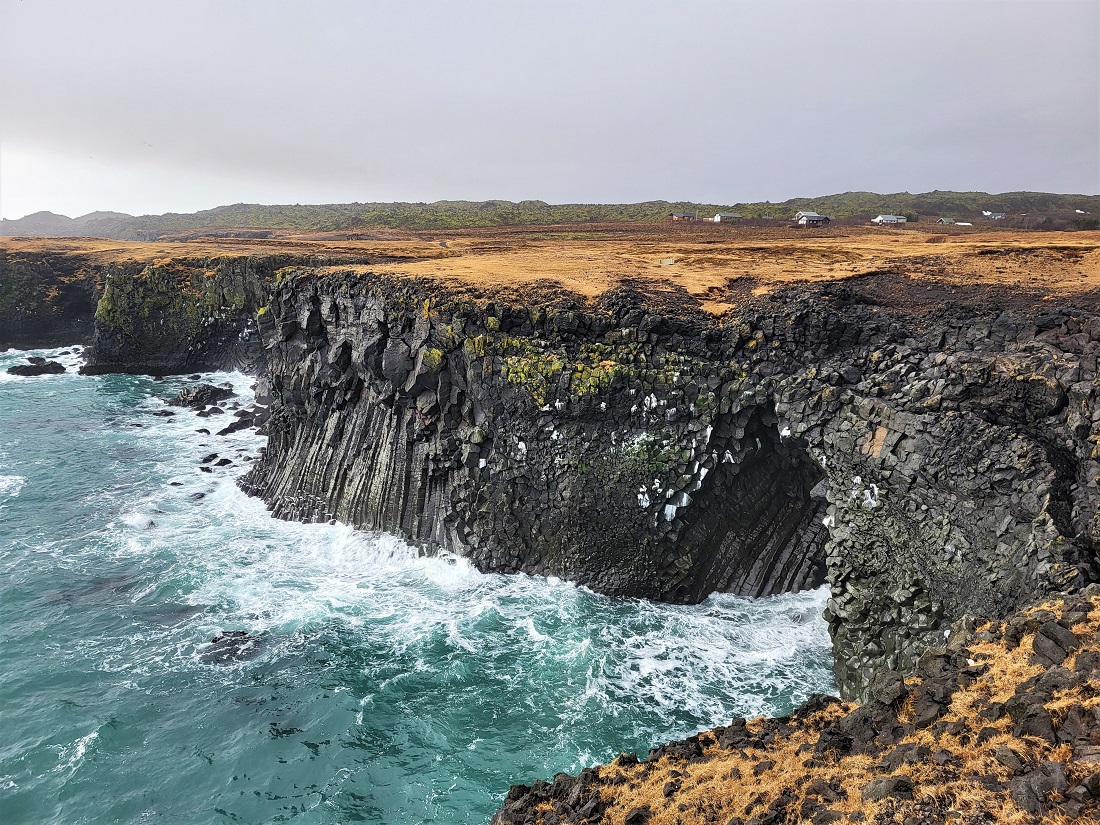
It was a lovely walk and as I reached a grotto in the cliff face (above), I turned and made my way back towards the centre of Arnarstapi.

As I approached the village, I stopped to take a look at a huge stone statue of Bárður Snæfellsnes (above).
According to Icelandic lore, the mythical half-orge, half-human guards the Snæfellsjökull glacier and surrounding area.
It seemed rather fitting that this enormous statue was keeping watch over the magnificent, almost otherworldly coastline, protecting its inhabitants from any dangers lurking in the mist.
Lóndrangar Cliffs

We continued on our way, hugging the coast, and it wasn’t long before we came upon Snæfellsnes’s most dramatic point – Lóndrangar Cliffs.
The cliffs are renowned for the startling collapsed volcanic cone that dominates the coastline and holds a special place in Icelandic mythology.
The rugged rocks, rumoured to be home to elves, are said to have been formed when two trolls turned to stone.
Thanks to their unusual shape and deep black colour, there was something magical about the place and I could see why it’s inspired so many folktales. It has an ethereal, almost mystical air.
I was mesmerised by the coastline – my photos don’t do justice to its sublime beauty.
Djúpalónssandur black sand beach
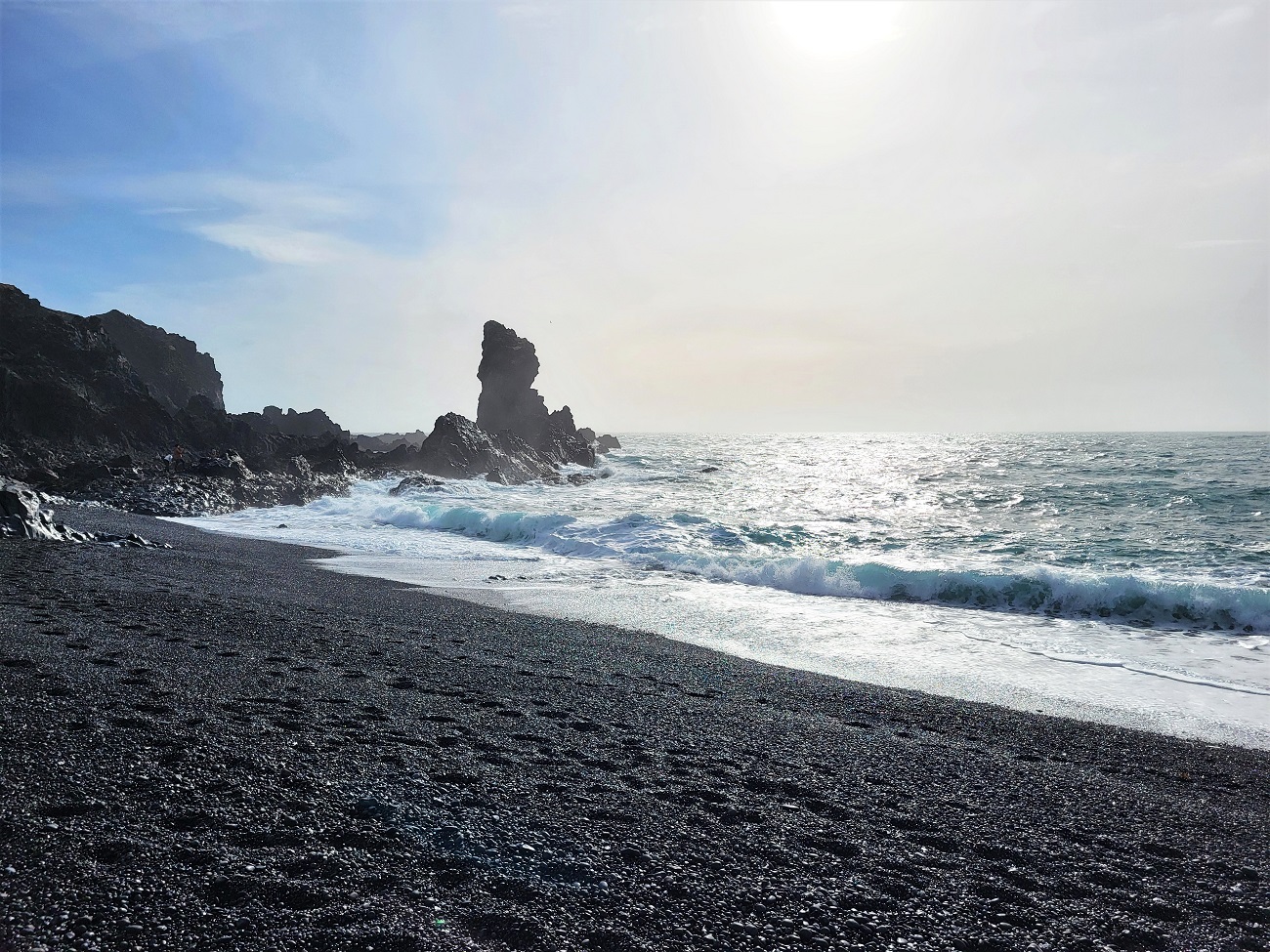
Iceland is famed for its black sand beaches and I’d been keen to see this natural phenomenon for myself.
I got my wish at Djúpalónssandur (above), a little further along the Snæfellsnes coastline.
The unusual black sand is formed when hot, molten lava meets the chilly waters of the sea, creating a dark, pebbly beach.
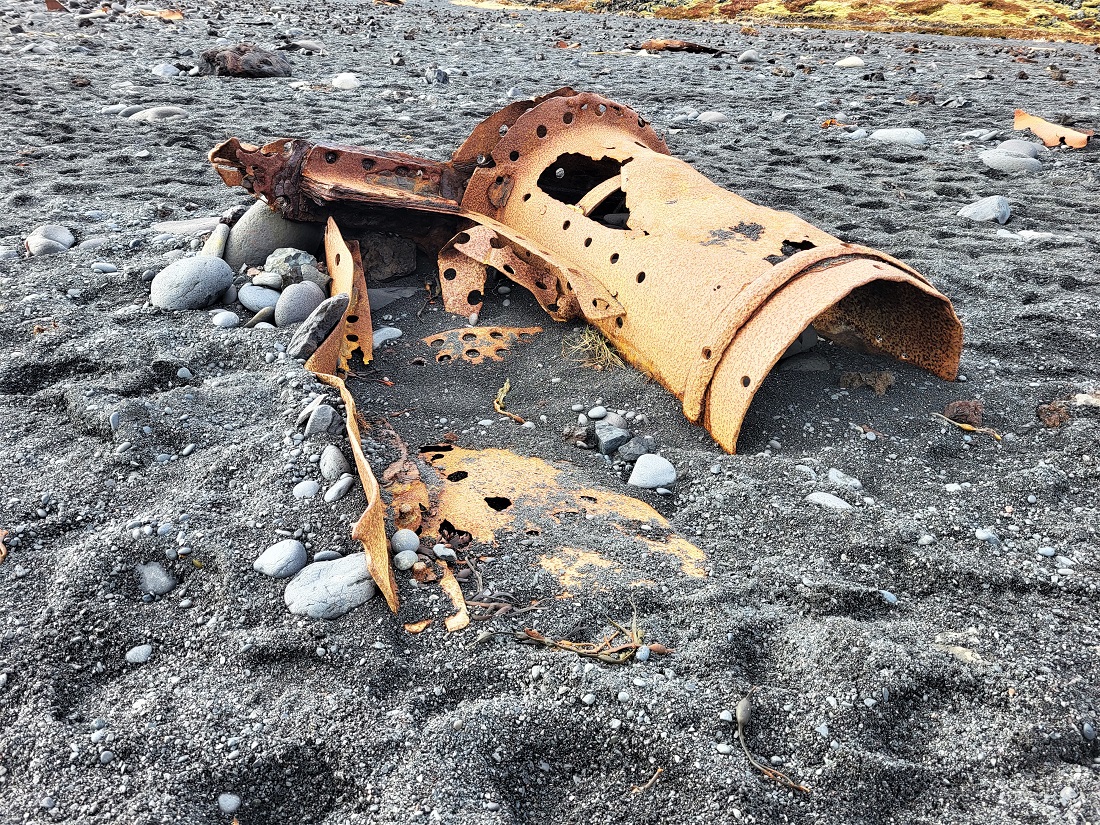
As I took my first steps on the tiny stones, I was intrigued to find a host of rusty red fragments mingled among them (above).
The metal pieces were the remains of a shipwreck, Epine GY7, a British trawler destroyed by a gale in 1948 with the loss of 14 lives.
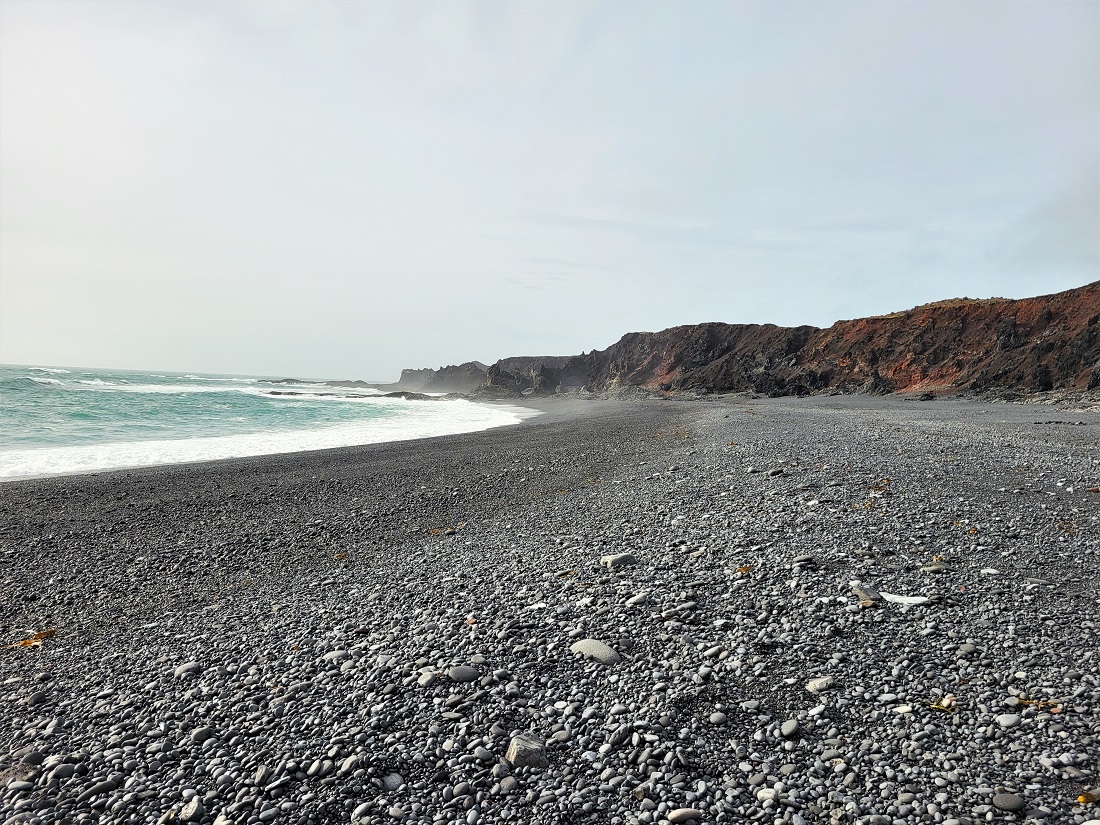
Passing the fragmented wreck, I strolled across the arresting beach towards the ocean, taking care not to get too close to the water as our guide had warned us the waves can be “tricky”.
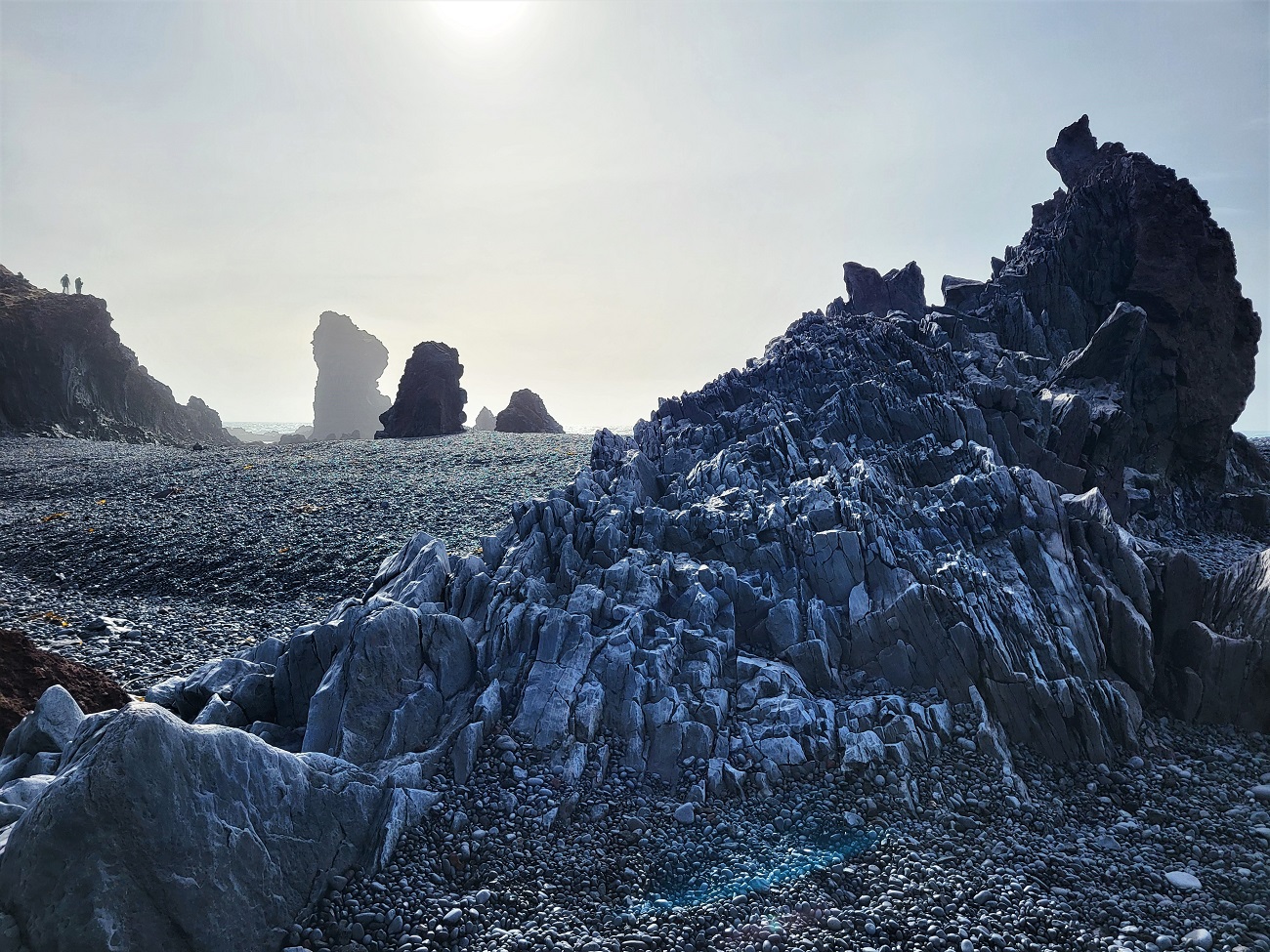
On the beach’s eastern flank, there was a series of craggy basalt columns that looked almost like a dragon’s back (above). Curious, I meandered towards them to see them up close.
I was awestruck by their astonishingly dark colour and irregular shape.

Perhaps unsurprisingly, I spent ages photographing and admiring the scenery at Djúpalónssandur, and I found I had to drag myself away to make sure I was back at the minibus on time.
Ingjaldshóll church
Ingjaldshóllkirkja is well-known in China because a photo of it is used by the country’s opticians during eye tests, making it a mecca for Chinese tourists, much to the bemusement of our guide.
We had a handful of Chinese people on our tour, so we made a quick detour to Ingjaldshóll so they could take a look at the fabled red and white church.

The lonely church, which is perched atop a small hill, looked very dramatic set against the snowy, grey mountainous backdrop and I spent a fun 10 minutes photographing it.
Kirkjufell
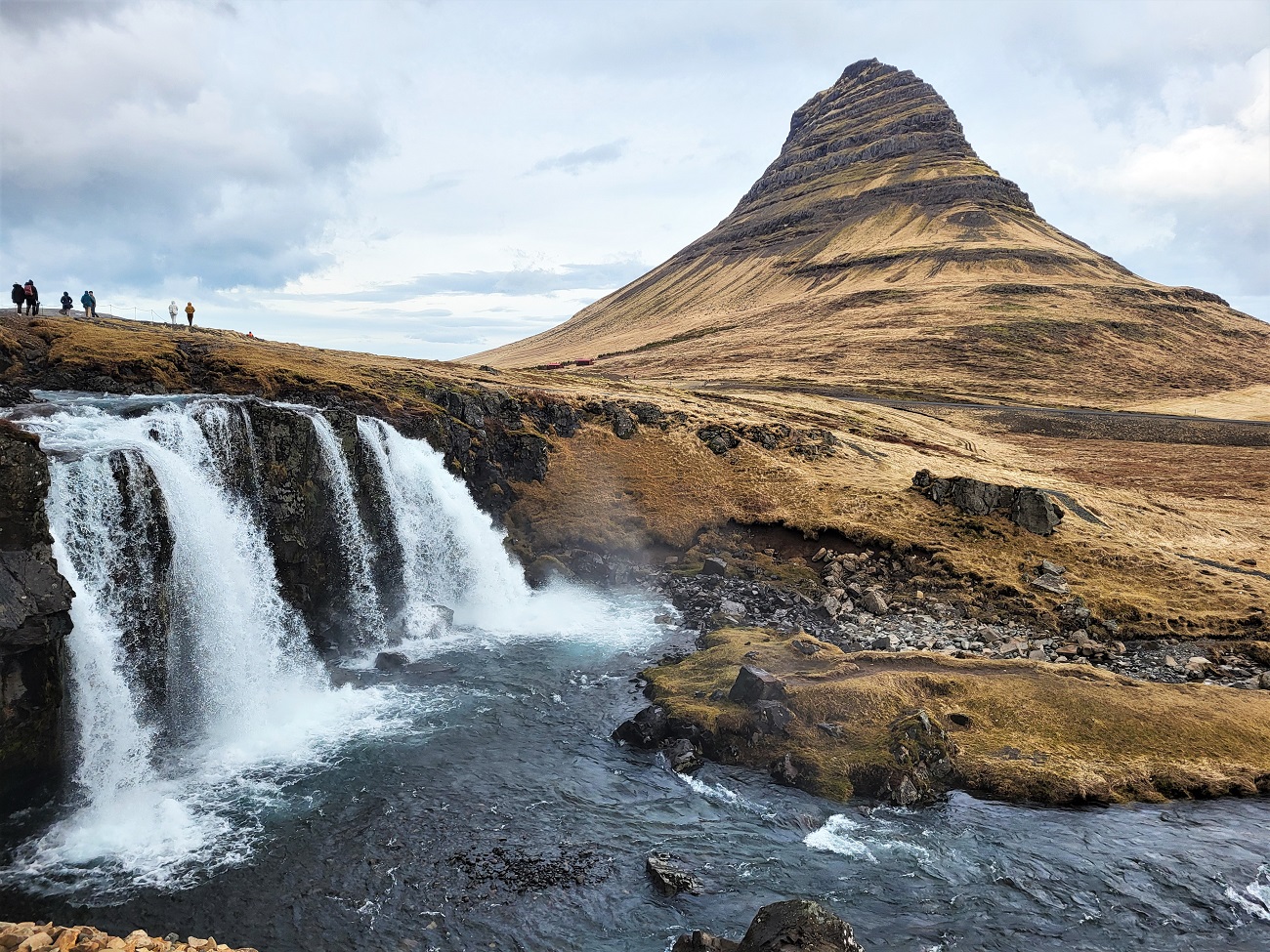
According to our guide, Kirkjufell is Iceland’s “most beautiful mountain” and as we caught our first glimpse of its bizarre shape, I could see why. I’ve never seen a mountain quite like Kirkjufell.
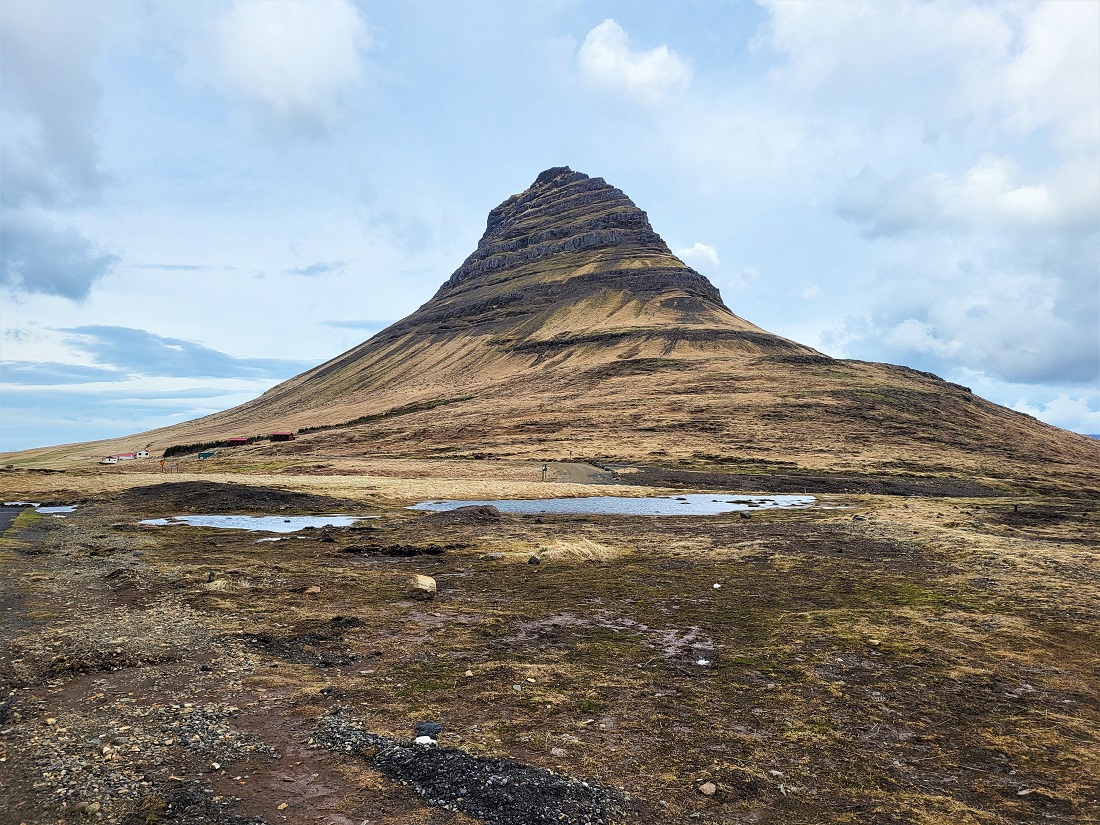
Back when the area was under ice, the mountain top used to peek out from under the glacier, and you can clearly see how the compact ice and erosion has left its mark on the mountain.

We were given around 30 minutes to explore Kirkjufell, so I set off in the direction of Kirkjufellfoss, a small nearby waterfall (above), to get a better look at the mountain and surrounding area.

The mountain and the waterfall are beautiful, as is the adjacent Breiðafjörður Bay on the peninsula’s northern coast (above).
It’s a delightfully scenic spot and I was blown away by the breathtaking views. Needless to say, I took an excessive amount of photos.
Selvallavatn
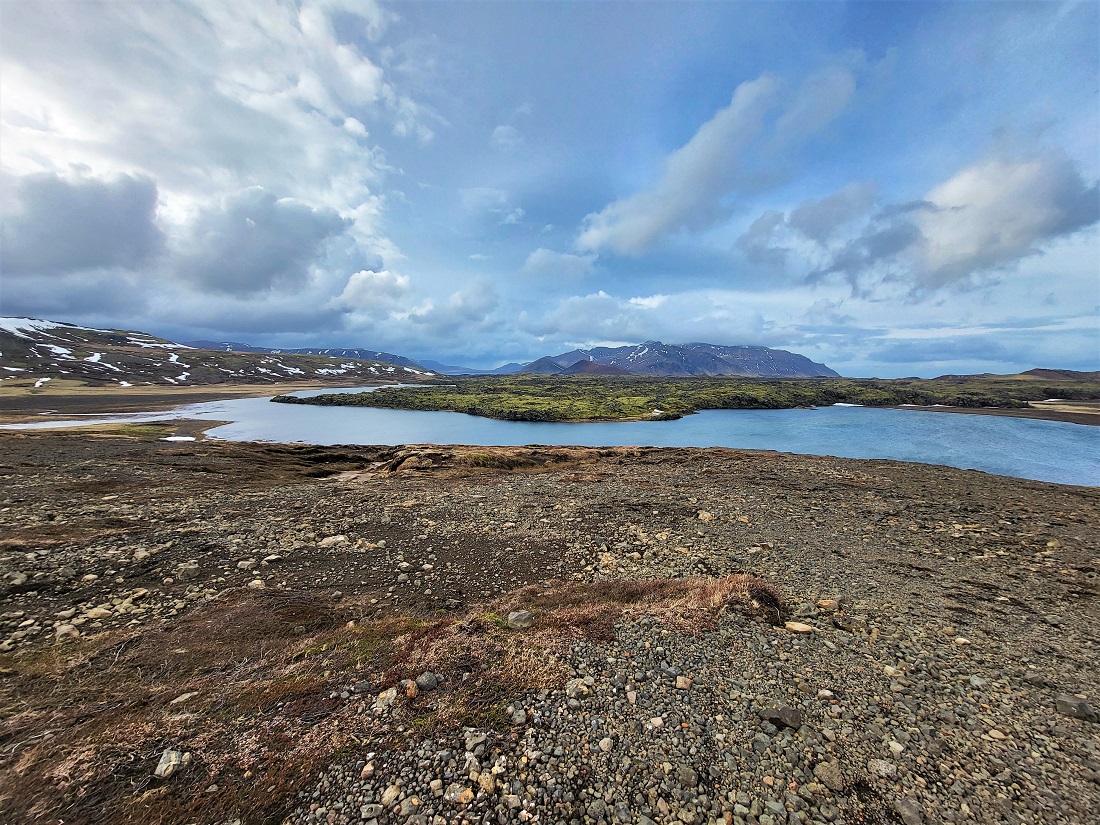
Our final stop was Selvallavatn, a picturesque lake to the north of the Snæfellsnes Peninsula (above).
Our guide told us we could walk across the lava field to get a closer look at the lake if we wanted, which I decided was an excellent idea, not realising the lava field was extremely muddy.
Luckily, the jaw-dropping vista more than made up for almost getting stuck in the mud.
My hiking boots sank deep into the mud with each step and when I emerged back at the car park, they were caked in a soft, gooey, red mud.
I spent a short while cleaning them up as best as I could, before getting back on the minibus ready for our two-hour drive back to Reykjavik.
Final thoughts
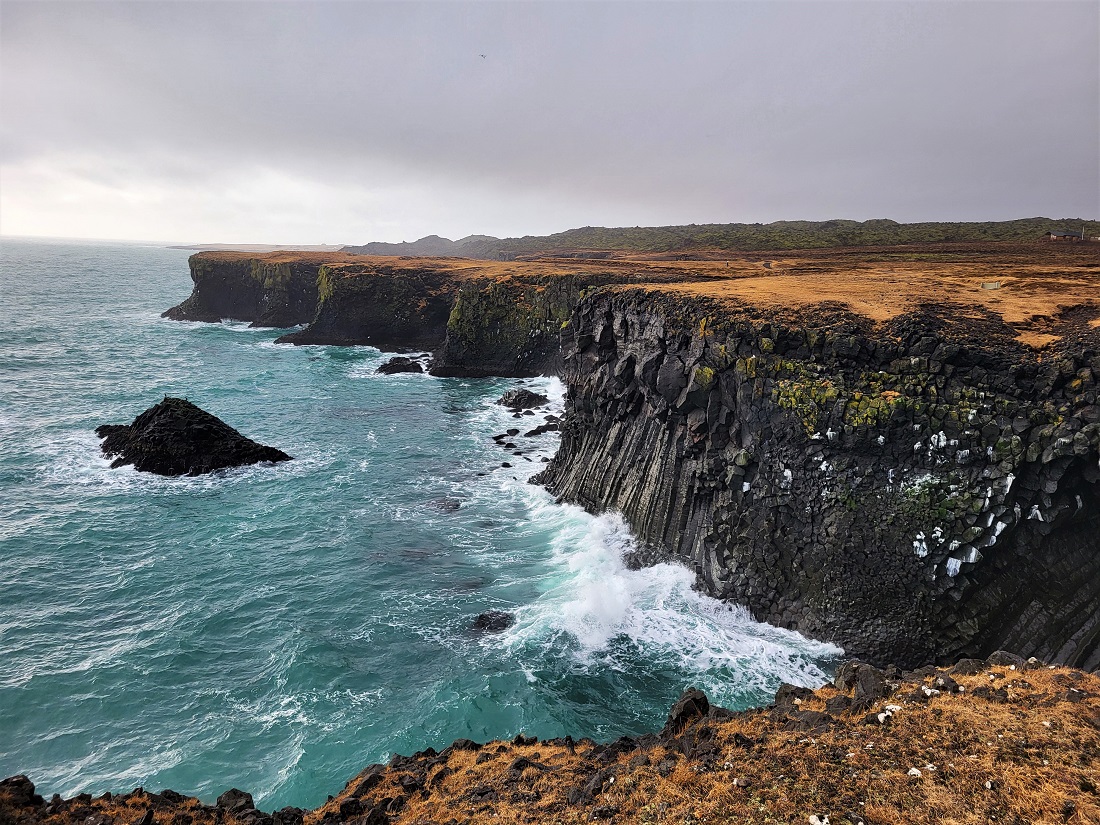
I adored the Snæfellsnes Peninsula. It’s not as well known as some of the other day trips you can do from Reykjavik, but I was glad I decided to spend the day there.

Thanks to its remote location and extraordinary, striking scenery, it was by far and away my favourite place I visited in Iceland and I’d go so far as to say, it’s one of the most beautiful places I’ve ever been. Magnificent.
 Little Old World
Such beautiful and amazing places you visited! The seals reminded me of seeing some on a near empty beach in Norfolk a couple of years ago. It was a highlight of the family trip.
LikeLiked by 1 person
It’s an extraordinarily beautiful part of the world. Oh, how wonderful! There’s something so magical about seeing wildlife in their natural habitat.
LikeLiked by 1 person
Stunning scenery!
LikeLiked by 1 person
Thank you, it was beautiful!
LikeLiked by 1 person
What a truly extraordinary landscape. I also love the eye-test church, that’s an amusing story. I think when I get my eyes tested it’s a red balloon I have to look at.
LikeLiked by 1 person
Snæfellsnes is one of the most remarkable places I’ve ever been. Our guide seemed bemused by the fuss being made about Ingjaldshólskirkja, apparently it’s just considered a normal church in Iceland. It was quite something watching the Chinese tourists, as they were all trying to recreate a specific image on the hill leading up to the church, while all the other visitors were obliviously walking into shot, completely unaware of what they were trying to do.
LikeLiked by 1 person
What a stunning landscape! Photographer’s Paradise. Thanks for the inspiration. Mel
LikeLiked by 1 person
Thanks Mel! It was spectacular and so photogenic.
LikeLiked by 1 person
Seals, black sand beaches, mystical cliffs… you really captured the magic of Snæfellsnes.
LikeLiked by 1 person
Thank you 🙂 It’s an incredible part of the world and I was so glad I visited.
LikeLiked by 1 person
Totally! It feels like stepping into a storybook, one of those places that stays with you long after you leave.
LikeLiked by 1 person
Beautiful captures of the rugged landscape around the Snæfellsnes Peninsula. I’d say Kirkjufell lived up to its reputation for being the most beautiful mountain. And how fun that you even saw some seals.
LikeLiked by 1 person
Thank you 🙂 The seals were brilliant and seeing them was the perfect start to the day! The entire peninsula was beautiful, but Kirkjufell was stunning. I’ve never seen a mountain quite like it
LikeLiked by 1 person
Wow- absolutely stunning! I love this rugged mix of rocks and shores…and seals! What an incredible corner of Iceland to follow along with you to.
LikeLiked by 1 person
Thanks Meg 🙂 The scenery was unlike anything I’ve ever seen, it was so beautiful and unusual. The fact there were seals, too, added to the magic of the place.
LikeLiked by 1 person
The landscape is just beautiful, I love the Snaefellsnes Peninsula shots – they are just stunning. I can imagine in person it’s even more breathtaking 🙂
LikeLiked by 1 person
Thanks Hannah! The Snaefellsnes Peninsula’s an incredible place, I spent most of the day in awe as we went to one stunning place after another. It’s difficult to take bad photos of the scenery as it’s so beautiful 🙂
LikeLiked by 1 person