
Nestled amid thick forest on a hilltop overlooking Cardiff, you’ll find the fairy tale-like Castell Coch.
Built between 1875 and 1891 atop a ruined 13th century hunting lodge, Castell Coch, which means ‘Red Castle’ in Welsh, was designed as a summer home for John Crichton Stuart, the 3rd Marquess of Bute.

Bute had commissioned the Gothic Revival architect William Burges, who’d also remodelled Cardiff Castle for him, to bring his medieval-themed dream to life.
More Victorian folly than traditional Welsh castle, the result is a dazzling, quirky affair awash with symbolism and painted murals.
It’s now in the care of the Welsh heritage agency Cadw.

When I visited Castell Coch in May, a huge illustrated banner covered the castle’s Well Tower (above), part of an extensive conservation programme to prevent and repair serious water damage.

I crossed the drawbridge, bought my ticket and began to explore the small castle, which has a set route for visitors to follow.
I started my visit in the ornate banqueting hall (above), which is so highly decorated, it was difficult to know where to look. It certainly isn’t subtle.

Next door is the castle’s most impressive space, the jaw-dropping drawing room (above).
The extraordinarily beautiful room is a sight to behold, its walls and ceilings adorned with painted motifs, gilding and embellishments.
The room is filled with symbolism depicting religion, morality, mortality and Bute’s love for his adored wife Gwendolen.

Look closely and you can spot birds, flowers, green men and animals, along with more than 80 species of butterfly, a symbol of resurrection.
I love the drawing room, it’s utterly spectacular and my favourite room in the castle.
It’s a triumph of imagination and creativity, and I spent quite a while taking in as many details as possible.

From the drawing room, I made my way up the tower to Lord Bute’s bedroom (above), which is intricately decorated like most of the family rooms.
But I was surprised by how small the room is, especially given that, at the time, Bute was one of the richest men in the world.
I can’t imagine too many of today’s billionaires being happy in such simple surroundings.

I carried on up the tower to Lady Bute’s delightful bedroom, one of the castle’s loveliest rooms (above).
The large, spacious room is a gorgeous affair thanks to its striking crystal ball-topped bed and elegant dressing table.

Like the drawing room, Lady Bute’s bedroom boasts an eye-catching ceiling embellished with meaningful symbols (above).

I made my way down the tower, stopping in the wench room to look at the mechanism that operates the drawbridge (above, apparently it still works!).
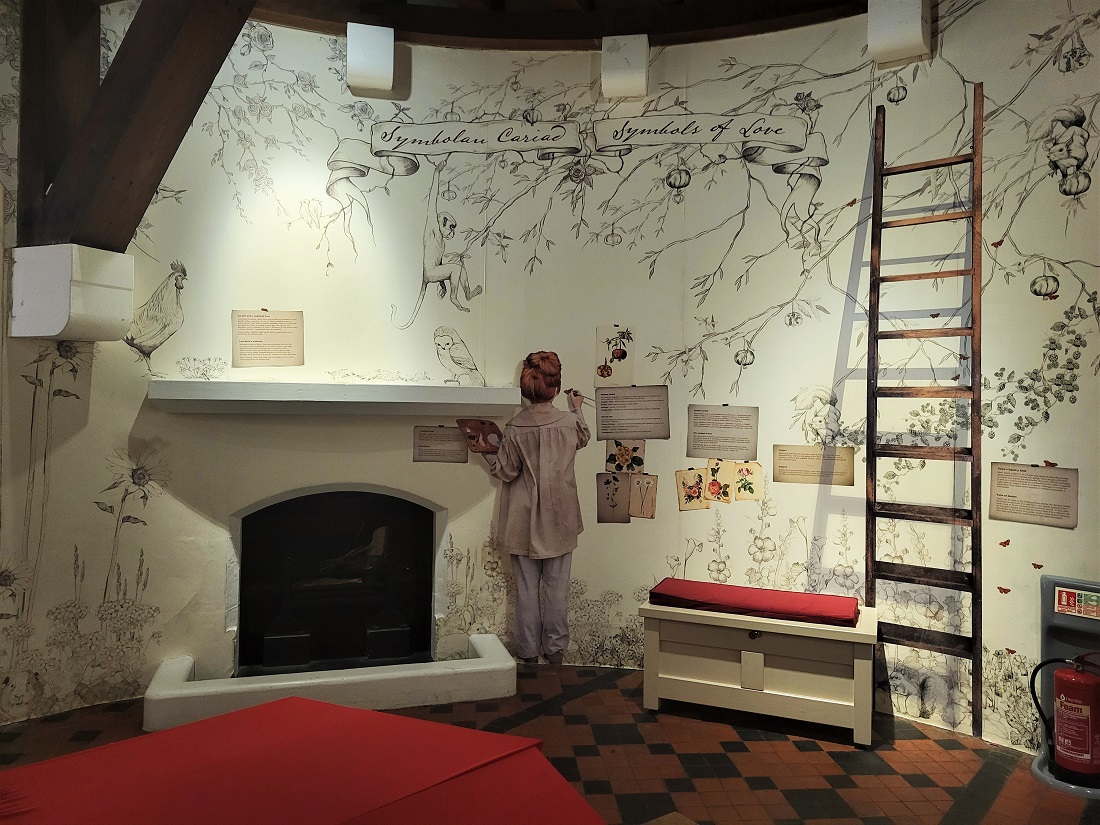
I then toured a few exhibition rooms, starting with a display about the symbolism found throughout the castle (above).
There were also exhibits about Lord Bute’s vineyards (he produced his own wine, grown to the southeast of the castle, for years) and the stained glass windows that once adorned the now-demolished chapel.
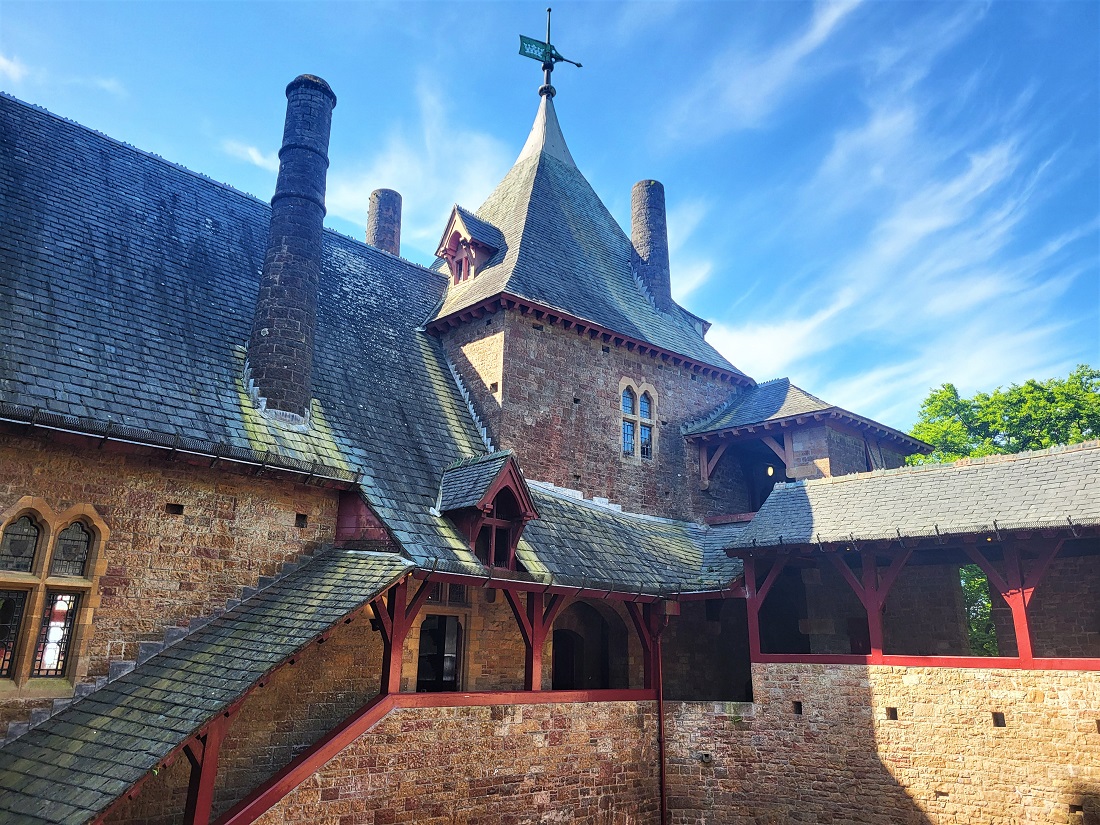
From there, I crossed the passage that runs along the top of the courtyard to a series of rooms on the other side of the castle.
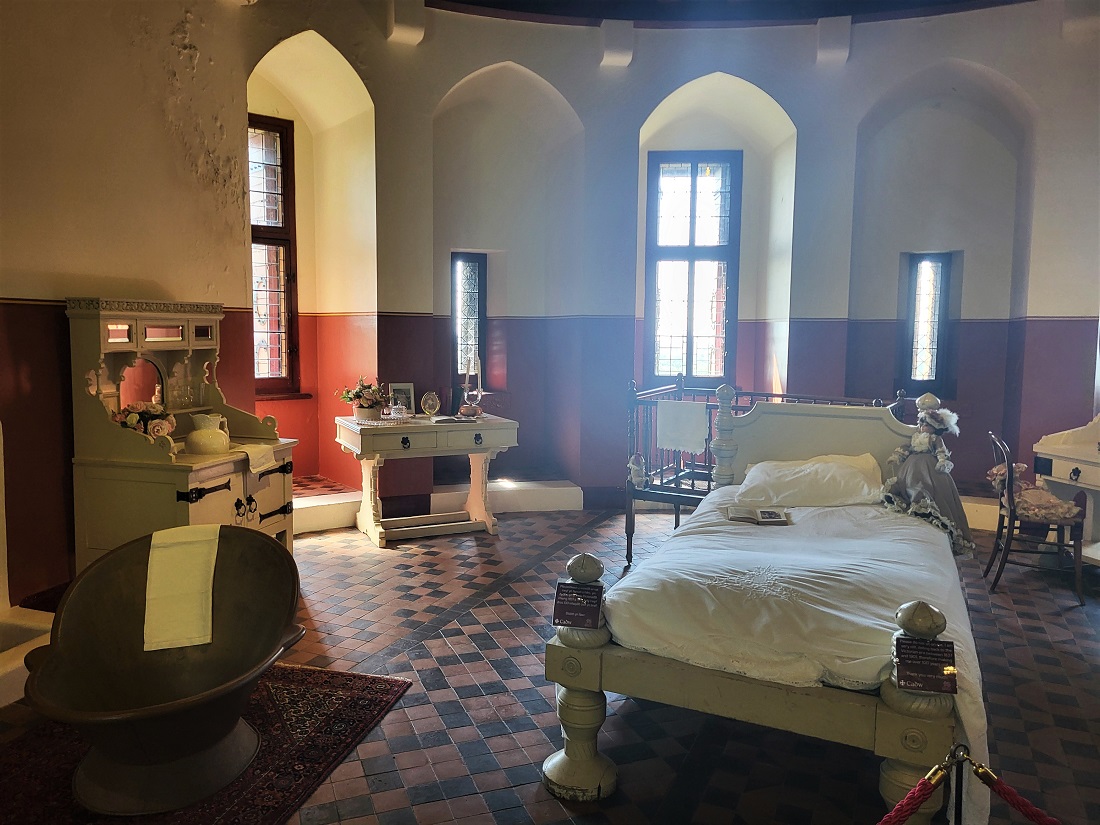
First up was Lady Margaret’s bedroom (above), a sweet, girlish room that seemed fitting for Lord and Lady Bute’s only daughter (they also had three sons).

I finished my tour of the castle by looking around the large kitchen (above), the basement and the small wine cellar (below).

In the basement and wine cellar, you can see the remains of the original 13th century stone castle, which had been built by Gilbert de Clare, the powerful Marcher lord who was also responsible for nearby Caerphilly Castle.
Having seen all there was to see, I set off for a walk around the woods behind Castell Coch.

Fforest Fawr, which means ‘Big Forest’ in Welsh, boasts four walking trails, all clearly signposted by different coloured waymarkers.
I decided to follow the longest, Sir Henry’s Trail, a 3.9km circular trail that’s marked in red.
The first part of the walk involved a steep climb, but the rest was easy going and I was glad to have gotten the hardest part out of the way at the start.

The trail took me through the extensive woods, past a series of old iron mines.
It was a baking hot day and while there were some exposed parts of the path (above), I was relieved the majority of the walk was in the shade.
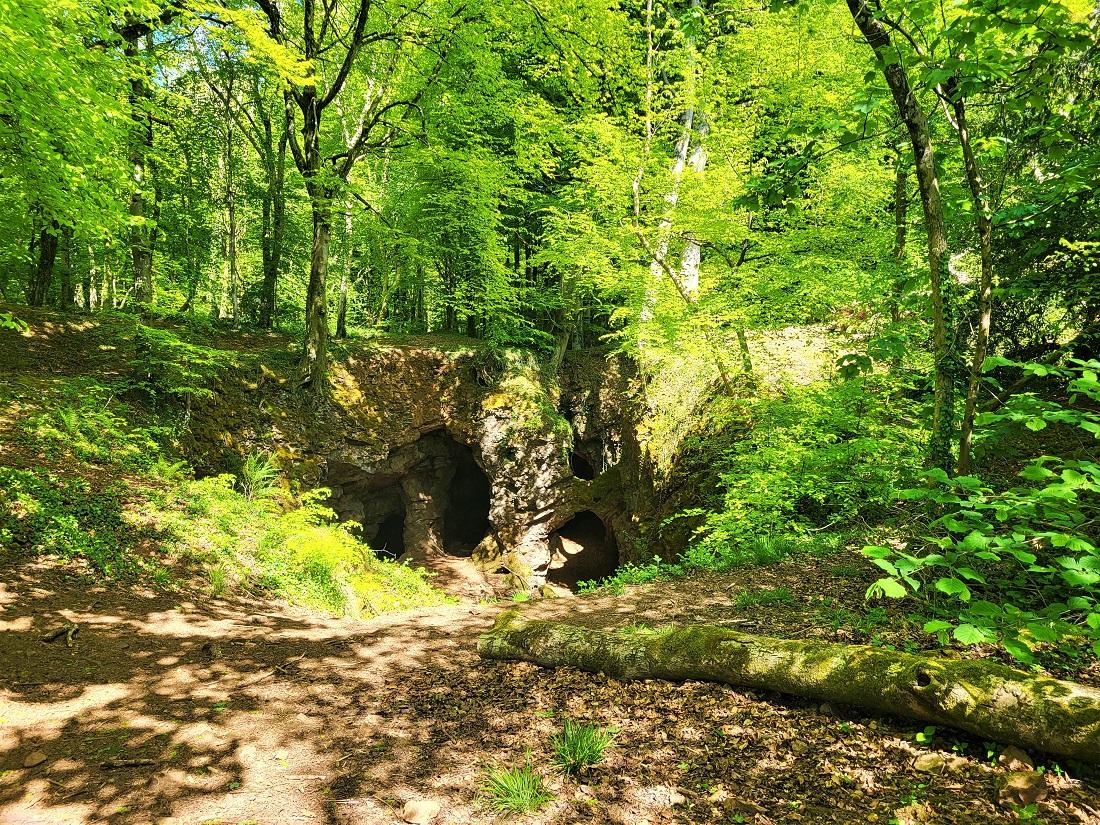
Around a third of the way into the walk, I came upon Three Bears Cave (above).
Despite the name, it’s not actually a cave. It’s the entrance to an abandoned mine, which now lies behind a fence as it’s too dangerous to go inside.
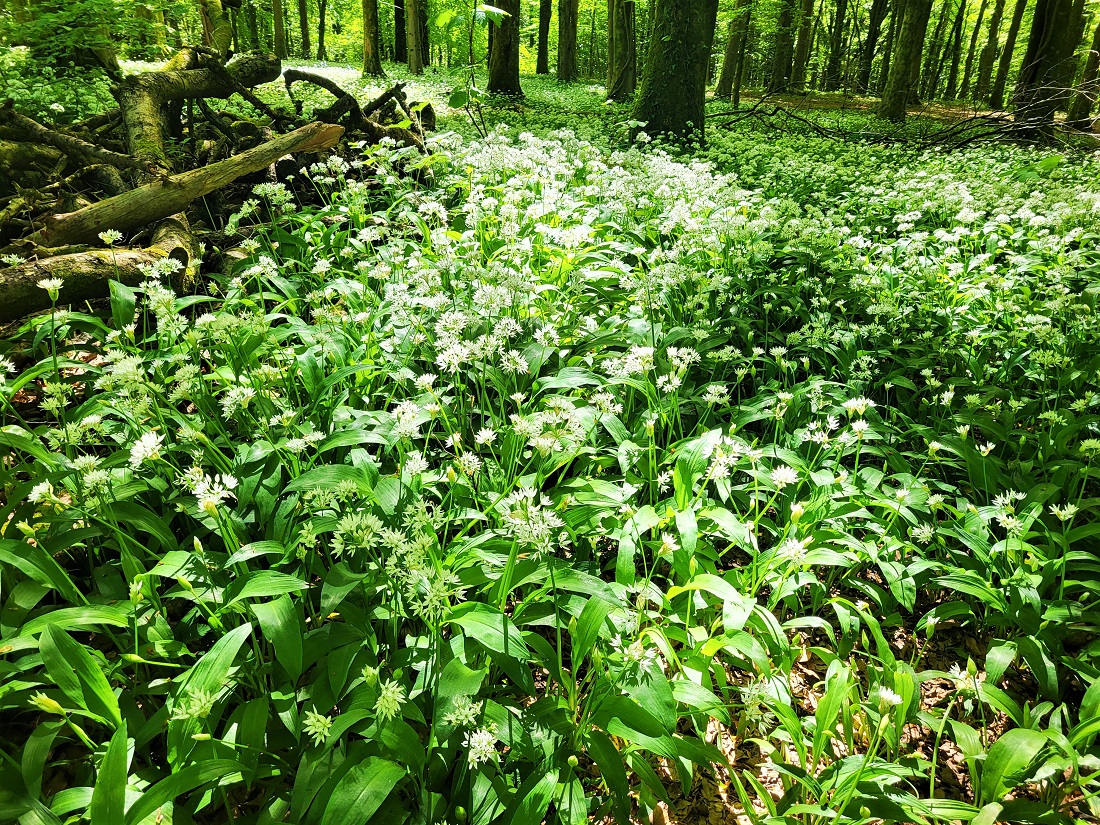
As it was early May, there were a few bluebells dotted around, but it was wild garlic that carpeted much of the forest floor.
Everywhere I went, there were huge swathes of it, its distinctive, pungent aroma wafting through the woods.
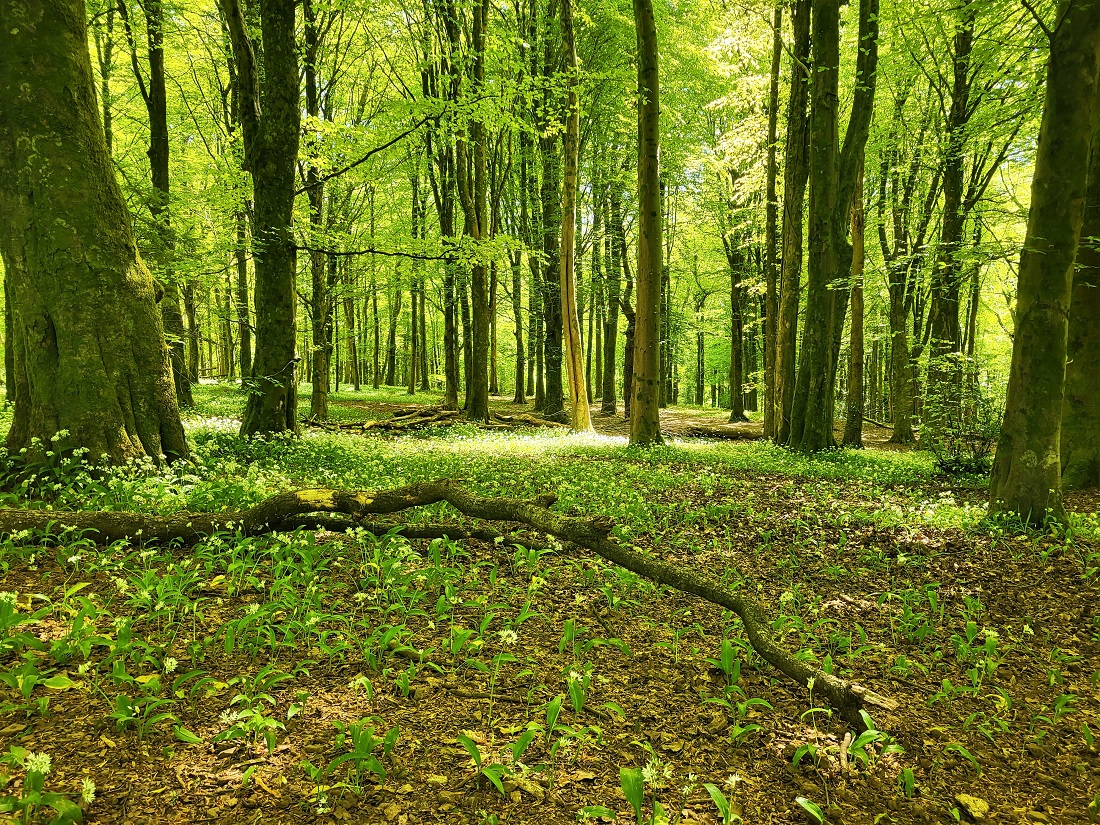
Despite it being a Saturday lunchtime, the woods were quiet and I only passed a few dog walkers and families during my walk.
It was nice having some tranquil time to unwind after an incredibly busy week at work.
I really enjoyed my visit to Castell Coch and Fforest Fawr – it was a fun, relaxing way to start the weekend.
Whimsical Castell Coch is one of the most distinctive and imaginative castles in Wales, while Fforest Fawr makes for a peaceful woodland walk.
Info
Castell Coch, Cardiff CF15 7JS
cadw.gov.wales/visit/places-to-visit/castell-coch
 Little Old World
Now that’s my kind of summer house.
LikeLiked by 1 person
It’s not a bad place to spend the summer. Thanks for commenting 🙂
LikeLiked by 1 person
I like that castle!
LikeLiked by 1 person
Thanks Neil! It’s cool, isn’t it?
LikeLike
These aristocrats get around! I would not have connected the names Bute to Crichton Stuart with Wales. Homes in every country I suppose.
LikeLiked by 1 person
They do! The Butes were hugely influential in Cardiff. Along with transforming Castell Coch and Cardiff Castle, they also played a major role in developing the civic quarter and the docks turning the city into a big port that was exporting a third of the world’s coal at the start of the 20th century.
LikeLike
I didn’t know that. I have been to Mount Stuart on Bute so I’ve seen one of their other homes.
LikeLiked by 1 person
I’d love to go to Bute one day. It would be interesting to see the family’s main residence.
LikeLiked by 1 person
Castell Coch looks very elegant and fancy. The surrounding forests and walking trails look very lovely too. Thanks for the tour.
LikeLiked by 1 person
It’s a fab castle, if a little peculiar. It’s very ornate, but quite simple at the same time. The forest surrounding it is a great place to go walking. Thanks for commenting!
LikeLiked by 1 person
Love those ceilings! I’m glad you explained the tarp. At first I thought it had been painted like that, but good to know it’s temporary. Maggie
LikeLiked by 1 person
Thanks Maggie 🙂 The ceilings are beautiful. There’s so much symbolism and detail in them, they’re quite something. They’ve put the cover around the castle to help protect it and keep it dry while they repair it.
LikeLike
What a brilliant place and the drawing room ceiling is particularly beautiful.
LikeLiked by 1 person
Thank you 🙂 It’s a beautiful and unusual castle. The drawing room is spectacular. It’s my favourite room in Castell Coch, it’s so pretty.
LikeLiked by 1 person
Castell Coch looks like something straight out of a fairy tale, and pairing it with a walk in Fforest Fawr sounds like the perfect escape.
LikeLiked by 1 person
Thanks so much for your comment 🙂 It’s a lovely castle and quite unlike any other castles in Wales. The walk through the woods afterwards was a nice way to unwind after a very busy week.
LikeLiked by 1 person
A fairytale castle followed by a peaceful woodland walk really does sound like the perfect way to recharge after a hectic week.
LikeLiked by 1 person
Oh this looks like my kind of place- stunning castle to explore and beautiful wilderness to stroll through. Great post! 🙂
LikeLiked by 1 person
Thanks Meg 🙂 Castell Coch is small, but fun and the decor’s beautiful. The woods surrounding it are a great place to go for a walk afterwards.
LikeLiked by 1 person
Lovely, I’ve never been inside the castle so I really must remediate that. I love it when the woods are covered in a blanket of wild garlic 🙂
LikeLiked by 1 person
Thanks Hannah 🙂 The decoration inside Castell Coch is quite something, it’s not your usual Welsh castle and is worth looking around. I love walking through the woods in the spring, the bluebells and wild garlic are so beautiful.
LikeLike
When I eventually make it to South Wales, this will be high on my list of places to visit. What a gem! It looks so unassuming on the outside, but the interiors are more like what you’d expect to find in a palace than a Welsh castle. Those ceilings are simply stunning. I love your photos from the woodland walk too. It definitely sounds like a good spot to unwind after a busy week 😊
LikeLiked by 1 person
Thanks Rosie 🙂 Castell Coch does look very unassuming from outside. It’s a spectacular place and the decoration’s breathtaking, although it’s more a billionaire’s folly than a typical Welsh castle. I often take friends there when they visit. The woods around the castle make for a great walk, too. If you ever do come to this part of the world and have any questions, let me know 🙂
LikeLiked by 1 person