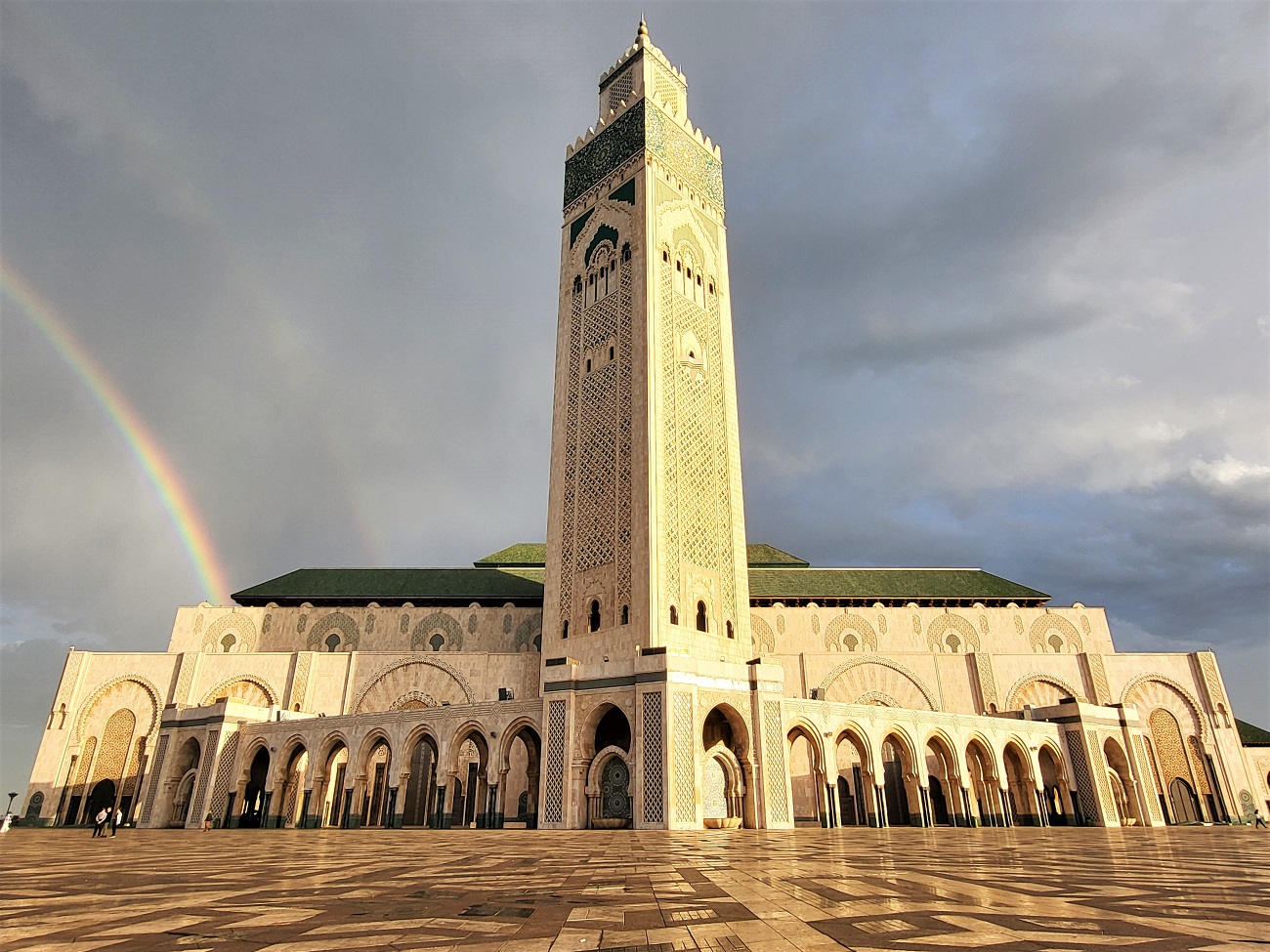
Towering above the Atlantic Ocean on the Casablanca shore lies Hassan II Mosque, one of the biggest and most beautiful mosques in Africa, and the first stop on my tour of Morocco.
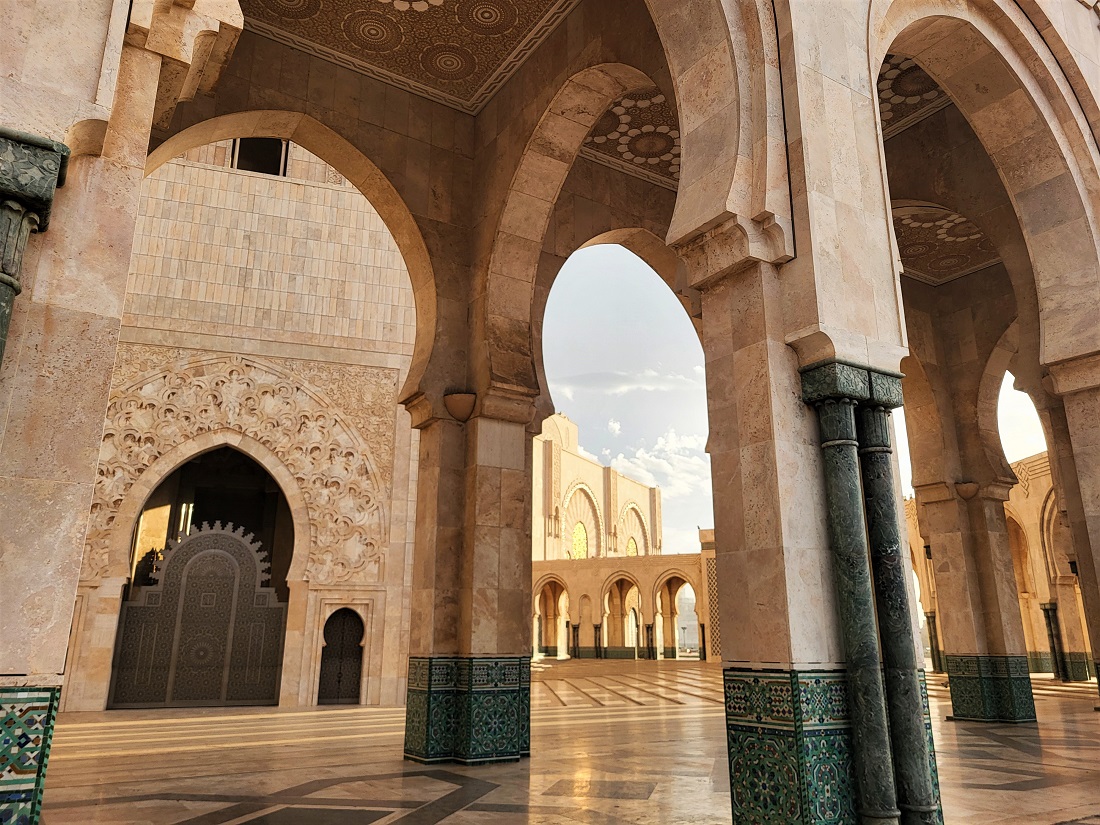
The enormous mosque was commissioned by King Hassan II, and built between 1986 and 1993 to a design by the French architect Michel Pinseau.

I started my visit in the mosque’s colossal courtyard (above), which can hold up to 80,000 people.
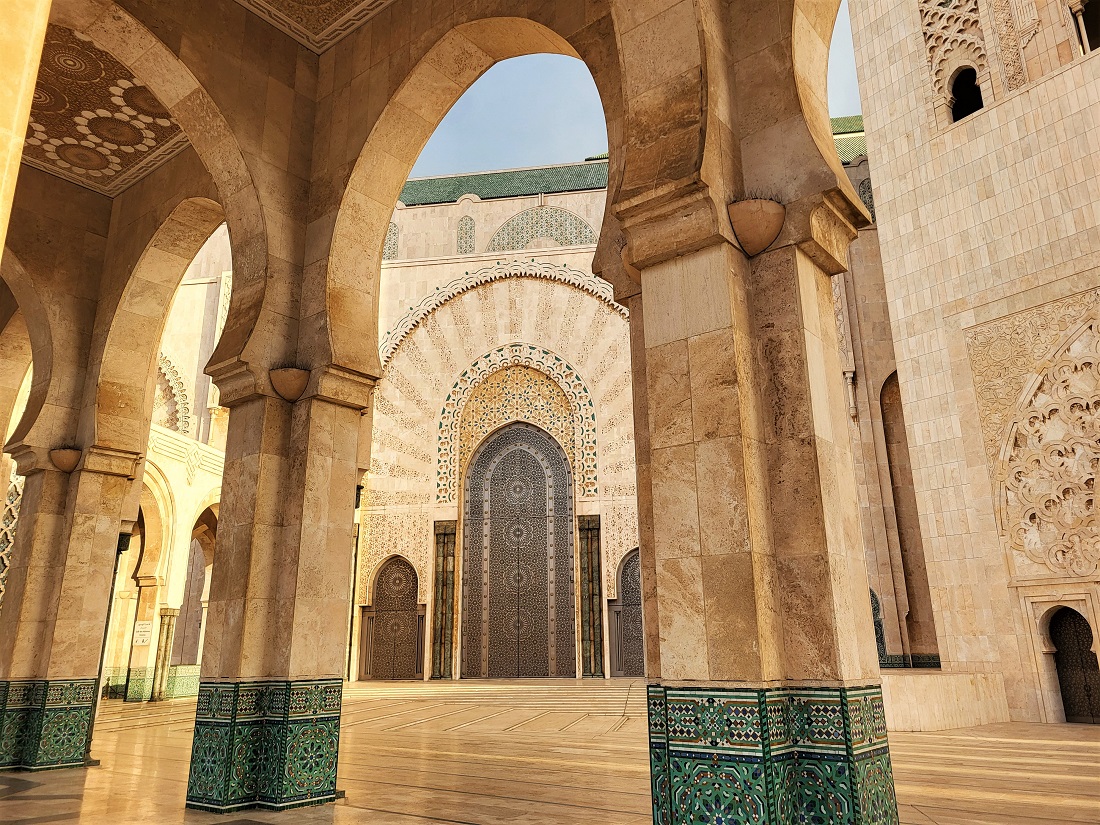
I’d arrived at the mosque first thing in the morning, so I spent some time looking around the courtyard while I waited for it to open, admiring the many intricate details of its design and taking an excessive amount of photos.

The architecture was delightful and the expertly crafted cream and sea green structure was ridiculously photogenic.
I spent ages marvelling at the amount of work that must have gone into creating it.

The eye-catching minaret, which stands at 210m tall (below), is the second tallest in the world (it was the world’s tallest when it was built) and at night, it shoots out a 30ft laser that points eastwards towards Mecca.

After looking around the courtyard, I strolled over to the seawall to take a look at Casablanca’s seafront (above).
The mosque sits on a partially-manmade platform that juts out into the Atlantic Ocean and as I looked out over the wall, I was hit by the salty smell of the sea.
The harbour looked striking and I could just make out El Hank Lighthouse – the tallest lighthouse in Morocco – in the distance.
The mosque is one of only two in Morocco that’s open to non-Muslims and at 9am, I made my way inside for a guided tour.
I took off my shoes, popped them inside the green fabric bag I was handed on entering, then wandered around the hall while I waited for the tour to begin.
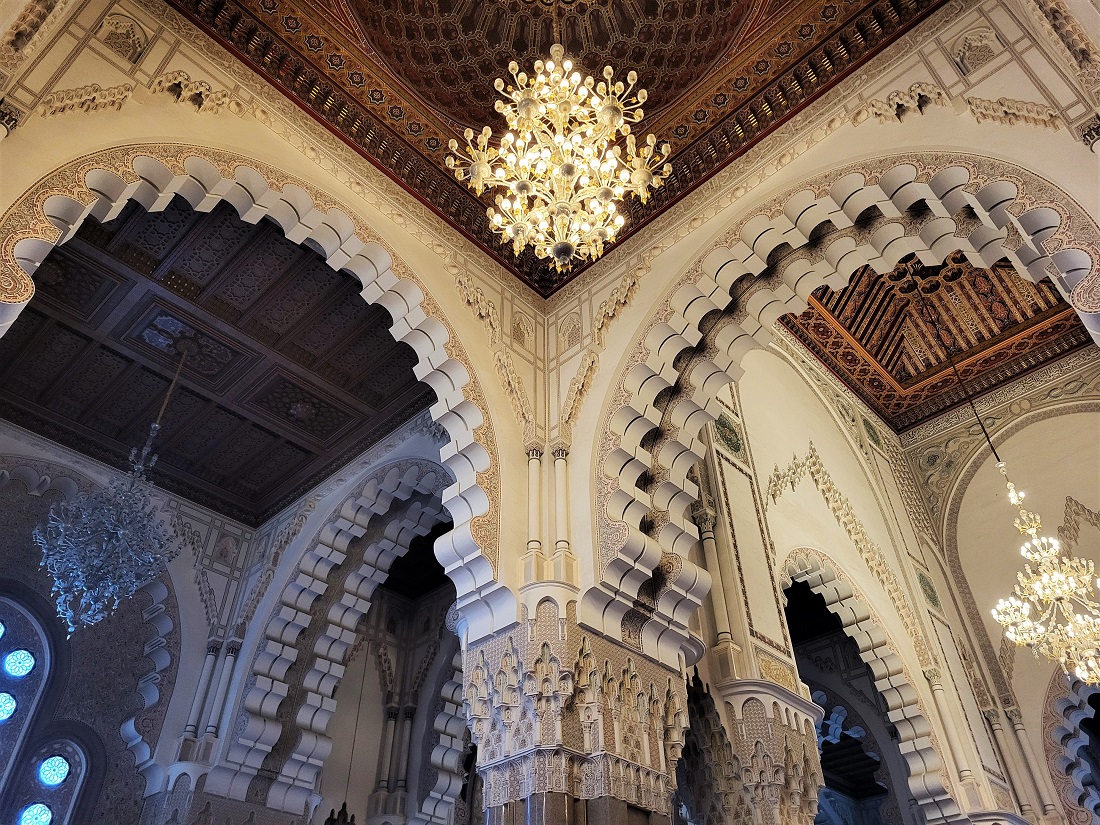
My jaw dropped as I laid eyes on the grand, opulent affair – it was just as impressive inside as it was on the outside.

We started our tour in the massive prayer room, which measures 200m x 100m and can hold up to 25,000 worshippers.
All in all, the mosque can welcome a whopping 105,000 people at any one time.
As we moved around the room, our guide explained the history of the building, as well as the expert craftsmanship that went into making it.
Some 35,000 people were reportedly involved in building and decorating the mosque, and their meticulous, skilled work was clear to see.
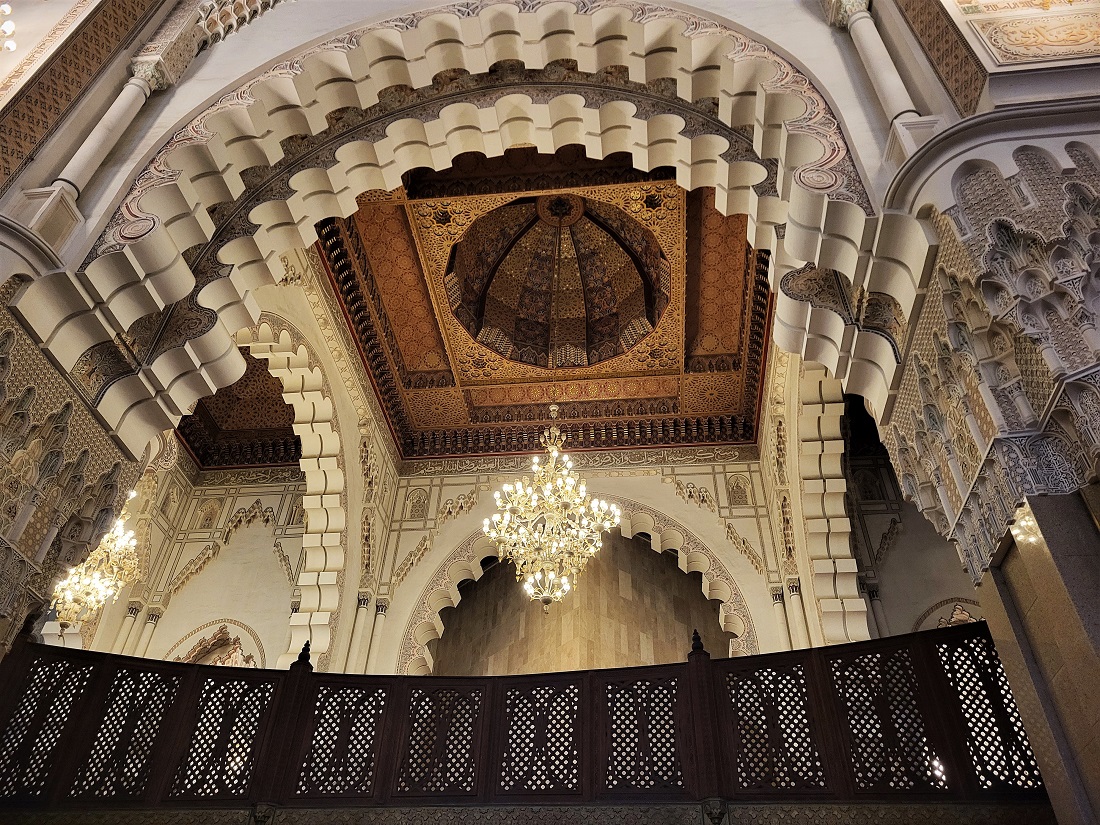
I was awe-struck by the mounds of dazzling pink marble from Agadir, as well as the array of hand-carved and painted stucco.
Our guide explained how the mezzanine was made from concrete and covered in intricately carved cedar wood.

Fifty-two stunning chandeliers made in Venice from Murano glass hang from the ceiling, while 320 loudspeakers are cleverly concealed around the room.
The interior’s astonishing and it’s mind-boggling to think it was crafted in just six years. It’s a phenomenal space and an exceptional work of art.

As we continued our tour, our guide told us about Islamic prayer practice, explaining how Muslims choose their mosque based on the imam and his voice, not the location.
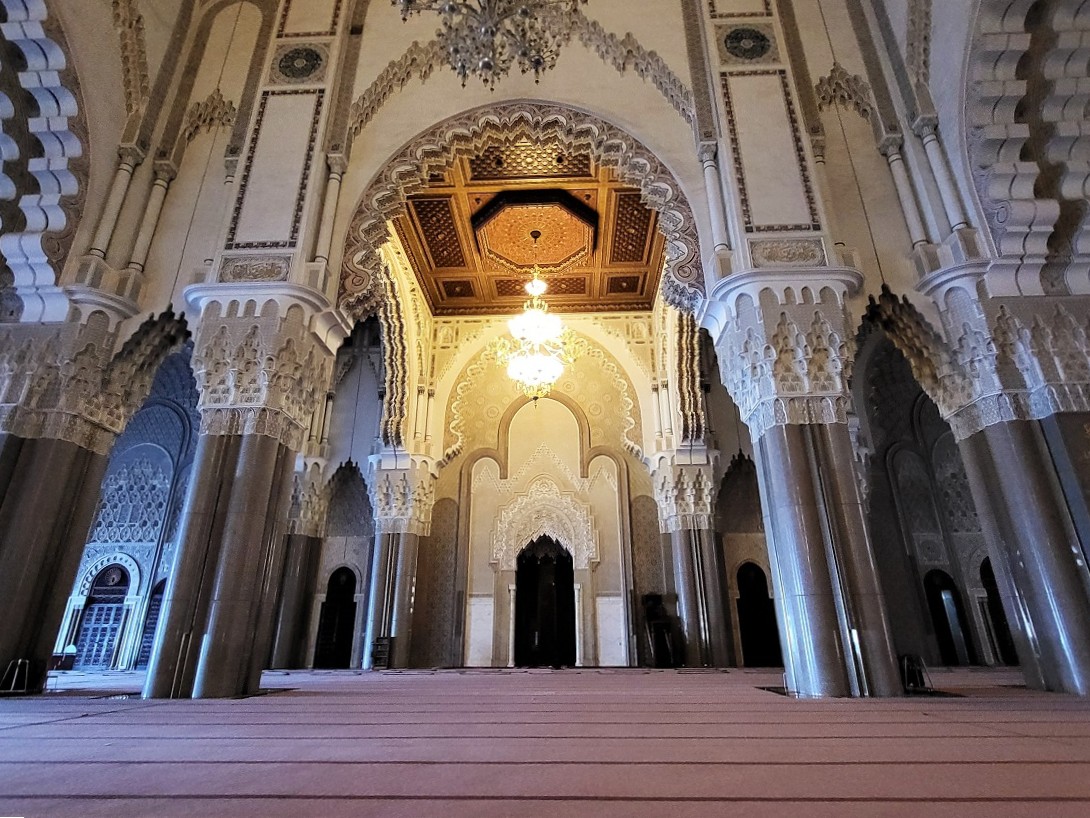
In between the guide’s short talks, we had ample opportunity to look around.
The guided tour was very busy – there must have been at least 70 people in our group – so it was difficult at times to hear the guide, which was a little frustrating.
He also seemed to be struggling to control some of the less rule-abiding members of the group, which distracted from the tour.

One of the prayer hall’s most impressive features is the retractable roof (above), which was hand-carved from cedar wood from the Middle Atlas mountains, then painted.
Not only is it a fine piece of engineering, it’s also extremely beautiful.
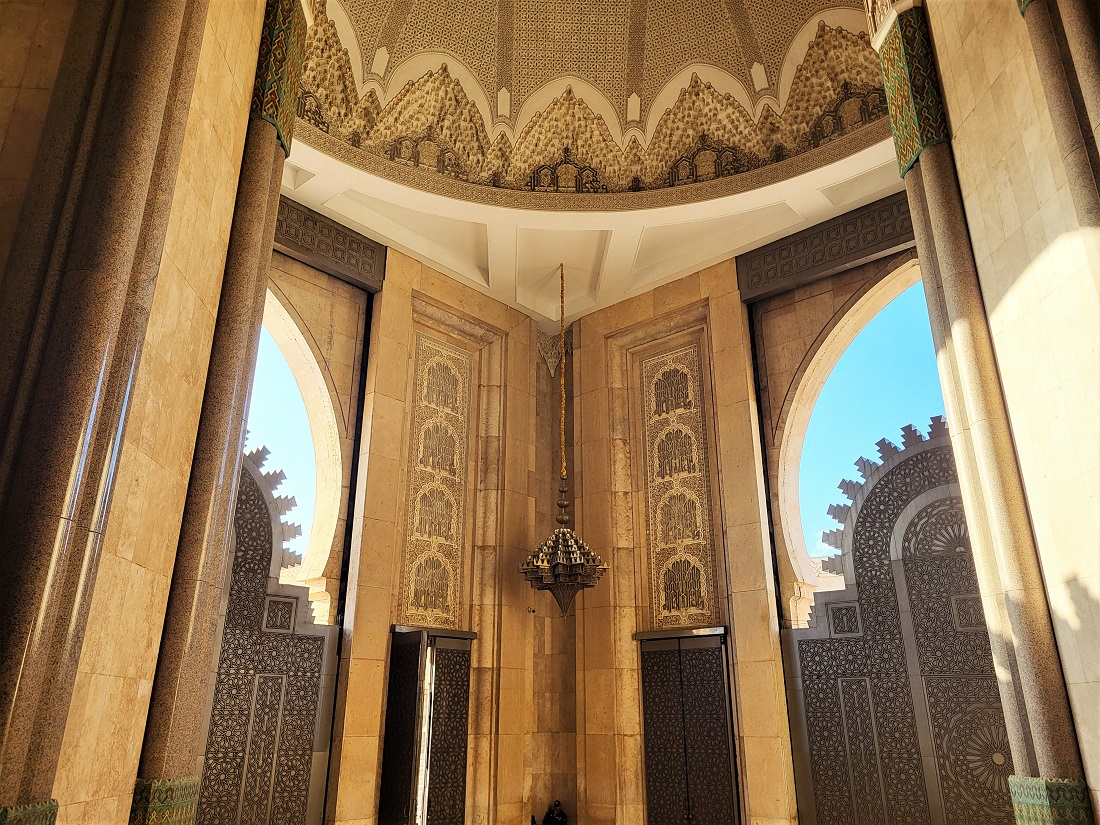
After 25 minutes looking around the prayer hall, we put our shoes back on and walked down some stairs to the base of the minaret (above and below), which was just as lovely as the rest of the mosque.
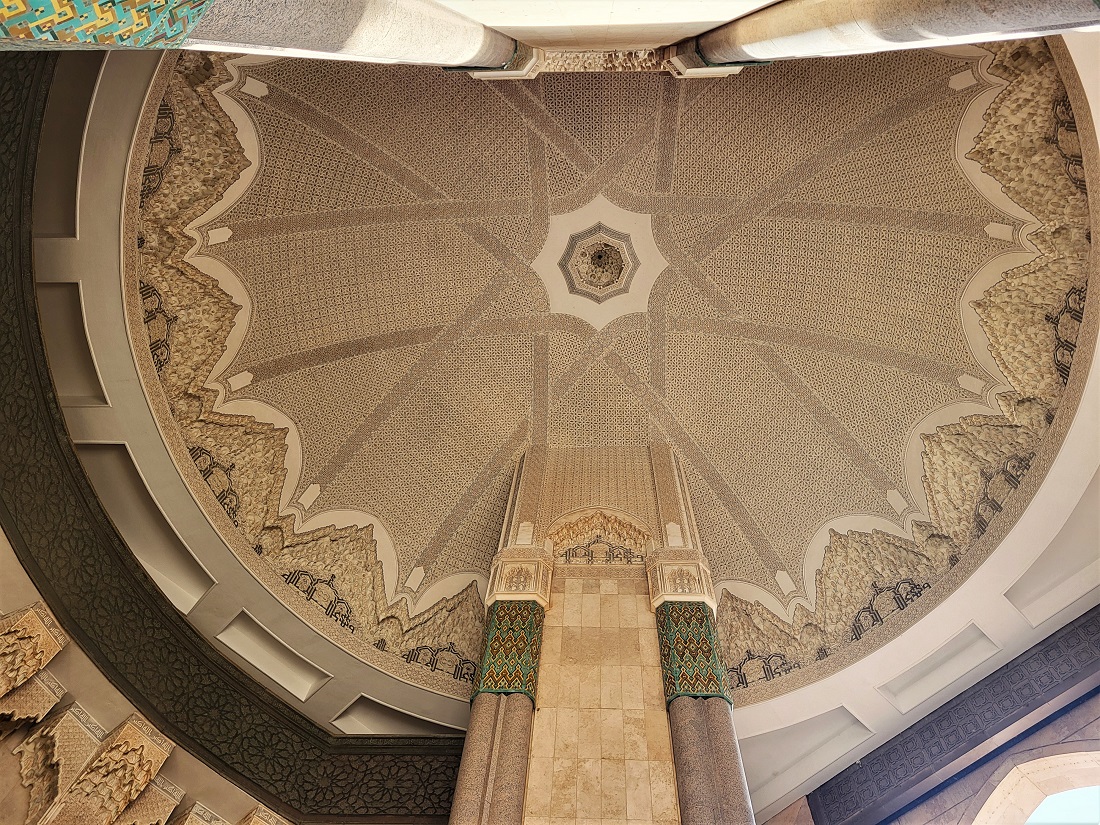
Everywhere we went, we were greeted with the same levels of exquisite artistry and attention to detail.

From the minaret’s base, we walked down some more steps to the ablution room (above), where the men wash before prayers. The huge, beautiful space is filled with 41 fountains.
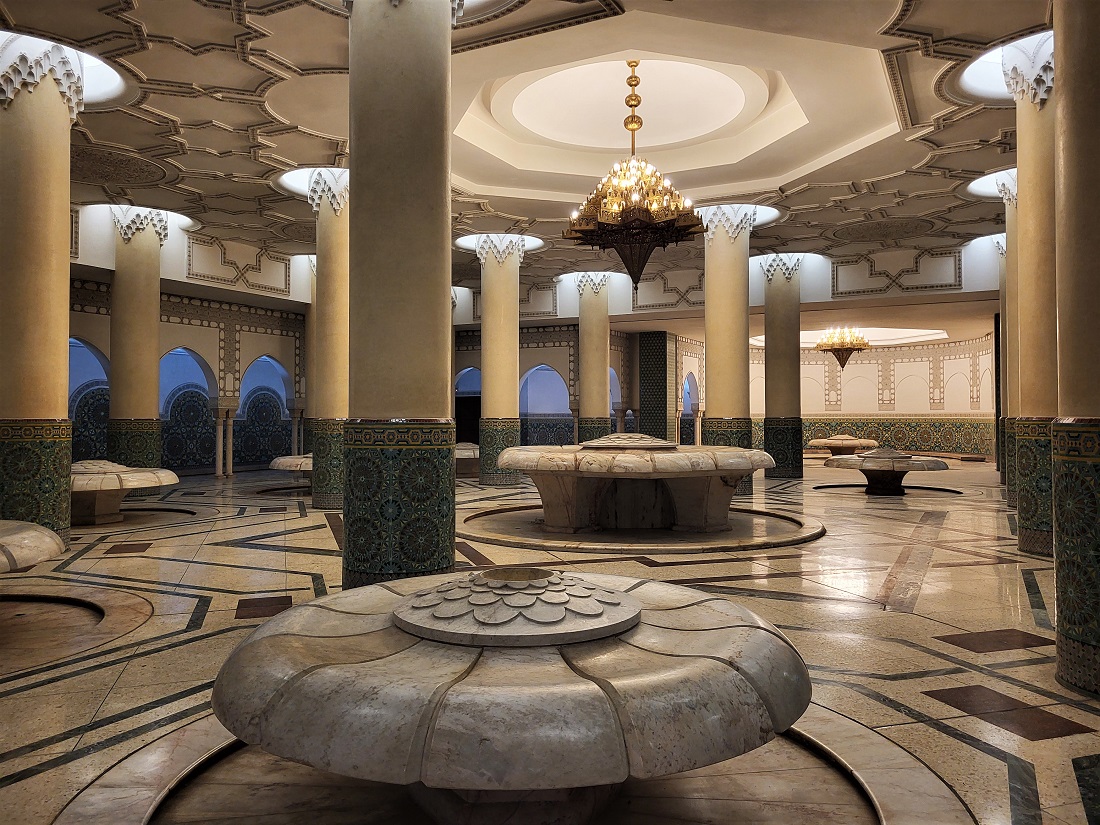
Like the prayer hall, there’s lots of handcarved stucco, which was painted in place, while the base of the pillars and walls are covered in green tiles from Fes.
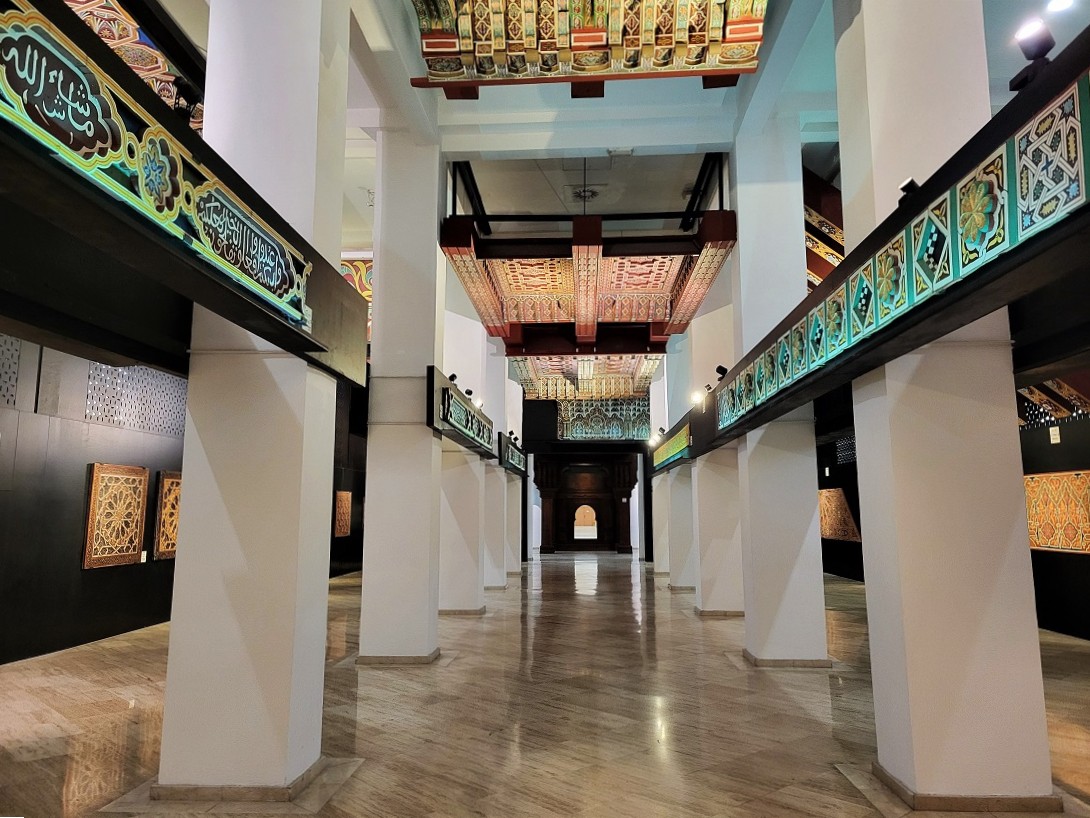
Before leaving the mosque, I stopped to take a look at the museum that adjoins the ticket office (above).
The small museum features exhibits about the mosque’s construction and its craftsmanship, such as the wood carving and painting.
There isn’t a huge amount to see in the museum, so it didn’t take long to look around, but it was interesting to learn more about the making of the mosque.

I really enjoyed my visit to the Hassan II Mosque. It’s a stunning building and a spectacular example of modern Islamic architecture, and as you can probably tell, I got a little carried away taking photos.
The only downside was the size of the guided tour as there were so many people, it was difficult to get close enough to hear our guide.
Nevertheless, it’s an incredible building and well worth a visit if you’re in Casablanca.
 Little Old World
What an amazing place. Shame about the guided tour not being great but how wonderful to see this mosque.
LikeLiked by 1 person
Thanks, it’s a fabulous building! The guided tour itself was fine, they just need to think about limiting the numbers as 70+ is far too many.
LikeLiked by 1 person
It is an incredible building isn’t it? I also found the guided tour less than ideal. So many people with their own conversations in that large echo chamber made it difficult to hear, but I’m glad we saw it. Maggie
LikeLiked by 1 person
Thanks Maggie 🙂 It’s spectacular! I couldn’t believe how much work had gone into making it, it’s astonishing. It’s interesting you also found the tour less than ideal. So it’s unlikely to be a one-off, which is a shame. But like you, I’m glad I saw it despite the issues with the tour.
LikeLiked by 1 person
Wow, what an incredible place! The architecture looks absolutely breathtaking, I’d love to see the minaret and that retractable roof in person someday.
LikeLiked by 1 person
The mosque’s a stunningly beautiful building. I was amazed by its splendour and how much work had gone into creating it.
LikeLiked by 1 person
It really shows in every detail! The craftsmanship and scale are just unbelievable, definitely a place that leaves a lasting impression.
LikeLiked by 1 person
So this is what I missed to see inside. When I went there, it was closed. The pitfall of DIY-ing, huhuhu.
LikeLiked by 1 person
That’s such a shame that it was closed when you went. It’s a fabulous building and the decoration inside is incredible. Thanks for commenting 🙂
LikeLike
When I saw this in your original post I assumed it was quite old, much older than late 20th century. I still think it’s beautiful as I did then, and the interior is amazing, but I now wonder what else the money could have been spent on to benefit the population.
LikeLiked by 1 person
It looks a lot older than it is, doesn’t it? It’s a stunningly beautiful building. Given the amount of work that went into it, it must have cost an absolute fortune, which as you say, could have been used in other ways.
LikeLiked by 1 person
Beautiful architecture
LikeLiked by 1 person
Thanks, it’s a stunning building.
LikeLiked by 1 person
What an incredible building!
LikeLiked by 1 person
I agree, it’s stunning!
LikeLike
Stunning shots, especially the one with the mosque and the rainbow. It’s incredible how massive it is and that each nook and cranny is intricately designed and detailed.
LikeLiked by 1 person
Thanks! It’s a beautiful building and so photogenic. I was amazed by the sheer scale and opulence of it. The amount of work and attention to detail that’s gone into it is astonishing.
LikeLiked by 1 person
The architecture is stunning- and all the more so that you caught it with a rainbow 🙂
LikeLike
Thanks Meg, it’s a spectacular building and I was blown away by the incredible architecture. I was very lucky with the rainbow, it appeared at just the right time 🙂
LikeLiked by 1 person