Of all the cities I visited in Morocco, Rabat was by far my favourite. Grand, elegant and historic, Morocco’s capital city is a delight.
Founded by the Almohad dynasty on the shores of the Atlantic Ocean in the 12th century, caliph Abu Yusuf Yacoub al-Mansur planned to make Rabat his Imperial capital, but he died before he could make his dream a reality.
In 1912, the French set up its administrative centre in Rabat and when Morocco was granted independence in 1956, it was chosen as the capital city.
The historic centre was designated a UNESCO World Heritage Site in 2012 and today, it’s the country’s seventh biggest city.
Last November, I spent Morocco’s National Independence Day (a busy public holiday with lots of flags flying) looking around some of Rabat’s most notable sights.
Hassan Tower

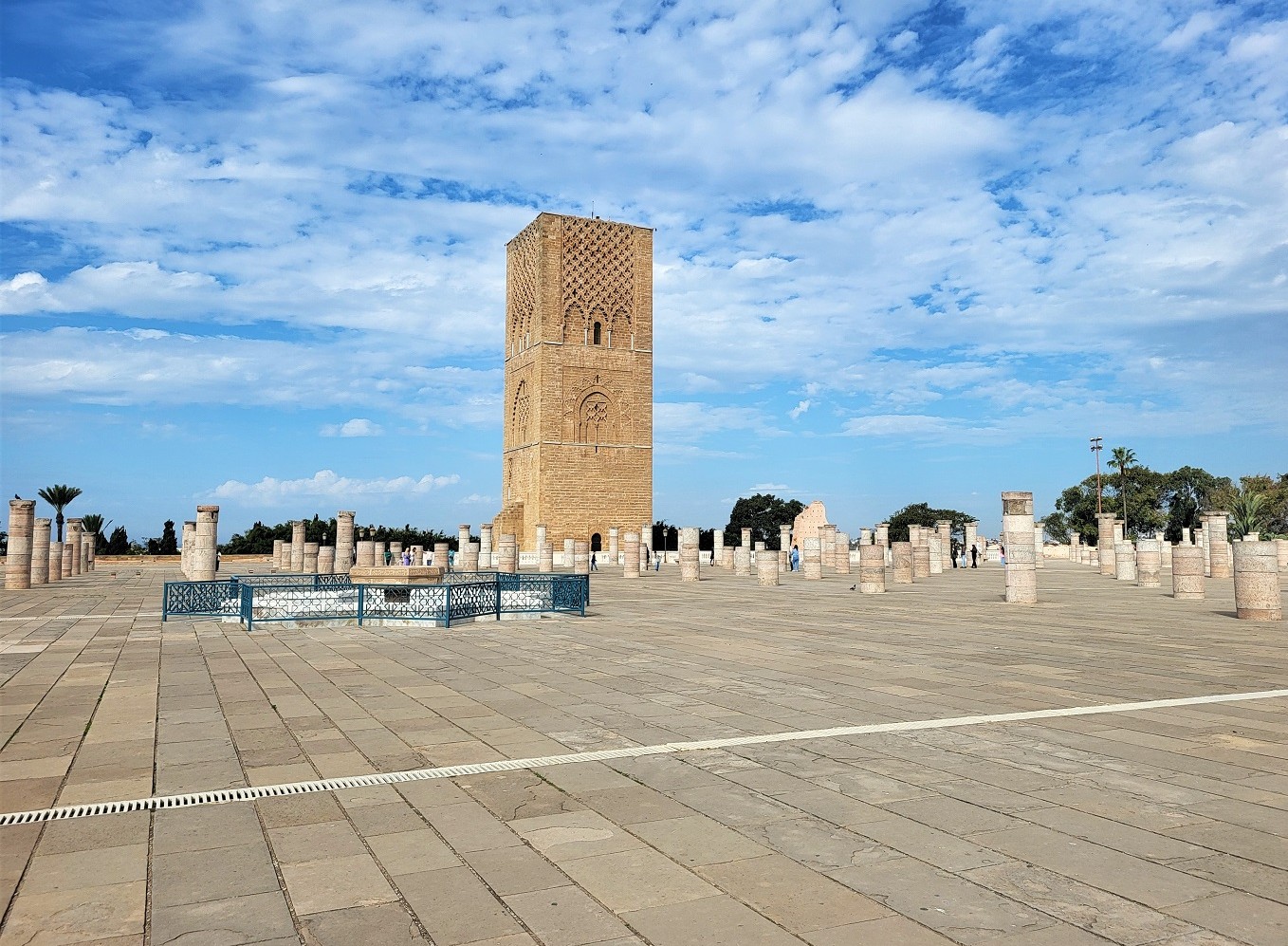
One of the most iconic buildings in Rabat is Hassan Tower (above), which dates back to 1196.
The minaret was part of a mosque commissioned by Abu Yusuf Yacoub al-Mansur, who wanted to build the biggest mosque in the western world.
Three years later, al-Mansur died leaving the mosque unfinished. The project was swiftly abandoned and the remains of the half-built complex were later damaged by the Lisbon earthquake of 1755.
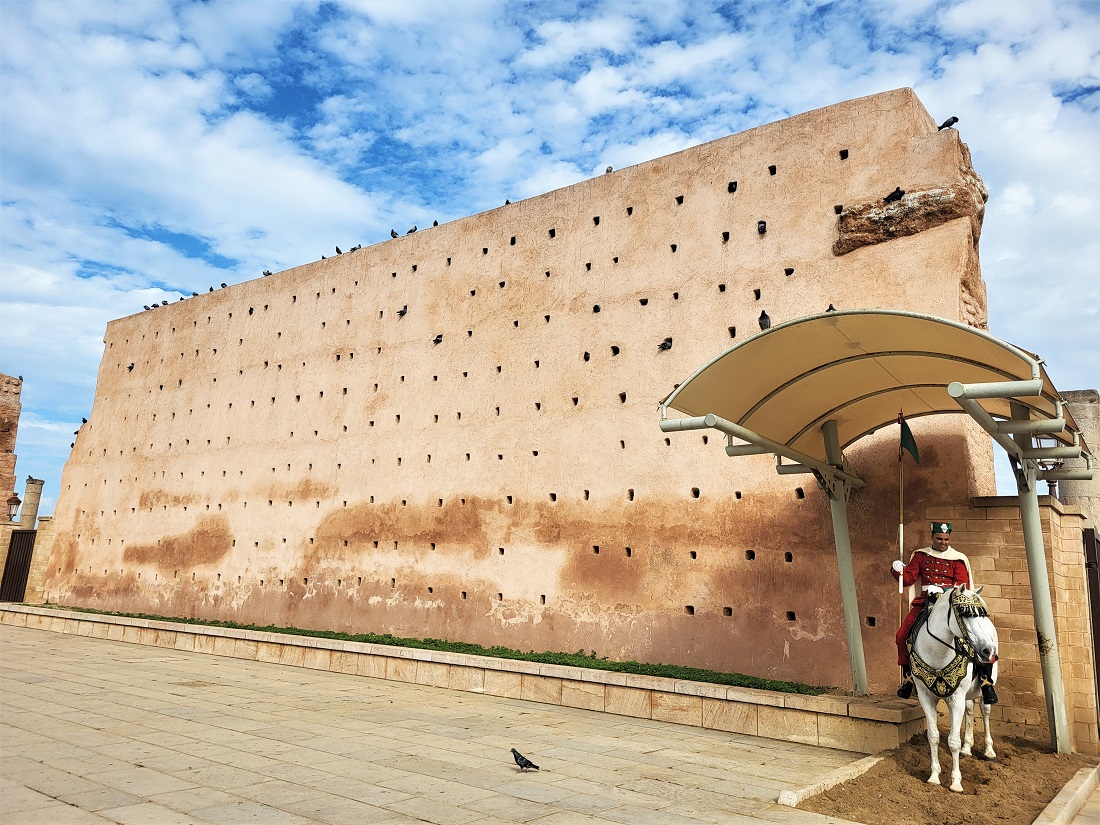
Today, all that remains are remnants of the clay and brick walls (above, now home to a flock of pigeons), the half-built minaret and a series of supporting columns that once stood in the Roman city of Volubilis.
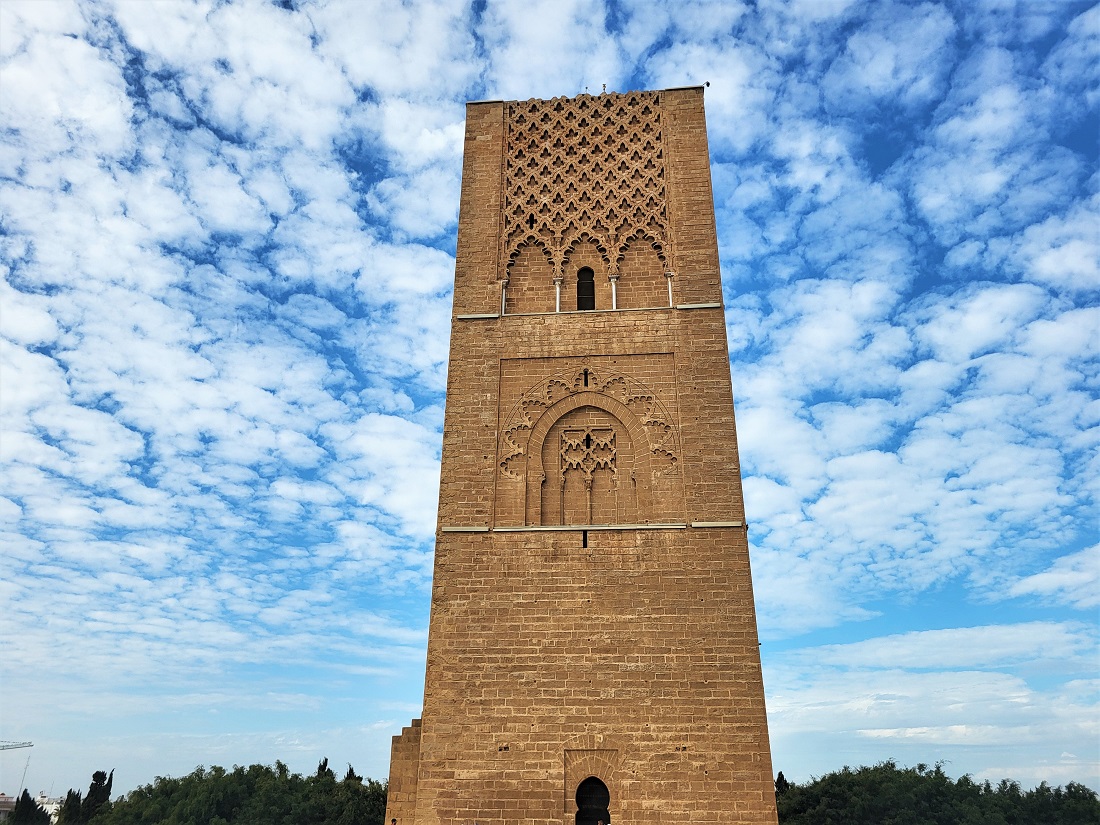
Inspired by the Koutoubia Mosque in Marrakech, the striking Hassan Tower was supposed to measure 80m tall, which would have made it the tallest minaret in the world.
And even though it’s only half its intended height at 44m, it’s still an impressive sight, its burnt-orange sandstone contrasting beautifully against the bright blue sky.
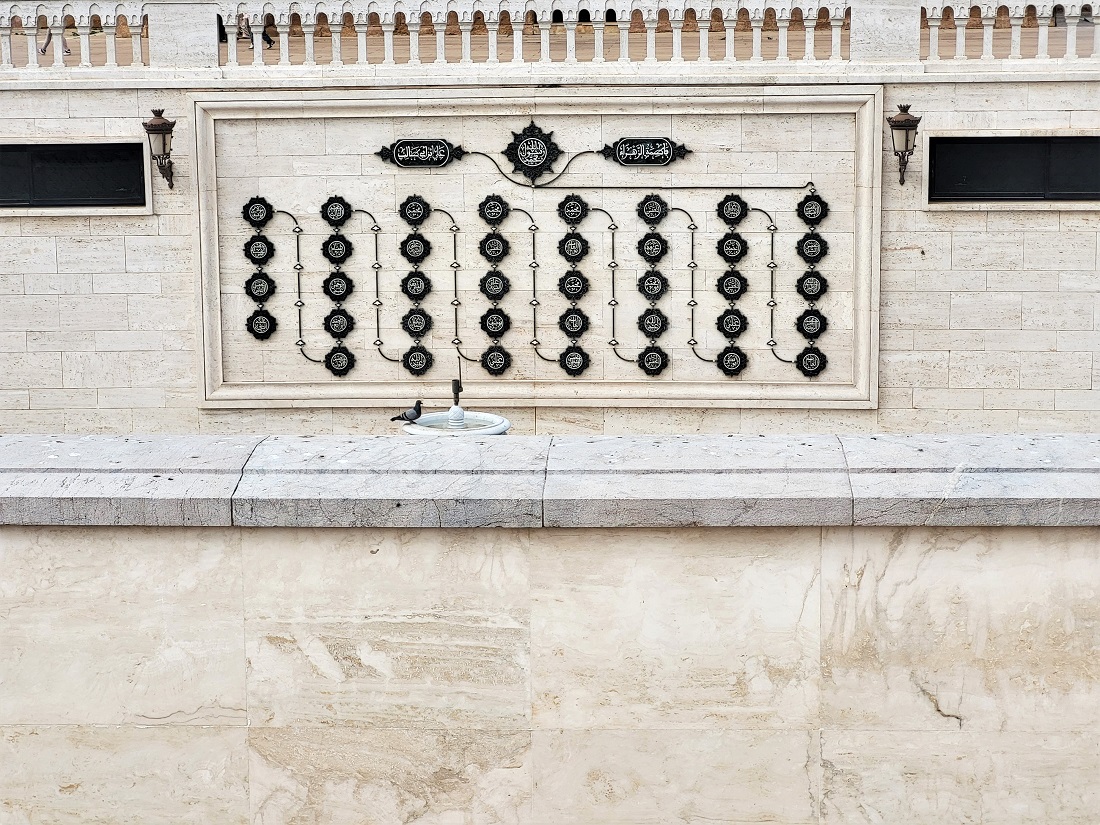
After spending some time looking around the square, we walked over to the tower, which today sits atop the royal library.
You can’t go inside the tower, so we spent some time admiring it, along with a family tree on one of the library’s walls, which shows how the kings of Morocco are allegedly descended from Mohammed (above).

We also stopped to take a look at the massive Grand Théâtre de Rabat, designed by Zaha Hadid, and the Mohammed VI Tower, which we could just make out in the distance, both in the adjacent city of Salé.
The latter, a 250m-high skyscrapper (above) housing luxury apartments and shops is the tallest building in Morocco.
Mausoleum of Mohammed V

Across the square from the Hassan Tower lies the Mausoleum of Mohammed V, the grandfather of the current king Mohammed VI.

The modern complex, which also includes a pavillion and a mosque (above), was commissioned by Hassan II to mark the death of his father in 1961 and was designed by the Vietnamese architect Cong Vo Toan.
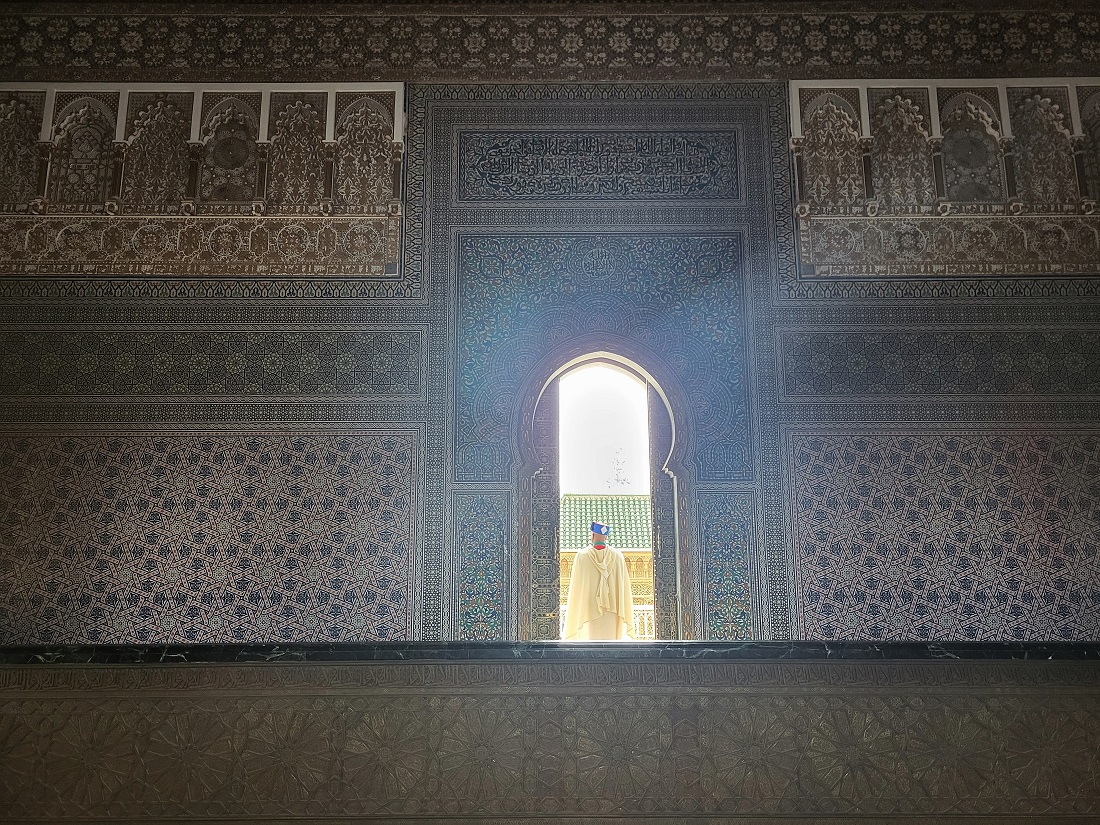
The grand mausoleum, which took 10 years to build, is the resting place of Mohammed V, his son Abdallah, who died in 1983, and Hassan II, who died in 1999.
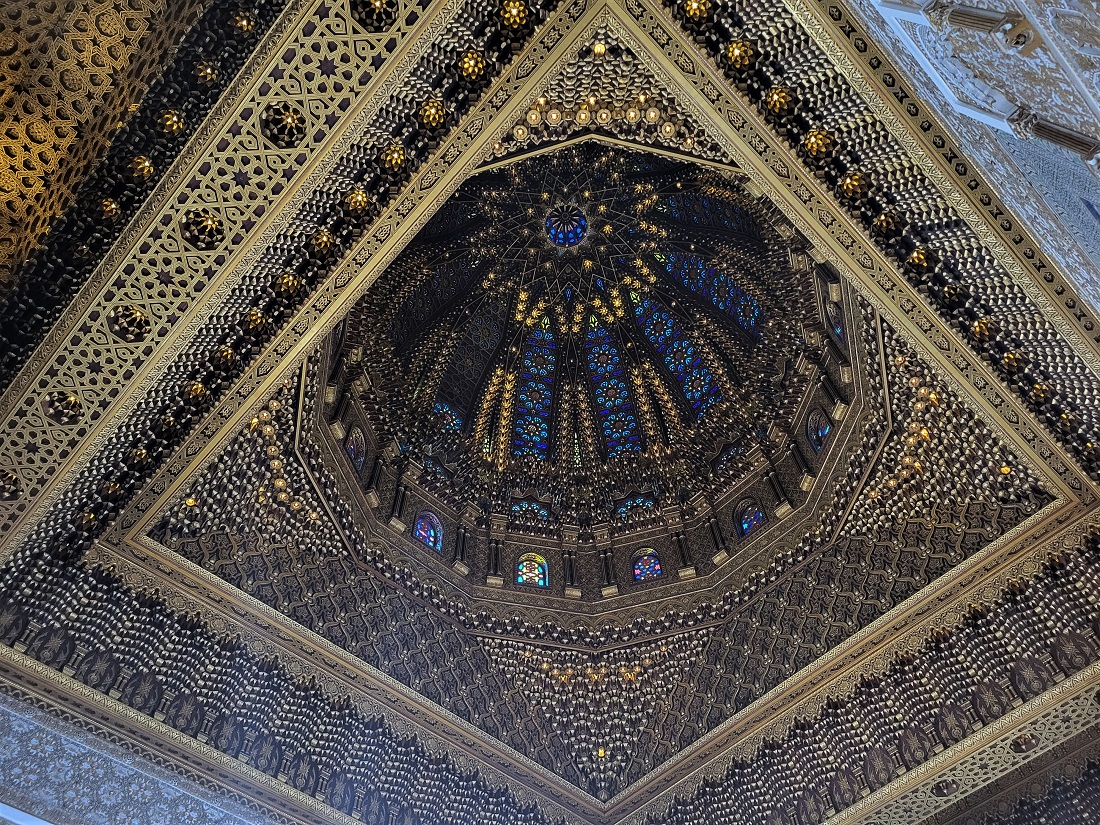
It’s a beautiful mausoleum with intricate tiling on the walls and a gorgeous, embellished ceiling (above).
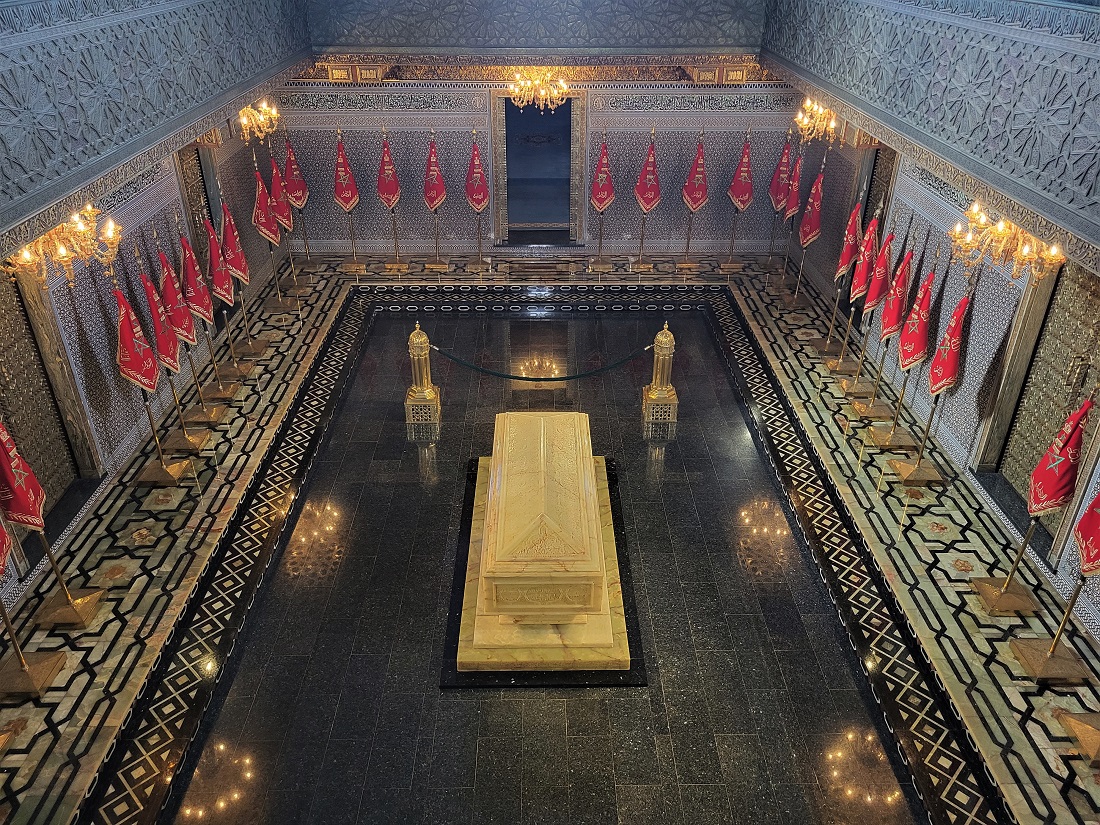
Visitors can walk around a mezzanine inside the mausoleum, which looks down upon the tombs (above).
It’s a stunning filial tribute and I was blown away by its magnificent splendour.
Kasbah of Oudaia
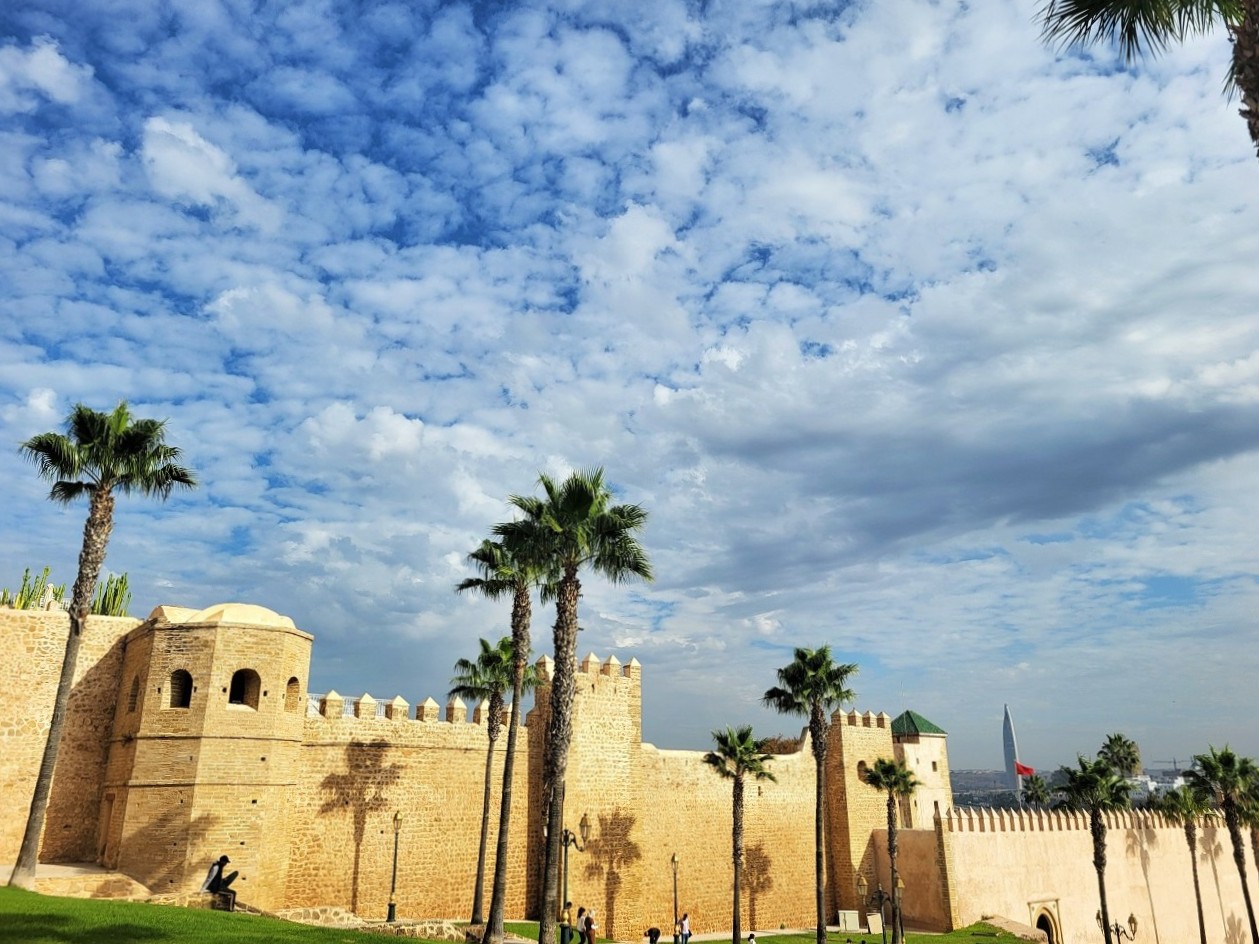
Founded by the Almohad dynasty in the 12th century, the Kasbah of Oudaia lies on the edge of Rabat and was named after the Oudaias tribe, who built a settlement in the area in the 10th century.
A mash up of parts built by Abu Yusuf Yacoub al-Mansur in the 1190s and the Alouite dynasty in the 18th century, the kasbah was restored by the French in 1914.
It’s home to the oldest mosque in the city, the 12th century El-Atika.
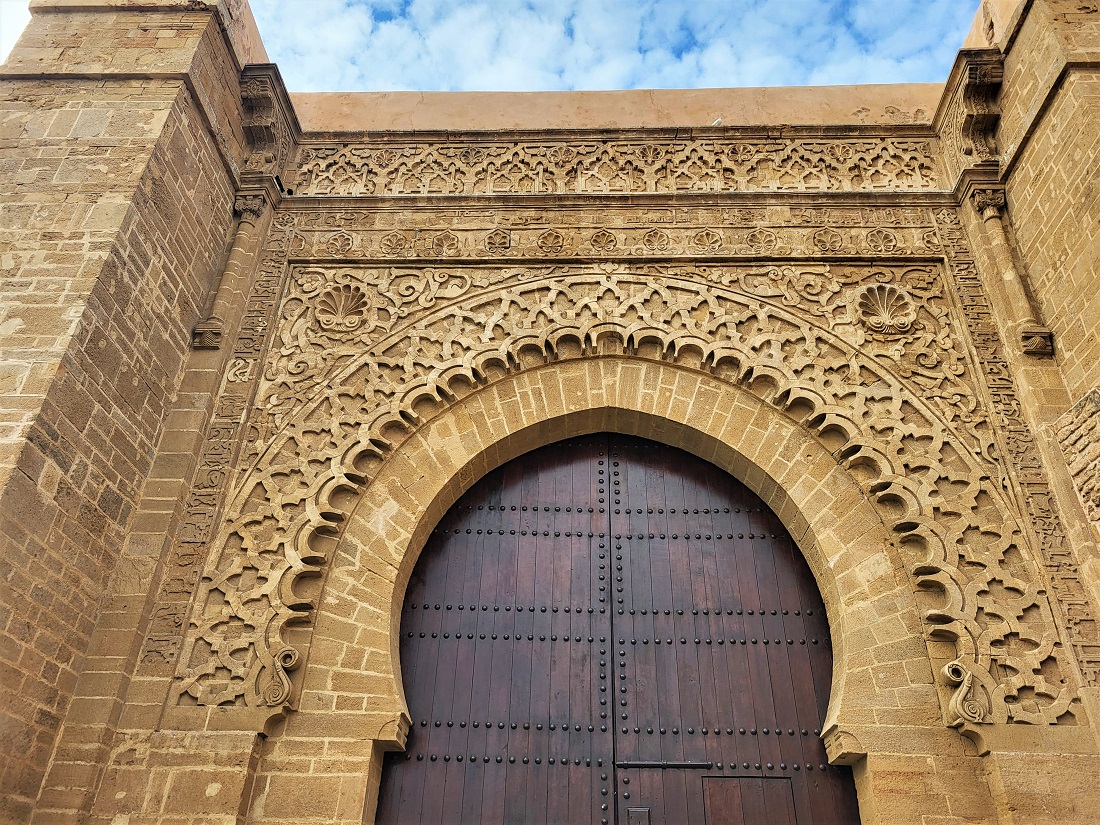
We entered the kasbah via Bab Oudaia, a beautiful, intricately carved gate, commissioned by Abu Yusuf Yacoub al-Mansur in the 12th century (above).

The kasbah has been described as Morocco’s Santorini, and I could see why thanks to its smart white-washed buildings that were reminiscent of the Greek isle (above).
The handsome maze of narrow streets and alleys was very clean and in good condition.

After spending a little while wandering through the alleys, admiring the charming buildings, we stopped in a café for some mint tea.
And I’m glad we did, because soon afterwards the thunder rolled in and the heavens opened. It bucketed down for 10 minutes, as a host of people sought shelter under the café’s awnings.
A couple of the kasbah’s many cats came and sat with us, too.

After the rain stopped, we made our way up to the platform of the old signal station, which dates back to the 18th century (above).

There, we enjoyed fabulous views over the Atlantic Ocean, as well as the Plage de Salé Ville on the other side of the Bou Regreg River (below).
Andalusian Gardens and the Musée des Oudaias

My favourite spot in the kasbah was the magnificent Andalusian Garden (above).
Built by the French in the 1910s, the Moorish-style garden lies in the grounds of an old summer palace.

A calm, green oasis, it’s filled with palm trees, orange trees, a banana tree and trumpet tree, along with herbs, such as sage, rosemary, lemongrass, absinthe and jasmine.
The lush garden was glorious and I could happily have spent hours there, relaxing with my book, away from the hustle and bustle of the city.

As we walked around the garden, we could hear the thunder rolling in the distance, along with the call to prayer, which started just after we arrived, and the smell of fresh rain lingered in the air after the earlier downpour.
The old summer palace (above), which was built by Sultan Moulay Ismail in the 17th century, is now home to the Musée des Oudaias.

The small, interesting museum is dedicated to costume and jewellery, and is centred around the palace’s stunning courtyard (above).

The museum is delightful and I had a great time marvelling at the many traditional costumes (above), chunky jewellery and arms on display.
Royal Palace

Our final stop was the 19th century royal palace (above). The palace sits within a huge 44 hectare guarded complex, which also houses the Prime Minister’s residence, the royal guard school and the supreme court.
Tourists are allowed to visit the complex, but you’re not allowed to go inside or get too close to the palace (unhelpfully there aren’t any signs to tell you how far you can go).
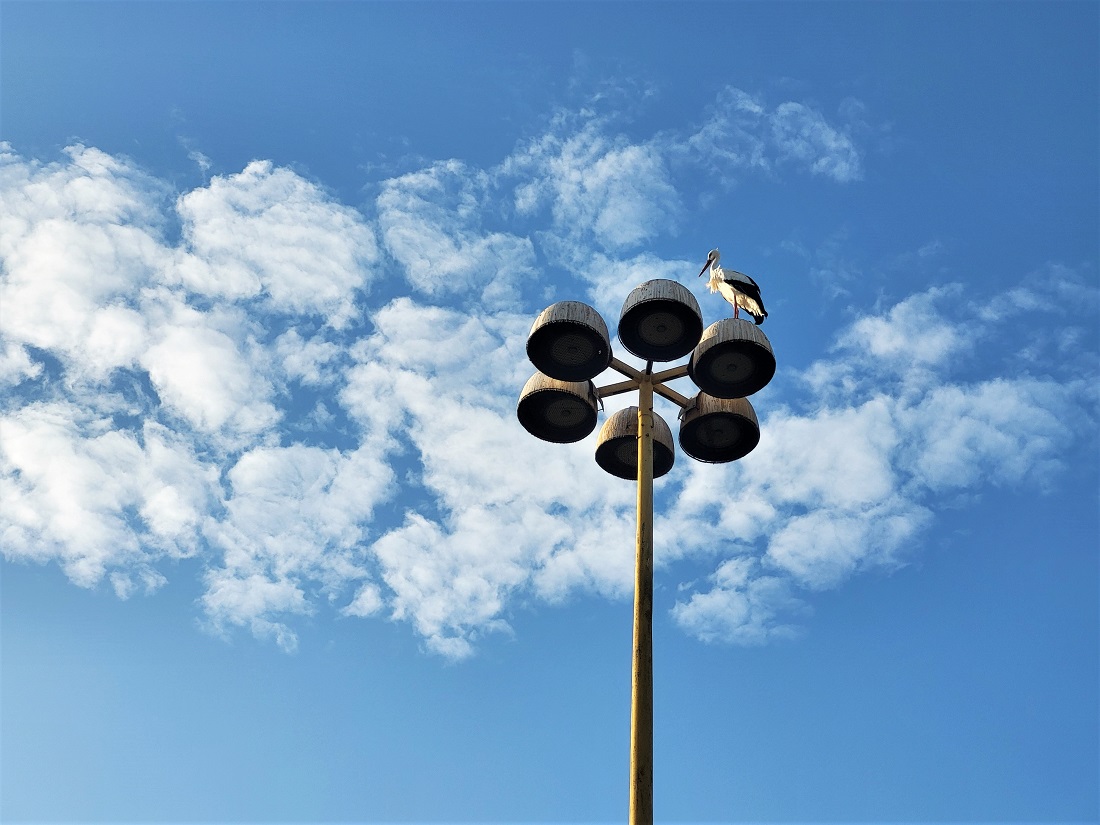
King Mohammed VI doesn’t live in the palace, but some 2,000 other people and a handful of storks call the complex’s confines home.

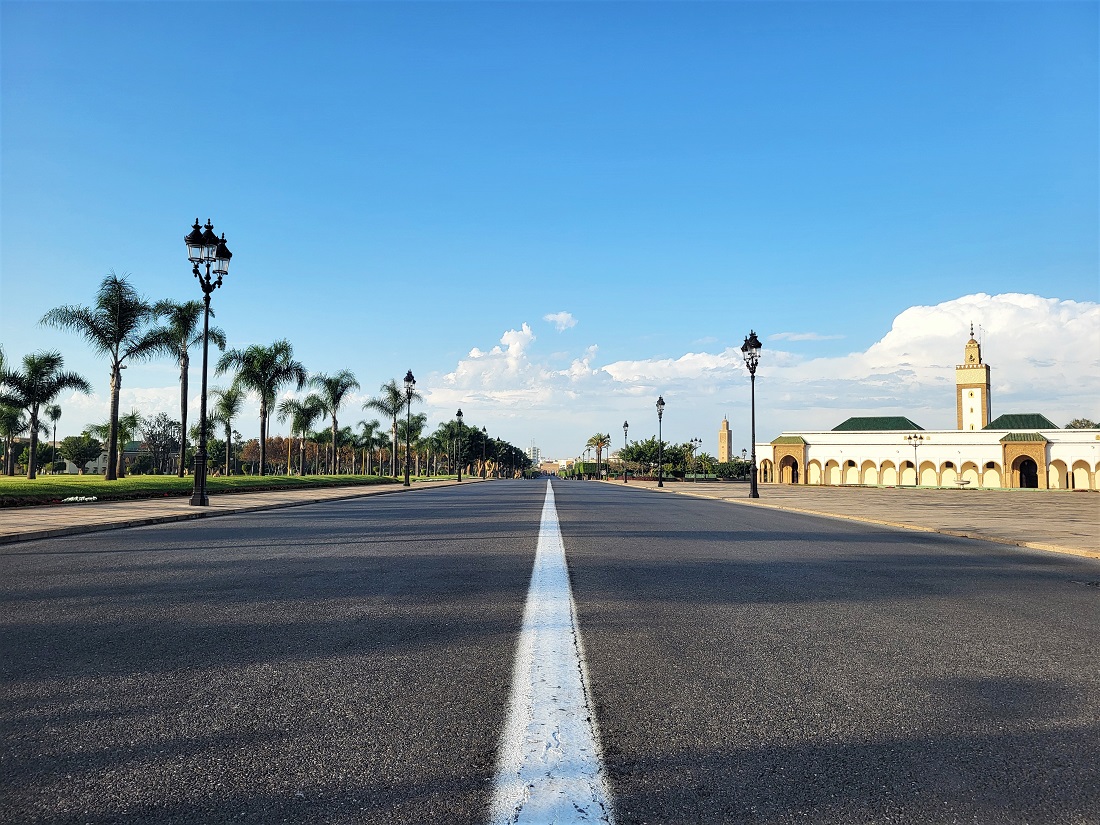
It was eerily quiet when we visited, I’m not sure if it’s because it was National Independence Day or if it’s always like that.
But it was a bit odd walking across the vast, deserted complex, so we didn’t stay too long, as there wasn’t much to see.
I had a great time in Rabat. I didn’t have any expectations before going, but I loved my time in the city.
I only had one day, which wasn’t enough to see everything, and in hindsight, I should have planned more time there.
I’d love to go back for a long weekend to really explore the city and see all the parts I missed.
 Little Old World
I’ve been to Morocco but not Rabat. I clearly should go – it looks wonderful!
LikeLiked by 1 person
I was only there for a day, but I really enjoyed it. What I saw of the city was lovely!
LikeLiked by 1 person
We were in Morocco at the same time. We were in Erg Chebbi for Independence Day. It wasn’t really observed there. We loved Rabat too. Like you, we had no expectations, and walked away happy. Maggie
LikeLiked by 1 person
Ah, it’s cool you were in Morocco at the same time and that you loved Rabat as well. It was one of the highlights of my trip.
LikeLiked by 1 person
The architecture is beautiful. I can’t get over how intricate and detailed the tilework is on the walls of the mausoleum. I can see why you enjoyed the garden, it looks lovely.
LikeLiked by 1 person
The architecture was stunning, especially in the mausoleum. I was amazed by the work that had gone into it. The embellished ceiling was incredible. The garden was just delightful, there was something really tranquil about it.
LikeLiked by 1 person
The mausoleum ceiling is amazing! So many beautiful buildings. And the garden looks very appealing.
LikeLiked by 1 person
The embellished ceiling was incredible! It was so beautiful. The architecture in Rabat was lovely and the garden was a charming oasis in the middle of the kasbah. There was a lot more to Rabat than I’d been expecting.
LikeLiked by 1 person
This is such a wonderful post. I’ve been to Morocco many times, but have not yet visited Rabat. It certainly looks like a great place to visit, especially for travellers seeking a less crowded and more authentic Moroccan experience than other major cities like Marrakech. Thanks for sharing, and have a good day 🙂 I hope your week is off to a good start 🙂 Aiva xx
LikeLiked by 1 person
Thanks Aiva! I really liked Rabat and if there was one thing I’d change about my trip to Morocco, it would be how long I spent in Rabat. One day wasn’t enough. There was a lot more to see than I’d been expecting and what I did see was delightful. It was my favourite of the Imperial cities. Have a good day, too! Hope you’ve had a good start to the week, too 🙂
LikeLike
What a lovely read! It’s great Rabat made such an impression on you. I wasn’t that taken by it, but the way you’ve portrayed its elegance, history, and quiet spaces between the obvious highlights. I especially loved your descriptions of the Hassan Tower and the Mausoleum of Mohammed V; you captured the grandeur and the human scale so well. The Kasbah of Oudaia’s white-washed walls, narrow alleys, and views of the Atlantic are lovely. Maybe I should give it another chance 🙂
LikeLiked by 1 person
Thanks Hannah, I really appreciate your kind words 🙂 It’s a shame you weren’t taken by Rabat, as I had such a lovely time there. I always find it really interesting how different people can have such varied experiences in the same place, and even how I’ve had wildly different experiences when I’ve visited the same place. So much of it can come down to the people you meet, circumstances, luck, the weather… and, of course, personal preference.
LikeLiked by 1 person
Thank you for the armchair tour of Rabat! Morocco was on our shortlist for the October holidays, and it’s somewhere I’d be interested in seeing more of in the future. Rabat looks like a great city to explore.
LikeLiked by 1 person
Thanks Rosie 🙂 I wasn’t sure about Morocco before I went as I’d heard such differing things from friends and colleagues who’d been. But I loved it and had a fantastic time. I was surprised by Rabat and how much there was to see. It’s not as well known as some of the other Moroccan cities, so I’d mistakenly assumed there wasn’t much to it.
LikeLiked by 1 person
Excellent tour around this beautiful city. I’ve heard a lot of people say this was the favorite city- I can see why 🙂
LikeLiked by 1 person
Thanks Meg 🙂 I loved Rabat, there was so much more to it than I’d been expecting. I’d like to go back and spend a little longer there as I didn’t feel I had enough time to really get to know the city.
LikeLiked by 1 person