
Nestled in the foothills of the Middle Atlas mountains, some 30 to 40 minutes from Meknes, lies the Roman city of Volubilis.
Founded in 40AD as the capital of the province of Mauritania, the city was occupied by the Romans for 245 years and was once home to some 20,000 people.

After the Romans left, the city was inhabited by a mix of Christians, Jews, Greeks and Muslims until it was abandoned in the 11th century.
French archaeologists began excavating the site in the 19th century and in 1997, the 42 hectare plot was designated a UNESCO World Heritage Site for its archaeological significance.
To this day, only part of it has been uncovered.

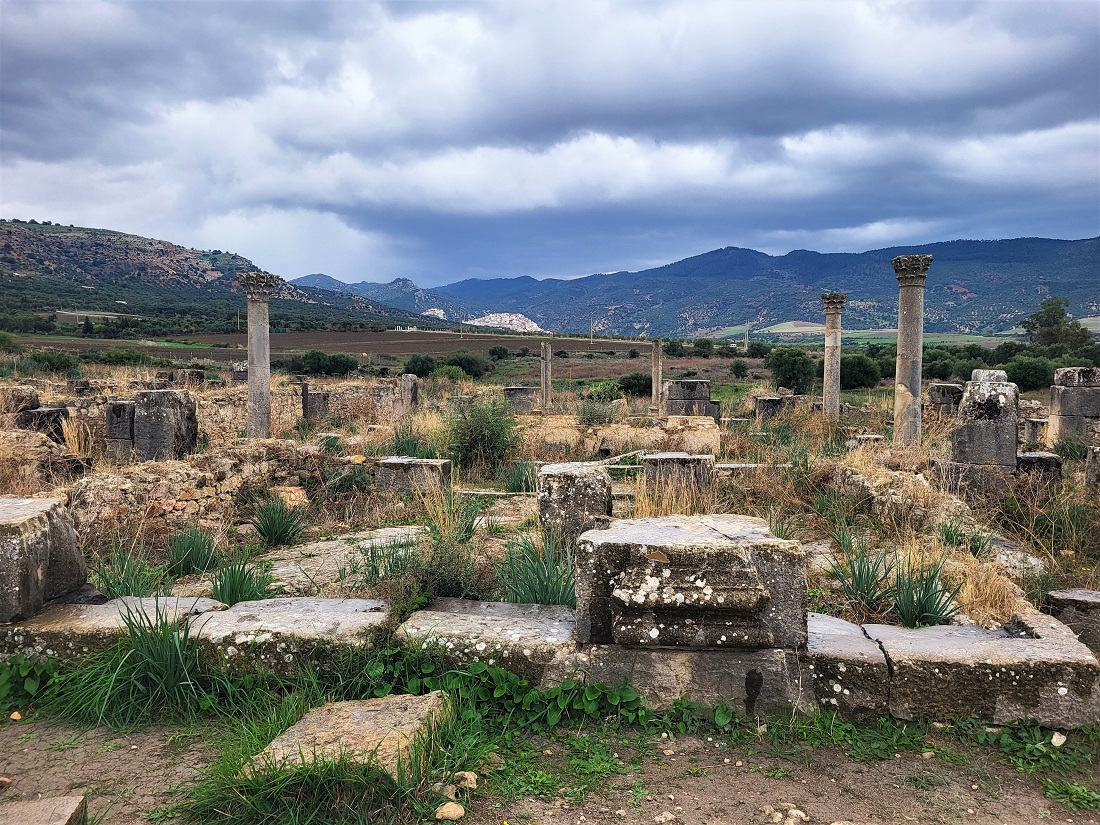
When we arrived at Volubilis, we met our guide and set off up the hill towards the ruins (above) just as the heavens opened. It was going to be a very wet afternoon.
We started our tour at the far end of the site, where we passed some ruined houses, before stopping to admire the mosaic of Diana and the bathing nymphs at the House of the Cortège of Venus (below).

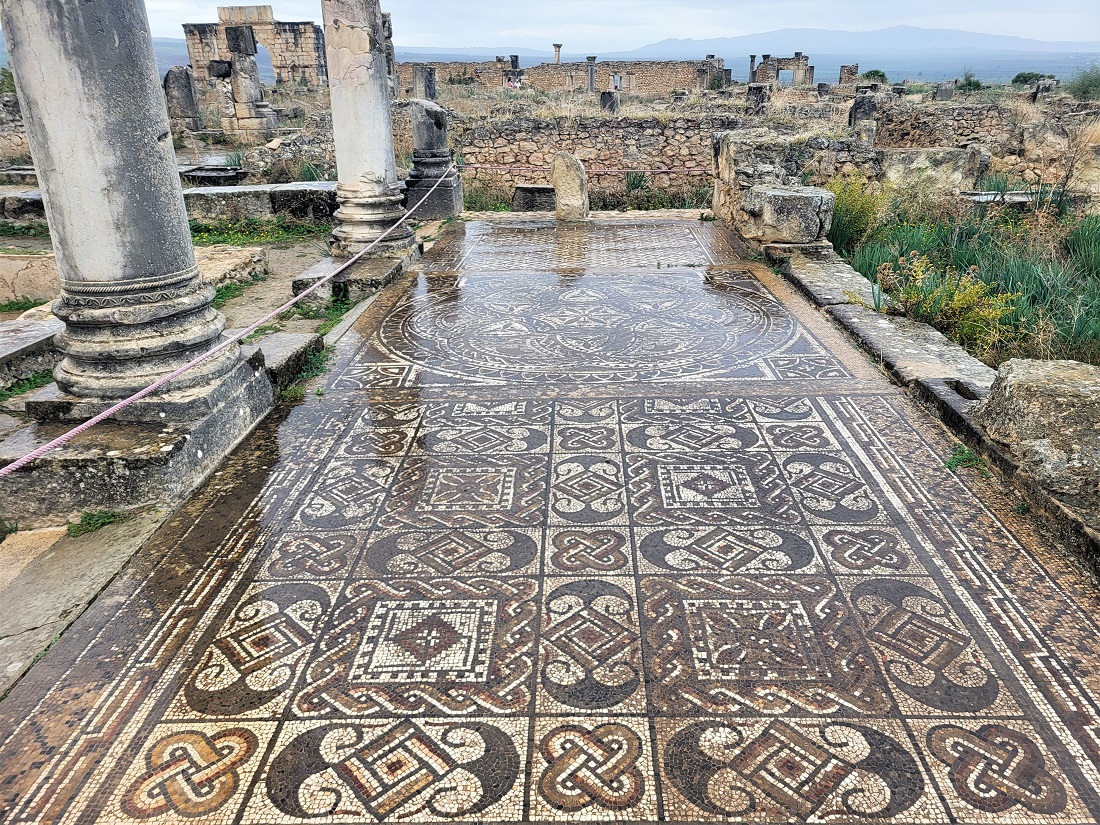
Given the mosaics were open to the elements, I was surprised by how intact they were and our guide explained that being covered in dirt for millennia had helped protect them.

We ambled among the ruins, stopping to take a look at the now overgrown aqueduct running along one of the streets that would once have supplied water to the city’s houses, fountains and public baths (above).

We carried on through the ruins until we reached the Decumanus Maximus, the main street connecting the Tangier Gate (above) to the Triumphal Arch (below).

Built in the 160s, I was intrigued by the old sewer system running down the middle of the street, now covered with big slabs of stone.

We stopped to admire a few more houses, including the House of Dionysus featuring a big mosaic of the four seasons (above) and the House of the Bathing Nymphs.

Then meandered around the ruins until we reached the impressive House of the Labours of Hercules, named for the incredible mosaic depicting the Greco-Roman hero’s exploits (above).
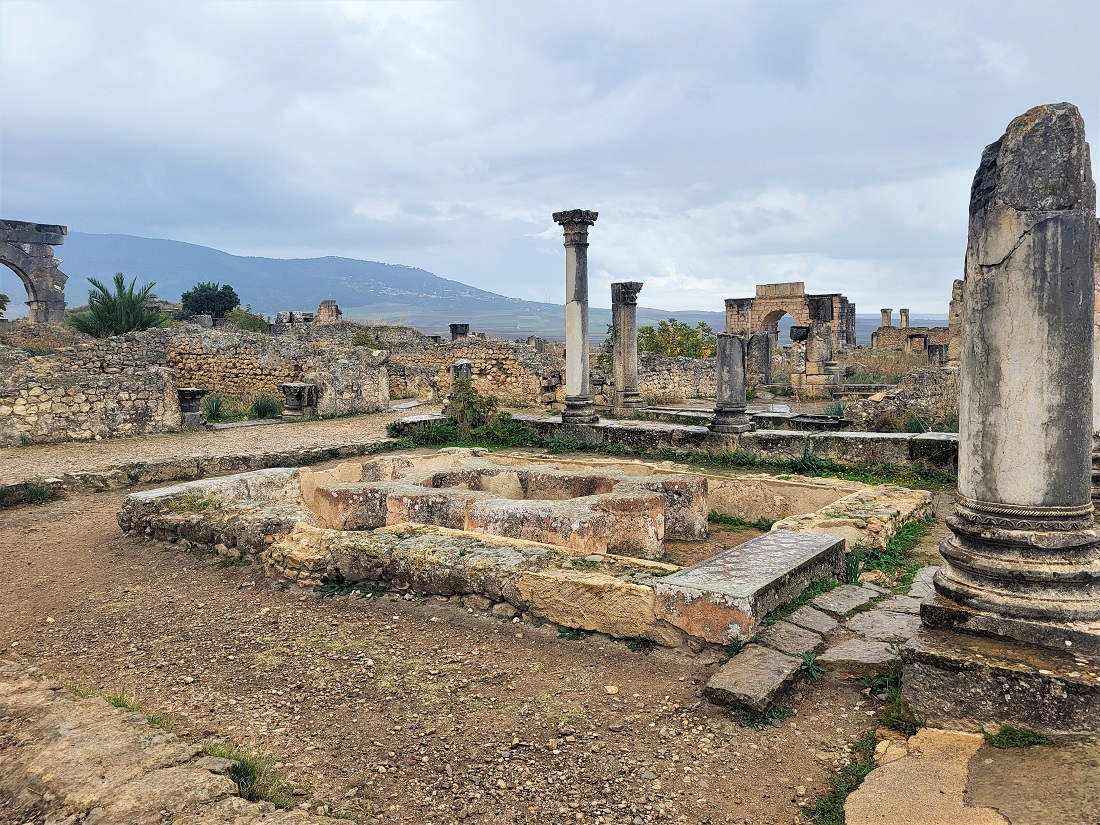
We wandered in and out of a few more buildings, including the North Baths (above) and the striking House of Columns (below).

By now the rain had turned into a deluge, so we sped up, taking care not to slip on the wet stones.
We spent some time sheltering under the spectacular Triumphal Arch (below), while we waited for the worst of the rain to ease off.
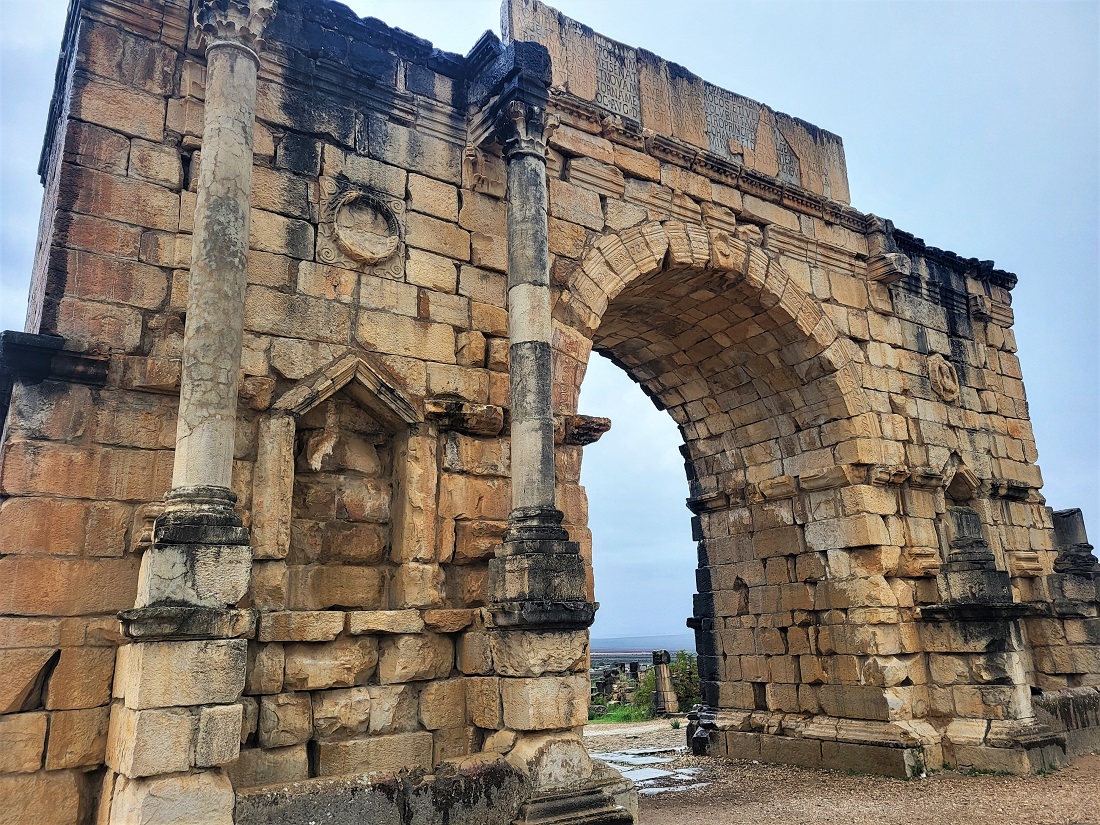
The arch, which is also known as the Arch of Caracalla, was built by Governor Marcus Aurelius Sebastenus in 217AD, in honour of the Roman emperor and his mother Julia Domina.
It’s since been reconstructed by archaeologists, although some dispute if this is what it would have looked like in Roman times.
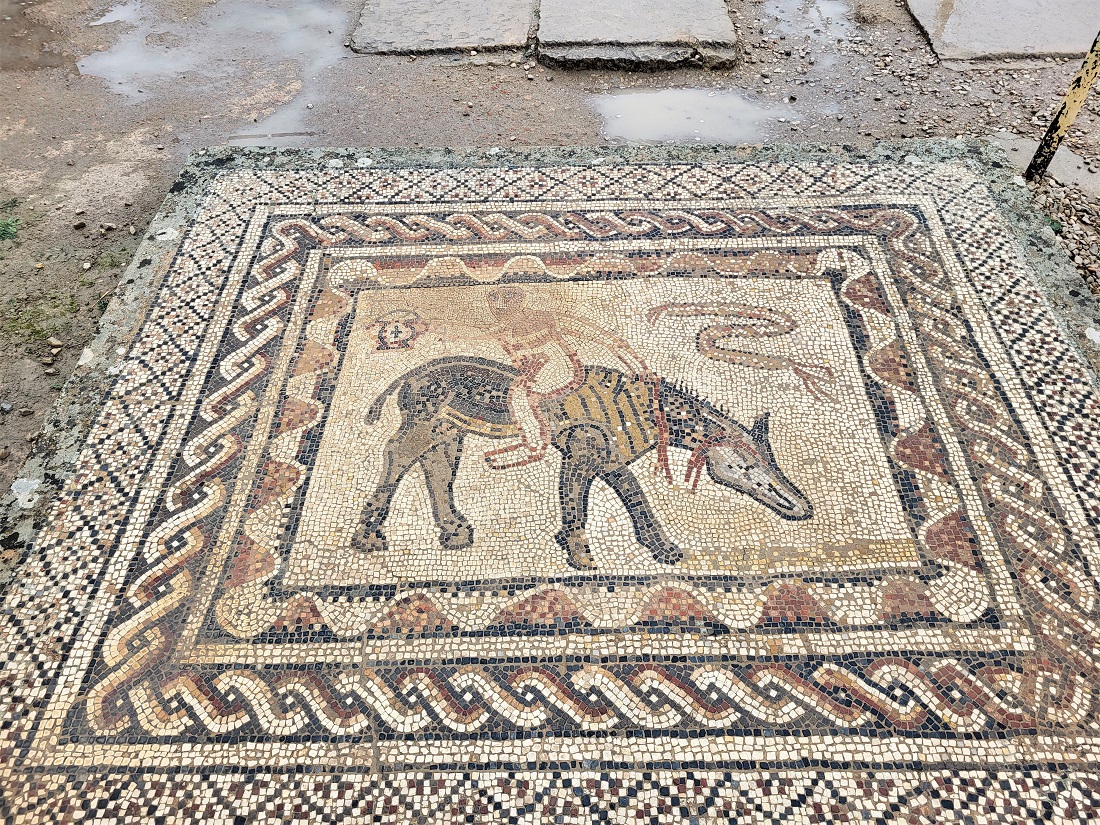
Once the rain had eased, we made our way towards the market place, stopping along the way to take a look at a few more ruined houses, including the House of the Athlete (above).
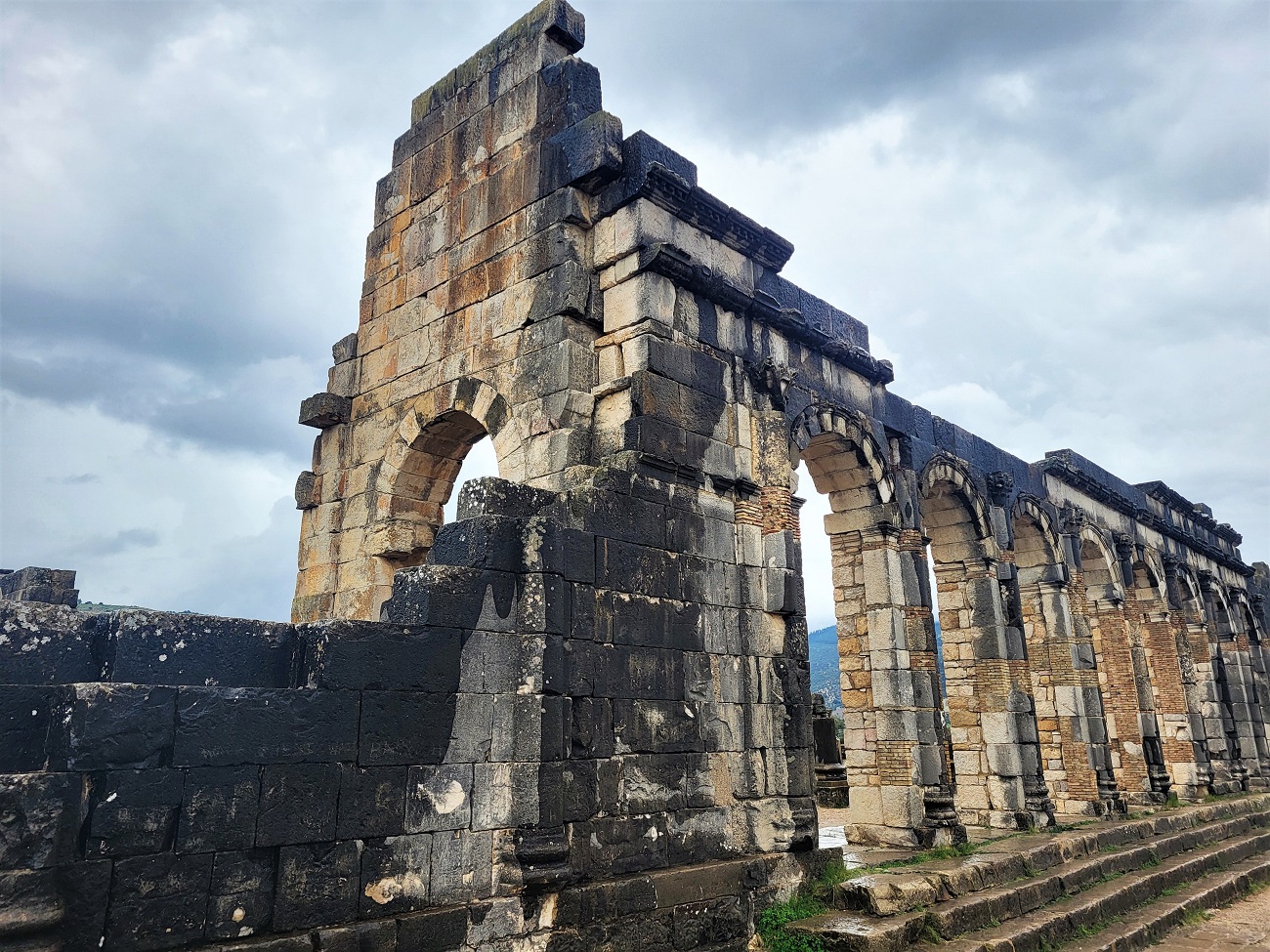
The most notable building still standing in Volubilis is the stunning basilica (above).
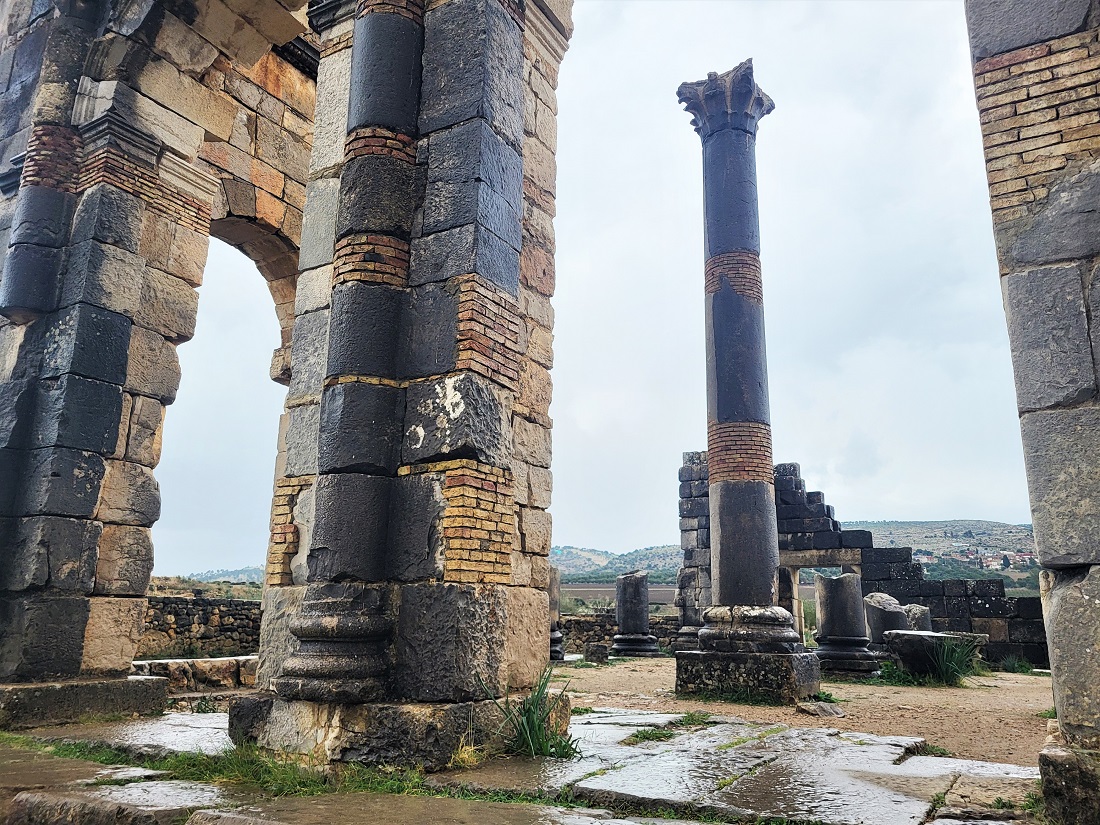
Dating from the start of the 3rd century, it’s where the city’s administration and justice was carried out.

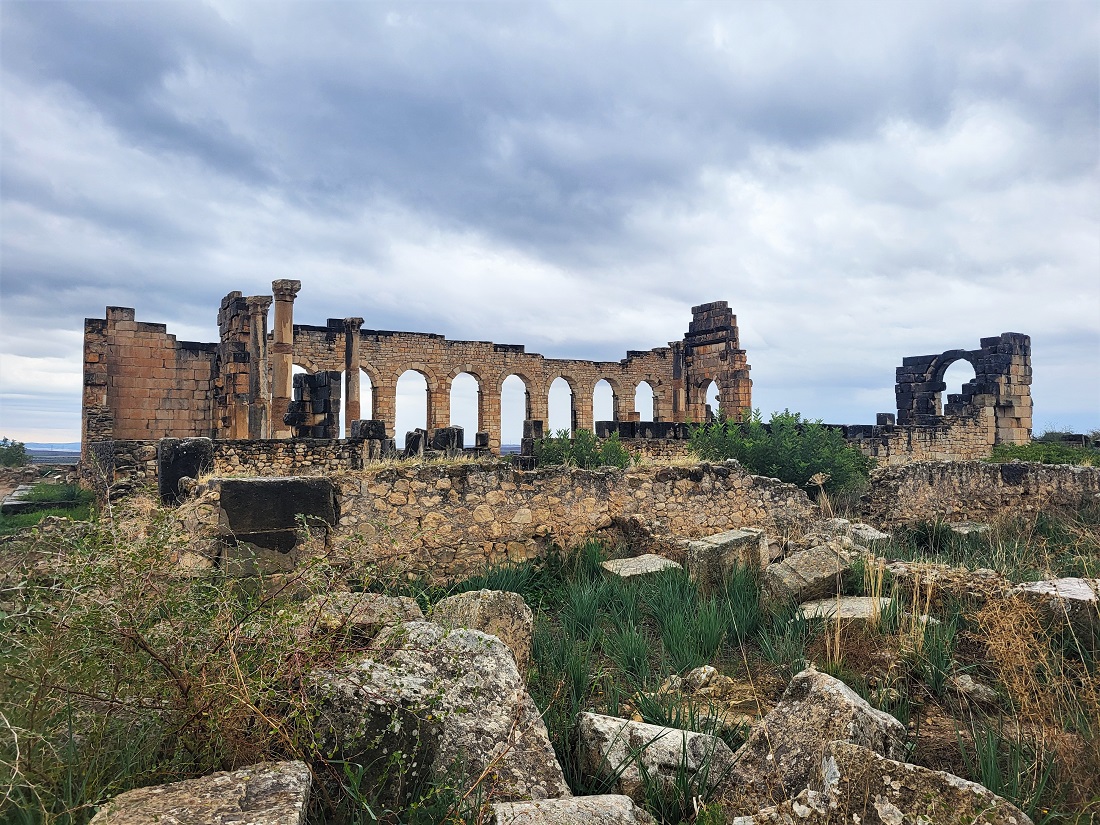
Behind the basilica lies the magnificent Capitoline Temple (above), which also dates from the early 3rd century.

Not much remains of it, but I was struck by the impressive altar in the courtyard.
I enjoyed our guided tour around Volubilis. Despite the fact it hasn’t been fully excavated, it’s quite a big site and there’s lots to see.
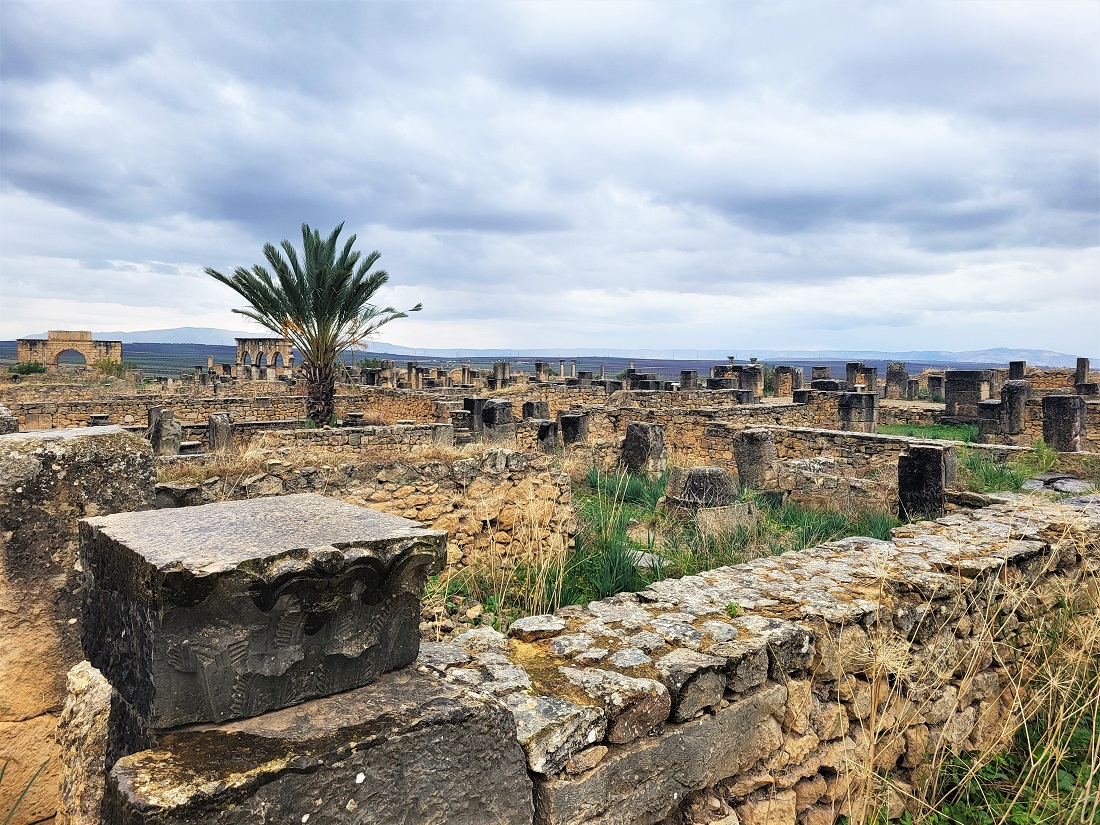
Volubilis doesn’t boast the intact houses or grand amphitheatres you find in other ruined Roman cities such as Pompeii, Herculaneum or Jerash.
But the sheer number of well preserved mosaic floors is impressive – I hadn’t expected there to be quite so many.
I’d been really excited to visit Volubilis and as much as I enjoyed my time there, I’d have liked more information about what I was seeing.
I felt as though I went from one ruined building to another, not always sure what I was looking at.
It’s a fascinating place and well worth seeing, and I’m glad I went as it was so different to anywhere else I visited in Morocco.
 Little Old World
What a great place. Those mosaics are wonderful!
LikeLiked by 1 person
The mosaics were fabulous! I couldn’t get over how many there were and what great condition they were in.
LikeLiked by 1 person
The mosaics are amazing. I get that being covered in dirt for millennia has protected them so far, but now they seem to be open to the elements which surprises me a bit. I love your opening shot of the grand view.
LikeLiked by 1 person
The mosaics were incredible. I agree with you, I was amazed they were just open to the elements, especially as it was raining really heavily when we were there, which can’t have been doing them much good.
LikeLiked by 1 person
The good thing about the rain is that it brought out the colours in the mosaics. We went on a sunny day and there were shadows across the mosaics from the ropes and other barriers. It is quite a phenomenal site isn’t it?! Maggie
LikeLiked by 1 person
Thanks Maggie, it’s an extraordinary place 🙂 I hadn’t expected the mosaics to be as spectacular and as intact as they were. The rain really enhanced their beauty, although I worry about the effect being so open to the elements will have on them.
LikeLiked by 1 person
Yes, I hope they realize what they have and protect them soon.
LikeLiked by 1 person
Thanks for the tour. I’d never heard of this place before.
LikeLiked by 1 person
Thanks Neil. I wasn’t aware of it either until I came across it in my guide book. It’s a fascinating place.
LikeLiked by 1 person
Wonderful mosaics
LikeLiked by 1 person
Thanks, they were beautiful.
LikeLiked by 1 person
Sounds like an interesting guided tour. The mosaics are impressive. Makes you wonder what the unexcavated parts are like.
LikeLiked by 1 person
Thanks 🙂 It was a fascinating place to visit and the mosaics were spectacular. It’d be interesting if they one day excavate the parts that are still under the ground.
LikeLiked by 1 person
I imagine these would have been such stunning buildings in their heyday!
LikeLiked by 1 person
Thanks 🙂 It’s impressive in its ruined and partially uncovered state, I can’t begin to imagine how spectacular it must have been in Roman times.
LikeLike
Beautiful pictures! Ruins and moody skies were made for each other. It’s always amazing how well preserved Roman cities are- like an architectural legacy left behind for us to marvel at.
LikeLiked by 1 person
Thanks Meg 🙂 It’s incredible how well preserved the site was. The mosaics, in particular, were spectacular.
LikeLiked by 1 person
You might find this of interest: https://tanitlostgoddess6.wordpress.com/2025/06/23/tunisias-pre-roman-regions/
LikeLiked by 1 person
Thanks for sharing Simon, that’s really interesting!
LikeLiked by 1 person