
Of all the places I visited in Morocco, the desert town of Rissani made one of the biggest impressions upon me, albeit not for the right reasons.
Situated in the southeast of Morocco, not far from the towns of Erfoud and Merzouga, and close to the Algerian border, Rissani lies in the arid Tafilat region, which is renowned for its date production.

We started our visit in the covered market in the town centre (above). Just outside the entrance, I spotted a group of women sitting in burkas.
After spending time in the cities where I became accustomed to young Moroccan women in western clothing, I was taken aback, as I wasn’t expecting such a huge cultural shift.
Much more conservatively dressed yes, but not as extreme as the burka.
I studied anthropology at university, where I was trained to be open-minded and curious about other cultures. But as a woman who values her independence, the burka is one cultural practice I really struggle with.

We headed inside the market to find it was almost deserted. It was a Friday, the holiest day of the week in Islam and a traditional day off, so most of the stalls were closed.
In the middle of the market, there was a huge area dedicated to selling dates, often wholesale (below).

I felt uncomfortable as I walked around, aware I stood out like a sore thumb, and I was pestered quite a bit by men, who wouldn’t take no for an answer as they tried to sell me various things I didn’t need.
It didn’t help that I only saw two women who weren’t in burkas the whole time I was in the town centre.
Even then, women seemed few and far between. It’s safe to say, I wasn’t a fan of Rissani.
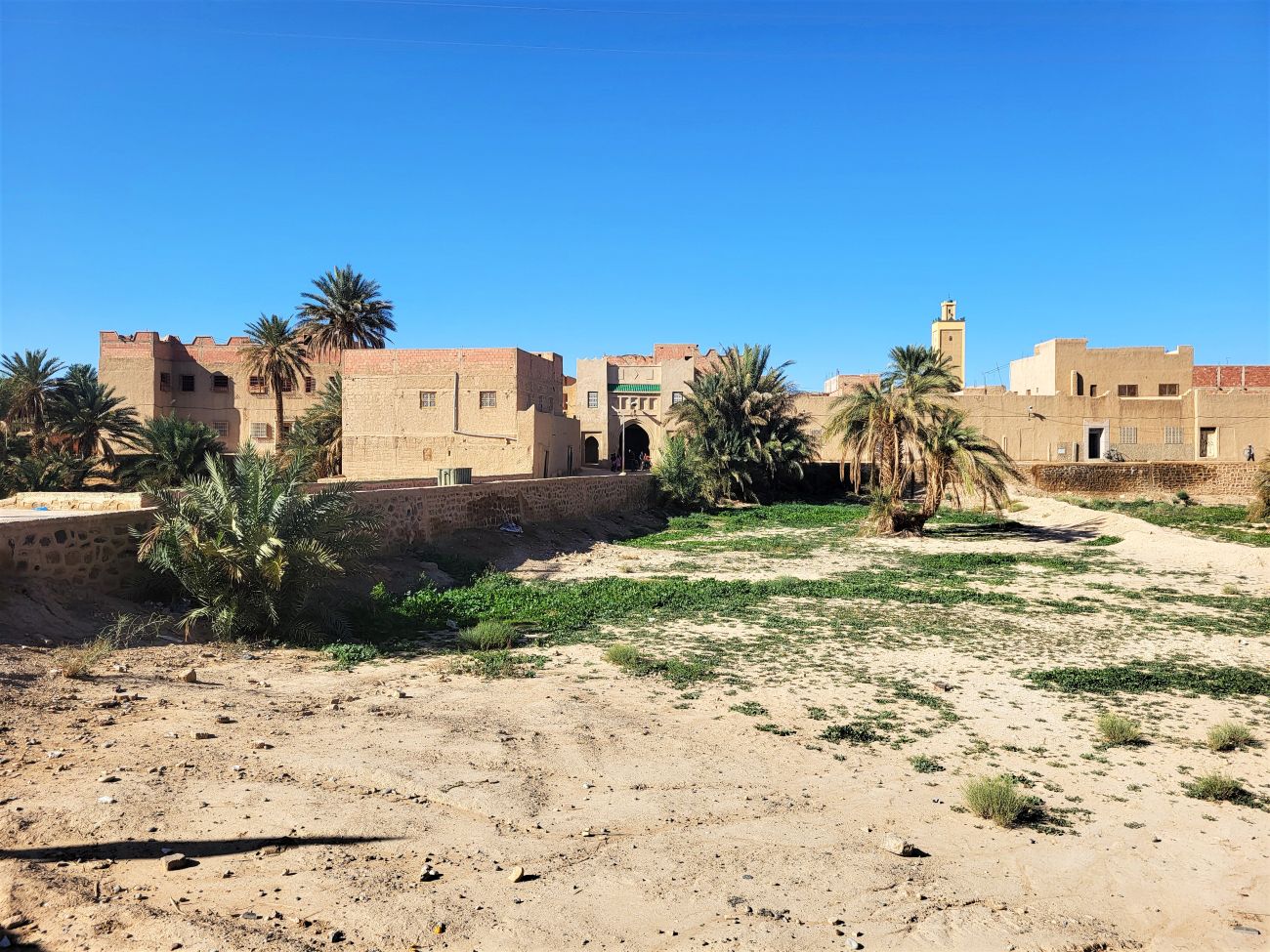
After looking around the market, we made our way to a nearby ksar (above), a small, fortified village, across the road from the Mausoleum of Moulay Ali Cherif.
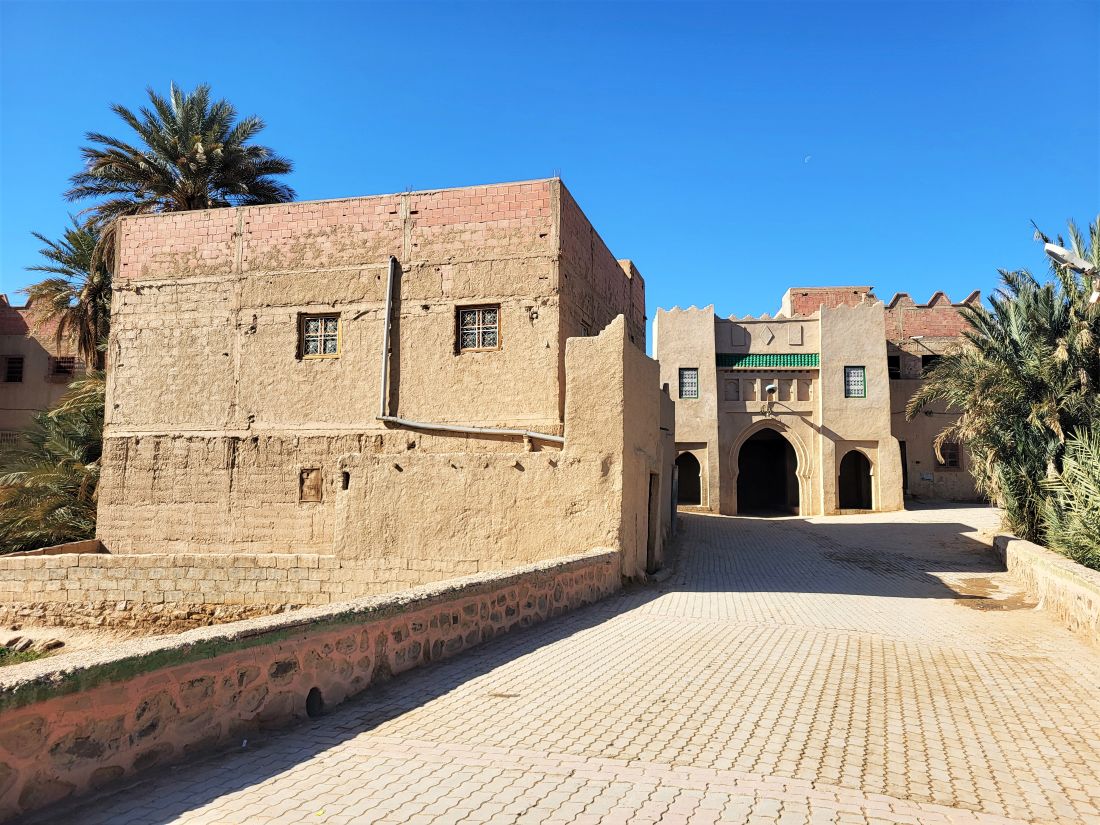
Ksars were designed to offer protection from neighbouring tribes who’d come to raid the village and steal their crops and women.
Built using mud bricks, this ksar was topped with a roof made with palm and wood from the Middle Atlas mountains.

The ksar was fairly empty, but there were still a few families living there and the mosque (below) had recently been rebuilt thanks to funding from the Moroccan government.
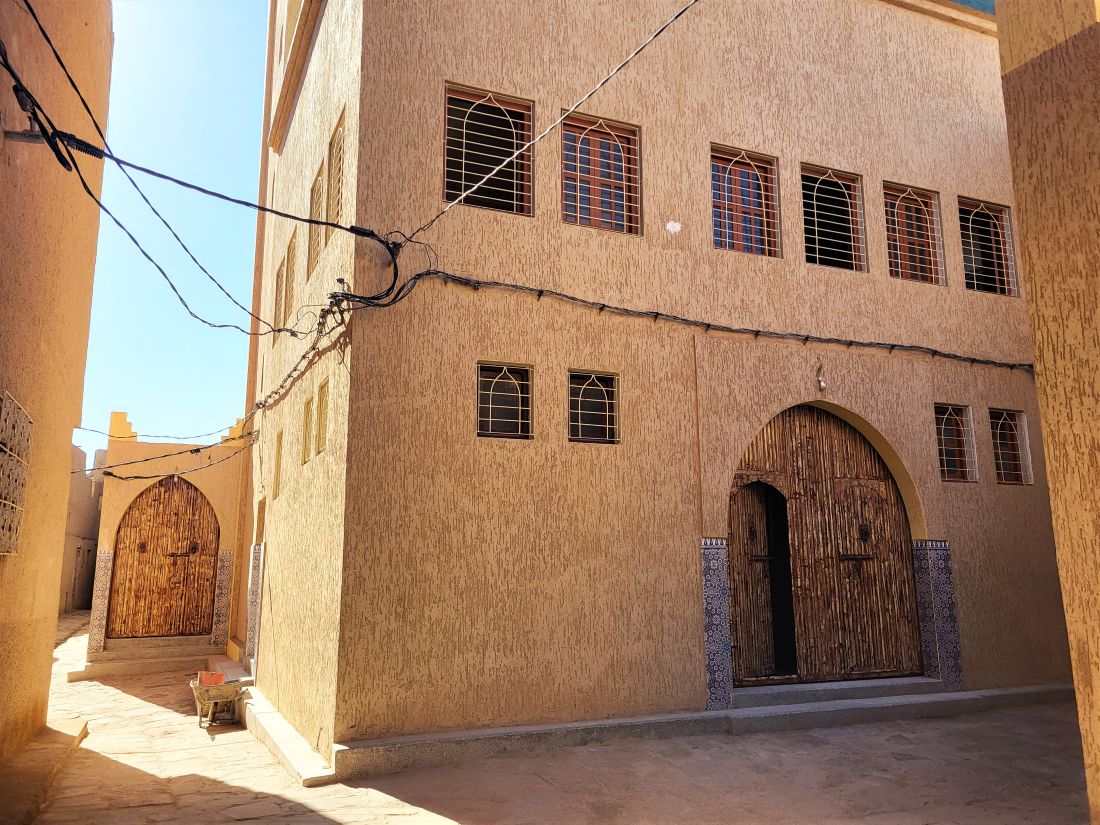
The government now controls all the mosques in the country in a bid to combat extremism.
It also employs all the imams and on a Friday, they have to give a sermon written by government officials in Rabat.

The ksar was a fascinating place, but very quiet and I wouldn’t have felt comfortable walking around by myself.

It felt quite isolated, even though we passed a few people – mostly children – as we ambled around.
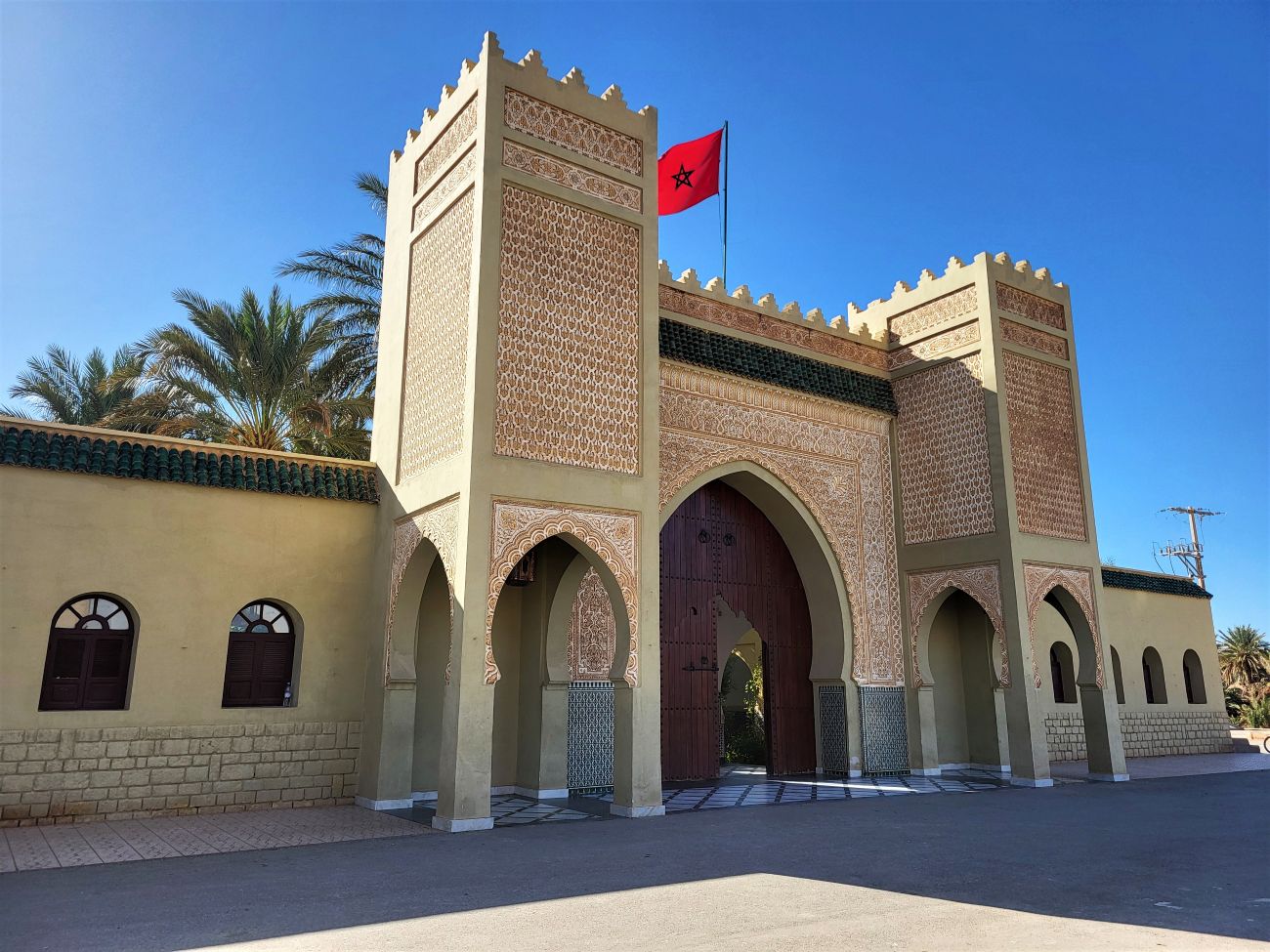
From the ksar, we popped across the road to take a look at the Mausoleum of Moulay Ali Cherif (above), the father of the founder of the ruling Alouite dynasty.
Born in Rissani in the 16th century, Moulay Ali Cherif is said to have been descended from the prophet Mohammed.

Non-Muslims aren’t allowed inside the mosque or to visit Moulay Ali Cherif’s tomb, so we had to make do with looking around the beautiful central courtyard (below).
It was a pretty, tranquil spot with a fountain in the middle surrounded by lush, green foliage.
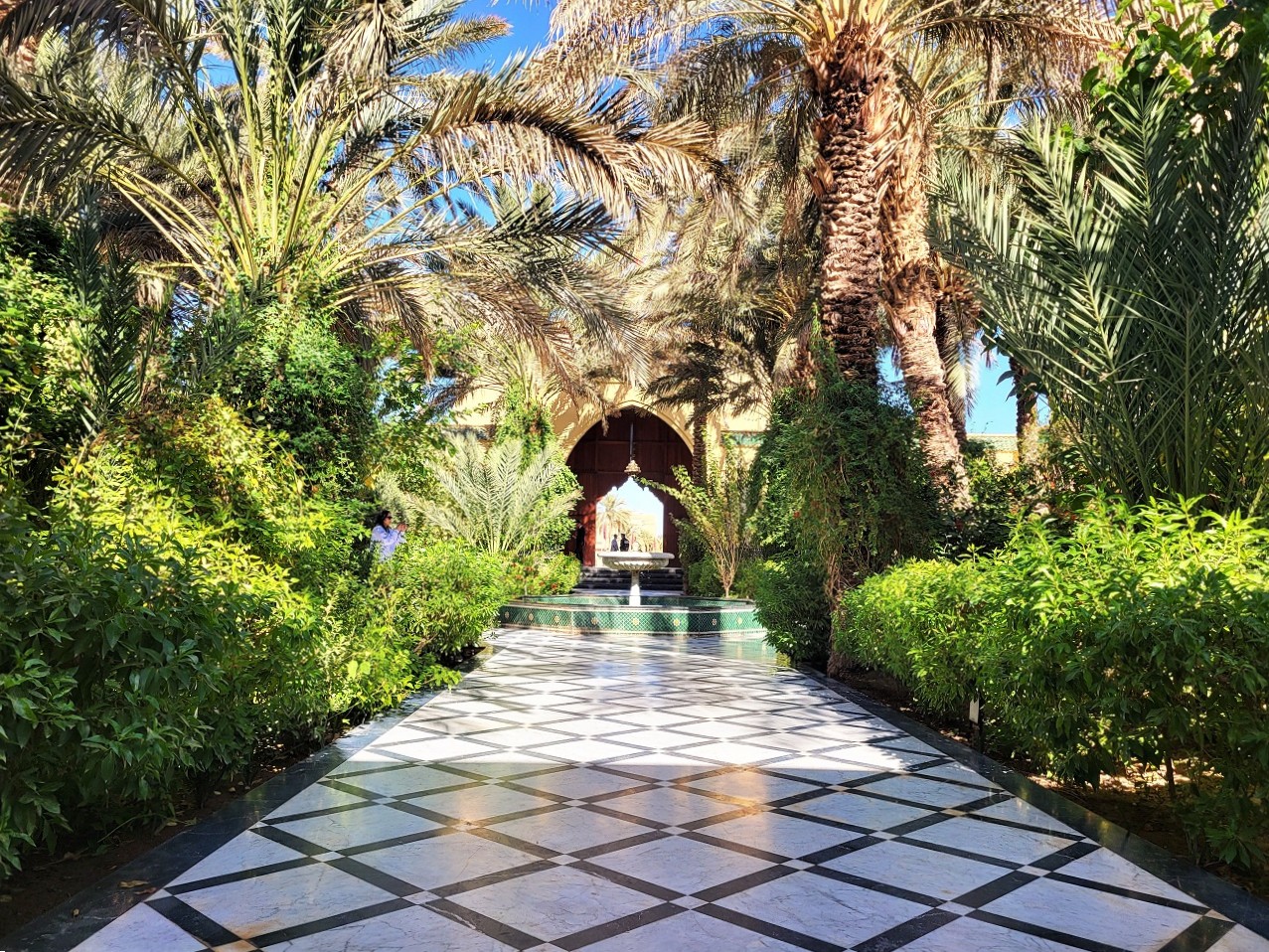
We didn’t have long to look around because they were expecting a VIP (possibly a government minister) imminently and we needed to be gone before he arrived.
There were lots of very anxious-looking security types milling around, who were all on their guard.
What we saw of the mausoleum was lovely, but I really didn’t like Rissani and was relieved to leave the town behind.
As a woman (and a pale skinned, blue-eyed redhead at that), I felt so uncomfortable there, aware I was attracting attention despite being modestly and respectfully dressed.
I’m used to people staring, pointing, whispering, even giggling, when they see me in parts of Asia and Africa, but it’s usually harmless. Here I just felt unwelcome.
Despite not enjoying my time in Rissani, I was glad I visited as it was important to see another side to Morocco that was in stark contrast to the more touristy areas I’d seen so far.
 Little Old World
Stay safe 🙏🏼❤️ The street markets seem quite a contrast to the mosque courtyard area and tile work which look very rich and amazingly elaborate.
LikeLiked by 1 person
Thanks, I’m safe. The mausoleum was lovely, but the covered market felt like a whole other world.
LikeLiked by 1 person
After all your lovely posts about Morocco it was a bit of a shock to read this one but as you say, important to see the other side.
LikeLiked by 1 person
Sorry about that, I felt it was important to also show the parts I didn’t enjoy. But it was the only part of the trip where I had a negative experience. I loved the rest of Morocco.
LikeLiked by 2 people
No need to apologise. I think it’s great you did tell this side of your Moroccan trip.
LikeLiked by 1 person
I would have felt equally ill at ease. The only time I have seen a lot of women in burkas was in KL but I think they were mostly visitors from Saudi. Occasionally I encounter a woman in a niqab and I find it strangely difficult to look her in the eye.
LikeLiked by 1 person
It’s one of the few times I’ve felt really uncomfortable while travelling and I hadn’t expected it in Morocco. I was expecting it to be conservative in parts but not to that extent. It’s interesting to hear your experiences in KL, it also isn’t somewhere I’d expect to find lots of women in burkas.
LikeLiked by 1 person
The architecture and history look incredible, but I can totally understand why it felt uncomfortable at times. Thanks for sharing such an honest perspective, and it’s eye-opening to see a different side of Morocco.
LikeLiked by 1 person
The architecture in the mausoleum was beautiful and the ksar was fascinating. But I found the covered market very uncomfortable. It had a completely different feel to the other places I visited in Morocco. Thanks for commenting.
LikeLiked by 1 person
I can imagine that contrast, some places feel magical, while others can be overwhelming. I’m glad you still got to enjoy the beautiful parts, though. Thanks for sharing your experience so openly!
LikeLiked by 1 person
beautiful area for sure, but that would make me feel uncomfortable too. It’s hard to really enjoy a place when you do not feel welcome at all
LikeLiked by 1 person
Thanks Meg, I hadn’t expected it at all. I had a great experience everywhere else I went in Morocco, but Rissani left me feeling uncomfortable and unwelcome. It’s not somewhere I’ll be going back to.
LikeLiked by 1 person
I don’t think I would enjoy Rissani either, it sounds actually quite intimidating and scary. Definitely another side, away from the tourist hotspots.
LikeLiked by 1 person
It was an eye opening experience and not somewhere I’d be going back to as a woman. It was the only place I felt like that though, I felt welcome and safe everywhere else in the country.
LikeLike
Ugh, sorry to hear that you felt uncomfortable walking around and that you didn’t feel welcome despite dressing appropriately.
LikeLiked by 1 person
Thanks, it’s a shame, as everywhere else I went in Morocco was fine. It was the only place I visited where I felt uncomfortable and as though I wasn’t welcome.
LikeLiked by 1 person