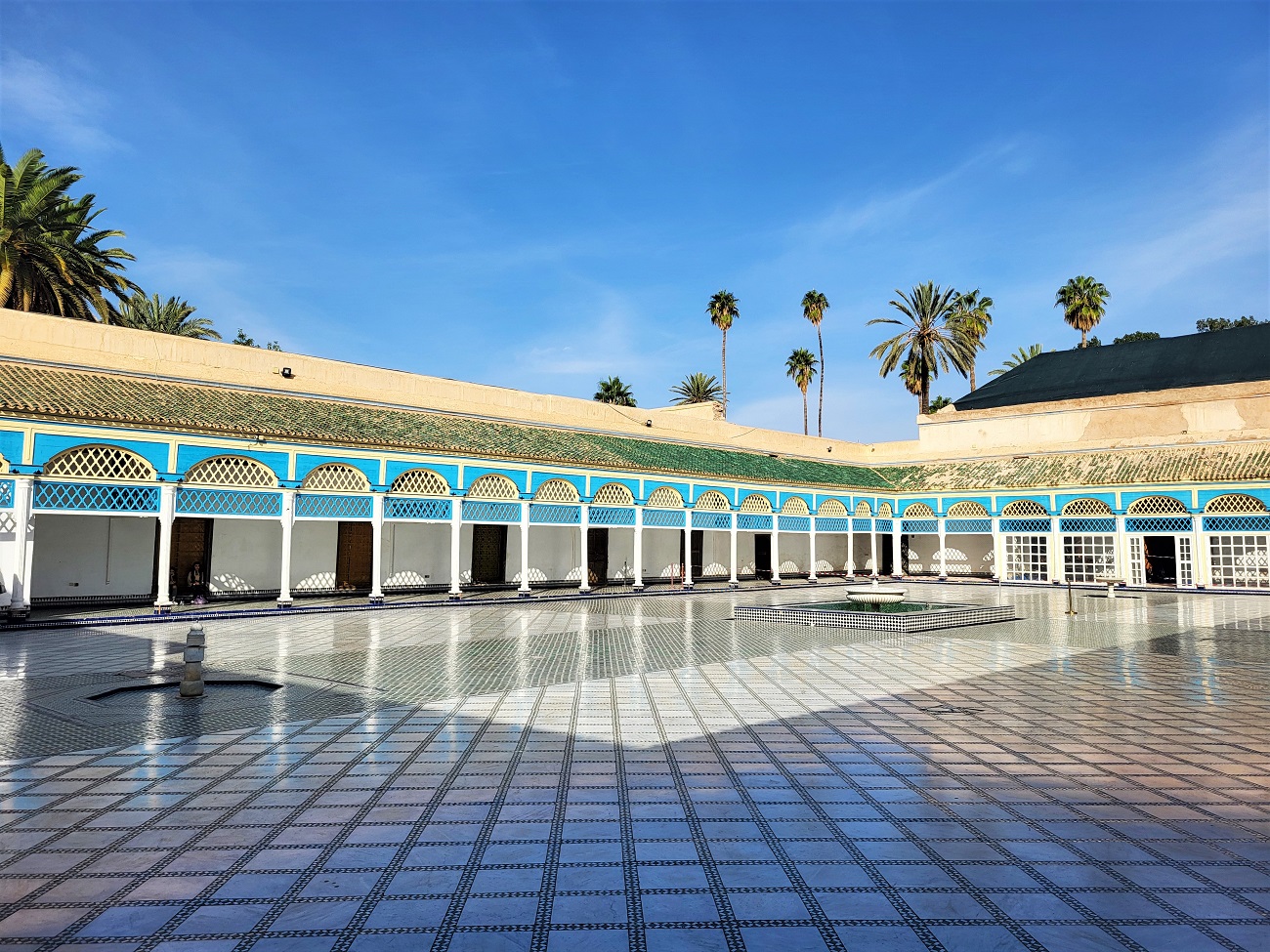
We only had a day and a half in Marrakech, which wasn’t anywhere near enough time to see the city’s sights.
So we spent most of our time exploring the medina, along with a brief foray to the Ville Nouvelle to see the extraordinary Jardin Majorelle and the Yves Saint Laurent Museum.
Dating back to the 1070s, Marrakech’s medina was founded by the Almoravid dynasty and in 1985, was designated a UNESCO World Heritage Site.
Here’s a brief guide to the places we visited in the historic medina…
Koutoubia Mosque
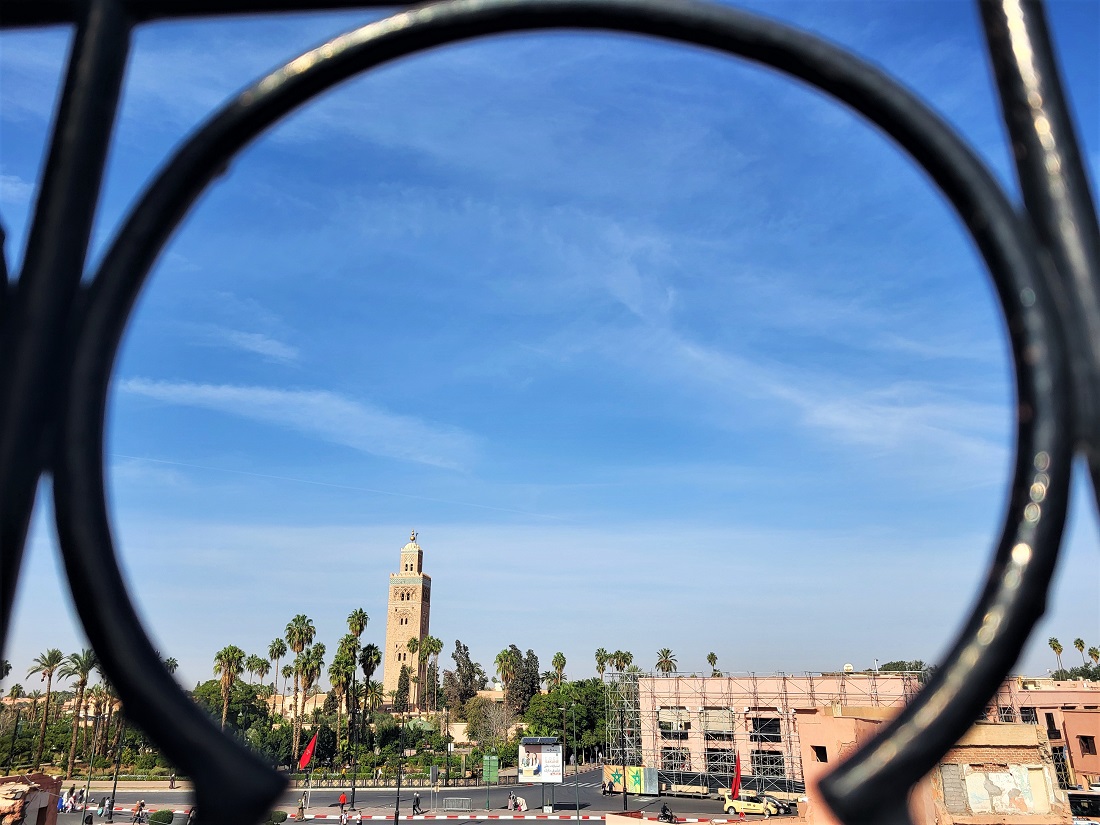
The most iconic building in Marrakech is also, at 230ft, the tallest, making it instantly recognisable around the city.
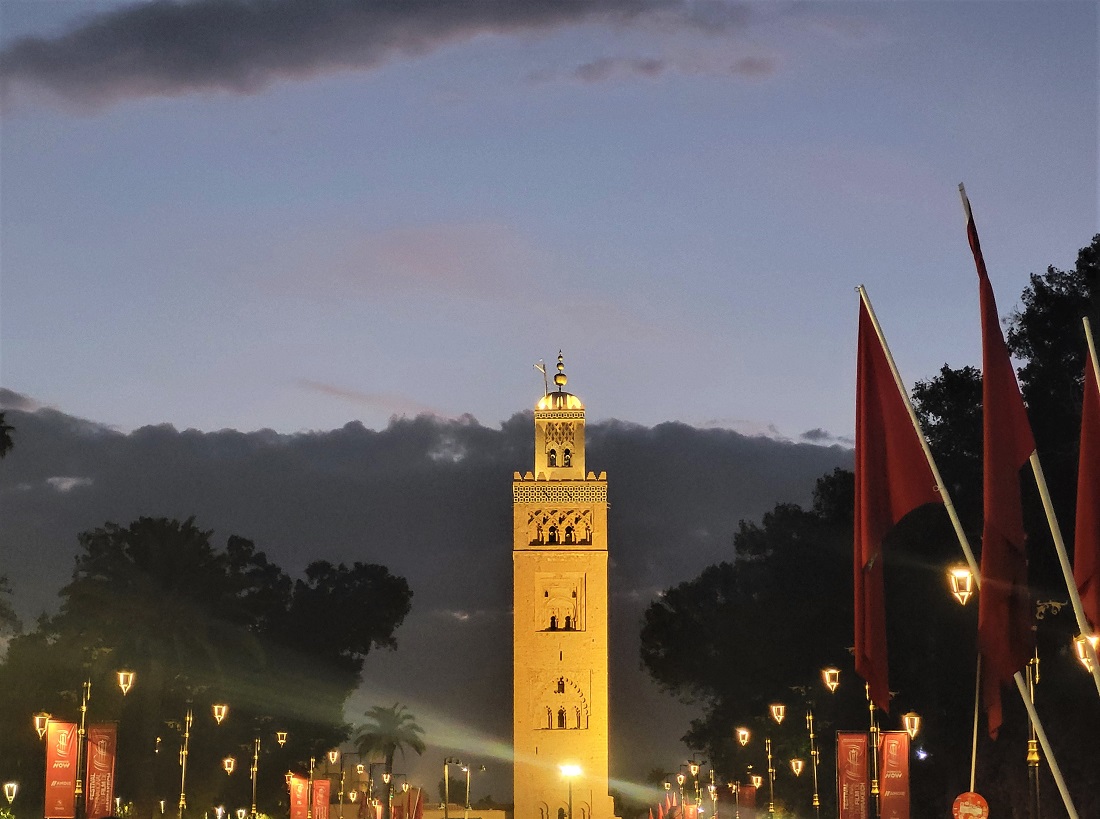
Koutoubia Mosque was commissioned by Sultan Abd el-Moumen in the 12th century to commemorate his victory over the Almoravid dynasty.
While the base of the mosque was built by el-Moumen, the distinctive square minaret was the work of his grandson Yacoub el-Mansour.
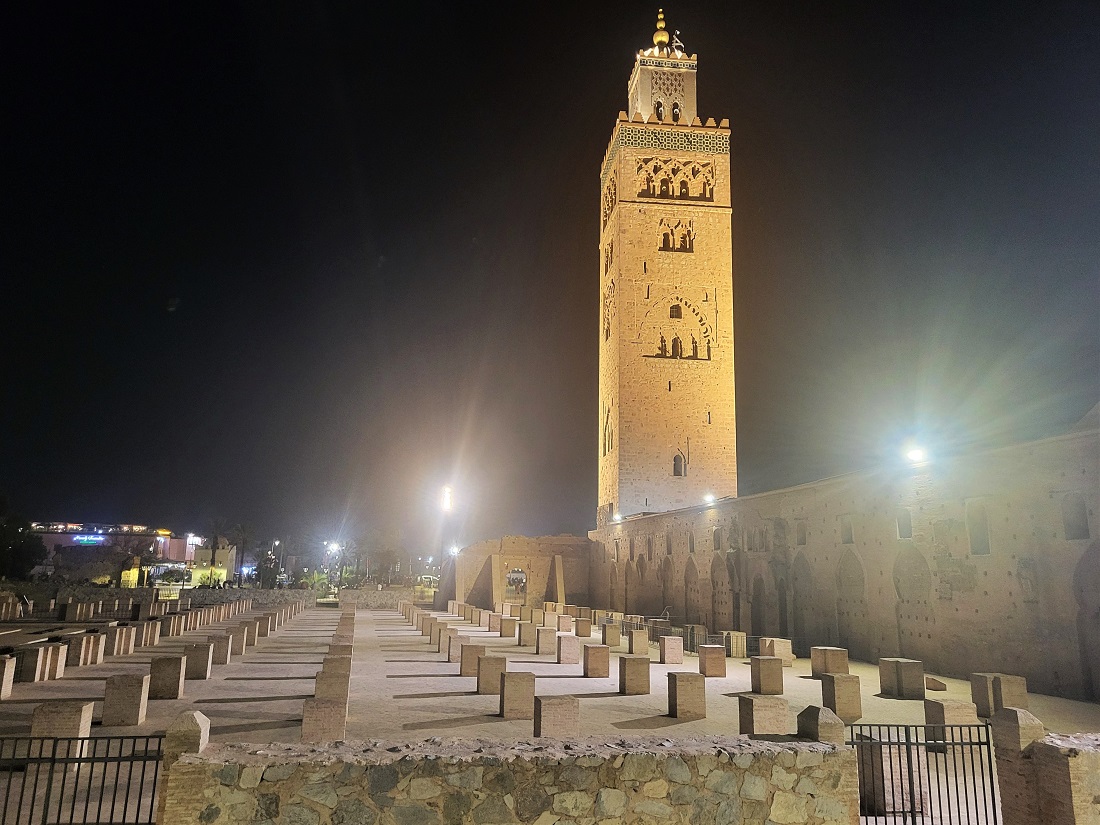
Built from pink Guéliz stone, the striking structure is the biggest mosque in Marrakech and can hold up to 20,000 people, and was the inspiration behind Rabat’s Hassan Tower.
Non-muslims aren’t allowed inside, so I had to make do with admiring it from the outside. It’s safe to say I was rather impressed by the grand mosque.
Jemaa el-Fna
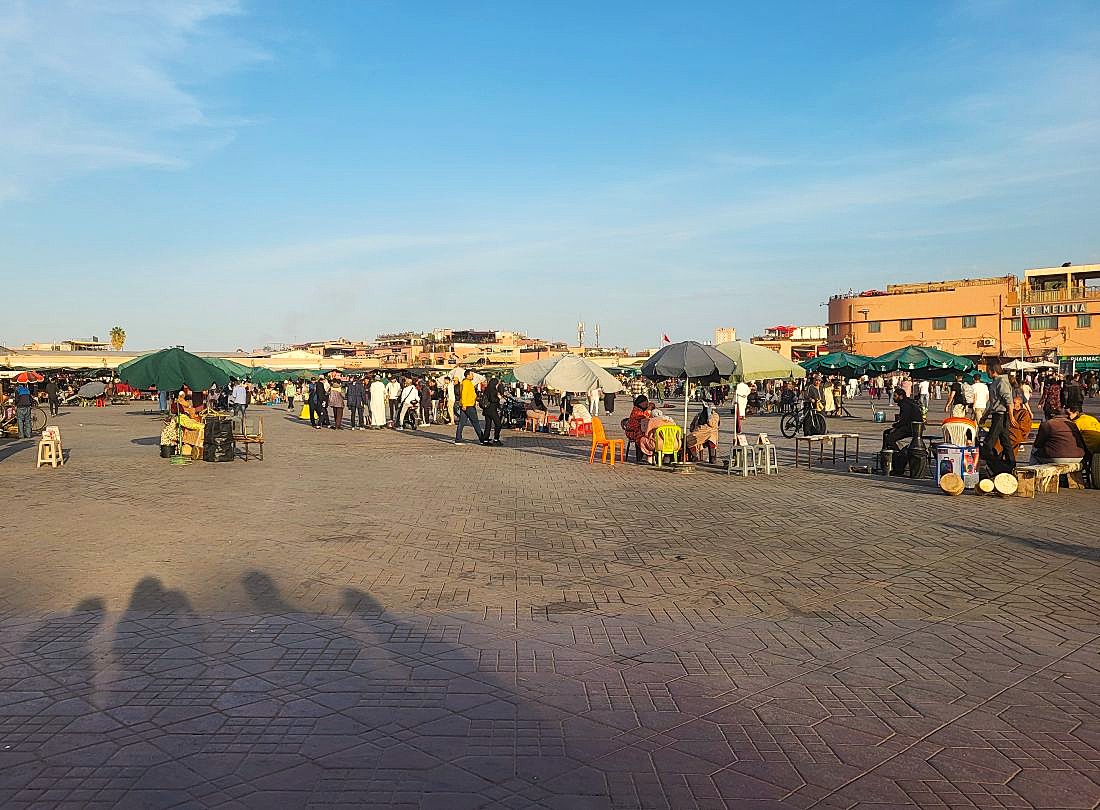
One of the most recognisable squares in the world, Marrakech’s Jemaa el-Fna is a symbol of the city and a must for visitors.
The lively square is filled with musicians, storytellers, dancers and vendors selling all manner of things, but it’s at night that it really comes alive.
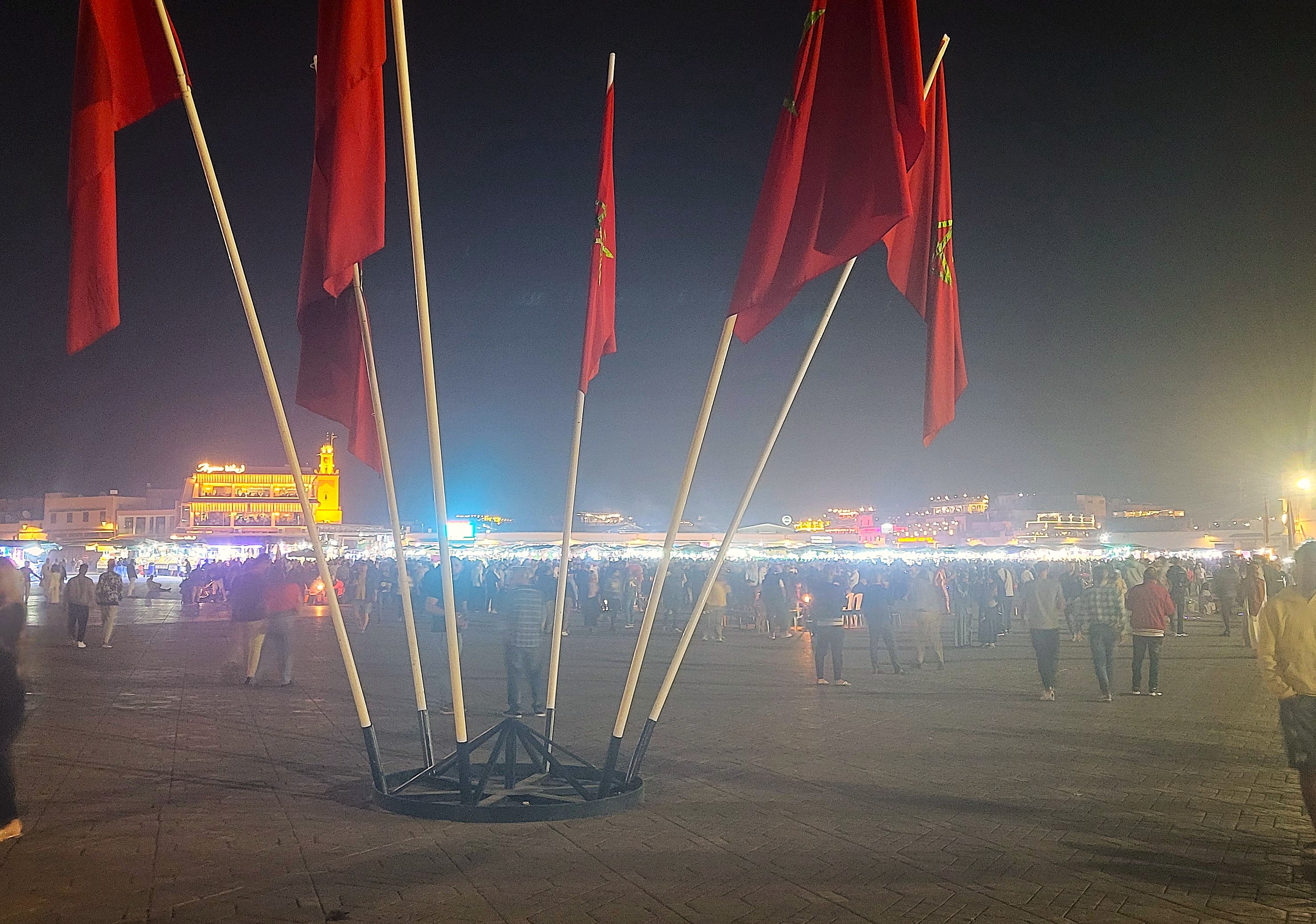
After dark, the square is teeming with people, stalls selling food, herbs and fruit juice, as well as street entertainers such as Gnawa musicians and spoken word artists.
I found the packed, pulsating square a little overwhelming and an assault on the senses, but it was an incredible experience and one I wouldn’t have wanted to miss.
Bahia Palace
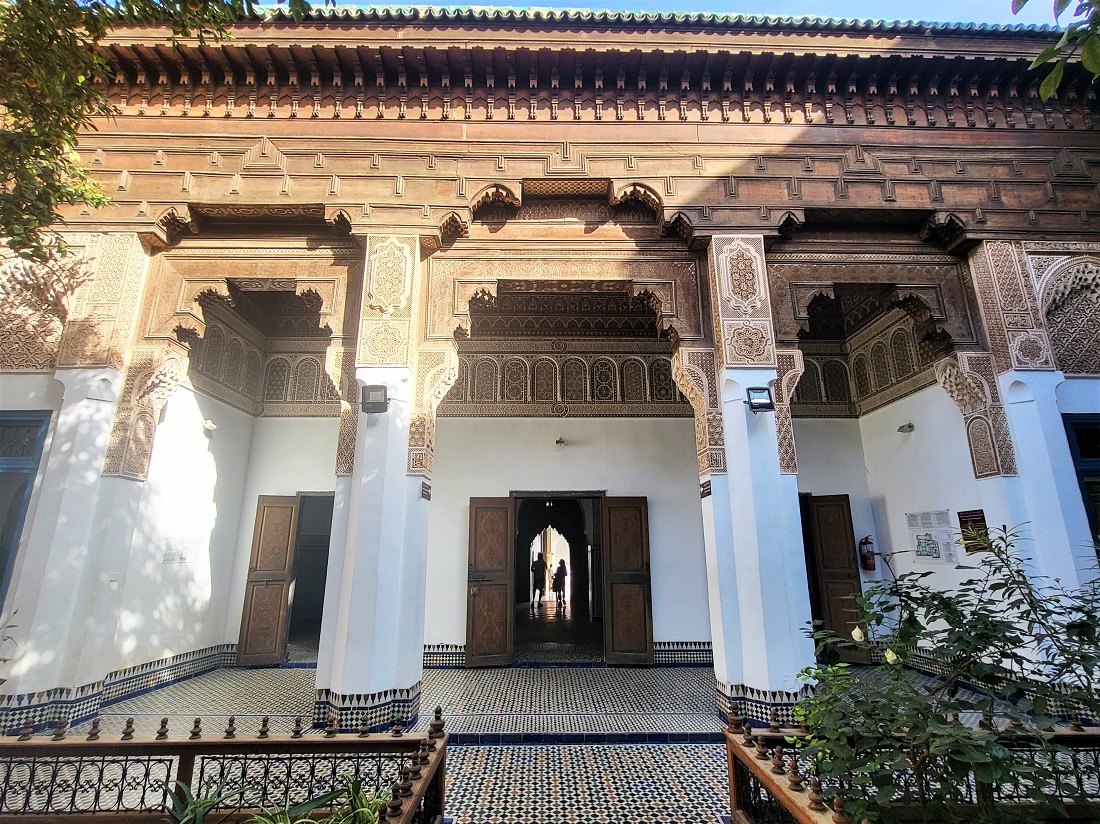
Nestled in the heart of the medina, the elegant Bahia Palace is the work of two grand viziers – Si Moussa and his son Ba Ahmed – and was named after Ba Ahmed’s favourite wife.
Built at the end of the 19th century, the palace was damaged by the 2023 earthquake and when we visited at the end of 2024, parts of it were still being repaired and were off limits to visitors.
We approached the palace via a large tree-lined path home to kumquat, orange and oleander trees.
We started our visit in the oldest part of the palace built by Si Moussa, before taking a look around the section built by Ba Ahmad (above).
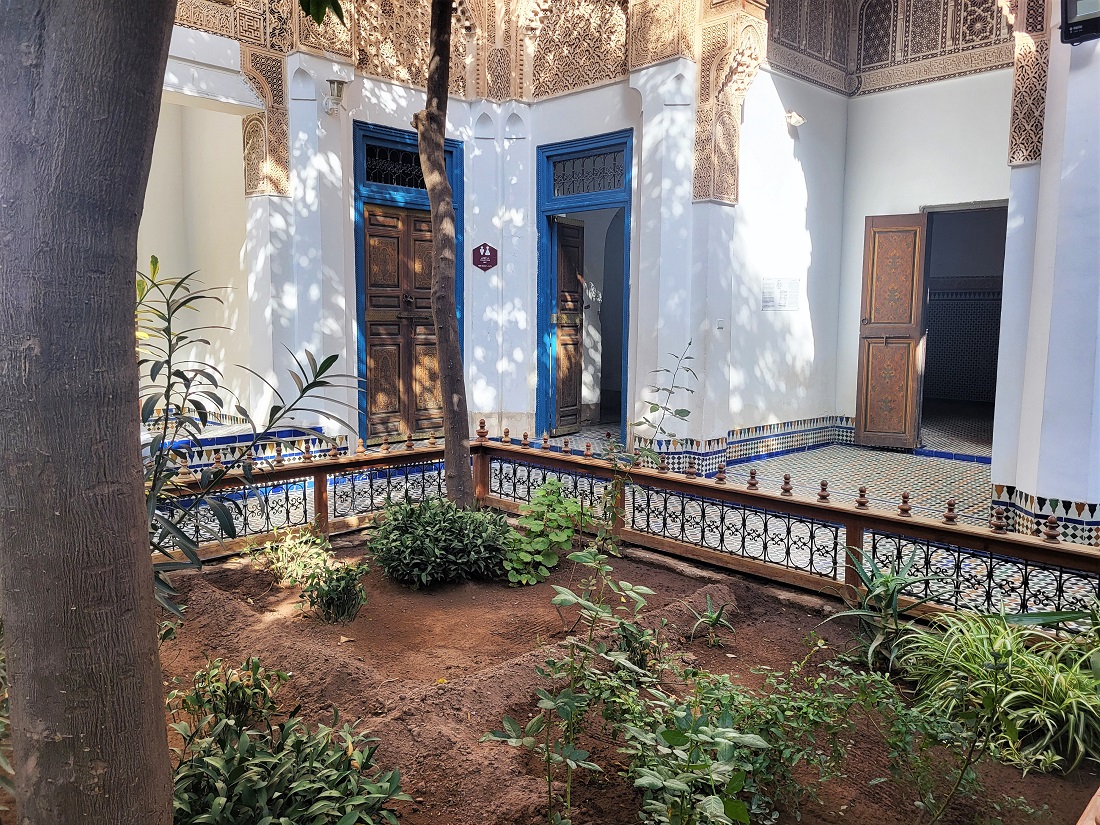
The older part revolves around a series of apartments leading off from a central inner courtyard filled with plants such as jasmine and cypress trees (above), and a couple of star-shaped pools.
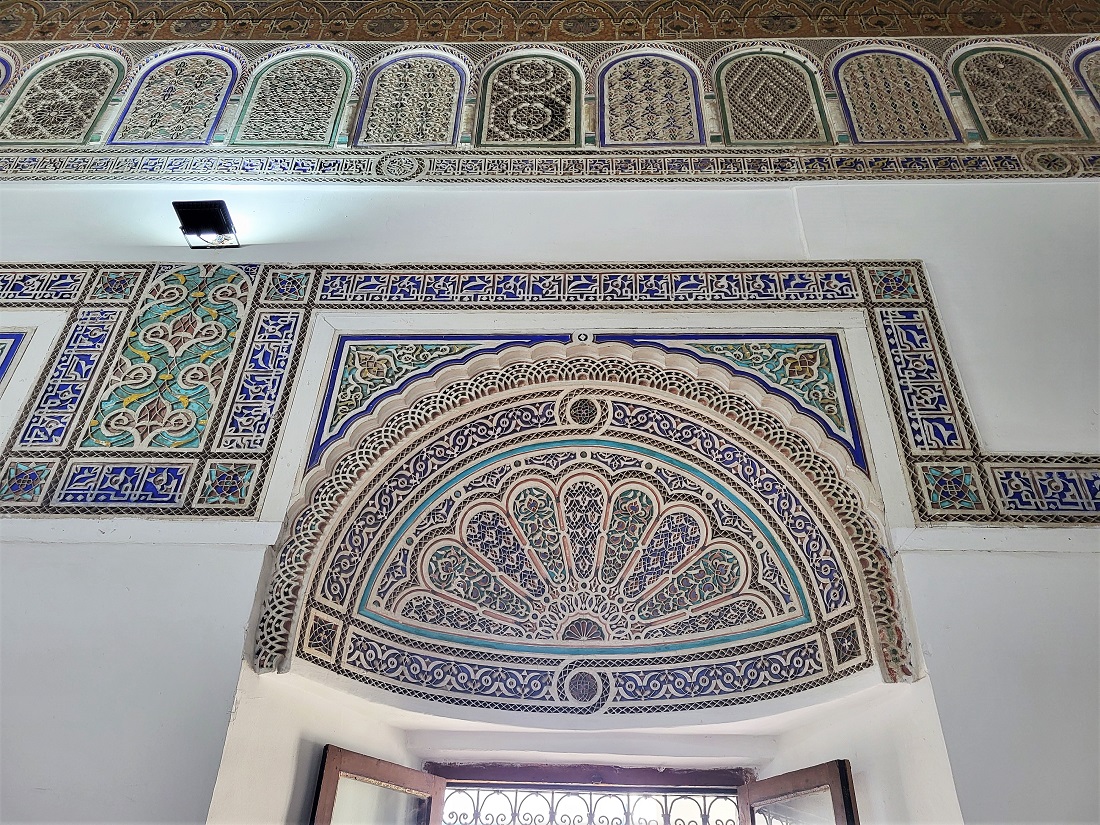
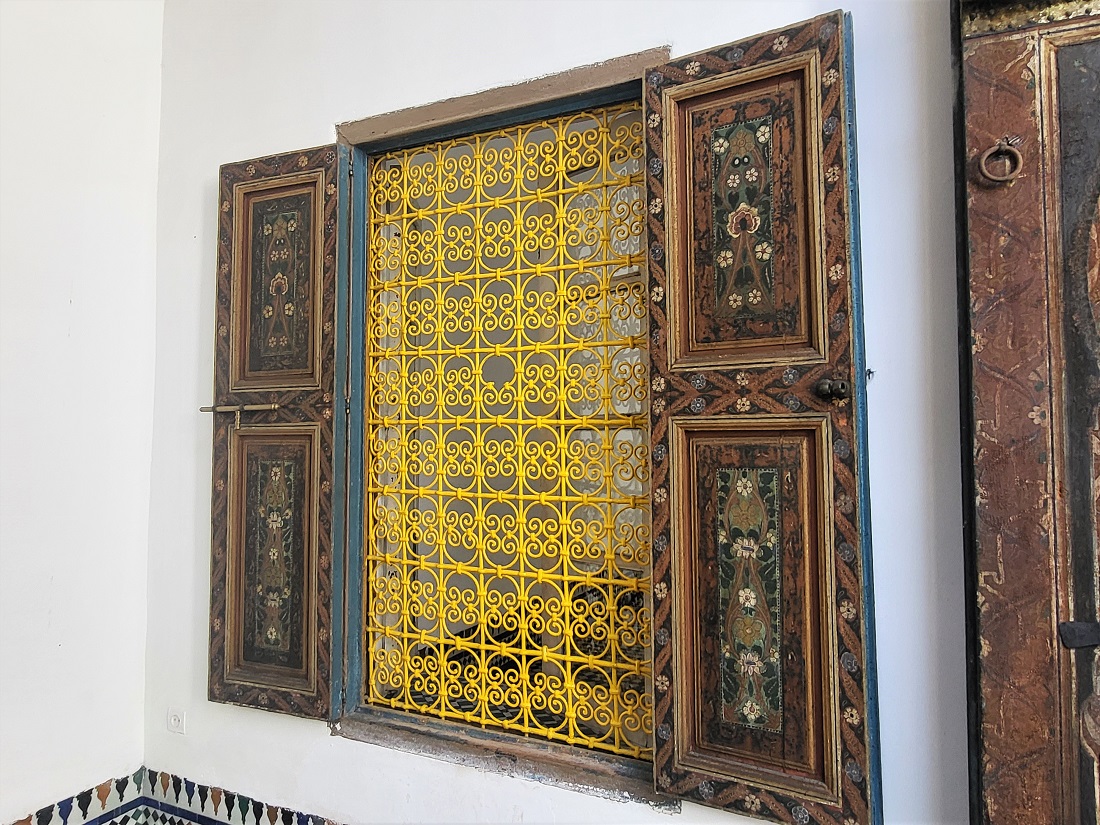
The palace was delightful – think lots of gorgeous zellij tilework, soothing fountains and lush greenery, and beautifully crafted wooden doors and metalwork.
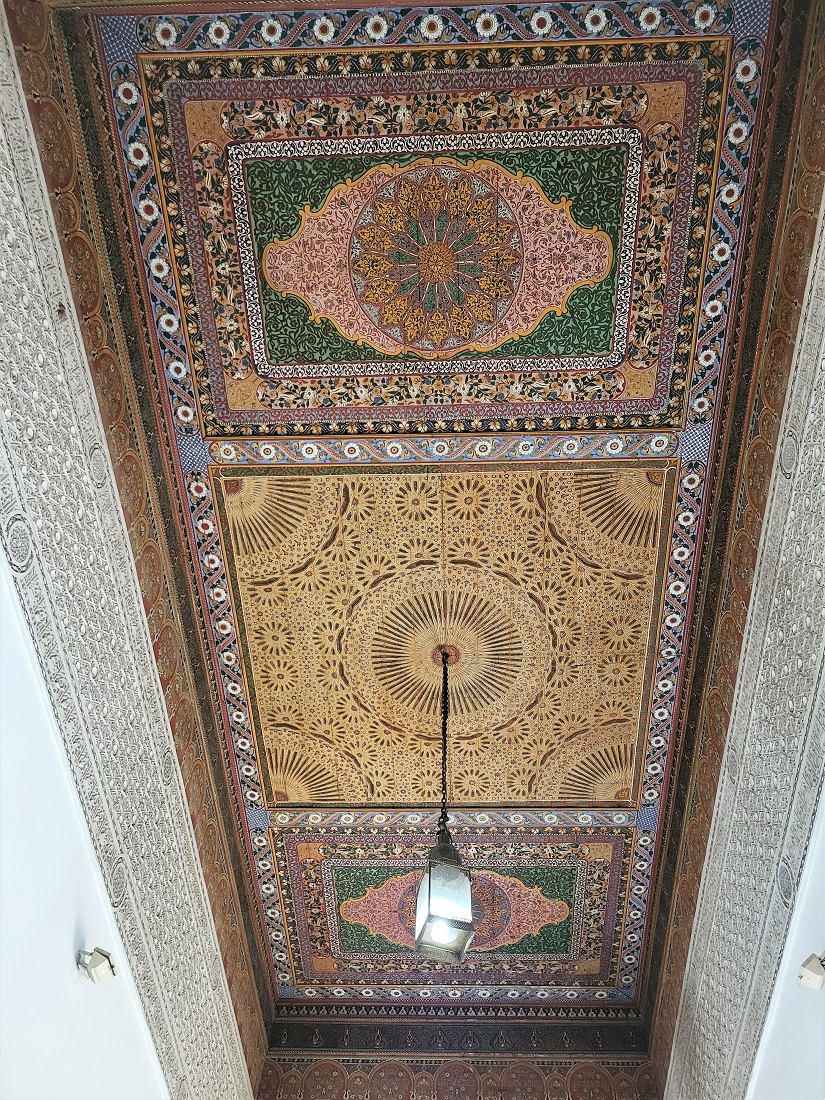
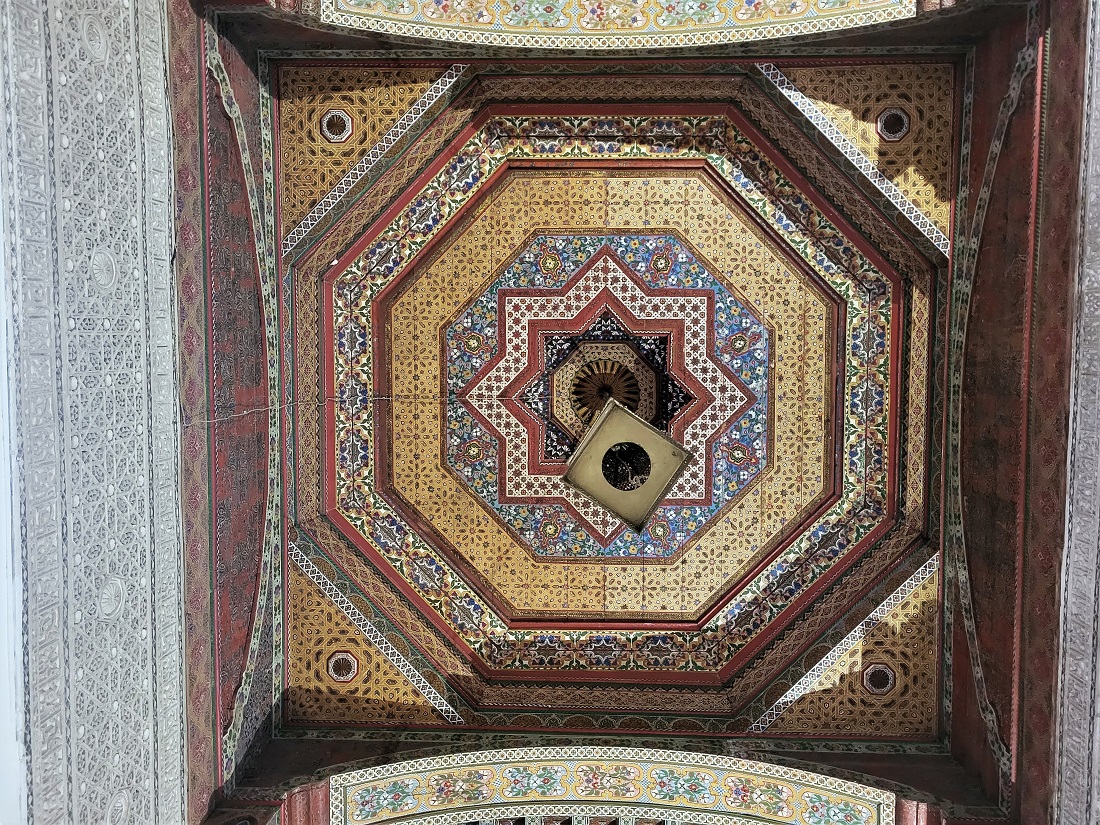
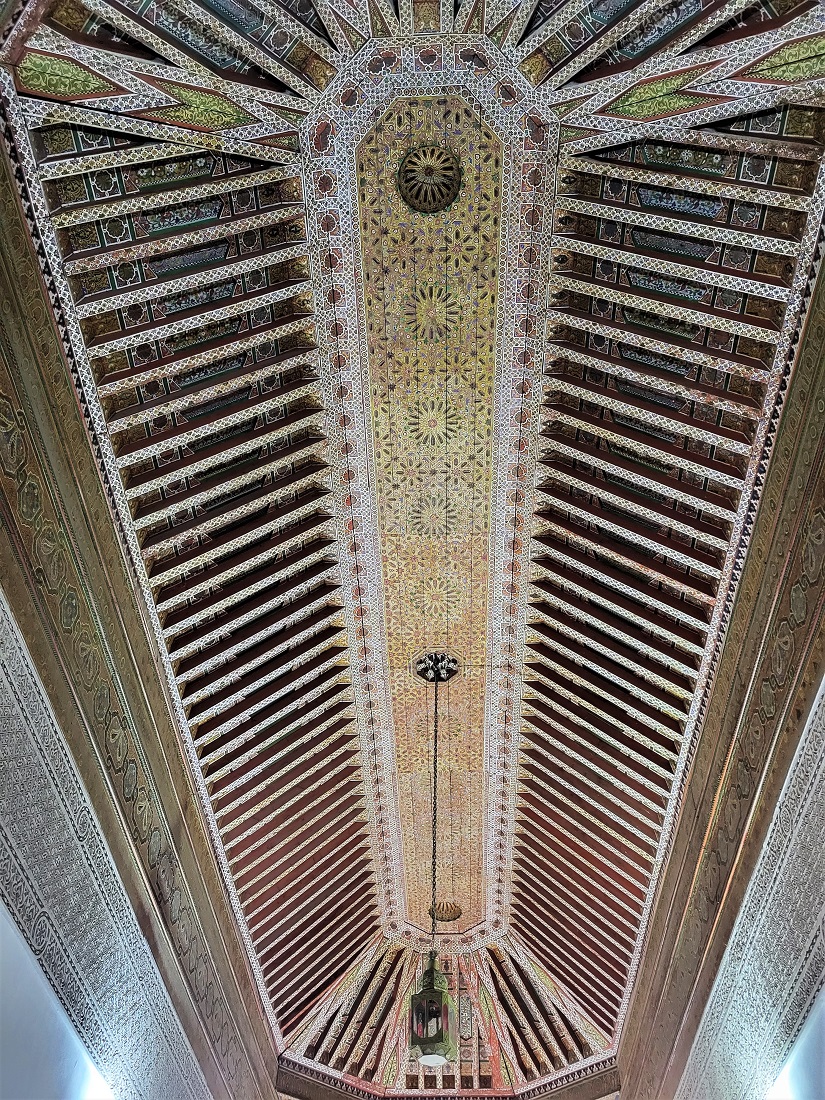
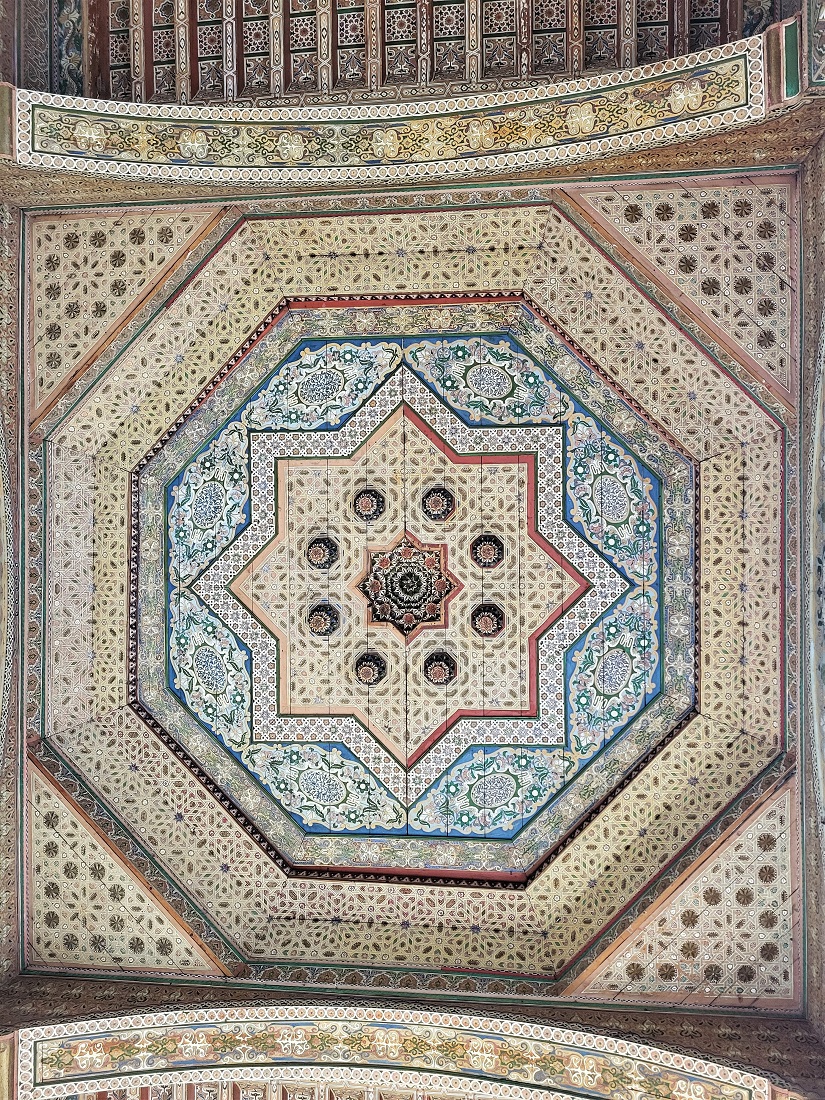
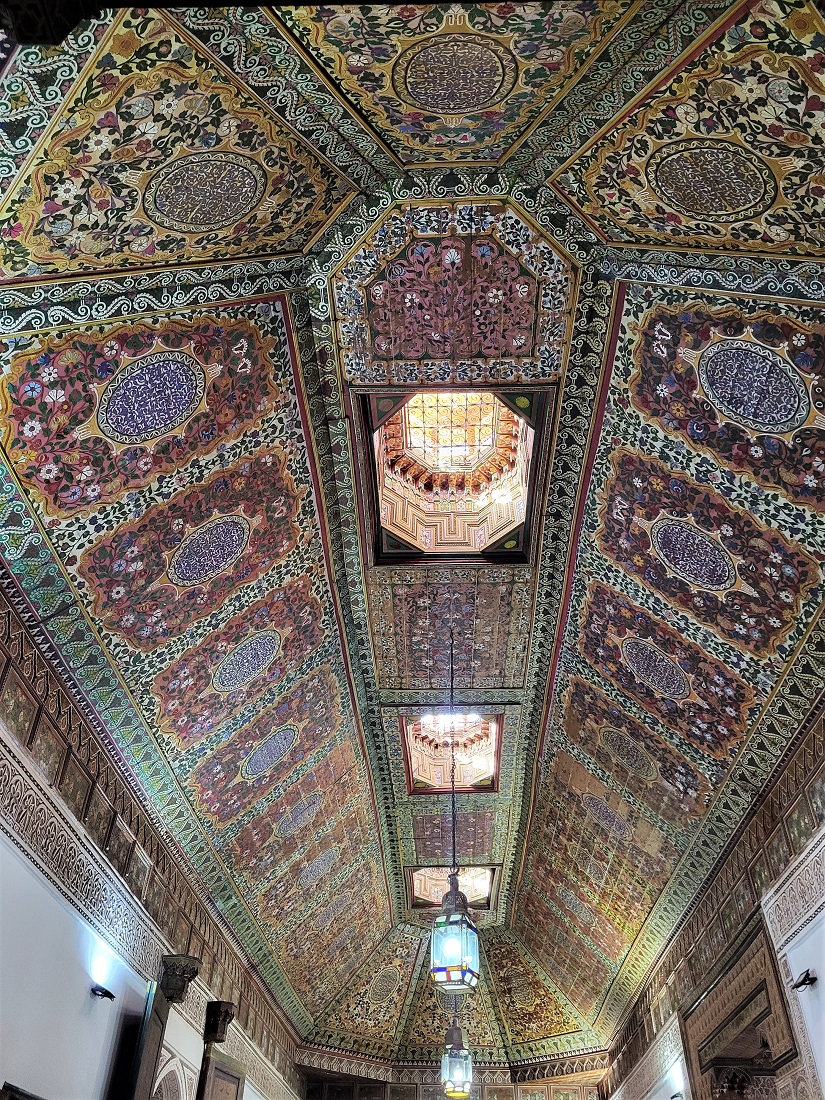
By far the best feature was the palace’s magnificent, ridiculously pretty, ornate ceilings, and I spent a lot of time gazing up in awe.
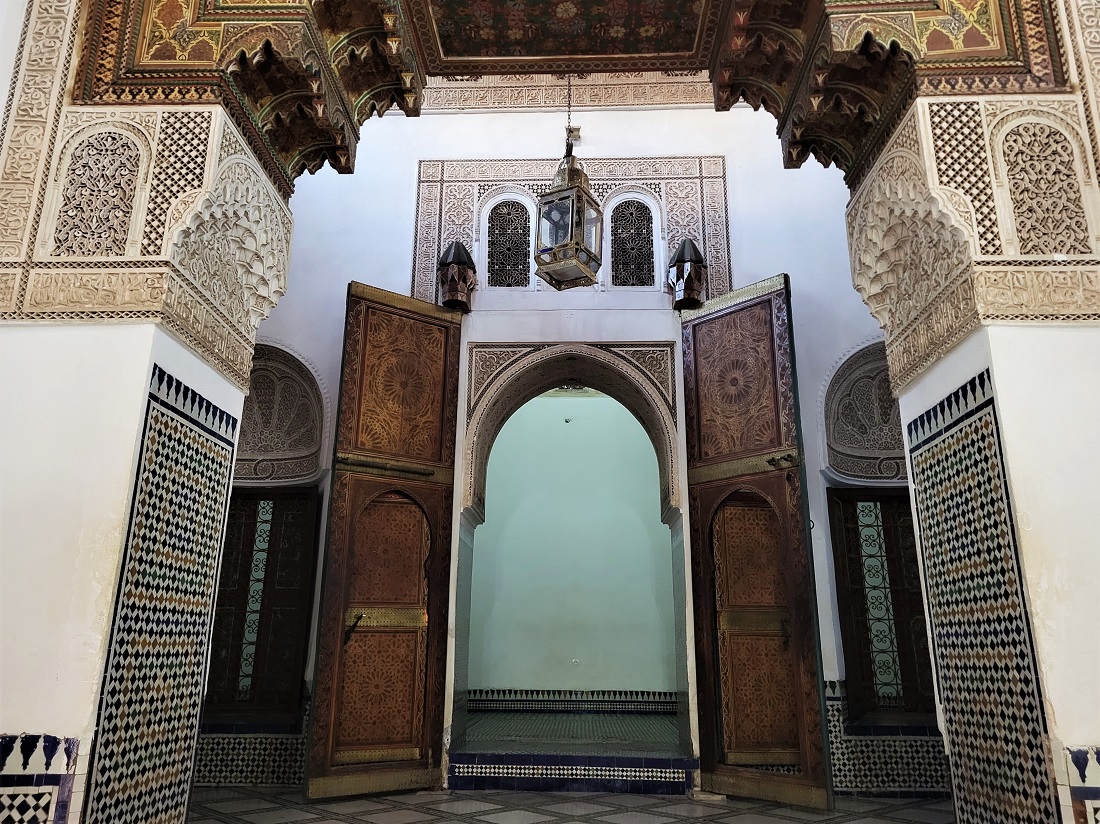
The palace is almost entirely devoid of furniture because when Ba Ahmed – who was hated by the Moroccan people – died in 1900, the palace was looted.
Only Ba Ahmed’s body was left and it took five days before he was buried.
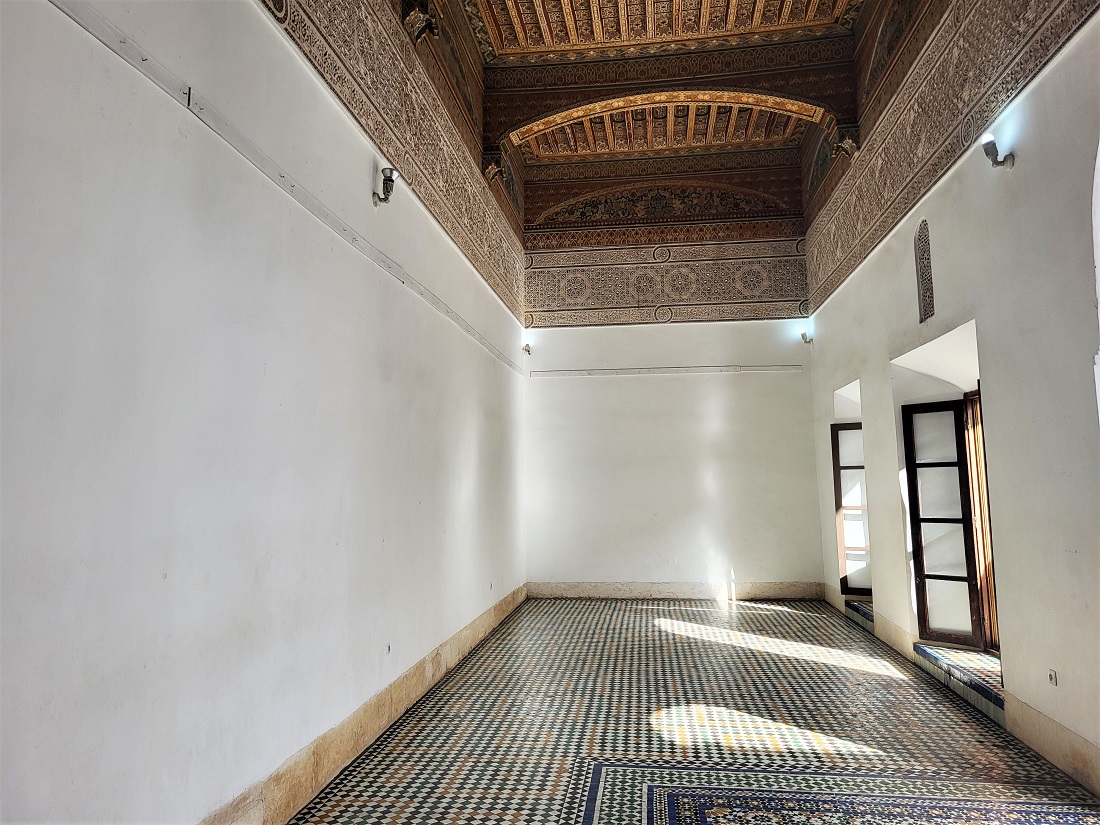
As beautiful as the decoration was, the lack of furniture meant it wasn’t the most exciting palace I’d been to.
The bare rooms meant it was difficult to put into context how they’d been used and what it would have been like to live there.
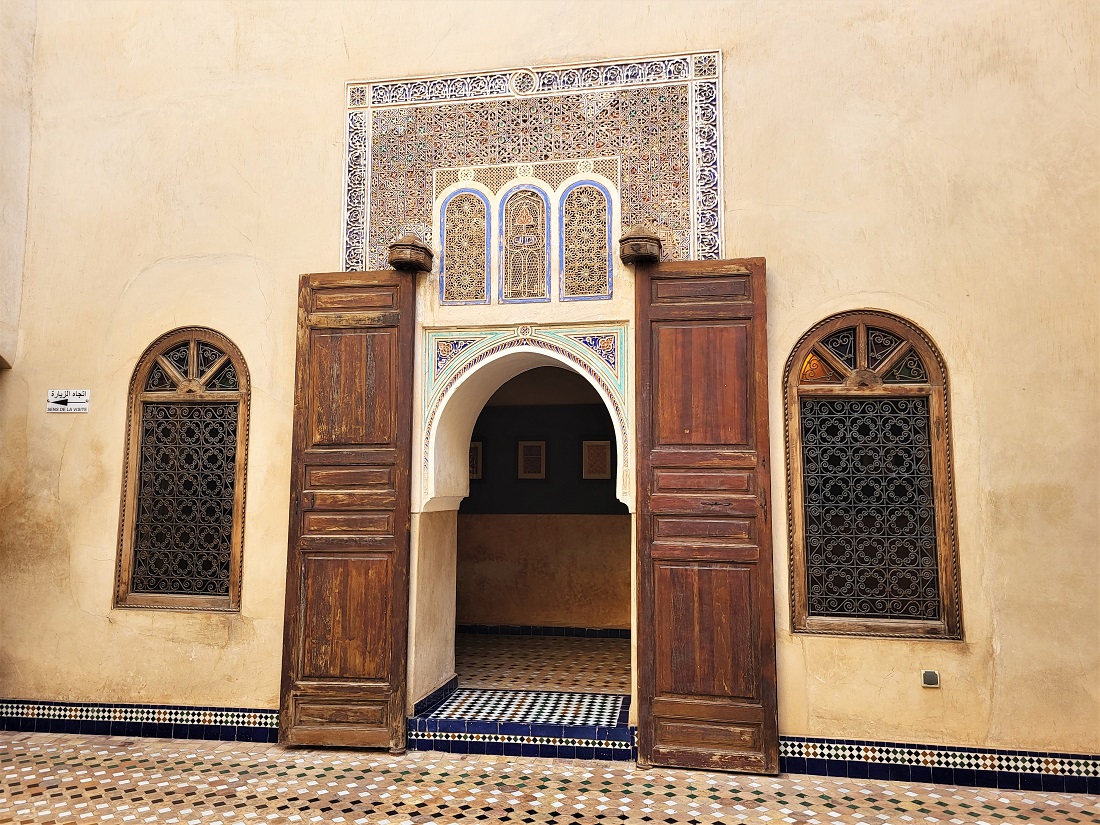
We finished our visit by looking around the servants’ quarters (above), which looked much plusher and more comfortable than the servants’ quarters you see in British stately homes.
Nevertheless, they were still far plainer than the other parts of the palace.
The palace was lovely, but it was uncomfortably busy and heaving with visitors, tour groups and influencers while we there, which made it difficult to enjoy the experience.
We visited at the very end of November, in the low season, and I dread to think what it’s like in high season.
The souks
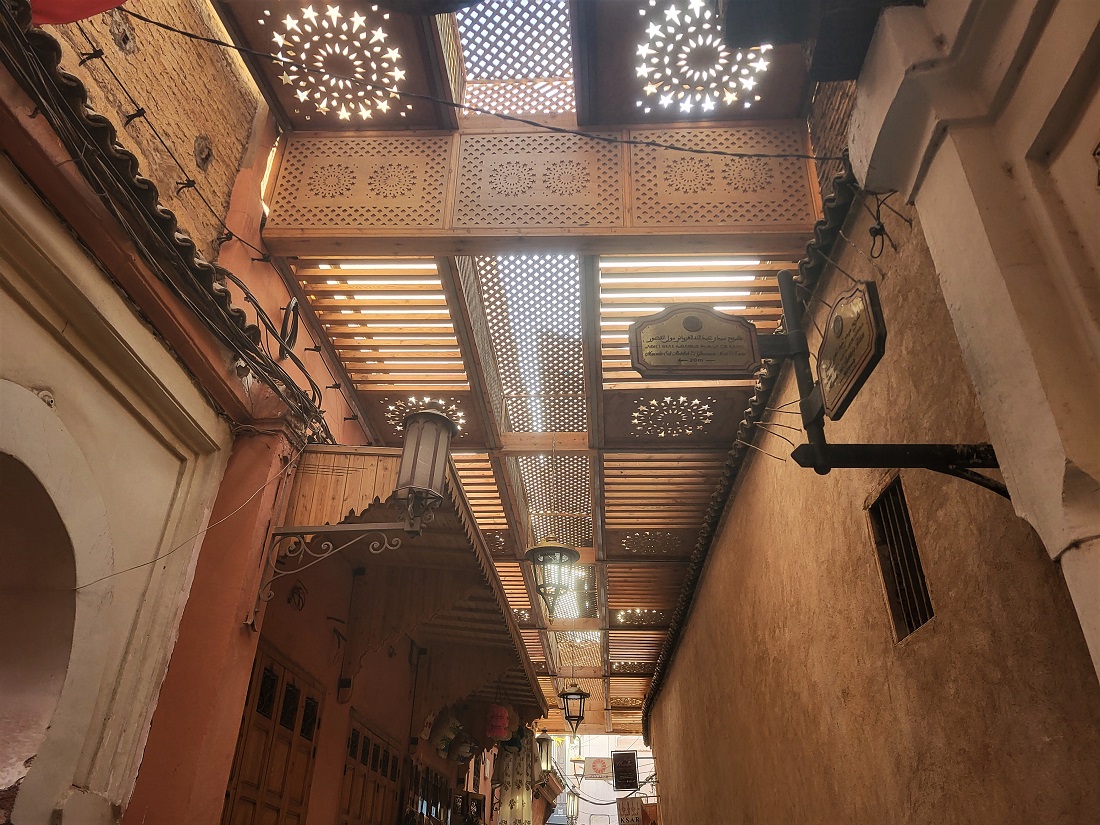
No trip to Marrakech is complete without a trip to the medina’s labyrinthine souks.
Filled with similar stalls to those we’d seen elsewhere in Morocco – it’s the place to go if you’re looking for leather, weaved goods, metalwork, ceramics, bric-a-brac and general tat.
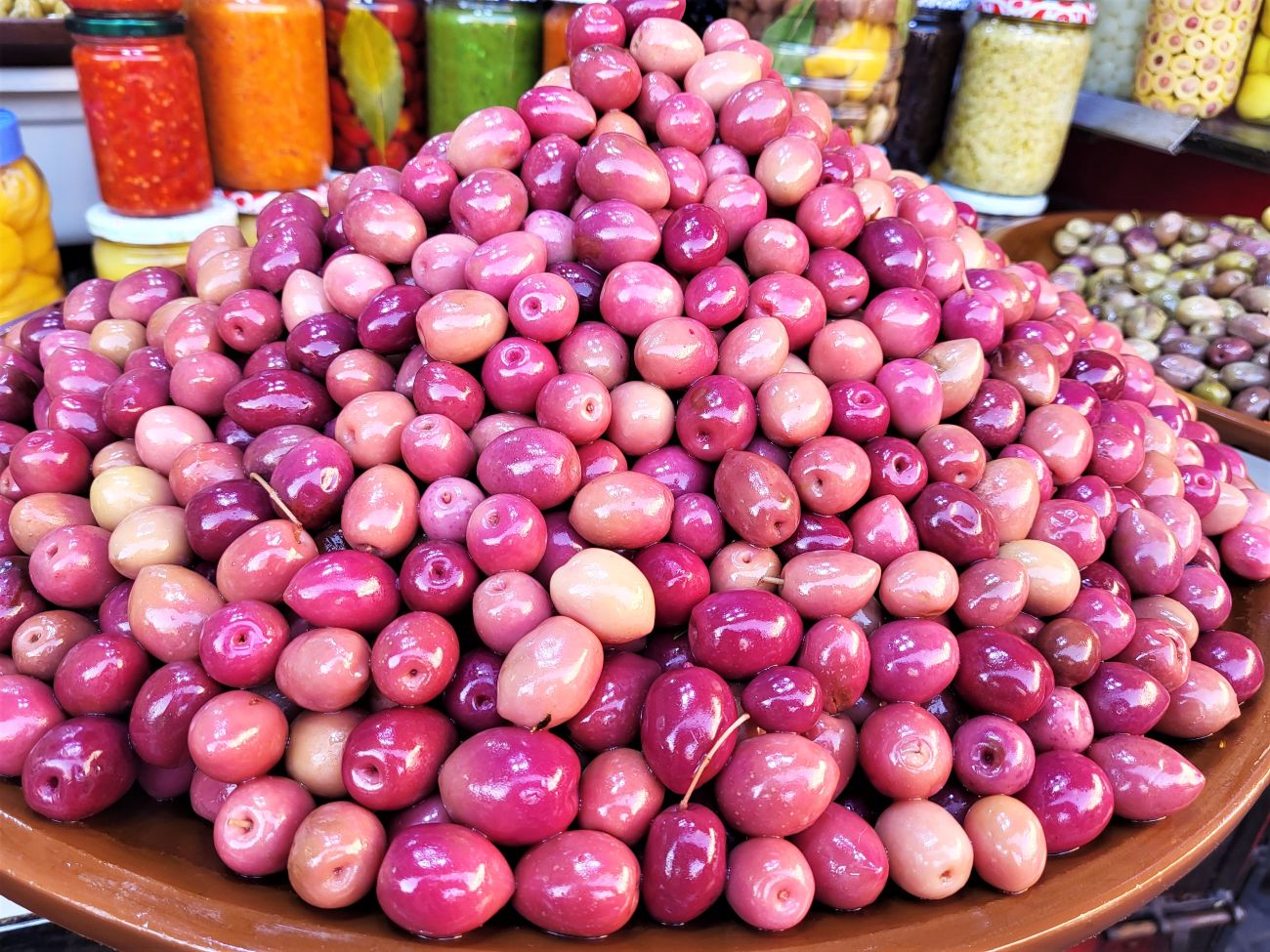
As we strolled through the souks, we stopped first at an olive stall to try a selection of the stone fruit (above) – green olives with lemon and parsley, then with garlic, and finally with harissa, as well as black olives. They were all delicious.
We then paid a visit to a patisserie to pick up a box of almond and pistachio-flavoured biscuits, and afterwards a herbalist that sold a huge array of herbs and spices.
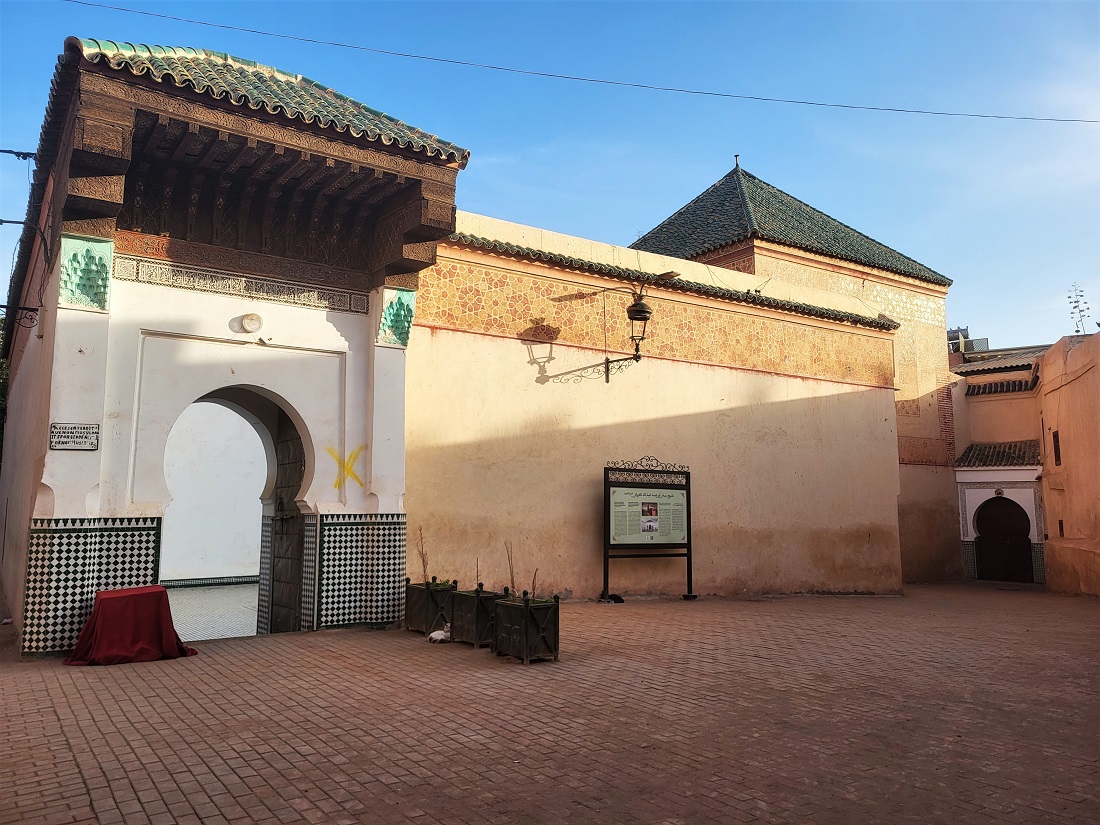
We ended our visit next to the Mausoleum of Sidi Abu Mohamed Abdallah El Ghazwani Moul El Ksour (above), one of Marrakech’s seven saints, who was renowned for his remarkable mediation skills.
Apparently he was so good at helping married couples work through their problems, no-one got divorced while he was around. Non-muslims can’t go inside the mausoleum, so we just admired it from outside.
The souks were fascinating and I was surprised by how little we were hassled, possibly because we were with a guide.
The most challenging aspect of exploring the souks was the motorbikes that raced through the slender passageways, as we were constantly having to jump out of the way as they whizzed past at speed.
Museum of Marrakech
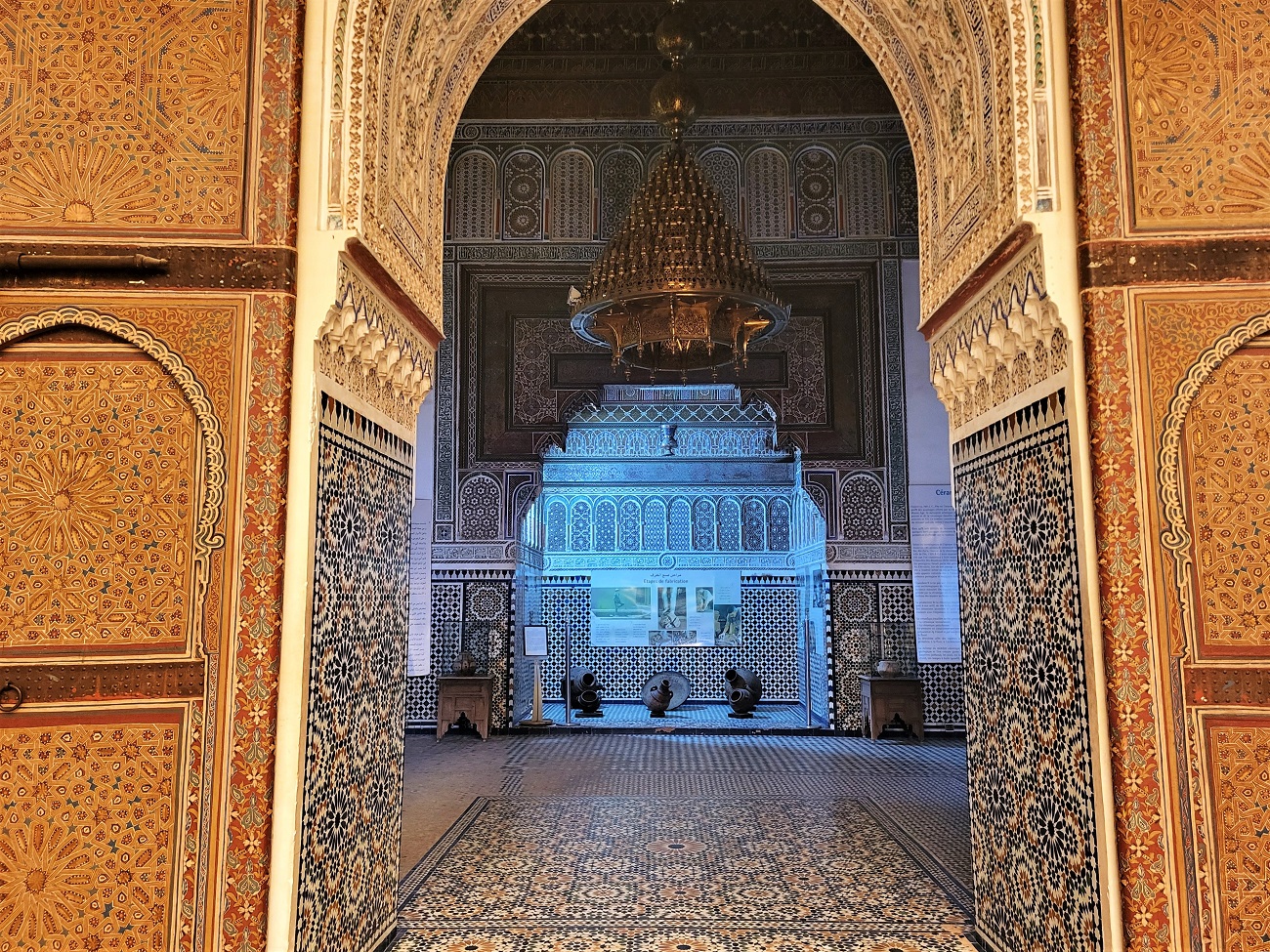
Our final stop in Marrakech was the city museum, which is situated in the heart of the medina (above).
We caught a taxi to the nearby Perfume Museum from the Jardin Majorelle and what we hadn’t realised was that our taxi driver planned to drop us deep inside the medina.
Cue us driving through the medina’s narrow, crowded alleyways in a far-too-big taxi, which was quite the nail-biting experience.
Our driver was excellent and how he avoided hitting anyone or anything is beyond me.
It was an incredible piece of driving, but we were left incredulous, and with a few more grey hairs, by the end of it.
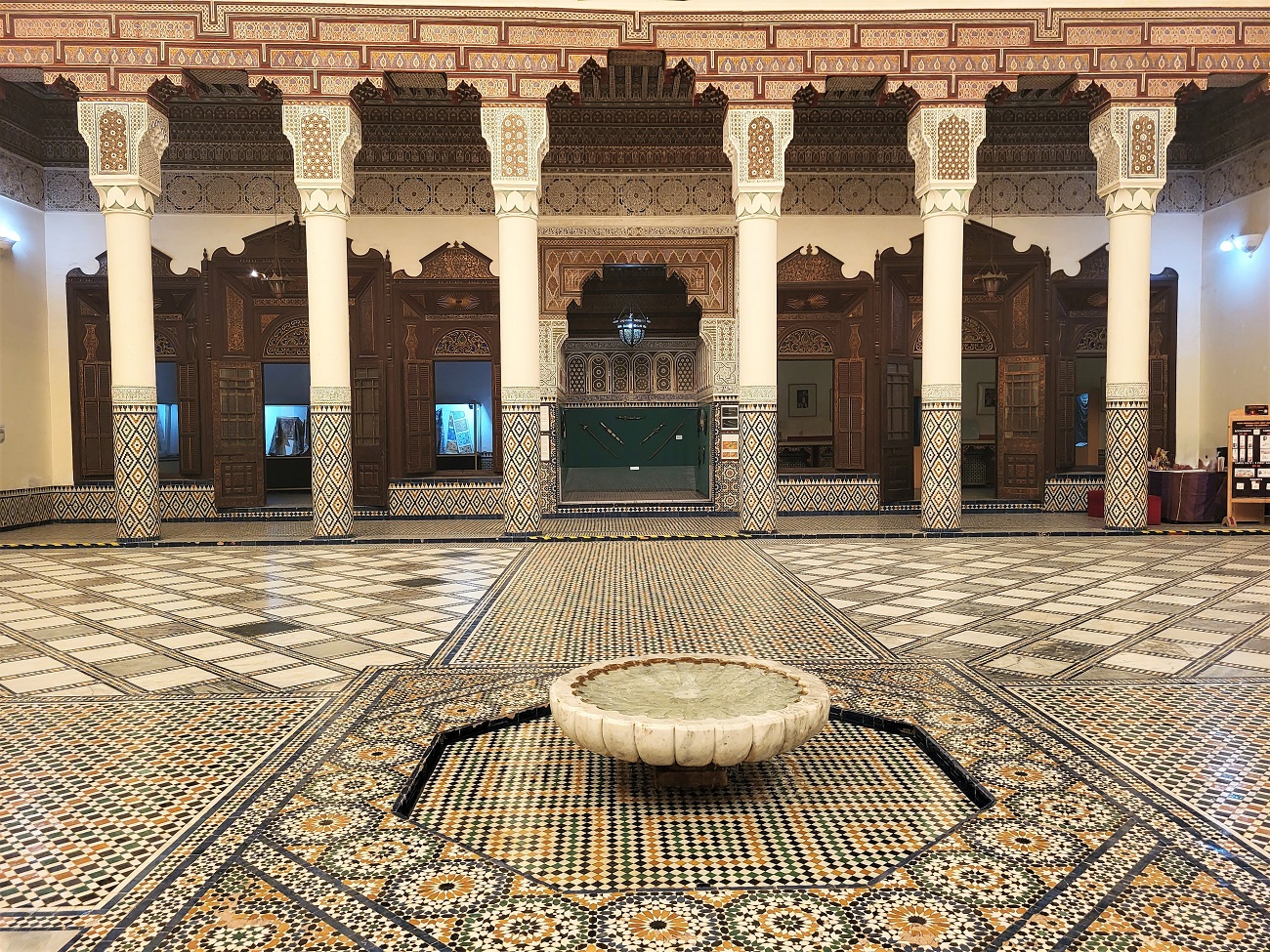
The Museum of Marrakech is housed in Dar Menebhi Palace, which was built at the end of the 19th century by the grand vizier Mehdi Menebhi.
The museum is centred around a couple of beautiful courtyards, and the rooms and passages leading off from them (including the palace’s hammam).
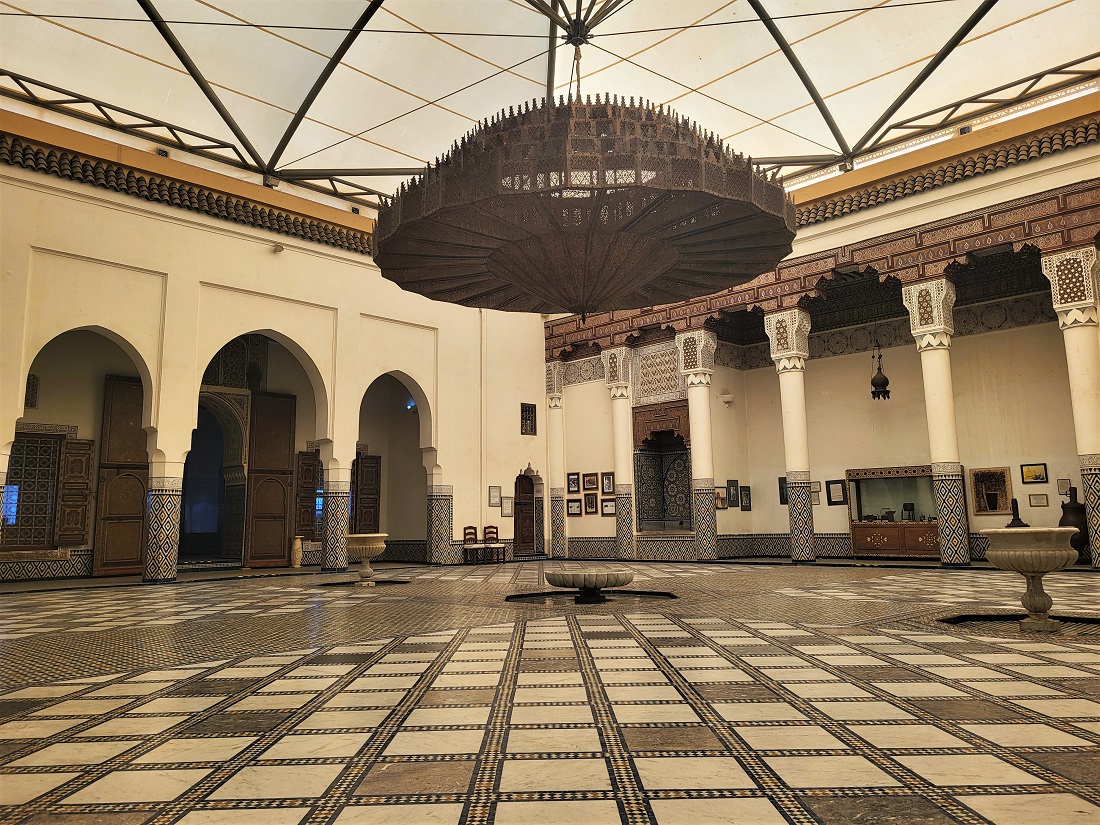
It’s a beautiful building, if a little shabby and rundown, and would be spectacular if it was fully restored.
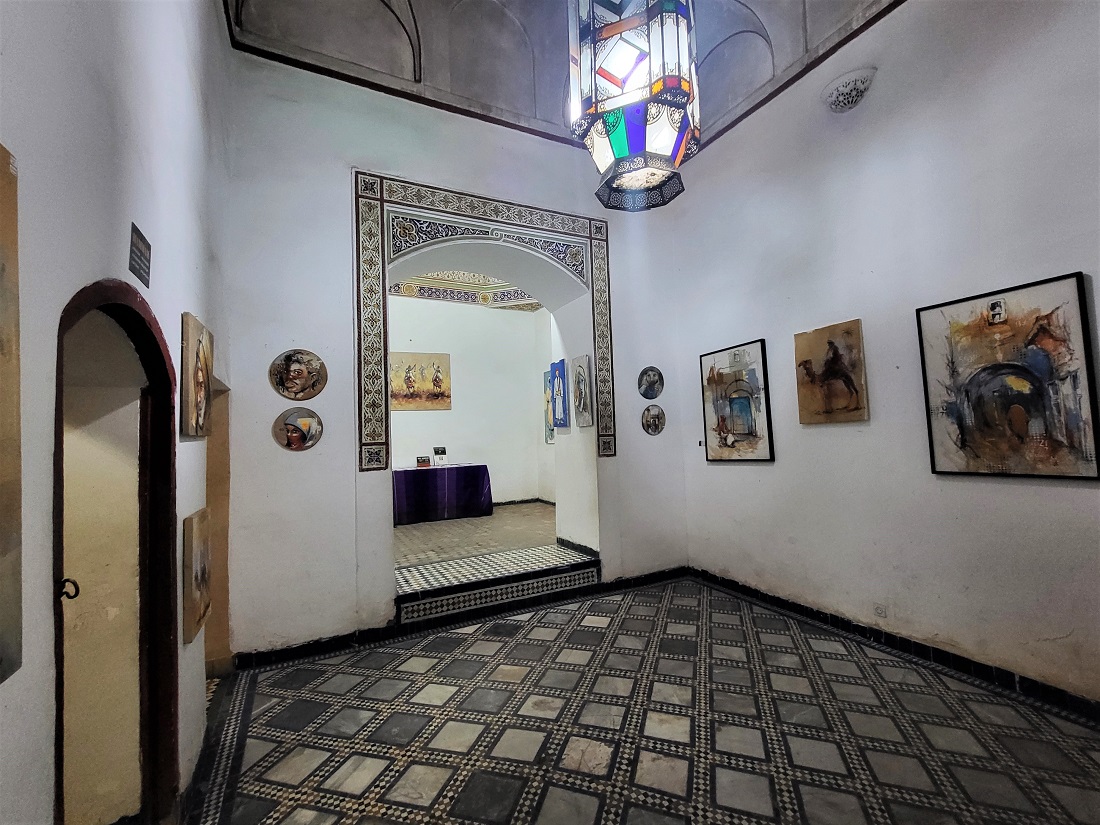
The museum features works by Moroccan artists, as well as artefacts such as ceramics from Fes, weapons and clothing.
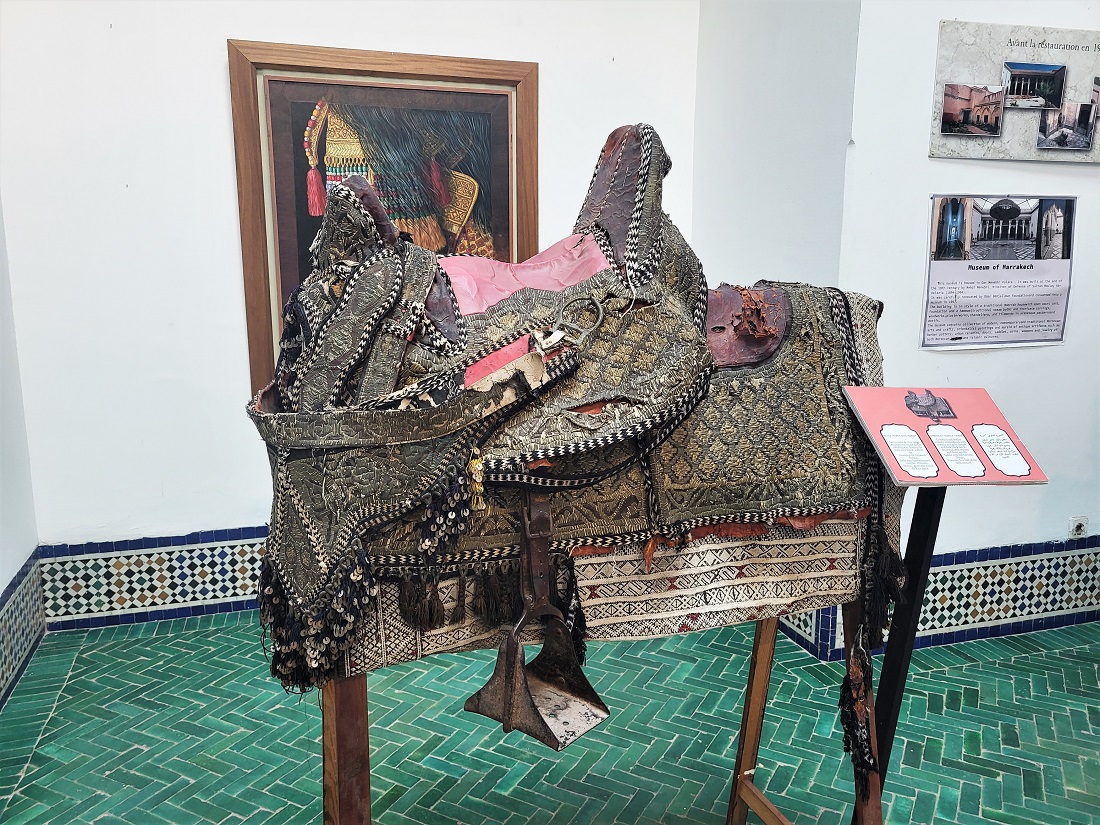
There isn’t a huge amount to the museum. It’s a bit rudimentary and I was surprised how little there was about Marrakech itself.
Given it’s the Museum of Marrakech, I thought there’d be more about the city and its history.
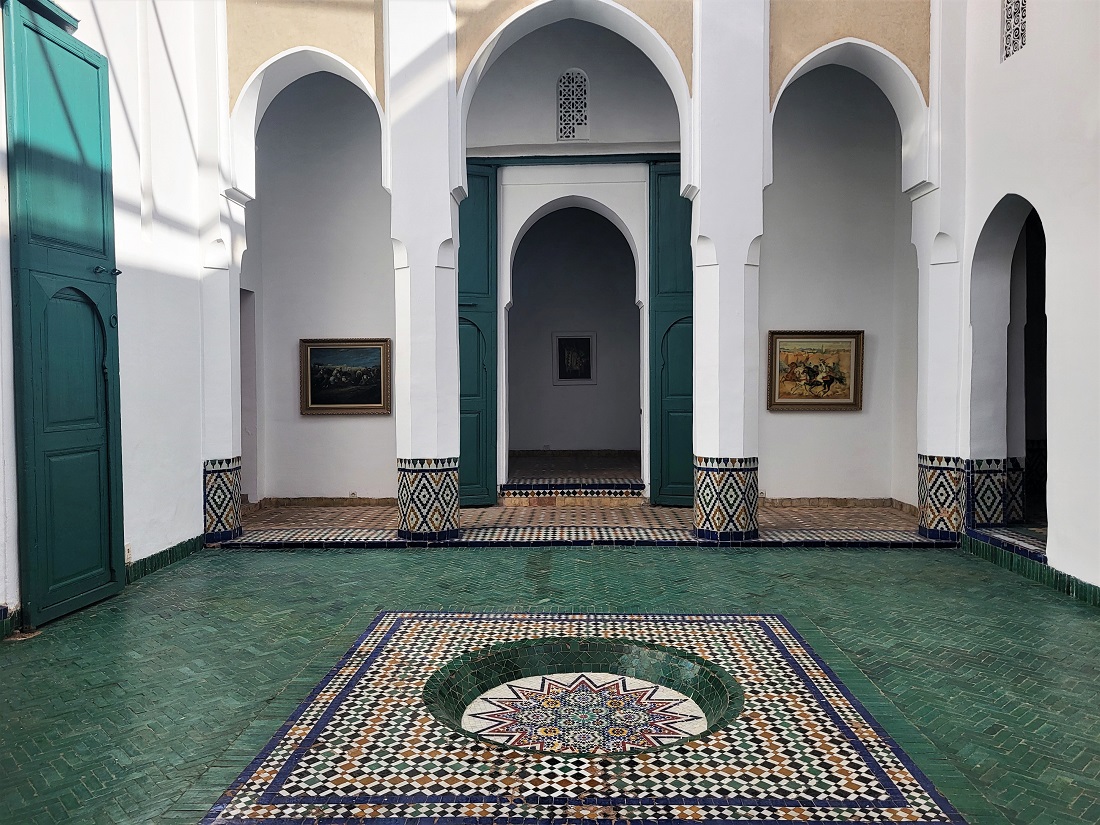
The artefacts on display are okay, but it’s the palace and its stunning architecture that are the star of the show.
It’s worth popping your head inside if you’re passing, but I wouldn’t go out of my way to visit.
Have your say
Have you been to Marrakech’s medina? What did you think of the historic sites? Share your thoughts in the comments below, I’d love to hear your experiences.
 Little Old World
I’ve been to Marrakesh twice, each time staying in a riad in the medina, which was wonderful. I love the place but didn’t do the sites as such. Last time my friend and I got lost in the souks and paid a small boy to take us back to Jemaa el-Fna from where we knew the way back to our hotel!
LikeLike
Marrakech was one of my least favourite cities in Morocco. It wasn’t the hectic pace or the touts, it just felt a little too artificial to me with perfectly piled spices and potpourri in the markets. I much preferred the less touristy cities. I don’t think you missed out by not staying longer. Maggie
LikeLike